Over-monitoring and “The Anxiety Toolkit”

This is an unusual topic for me to take up in this blog. For the most part, I write about plants and fungi, occasionally books and movies. But today, for some reason, I feel like taking up a psychological concept, “over-monitoring,” which I’ve encountered in Alice Boyes’s book The Anxiety Toolkit.

I took up this book (and yes, this is the third time I’ve used the phrasal verb “take up” in the past 50 words—TEFL teachers, feel free to use this post when your students ask, “but, do you really use phrasal verbs?”) in part for work, as a lot of the students I work with have anxiety disorders, and in part for myself, as anxiety is something pretty much everyone deals with at one point or another (probably many times a day).

The idea that you can over-monitor your symptoms is somewhat surprising in an age of mindfulness, when one would assume that more aware of how you are feeling at any given moment the better. I, for instance, begin almost every session with a student/client with a check-in, where I ask them how they are feeling on a scale of 1-10. But, as Boyes points out, constantly monitoring your anxiety tends to make it worse— as when you can’t fall asleep because you are thinking to much about much you need to fall asleep.

Similarly, over-monitoring your happiness can be counter-productive, if by happiness we mean feeling good in a particular moment. You might get frustrated with yourself for not feeling happy when you should. For example, the weekend you’ve long been waiting for rolls around and you feel frustratingly meh, and then mad at yourself for not making better use of your precious freedom.

The idea behind Boyes’s CBT based approach is to treat anxiety indirectly. Treat anxiety as an obstacle on the path to something else—fulfillment, your goals. Keep your eyes on the goal, not on the anxiety that stands in your way.

This brings us to a second sense of the word “happiness.” Not as feeling good in this present moment, but as feeling overall that your life has a meaning and purpose. Perhaps this sense of “happiness” is closer to “fulfilled.” The point of this distinction is that it contextualizes your present feelings within a broader framework of meaning. If I see my anxiety as a temporary discomfiture on the way to something I want, I will feel less overwhelmed, less likely to try to change the way I’m feeling, and more likely to endure it. Similarly, I may not feel all that joyous in the present moment, but if I know that what I’m doing contributes to some goal I’ve set myself, I will be more self-forgiving.

The question this raises though, is if what if there is no goal I want more than I fear my anxiety? What if I struggle setting goals for myself? For example, students with intellectual disabilities may lack the metarepresentational skills that make contextualizing current anxiety within a broader framework possible.

Overall, I find Boyes’s concepts very useful—but as with any other tool, I don’t think they will work for everyone.
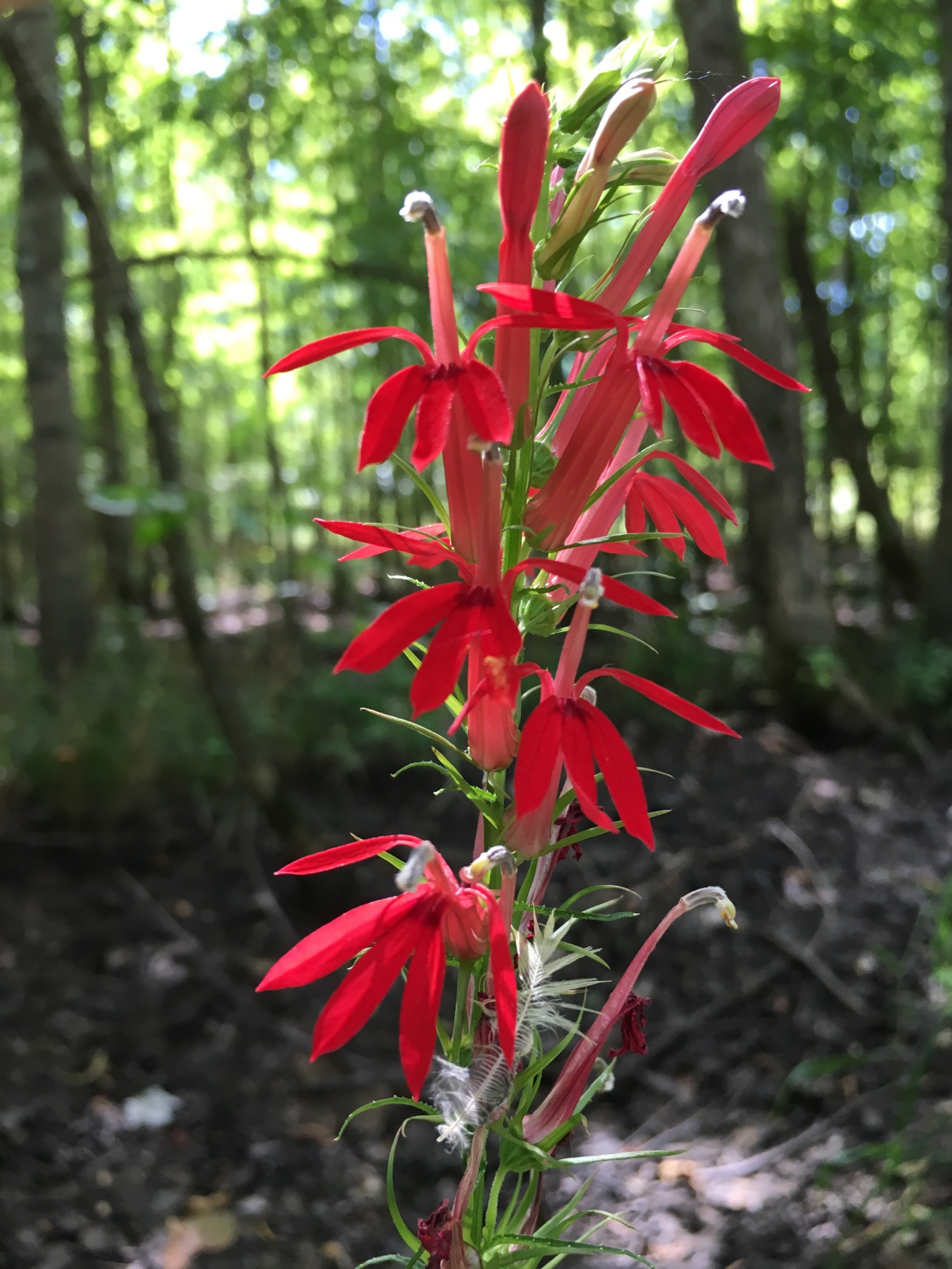
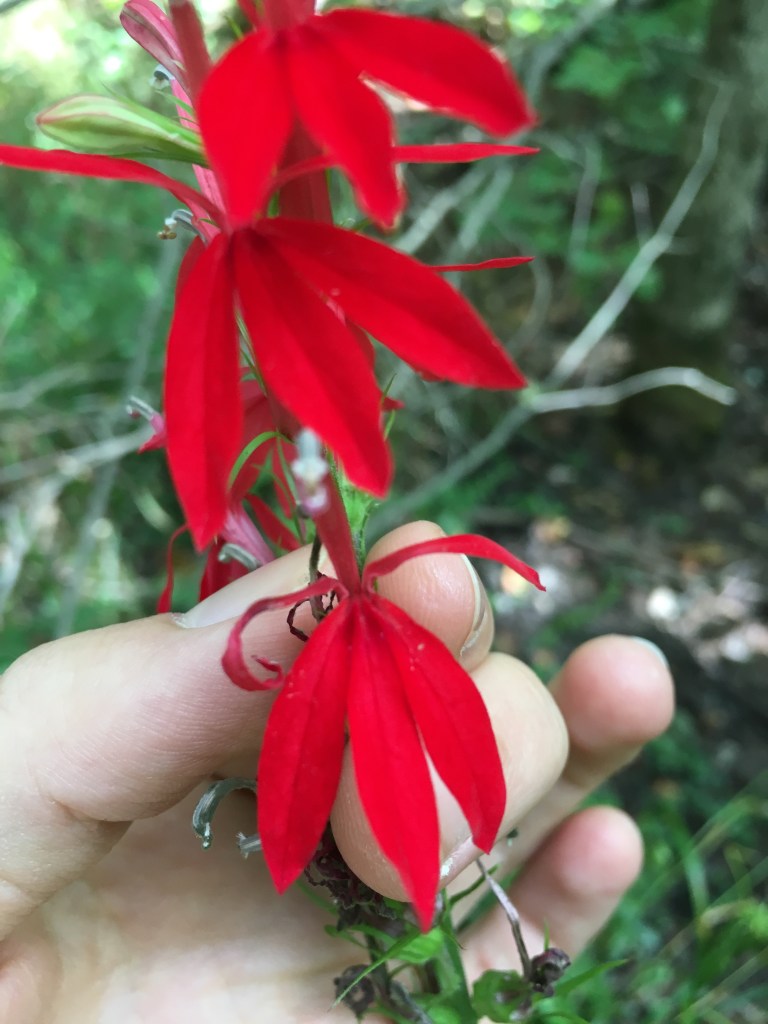
Three Swampy Species: The Cardinal Flower, Buttonbush, and Arrowhead

In Indiana at least, forests are actually one of the best preserved habitats. Forests are “multiple-use” spaces — they can be used for hunting, logging, and hiking — and so there is an economic incentive to preserve them. In contrast, wetlands tend to be less well preserved because they don’t produce a salable product like timber. Pre-European settlement, an estimated %25 of Indiana was wetlands, whereas today wetlands represent approximately %4 1 .

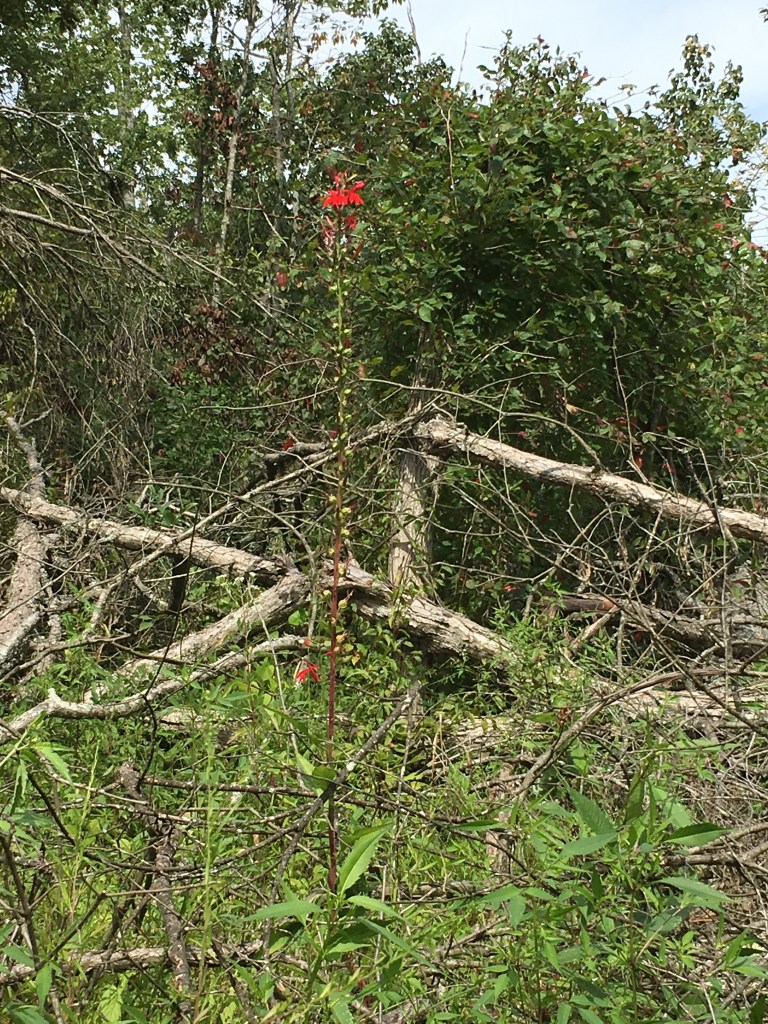
This is what makes the Cardinal Flower a rarer species. Not that it is rare within its habitat, but that its habitat is rare. Luckily, a couple weeks ago I had the opportunity of visiting one of these habitats and found the Cardinal Flower, “America’s Favorite,” everywhere.

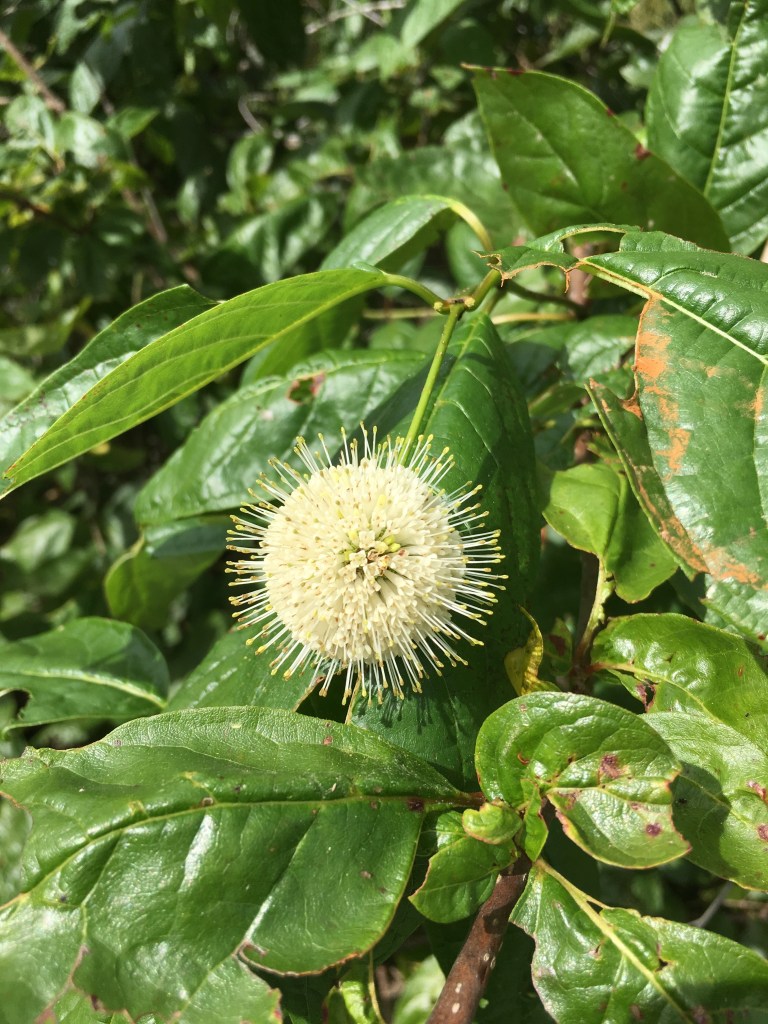
Another species I found everywhere, was Buttonbush. Like the Cardinal Flower, Buttonbush has a number of medicinal uses historically, but is now considered poisonous.

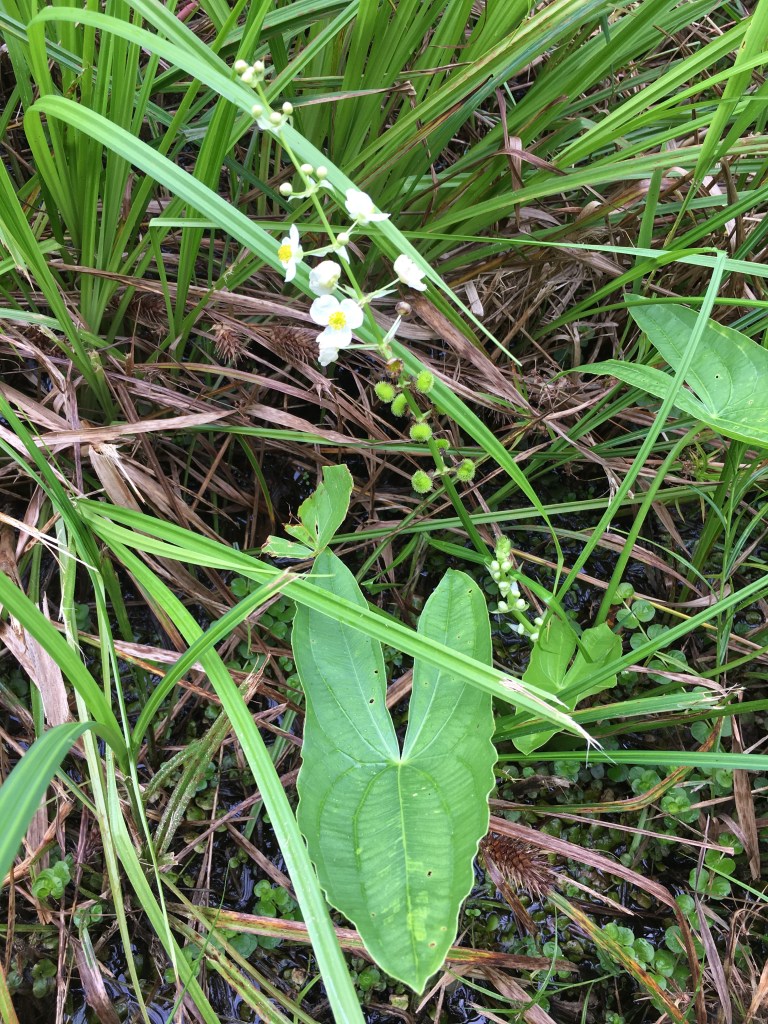
Another swampy stable, Broadleaf Arrowhead, Sagittaria latifolia, or “duck-potato,” is so called because it produces edible tubers, which were cultivated by indigenous peoples. In fact, according to the wikipedia page, raw arrowhead has 5.33g of protein per 100g—which is way more than potatoes have, and a little less than peanuts.

Anyways, all this to say: brave those mosquitoes and go check out a swamp!

Mushroom Lingo #9: Polypore

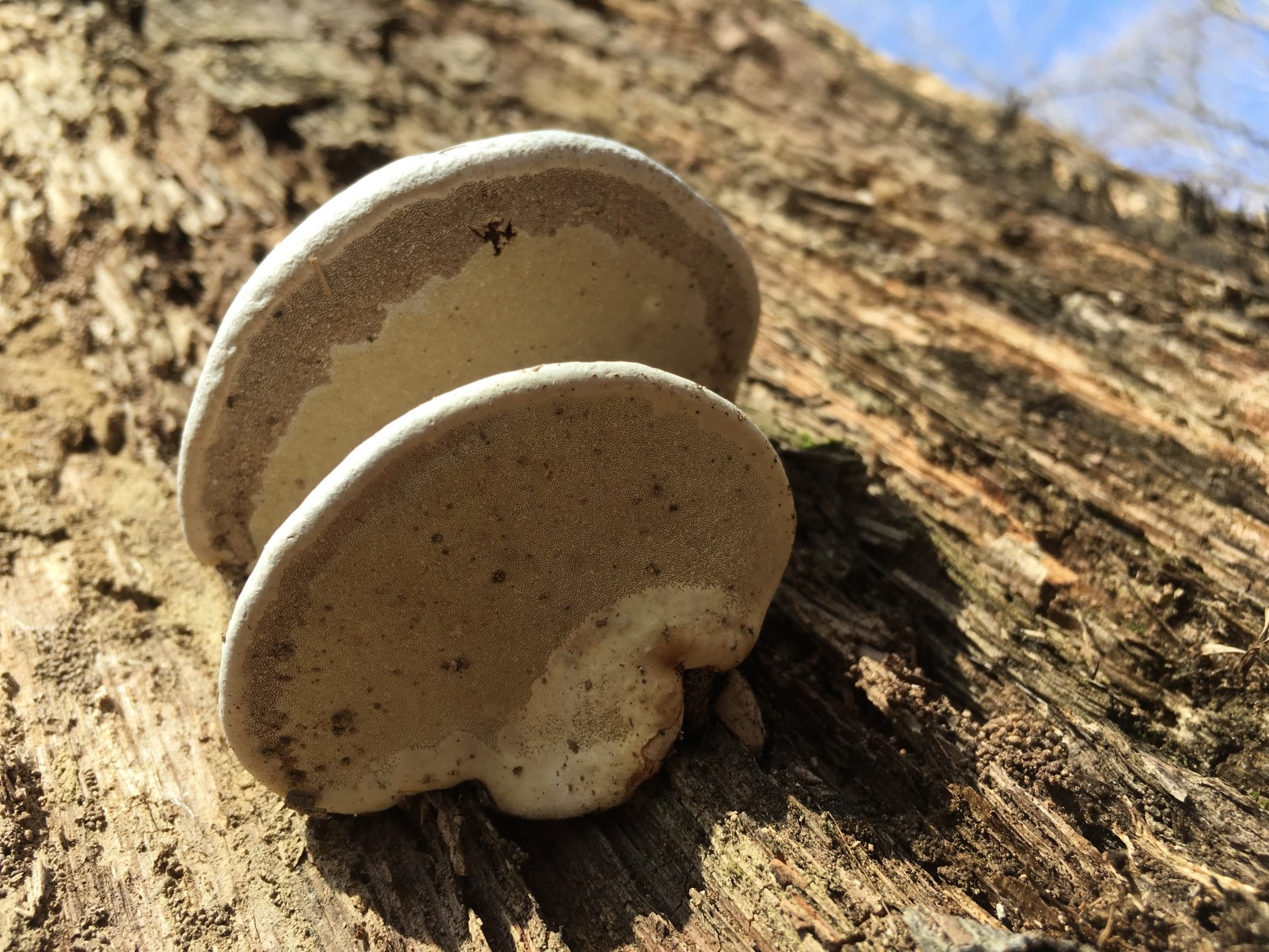
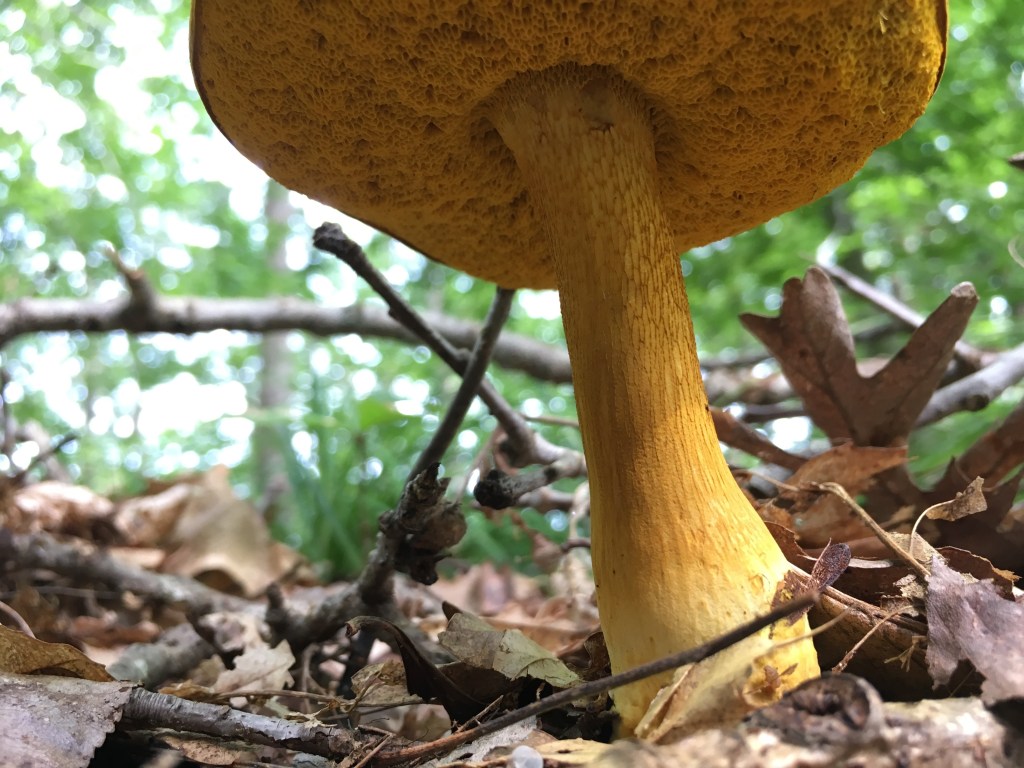
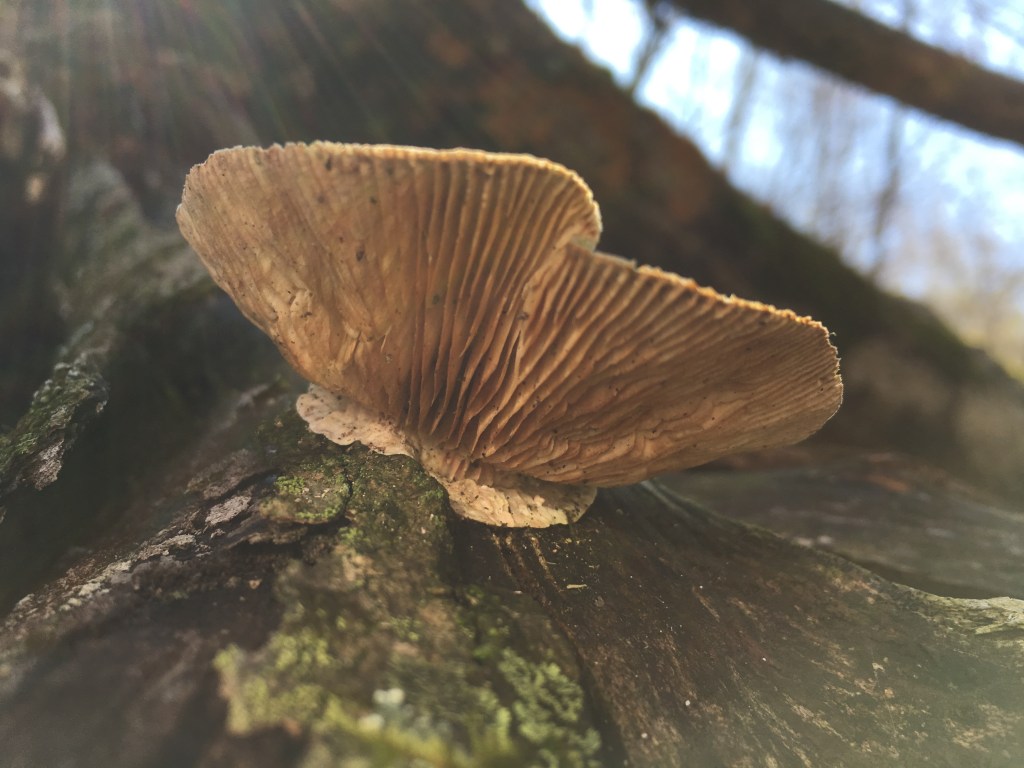
A polypore is just a mushroom with a lot of pores, right? Not quite. Boletes are pored mushrooms, for example, and yet are not polypores. Lenzites betulina doesn’t have pores — it has gills! — and yet it is considered a polypore. What’s going on?

Not all pored mushrooms are polypores!
Not all polypores have pores!

As so often with things mushroomy, there isn’t a clear cut definition. Typically, polypores produce fruiting bodies which are tough and shelf-shaped, don’t have a well developed stem, and grow from wood. Individual polypores may violate one of those conditions, but conform to the majority. Additionally, I should specify there are two ways of using “polypore”: morphologically (to describe a certain form of mushroom) or phylogenetically (to refer to a group of related fungi in the Order Polyporales). I have more the first sense in mind, since I’m not overly obsessed with mushroom taxonomy, and some of the “polypores” I will talk about are not actually in the Order Polyporales.

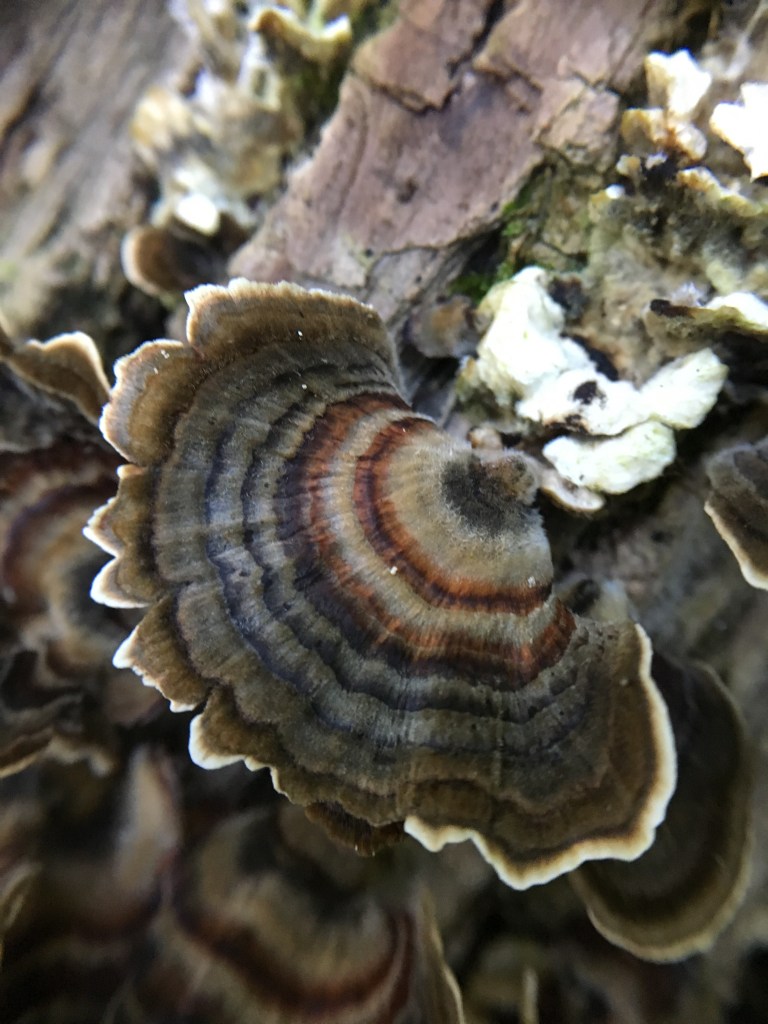
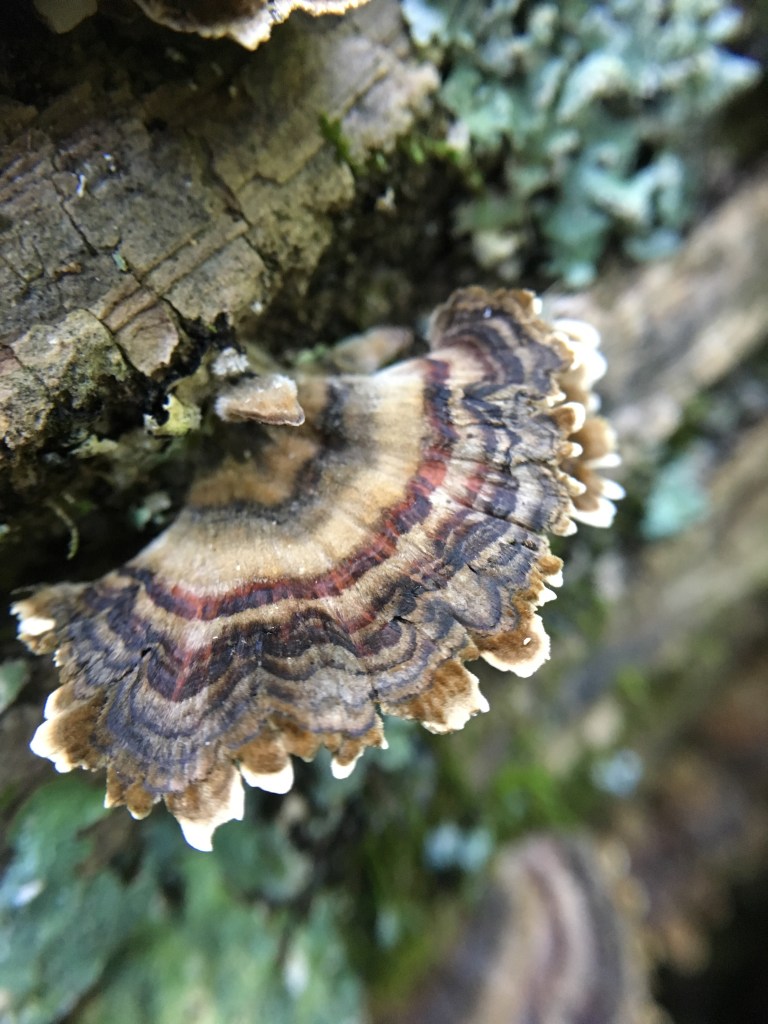
Probably the most famous polypore is Turkey Tail. It’s a beautiful mushroom characterized by rings of color, a fuzzy cap, and visible pores.

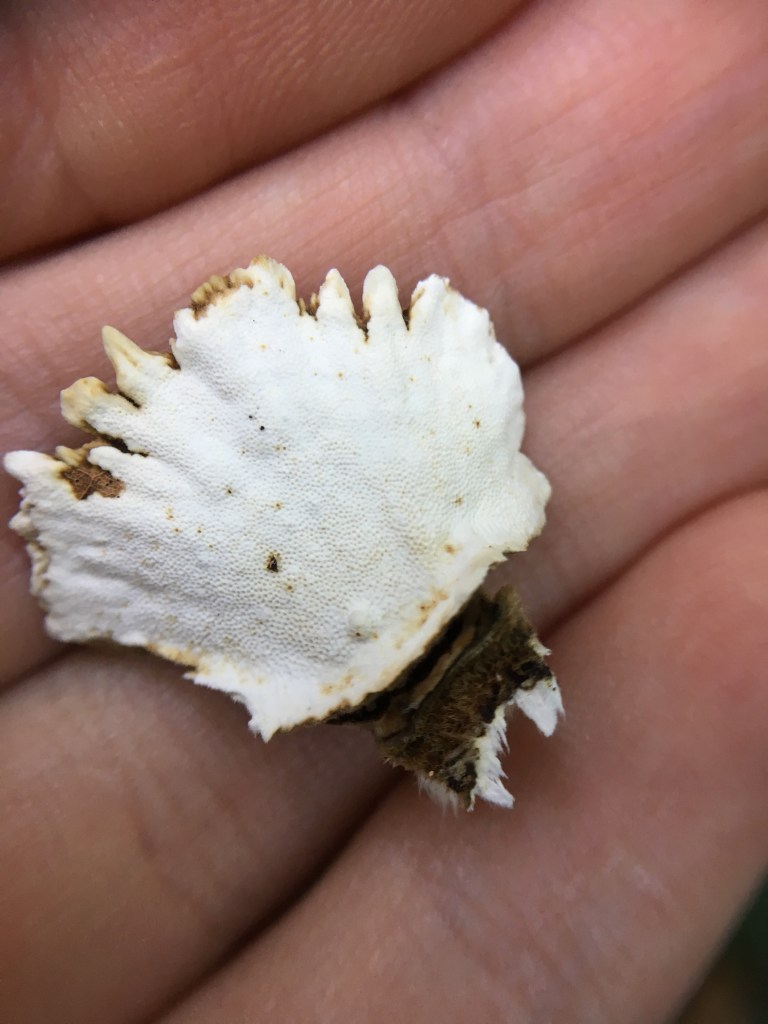
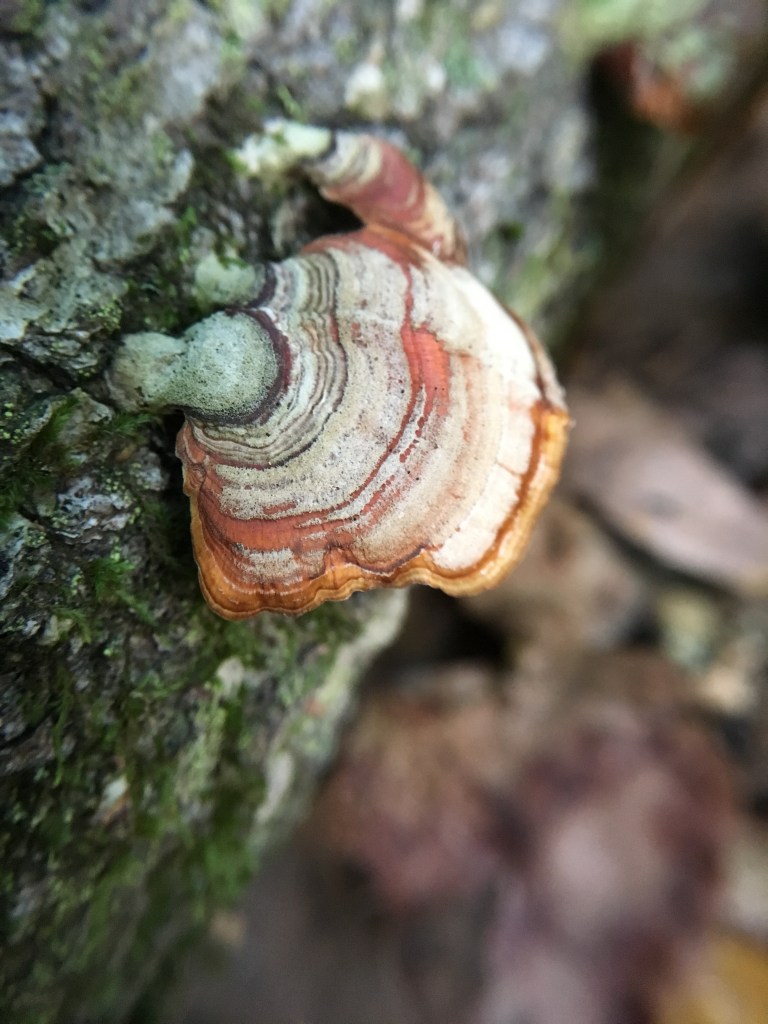
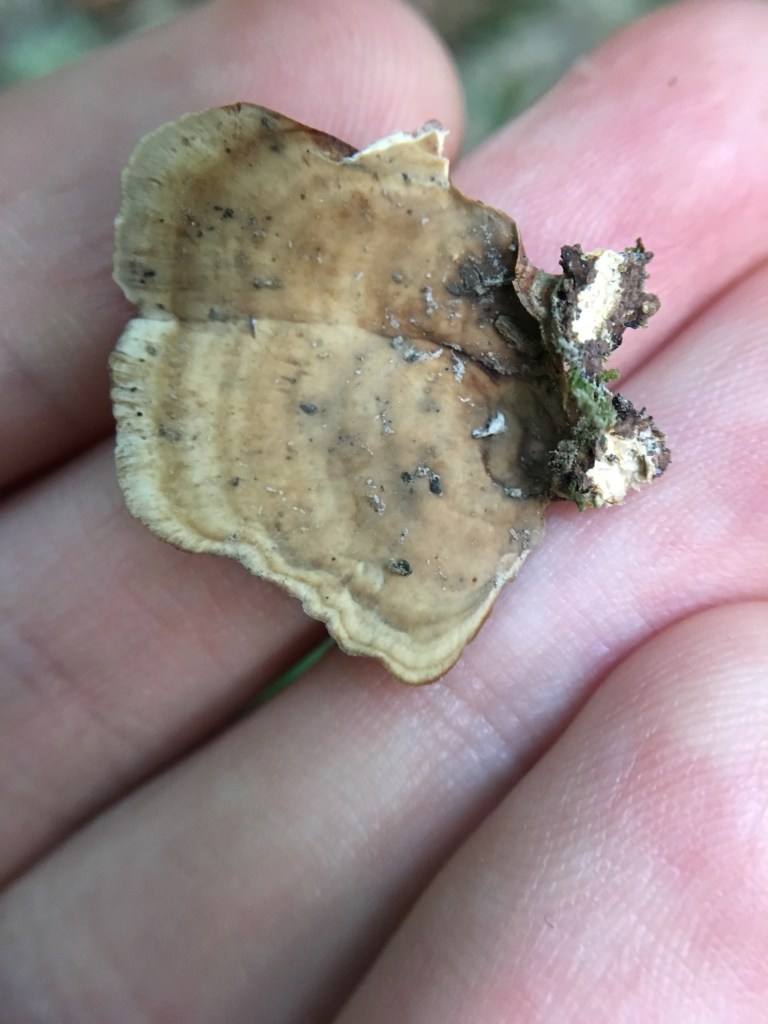
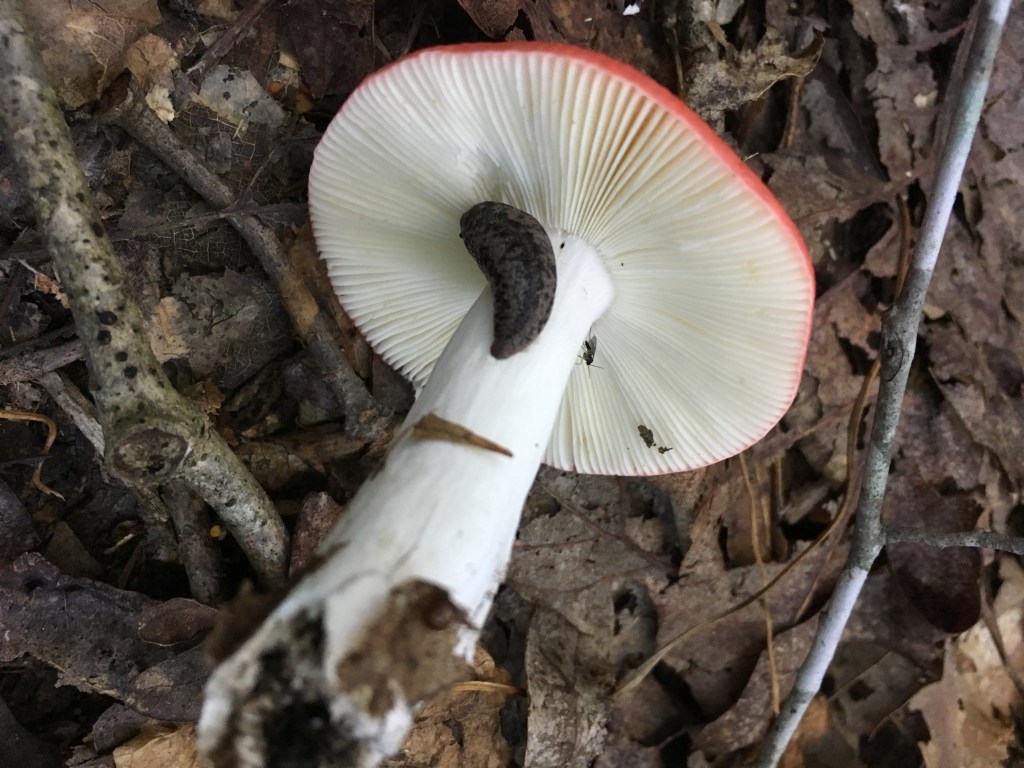
In contrast, False Turkey Tail, Stereum ostrea, lacks visible pores (its pore surface is “bald”), and tends to have buffer/tanner colors. Fantastically, Stereum ostrea is a member of the order Russulales, a group of typical-mushroom-looking-mushrooms with gills. Which just goes to show the incredible disconnect between the form of a mushroom and its evolutionary past.

False Turkey Tail
no pores
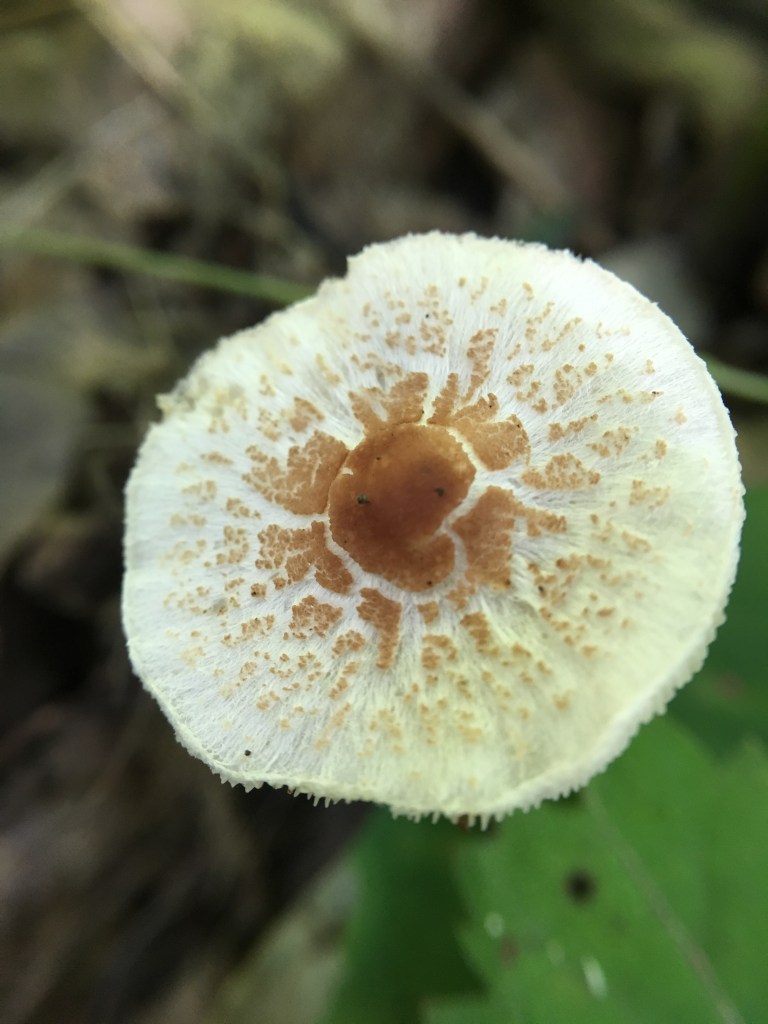
Member of Russulales in no way resembling False Turkey Tail.

Mushroom Lingo #8: Parasites (and Rhizomorphs)

This one’s not too hard to figure out. In contrast to saprobic fungi, parasitic fungi feed on living organisms, whether those are trees, other fungi, or even insects—as is the case with the famous Cordyceps militaris (see Planet Earth: https://www.youtube.com/watch?v=XuKjBIBBAL8)

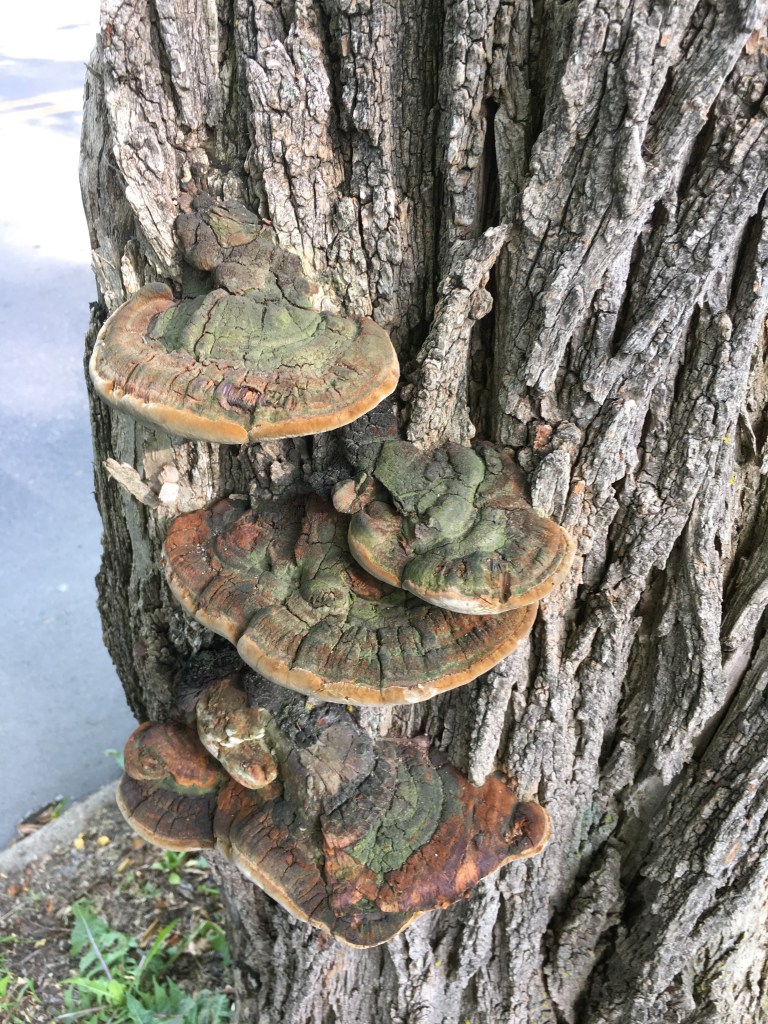
Trees undoubtedly bear the brunt of fungal parasitism, however. These parasites are often specific to certain species of trees. There’s the Birch Polypore (found on “Ötzi the Iceman” and known for its medicinal properties) which only attacks birch, for example. Or Phellinus robiniae, which is primarily found on Black Locusts (so commonly that it can almost be used to identify that tree.

Phellinus robiniae

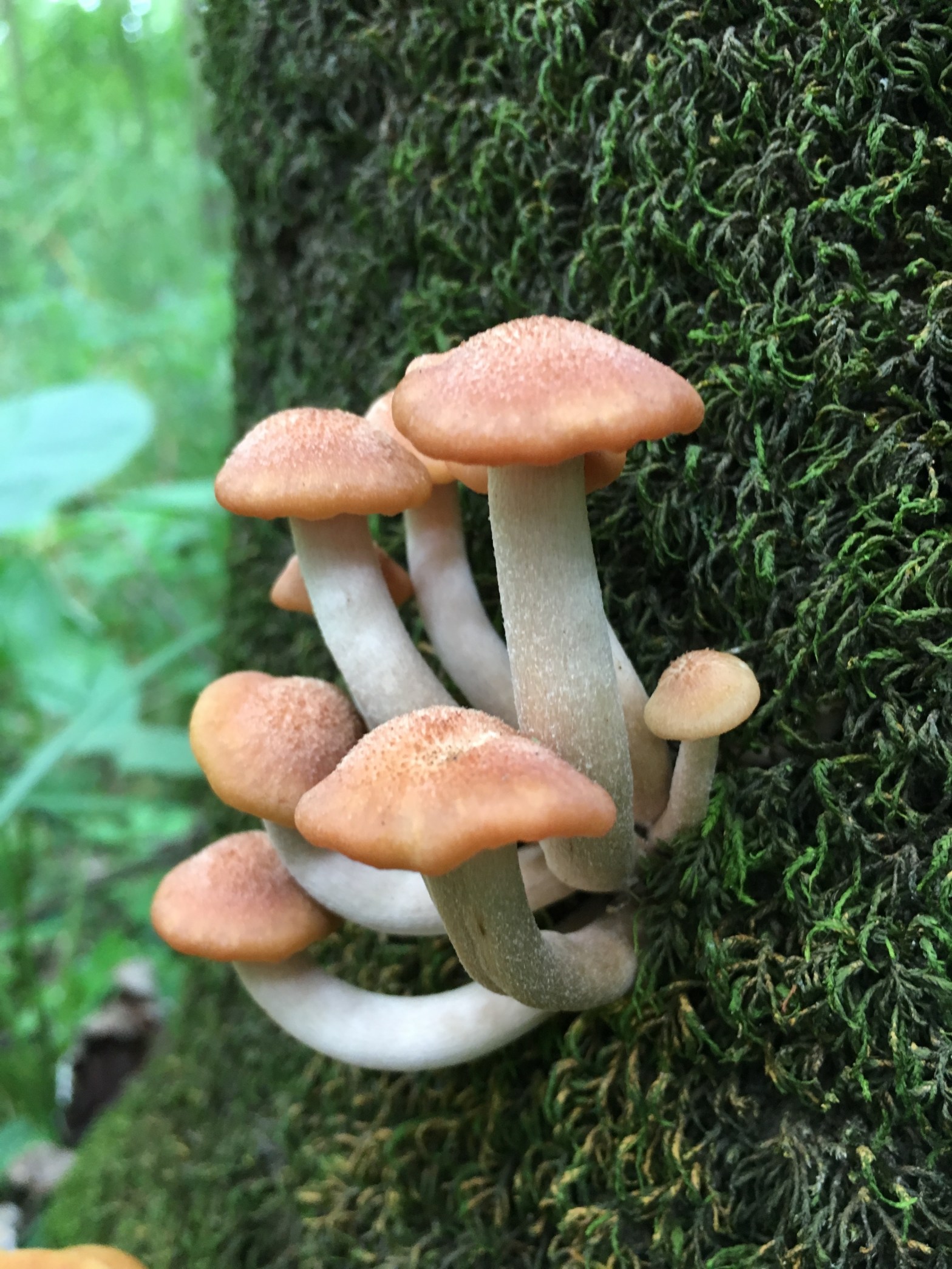
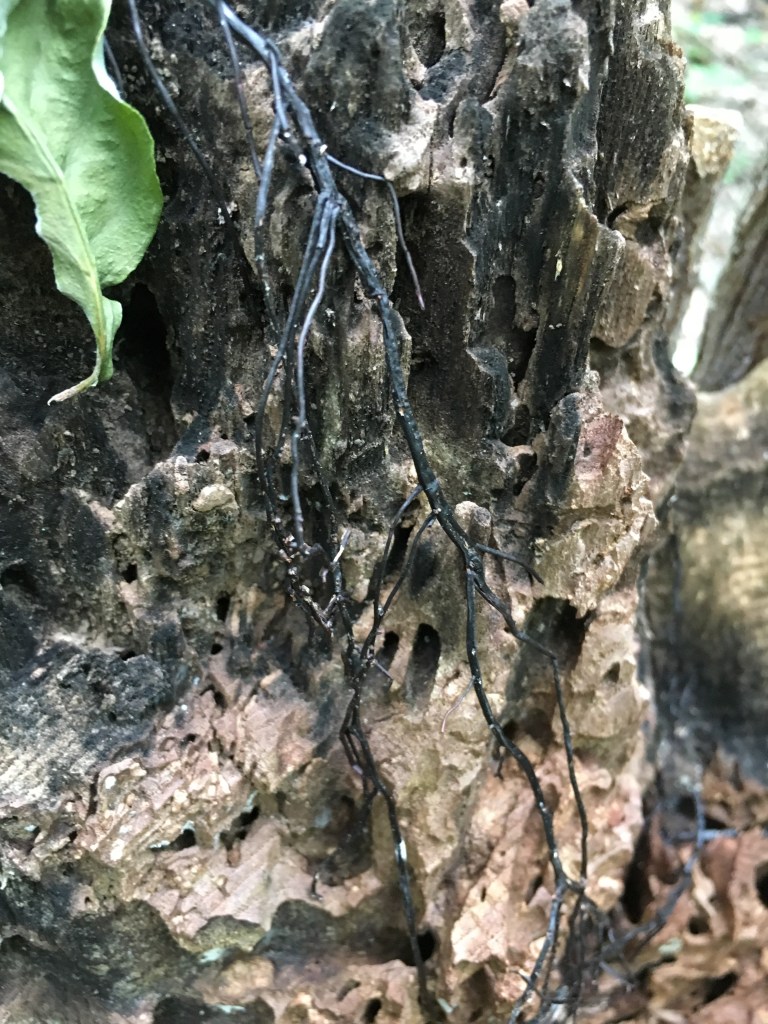
Then there are species like Armillaria solidipes, the world’s largest living organism—in terms of area, not mass— which parasitize trees but don’t necessary grow directly from them. Rather, they spring up terrestrially, like mycorrhizal mushrooms, which can be confusing. Species of this genus (broadly known as “honey mushrooms”) use rhizomorphs (black “shoestring” like structures)

to infiltrate under the bark of trees and spread through the ground from tree to tree. They are one of the most prolific fall fungi: you’ve probably seen something like this before:

https://www.mushroomexpert.com/armillaria_tabescens.html

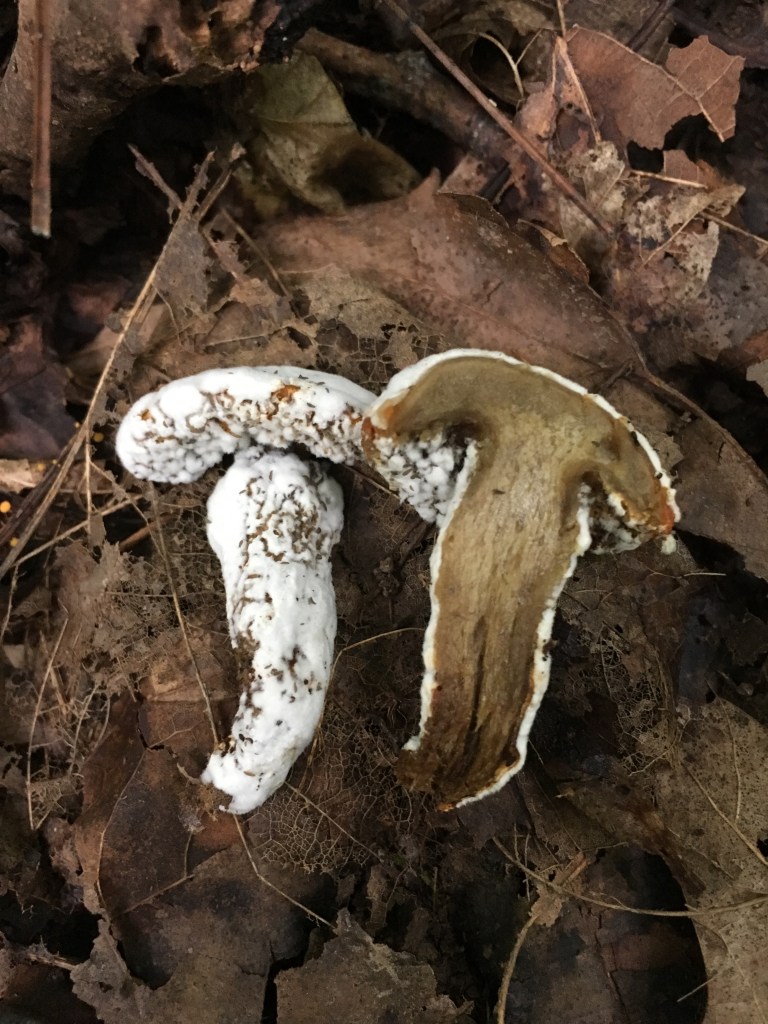
Fungi don’t just parasitize insects and trees though, they also parasitize each other. One of the most common instances of this is “Bolete mold,” Hypomyces chrysospermus.

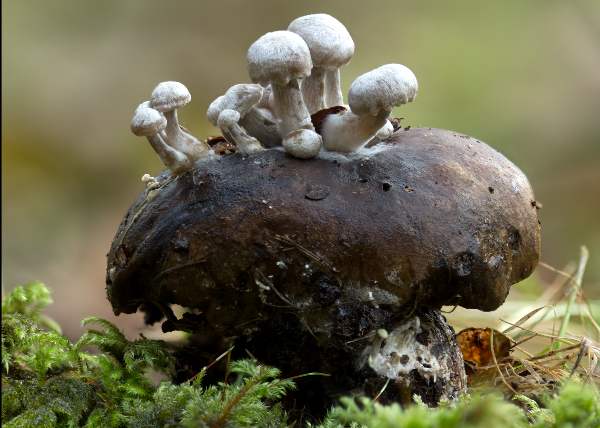
Or if you are luckier, you might find Hypomyces lactifluorum, the “Lobster Mushroom,” which attacks Milkcaps and Russulas and is considered a prime edible. Molds are fungi, but that’s not quite the same thing as a mushroom parasitizing another mushroom. For that you’d have to look to species like Asterophora parasitica:

As I’ve mentioned before, the exact ecological role of a mushroom is sometimes variable. A fungus might start out as a parasite on a living tree, but then become a saprobe once that tree is dead, for example. Some mycorrhizal mushrooms are in some part saprobic-like, in that they can also break down organic matter (it’s just that that is not their primary source of energy). And other mycorrhizal mushroom paralyze springtails and use them for nitrogen, does this make them partial parasites? Should we think of saprobic-mycorrhizal-parasitic as a continuum, rather than three discreet identities? At any rate, the ecological versatility of fungi, their incredible niche-finding ability, is part of what makes their unseen, unstoppable presence, awesome.

Meet the Pin Oak

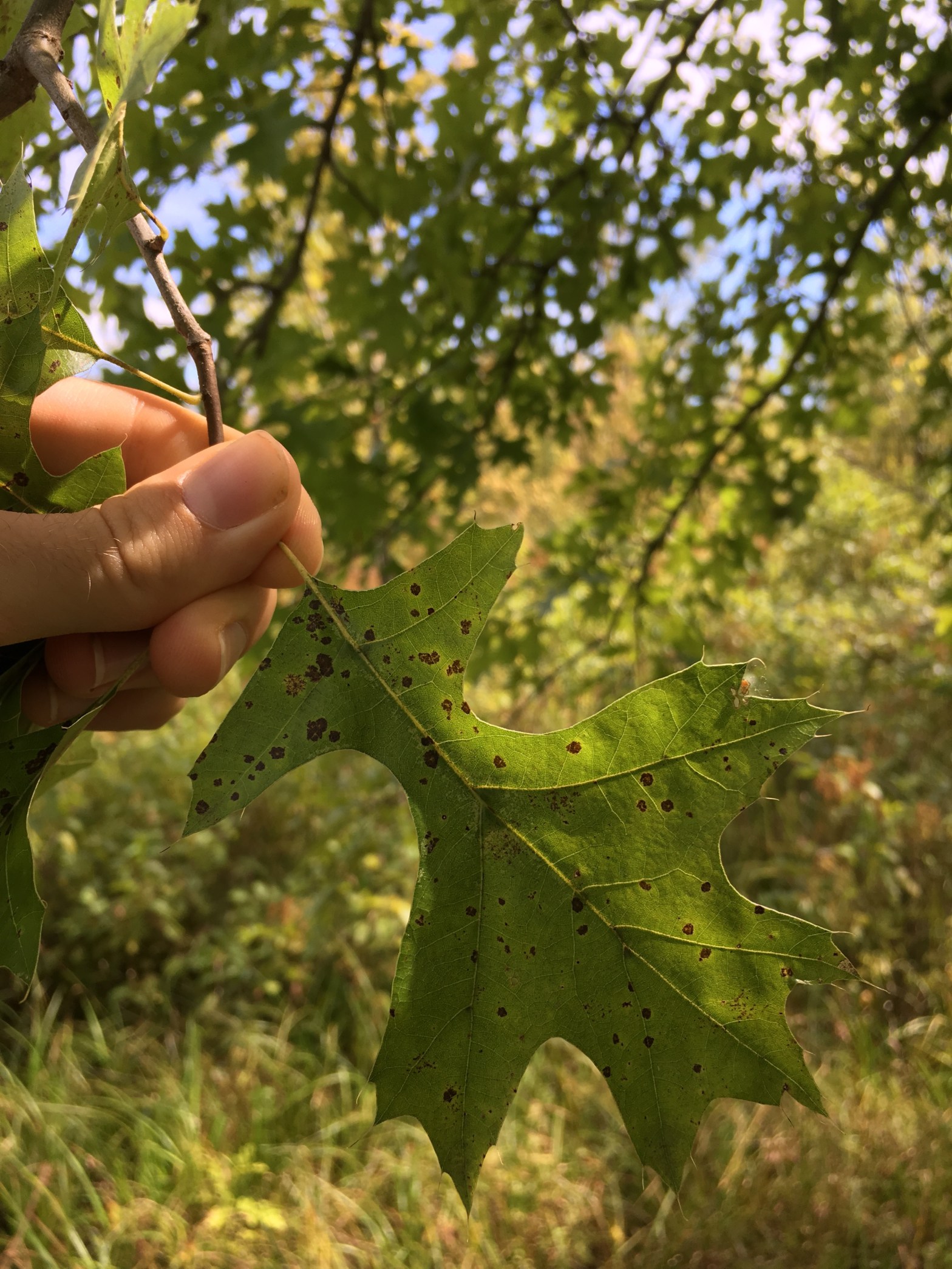
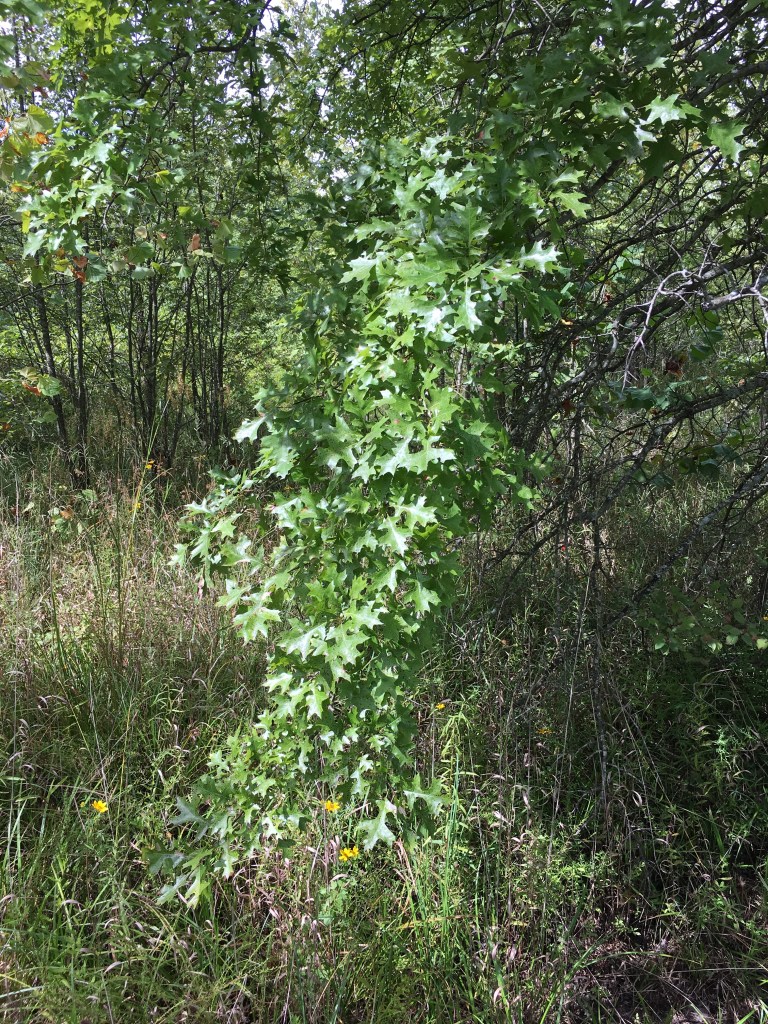
As it naturally occurs, the Pin Oak is a bottomlands tree. It grows on poorly drained, high-clay content soils, with dormant season flooding. The latin epithet palustris in Quercus palustris means something like “of swampy areas,” and it can be readily identified in the wild on the basis of its habitat. Other red oaks, like the Scarlet Oak or Black Oak, with which it could be confused, are upland species which would not tolerate the seasonal flooding Pin Oak does.

Drooping lower branches can be a problem as a landscaping tree, as they can block sidewalks.
Dead lower branches the Pin Oak does a poor job of self-pruning.

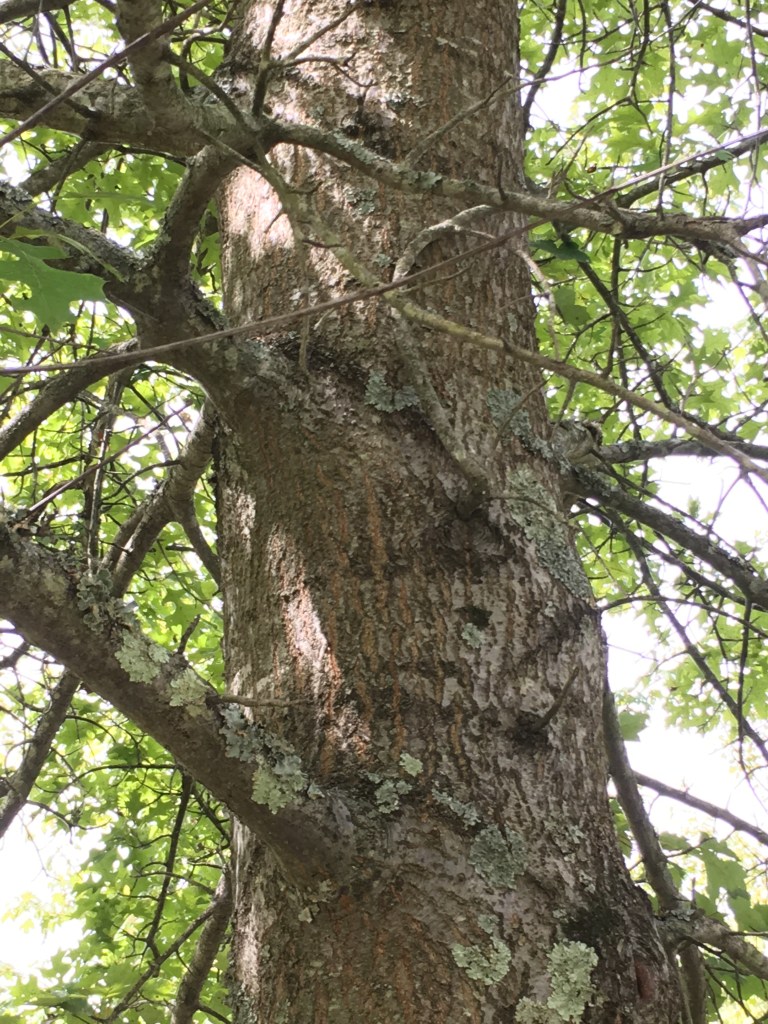
Pin Oak, however, is also a popular landscaping tree, and in this context it could be confused with other trees if identified on the basis of leaves. The key feature here, and probably the origin of its name, is the structure of its canopy. Unlike other oaks, Pin Oaks do a poor job of self-pruning, which means that mature trees have many dead, downward pointing branches, while the middle of the canopy juts straight out, and the top actually points upward.

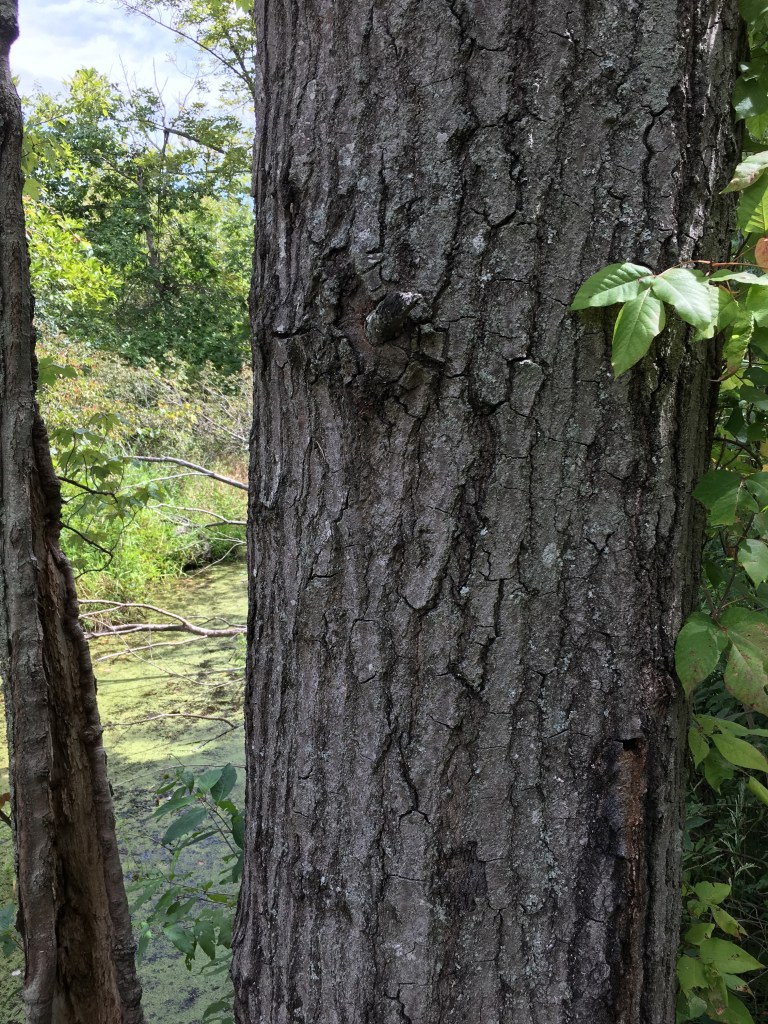
Pin Oak also has somewhat distinctive bark for an oak. It doesn’t have the deep furrows, or scaly appearance of other oaks. The grey-red coloration reminds me somewhat of pines.

Pin Oak in its natural habitat: floodplains.
Another denizen of the floodplain: the Cardinal Flower

Mushroom Lingo #7: Mycorrhizal

Like “veil,” this word is always a spelling challenge for me, although probably with better reason. Mycorrhizal is pronounced “MY-ko-RYE-zal.” It comes from the Greek words for fungus (“myco”) and root (“rhiza”). A mushroom is mycorrhizal, as opposed to saprobic or parasitic, when it depends on a symbiotic relationship with a plant for survival.

https://commons.wikimedia.org/wiki/File:Mutualistic_mycorrhiza_en.svg

In a previous post I mentioned that most mycorrhizal relationships are between a fungus and a tree, but actually there are two main types of mycorrhiza: Ectomycorrhiza and Endomycorrhiza. Ectomycorrhizal fungi weave a kind of net between plant cells within the root cortex that allows for nutrient exchange. The hyphae of the fungus don’t penetrate the plant cells, rather they encase them, hence “ecto”mycorrhizal. This is the kind of relationship mushroomers are talking about when they call a fungus “mycorrhizal,” and it’s almost always (never say never! especially when it comes to fungi) with a woody plant.

Endomycorrhiza, in contrast, penetrate the cell walls. Evolutionarily speaking, this relationship pre-dates ectomycorrhizae, dating back to when plants first colonized land 400 Million Years ago (or so). Before plants had well developed root systems they may have relied on fungi for obtaining nutrients from soil. Well, actually, they still do rely on fungi for certain nutrients. 80% of plant families form endomycorrhizal relationships with fungi, including many crop species like wheat. It’s just that these ancient fungi belong to a single phylum, Glomeromycota, with only around 230 species—none of which really produce “mushrooms.”

One last note on the coolness of mycorrhizae. At least one mycorrhizal fungus, Laccaria bicolor, has been found to “lure and kill springtails to obtain nitrogen, some of which may then be transferred to the mycorrhizal host plant.1” For those of you who don’t know, springtails are those tiny little maggot-like hexapods that infest morels and other mushrooms. I always thought, poor mushrooms getting eaten up by a bunch of bugs! But it turns out mushrooms are capable of deliberately luring insects in order to paralyze them with toxins and harvest their nitrogen—which is then exchanged through mycorrhizae for the products of photosynthesis. (I still don’t feel bad for the springtails). Check out here for more info.

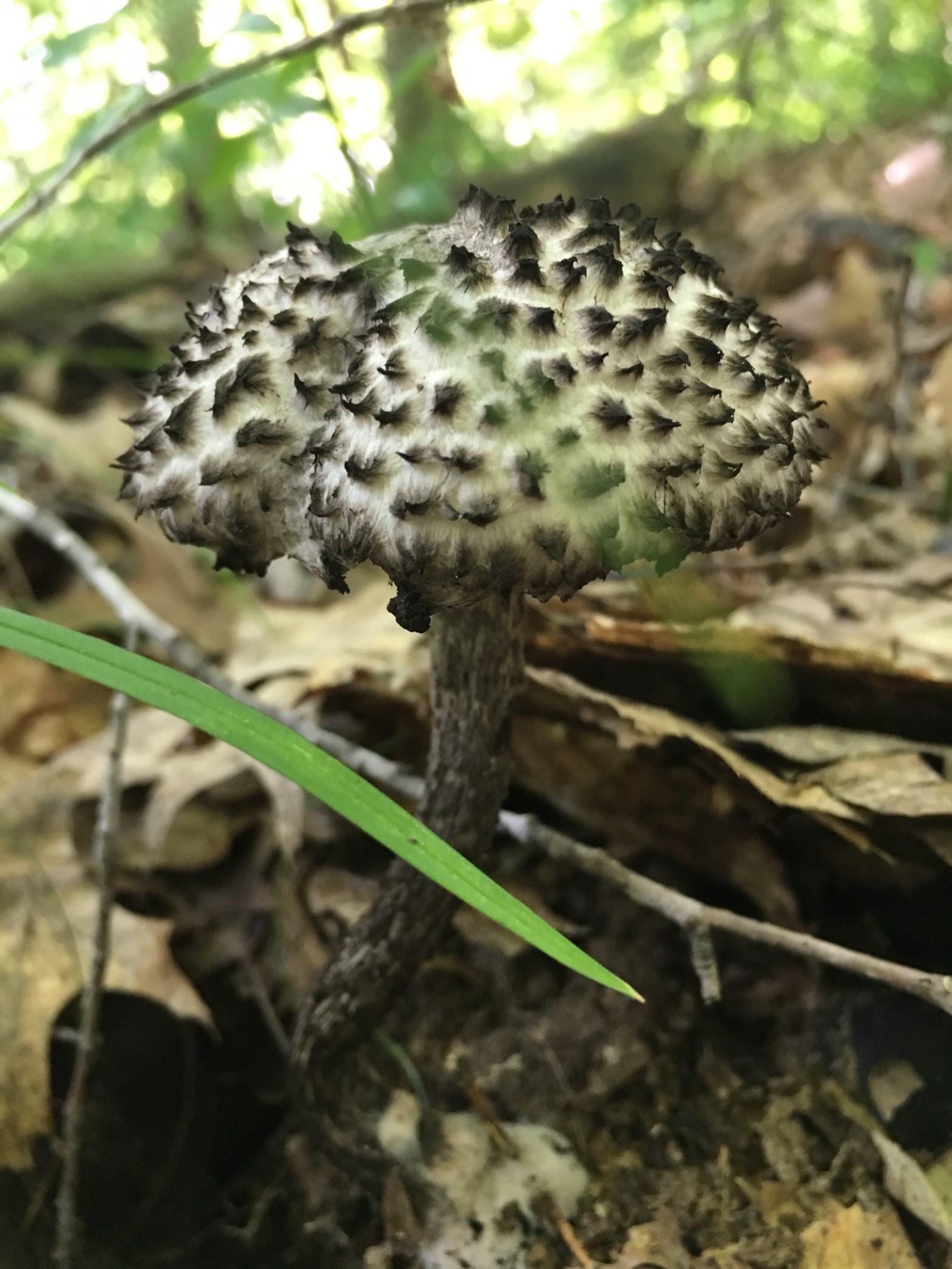
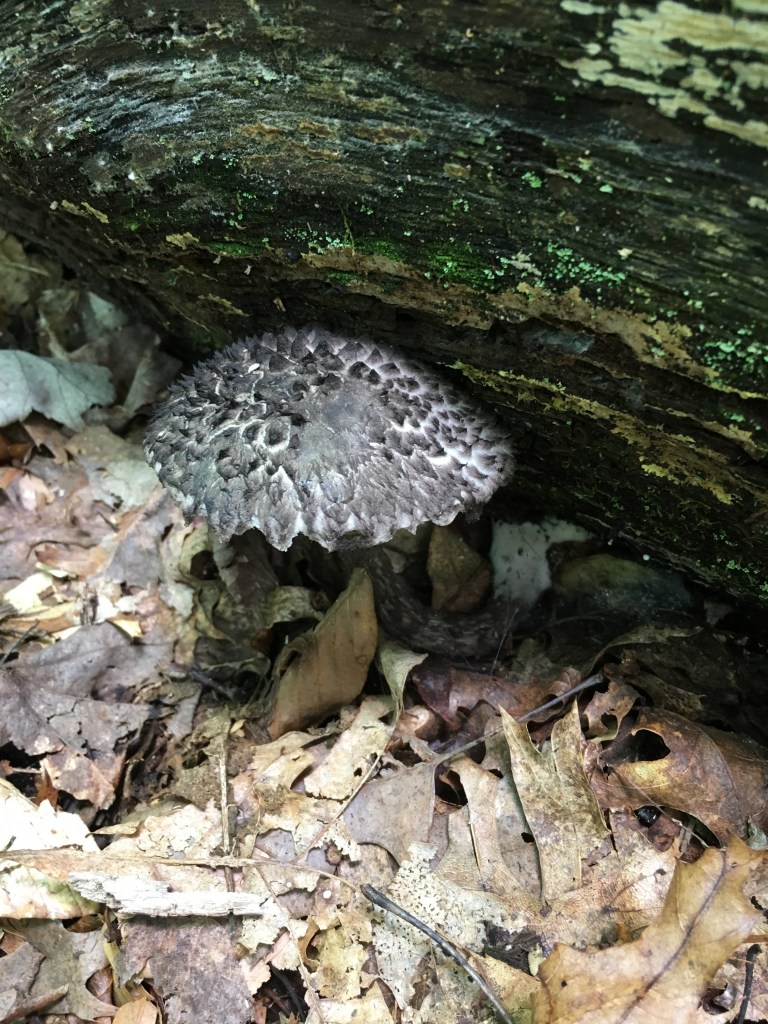
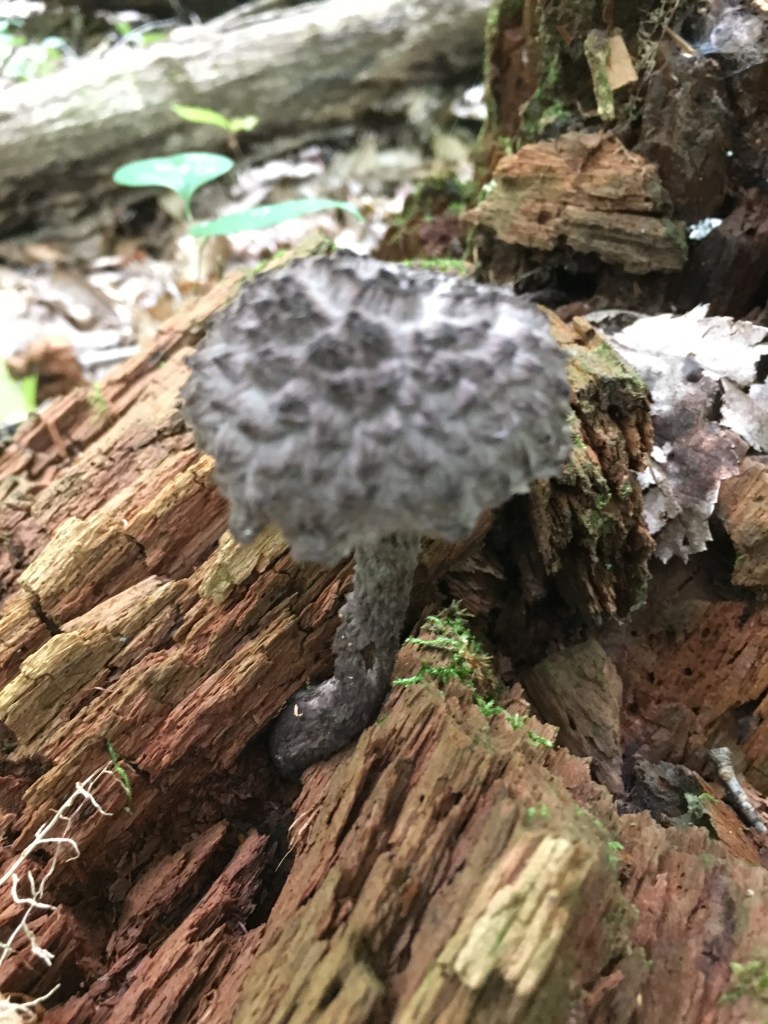
The practical question of determining whether a mushroom is mycorrhizal or not is trickier than it might at first seem. Many fungi growing apparently from the ground could actually be growing from buried wood. You might have to dig around a bit, and even then it might not be possible to tell. Other times I have found mycorrhizal fungi seemingly growing from or around decaying wood. Old Man of the Woods (picture up top), for example, is a mycorrhizal fungi, but I have often found it growing out from under, or even from dead wood.

It is totally possible that the same mushroom could play different ecological roles under different conditions, or that a mycorrhizal species could “supplement its income” so to speak by also decaying wood. The best bet for knowing a species to be mycorrhizal is if you find multiple mushrooms of the same species spread out, rather than clustered together as they would be if they were growing from a clump of buried wood.

  1. https://en.wikipedia.org/wiki/Mycorrhiza#Ectomycorrhiza

Mushroom Lingo #6: Saprobic

A mushroom is saprobic if it survives by decomposing dead organic matter. This separates it from parasitic fungi (who feed on living organic matter) and mycorrhizal fungi, which receive sugars from trees in exchange for certain nutrients.

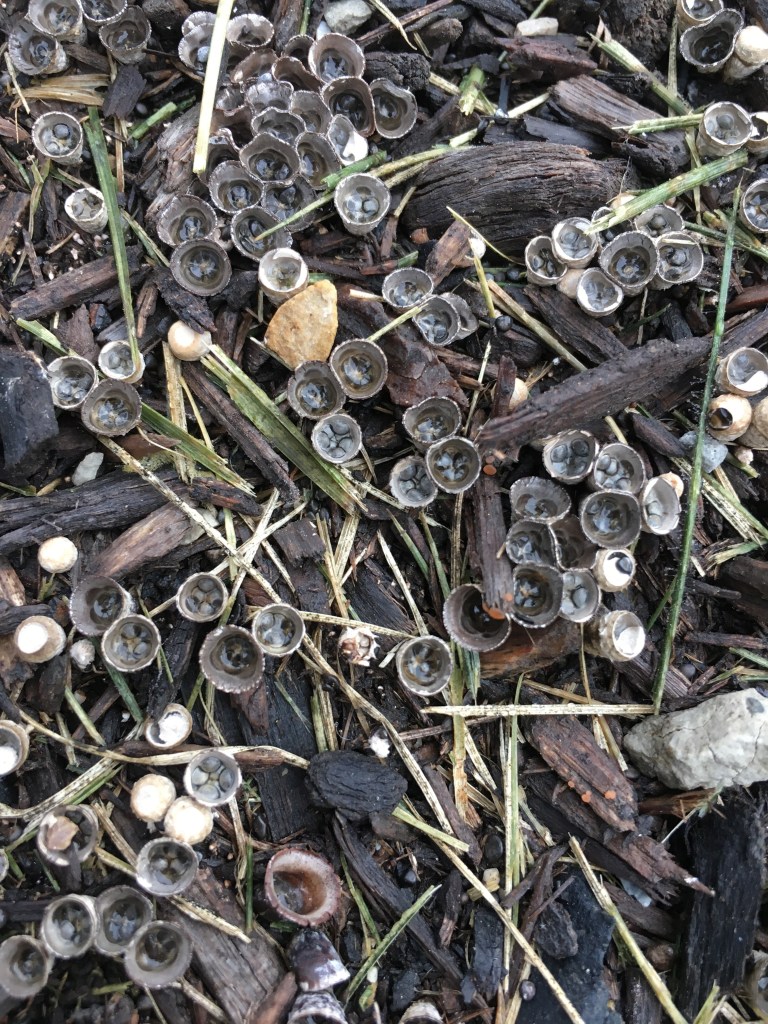
Many urban mushrooms are saprobic. For example, the parasols above, which are decomposing the wood chips in my front yard. Bird’s nest fungi, such as the ones below, are also wood chip loving saprobes:

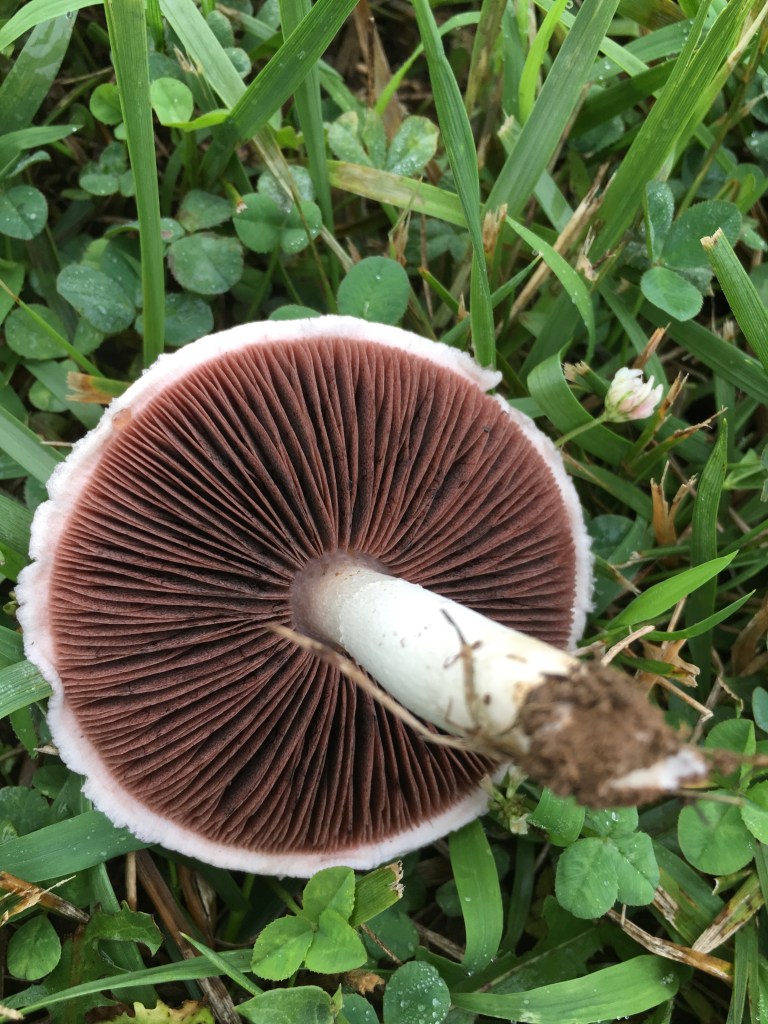
Mushrooms growing in grass are typically saprobes. It is rare for mushrooms to form mycorrhizal relationships with plants other than trees (but more on that in a future post!).

Agaricus campestris (probably). Note the partial veil remnants around the margin of the cap

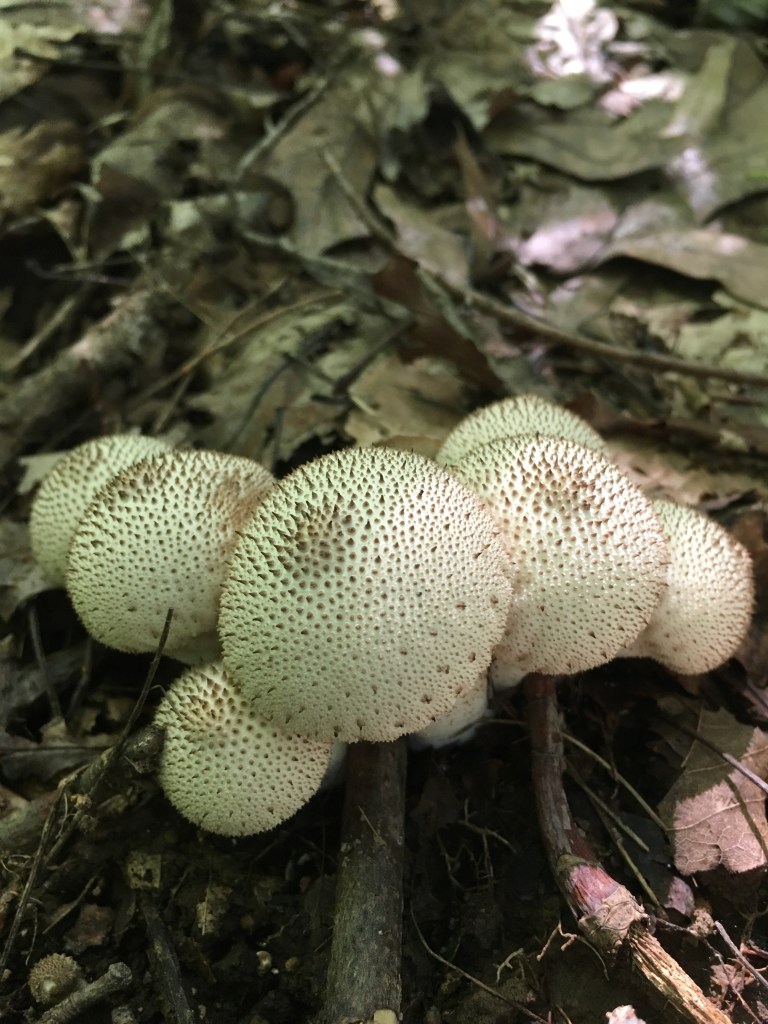
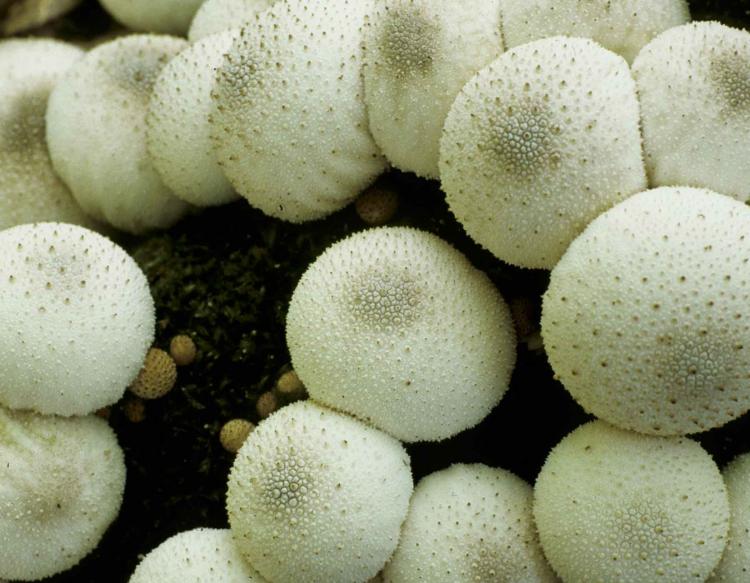
Saprobes can be further separated based on whether they grow “terrestrially” or on wood. This can help distinguish otherwise similar species such as the Common Puffball and Pear-shaped Puffball.

Photo Recap: My First Online Mushroom Foray

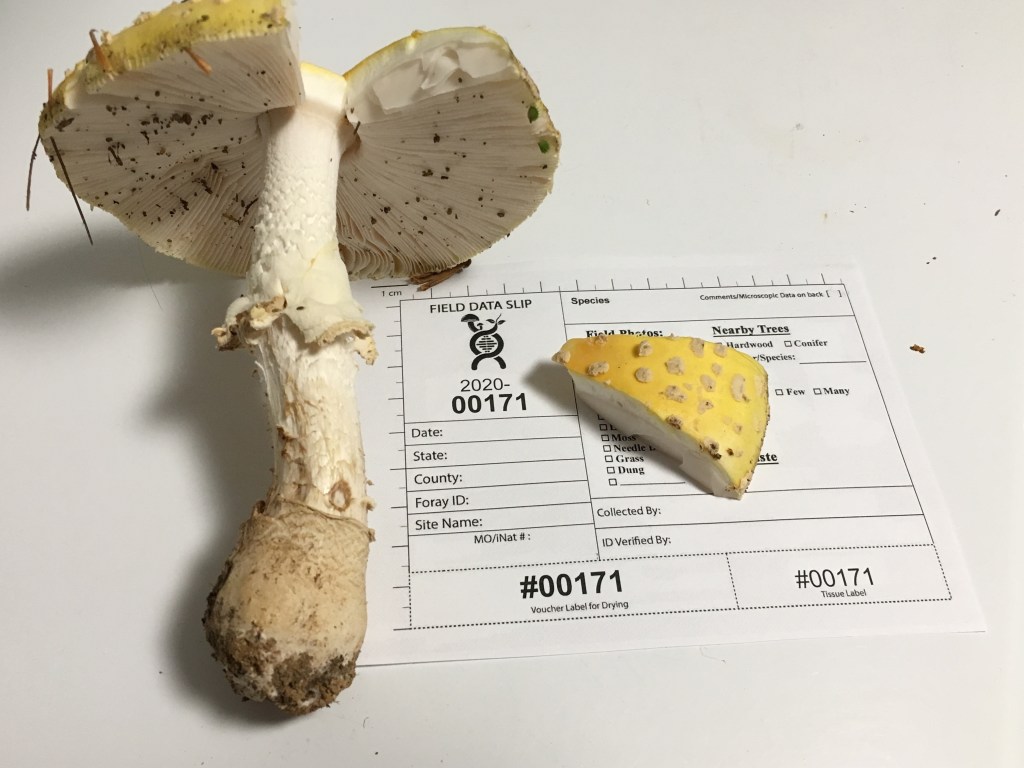
What is an online mushroom foray, you say? It’s actually not an experience unique to the pandemic, and it’s not hunting virtual mushrooms. You go mushroom hunting like normal, only you document your finds a little more carefully and upload them online. They last for a certain period of time, this one a week, and span a certain geographical range, Indiana, in this case. There is an online sense of community because everyone is uploading their finds to the same project, seeing what other people are seeing more or less synchronously, and sharing IDs. There’s also an element of competition because there are standings for who has observed the most and identified the most. It’s like mushroom olympics. I started out in second, but over the course of a busy work week, I’ve plummeted to seventh 😦
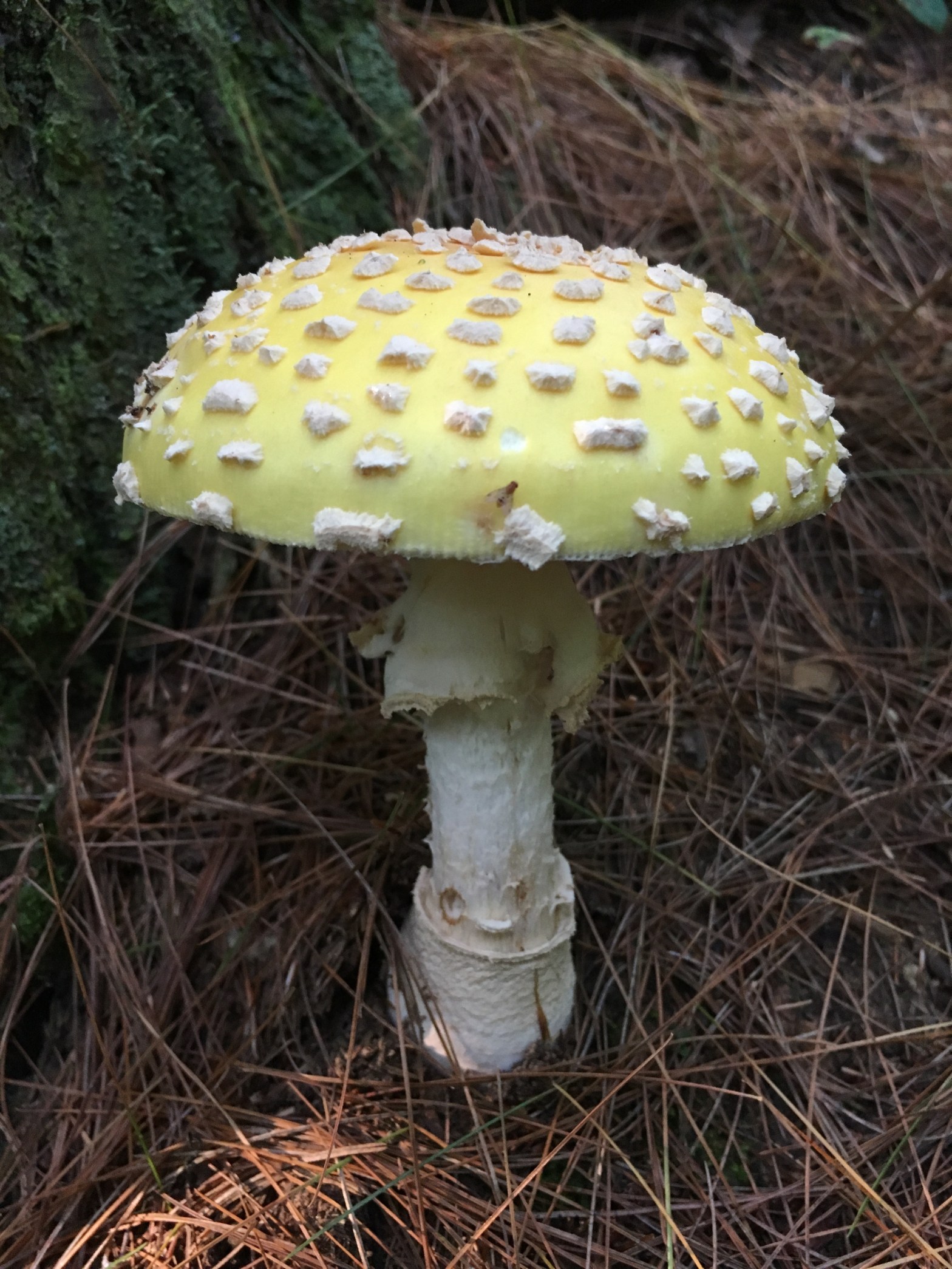
Amanita muscaria var. guessowii

By the way, the word “foray” is worth note. It is both an incursion and an excursion. Incursion in the sense of raid, invasion, sudden attack on an enemy territory. Excursion in the sense of a trip, a deviation from the regular path. This ought to be some kind of crossword clue, in my opinion.

Also interesting is that while you forage for mushrooms, rather than foray for them, at the end of the day, it’s a foray and not a forage!

Anyways, here are some of my most interesting finds:

Stinking Dapperling
Cross-veined Troop Mushroom: Xeromphalina kauffmanii
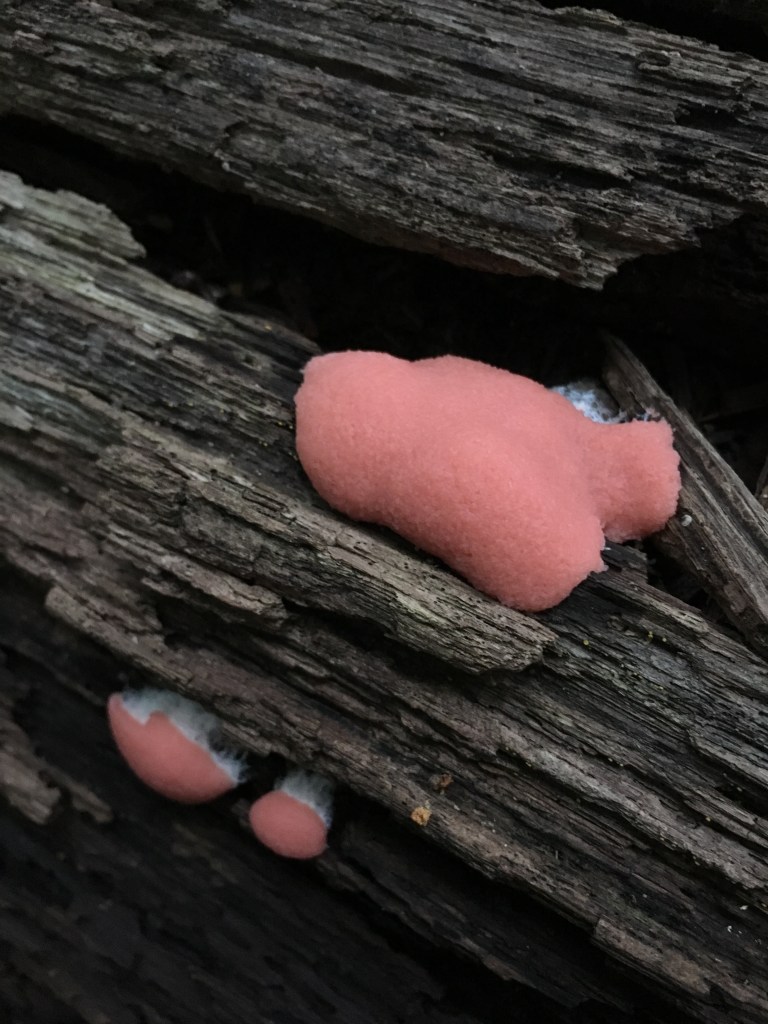
Raspberry Slime Mold (not a fungus)
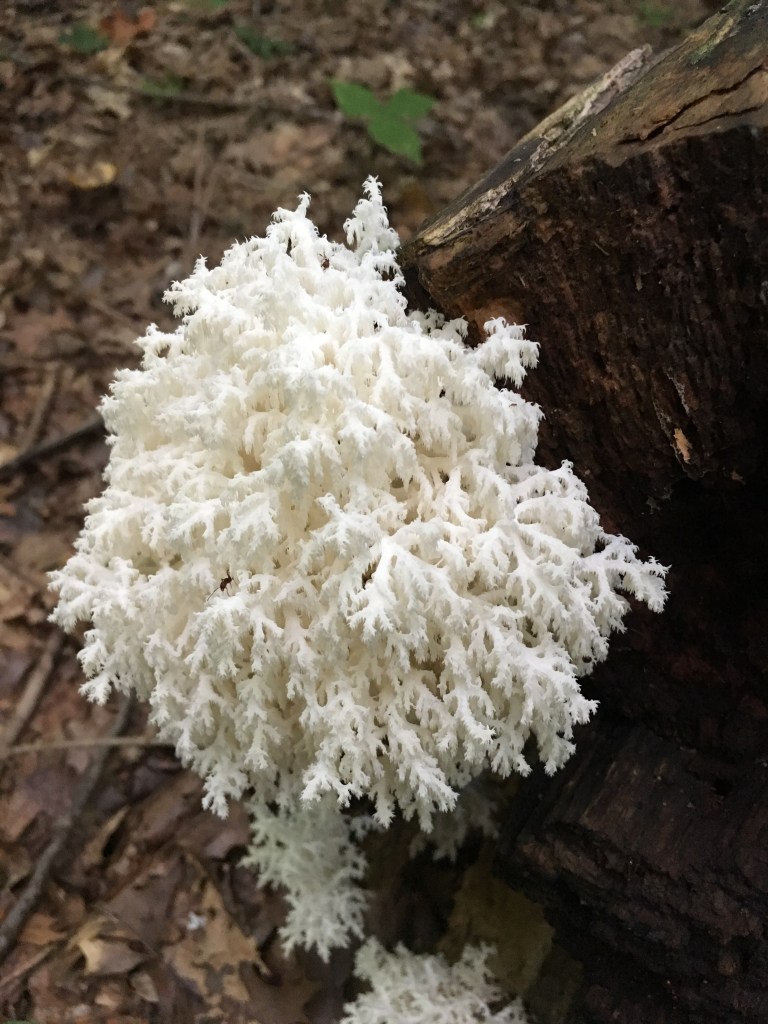
Coral Tooth Fungus
Good old Turkey Tail
Mutant Ornate-Stalked Bolete

In the Spotlight: The Chicken Fat Mushroom

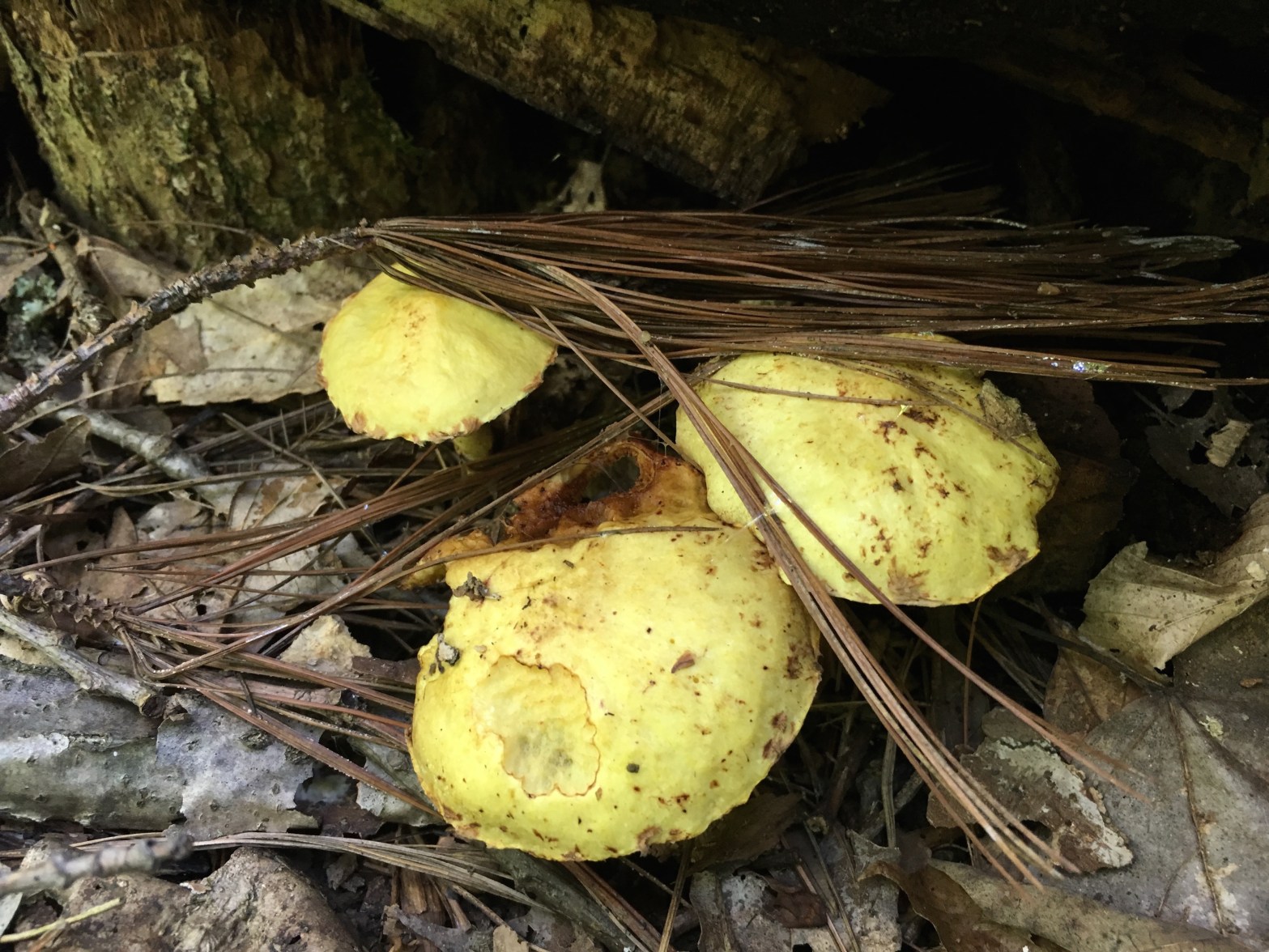
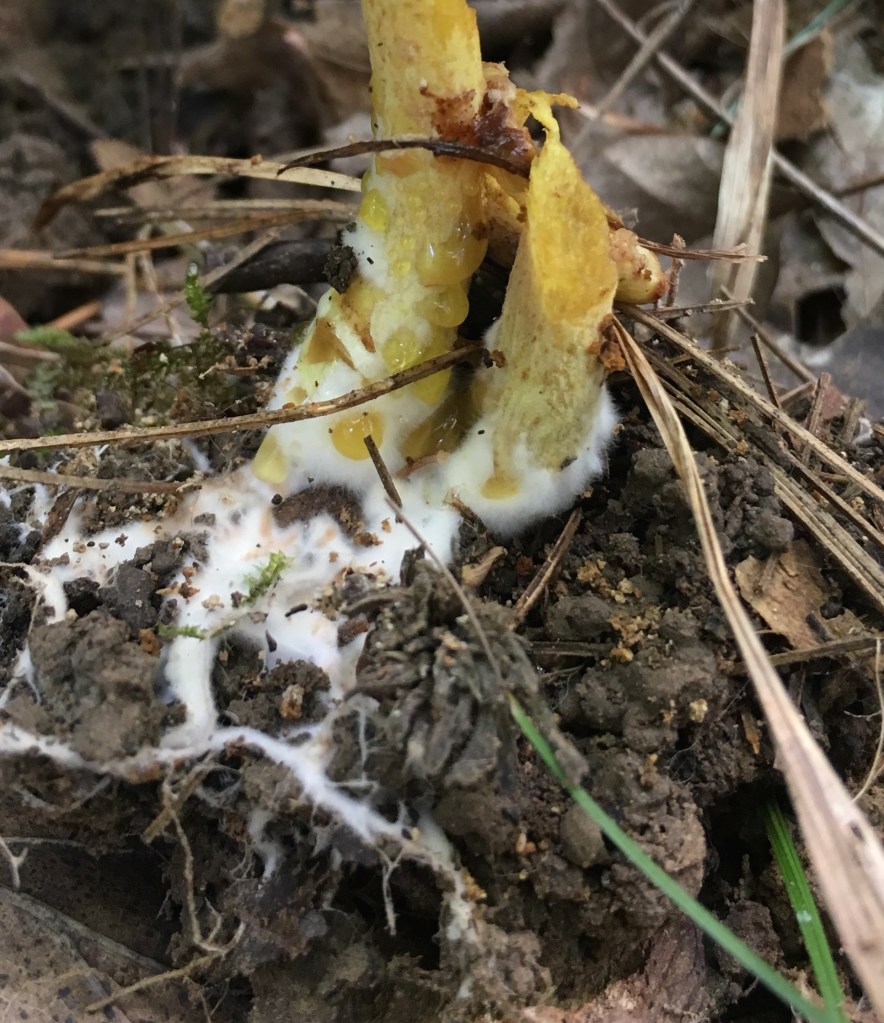
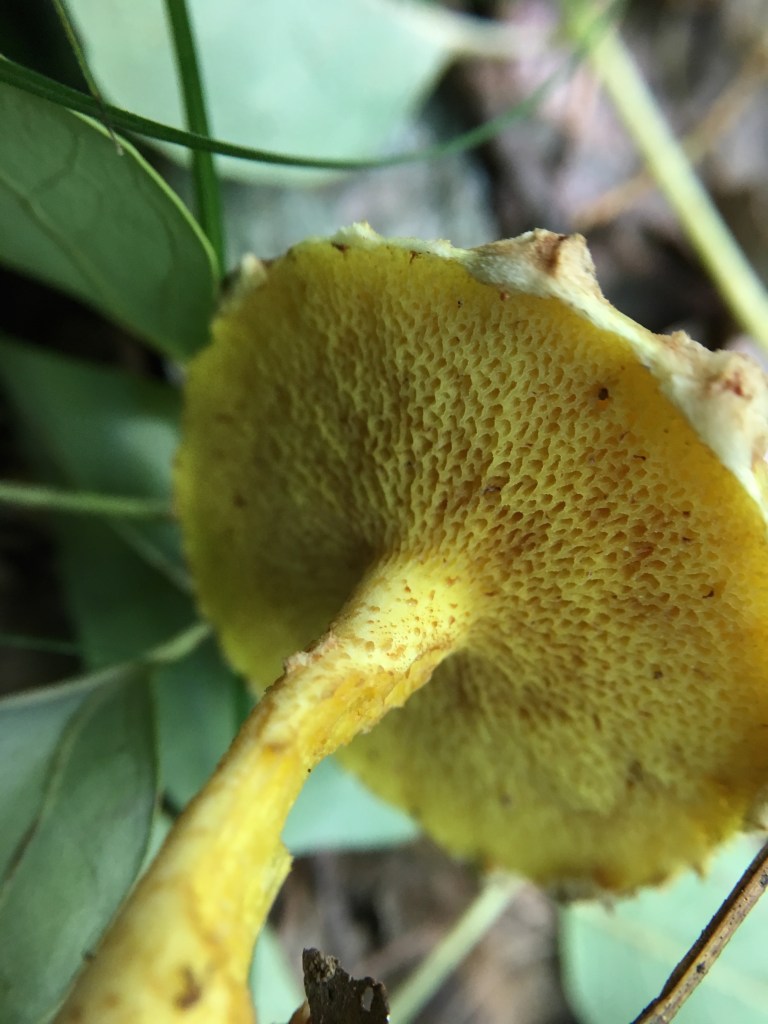
The Chicken Fat Mushroom, or Suillus americanus, has a doubly interesting name. Firstly, why “Chicken Fat”? I think it’s an incredibly apt name, given the overall slimy/tackiness of the mushroom and these fat-like globules that seem to coagulate around the base:

Base of the Chicken Fat Mushroom showing the “fat” and white mycelium

And secondly, there is the specific name “americanus.” What makes this mushroom American? Most obviously, there’s its geographical distribution. Suillus americanus is not found in Europe, which in some ways makes it easier to describe and define. Many North American species are based off of European taxa, which can be confusing because sometimes the North American reality doesn’t line up with what European sources say are the distinctive features. In the case of the Chicken Fat mushroom, however, the species was defined based on North American specimens and so the book description and the field reality line up quite well.

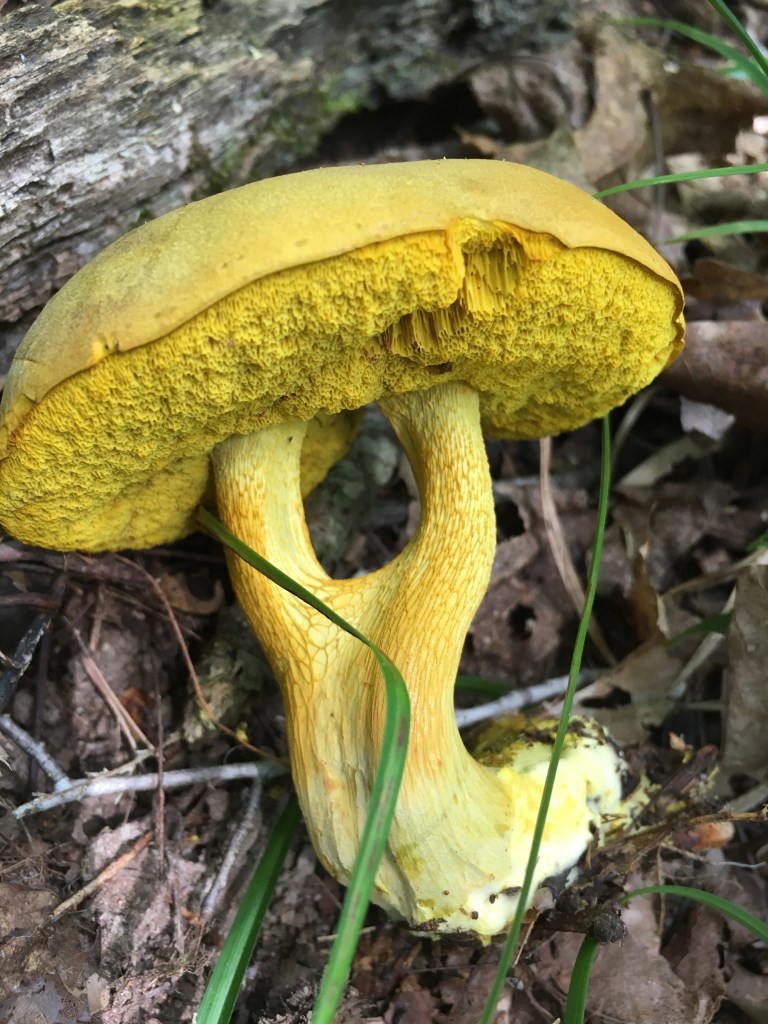
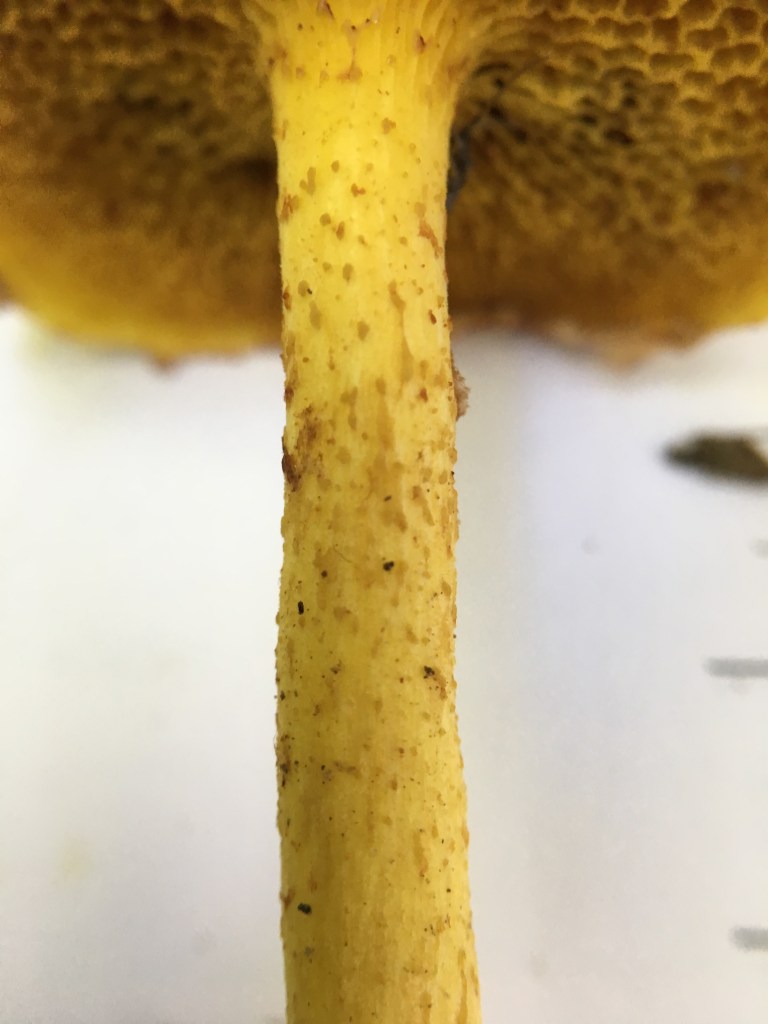
Suillus americanus is part of the genus Suillus (pronounced Sue-il-us), which is a fairly distinct subsection of the Boletes, characterized by their habitat (growing under conifers), their sliminess, their “glandular dots” on the stem, and remnants of a partial veil hanging from the cap margin.

Remnants of a partial veil hanging around the margin of the cap
Glandular Dots

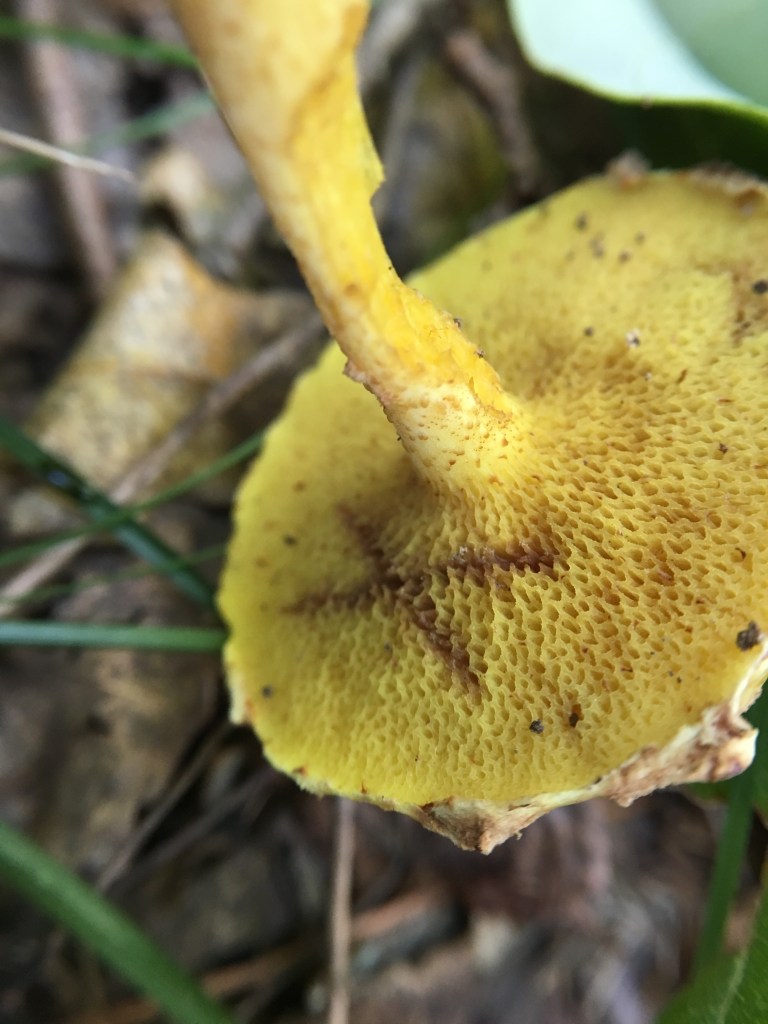
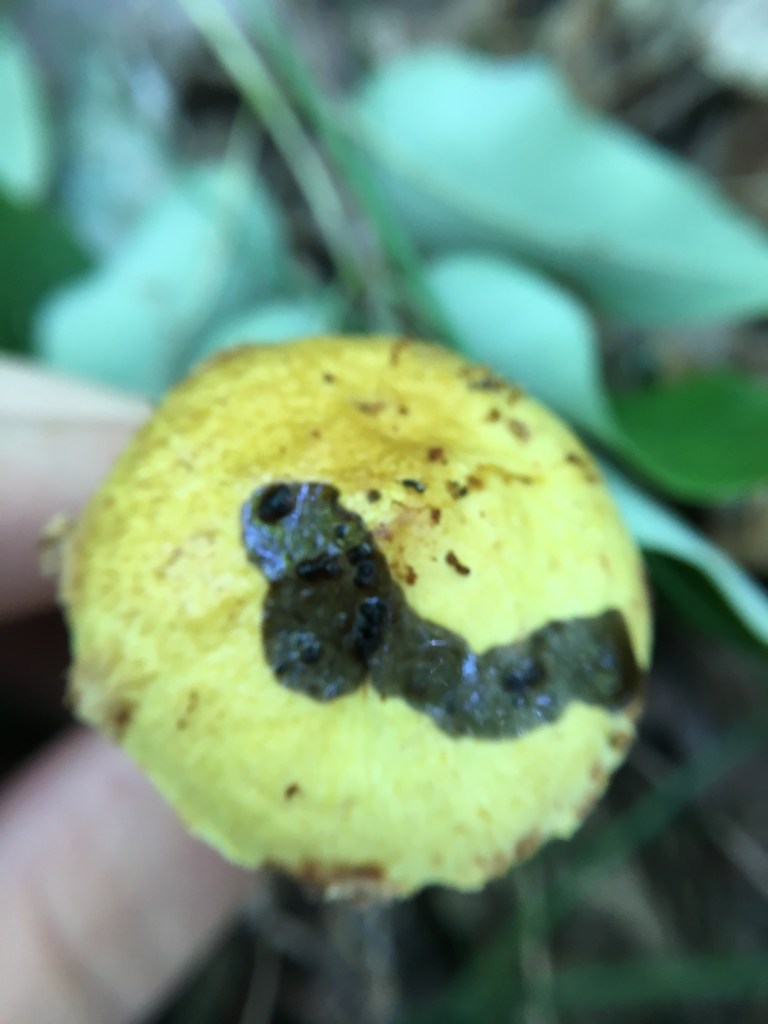
Other distinctive features of the Chicken Fat mushroom include the white basal mycelium, the reddish bruising pore surface, and an interesting chemical reaction. KOH, or potassium hydroxide, is a strong base used to identify some mushrooms. When applied to the cap of Suillus americanus it turns an inky black:

And that’s about all there is to the Chicken Fat Mushroom. It is considered edible, but it’s rather insubstantial and slimy, so I personally have no desire to give it a try, appetizing as its name may—or may not—be.

Mushroom Lingo #5: Slime Veil

Yet another kind of veil! The good news is after three posts (partial veil, universal veil, and now slime veil) I think I’ve finally figured out how to spell it: v-e-i-l.

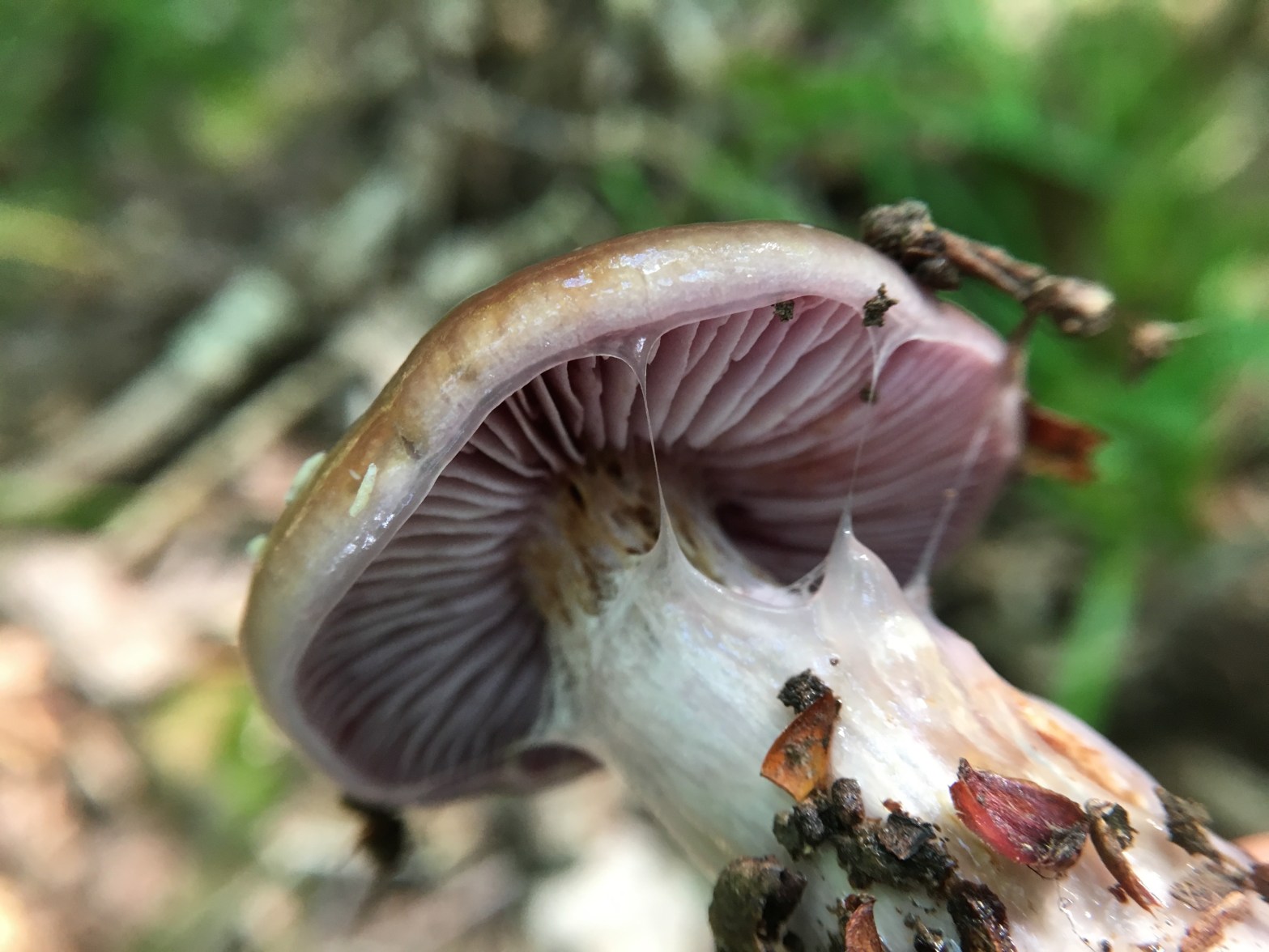
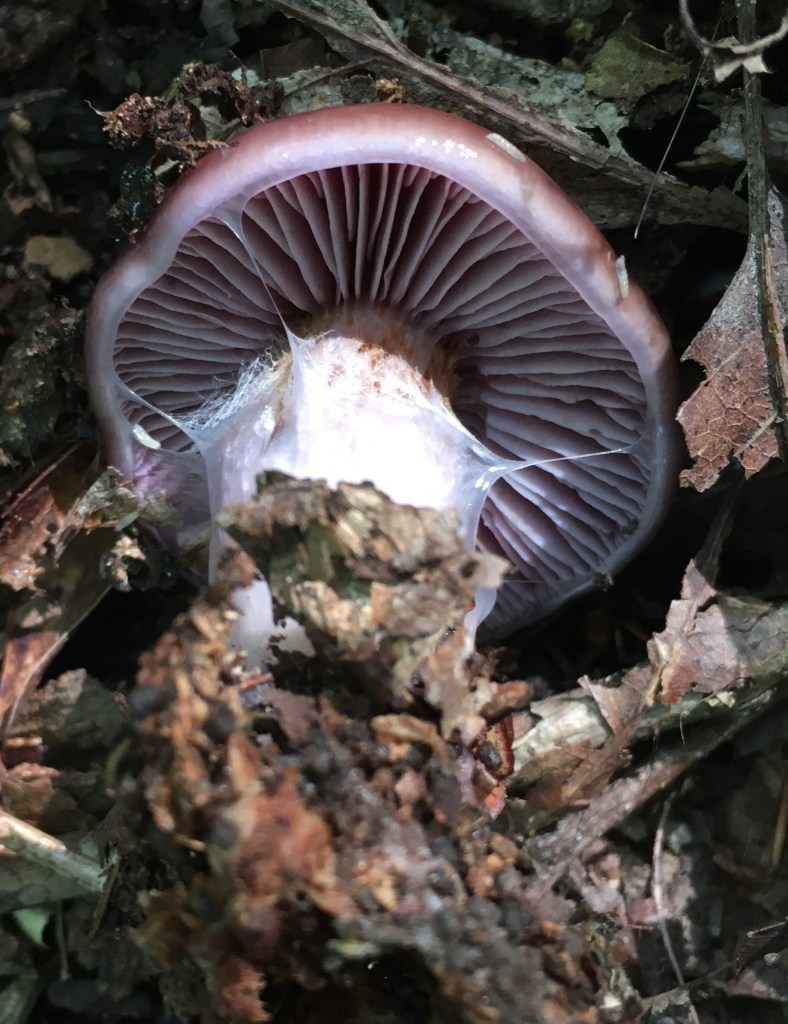
The spelling of the word is to me almost as strange as the thing itself. A slime veil is basically a kind of universal veil, only it is made out of gluten instead of tissue. (Gluten is also responsible for the sticky, gluelike texture of wet dough.)

Most mushrooms with a slime veil fall under the genus Cortinarius, which is also one of, if not the largest genus in the fungal kingdom, with something like 1000 species. The vast majority of these are not yet well understood in North America, so identifying a “cort” down to the species level is a pretty dubious task.

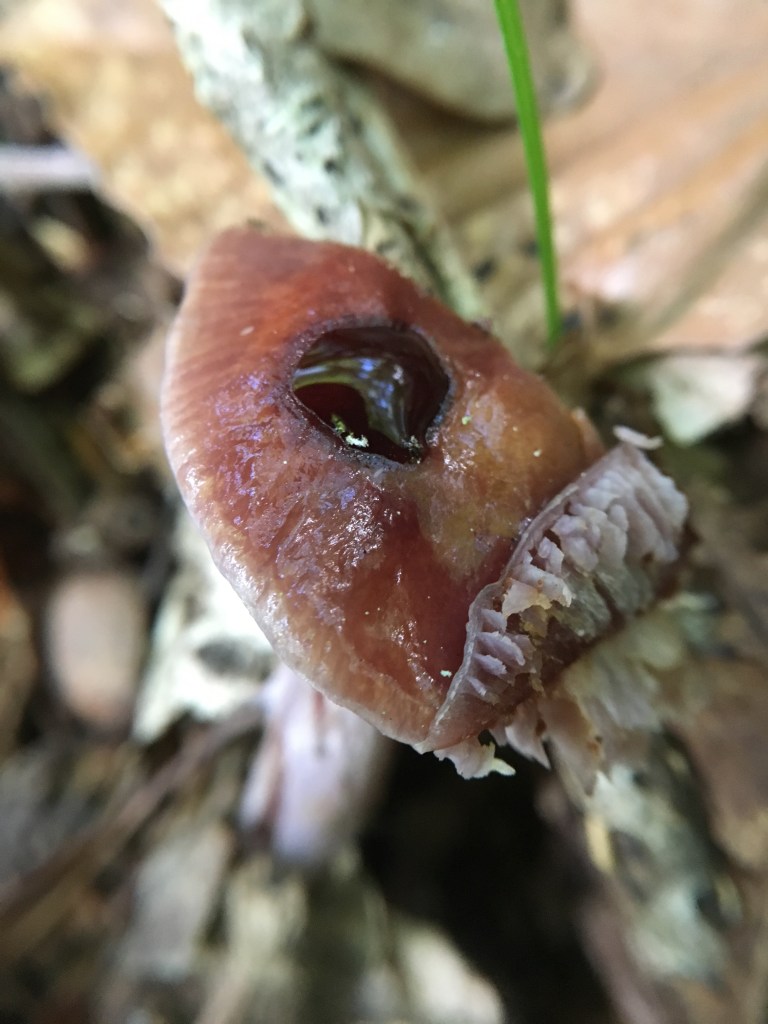
That said, I’m 73% sure the species above is Cortinarius collinitus, or a closely related varient. It matches the field guide description in everything except the KOH reaction. (KOH is a strong base used to test for certain chemical reactions). Mushrooms of the Midwest says, “KOH negative on cap and on flesh,” whereas I found both cap and flesh to slowly turn a dark purple color.

As Michael Kuo notes “several midwestern versions exist,” mine probably being one of them.

Design a site like this with WordPress.com
Get started