Recent Non-fungal Finds

Beech Blight Aphids

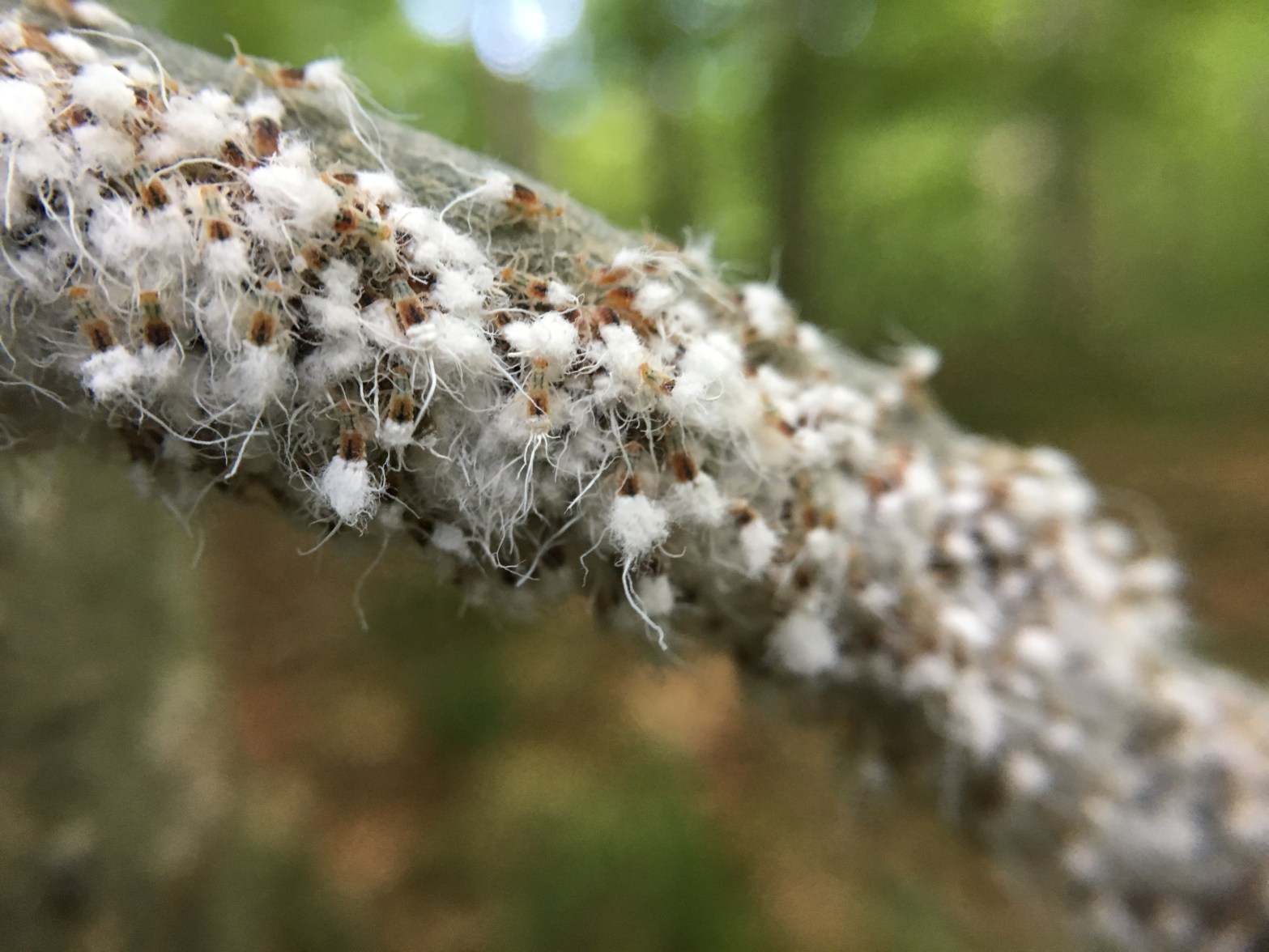
Beech blight aphids are funny little insects that feed on the sap of beech trees. They have fluffy white appendages (I’m not sure what to call them) which they wag back and forth in a kind of dance. Apparently this is a defensive mechanism, although to me this would seem to just draw attention to them (but I’m not the predator they’re worried about). You can watch a video of the dance here.

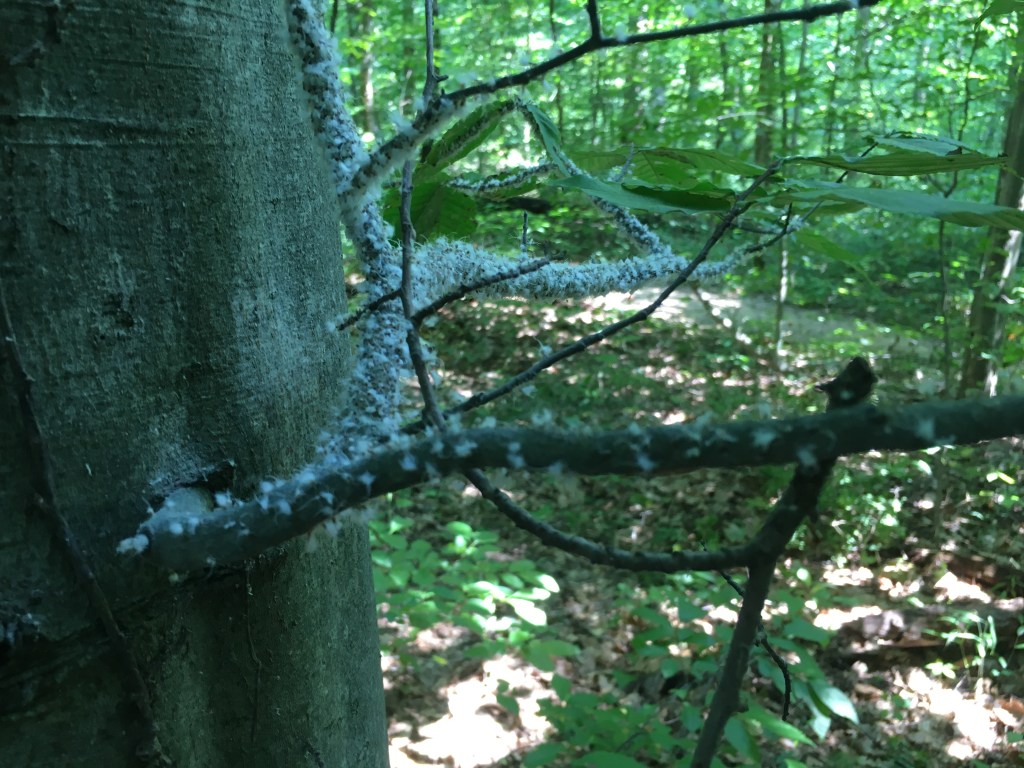
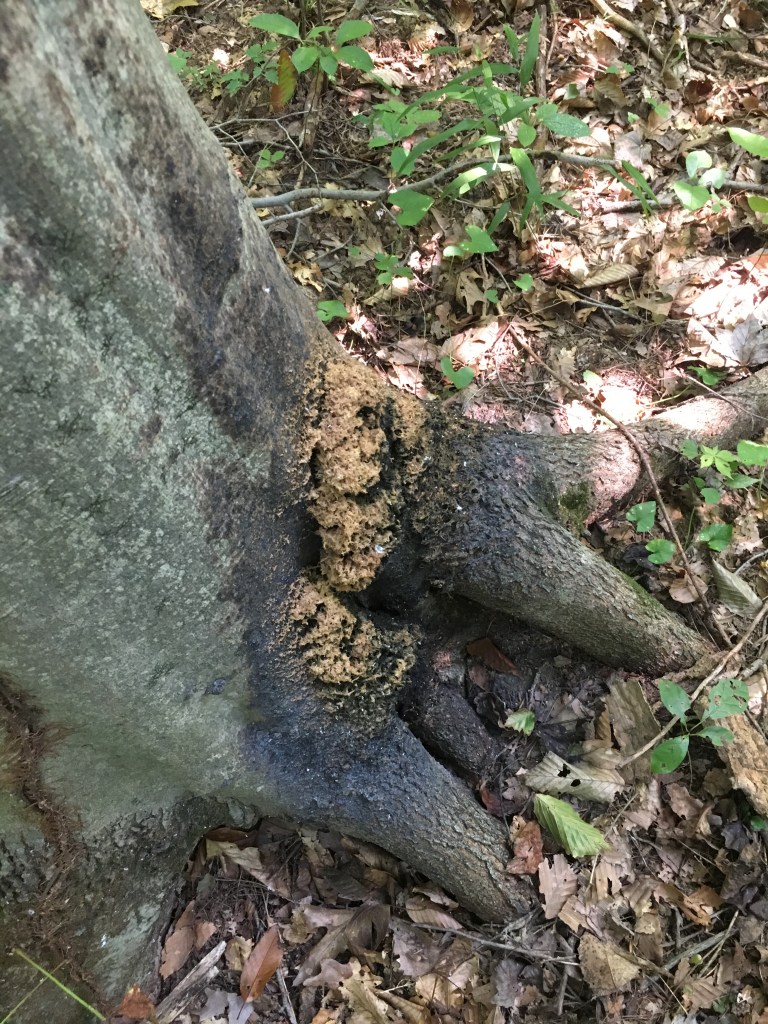
These aphids are visible from a good distance because one, it looks like snow has fallen on one particular beech limb, or a thoughtful do-gooder has knitted a one-armed version of one of those sweaters for trees, and two, because they tend to leave what appears to be a patch of charred earth underneath them.

Beech blight aphids excrete a honeydew which is itself the food for a mold fungus called Scorias spongiosa previously featured on this blog.

On the whole, beech blight aphids and their associated fungus are relatively harmless to beech trees. The most damage they will do is cause the die-back of a twig or two.

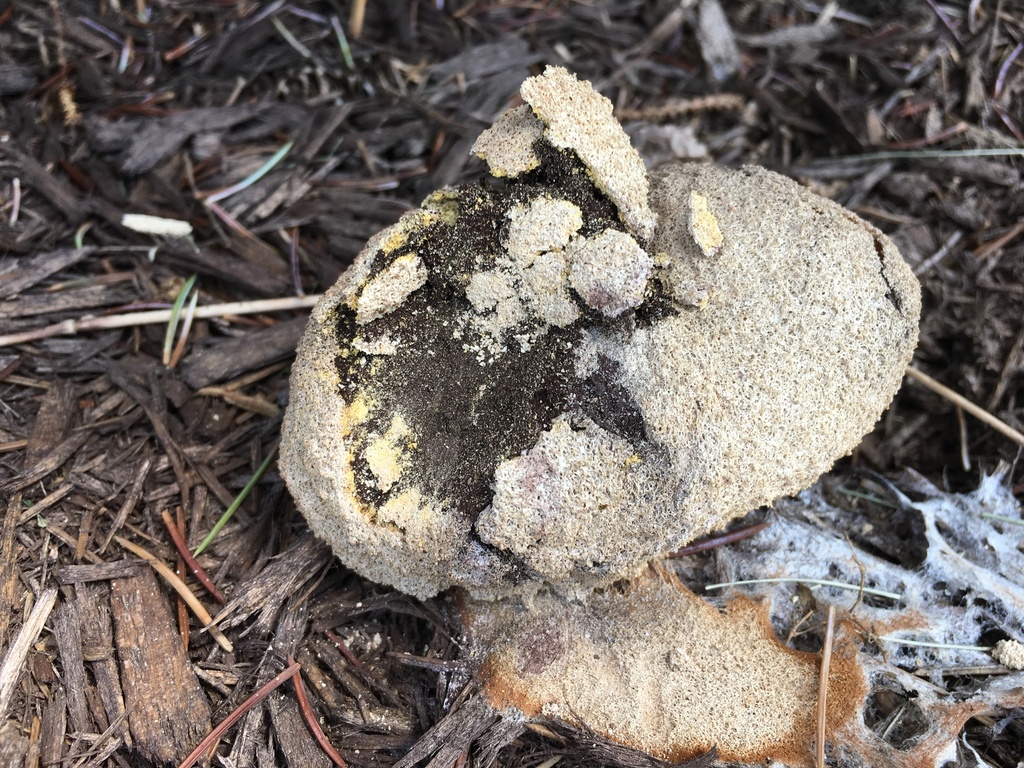
Dog Vomit Slime Mold
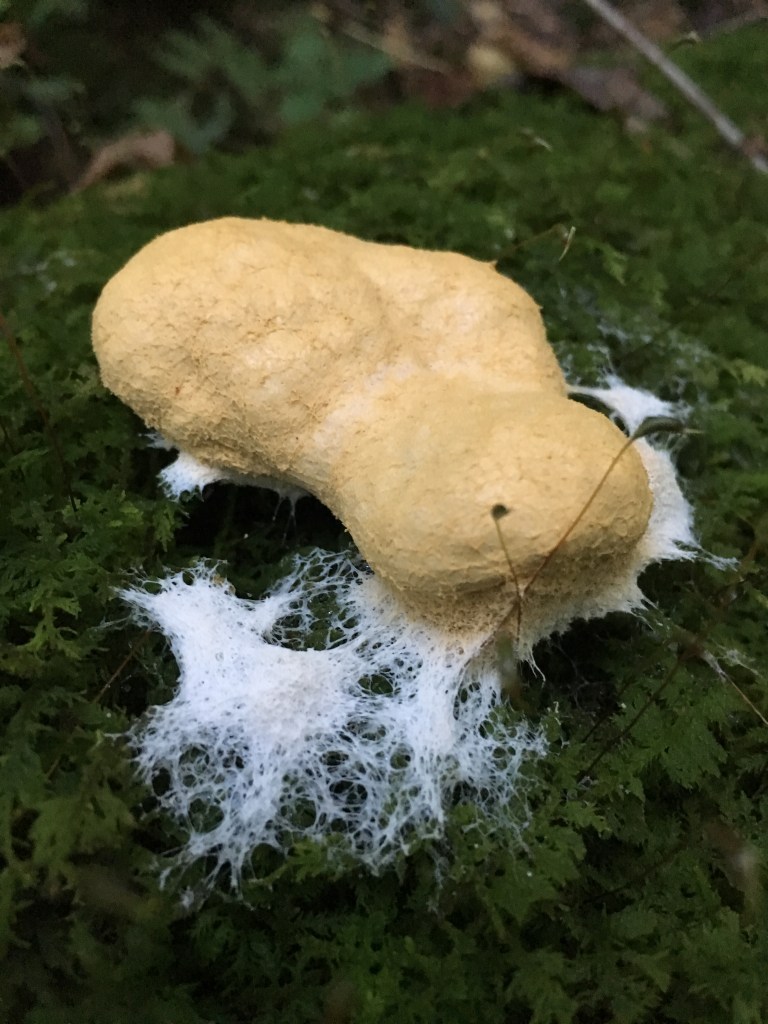
Dog Vomit Slime Mold
At the mature, spore-releasing stage.

Fuligo septica is one of the largest and most commonly encountered slime molds. Slime molds are not fungi (I’m staying true to the title of this post), a key difference being that slime molds are basically big multinucleated aggregations of undifferentiated cells (whereas fungi are truly multicellular organisms with differentiated cell types).

Fuligo septica is more commonly called “Dog Vomit Slime Mold” or “Scrambled Egg Slime Mold” and is fairly common in wet urban mulch. As it matures it darkens and dries out, releasing spores in the wind.

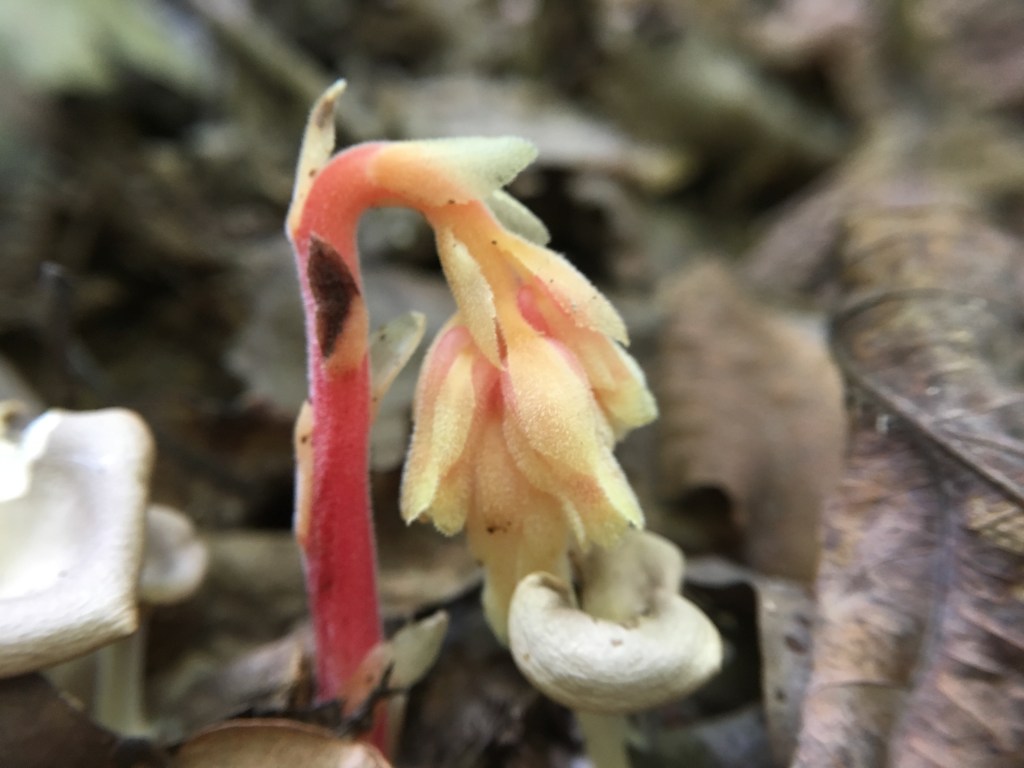
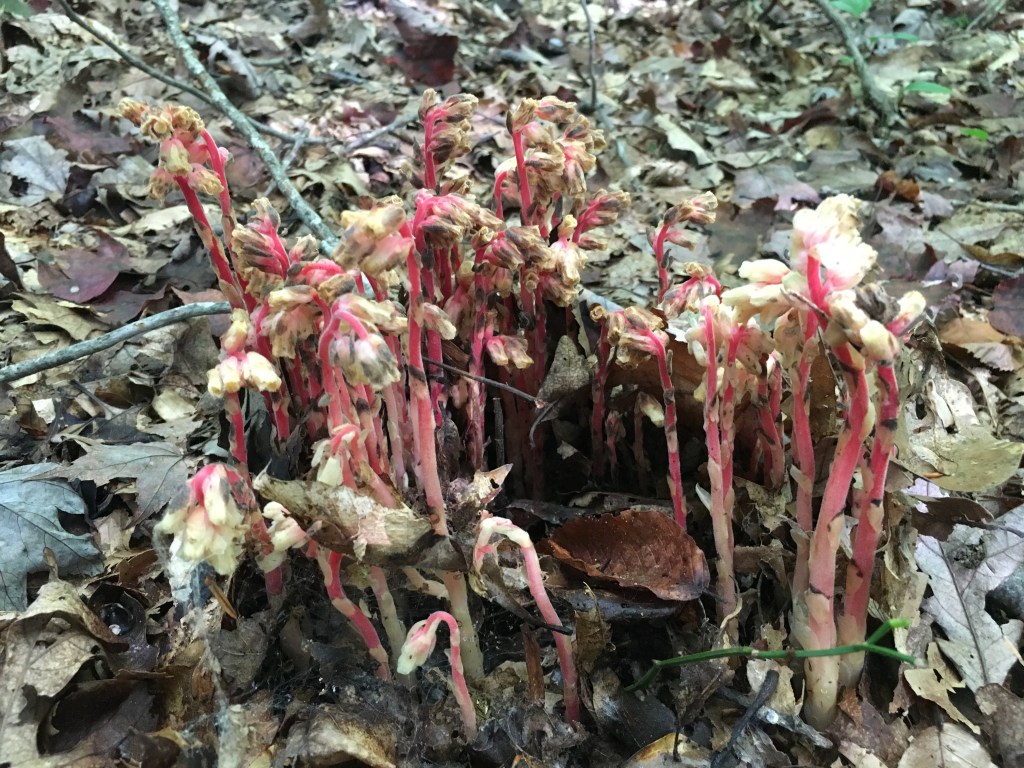
Genus Monotropa
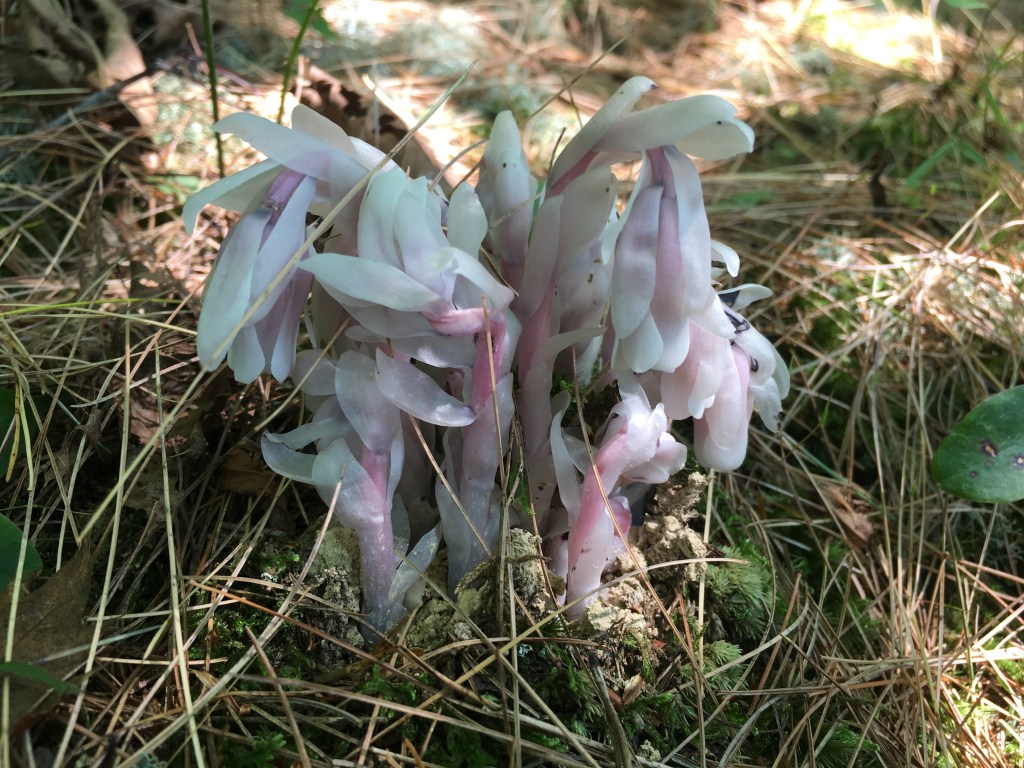
Ghost Pipes, non-photosynthesizing plants which parasitize certain mushrooms.
Pinesap.
Pinesap

I won’t say too much about these guys because I’ve written about them before. But I’ve found some especially prominent and colorful specimens recently I thought I would share.
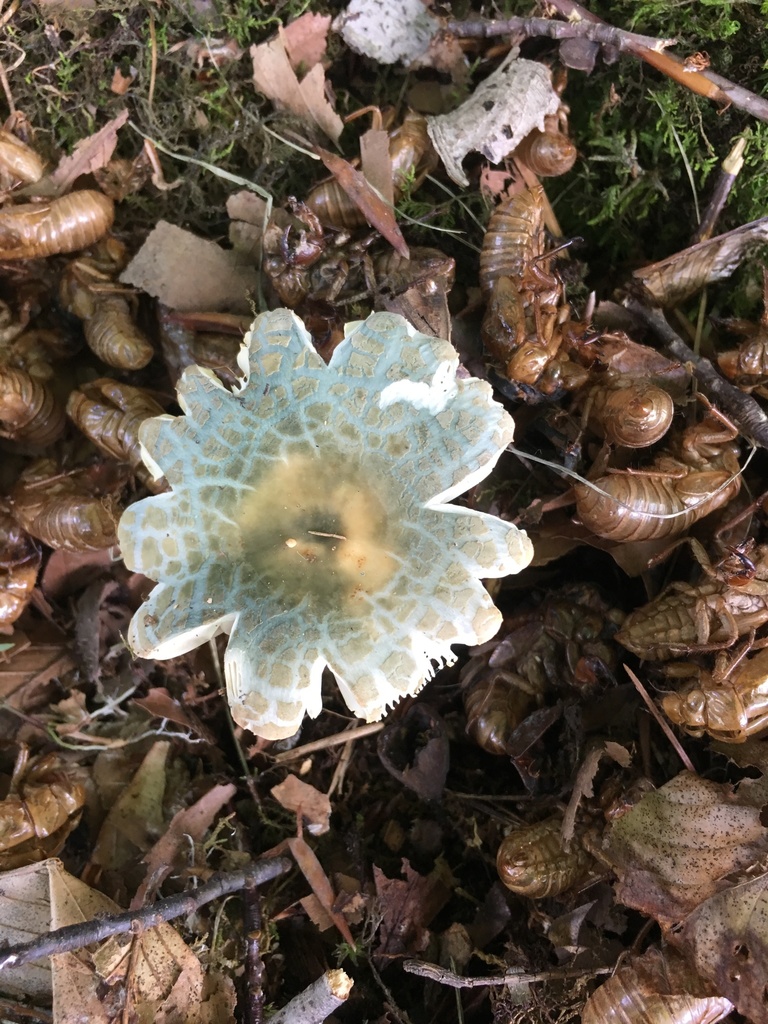
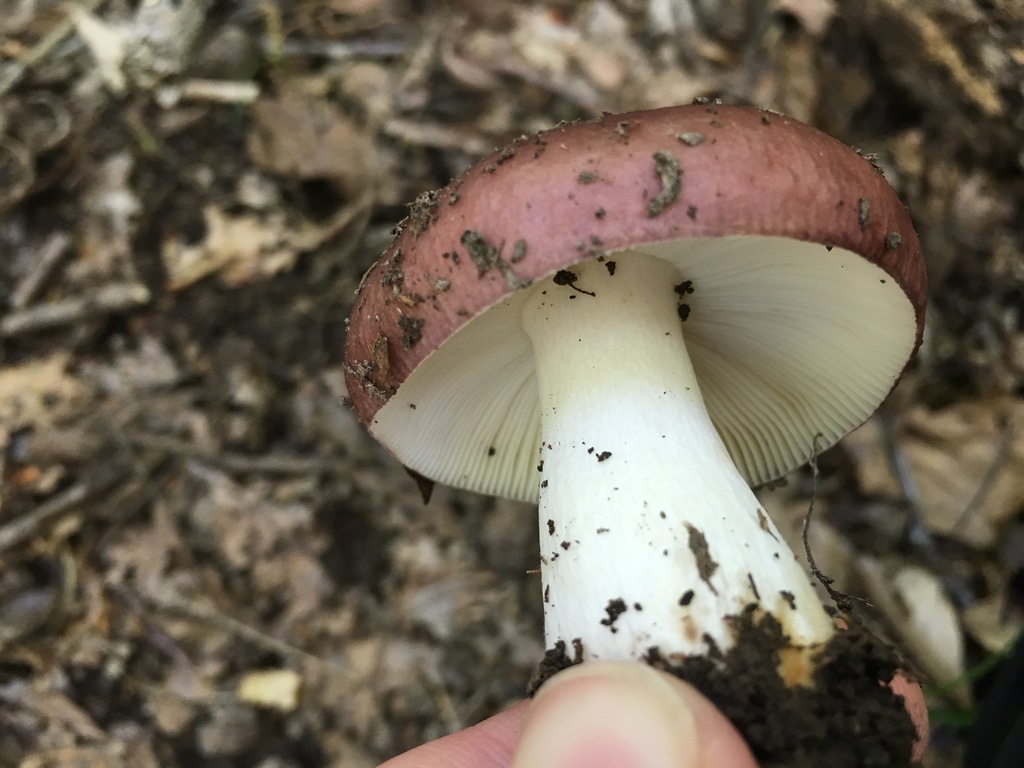
Russula Rainbow

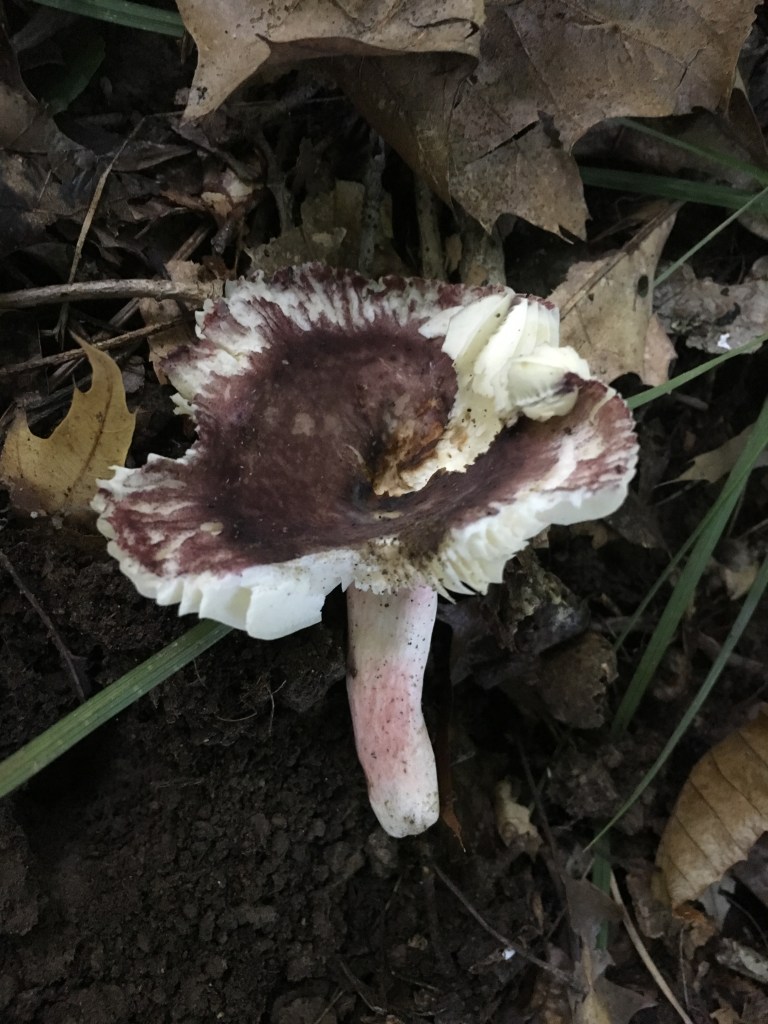
Russulas are notoriously hard to identify, so much so that most of the time I don’t even try. However, this year I feel like I’ve made some progress due to some colorful finds.

Russula is a large genus of mushrooms, characterized by brittle gills and stems. If you bend the stipe of most mushrooms, you’ll find that it is fibrous and doesn’t break cleanly. Russulas, in contrast, tend to snap, almost like very weak chalk. Their gills, also, cannot be bent without breaking.

Other identifying characteristics include the absence of a veil, paler spore prints, and a certain outline you will quickly come to recognize. They are one of the first mushrooms you will notice when you start mushroom hunting because they tend to have brightly colored caps, are very common, and can be found throughout the mushroom season.

Getting from the genus level identification (Russula) to the species level is a real challenge, though. So far, I have only found a handful of russulas distinctive enough to make this leap. Here they are:

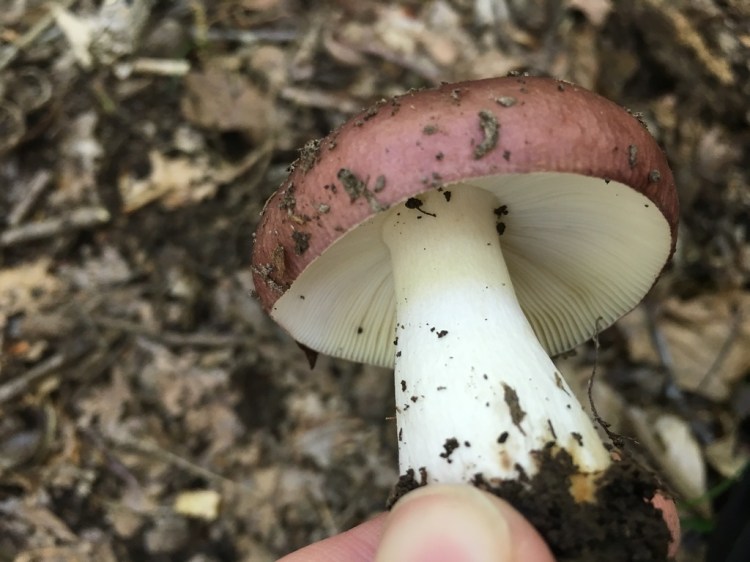
Russula vinacea

This was actually the first russula I learned to identify. You can see a step by step identification here. The key detail is less anything physical about the mushroom and more the time of year it appears: early to mid spring. It also has a somewhat distinctive wine-red color.
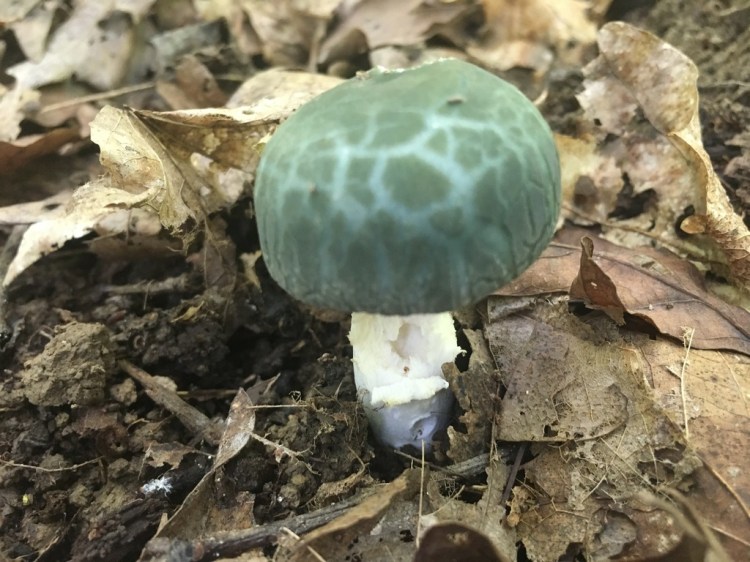
Russula parvovirescens

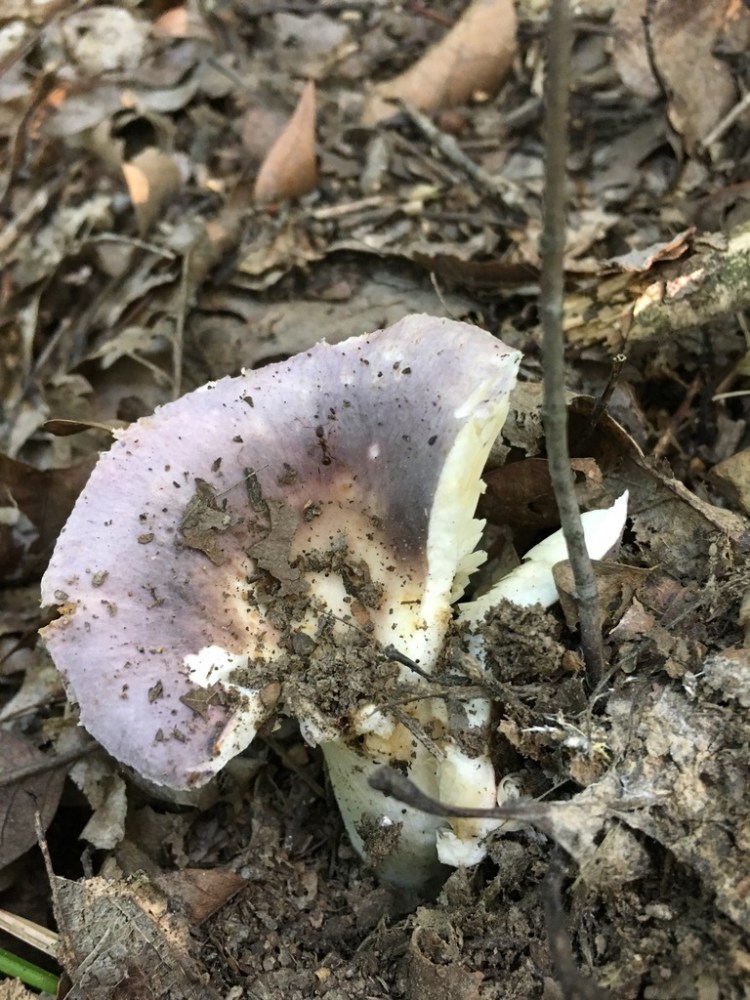
This is one of the more beautiful (and easy to identify) russulas. The key feature is the large patches of color that break up, almost like cooling magma (if magma were blue). Russula parvovirescens is actually a fairly new species, formed on the basis of DNA analysis. Traditionally, there was R. virescens and R. crustosa but these have turned out to be European species. Analysis of North American samples has turned up a slew of new species (many of which are yet to be published)more info here. The only one of these that is identifiable in the field is R. parvovirensens, the “Blue-green Cracking Russula.”
Member of the R. virescens / crustosa group. This would probably formerly have been called R. crustosa.
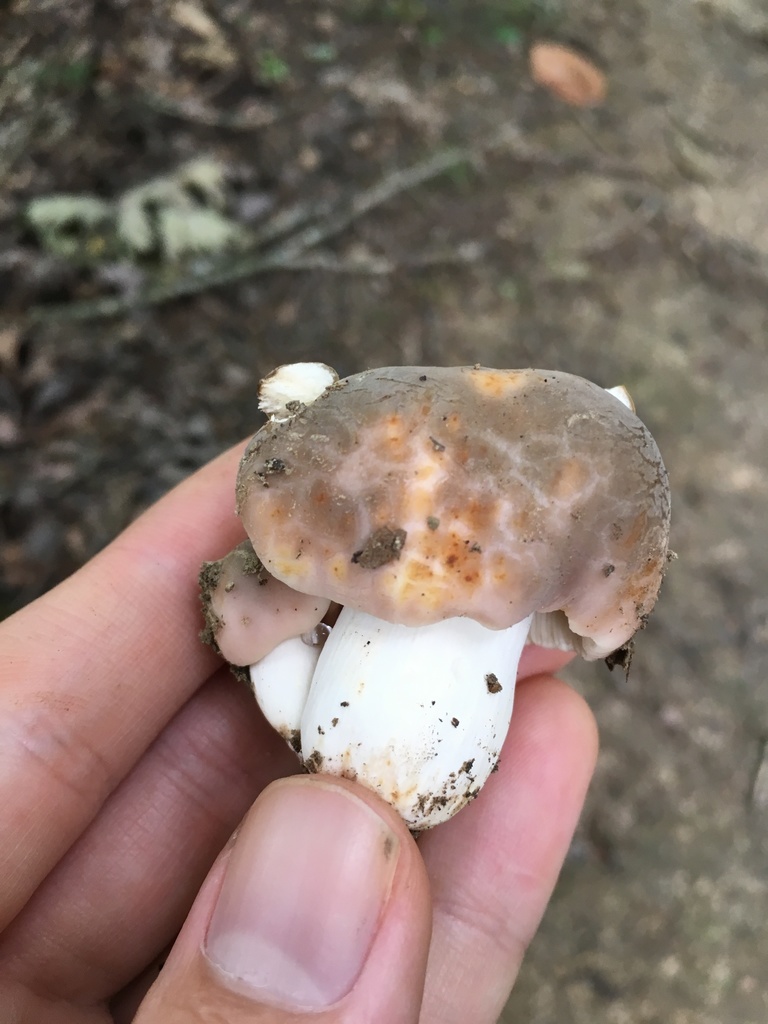
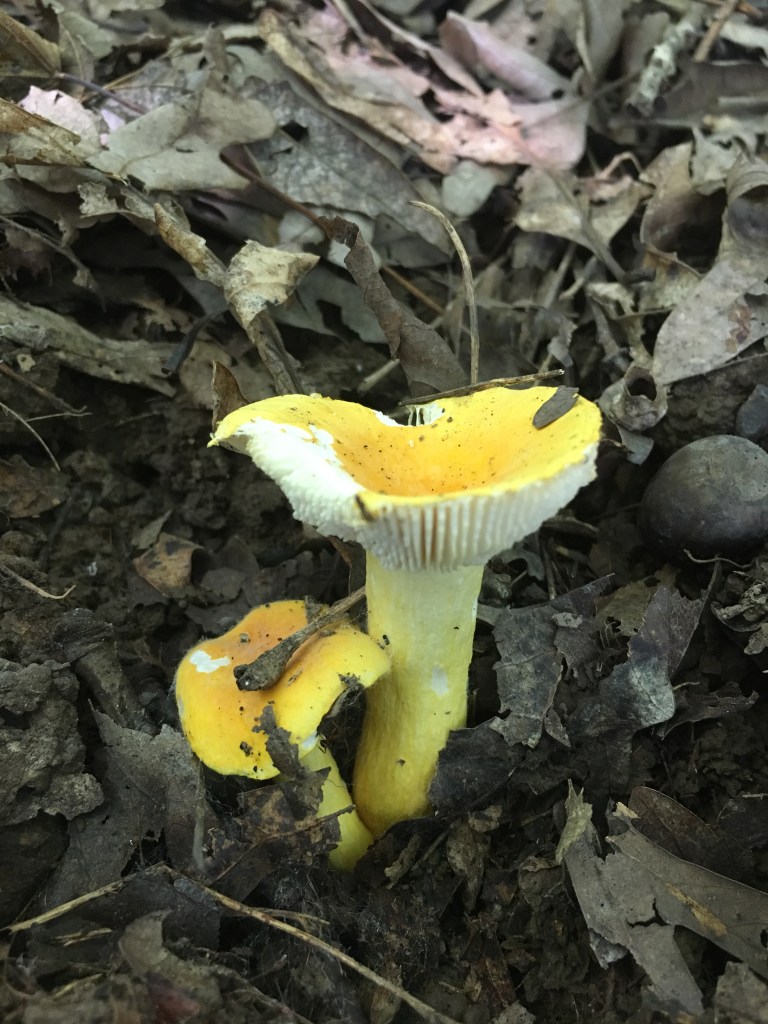
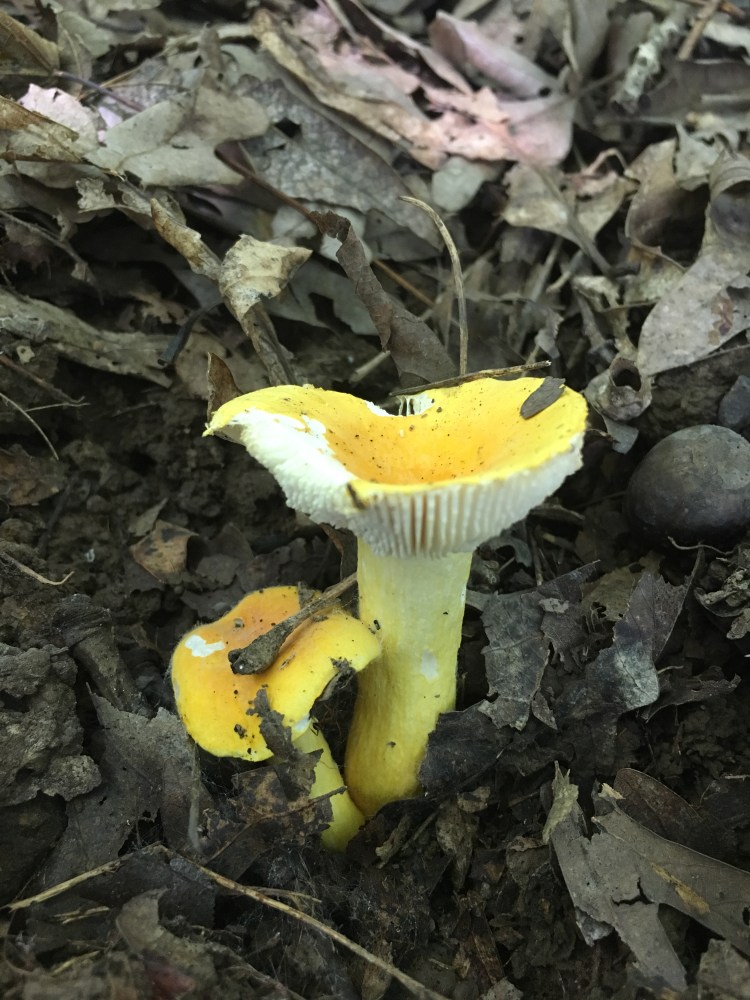
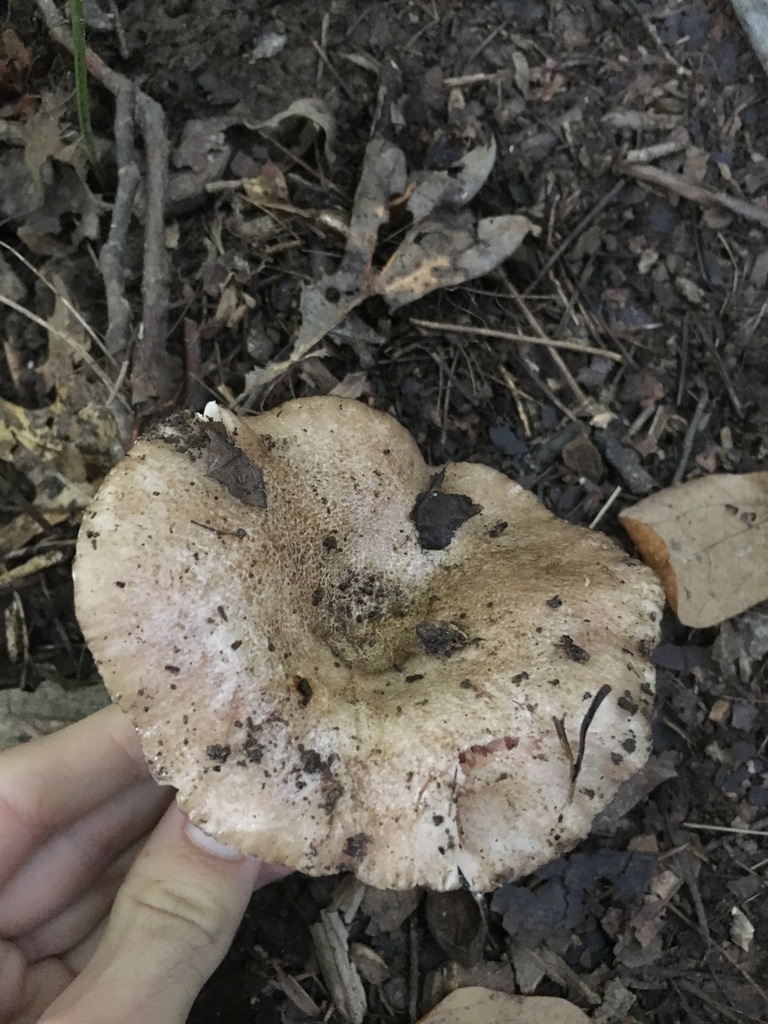
Russula flavida (most likely)

This one I’m still not 100% about—I only included it because of it’s bright lemon yellow colors, unusual for a russula.

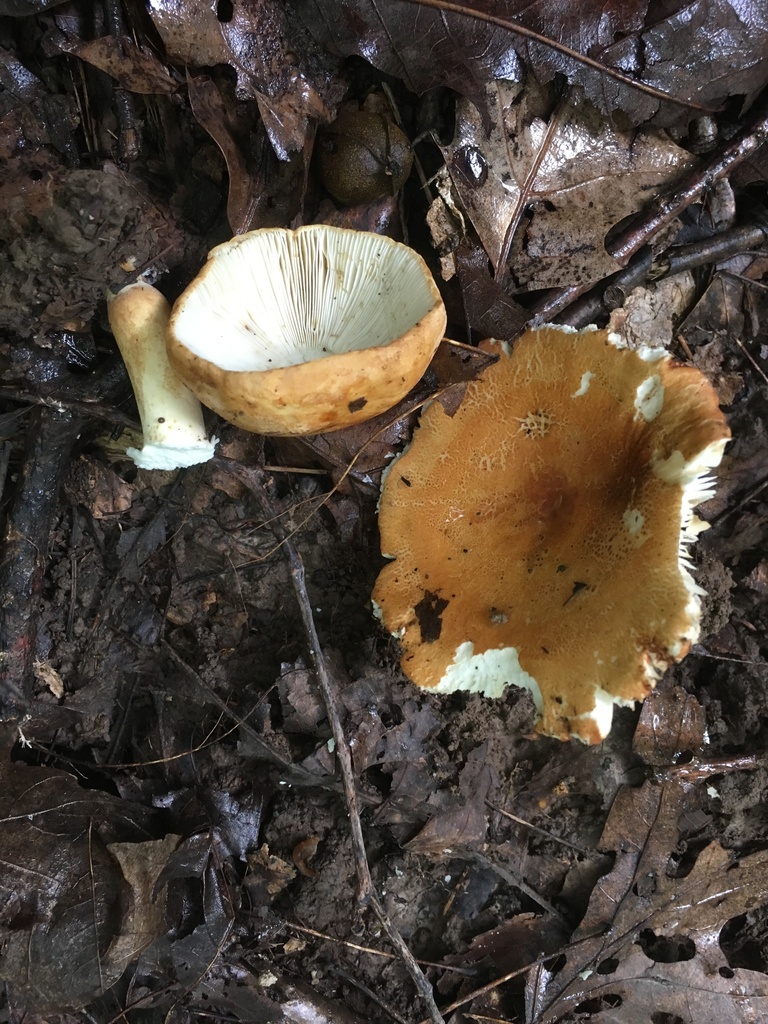
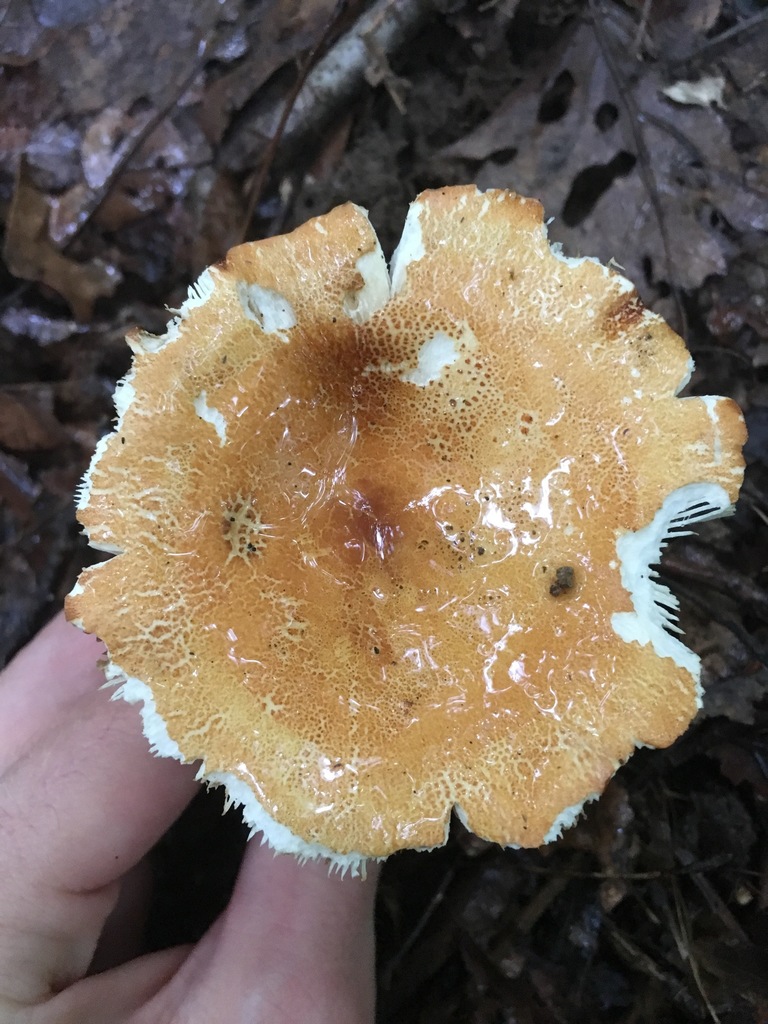
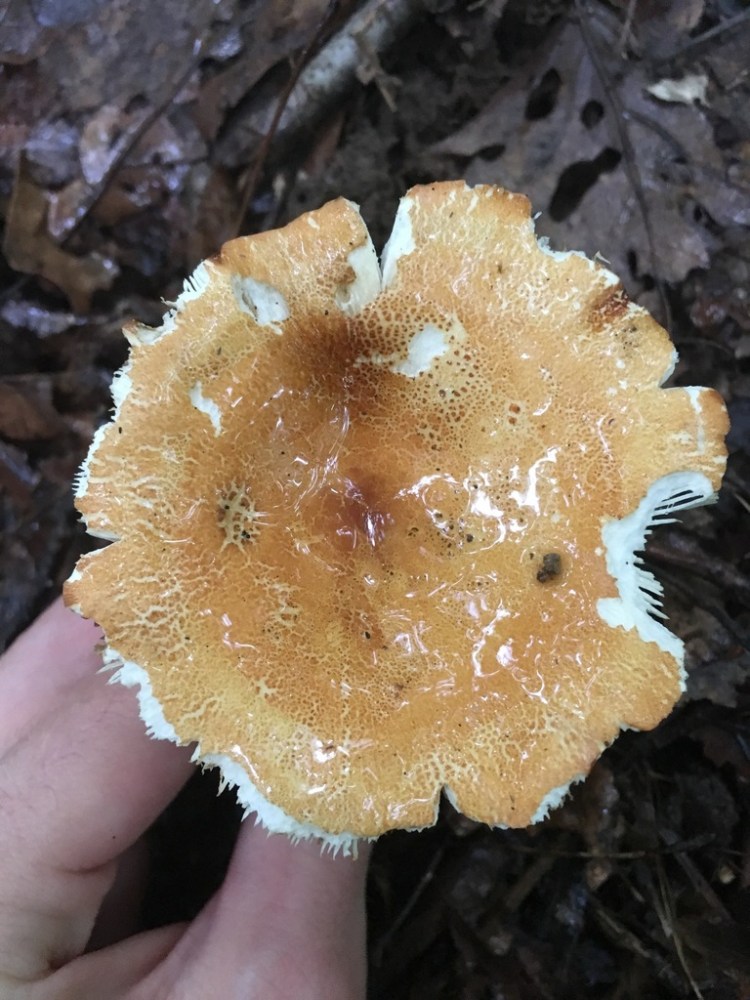
Russula balloui
Russula balloui

Russula balloui is one of my discoveries this year. It has a beautiful orange cap that breaks up into patches of color (but much smaller patches than R. parvovirescens).

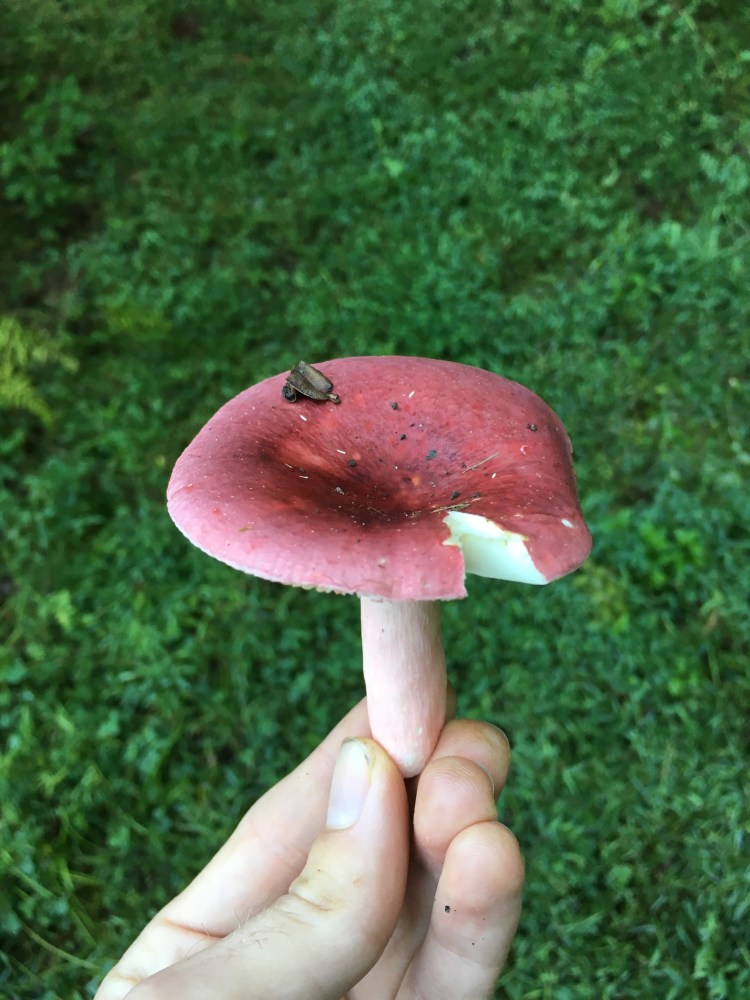
This one I’m not 100% about. I believe it is R. mariae (the purple-bloom russula). I included it because it displays a pretty characteristic of some russulas: the tendency of the stem to flush with the color of the cap — the faint purple pink on the stipe.

August Photo Highlights

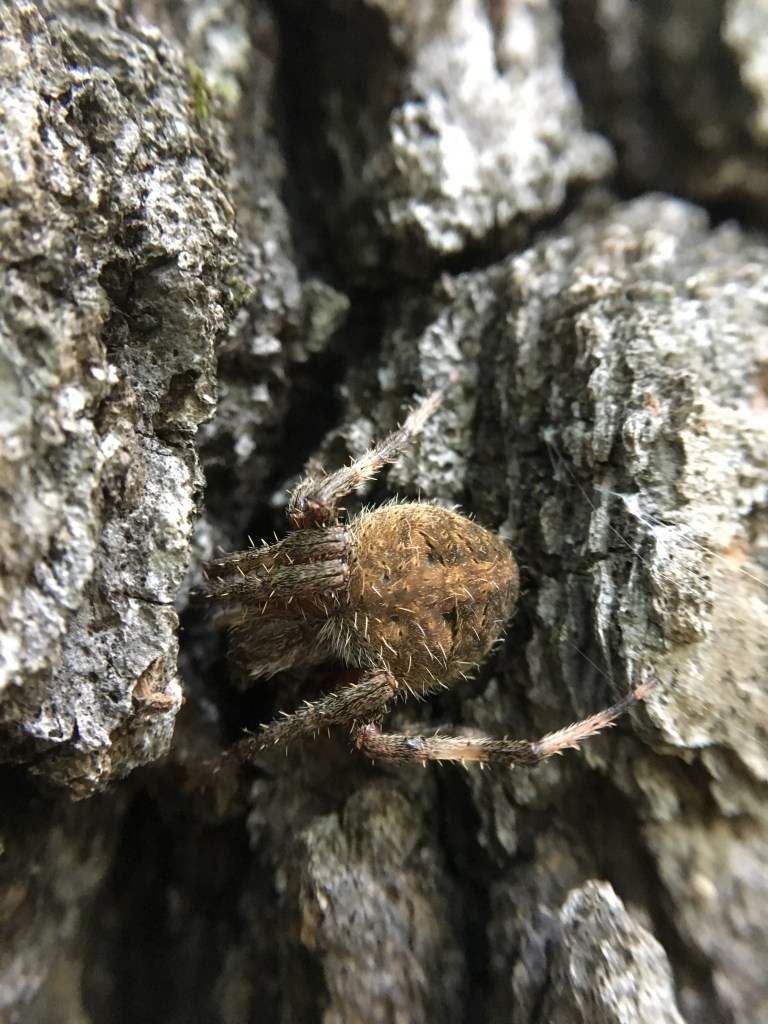
A spotted orbweaver – very bristly
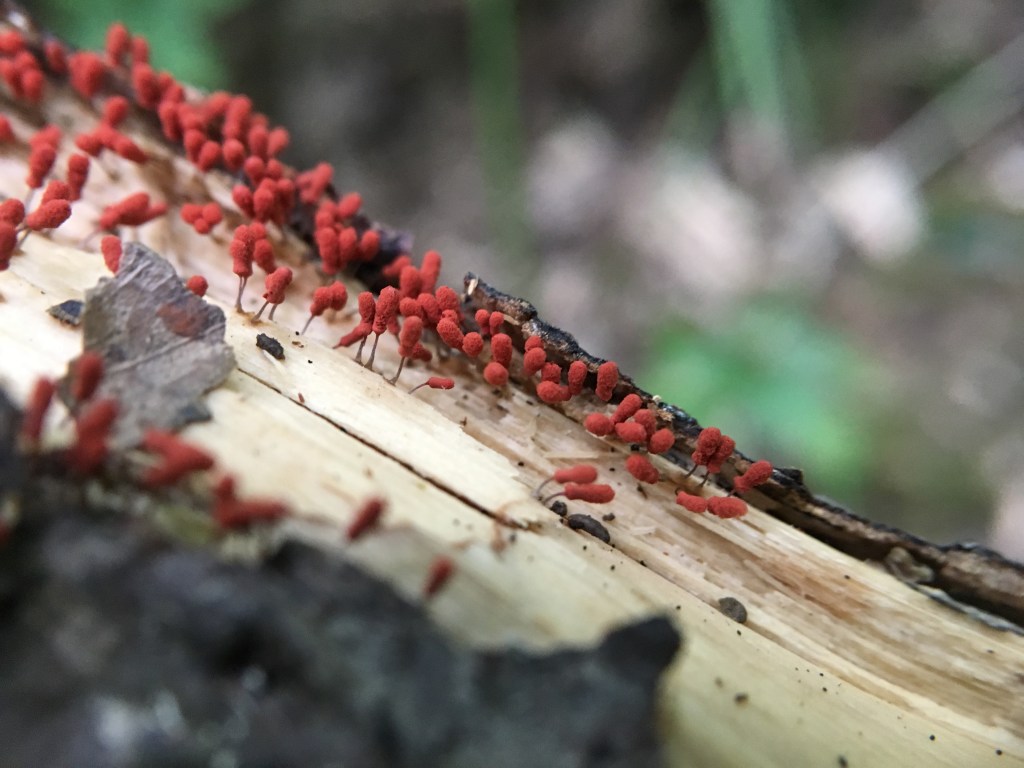
Slime Mold of some type.
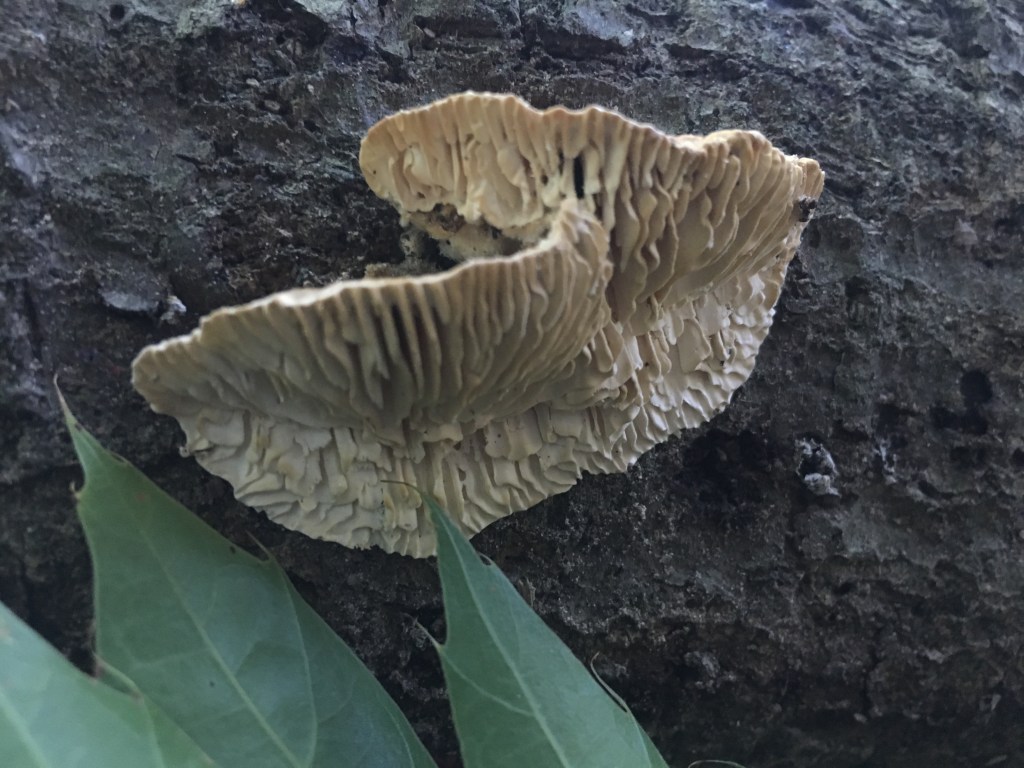
Trametes betulina – The Gilled Polypore
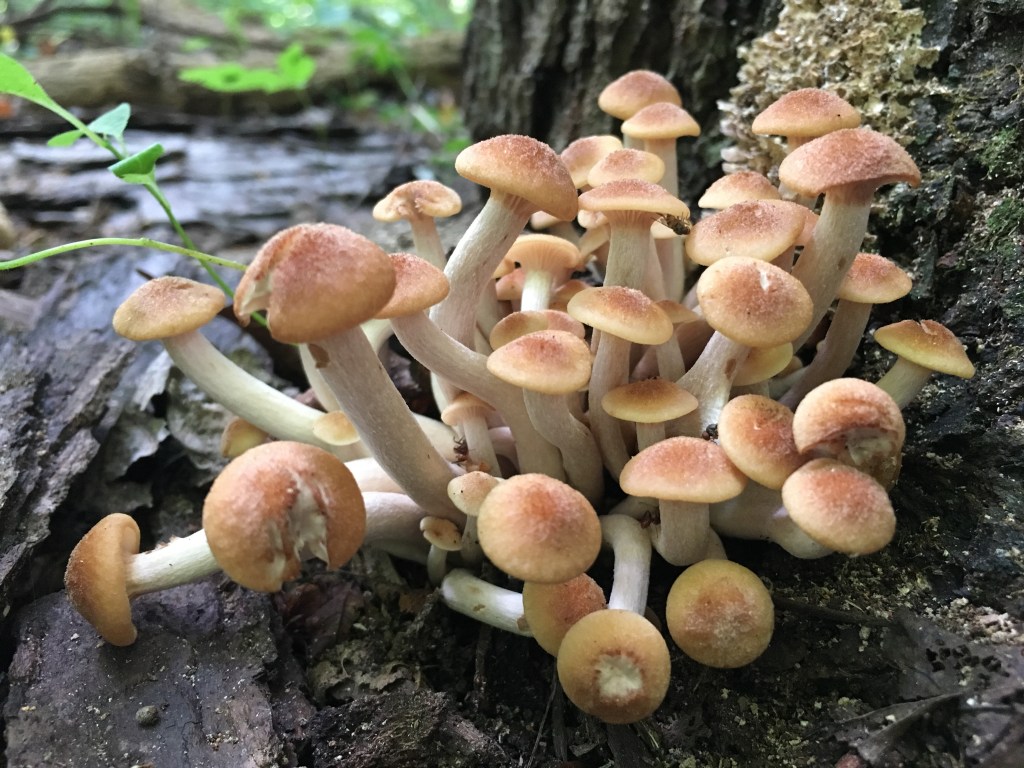
Nothing says early fall like honey mushrooms
Unidentified Leccinum sp. featuring scabers on the stipe.
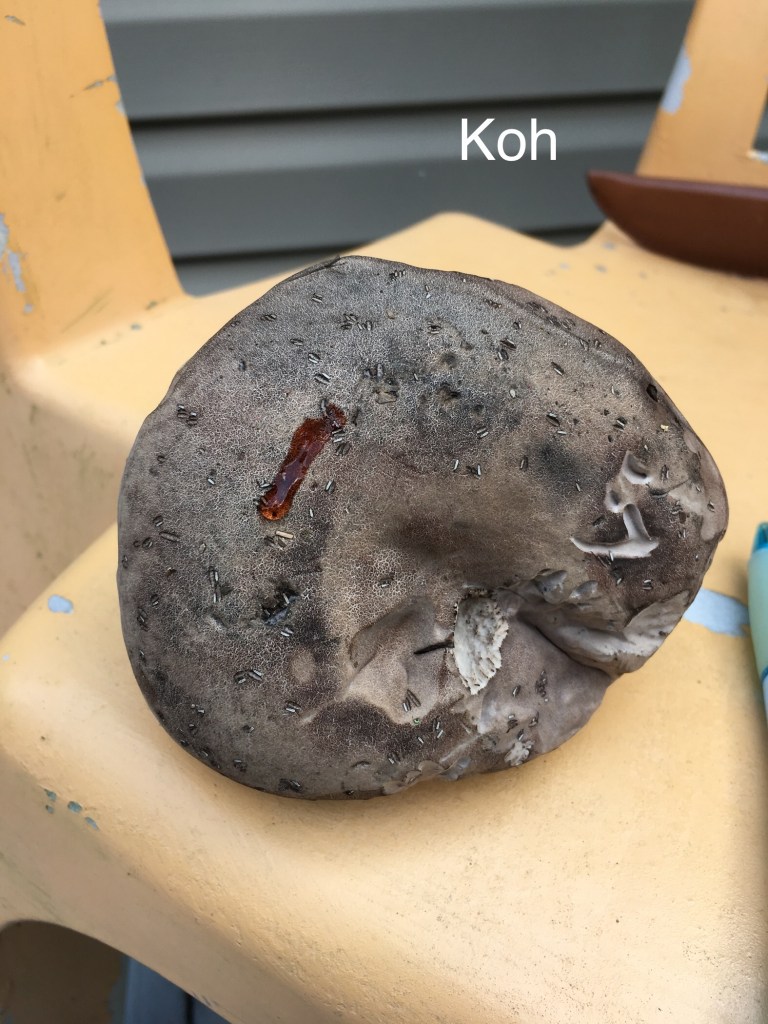
Tylopilus alboater – The Black Velvet Bolete, with KOH (Potassium Hydroxide) on the cap. KOH can be used to help identify some mushrooms.
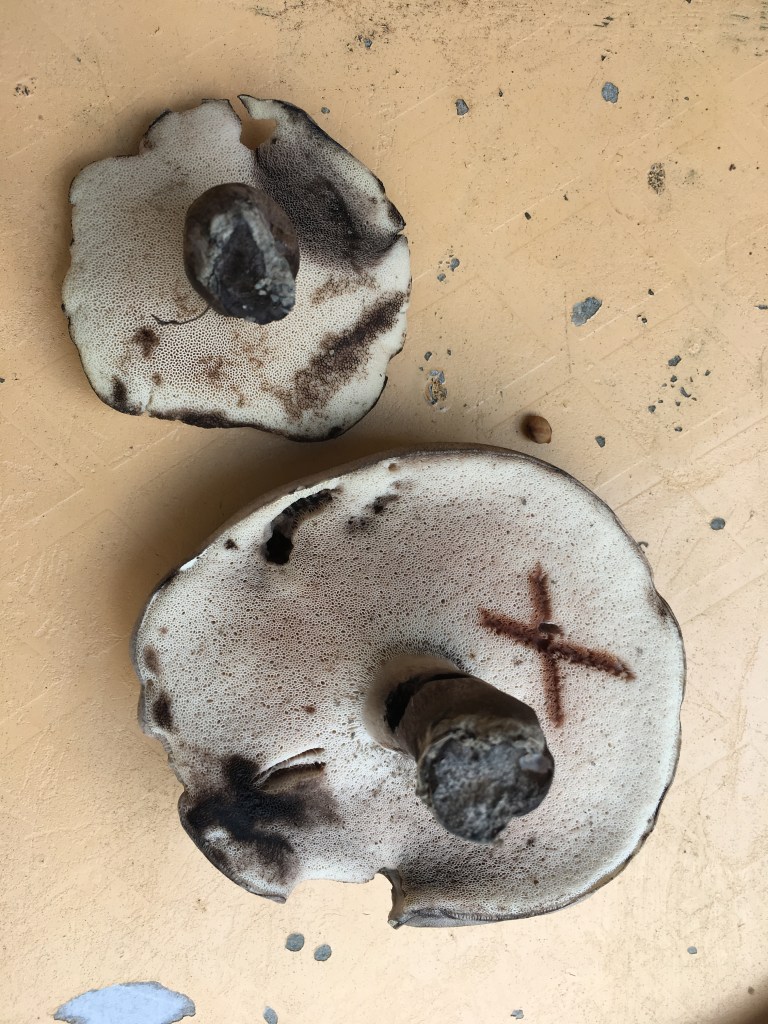
Underside of the black velvet bolete.
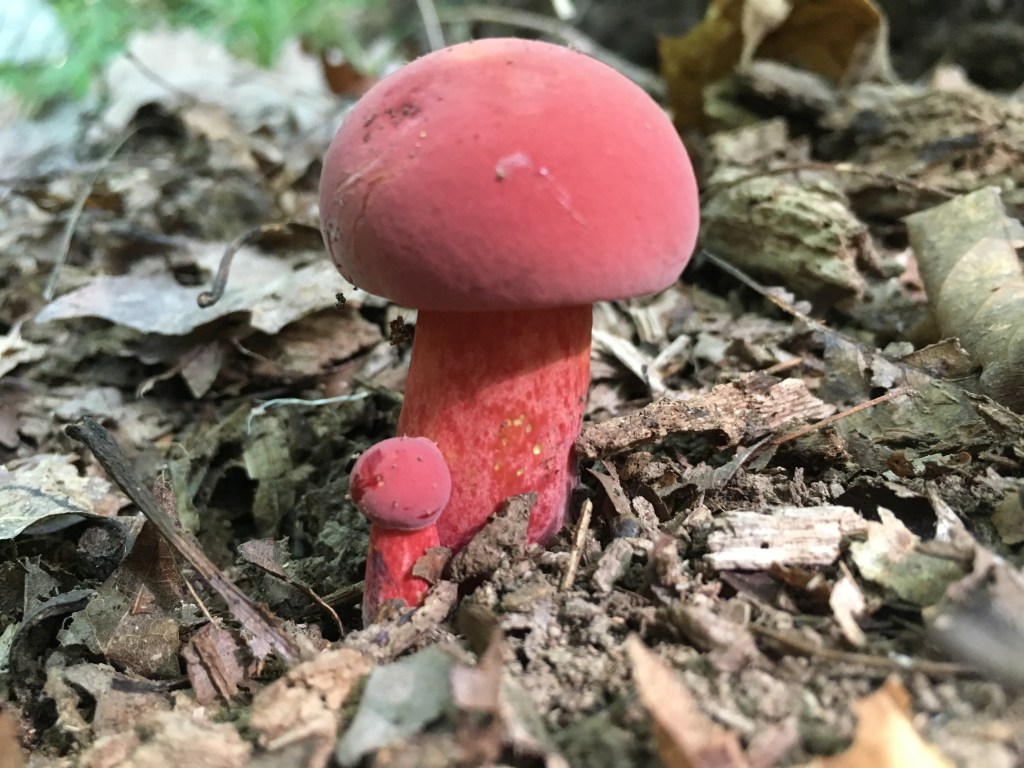
Baorangia bicolor – The Two Toned Bolete. A beautiful bright red when young, they quickly fade to pale pinkish.
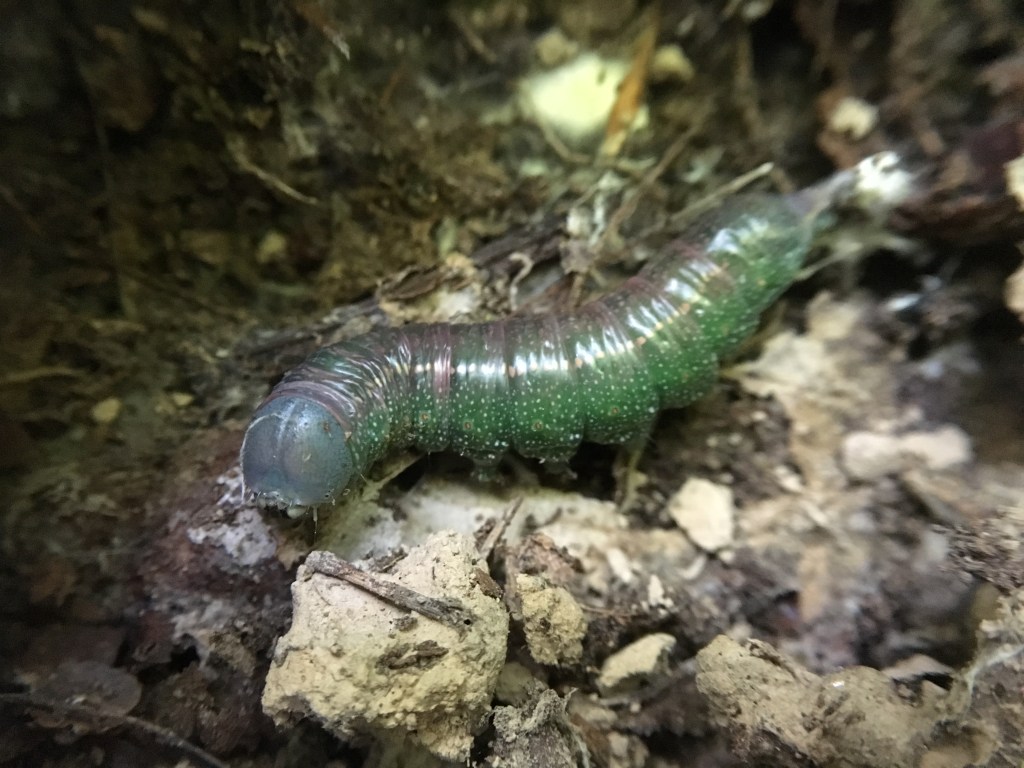
Caterpillar found munching on the base of a mushroom.

Mushroom Lingo #11: Punctae

I recently bought Boletes of Eastern North America, which has been a game-changer for identifying all those incredibly similar cushiony pored mushrooms we call boletes. One thing about it that has changed my mindset is that it starts off by closely examining the stalk. Boletes are divided into five groups, based on the qualities of their stalk: Ring Stalks, Net Stalks (see Mushroom Lingo #1: Reticulate), Resin Stalks, Rough Stalks, and Smooth and Miscellaneous Stalks.

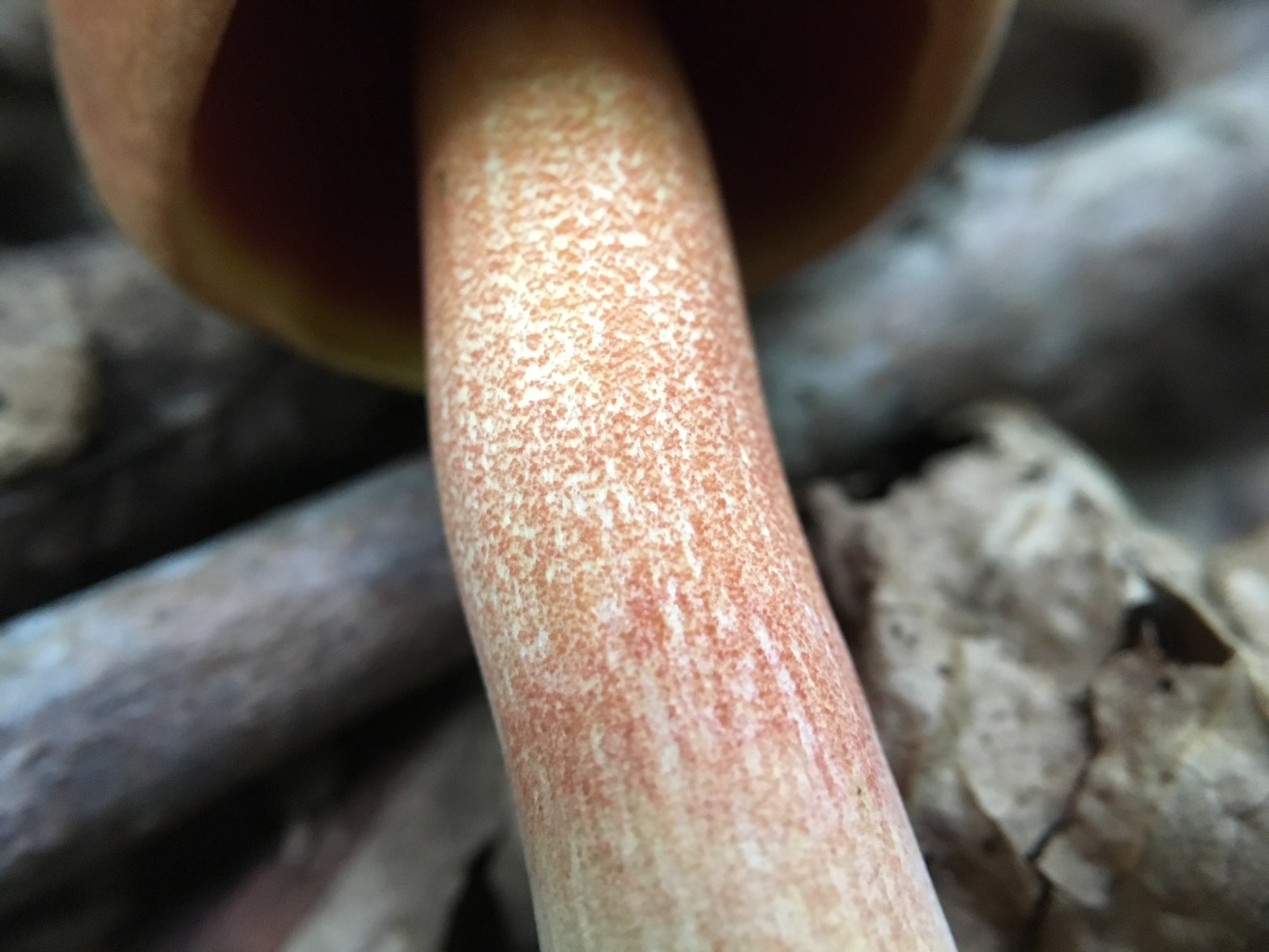
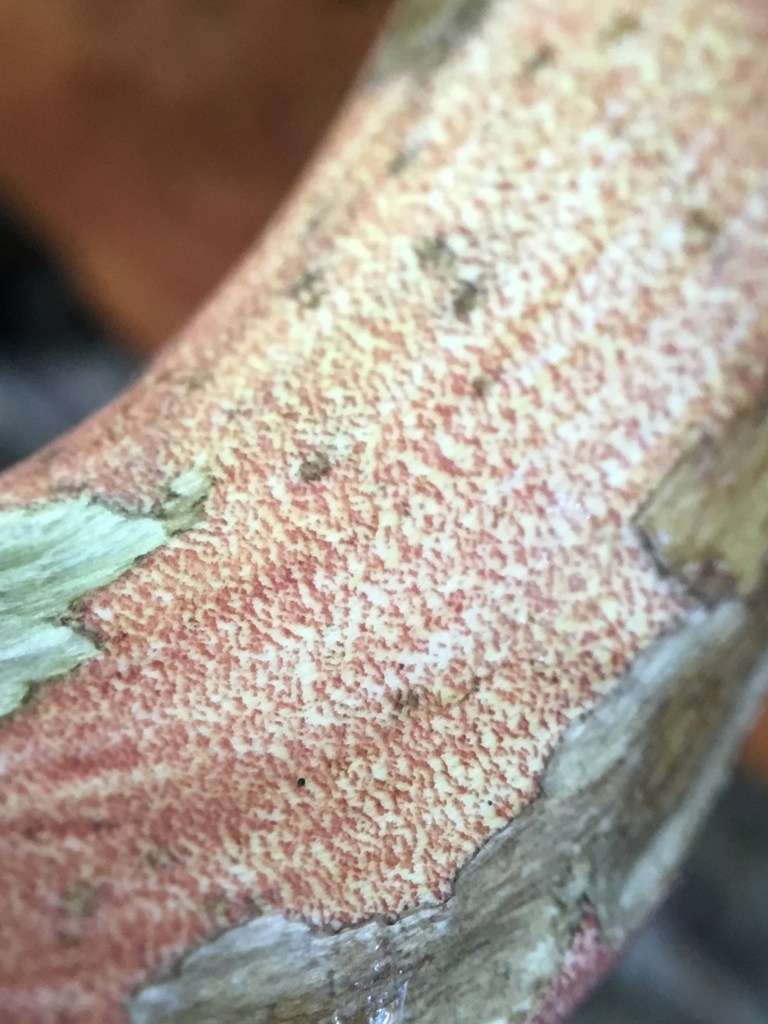
To put it briefly, “punctae” are dots (punctuation, you could say) on the stalk. They differ importantly, however, from “resin dots” in that they are dry and do not smear when touched. As you can see below, visually they are fairly similar, but to the touch they are easily distinct.

Resin Spots on Suillus weaverae
Punctae on Neoboletus luridiformis.

These dots are a key identifying feature of at least one beautiful mushroom: the Scarletina Bolete. In Europe, the Scarletina Bolete is a well established and sought-after if somewhat risky edible mushroom. (There are lots of youtube videos in Czech, Polish, Ukrainian, etc about correctly identifying it, if you are curious about European mushroom culture). In North America, however, it is less well established (meaning it will probably go through additional name changes and taxonomic swaps). Very probably, what we have over here is not the same mushroom they have in Europe (even though for now they are flying under the scientific name) so it should not be considered edible.

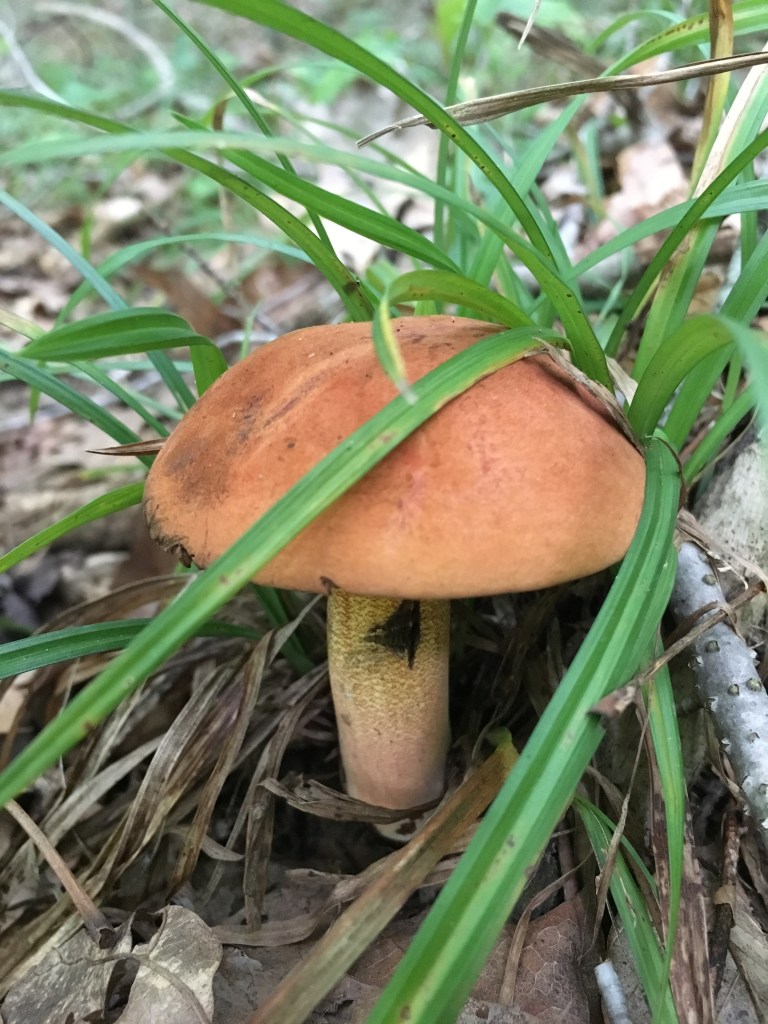
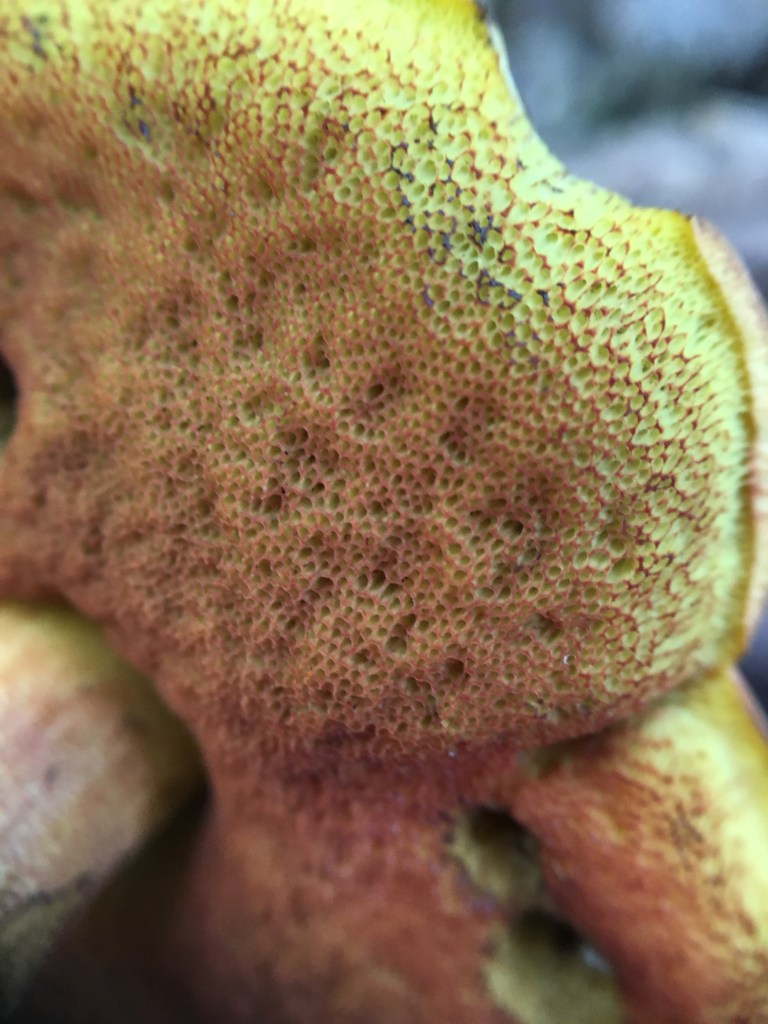
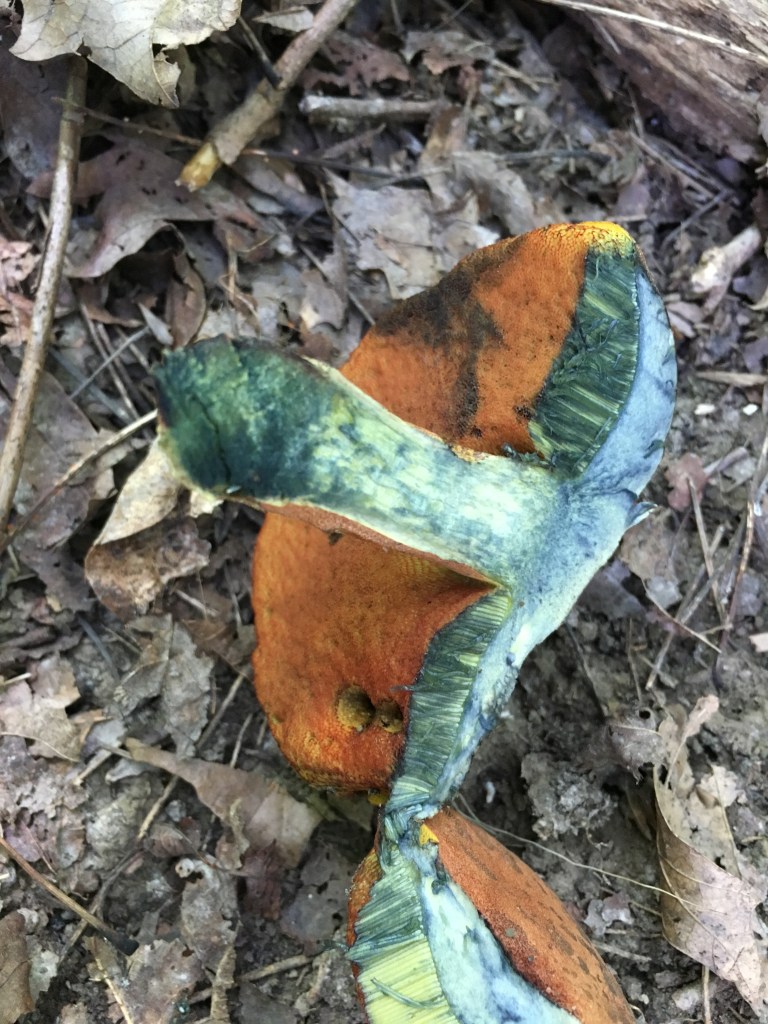
Anyways, whatever it may eventually be called, Neoboletus luridiformis is an exceptionally pretty mushroom characterized by “carmine” punctae, a dark brown cap that gets paler with age, a lack of red hairs on the base of the stalk, blue staining, red to orange pores, often yellowing at the margin and depressed around the stalk.

Brown-cinnamon cap gets paler with age. Even from here you can see the punctae.
Pores orange, but the tube layer is pale yellow. Notice also depression around the stalk.
Quickly staining blue.

Even with all this though, identifying Neoboletus luridiformis is more a matter of probability than on certainty. As the authors of Boletes of North America say, “the art of field identification is recognizing the point at which flexibility exceeds credibility.” But what is more important than positively identifying a mushroom, is learning to see them in a more detailed way.

First Thoughts on Oliver Sacks

I have been intrigued by Oliver Sacks for a while, but only recently actually read him. Someone like Oliver Sacks is so desperately needed: someone with all the right medical credentials who has also thought deeply about the moral implications of modern neurology. Unfortunately, I don’t think Sacks is what he is promised to be.

Take for example the title story of “The Man who Mistook his Wife for a Hat.” The moral thinking in this story is actually deeply disturbing. Sacks’ writing is characterized by the same oversimplifications and poorly reasoned generalizations that mark the writings of his “great” predecessor: Freud.

At the most basic level what I object to is that a functional deficit in one specific area of a person’s life is described as a total state of being. In Sacks’ writing the pathology defines the person. Pathology is deeply associated for Sacks with loss and shame. Thus the first section of The Man Who Mistook his Wife for a Hat and other Clinical Tales is called “Losses.” It’s not hard to see a connection between Sacks’ view of sickness as lack and Freud’s theories of the castration complex and penis envy. Sacks sees disability as a primal ontological lack, rather than as an accidental epiphenomenon. In fact, I would go so far as to hypothesize that Sacks was interested in neuropathology primarily as a way of reflecting on and dealing with his own highly Freudian feelings of shame and loss.

While Sacks is known for deeply empathizing with the people he describes, consider the language he actually uses for describing Dr. P, the subject of “The Man who Mistook his Wife for a Hat”. The primary adjectives he uses to describe Dr. P’s case are “sad” and “tragic,” Dr. P himself is “damned” and functions like a “machine.” He has lost “all power of representation and imagery, all sense of the concrete, all sense of reality.” This last line of reasoning I find especially odd. How do we get from Dr. P is unable to recognize faces and familiar objects, to Dr. P has no sense of reality? Dr. P’s hearing, touch, smell and taste are all entirely intact. How can be said to have lost all “sense of reality”? Since when is reality entirely visual, what would that imply about blind people?

Dr. P goes from being a specific individual with visual agnosia to being a “warning and a parable” all too fast. Sacks describes Dr. P as someone who is literally lacking the “most important faculty we have [judgement].” Dr. P’s problem is that, according to Sacks, he is fundamentally less than human, he is “computer-like.”

Rather than sticking with a “merely” biological description of disability, Sacks pathologizes Dr. P’s agnosia into a question of his fundamental “attitude.” Sacks briefly considers the physiological hypothesis: “Was this [Dr. P’s lack of judgement] due to lack of visual information, or faulty processing of visual information? (This would be the explanation given by a classical, schematic neurology).” But quickly moves on to a more “fundamental” explanation: “was there something amiss in Dr. P’s attitude, so that he could not relate what he saw to himself?”

Sacks animates his characters in my opinion primarily by projecting onto them his own feelings of shame and deficit. Dr. P is Oliver Sacks, but he is the shamed and repressed part of Sacks that he only gradually and late in life came to accept and acknowledge. At least these are my thoughts and hypotheses for now.

July Photo Highlights

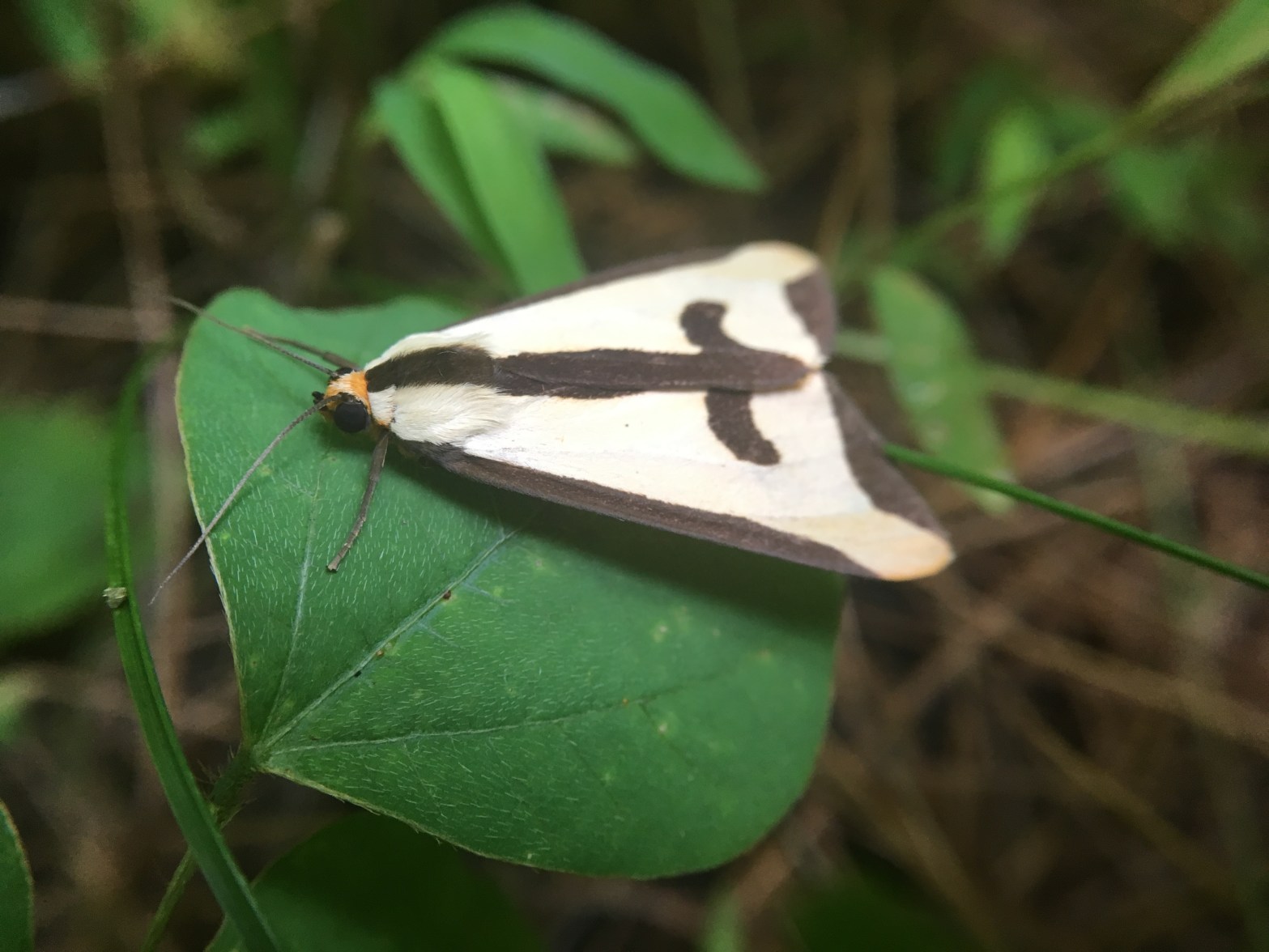
Above: Clymene Moth

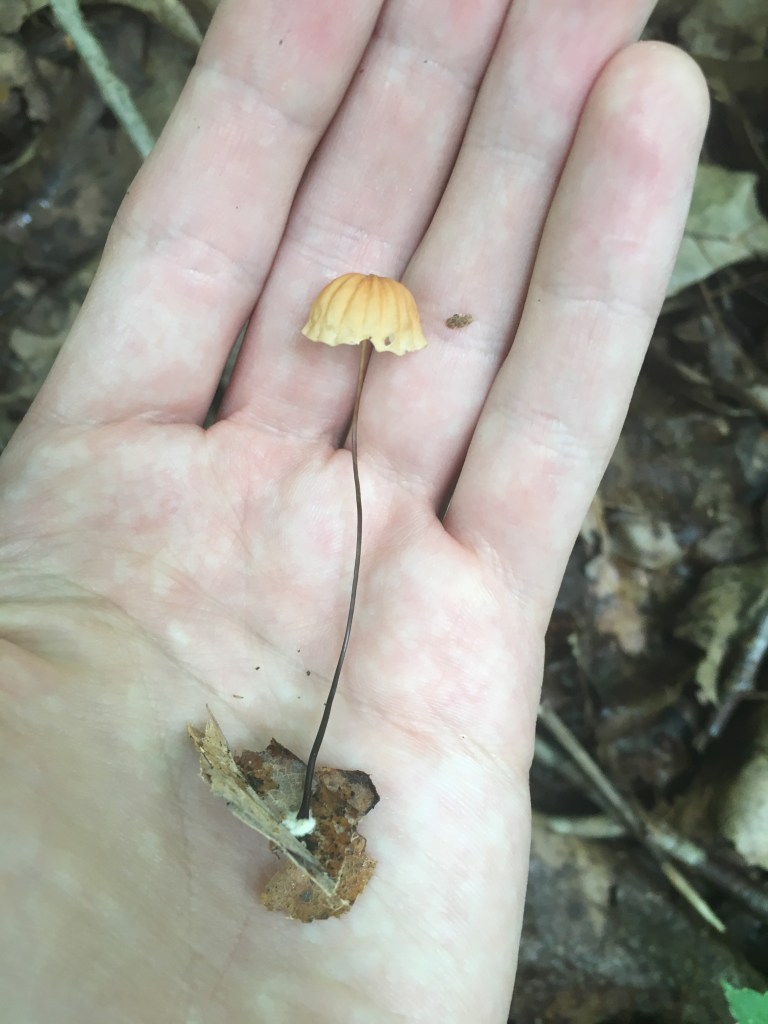
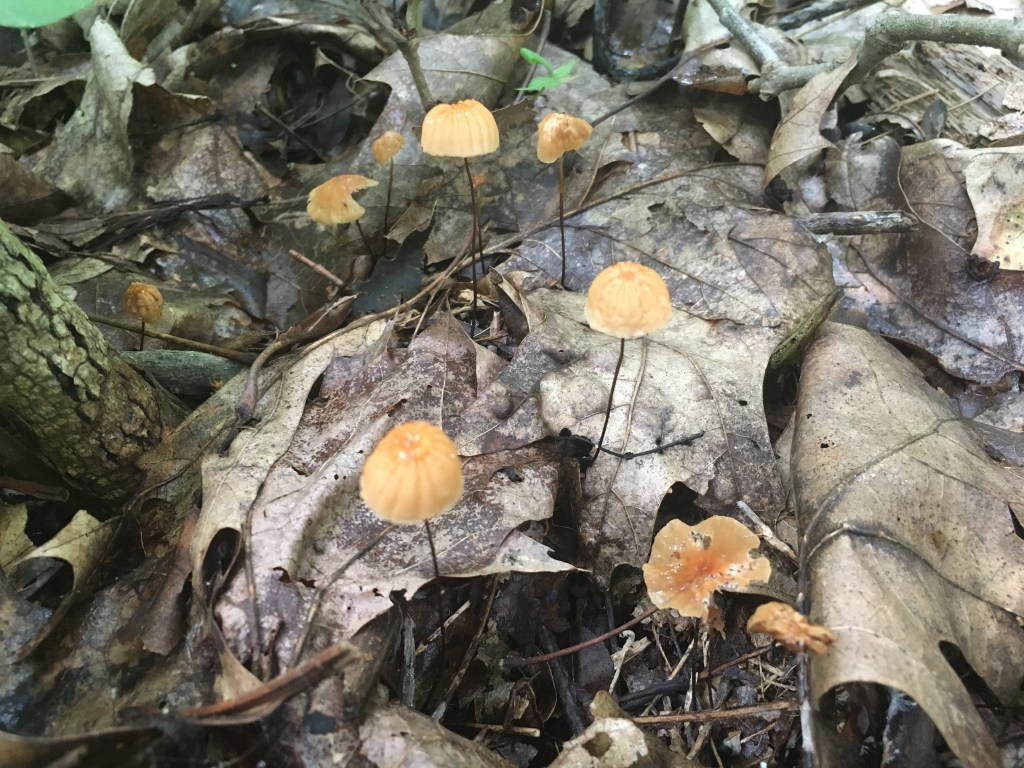
Orange Pinwheel, Marasmius siccus. This mushroom features on the cover of Michael Kuo and Andy Methven’s 100 Cool Mushrooms – so it must be cool.
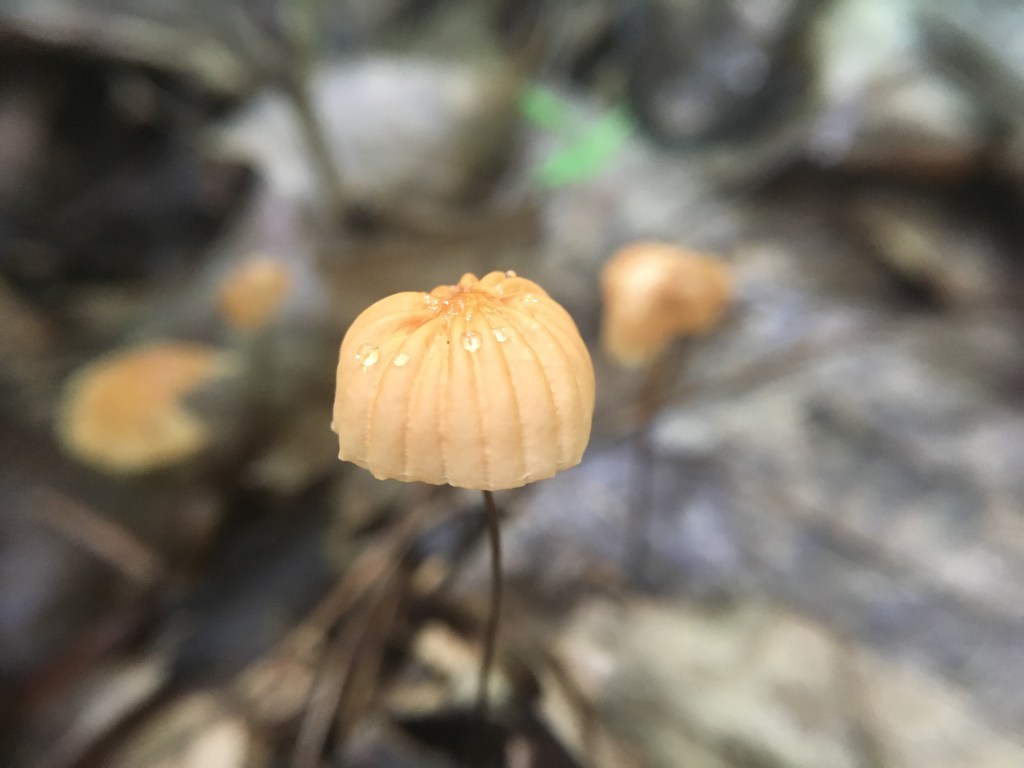
Marasmius siccus breaks down leaf litter.
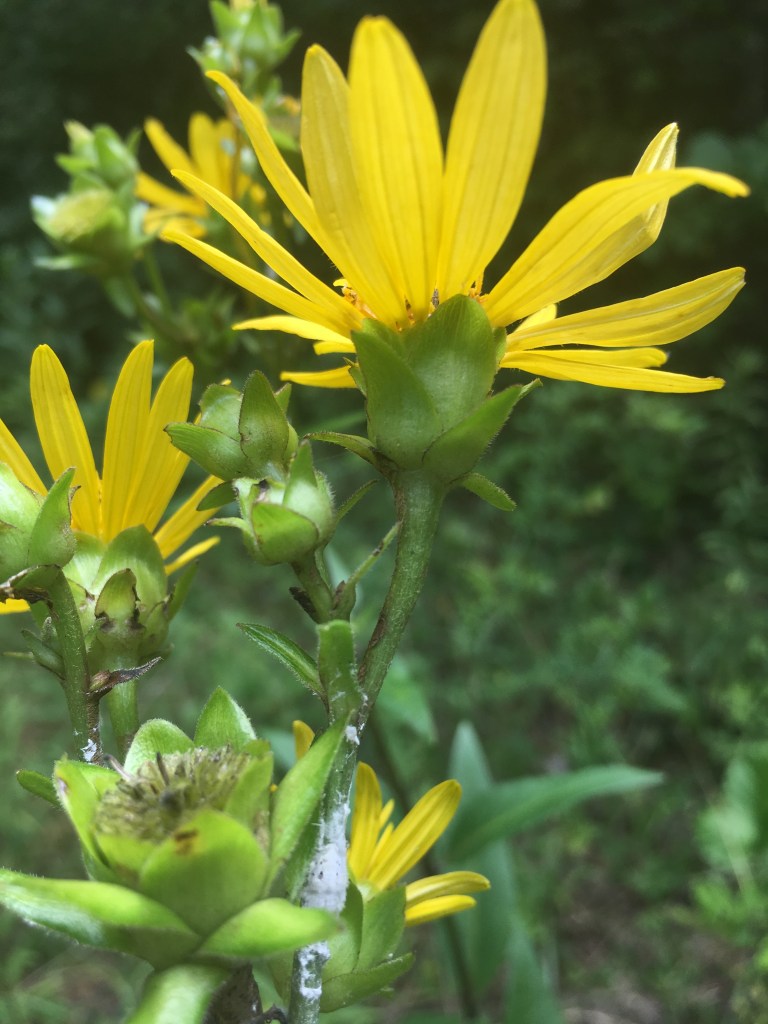
Prairie Rosinweed
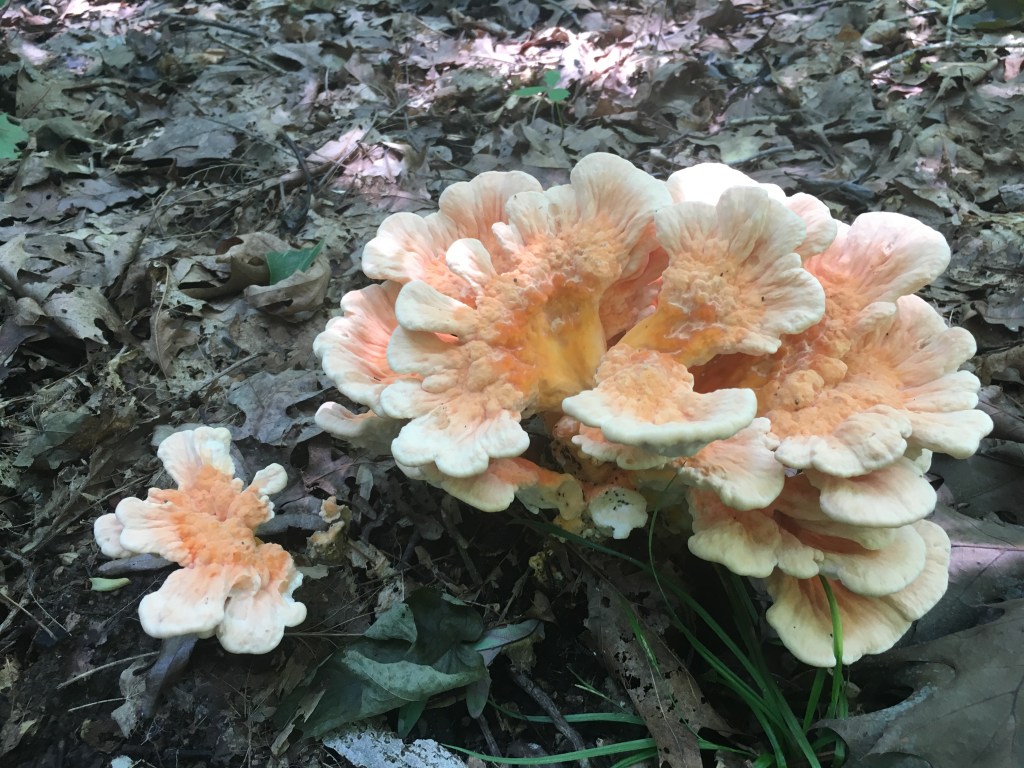
White-pored Chicken of the Woods, Laetiporus cincinnatus (the official fungus of Cincinnati) typically appears before its yellow pored cousin, Laetiporus sulphureus. Another difference is that white-pored chicken of the woods typically grows from stumps or buried wood, whereas L. sulphureus more often grows from logs. (Also, it’s not really the official fungus of Cincinnati, at least that I know of).
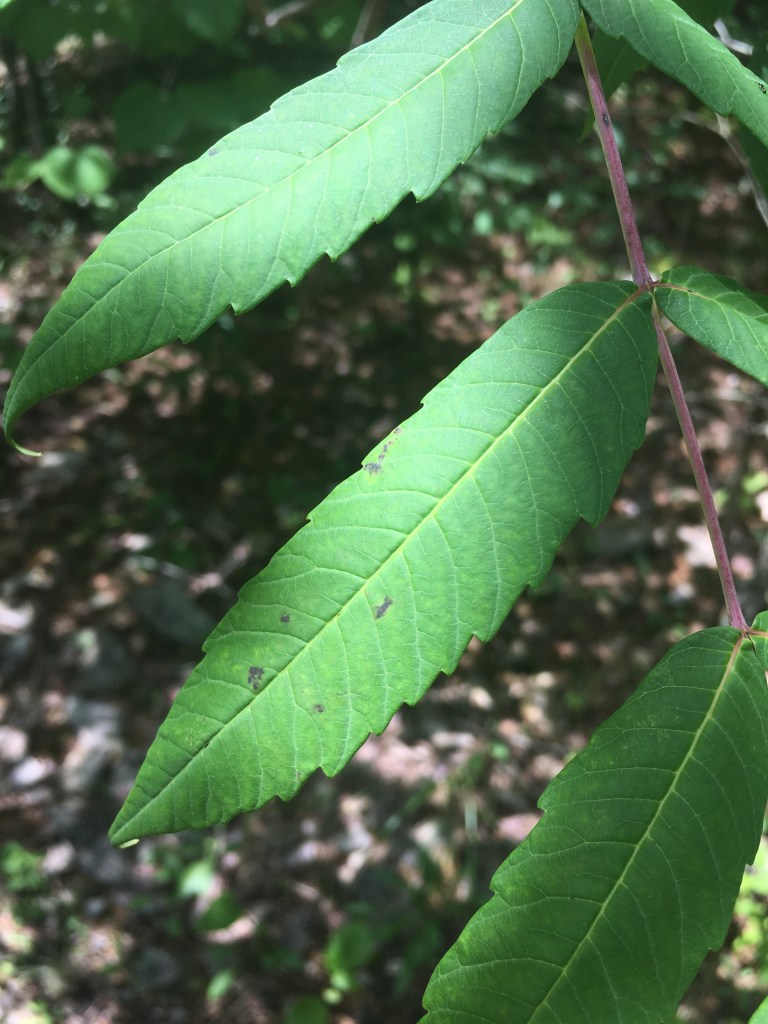
Smooth Sumac in a sunfleck.
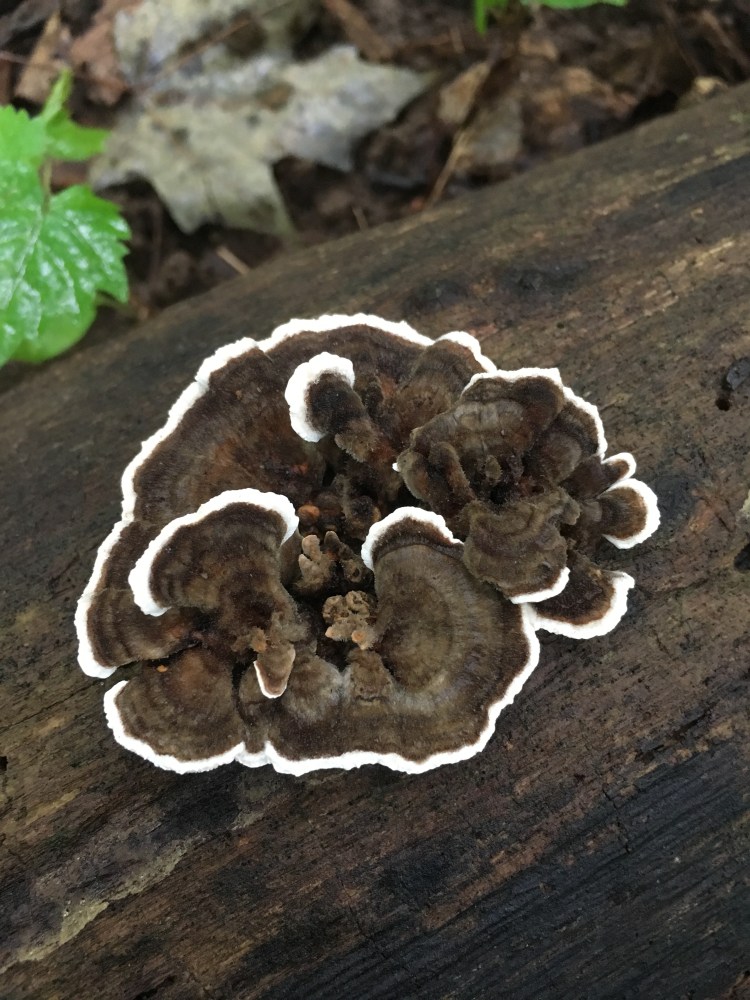
Turkey Tail
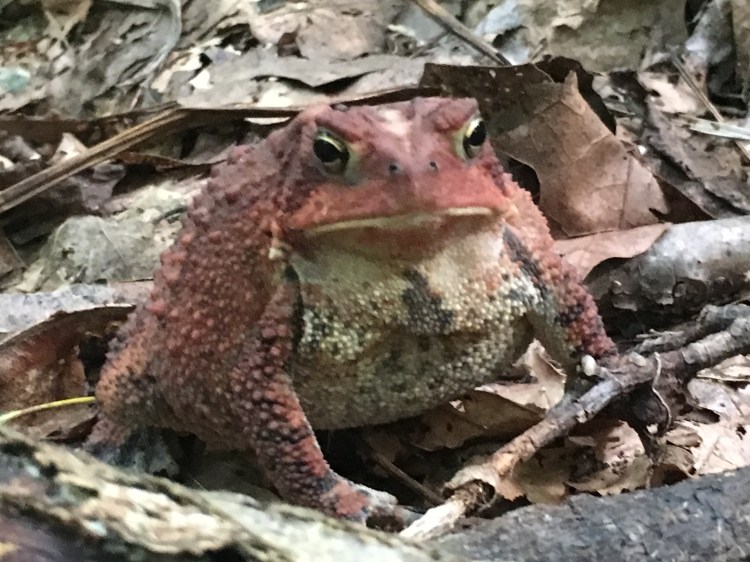
American Toad

Mushroom Report: The Snaketongue Truffleclub.

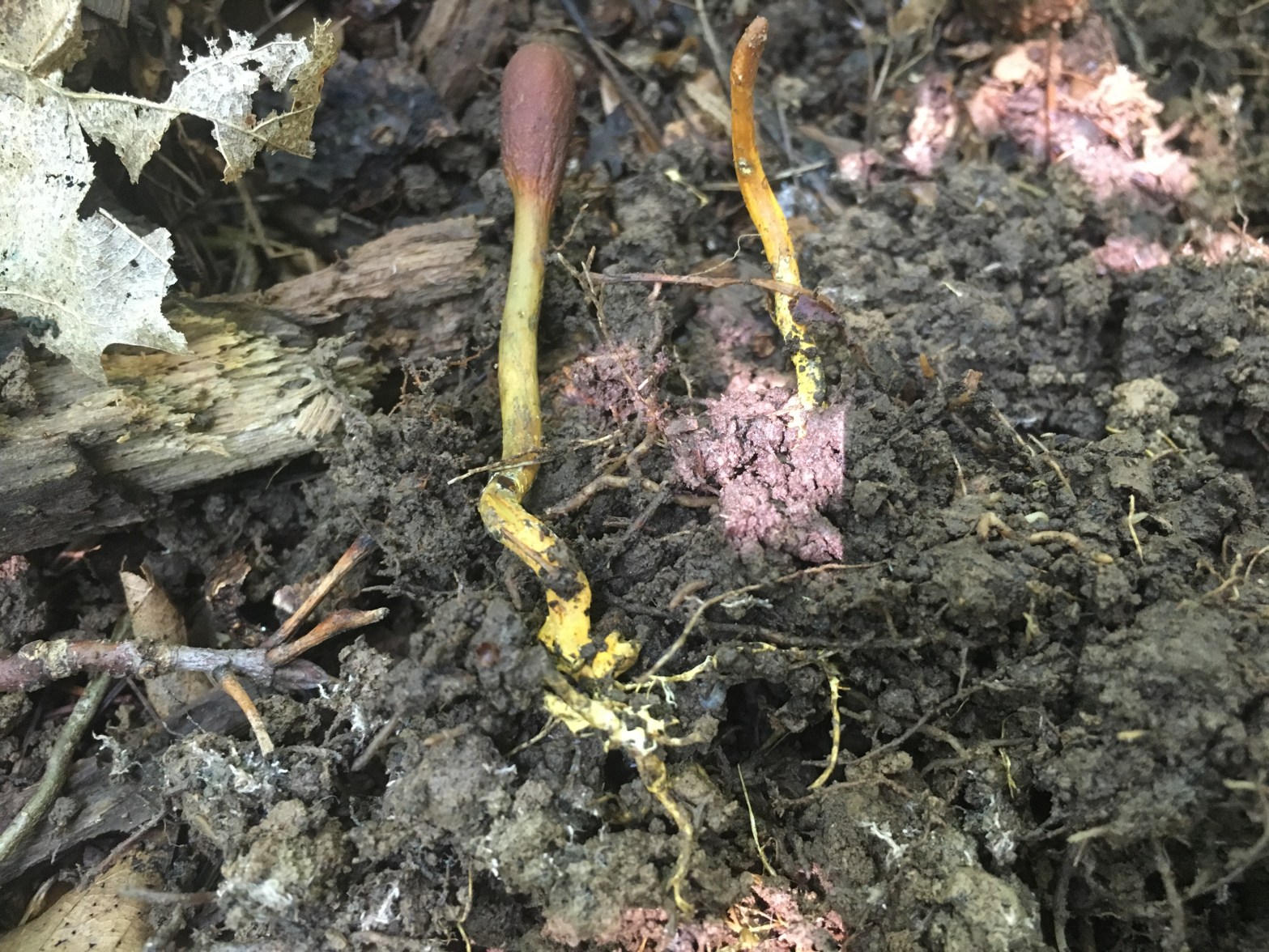
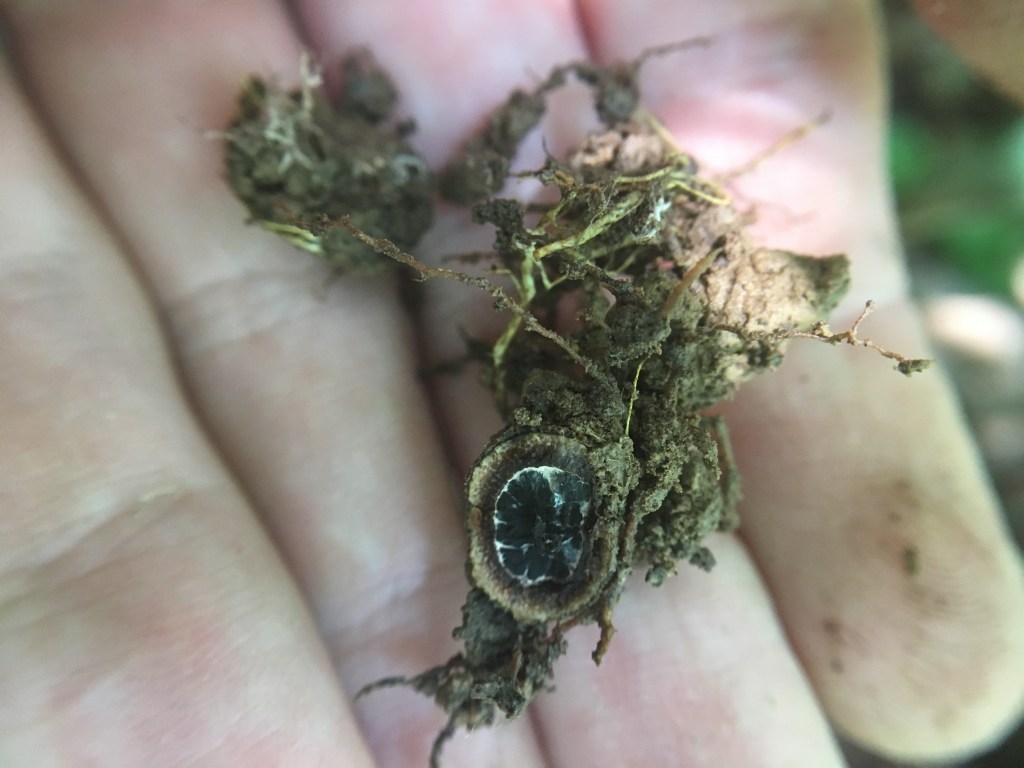
Last week, as I was sitting down to photograph a small field of deliquescing Ochre Jelly Babies, I noticed a large matchstick looking club fungus sticking up out of the ground. My first thought was that it was one of the famous Cordyceps mushrooms which parasitize insects, for instance by hijacking the brains of certain wasps and causing them to climb high into the canopy, where they die and spread the fungus’s spores far and wide.

With this in mind, I was very careful to dig out underneath the mushroom in the hopes of finding an insect carcass (see Cordyceps militaris). This is not what I found, but I did find something just as interesting.

What I found was a small truffle-like fungus that the club fungus was growing from. When I researched this at home I learned that the club fungus I found was Tolypocladium ophioglossoides (also known as the “goldenthread cordyceps” or, what I think is more accurate since it doesn’t actually belong to the genus Cordyceps, the snaketongue truffleclub) which parasitizes truffle-like fungi called Elaphomyces.

This brought up a lot of questions about truffles and truffle-like fungi. Here is some of what I learned:

  • underground mushrooms have evolved from the typical cap and stem mushroom on many many separate occasions, a classic instance of convergent evolution.
  • “True” truffles belong to the genus Tuber which in turn belongs to the phylum Ascomycota (along with morels and other cup fungi). Most cap and stem mushrooms belong to the phylum Basidiomycota.
  • But, truffle-like mushrooms have evolved many many times within Basidiomycota as well. Classic above-ground fungi like agarics, boletes, russulas, chanterelles, have closely related underground cousins, considered “false truffles.”
  • The reason that so many fungi have separately evolved underground fruiting bodies appears to be that it makes them less dependent on rain, as levels of moisture are more consistent underground. Truffle-like fungi therefore have an advantage in drought or low water conditions.
  • Truffles and truffle-like fungi rely on animals to spread their spores, as they have no aboveground structure for wind dispersal.
  • They therefore emit powerful attractants for squirrels, deer, etc… which eat the truffles and then spread their spores in their poop.
  • The specific truffle-like fungus I found belongs to Ascomycota like the true truffles, but is not otherwise closely related.
  • We can therefore break underground mushrooms into roughly three categories: true truffles (members of Tuber and close allies), false truffles (basidiomycetes more closely related to your standard cap and stem mushrooms than to true truffles), and truffle-like fungi (members of Ascomycota, but not closely related to truffles).
  • Elaphomycetes, like the truffle-like fungus I found, are not generally edible to humans. But, as the common name “deer-truffles” suggests, they are edible to other animal species on which they depend for spore dispersal.
  • Truffles, false truffles and truffle-like mushrooms are all mycorrhizal.
Ochre Jelly Clubs, possibly being parasitized by something else. Notice the white filaments growing from the head which is deliquescing (rotting).
5 Main Branches of Fungi. (Chapter 31 Flashcards | Chegg.com)

Sources:

Snow Fungus: A Tropical Edible in Indiana

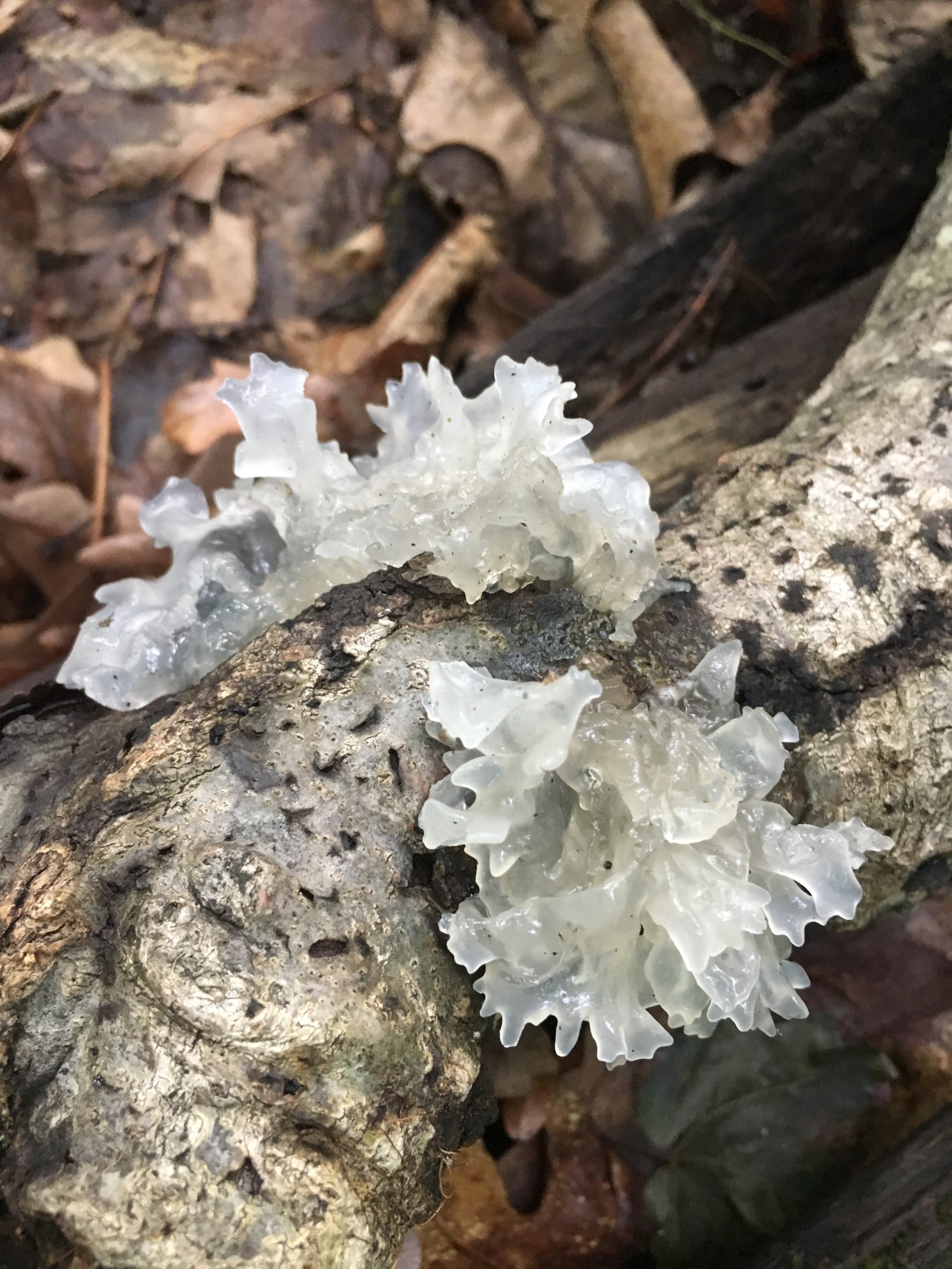
I mentioned in a previous post that Snow Fungus, Tremella fuciformis, deserved its own post. Firstly because, although you wouldn’t know it from the looks of it, it is considered a choice edible, and is actually cultivated to the tune of over 100,000 metric tones a year1. Despite having little appreciable flavor, you can find it dried at most Asian food stores, because it is highly valued for its gelatinous texture and various health benefits (some of which have been experimentally demonstrated).

Beyond this though, it is an interesting mushroom because of its lifecycle. Tremella fuciformis is a yeast, which only produces the edible fruiting body after invading a host fungus. Fungi have two main forms. They can swim around as single-celled yeasts, or they can form long chains of cells called hyphae2. Bundles of these hyphae are called mycelium, which under the right conditions produce mushrooms.

These two fungal modalities are not clearly separated taxonomically. It’s not that yeasts are one branch of the fungal kingdom, and mycelium-forming fungi are another. Rather, the two modalities are kind of scrambled in across the fungal kingdom, or in the case of snow fungus, across the lifespan of a single fungus.

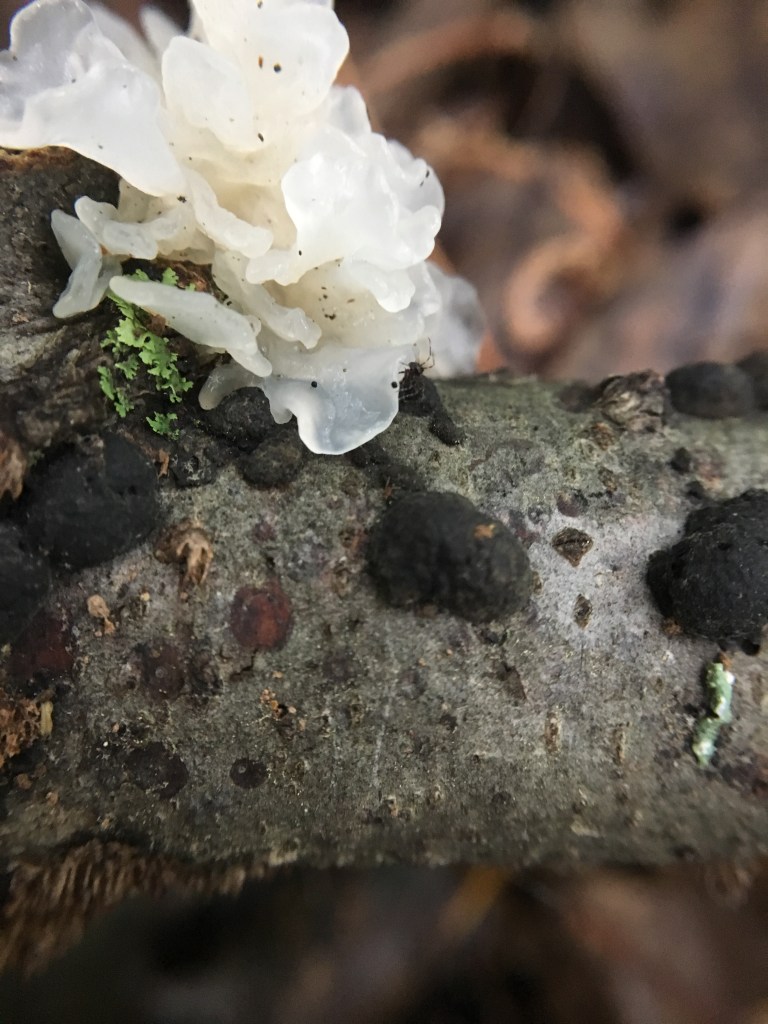
When T. fuciformis finds a suitable host, such as Annulohypoxylon archeri (the small, carbon-y balls in the picture below) it switches from yeast to hyphae, rapidly generating the mycelial web necessary to fuel the growth of the fruiting body. The exact relationship between snow fungus and its host is not yet known. It could be parasitic, or it could be there is a subtle symbiosis going on.

Snow fungus, like many other fungi, challenges our traditional notion of species as separate, independent life forms. But in fact these sort of multispecies “super-organisms” are by far and away the norm. Consider our own complex relationship to the bacteria, protists, and fungi that make up our “gut flora.” Or the anaerobic fungi that live in herbivorous animals’ rumens and allow them to digest plant matter.

Viewed in this light, snow fungus’s relationship to its host is far from unique. But it is especially interesting because you can see it with your own eyes. If you ever see snow fungus (which won’t be that difficult if you live in Indiana or further south) examine the rest of the log its growing on and you’ll find a complex microecosystem.

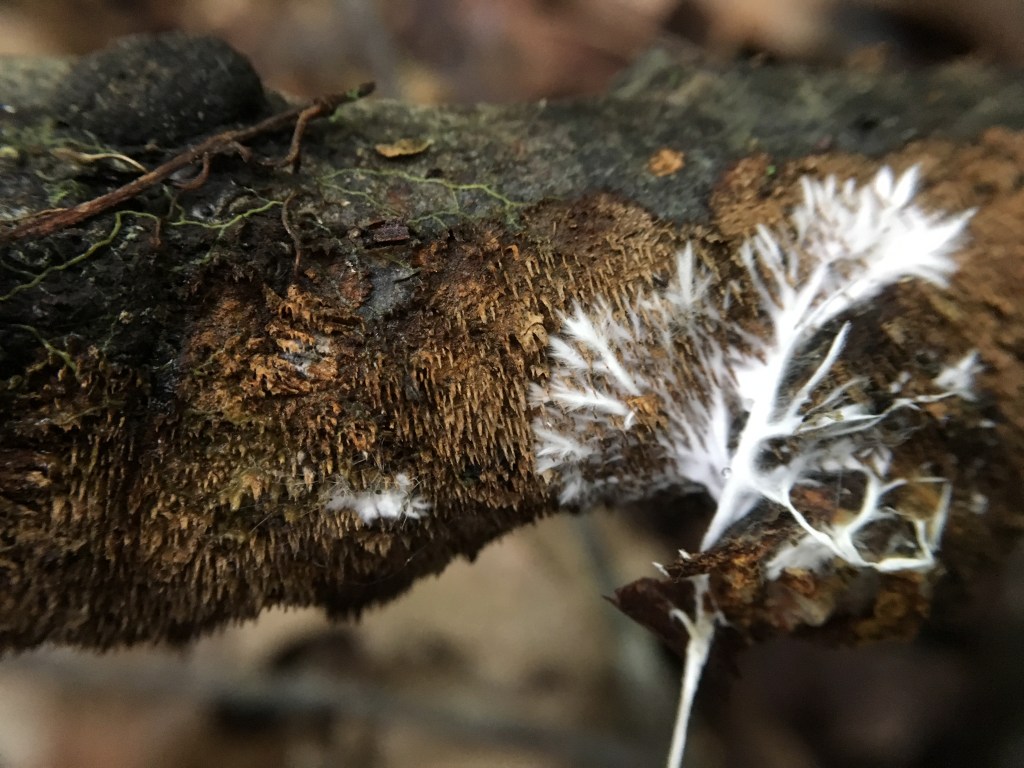
There are at least three species of fungus on this log, A archeri, Snow Fungus, and an unidentified toothed fungus with the small yellow mycelium. I’m not sure which species the large white mycelium belongs to.

Snow fungus grows all over the world, mostly in tropical areas, but extending north into temperate zones as well. It can be identified by its transparence and the fairly well defined lobes it forms3.

Sources

  1. Tremella fuciformis – Wikipedia
  2. #003: Yeast vs. Hyphae – Fungus Fact Friday
  3. Tremella fuciformis (MushroomExpert.Com)

Do mushrooms grow underwater?

Fungi are one of the most diverse and omnipresent forms of life. There are likely millions of species, the vast majority of which are unidentified and poorly understood, performing all kinds of crazy ecological roles we haven’t even begun to study. But they do have one limitation: mushrooms don’t grow underwater, right?

You won’t see marine mushrooms in field guides, and might never encounter one with your own eyes, but they do in fact exist. According to Wikipedia, 400 species of marine fungi have been described. This is thought to represent something like 1% of the total number of marine fungi.

But fungi and mushrooms aren’t quite the same thing. Mushrooms are specifically macroscopic fungi, you might point out. Sure, there might be all kinds of microscopic fungi, but “real” mushrooms underwater??

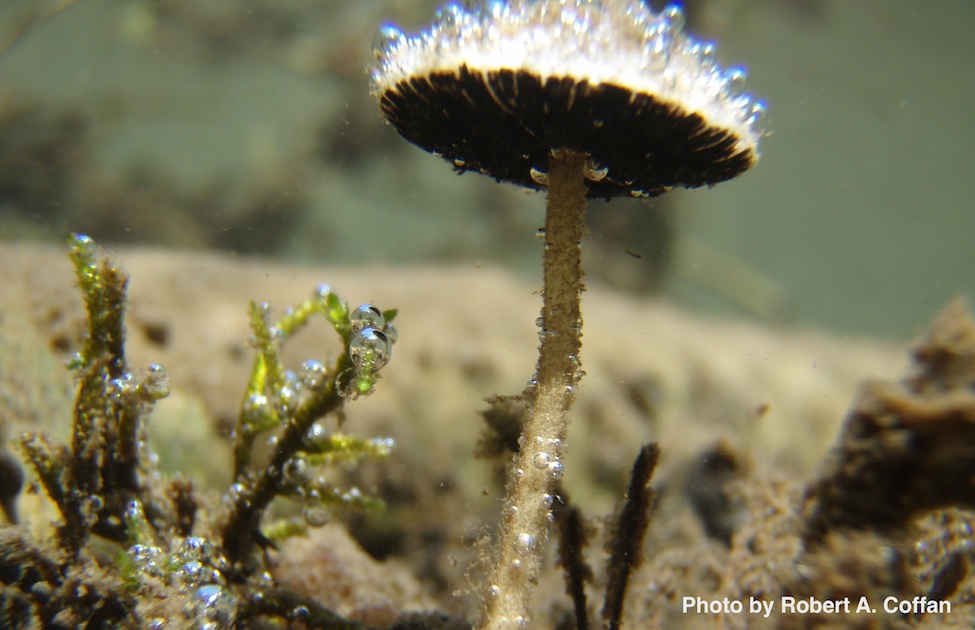
The answer is still yes, although this is very uncharted territory. The best described, and possibly only fully accepted underwater mushroom is Psathyrella aquatica, which was first documented in Oregon in 2005. For more information on this mushroom see the sources below.

The existence of underwater mushrooms poses further questions. Fungi respire, so how does an underwater mushroom “breathe”? One suggestion is that P. aquatica creates a bubble around its gills that allows for gas exchange and spore release. Other aquatic fungi are believed to absorb oxygen directly from the surrounding water in the same way that fish do through their gills.

Another question is, how does spore dispersal work? Wouldn’t all the spores just float downstream and out to the ocean? This question remains to be definitely answered, but it seems likely that aquatic insects are involved. Perhaps aquatic insects lay their eggs in the mushroom which then covers the larvae in spores?

Another remarkable thing is the fact that this mushroom must have evolved from terrestrial mushrooms, as opposed to evolving directly from marine fungi, because it’s a member of the genus Psathyrella, which is an extremely common group of terrestrial little brown mushrooms. Interestingly, the first fungi were aquatic. They are believed to have lived in water and swam around using flagella. Psathyrella aquatica‘s ancestors then colonized the land some 500 million years ago, only for it to recolonize water.

I have a vague memory of having seen something like a mushroom underwater. Most likely this is retroactive thinking, but now that we know to look, who knows what we will find?

Sources:

Chanterelles!

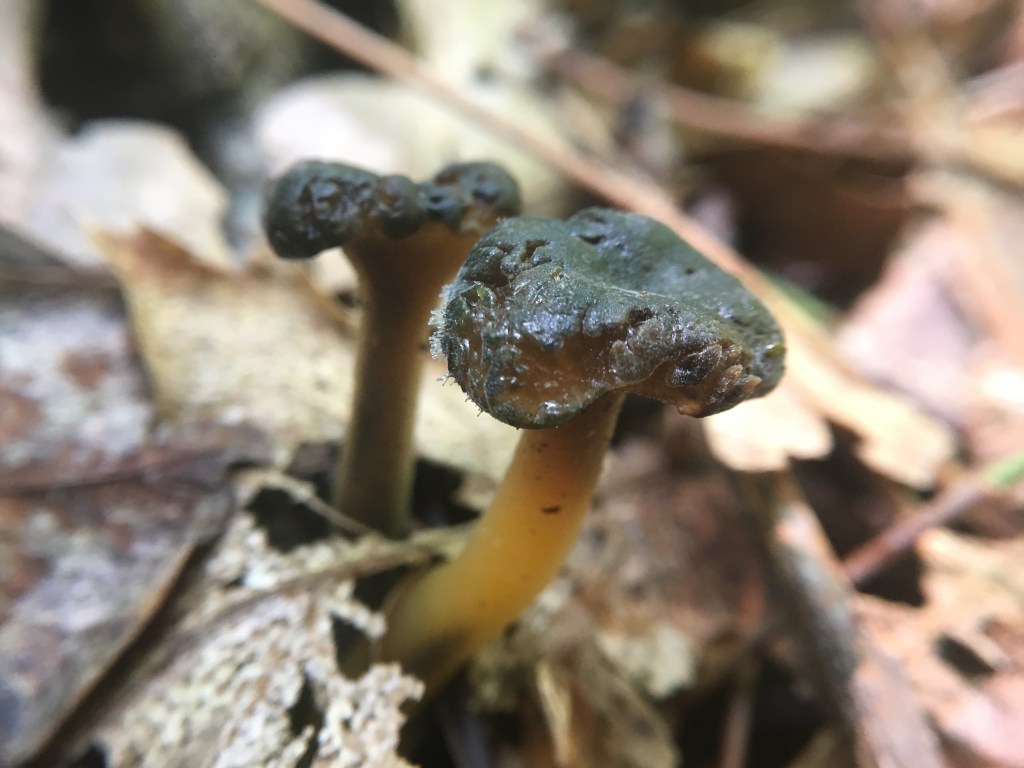
Chanterelles are out! The upcoming two months are the best time of year, in my opinion, if you are looking to harvest edible mushrooms for the table. I won’t go over how to identify chanterelles, as there are already plenty of resources on that. Instead, I’m just going to share some pictures of the different types of chanterelles that grow in my region.

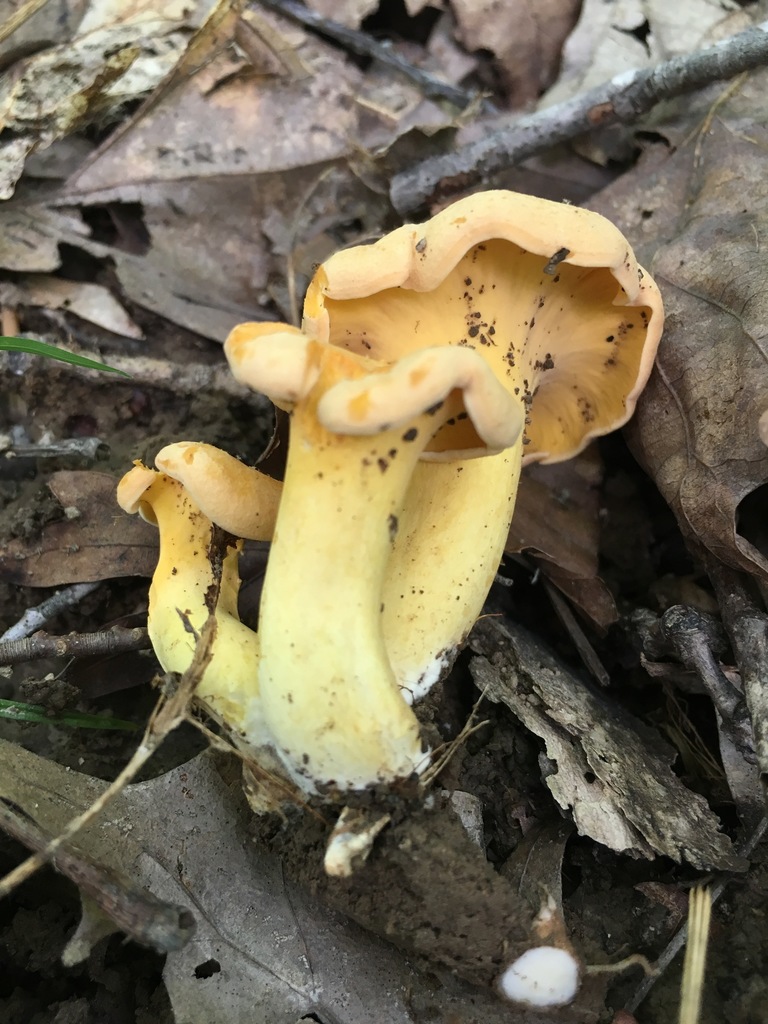
C. lewisii – one of the many North American species roughly equivalent to the European Golden Chanterelle.

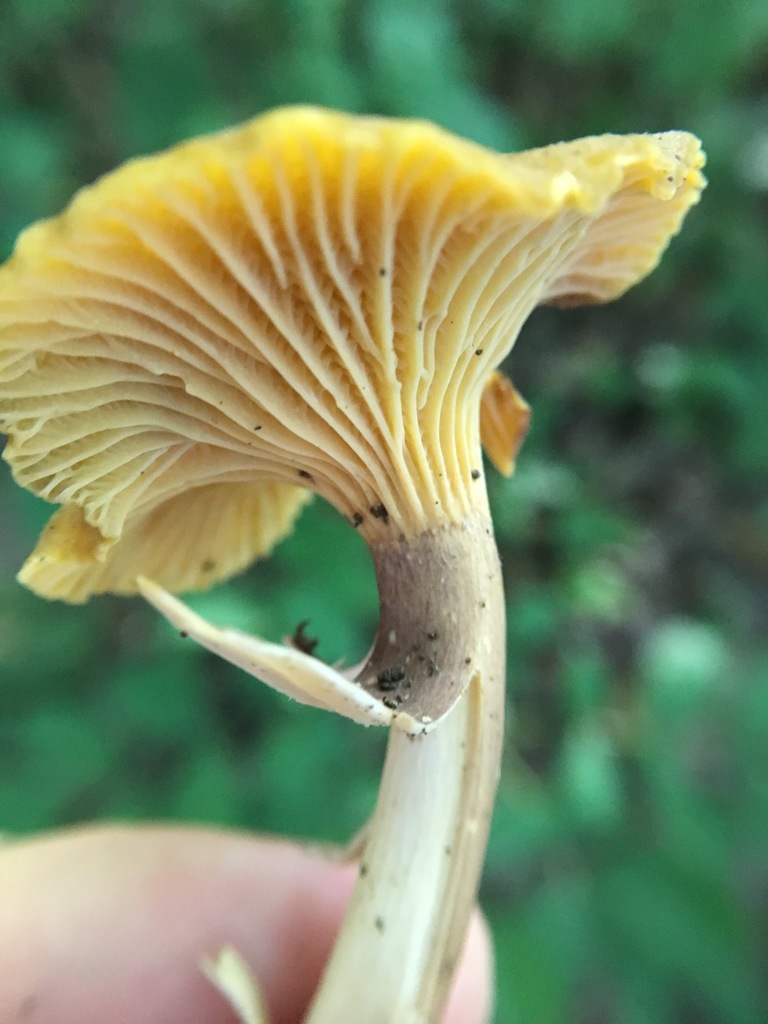
Probably the most highly sought after chanterelle is the “golden chanterelle,” Cantharellus cibarius, the “original” chanterelle of French cuisine. However, DNA analysis has shown that this mushroom does not grow in the United States. Instead we have a cluster of similar species we may casually call “golden chanterelles,” but actually comprise a group of genetically distinct North American species including the “Chicago Chanterelle,” the “Appalachian Chanterelle,” and the “Peach Chanterelle.”

Smooth Chanterelles

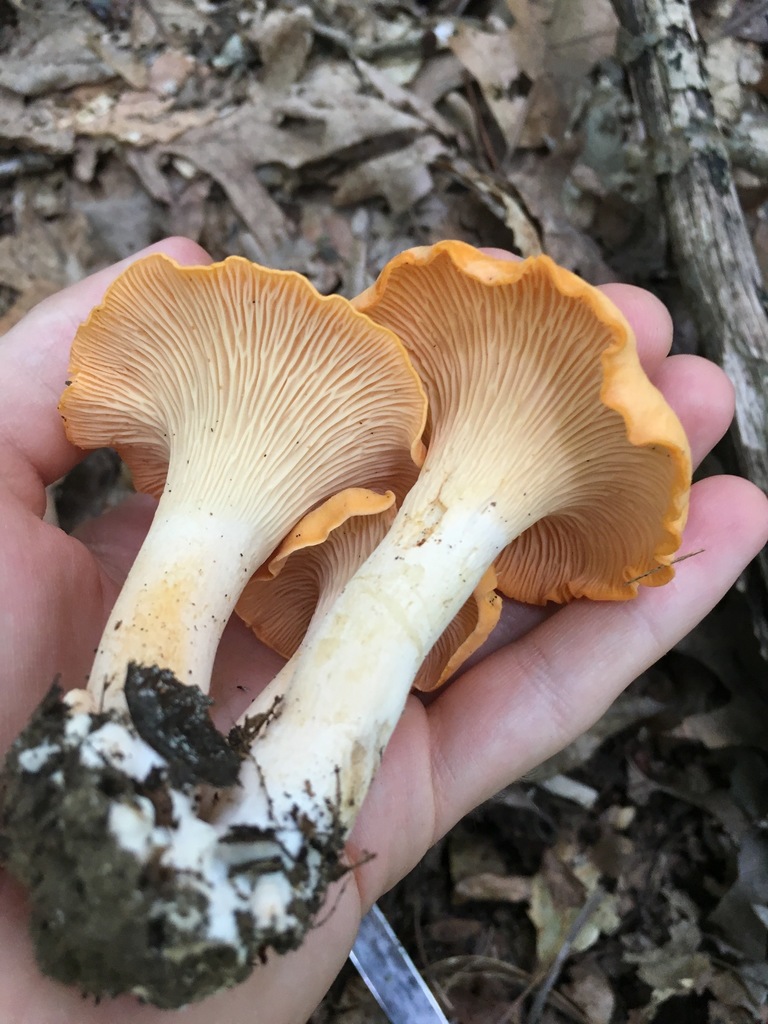
Smooth Chanterelles (Cantharellus lateritius) tend to be a little bulkier than “golden chanterelles,” and supposedly have a weaker flavor. What generally sets “golden” and “smooth” chanterelles apart is that golden chanterelles have more pronounced folds under the cap. Smooth chanterelles develop folds as well, but typically only gradually as they mature (for instance the chanterelles up top, are most likely smooth chanterelles, even though they are not entirely smooth). As with “golden chanterelles” the story is not quite as simple as most “field to kitchen” guides would have it. There is also a nearly indistinguishable species called C. flavolateritus, which likely evolved just to make things more complicated.

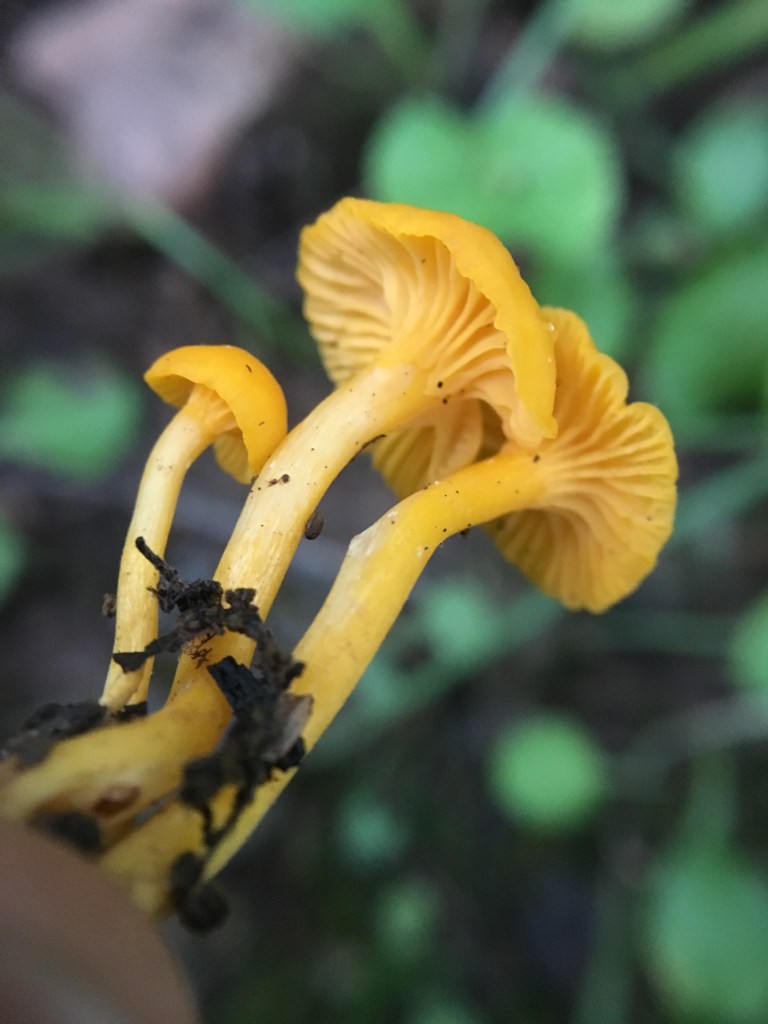
Not all chanterelles are quite this complicated, however. At least not yet. The above is C. minor, which as it’s name suggests, can mostly be identified on the basis of its smallness.

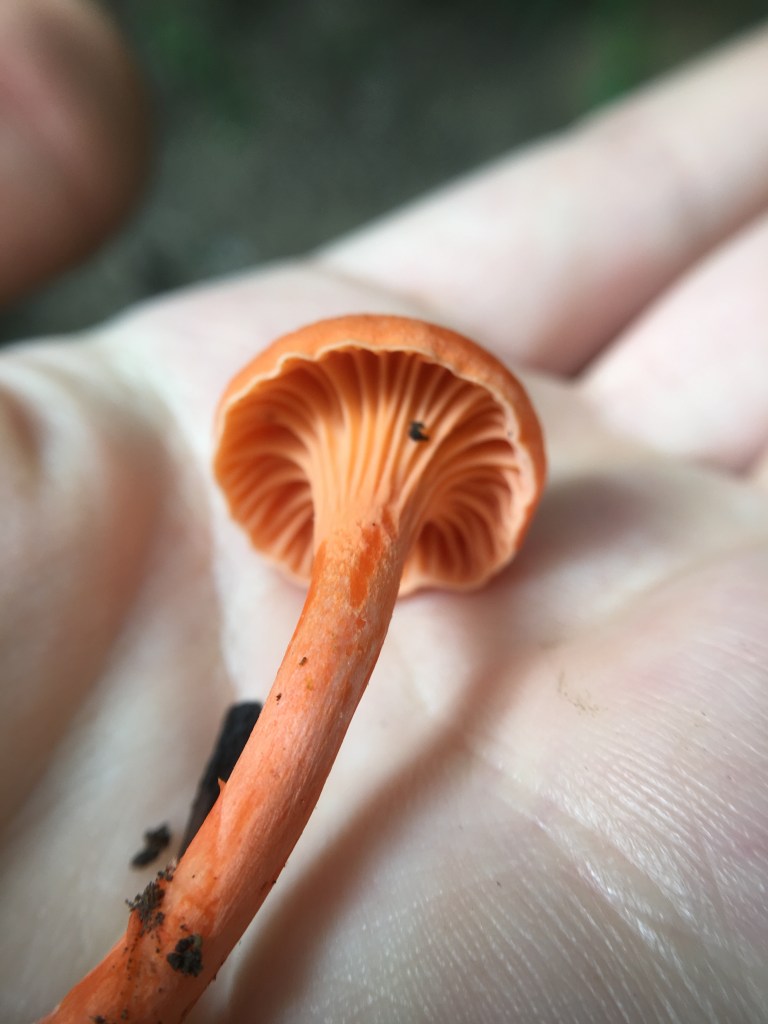
The red chanterelle, is also quite small, and has a distinctive color to make things even easier.

Smooth chanterelles are not to their full size yet.

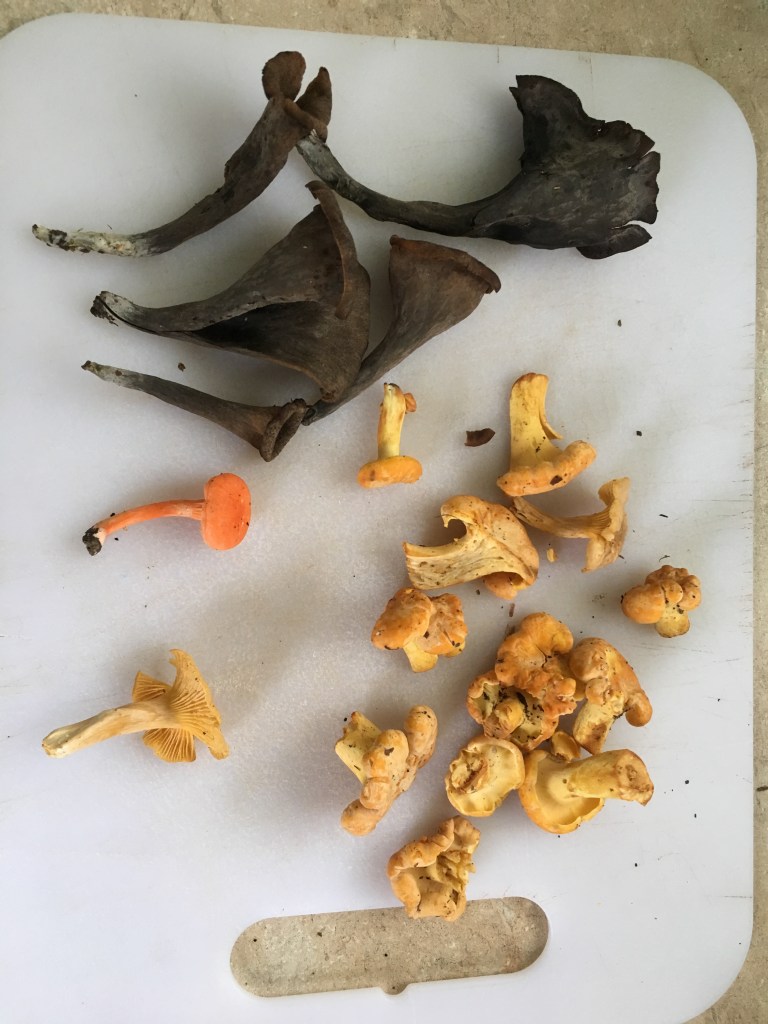
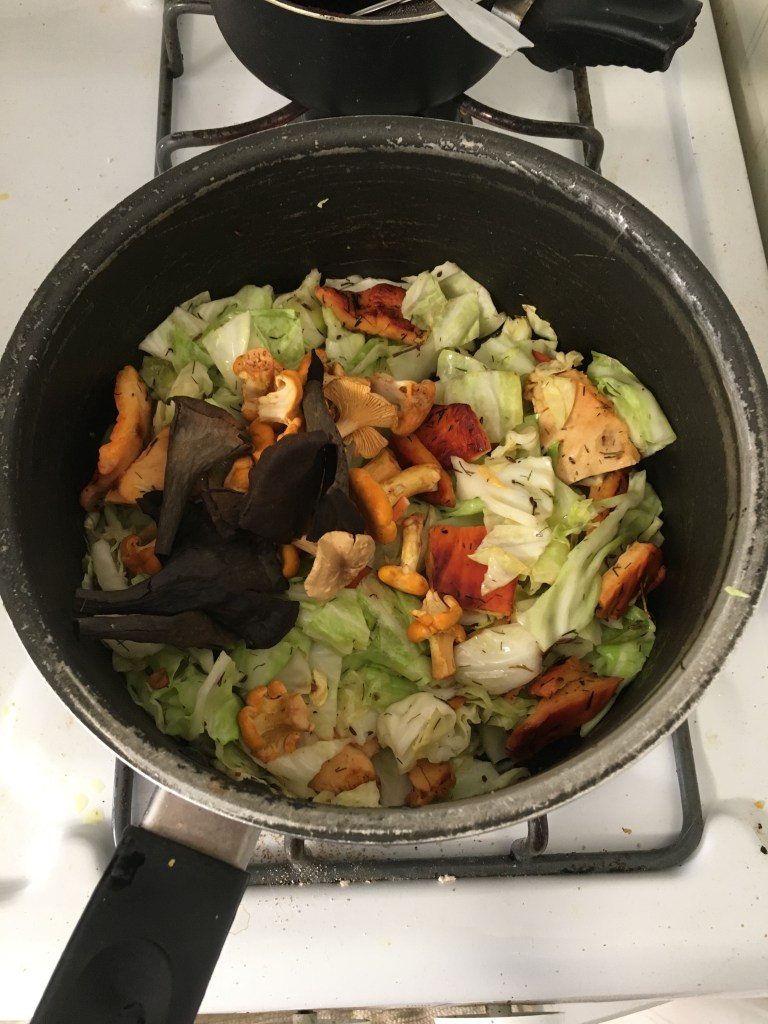
Lastly, there are Black Trumpets, which belong to a slightly difference genus, Craterellus. The European equivalent is called trompette de la mort, “trumpet of death,” in French. They are highly prized, especially for their flavor dried. Fresh, they tend to be rather insubstantial.

Cabbage and various mushrooms

Regardless of the exact species you find, what makes chanterelles great edibles, is that they are easy to find (they’re bright yellow and grow in large clusters) and are usually not overly bug-ridden. I find smooth chanterelles have a nice firm texture and slightly fruity flavor, which without sounding too much like the fox and the grapes, I would take as gladly as morels any day.

Design a site like this with WordPress.com
Get started