What’s Coming Up? Miscellaneous Spring Developments

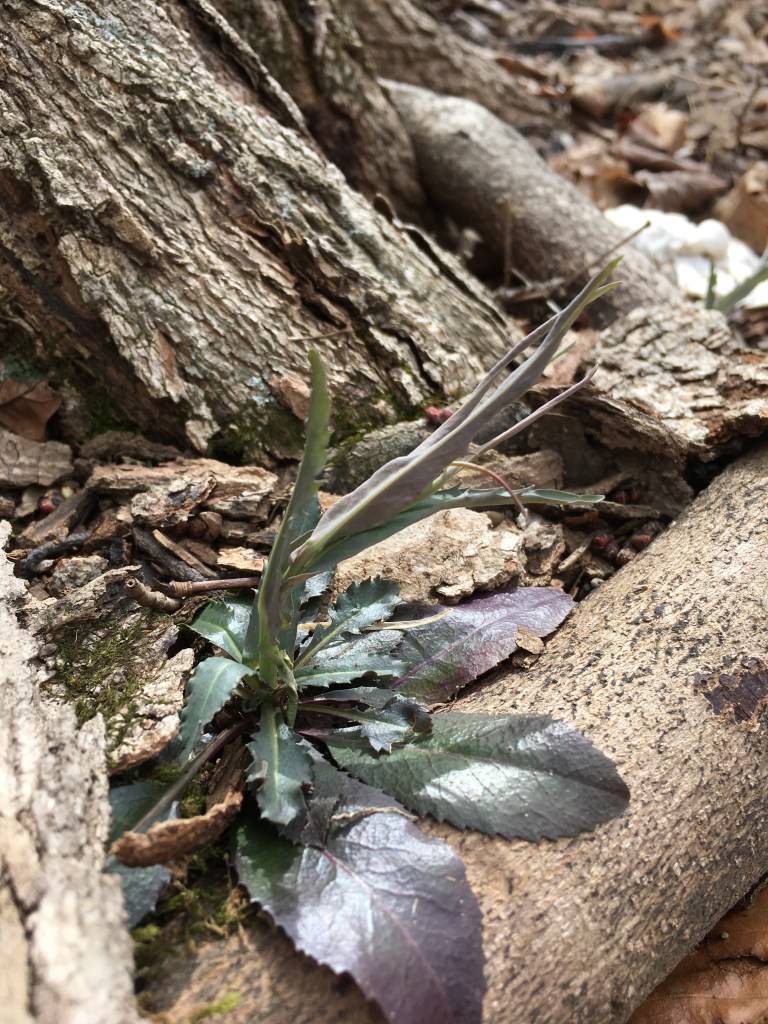
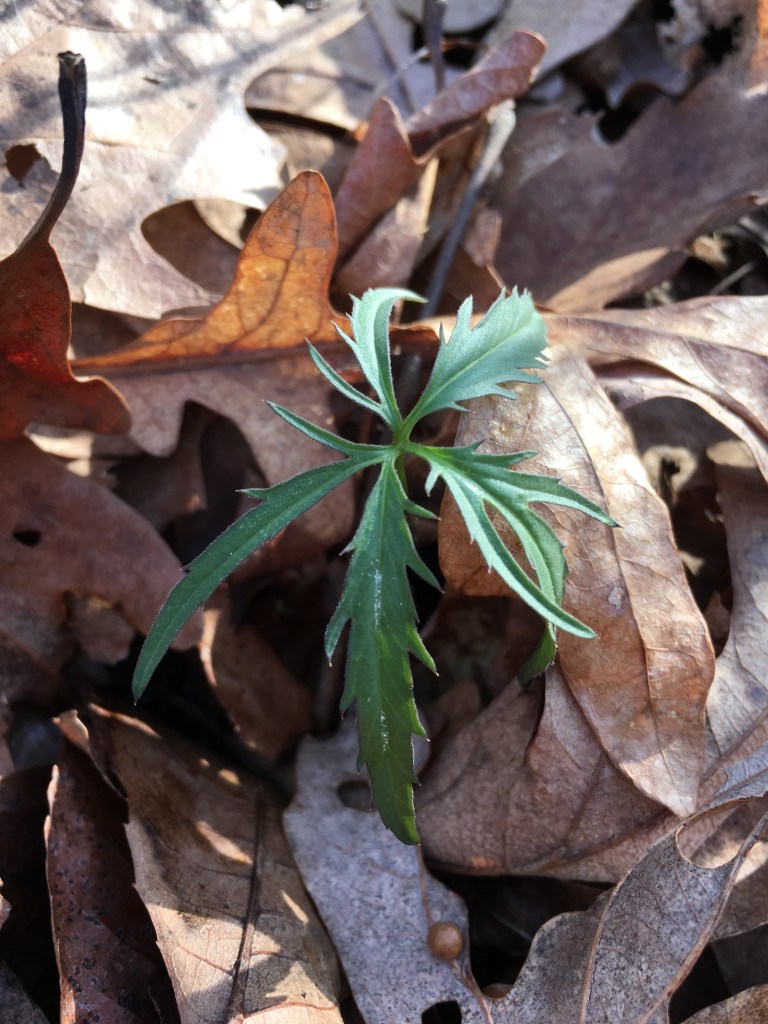
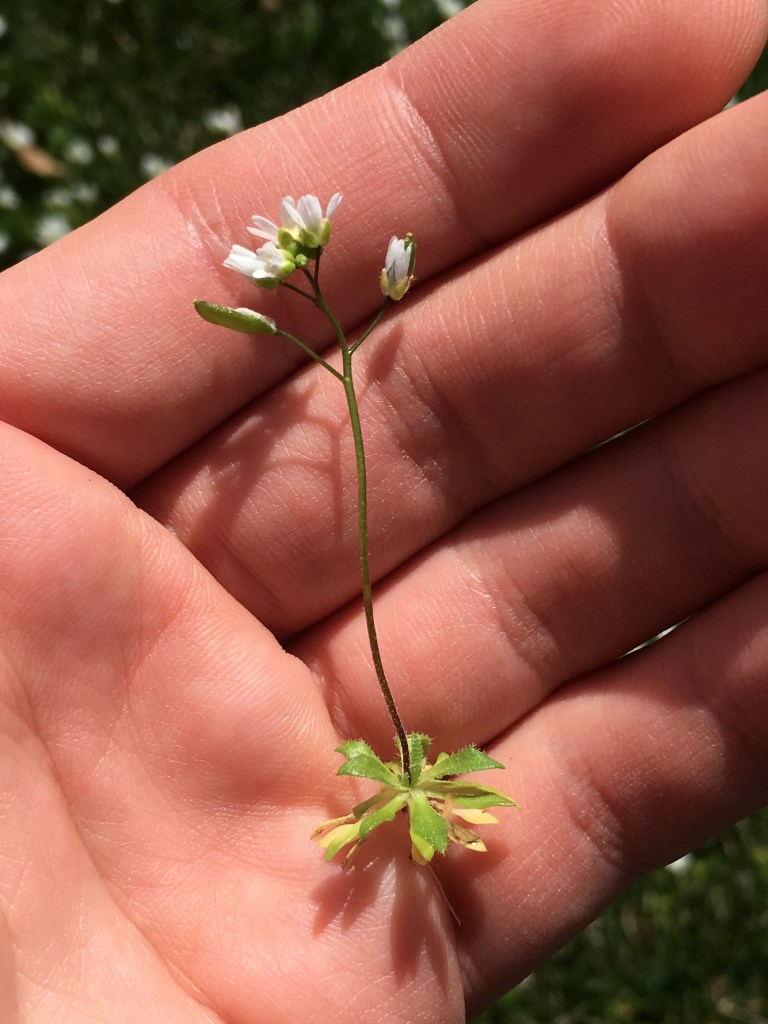
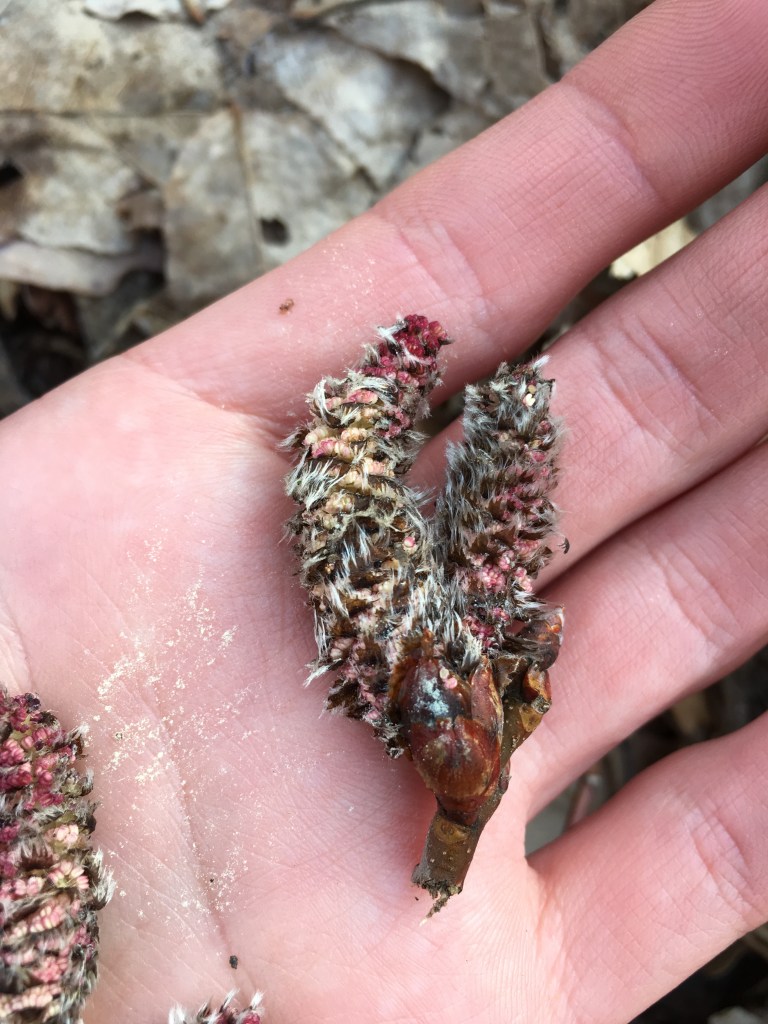
Can you identify these? (Answers at the bottom)

Answers

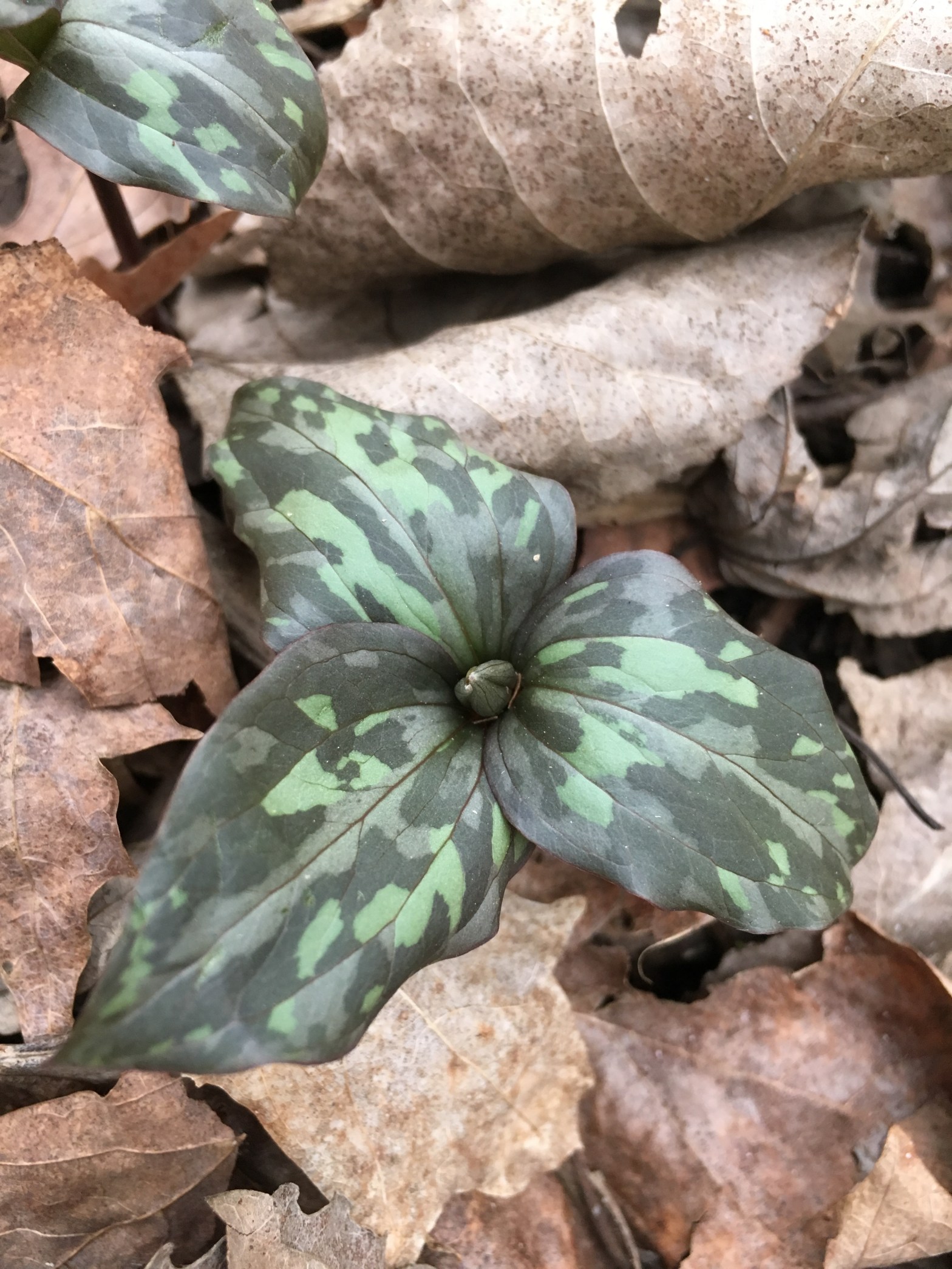
Up top (1): a Trillium sp. most likely Trillium sessile or Toadshade.

(2): This crustacean-esque plant is a species of Rockcress. These belong to the family Cruciferae, like many well known leafy greens. At this stage it looks a lot like some kind of lobster/crayfish/prawn.

(3): Cut-leaved Toothwort. A classic spring ephemeral which should be blooming any day now.

(4): Draba verna or common whitlowgrass is also in the Mustard family, like rockcress. Apparently a whitlow is an infection of the tip of the finger caused by herpes, which Draba verna was used to treat. Invasive/naturalized.

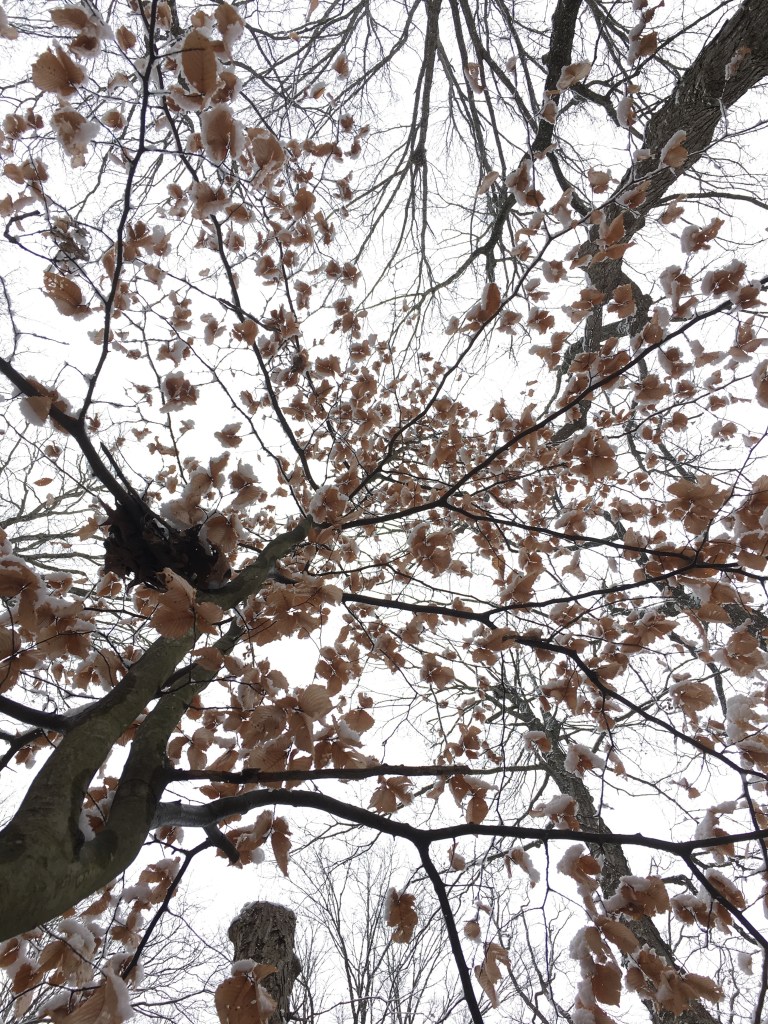
(5): Big Toothed Aspen. Without more context you might not be able to get this one down to the species, but you could infer the genus Populus, the aspens/cottonwoods. These catkins are not coming up, but rather falling down to the forest floor, where you can find lots of evidence for what’s going on above. You can begin to see the cotton-y seeds which will soon be spread in the wind.

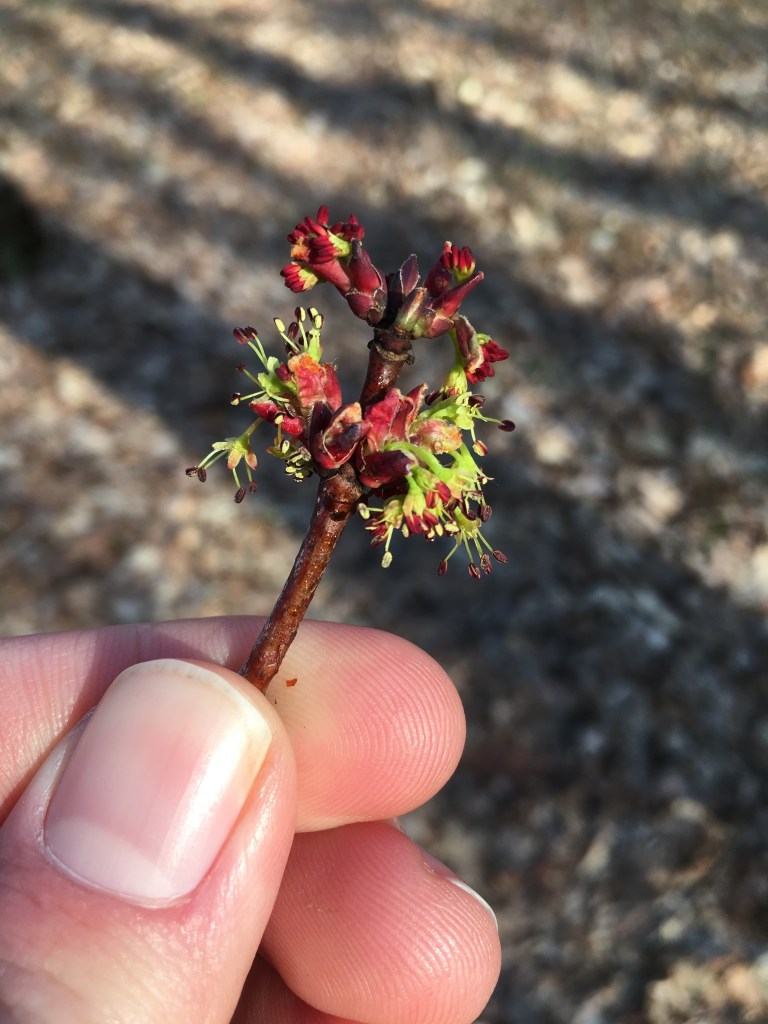
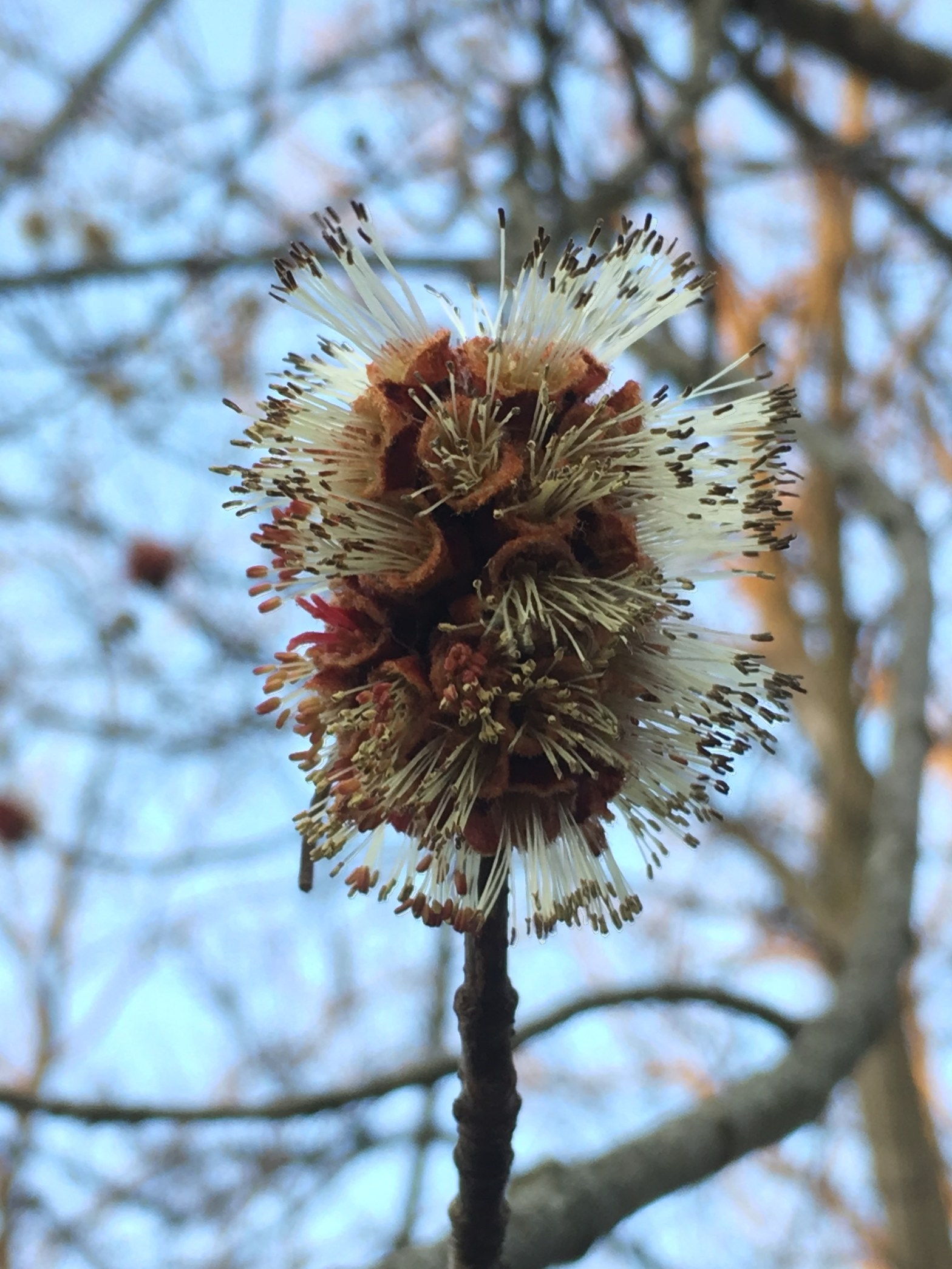
(6): Red Maple. Another piece of evidence found fallen on the ground.

Recognizing the American Elm in Bloom

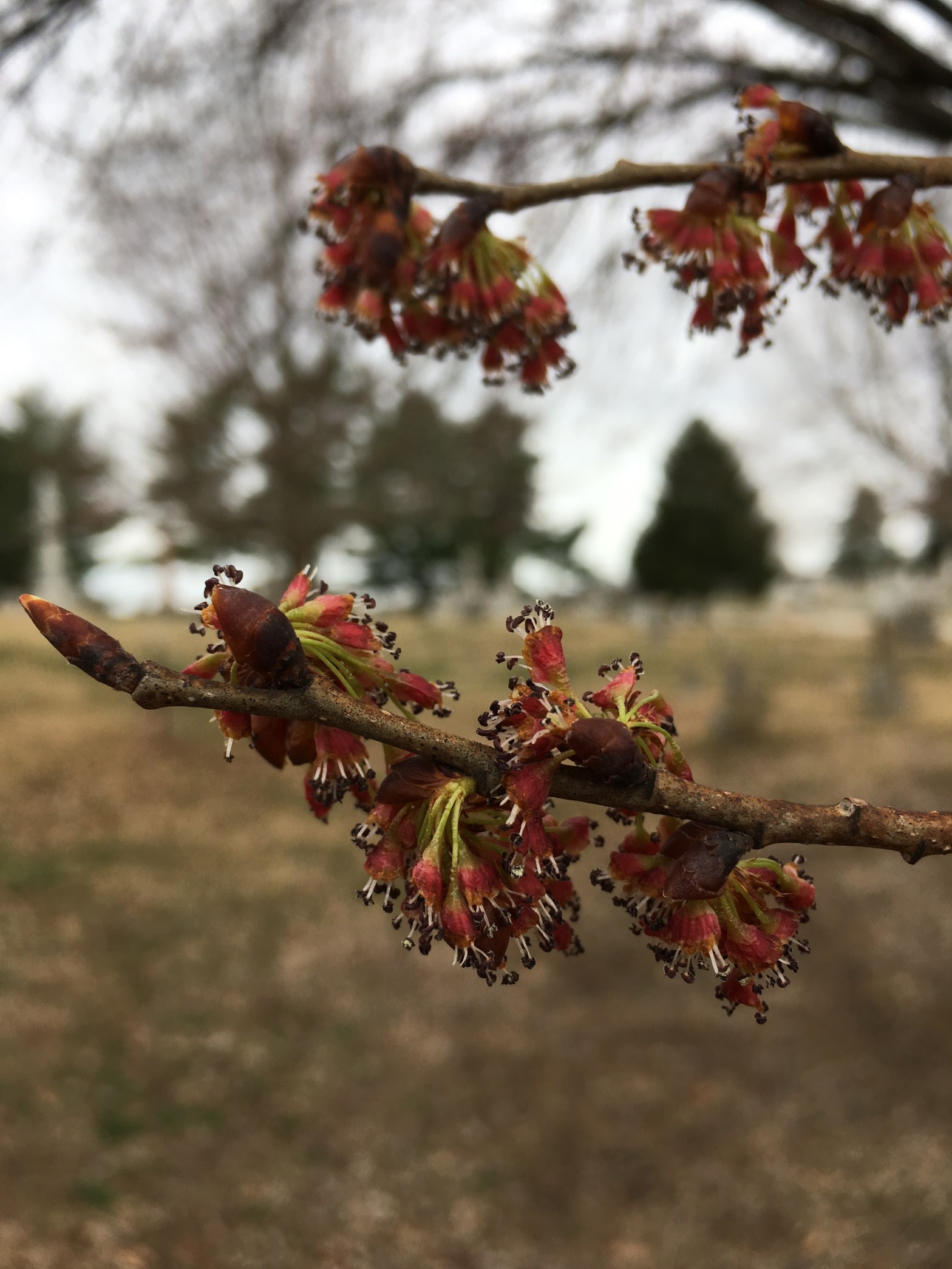
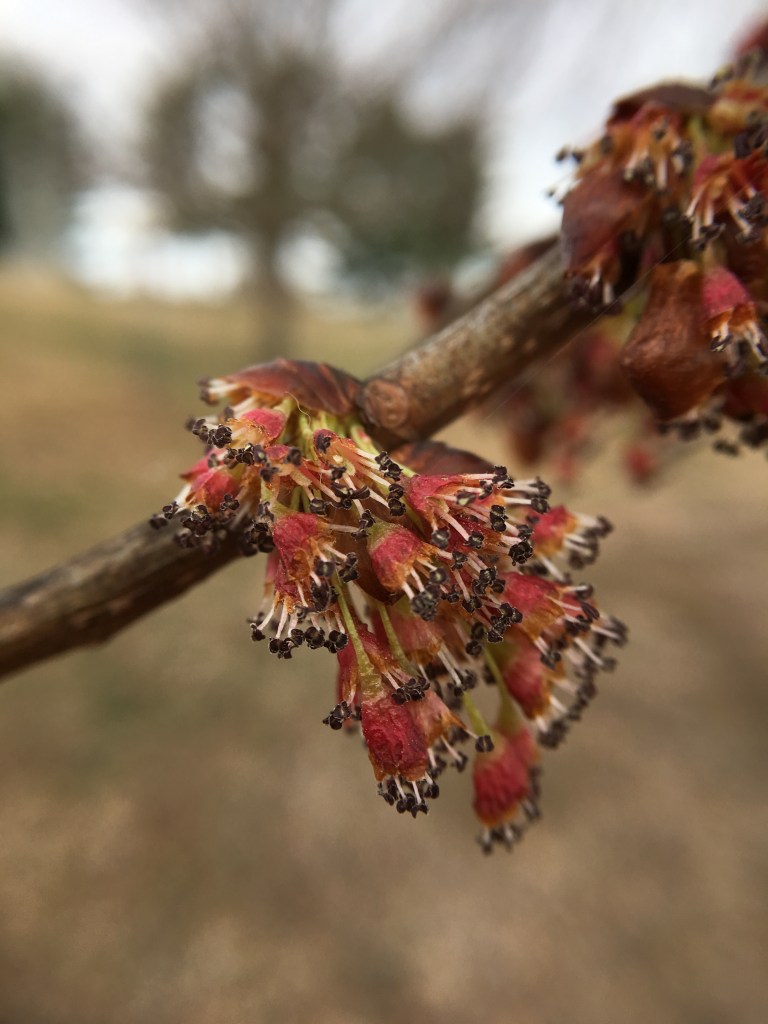
The American Elm can be confused with two other species of elm, The Slippery Elm and the Siberian Elm. Luckily, the American Elm can be easily distinguished from these two when it is bloom— as it happens to be right now (in Indiana). So if you’re unsure about a particular tree, now’s the time to check!

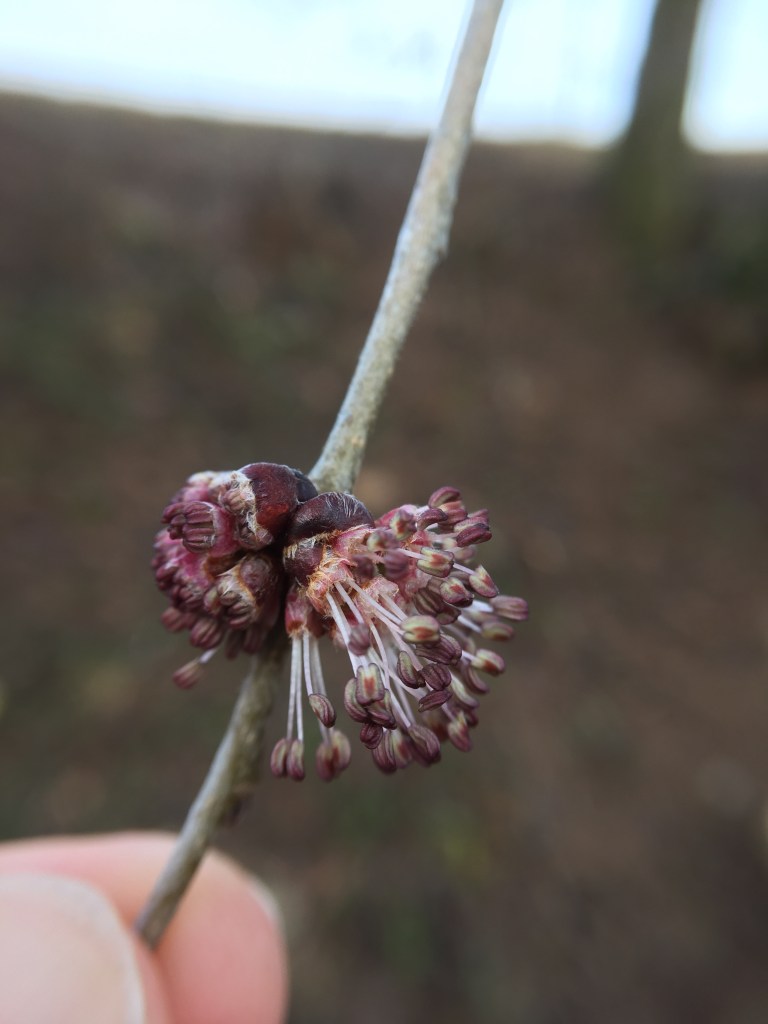
American Elm flowers are pendulous, they hang from stalks about half an inch long, which get even longer after pollination. The other two species have flowers without stalks or very short stalks. It’s as simple as that.

American Elm
Not American Elm

Don’t confuse the anther and filament (the pollinating part sticking out of the flower), for the stalk. Here’s another comparison

American Elm
Not American Elm

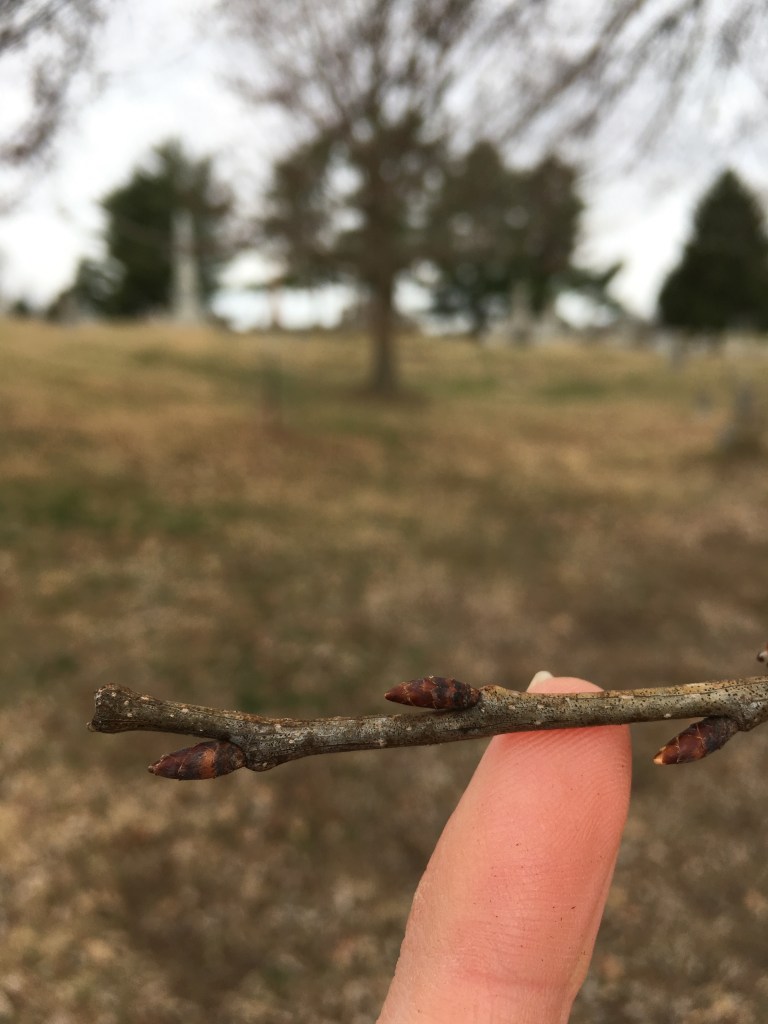
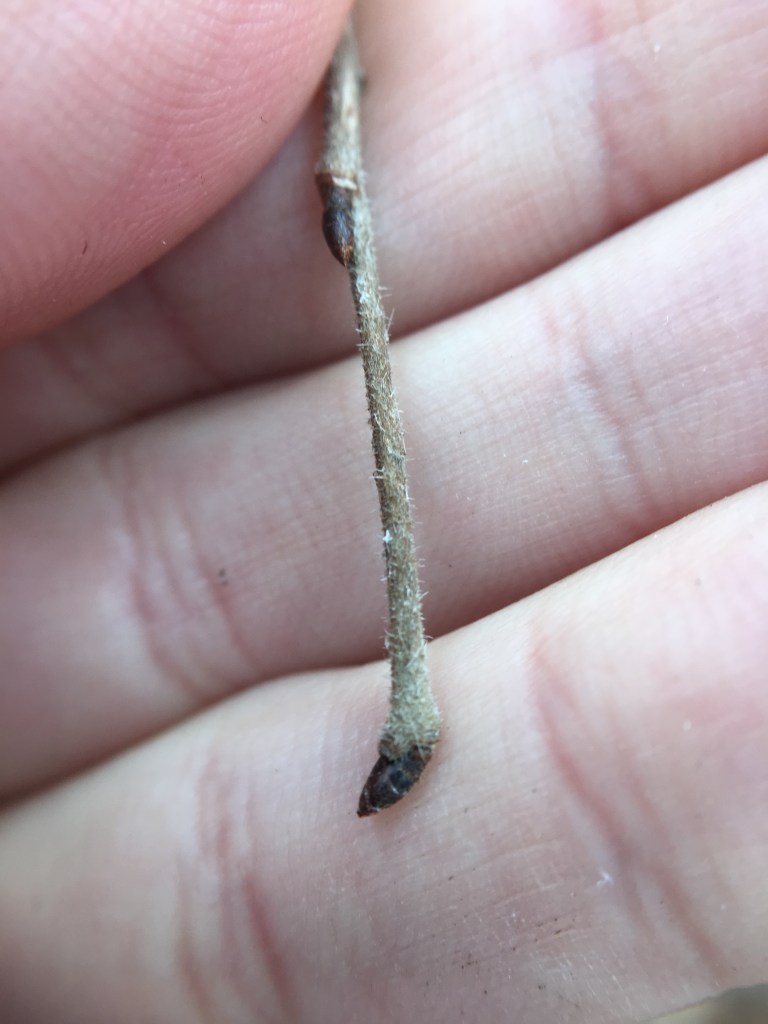
If elms in your area don’t happen to be in flower right now, another thing that can help is looking at the buds. American Elm buds are orangey brown, and relatively hairless.

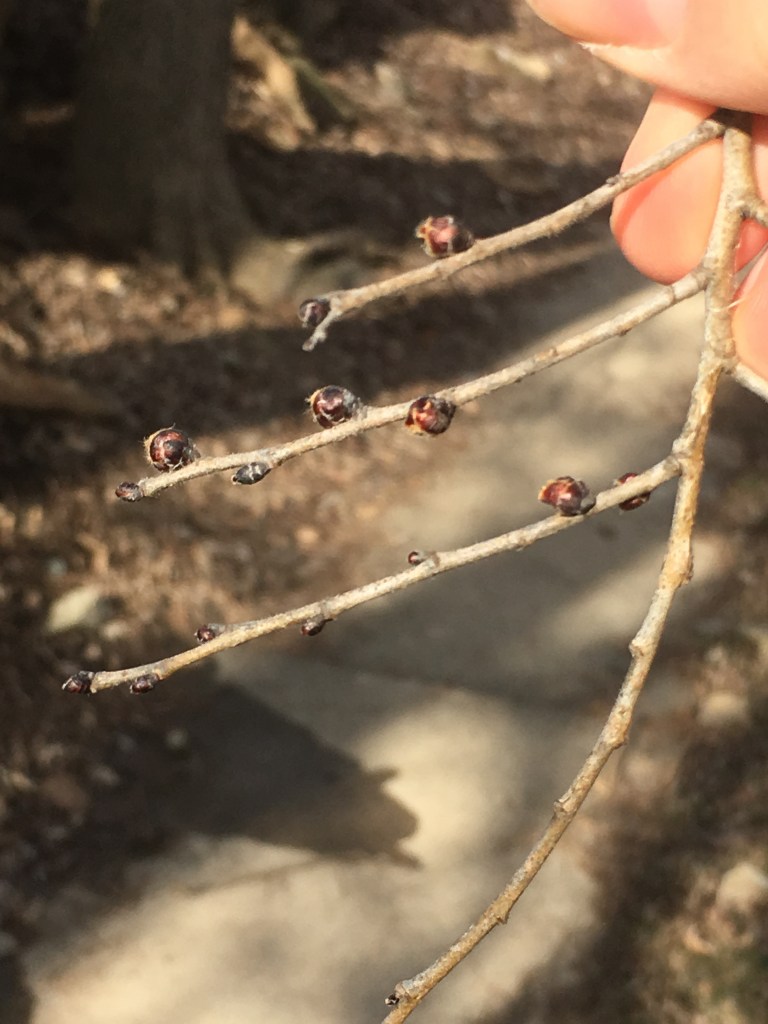
The other two elms have more of a purple/grey color scheme going.

Fuzzy twig and ovate buds suggesting Slippery Elm
Small rounded buds suggested Siberian Elm. The leaf buds are much smaller than the flower buds.

Monoecious? Dioecious? Understanding Maples in Bloom

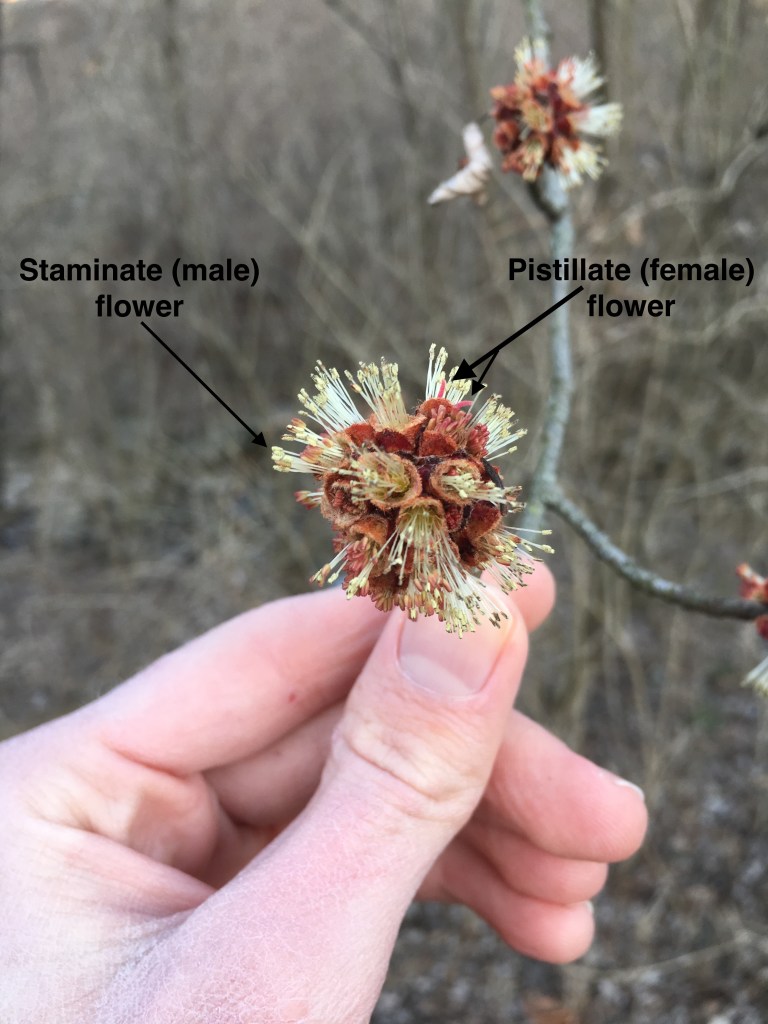
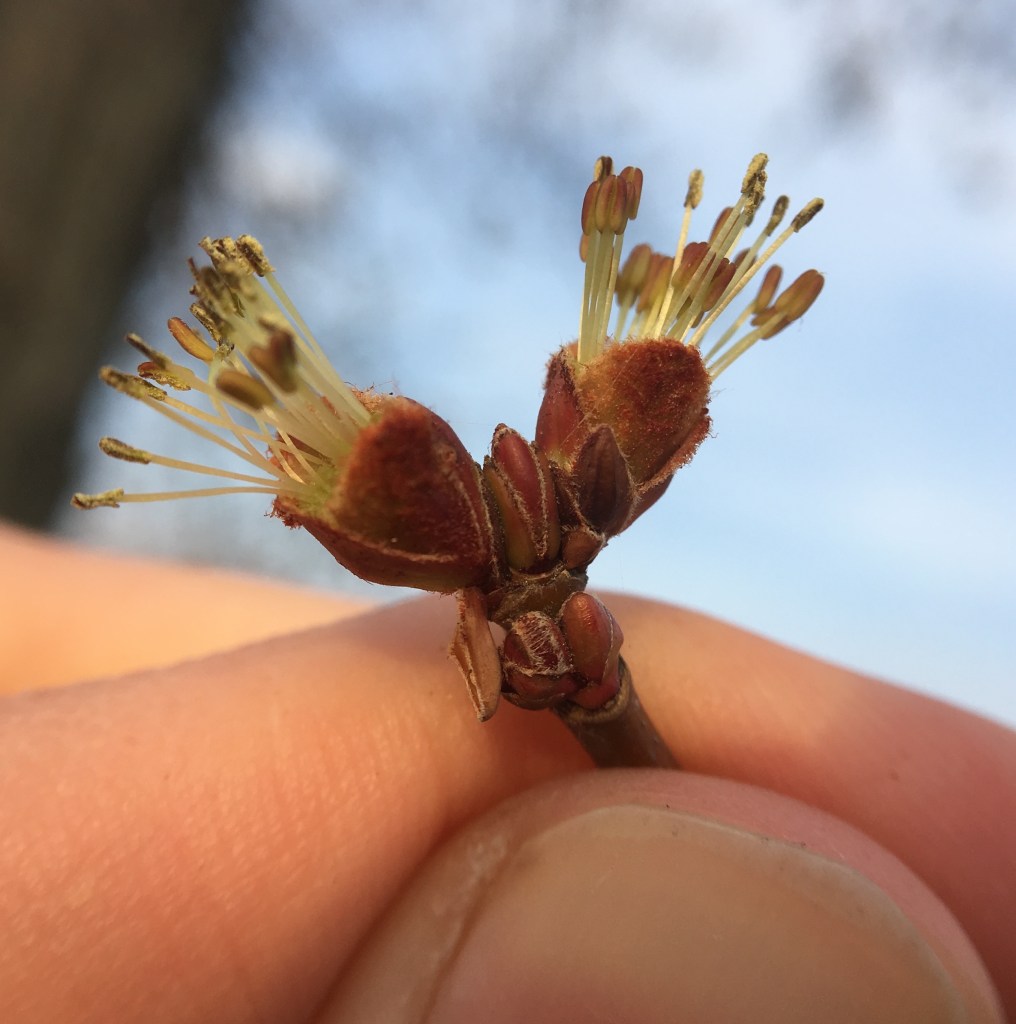
First, a quick explanation of the words in the title above: monoecious vs dioecious. Both of these differ from a third type of flower, the “perfect” flower, or bisexual flower which has both pistils and stamens (an example of this are elms, about which, more in another post). So in both monoecious and dioecious flowers there is some separation between pistil and stamen, between male and female parts. The difference is that if a species is monoecious both types of flowers, pistillate and staminate (female and male), occur on the same individual. Dioecious plants, on the other hand, have separate male and female individuals.

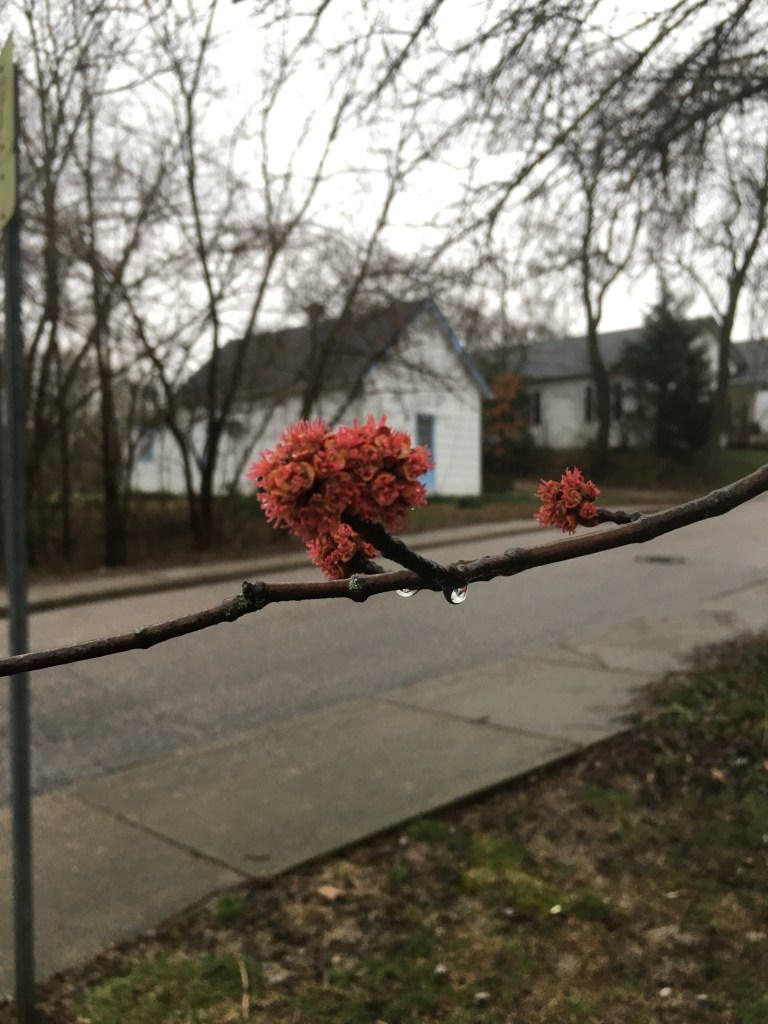
What’s interesting about maples is that they can be both. Most maples have a predominate sex, but you will often find on mostly staminate trees pistillate flowers, as below.

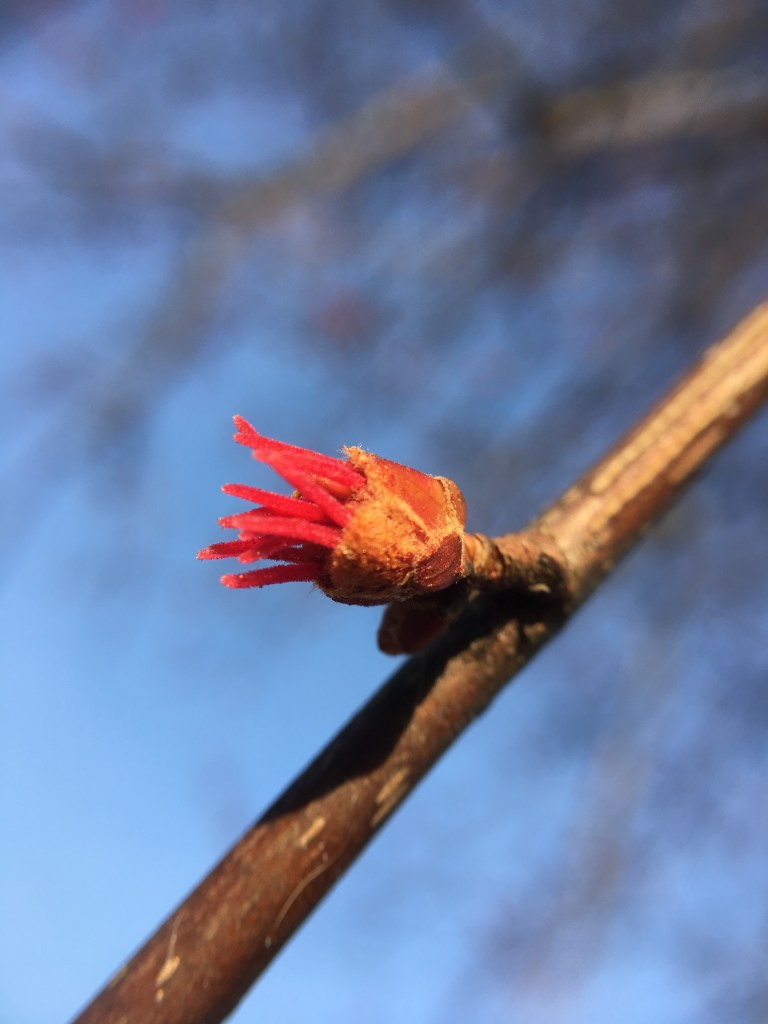
Dioecious individuals also exist, as for instance the pistillate flowers below.

Maples pollinate via the wind so they have no need to attract insects, and hence no need for petals. Maple flowers are thus considered “incomplete” flowers. Here are a couple more pictures:

Walnut Bark at Different Stages of its Lifecycle.

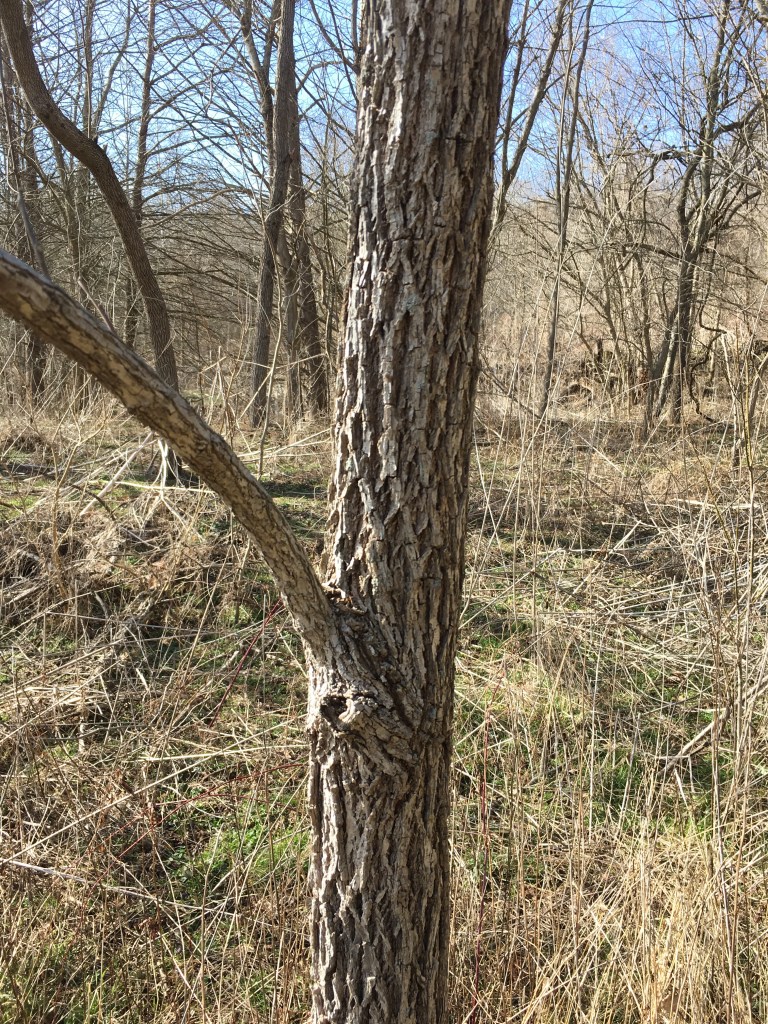
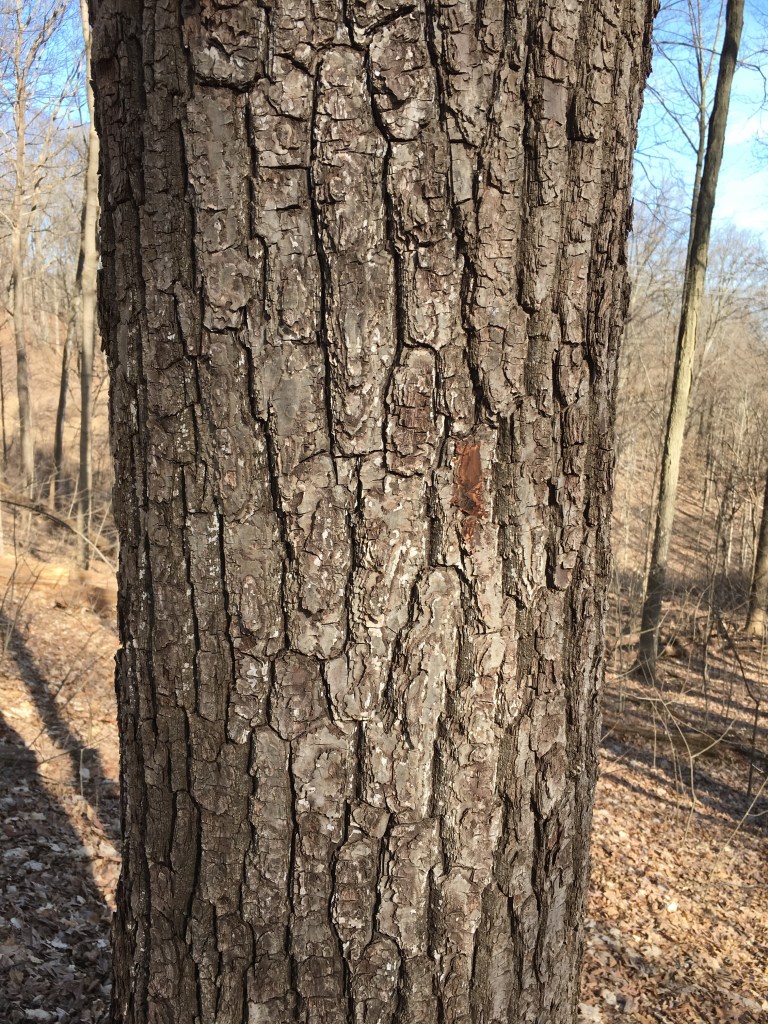
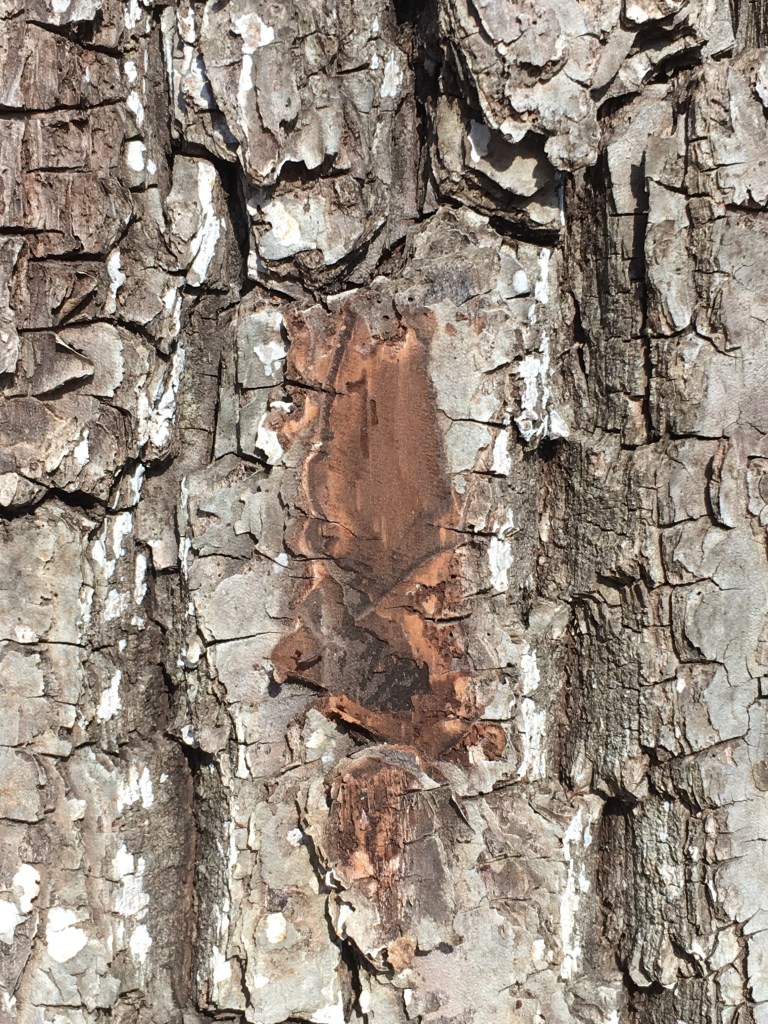
A major obstacle to identifying trees by bark is that the bark can look very different at different stages of the lifecycle. Guidebooks usually show only the bark at full maturity, which can make it difficult to identify younger trees and leaves out a fascinating metamorphosis.

Young walnuts closely resemble their relatives, the hickories. There is a kind of weaving pattern, like a lattice pie crust. The color is a fairly light grey. The furrows are slightly deeper than they would be for most hickories.

As a walnut gets older the bark becomes blockier, and begins almost to resemble sassafras. The furrows end abruptly in horizontal lines. The color changes from grey to an orangish brown. The bark no longer looks anything like a hickory.

At full size, walnut bark becomes flaky or scabby. This is the easiest part of the cycle to identify. As at every stage of the cycle, the knife test reveals a rich brown layer.

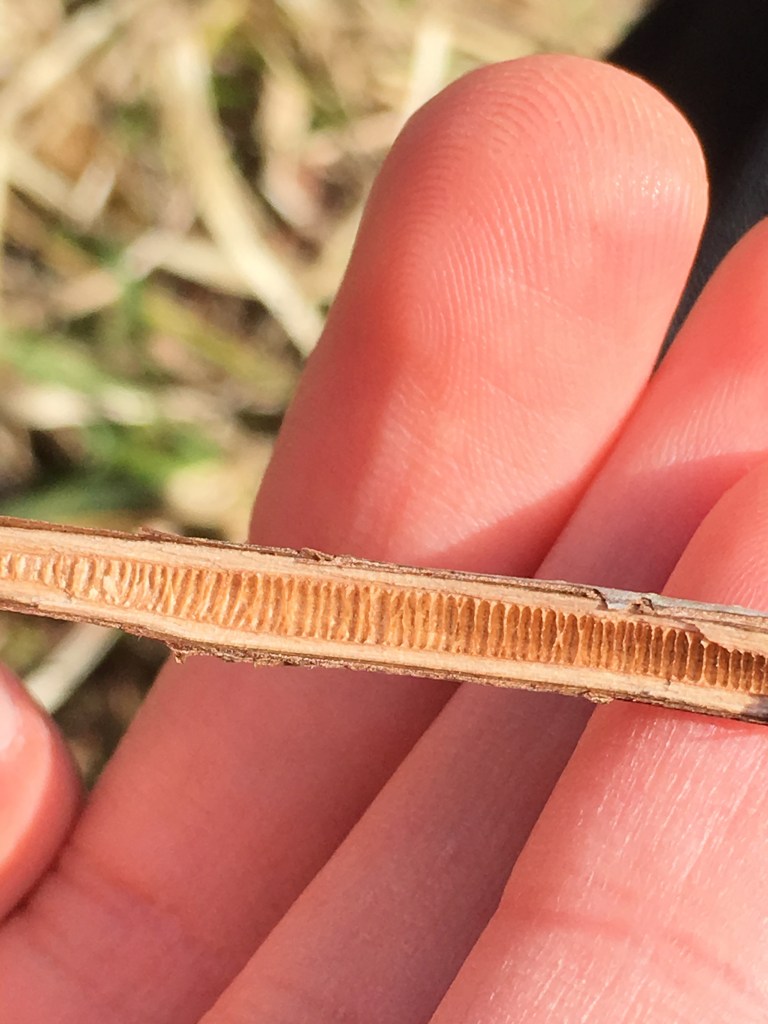
A final note on walnuts. Another distinctive feature is that the twigs have chambered pith. This is more or less unique in the whole plant kingdom. As far as I know, it is unknown why they evolved this unusual structure.

Crocus, Snowdrops, and Winter Aconite

A week ago we had ten inches of snow. There’s still some snow left, piled up along the edges of parking lots, but that hasn’t stopped winter blooming species from taking advantage of the suddenly temperate temperatures.

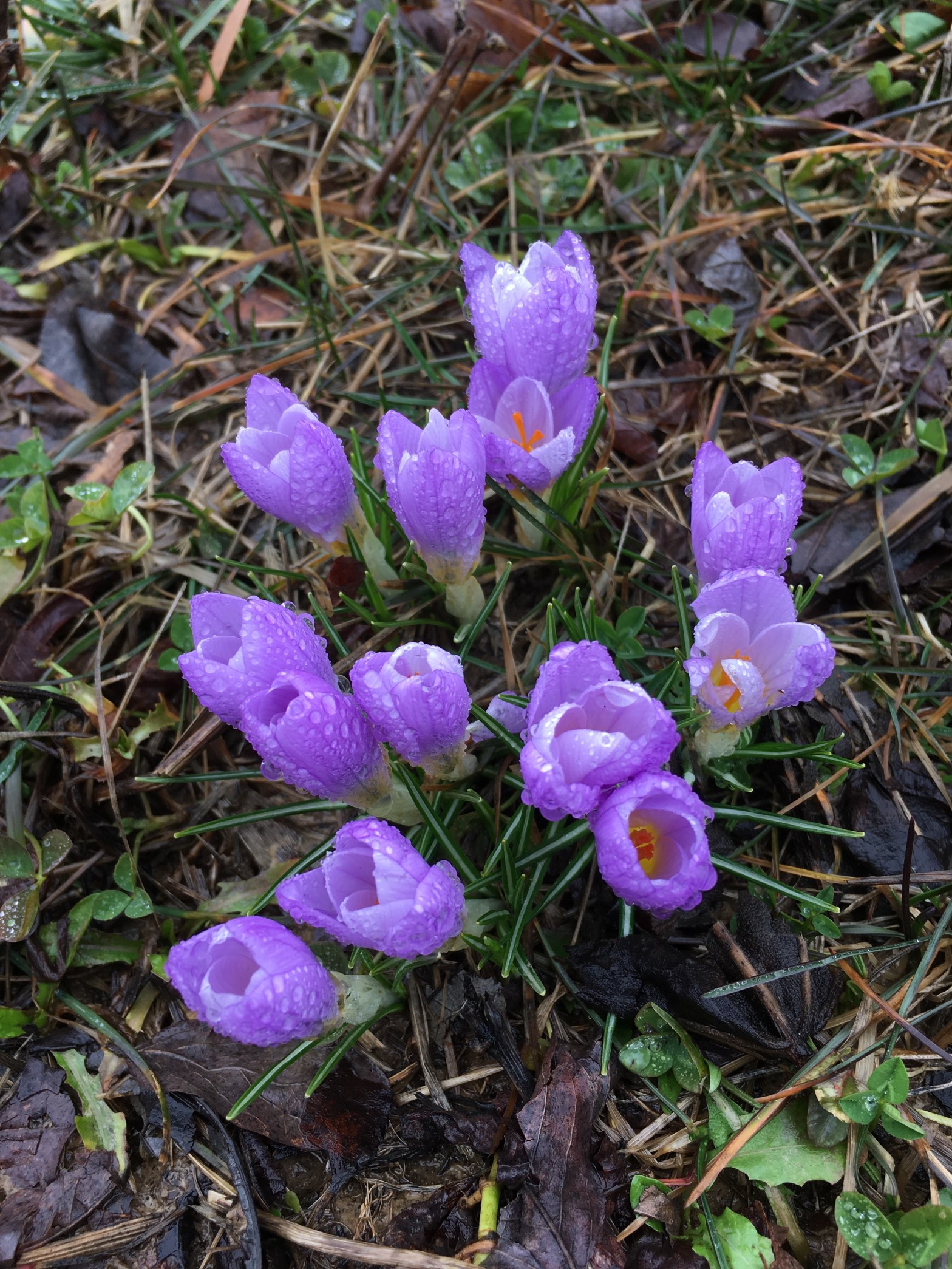
Firstly, above, there are the Crocuses. Something I didn’t know about this genus is that the spice saffron is made from a type of Crocus, and that the name Crocus ultimately links back through Greek and Hebrew to the Sanskrit word for saffron1. I am guessing that the crocus above is Crocus vernus, which is native to the Alps, Pyrenees and Balkans, and which cannot be made into saffron 😦

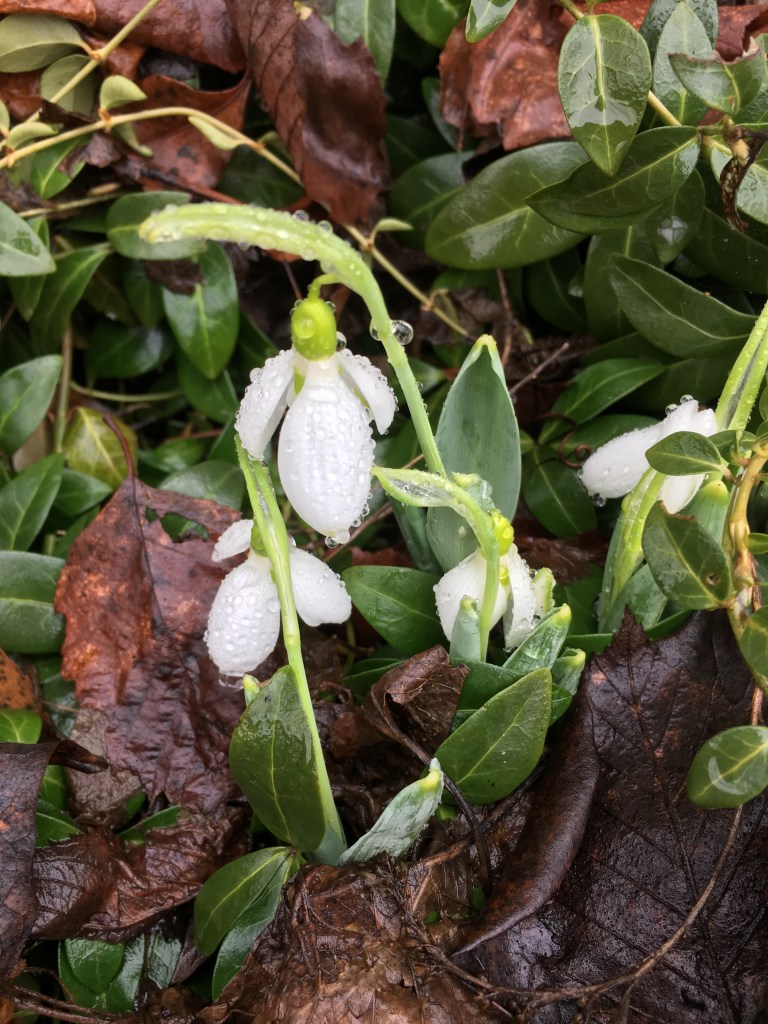
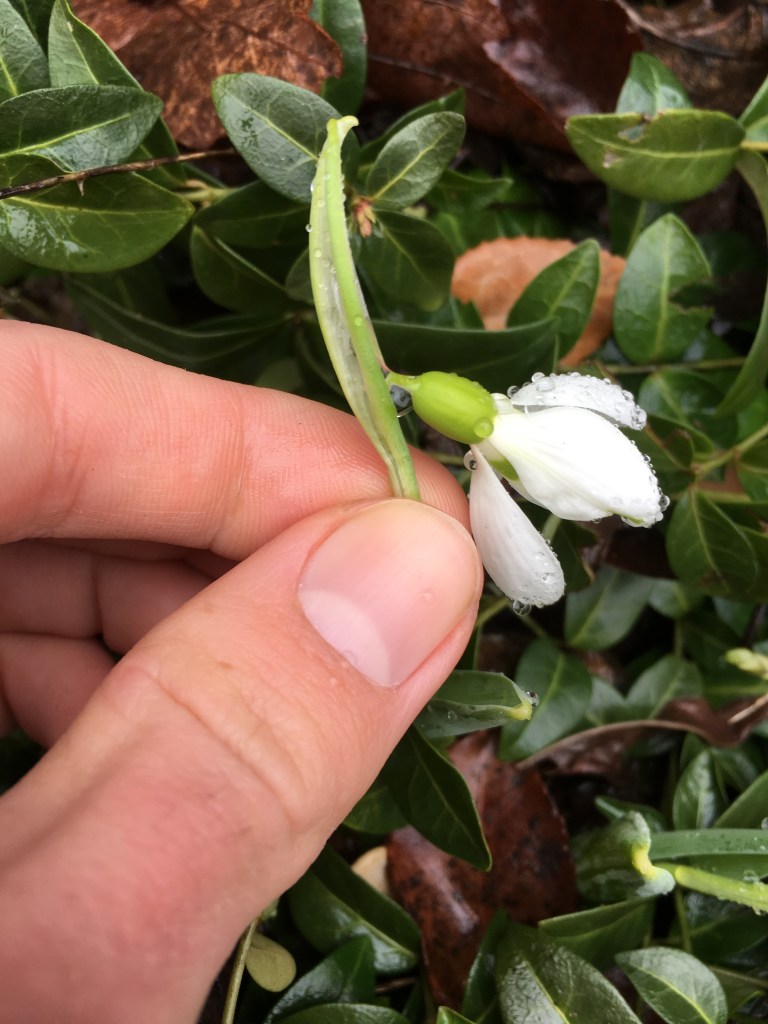
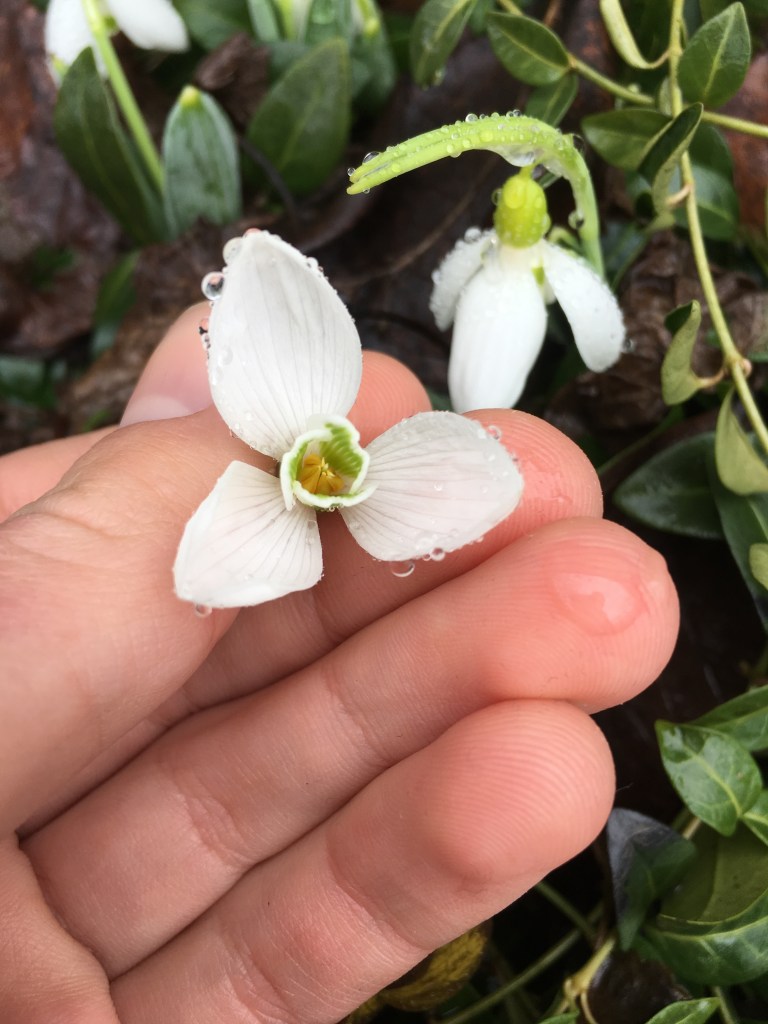
I believe this (below) is the greater snowdrop, Galanthus elwesii, which is a native of the Caucasus, although I’m not 100%. The main other candidate would be the Common Snowdrop, which is interesting in that it contains the chemical Galantamine which is used for “treatment of cognitive decline in mild to moderate Alzheimer’s disease and various other memory impairments.”2 Basically, galantamine increases the availability of acetylcholine, which, as I’ve been learning in my Speech Anatomy class, is a neurotransmitter associated with muscle firing. It must also be involved in memory though, I’m not quite sure how. Anyways, it’s an aptly named flower.

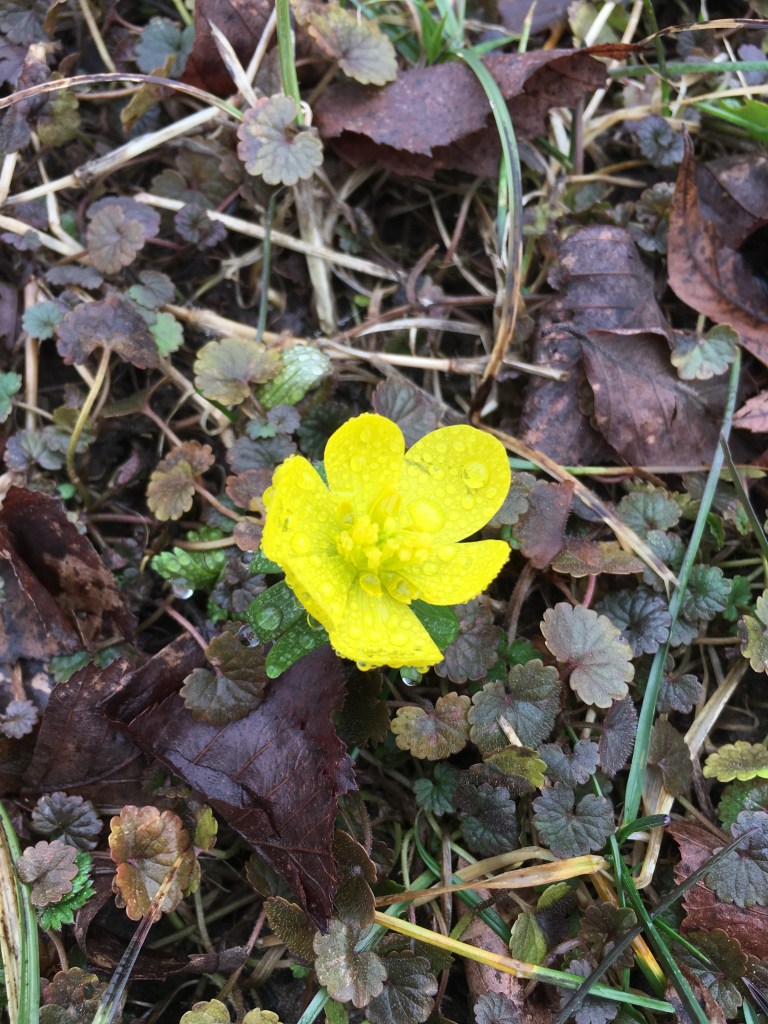
Lastly, what I initially thought were buttercups have sprung up.

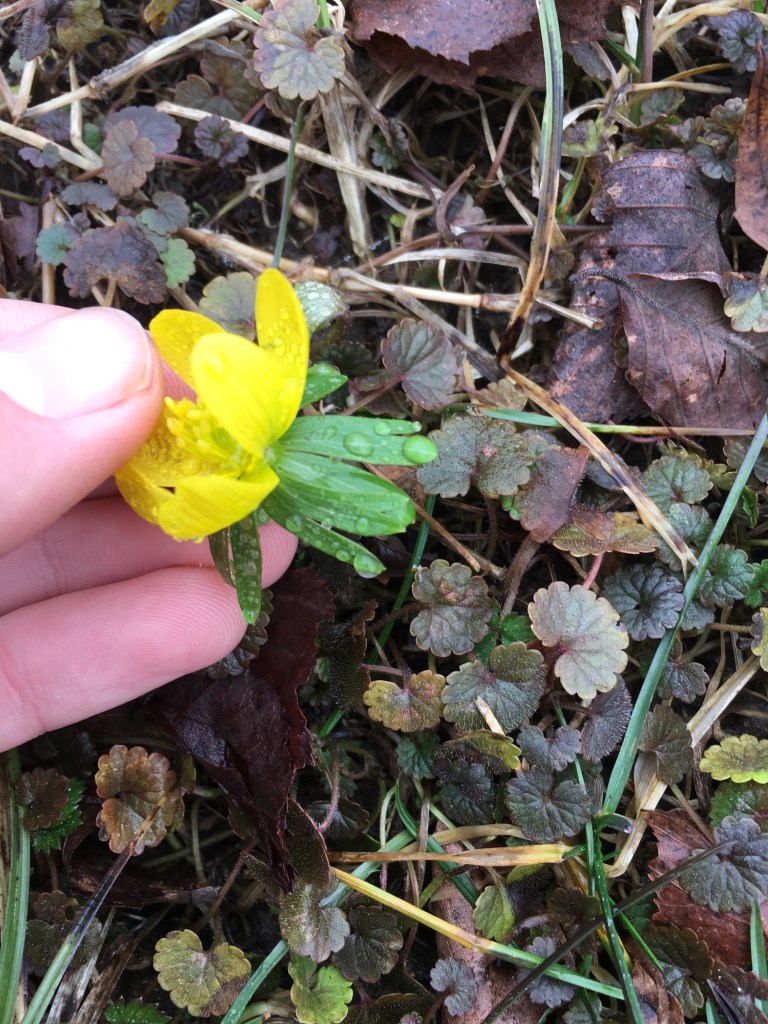
It turns out after closer inspection however, that the leaves do not match those of buttercups. Rather, this is a closely related species called Winter Aconite. It is in the same subfamily as buttercups, but a different genus. Like buttercups though, all parts of the plant are poisonous.

The narrow finger-like lobes distinguish winter aconite from buttercups.

What is Winter Creeper?

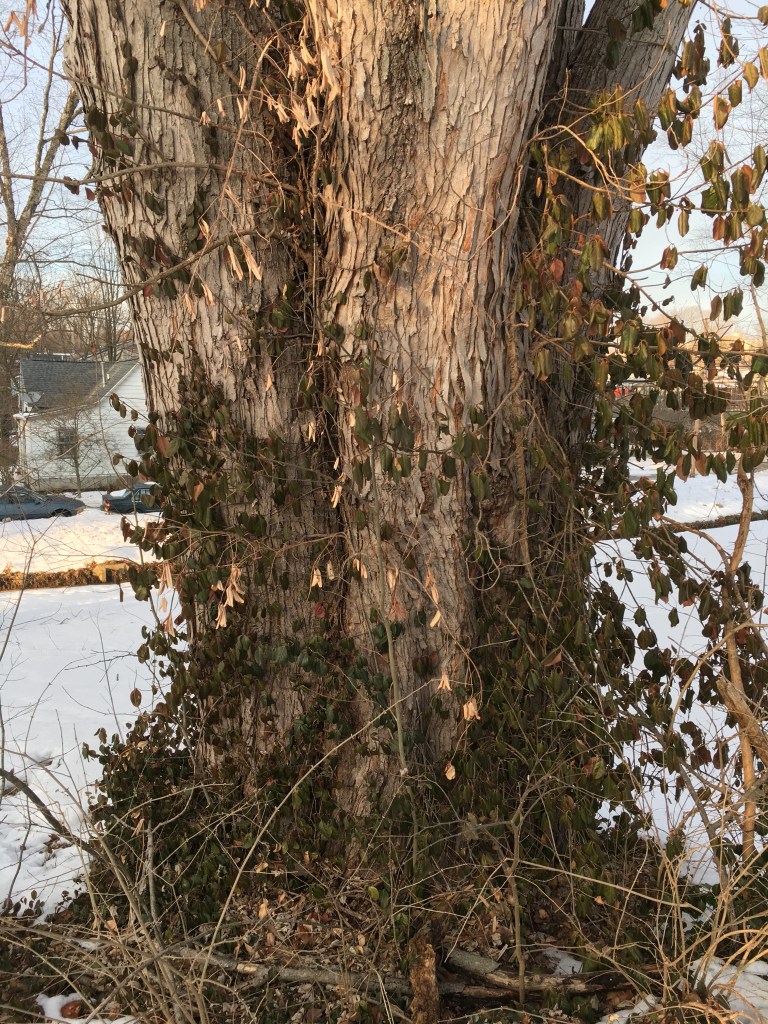
Winter creeper, also known as Fortune’s spindle—not because it has anything to do with luck, but because the first European to classify it was named Robert Fortune—is a highly invasive shrub/vine which can smother trees to death. It’s everywhere in my neighborhood. In a totally unscientific way, I’d estimate it has infested 1 in 5 trees and for some reason that number goes way up for older maples, 4/5ths of which I’d estimated are wintercreepered.

Winter creepered maple.

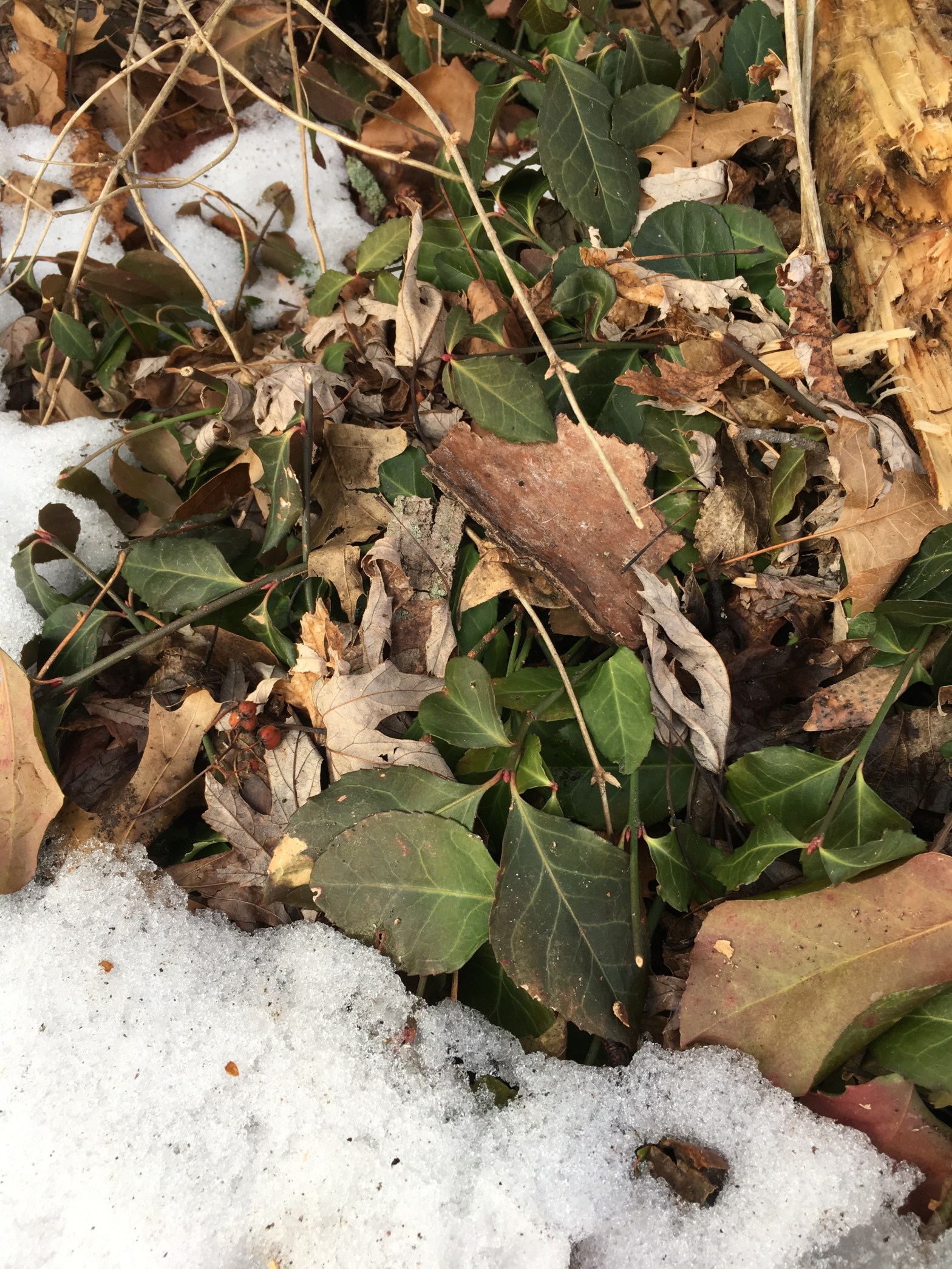
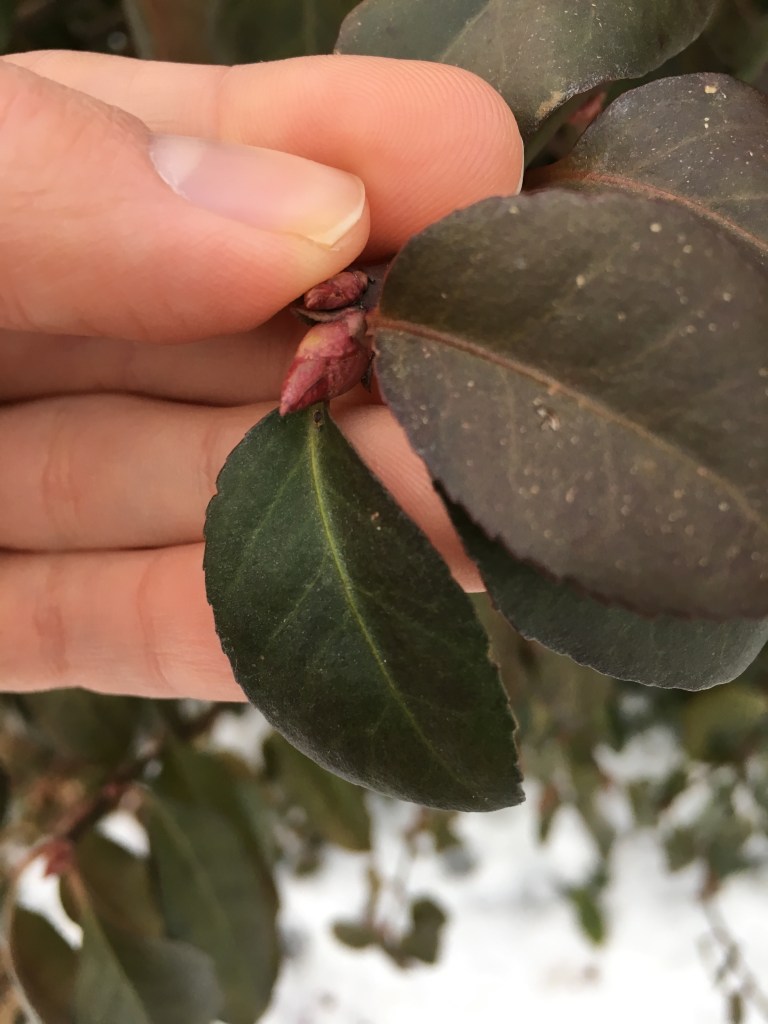
What does it look like? The distinctive features in winter are that it is 1) an evergreen, 2) has opposite, slightly serrated leaves, 3) has red pointy buds.

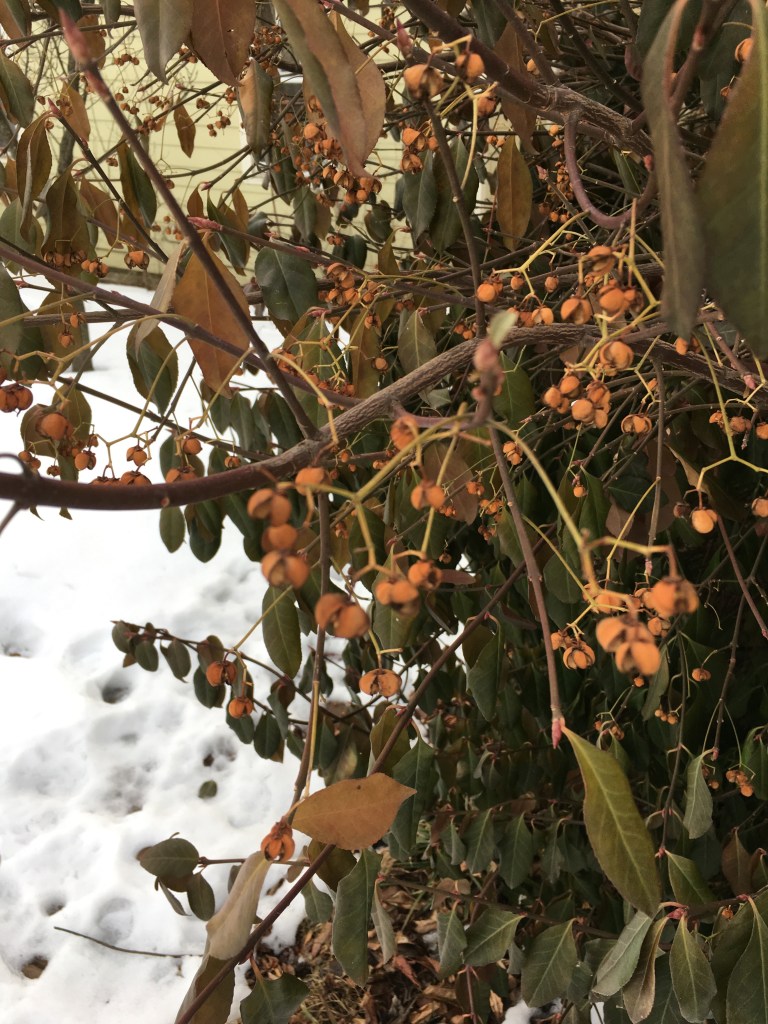
It has two forms. A sterile climbing form, concentrated on growing as fast as possible without reproducing. And a flowering phase, which typically occurs higher up the tree, or in shrub form.

Flowering Shrub Form

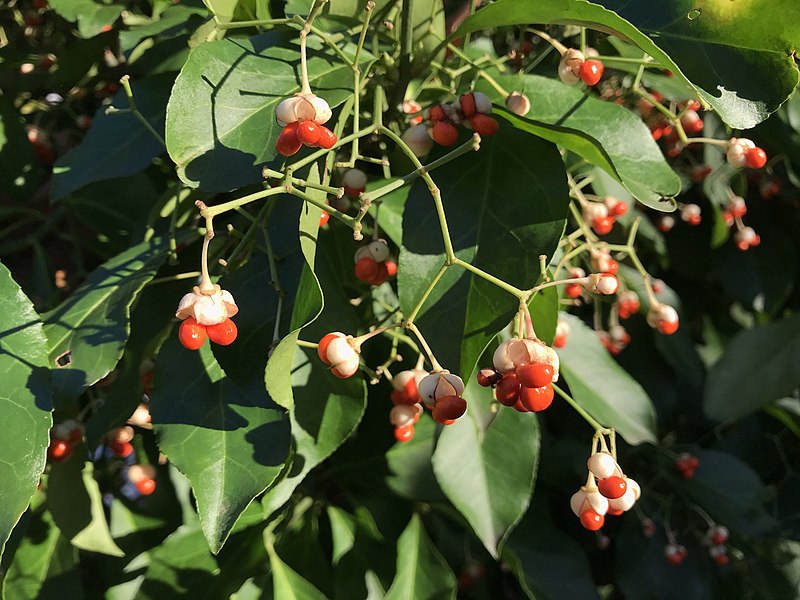
This flowering phase may remind you of a native species in the same genus: the Wahoo. See the similarity?

Good! Wahoo
Bad: Invasive winter creeper. https://en.wikipedia.org/wiki/Euonymus_fortunei

Unfortunately, winter creeper isn’t just an urban invasive. It’s less common in wooded spaces, but can easily crop up in forest openings or damaged areas (see these two previous posts for examples). As far as removal goes, good luck! One author I’ve found recommends ripping it out when the soil is wet, ie spring or fall, as the roots come out more easily1.

“Lessons in Obedience,” reading Helen Keller’s The Story of My Life

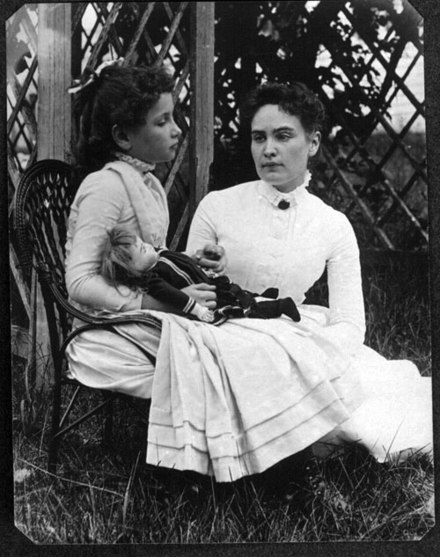
Anne Sullivan, Helen’s “Teacher,” describes her initial encounters with Helen thus:

As I began to teach her, I was beset by many difficulties. She wouldn’t yield a point without contesting it to the bitter end. I couldn’t coax her or compromise with her. To get her to do the simplest thing, such as combing her hair or washing her hands or buttoning her boots, it was necessary to use force, and, of course, a distressing scene followed. The family naturally felt inclined to interfere, especially her father, who cannot bear to see her cry. So they were all willing to give in for the sake peace.

Keller, Helen. The Story of My Life. Norton, 2003. page 142

This presents a not uncommon scenario in the lives of educators, especially the lives of special educators. On the one hand, the desire to teach with love, to affirm the student’s needs and wants and avoid force. On the other, a certain need for authority and compliance.

Anne Sullivan solved this problem in a way that would be totally unacceptable now.

I told her [Helen’s mom] that in my opinion the child ought to be separated from the family for a few weeks at least—that she must learn to depend on and obey me before I could make any head-way.

143

Anne and Helen went to live together in a “little garden-house about a quarter a mile from her home.” The end result of which was that after a series of “terrific tussle[s],” the “wild little creature of two weeks ago has been transformed into a gentle child…The little savage has learned her first lesson in obedience, and finds the yoke easy.”

But after Helen is “broken in” so to speak, her education is the exact opposite: the modern liberal pedagogist’s dream. No rote lesson’s at the blackboard, but spontaneous lessons largely outdoors, active, and full of play. To quote Anne again:

No, I don’t want any more kindergarten materials…I am beginning to suspect all elaborate and special systems of education. They seem to be to be built up on the supposition that every child is a kind of idiot who must be taught to think. Whereas, if the child is left to himself, he will think more and better, if less showily. Let him go and come freely, let him touch real things and combine his impressions for himself, instead of sitting indoors at a little round table..

153

This emphasis on play, independence, and freedom for the child contrasts sharply with her own early behavior towards Helen. How are we to relate Anne Sullivan’s incredibly progressive and successful later methodology with the authoritarian and force-based compliance on which it was initially based? Was she right to use force initially, in order to, again in Anne’s words, teach the child that “everything cannot be as he wills it”?

Anne justifies herself by pointing out the “terrible injustice to Helen of allowing her to have her way in everything,” and Roger Shattuck, who provides the introduction, agrees, saying

the violent battles did not break Helen’s spirit…the battle between a twenty-one-year-old and a seven-year-old obliged Helen to take account of the existence of other people and of the possibility of sharing her world with them…without that shift toward attentiveness to others, she would not have learned finger spelling and would have remained buried alive inside herself

xii-xiii

Is it really true though, that force was the only way of “[obliging] Helen to take account of the existence of other people”? Would her life have been so meaningless without Anne’s intervention as to be equivalent to being “buried alive”?

Now, it should be noted that Anne did not beat Helen or use violence to inflict pain. They wrestled, essentially, in a way that would be considered harmless between siblings or kids. More troubling is perhaps the psychological imbalance of power. Anne writes much later, after Helen is already somewhat famous, that “it is a great thing to feel that you are of some use in the world, that you are necessary to somebody. Helen’s dependence on me for almost everything makes me strong and glad.” This is the great contradiction of disability services, and perhaps the most troubling sentence in the whole book.

Helen’s account contains no traces of this early struggle between her and her “Teacher,” or of any later resentment on her part of her dependence. This could be because, being seven at the time, she doesn’t have a clear memory of those fights, or they weren’t that traumatic, or she may have even felt genuine gratitude for Anne’s use of force, in the same way we might feel gratitude to the surgeon who inflicts pain in order to make it go away. Or possibly she did feel resentment for the unequal balance of power between her and Teacher, but was unable to express it, whether for fear of being guilty of ingratitude or because depending on Teacher for access to the outside world as much as she did left her no means of criticizing the source of that access.

I don’t know quite what to make of Helen Keller’s story… so I’ll stop here for now.
Rounding a Corner

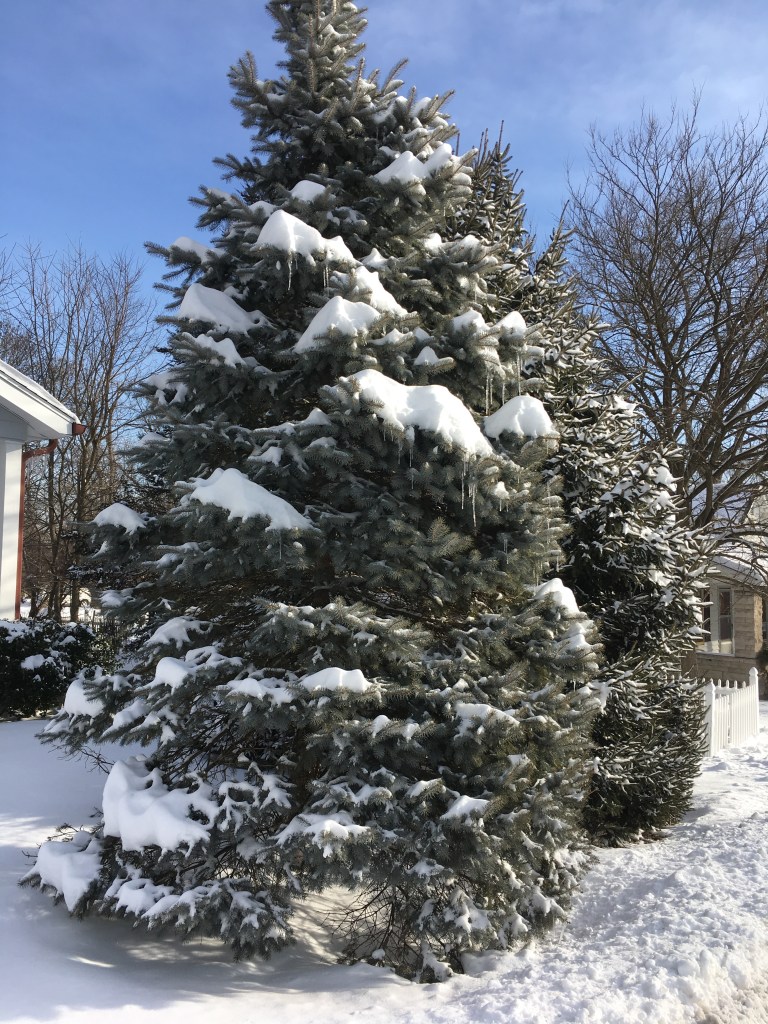
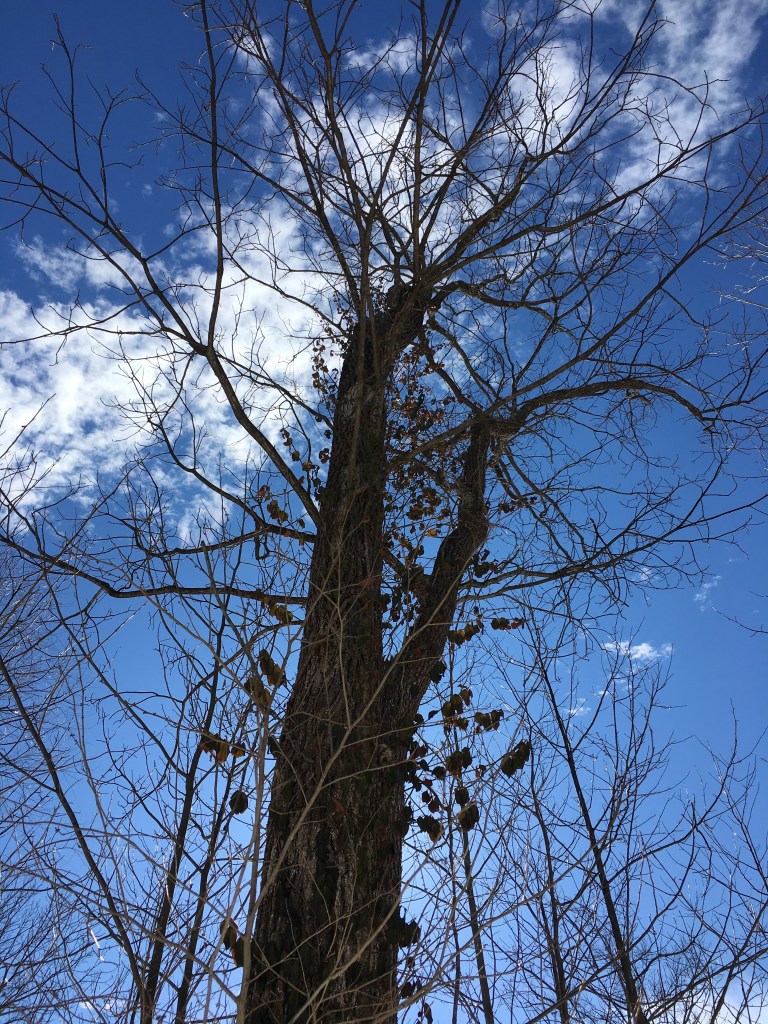
Yesterday I think we rounded a corner on spring. In honor of the winter we are (hopefully?) leaving behind, I’d like to share some photos…and talk about birds.

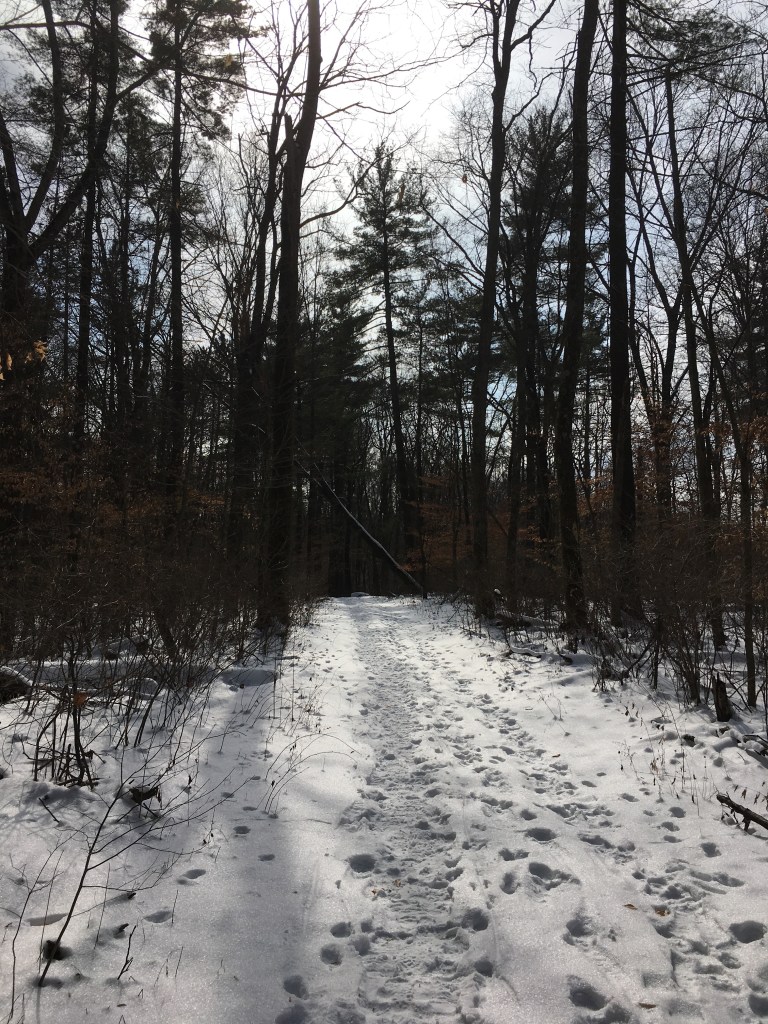
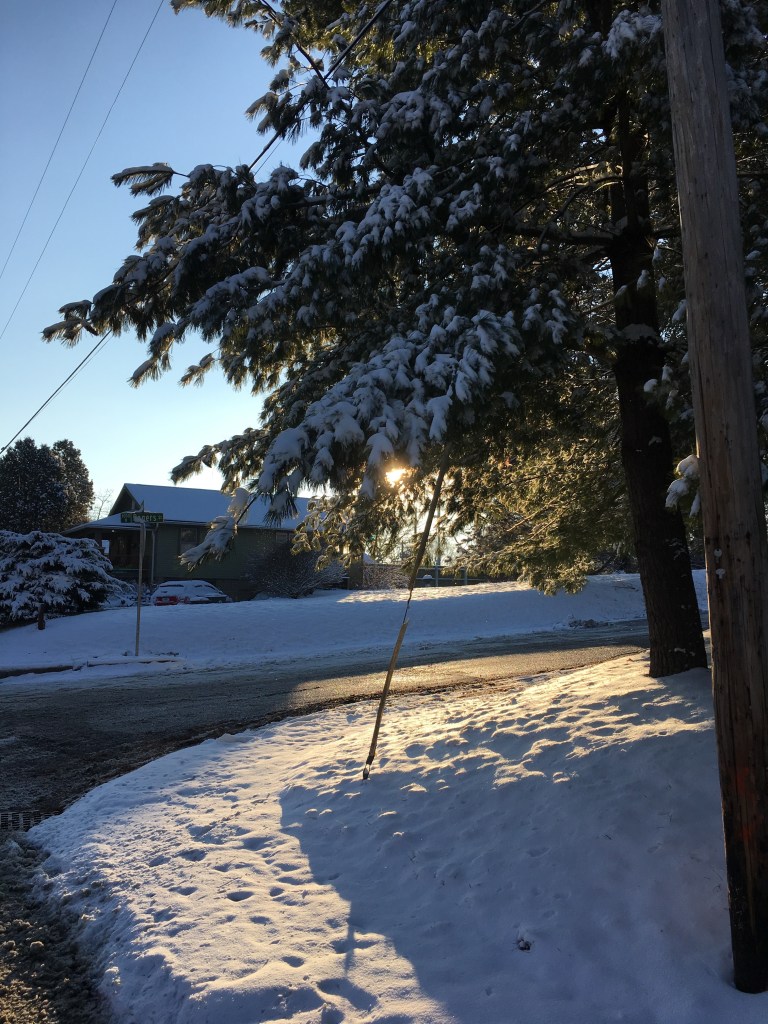
Hike day before the big snow.
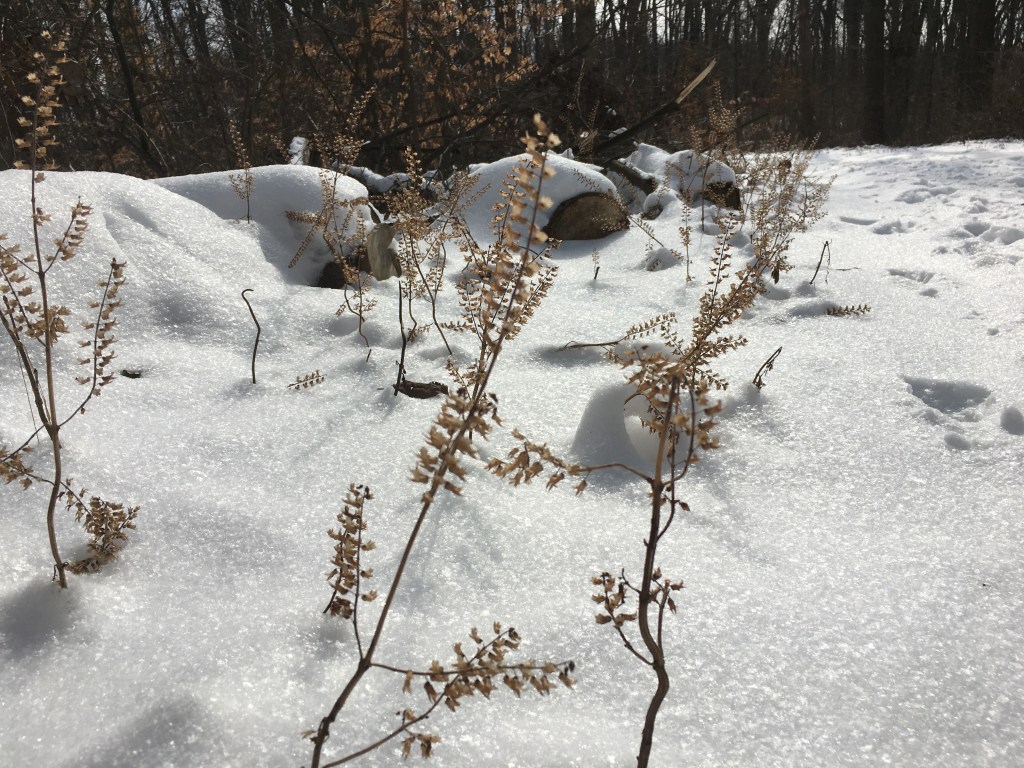
Wavy forms looking like seaweed growing out of sand.
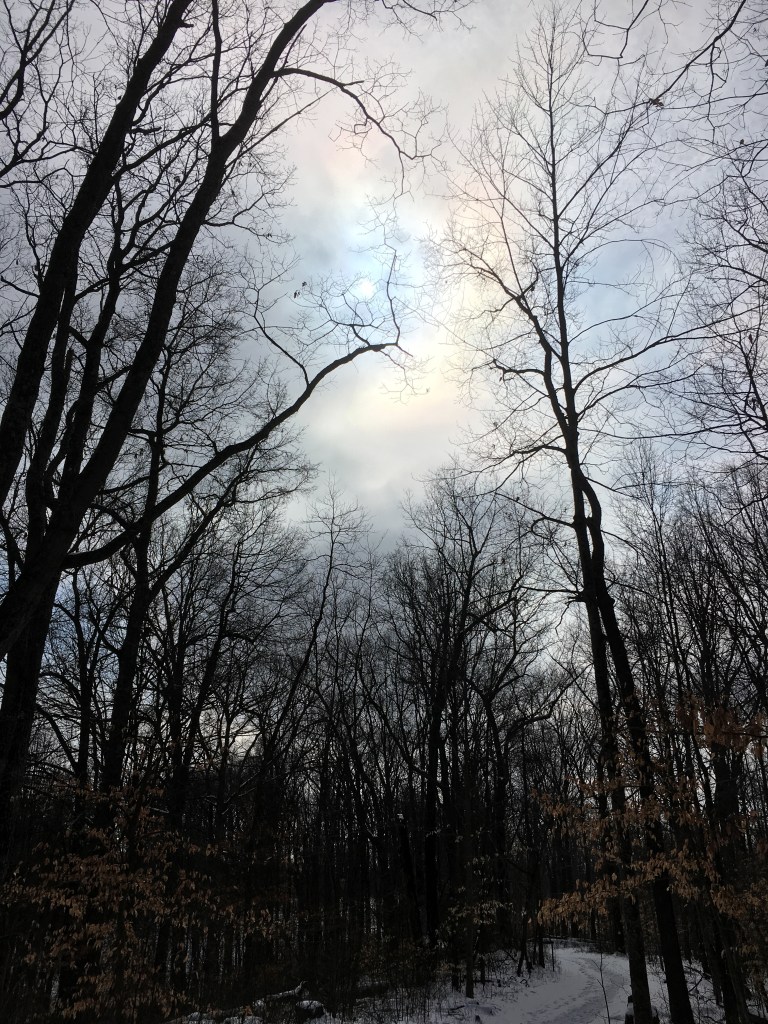
Sun fighting the clouds.
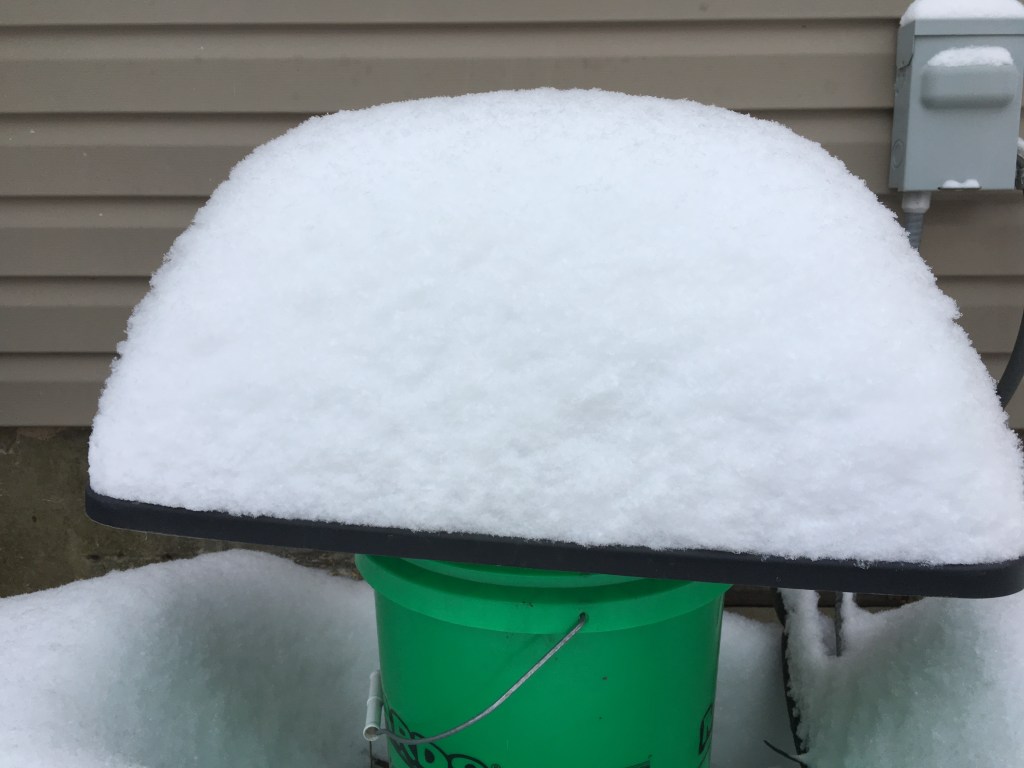
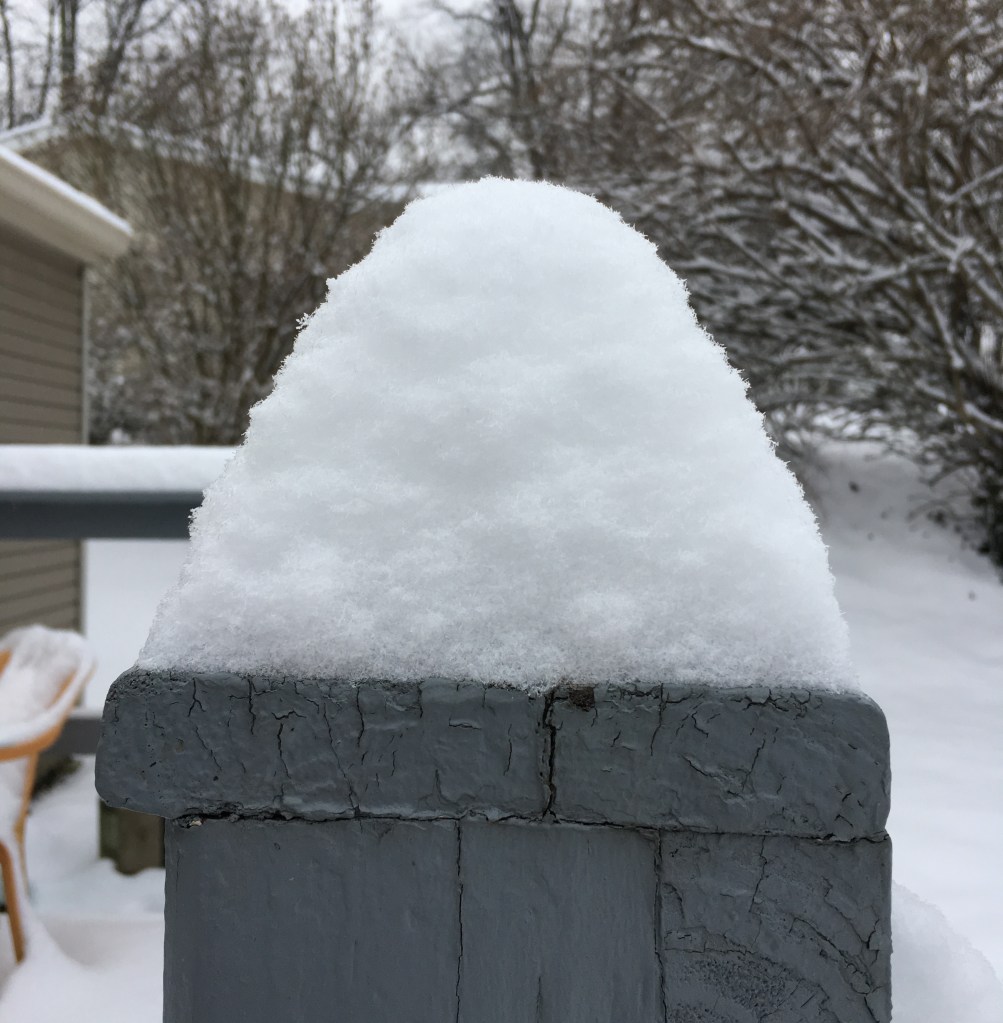
Snow on the compost bucket
Looking Christmasy, a month and a half too late.
Following a deer trail.
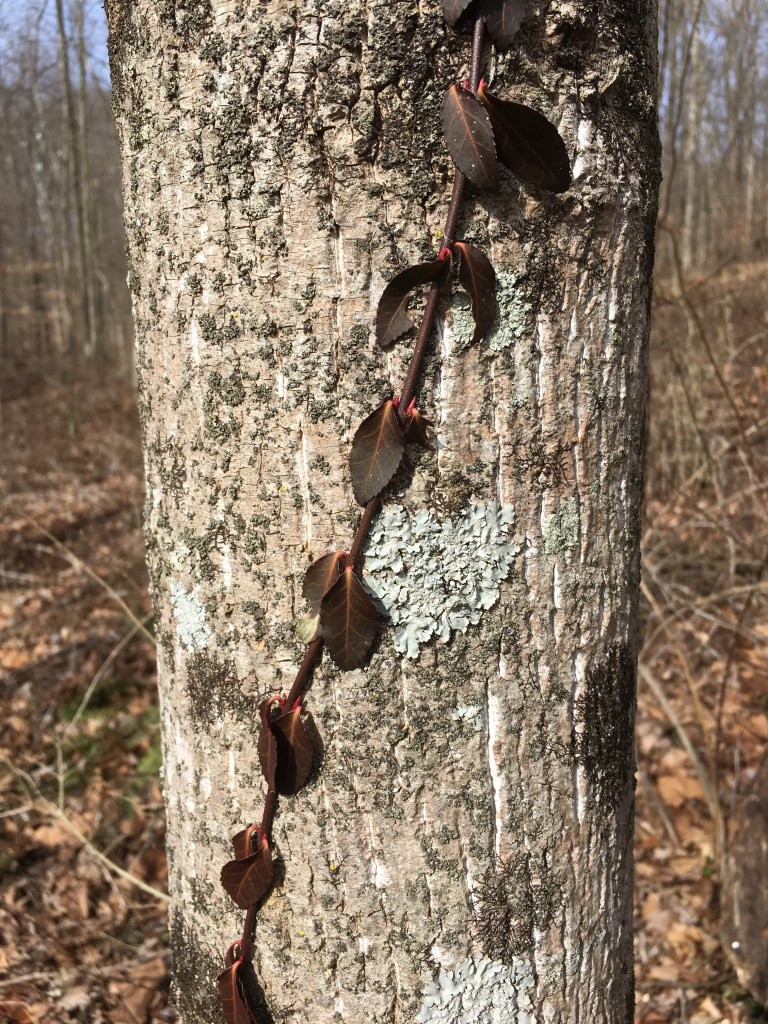
Black Walnut encased in Winter Creeper

In addition to these photos I’d like to present some audio (the pictures in the video’s below aren’t mine). These are the songs I’ve heard the most over the winter. The song sparrows like the forsythia bush out front, and are active early.

The cardinal, on the other hand, seems to be more of a midday bird. I notice him perched prominently in the Amor Honeysuckle out back.

The white breasted nuthatch I don’t hear at home, but inevitably hear out in the woods. Their calls sound to me like a very nasal laugh.

Lastly, I’ll mention the House finch, whose song is by far and away the most complicated, resembling, in fact, a John Coltrane solo. Being snowed in and working from home, I’ve gotten to share my lunchtime with these guys, who seem to really like Rose of Sharon seeds.

Rose of Sharon

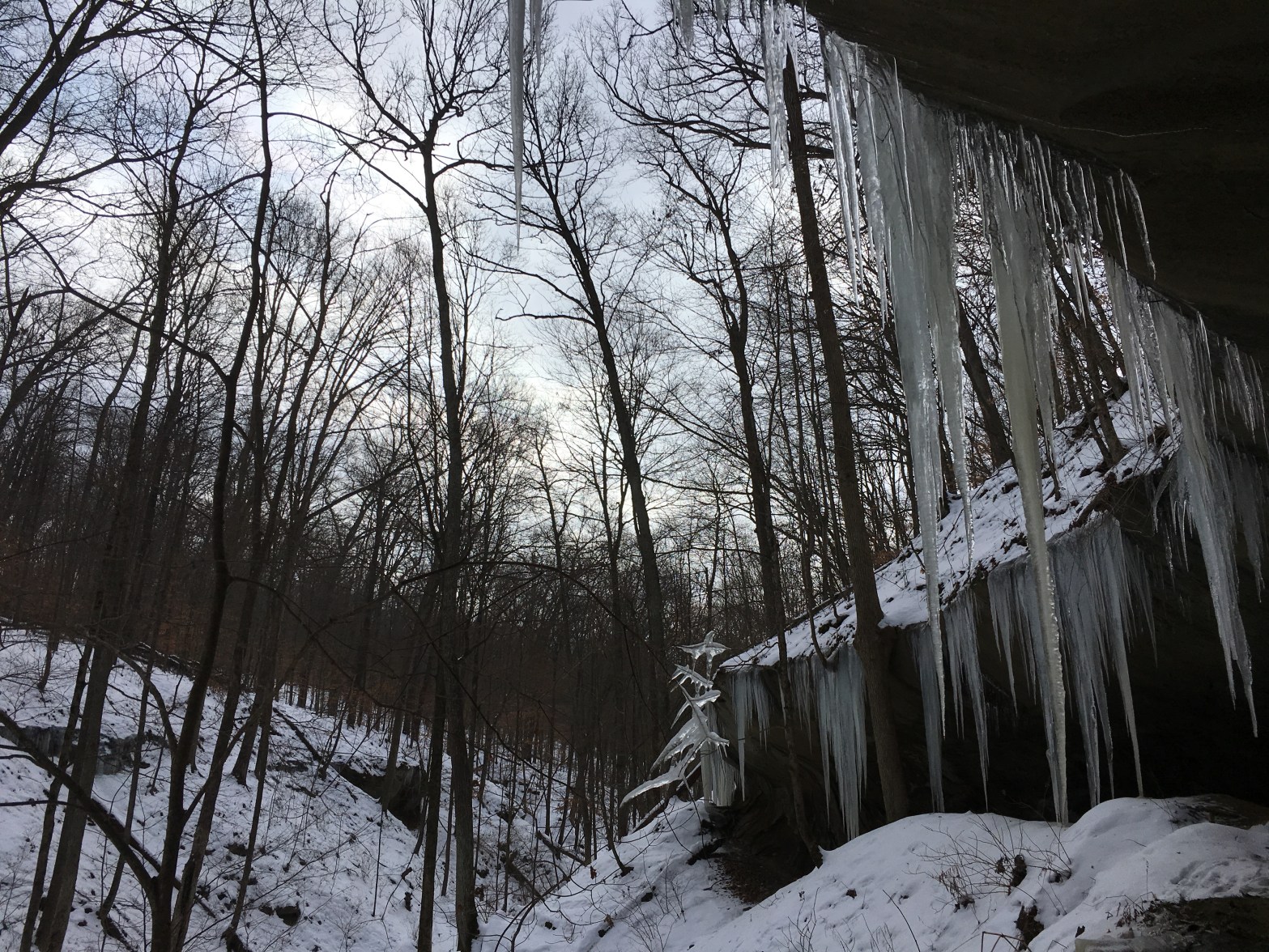
Why don’t trees freeze? Ice nucleation and winter photos.

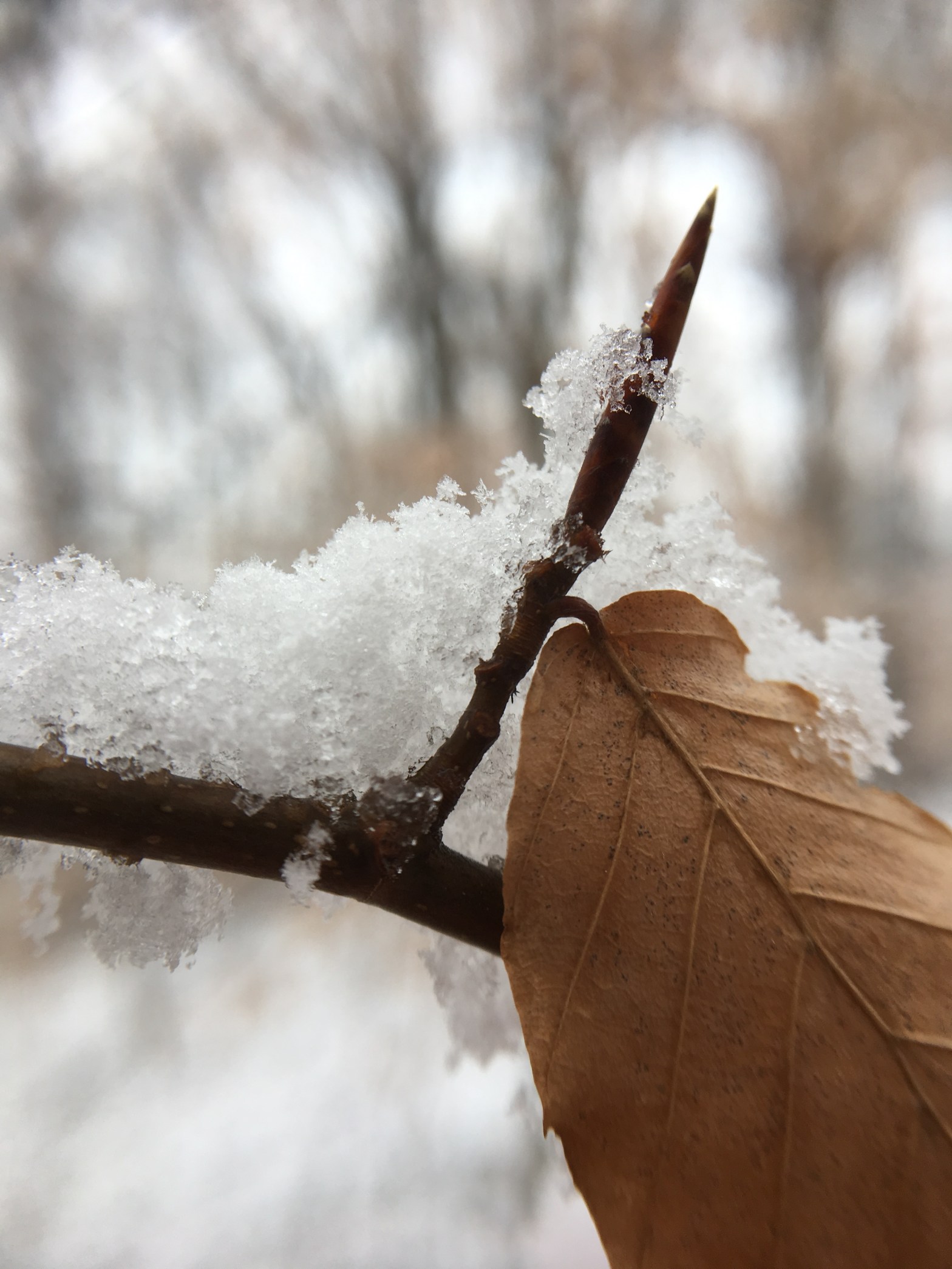
Did you know that pure water droplets remain liquid until -37 degrees C (-34 F)1? This is because ice has to form around something, usually dust or tiny particulate matter in the atmosphere2. Trees exploit this fact to avoid internal ice damage during the winter.

Trees produce proteins which attract ice formation (called ice nucleators) and position them outside cell walls. It’s a sort of reverse Trojan horse strategy. Freezing cold water is drawn out of the cells onto the ice nucleators, leaving the inside of the cell with much higher concentrations of sugar. This lowers the freezing point of the water in the cells and makes the sap much thicker and sugary (hence prime for syrup).

On the topic of the cold, here are some photos:

Wintercreeper, an invasive in the same genus as the native Wahoo.

Carbon Footprint of the Mars Mission?

I have to admit I am one of the few people not particularly excited about space exploration. To put my cards on the table, I could care less whether we ever land a person on Mars. Recently on the radio I’ve been hearing about the Perseverance rover and whether or not there has been life on Mars. I admit this is a somewhat interesting question, but find myself wondering whether it’s worth the tremendous amount of resources we have devoted to it. In particular, I wonder about the carbon cost of such a mission, and of space flight in general. So I did some research.

Unfortunately for my anti-spaceflight prejudices, but fortunately for the planet, it turns out that the carbon footprint of space flight is not something to particularly worry about. This is mostly due to the fact that there simply aren’t that many launches per year. In 2020 there were 114 launches, 104 of which were successful.

Probably because of this, there is not a whole lot of data out there about the environmental impacts of space flight. I have found, however, various estimates and conjectures that for the time being are the best we’ve got. The carbon footprint of a rocket launch, such as the Atlas V launch in July 2020 which sent Perseverance on its way to Mars, is somewhere between 259 (considering just the carbon cost of the launch itself) and 1115 tonnes (factoring in more considerations, but still not covering the full cost of production, testing, etc.) That is roughly equivalent to the yearly carbon footprint of 56 Americans, (or 278 average world citizens). So at 114 launches a year, the carbon footprint of the space industry is approximately that of an American town of 6,355 people. Not a big deal, I have to admit…

For more detailed info/sources:

Design a site like this with WordPress.com
Get started