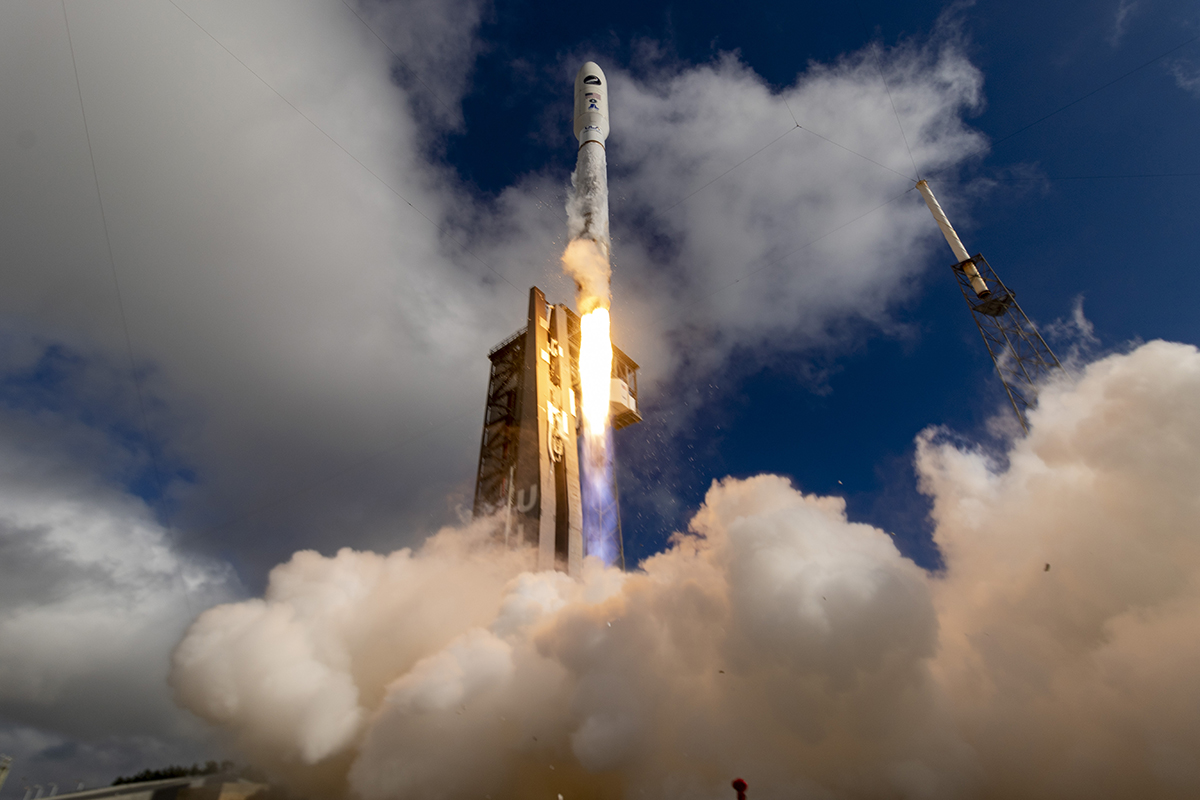
I have to admit I am one of the few people not particularly excited about space exploration. To put my cards on the table, I could care less whether we ever land a person on Mars. Recently on the radio I’ve been hearing about the Perseverance rover and whether or not there has been life on Mars. I admit this is a somewhat interesting question, but find myself wondering whether it’s worth the tremendous amount of resources we have devoted to it. In particular, I wonder about the carbon cost of such a mission, and of space flight in general. So I did some research.
Unfortunately for my anti-spaceflight prejudices, but fortunately for the planet, it turns out that the carbon footprint of space flight is not something to particularly worry about. This is mostly due to the fact that there simply aren’t that many launches per year. In 2020 there were 114 launches, 104 of which were successful.
Probably because of this, there is not a whole lot of data out there about the environmental impacts of space flight. I have found, however, various estimates and conjectures that for the time being are the best we’ve got. The carbon footprint of a rocket launch, such as the Atlas V launch in July 2020 which sent Perseverance on its way to Mars, is somewhere between 259 (considering just the carbon cost of the launch itself) and 1115 tonnes (factoring in more considerations, but still not covering the full cost of production, testing, etc.) That is roughly equivalent to the yearly carbon footprint of 56 Americans, (or 278 average world citizens). So at 114 launches a year, the carbon footprint of the space industry is approximately that of an American town of 6,355 people. Not a big deal, I have to admit…
For more detailed info/sources:
- https://eos.org/features/the-coming-surge-of-rocket-emissions
- https://energycentral.com/c/ec/surprising-carbon-footprint-space-travel
- https://everydayastronaut.com/rocket-pollution/#:~:text=So%20again%2C%20the%20Falcon%209,the%20Starship%20alone%20releases%20716.
- Featured photo: https://www.nasaspaceflight.com/2020/05/ula-atlas-v-launch-sixth-x-37b/
 recycled paper clips