
My first Indiana Spring has come and given me a chance to learn some new wildflowers. Above you see one of my favorites, cleft phlox. Below we’ll talk about three more!
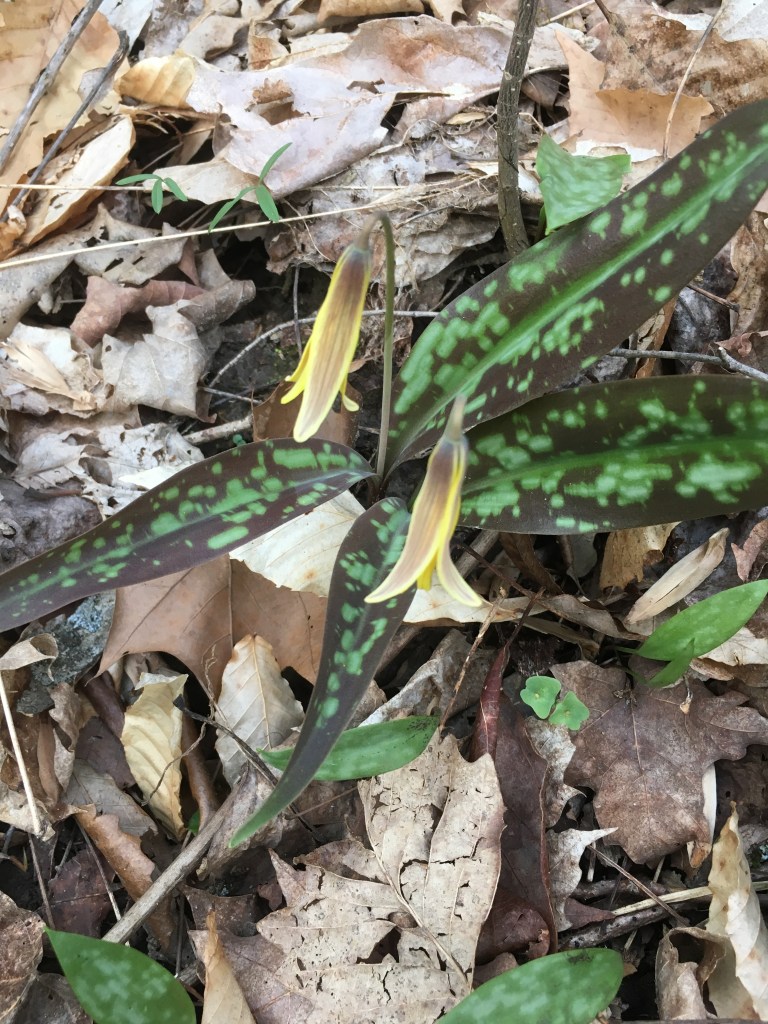
First up, the yellow trout lily. Called a “trout” lily because its leaves are mottled, or perhaps “dappled,” in a vaguely trout-like way. Yellow trout lilies grow in big colonies, which can live for hundreds of years and only a small percentage of which actually flower. The non-flowering form consists of a single leaf, which I find kind of bizarre:
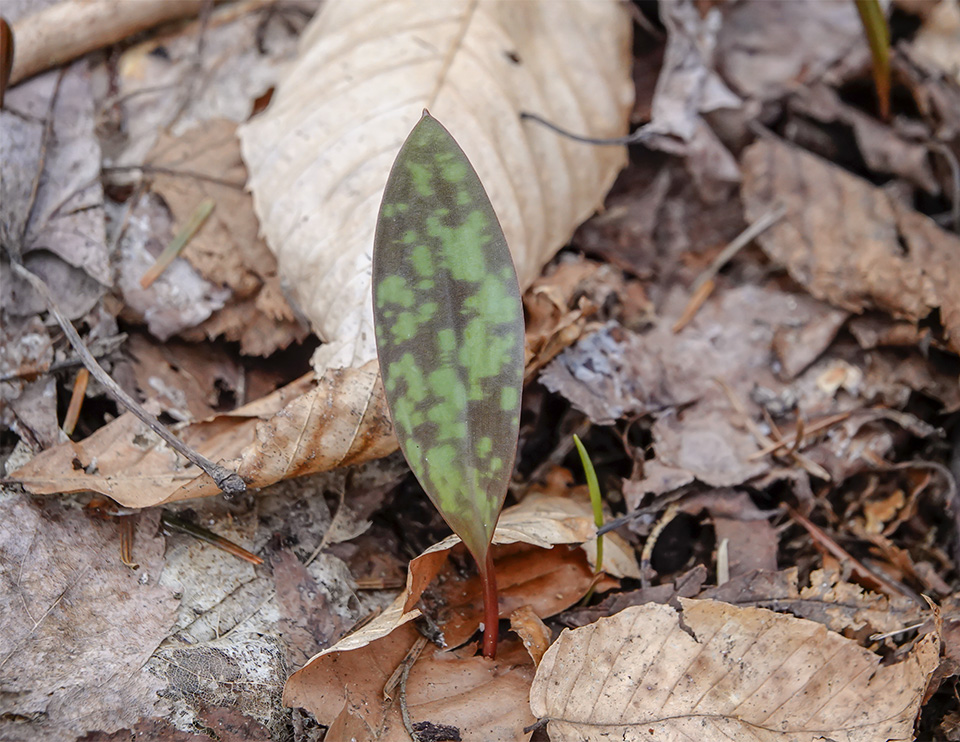
For the first years of their lives yellow trout lilies don’t flower, they just spring up early in the spring, grab all the sunlight and still-nutrient-rich soil they can, and then coast the rest of the year. The flowering members of the colony use the same early-growth strategy. In the summer they wilt and retreat into their bulbs, or maybe “corms” is the correct term. This makes them a type of “spring ephemeral,” like Dutchman’s breeches which we will discuss later. Also, they’re not especially dependent on sexual reproduction for propagation. Colonies of trout lilies can expand asexually, through “droppers,” which are essentially shoots the parent bulb sends out which then disconnect from the parent bulb and become their own bulb.
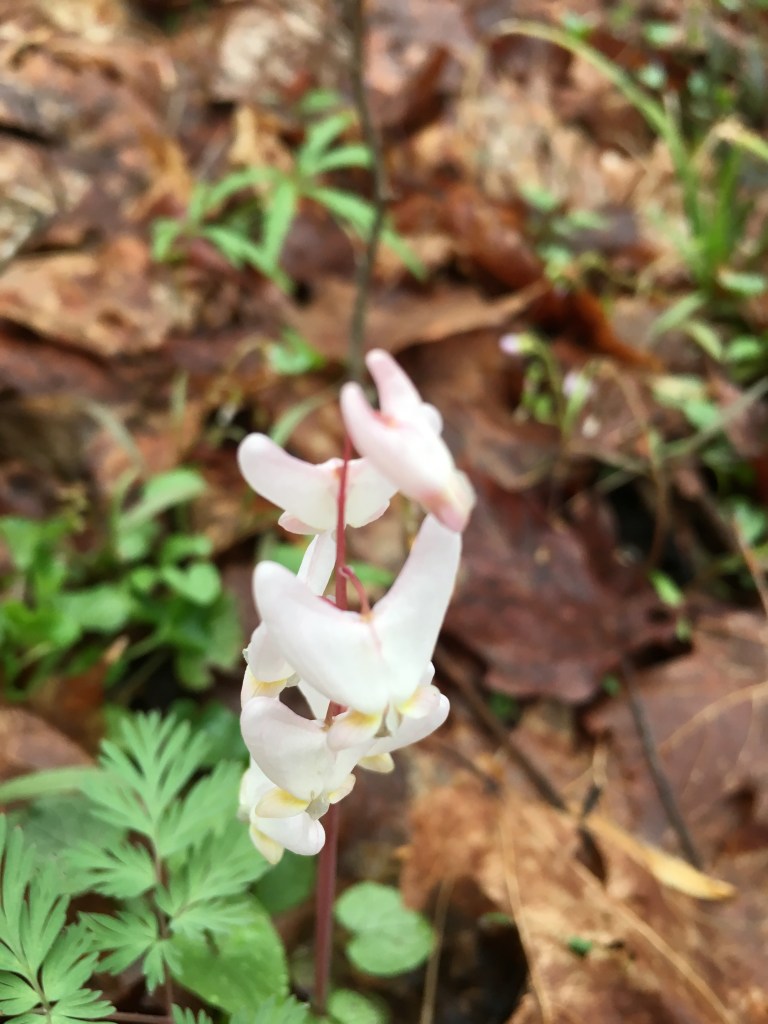
The second wildflower we will look at is Dutchman’s Breeches. Like Yellow trout lilies, Dutchman’s Breeches seeds have elaiosomes, which are little nutrient rich structures attached to the seed which attract ants, who then carry the seeds, elaiosomes and all, back to their mounds, dispersing the seeds in the process. Neat huh?
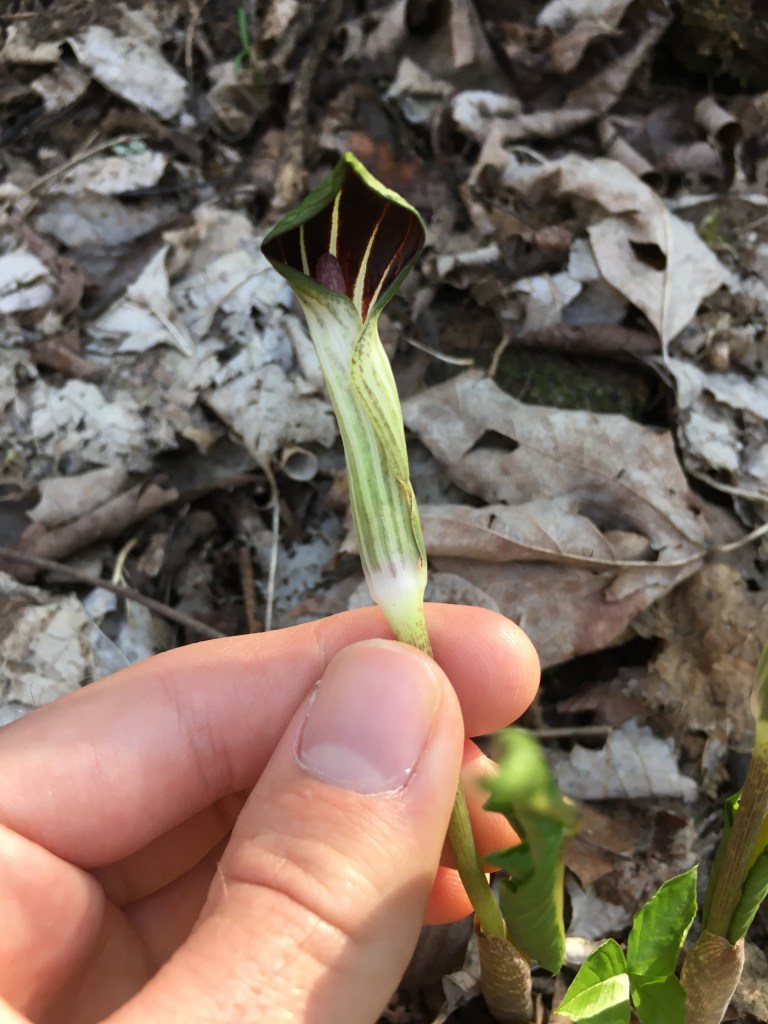
Lastly, lets take look at another wildflower with a great name, Jack in the Pulpit. This hooded flower has a lot of personality and an interesting way of reproducing. It attracts gnats, which are able to escape the male flowers carrying their pollen, but are trapped by the female flowers. Jack in the Pulpit is toxic, and its corms (bulb-like storage organs) were apparently used by the Meskwaki as poison. This time of year the leaves are not yet fully unfolded, so I’ll have to check these guys out later in the year to see their fully mature state:

 recycled paper clips
I dig the single leaf of the yellow trout lily.
LikeLike