Winter Tree ID: Buds

I’ve written before about using bark to identify trees in the winter, but sometimes bark can be ambiguous and it helps to have another tool up your sleeve. Knowing a bit about buds just gives you that much more evidence to go on.

One of the first things looking at buds will tell you is whether a tree has alternate or opposite leaves. Knowing just this one fact can help you rule out a lot of options. In the Midwest, a common mnemonic for remembering the trees with opposite branching is “M.A.D. Buck” which stands for Maple, Ash, Dogwood, Buckeye. Let’s check out a couple of these:
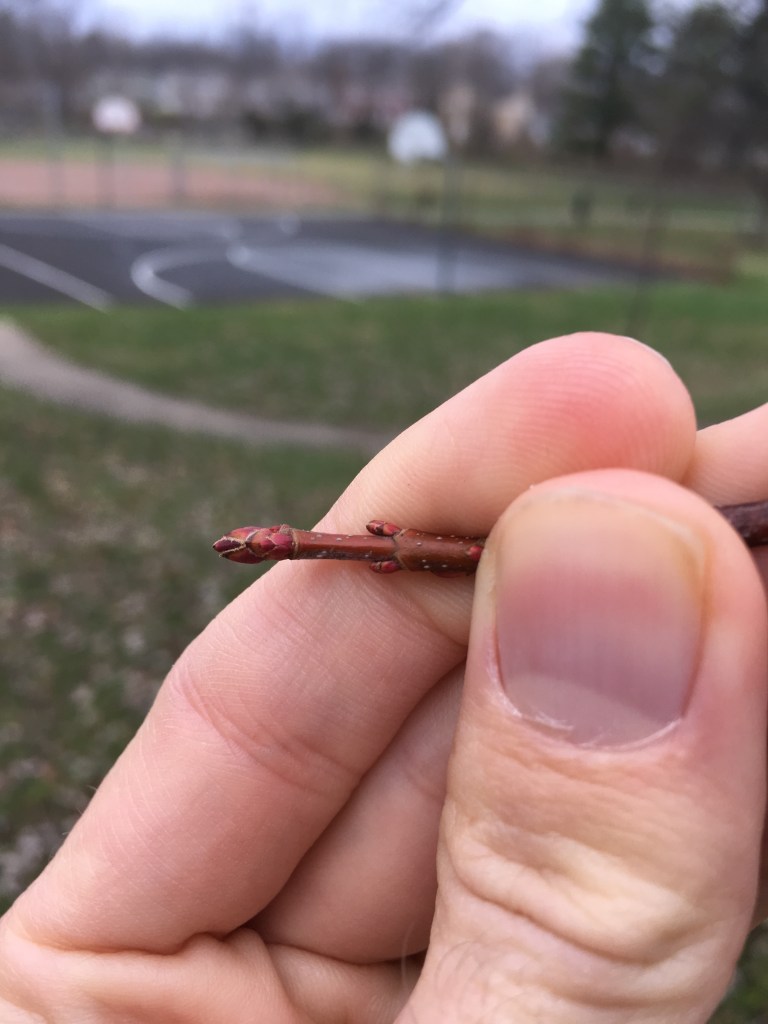
Notice that buds are oppositely arranged, they are also somewhat rounded, small and slightly hairy. All this adds up to…Red Maple.

The tree below could easily be confused with a sugar maple, judging by the leaves still left on the tree.

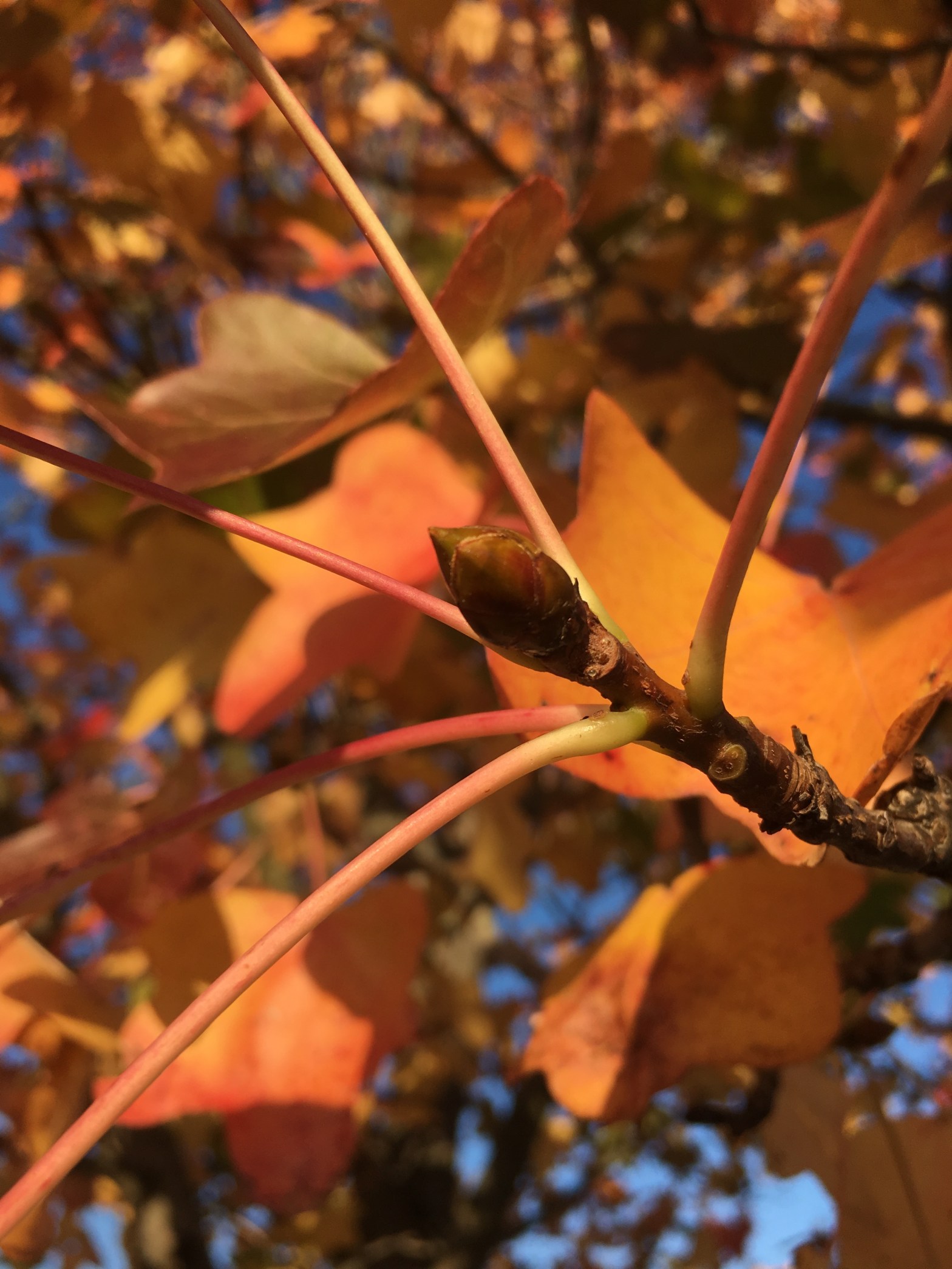
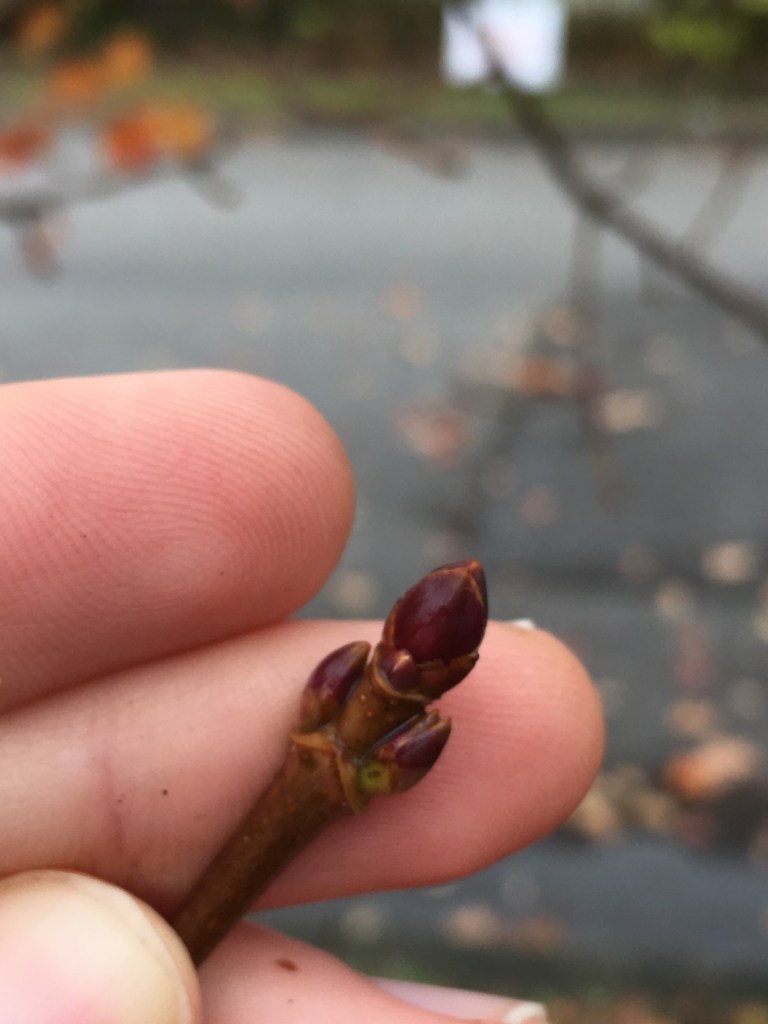
But the buds tell a different story. Whereas sugar maple buds are brown and sharply pointed, these are fatter, redder and shinier. There’s no mistaking the Norway Maple.
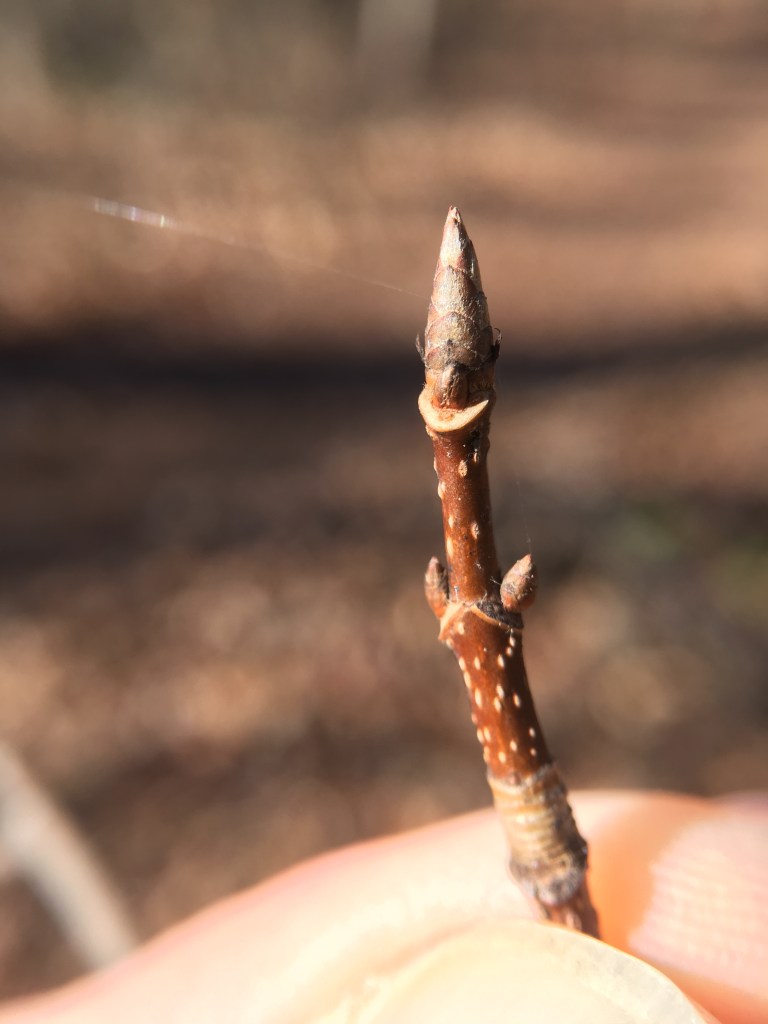
This, in contrast, is sugar maple:
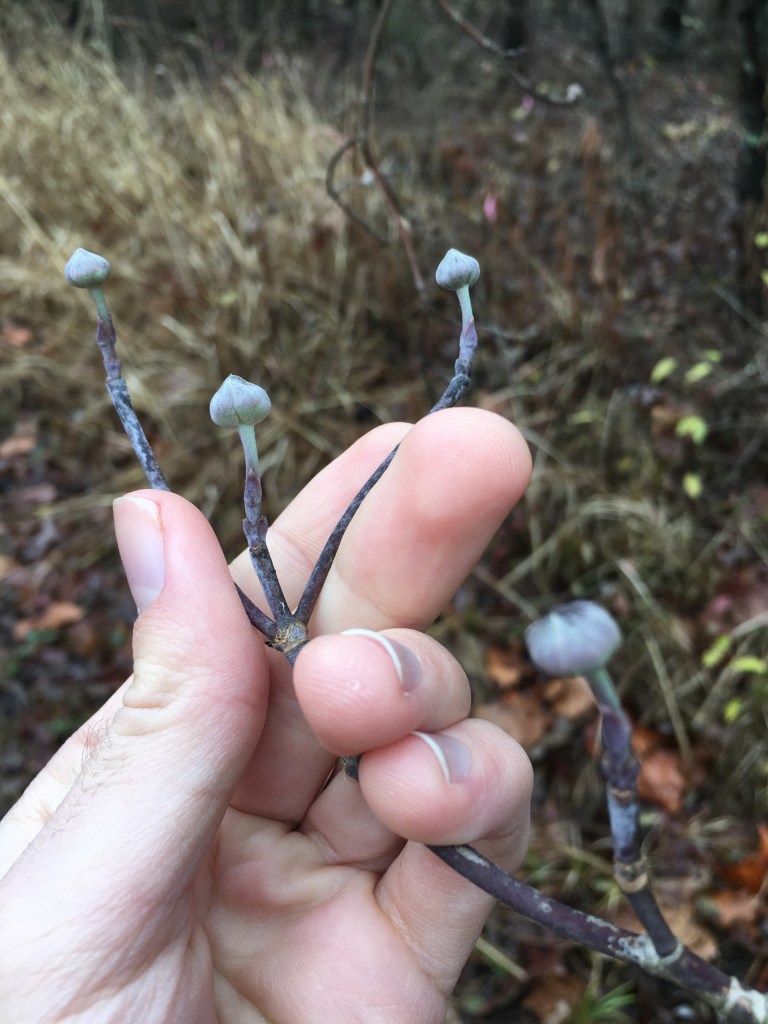
Another opposite brancher is Flowering Dogwood, which has very cool looking twigs. There are two types. The buds that will become the flowers, which look like little purple-green mushroom-domes, and the buds that will become leaves, which are small pointy and lilac.
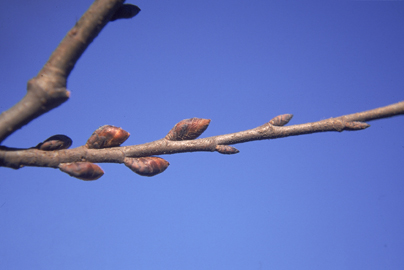
While not every tree has as clear a distinction between its flowering buds and its leaf buds as Flowering Dogwood has, it’s important to keep in mind that one tree has multiple kinds of buds, depending on their eventual function. Consider this American Elm branch for example:
https://ohiodnr.gov/wps/wcm/connect/gov/ohio+content+english/odnr/discover-and-learn/plants-trees/broad-leaf-trees/american-elm-ulmus-americana

The buds closer to the tip are smaller and pointer—they will become leaves. Further from the tip they are bigger and rounder, they will become flowers. So before identifying a tree based on its buds, know what kind of bud you are looking at. Most commonly guide books will use the terminal bud (the bud at the very end) as a standard point of reference.

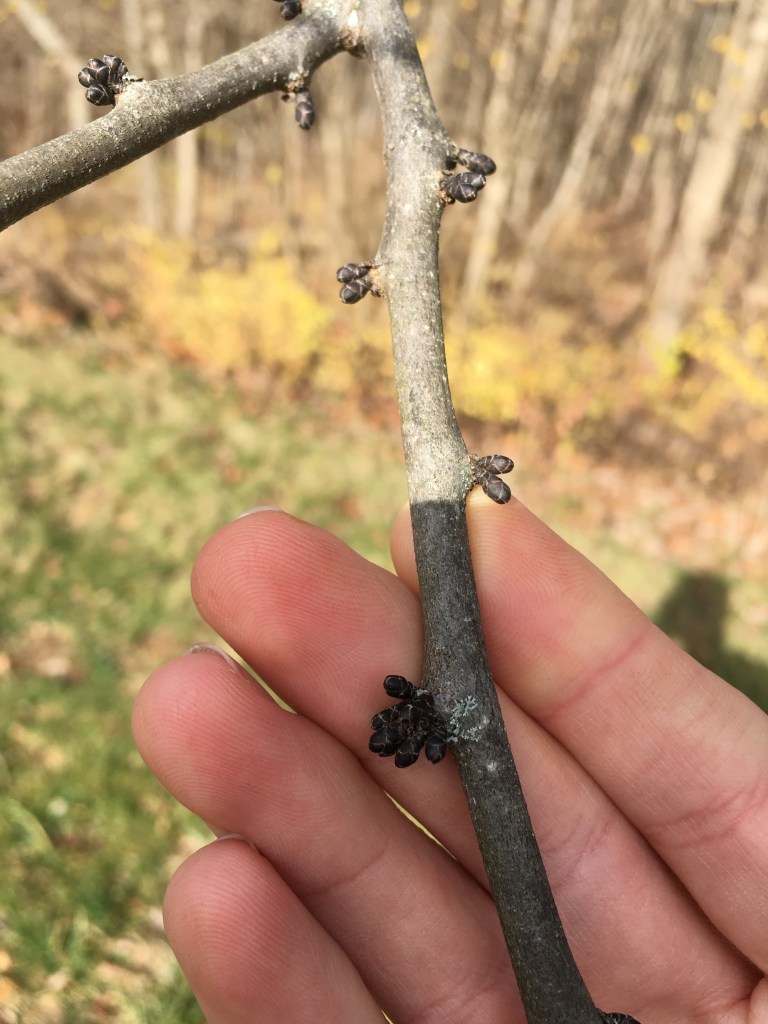
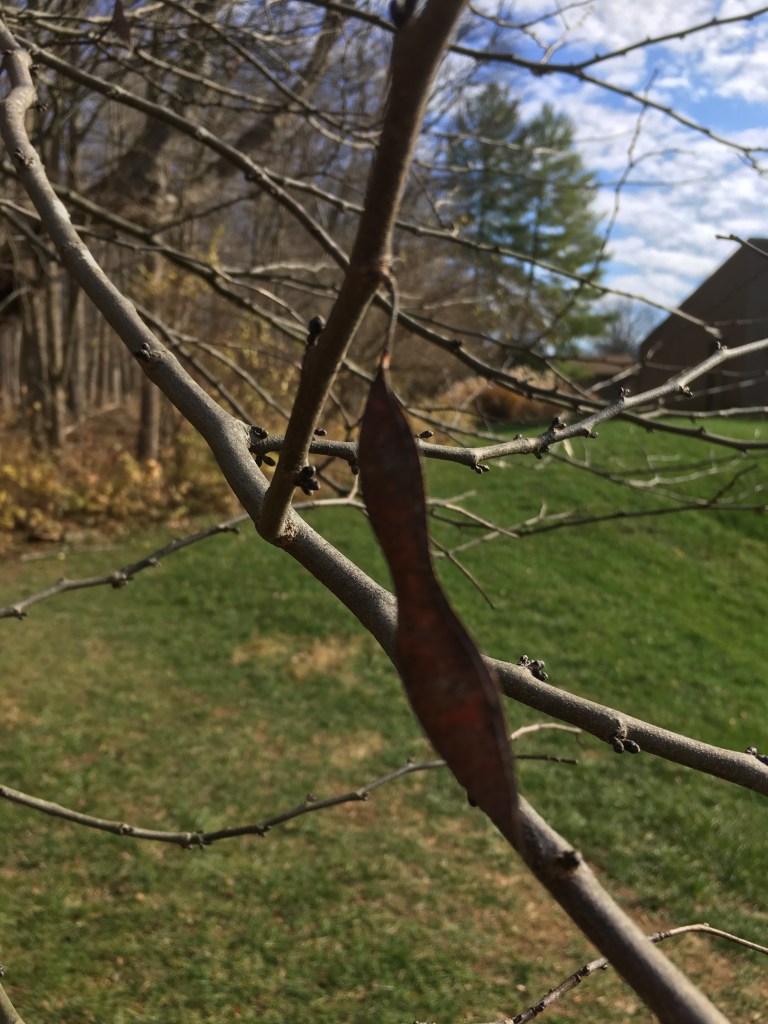
When it comes to alternate branching trees, there’s a lot more to choose from. For now, let’s just take a look at the tree with “bud” in its name: The Eastern Redbud. This time of year the buds are not particularly red, but they will become more so when we are on the other side of winter, heading in to Spring. For now, the presence of the seedpods makes identification a little easier.
Wahoos and Other November Color

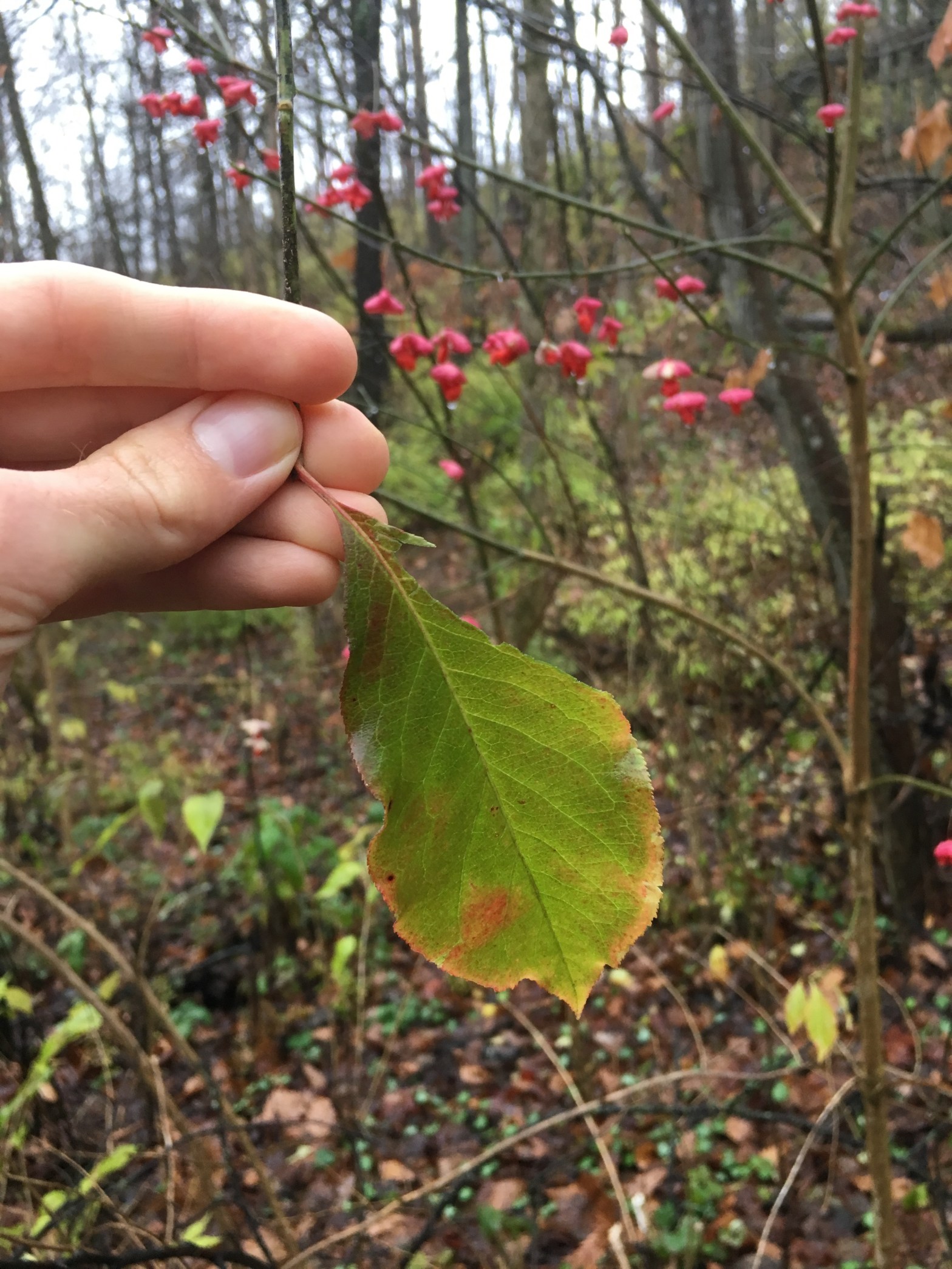
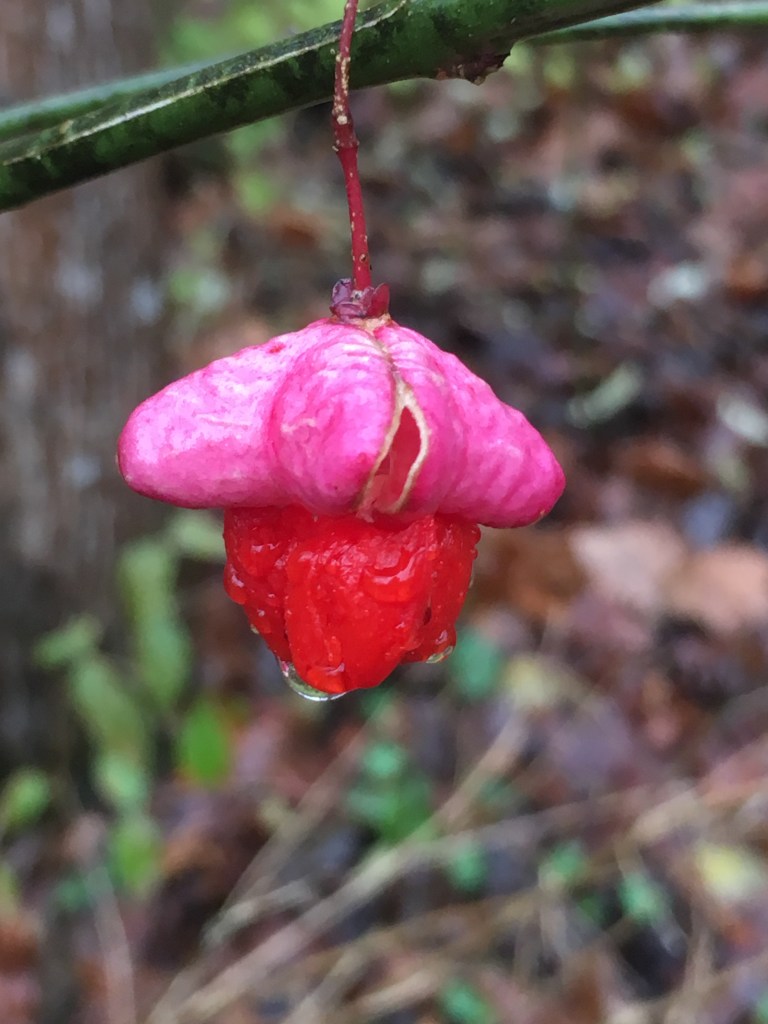
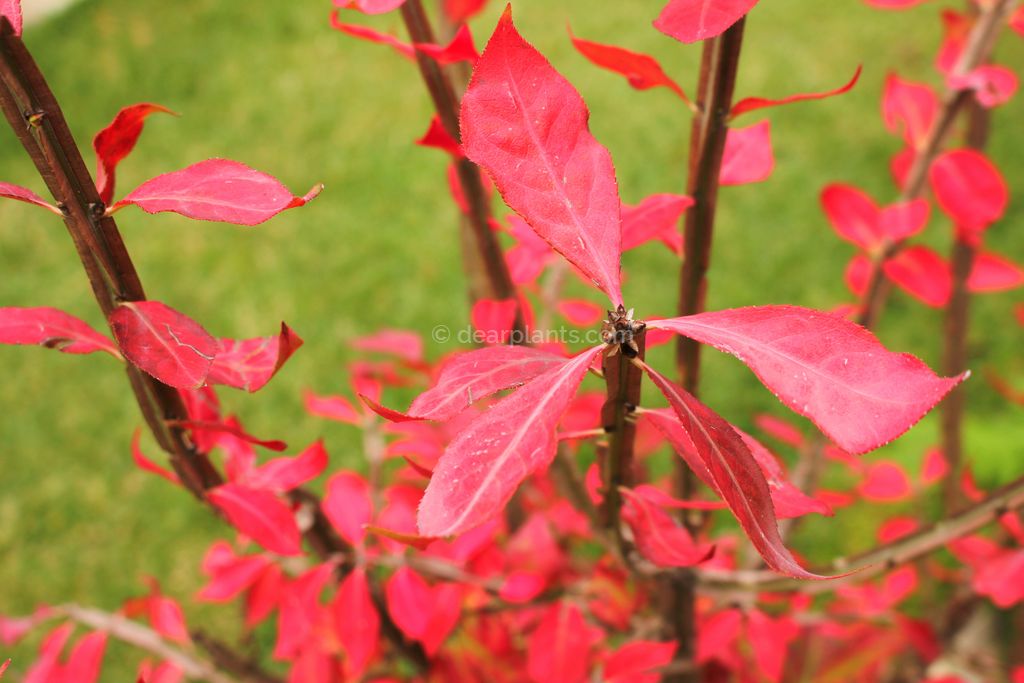
The Eastern Wahoo is one of the handful of idiosyncratic plants that defy the general greyness of November. Also called “burning bush,” it is native to the Midwest, and gets the name Wahoo from the Dakota language, in which it means “Arrow-wood.” (“Wahoo” is also the name of a tropical game fish, and a Creek word for the winged Elm—an example of linguistic convergent evolution I ascribe to the fun-itude of its pronunciation). It is a shrub whose most distinctive feature is its fruit, poisonous to humans but beloved of birds:
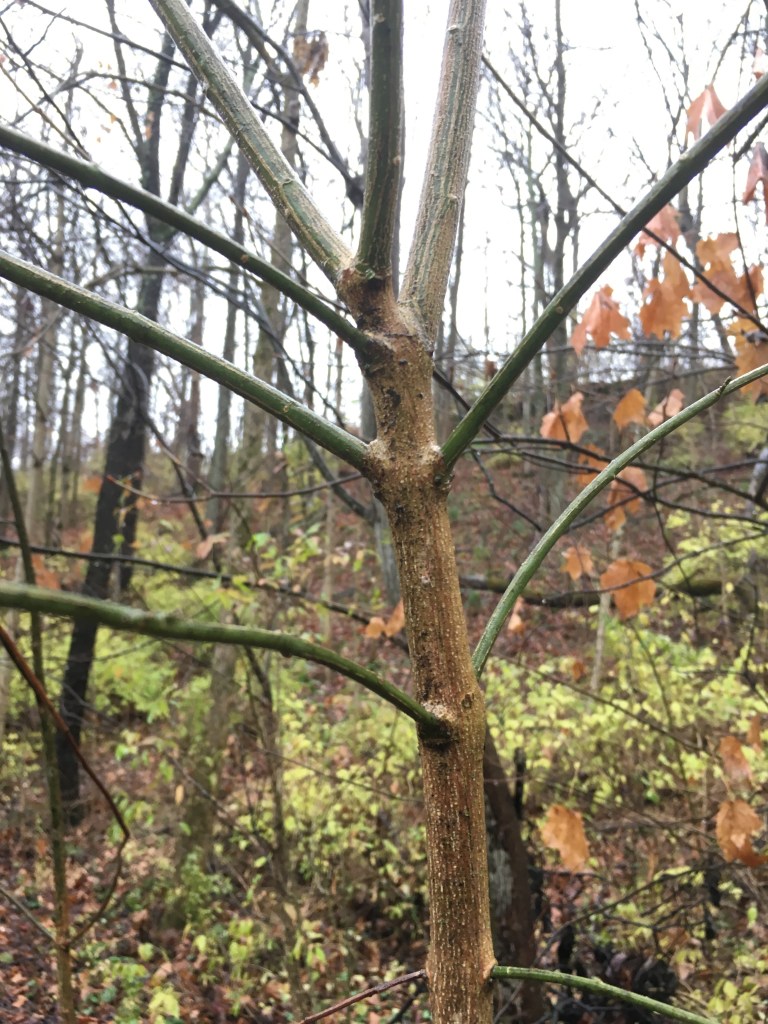
Other key features include opposite branching, vertical stripes called lenticels on the bark, and petioles 1/4th to 3/4th inches long.

Notice the opposite branching and vertically fissured bark.

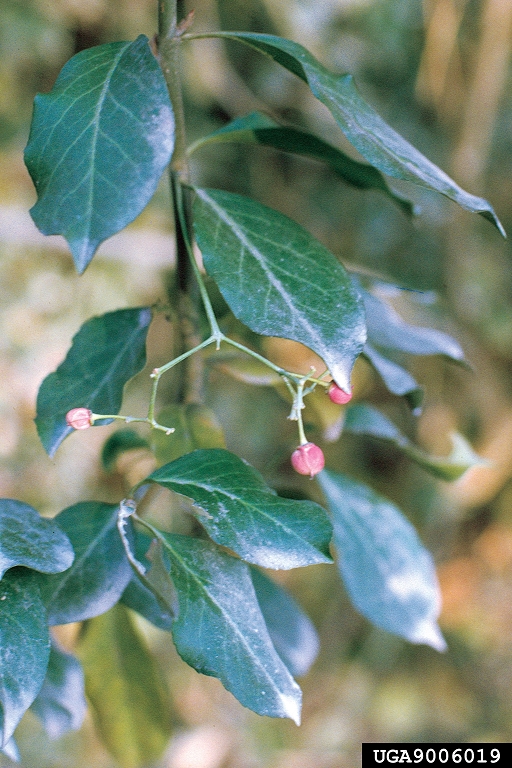
There are several non-native species in the same genus, including winter creeper/climbing euonymus and winged euonymus to be aware of.

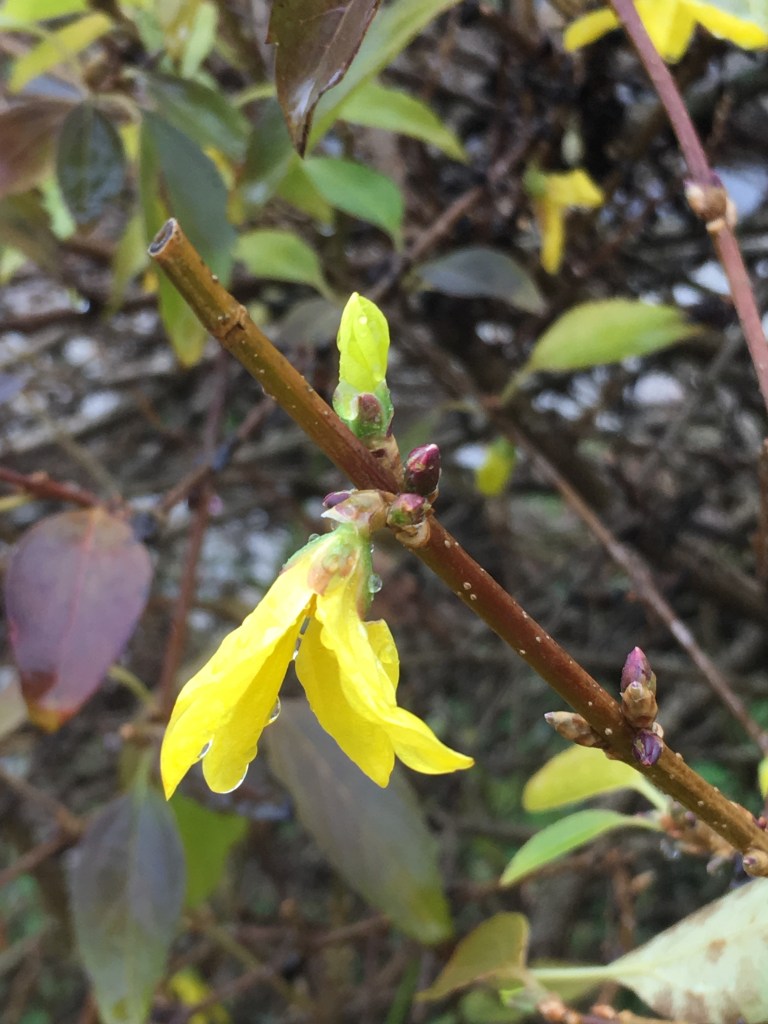
Another plant that has been providing me with some November color is my backyard forsythia. Forsythia is not supposed to bloom in the fall, but sometimes if the weather conditions are right (ie, they approximate early Spring) it is tricked into blooming in October or November, as happened to mine!

Reading “A Brief History of Neoliberalism”

David Harvey sheds light on a question I have asked before on this blog in connection with Peter the Great: Why do we obey? Or rather, why do people sometimes act against their own best interests? Why do the many “let” the few take advantage of them?

This question is perhaps not as mysterious as my own cognitive biases make it seem. As a product of Protestant America, perhaps I see the individual as more individual than he/she really is. Furthermore, I tend to favor explanations resting on raw, concrete facts or the brute power of tangible resources. I tend to see ideology as following and justifying, rather than as leading material interest.

And yet, as both the reign of Peter the Great and US history since Reagan show, people act against their own interests. The Rust Belt, for example, votes overwhelmingly for the very people who destroyed their unions and outsourced their jobs. Why? Harvey’s answer is that ideology is a lot more powerful than I would like to admit.

To say that people act against their own true interests is in a sense merely to say that they don’t act rationally—and yet I find myself very reluctant to admit this! For one thing, it makes so much of human suffering seem needless, lacking the dignity and inevitability of tragedy. Furthermore, to admit that other people can be duped into walking themselves into their own prisons, is to admit the same of myself.

On the other hand, to acknowledge the power of ideology is also to acknowledge the power of art and thought. It teaches me to have more patience for ideas than I might otherwise have. And while it strips away the fatalistic dignity of tragedy, it opens up avenues of change that would be closed in a fully pragmatic universe.

Neoliberalism in Contemporary Czech Fiction

I have at last finished Pavla Horáková’s Teorie Podivnosti, a book chosen more or less at random from the pool of “highly-acclaimed contemporary popular Czech fiction” as a kind of experimental sampling. What is Czech literature currently like? How is it different from American popular literature, and what kind of world-outlook does it evince?

To start with, let me give you a brief summary of the plot. Our protagonist is a woman in her 30s with two PhDs who works at the “Interdisciplinary Institute for the Study of Man,” which she describes as a bureaucratic and soul-sucking institution where all sorts of overly educated drones study a variety of extremely niche hypotheses. Already, one trait of the novel, its “cynicism” is apparent. Ada, the protagonist, sees herself as a rebel, disillusioned with the system. She is friends with a few of her similarly disillusioned coworkers, including one, Valerie, whose son has been missing for many years. The search for this son, who is the ultimate rebel and who has disappeared because he can’t be controlled by the limits of society, forms the basic through-line of this otherwise very meandering book. In the end, this Byronic son who the narrator has been fantasizing about throughout the book, turns up briefly, gets the main character pregnant to provide some kind of an ending, and disappears again. Most of the book is taken up with very frank description of the protagonist’s everyday life.

She has many little pseudo-scientific pet theories, for example, that hirsuteness is a predictor of homelessness. She takes phrenology for an actual science, and makes “observations” such as “The children of cleaners and cooks were exact copies of their mothers. Smart children, however, don’t particularly resemble their parents, they have their own restructured physiognomy”(58). There are other parts of the book which are fairly offensive, for example, there is a custodian without arms whose name is simply “Bezruče,” literally “Armless.” Much could also be said about the patriarchal attitudes internalized by the narrator, for example, that women ought to have long hair and know how to use make-up.

Over the course of the book, the narrator abandons the specialization/technocracy of science, and seeks meaning instead in her own home-spun popular-science version of quantum physics mixed with mysticism (fractals explain everything, somehow). Her “Theory of Strangenesses” takes authority away from the specialist, and gives it back to the individual, who is essentially allowed to create their own truth.

What Teorie Podivnosti amounts to, I propose, is the story of the protagonist’s journey to a distinctively European brand of neoliberalism. As the back of the book says, “And while the society around her clings to emptier and emptier rules, Ada abandons these structures one after the other, and sets out for freedom.” Her valorization of her rebel-lover (who in the Czech context is inevitably tinged with the cool of the anti-communist dissidents) and her disillusionment with the scientific institution for which she works, essentially amount to an espousal of neoliberalism’s negative definition of freedom (freedom = not being told what to do) as a lifestyle. What makes Horáková’s neoliberalism European is that it arises not from an American belief in people’s ability to create themselves, but from a deterministic fatalism that people are where their innate abilities mean they deserve to be. Or at least that’s my working hypothesis.

I don’t think I have enough information to really work this thesis out. But I do think there is a connection between the narrator’s distrust of social consensus, her cynical outlook on social justice, the pride she takes her “individuality,” and the neoliberal elevation of “freedom”— defined as the freedom to be selfish— to the ultimate good.

Halloween Botany: Witch-Hazel

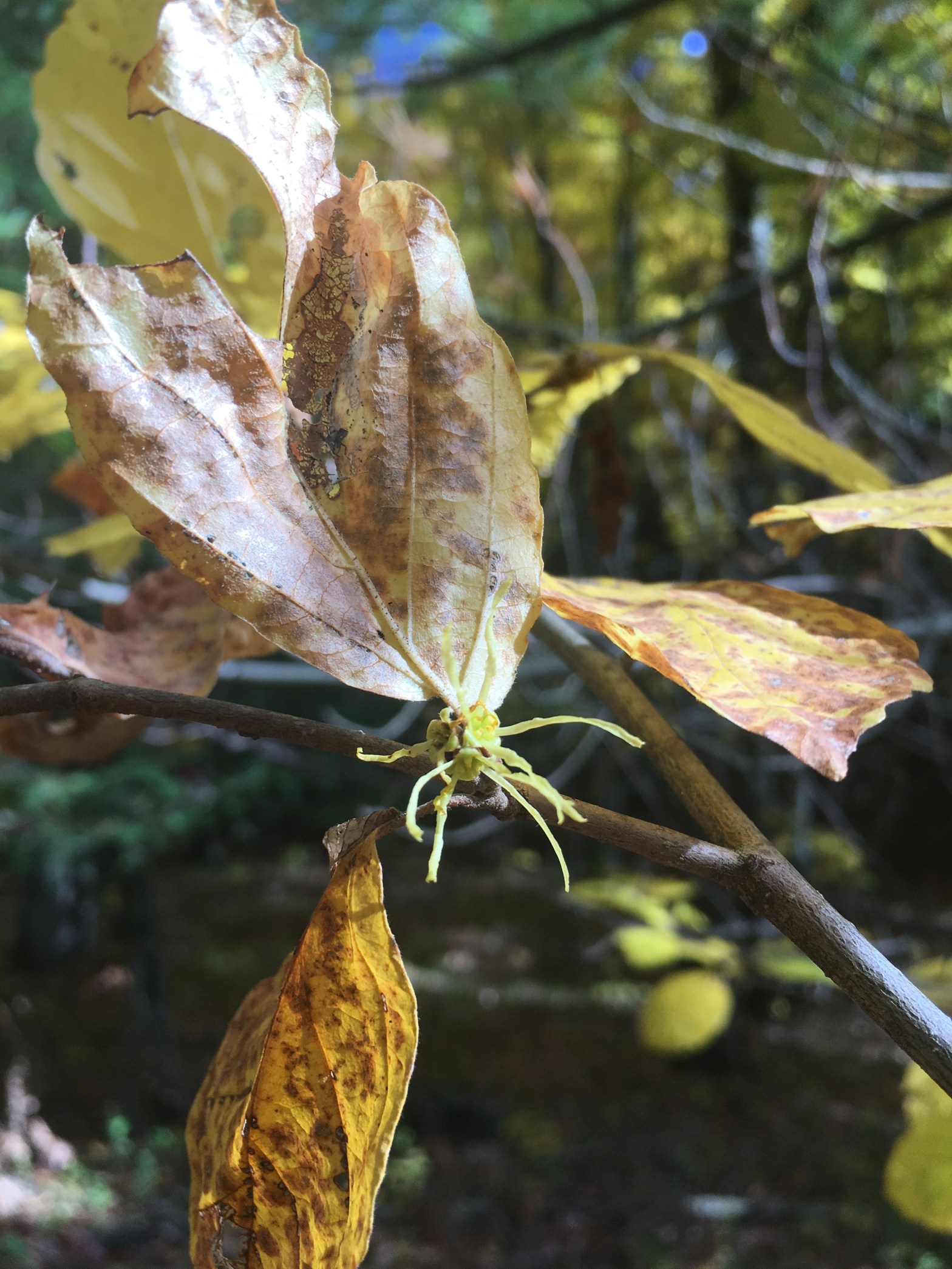
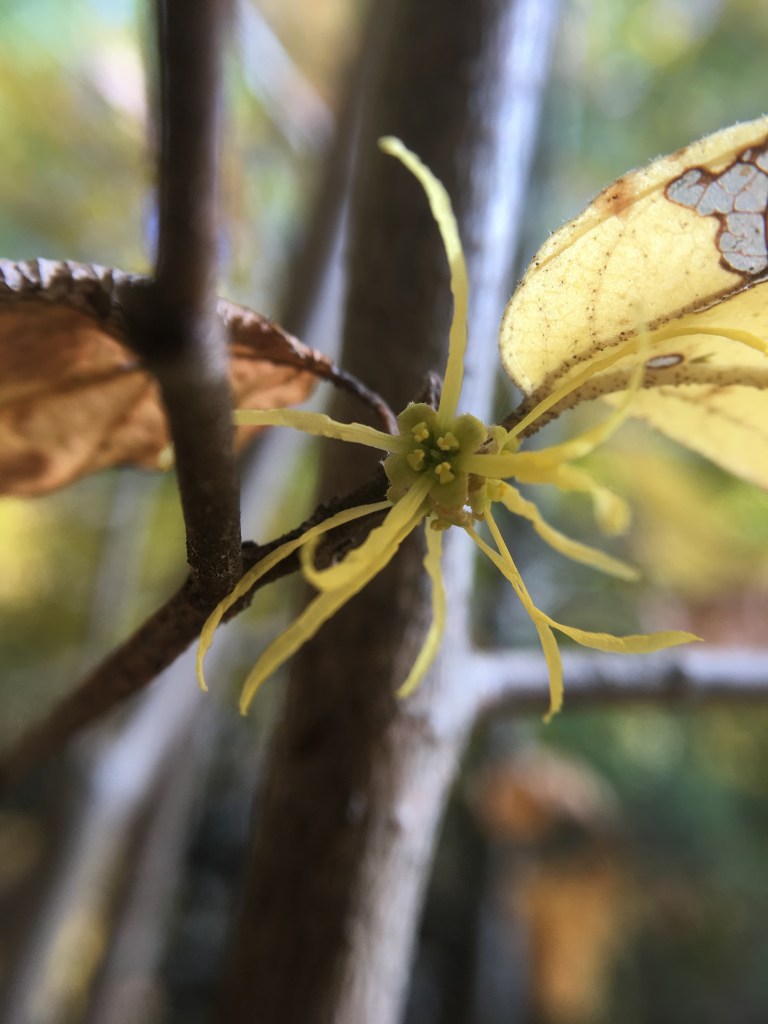
Witch-hazel is fall/winter bloomer, just like the orchids I covered a while back. Perhaps this is part of what makes it “witchy.” In fact, though folk etymologies attribute the name to its use in divining or dowsing, the Online Etymology Dictionary notes that the “witch” in Witch-hazel probably doesn’t come from the common use of the word, but goes back to the Old English wice, meaning “pliant” or bendable.

witch hazel (n.)

1540s, probably from Old English wice “Applied generally or vaguely to various trees having pliant branches” [OED], from wican “to bend” (from PIE root *weik- (2) “to bend, to wind”) + hæsel, used for any bush of the pine family (see hazel (n.)). The North American bush, from which a soothing lotion is made, was so called from 1670s. This is the source of the verb witch in dowsing.

https://www.etymonline.com/word/witch%20hazel

Nonetheless, it is a witchy plant with a spooky flower.
As mentioned above, Witch-hazel has been used extensively for divining or dowsing, which is an occult technique for locating underground water. Some of you may be familiar with Seamus Heaney’s poem “The Diviner.” But the hazel mentioned in that poem is not Witch-hazel, which is native to North America. As the etymological dictionary points out, “hazel” or haesel was used fairly indiscriminately to refer to a variety of shrubs.
If you are curious what dowsing actually involves, I would say it’s rather anti-climactic. It involves holding a forked branch in your hands and walking around until you feel the branch start to point downwards (or until you unconsciously let it slide). At the spot it points to you will find water, or metal ore, or whatever it is you are witching for. According to wikipedia, during the Vietnam war, “some US Marines used dowsing to attempt to locate weapons and tunnels.”

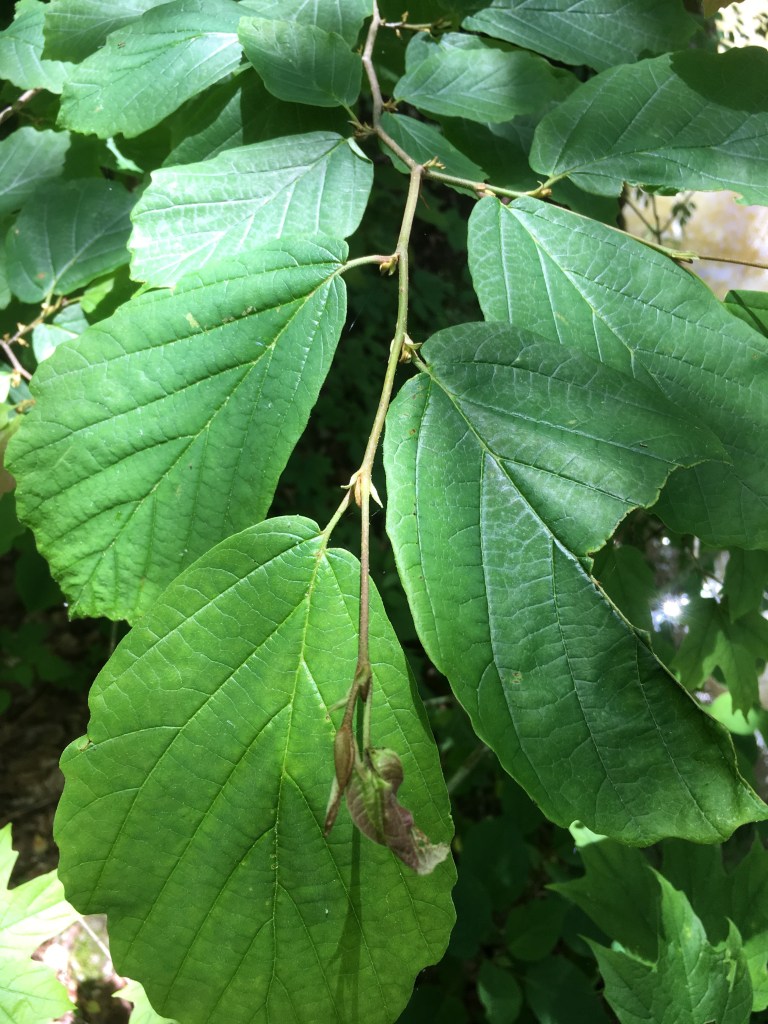
Identifying the plant is easy in the fall because of the presence of the flowers. In the Spring or Summer it can be identified by its broadly rounded teeth, frequently uneven leaf base, and its preference for moist woods and streams.

A final fun fact about Witch-hazel is that it forcefully expels its seeds, in fact with enough force to propel them up to 30ft. I haven’t been able to find a video of this, or see it in action, but I would recommend this video from the Smithsonian about other plants, like violets and touch-me-nots, that disperse their seeds via “explosion.”

In the Spotlight: Northern White-cedar

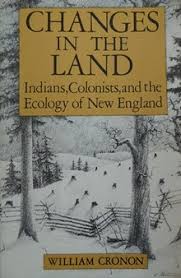
I just got back from a trip up north, which took me into the native range of Thuja occidentalis, also know as Swamp-cedar or Arborvitae. I chose to write about it for two additional reasons: one, because I’ve been reading William Cronon’s classic Changes in the Land, which mentions it as one of the trees more common before the impact of the early colonists was felt, and two, because it is rare to non-existent in the wild in Indiana, thus making it something of a special sighting for me.

Northern White-cedar is a pretty tough tree. They love to grow in swamps, and on the edges of cliffs, growing very slowly and usually only to about 50 feet. The cliff specimens, which are inaccessible to deer and wildfires, can be quite long-lived—the oldest currently living specimen being 1,100 years old.

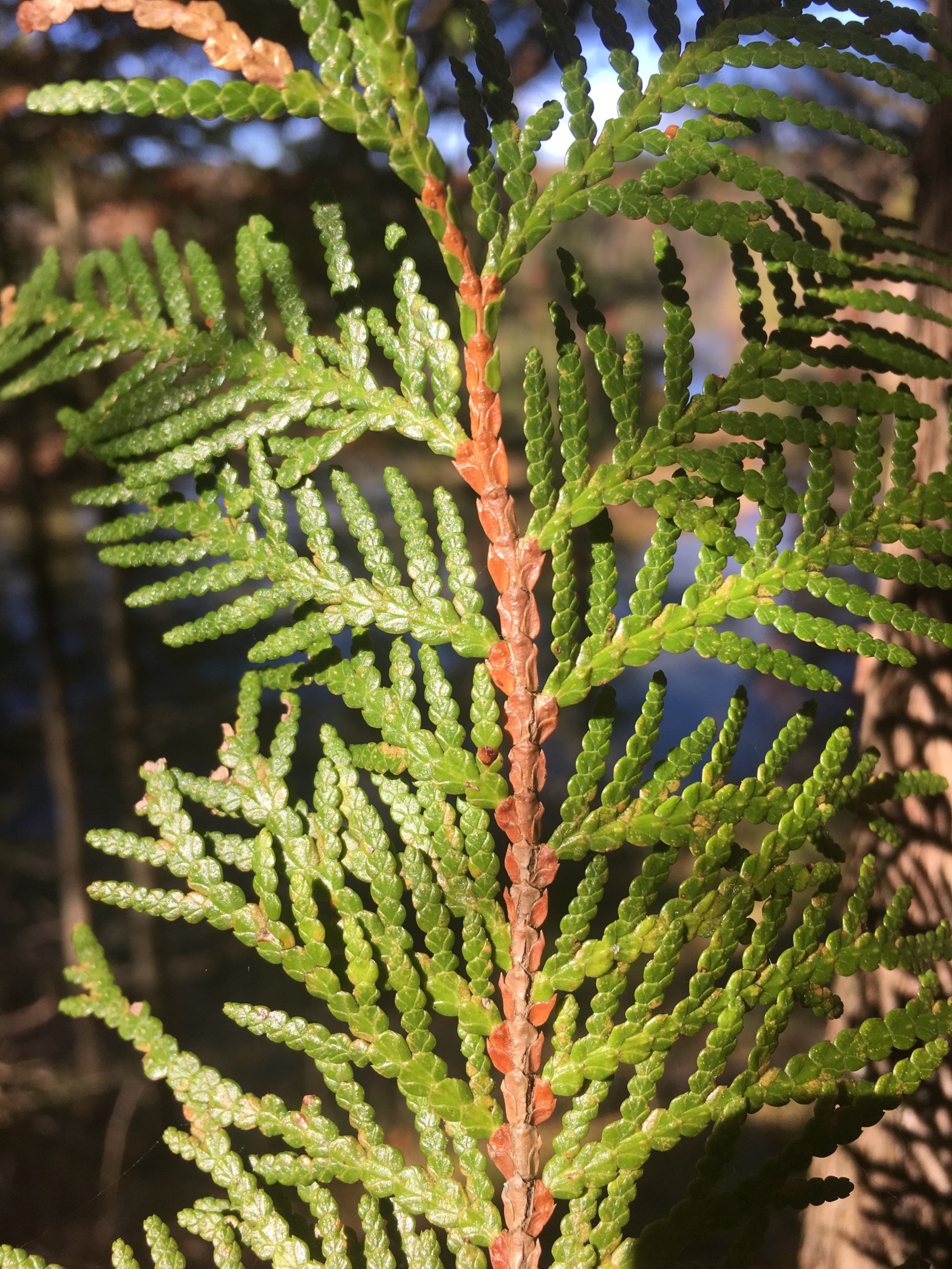
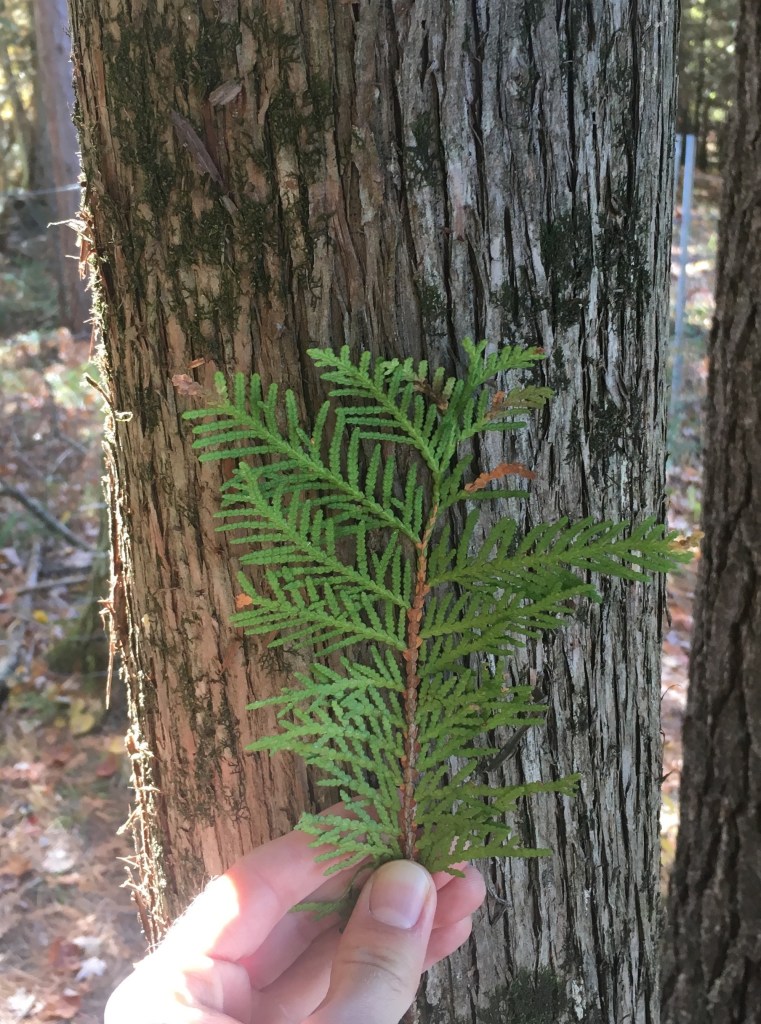
A distinctive feature of the Northern White-cedar is its fan-shaped branches, forming flat sprays of scaly leaves. In contract, Juniper (or Red Cedar, which is not a cedar at all) is more needle-y and less flat and fan-like. Northern White-cedar has many uses–which is why the early colonists almost harvested it to elimination. Colonists were most interested White-cedar because it makes good shingles and fencing. Cedar wood is incredibly light, durable, and fragrant (due to its essential oils).

It gets the name Arborvitae (Tree of Life) from the story of an early French explorer, whose crew fell ill of scurvy. According to the story, they were saved when the local Native American people (either Iroquois or Heron) prepared a tea they called “annedda.” It is believed that this tea was made from White-cedar foliage, which is extremely rich in Vitamin C.

Though fairly uncommon in the wild, Northern White-cedar is an often used ornamental, frequently as a screen or hedge. In whatever form you find it, take a look! There is something spare and yet flourishing about the contrast between its rough shaggy bark and inhospitable habitat, and its fragrant, evergreen leaves.

A Southern Indiana Fall

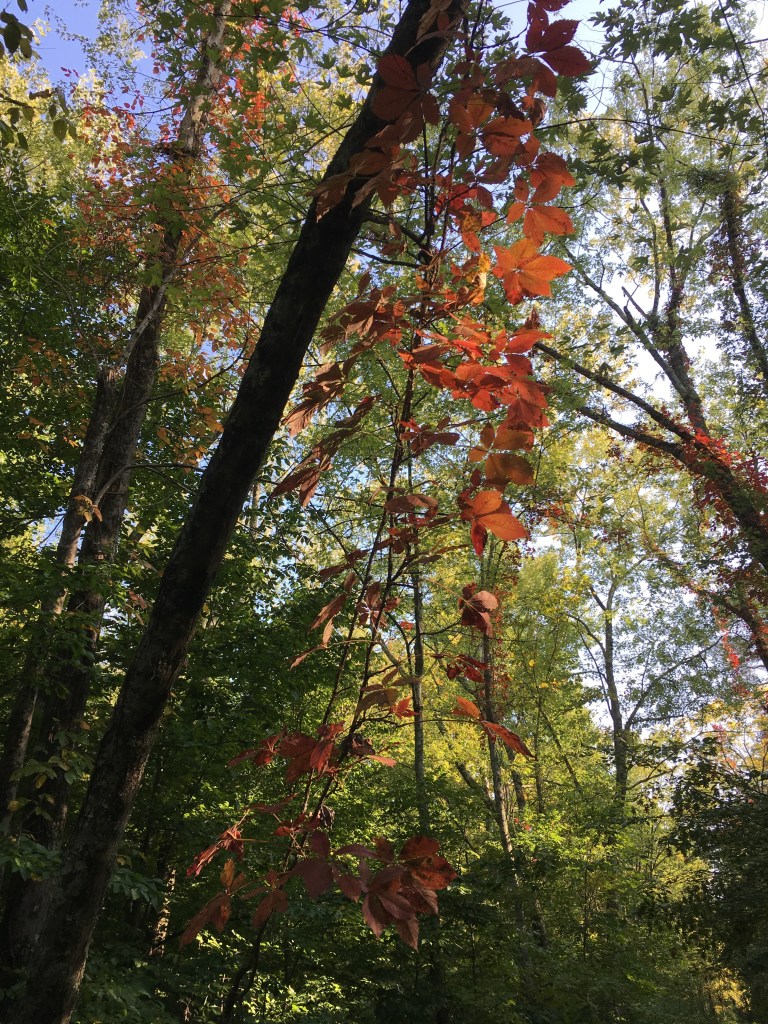
Virginia Creeper, one of the first things to go red!
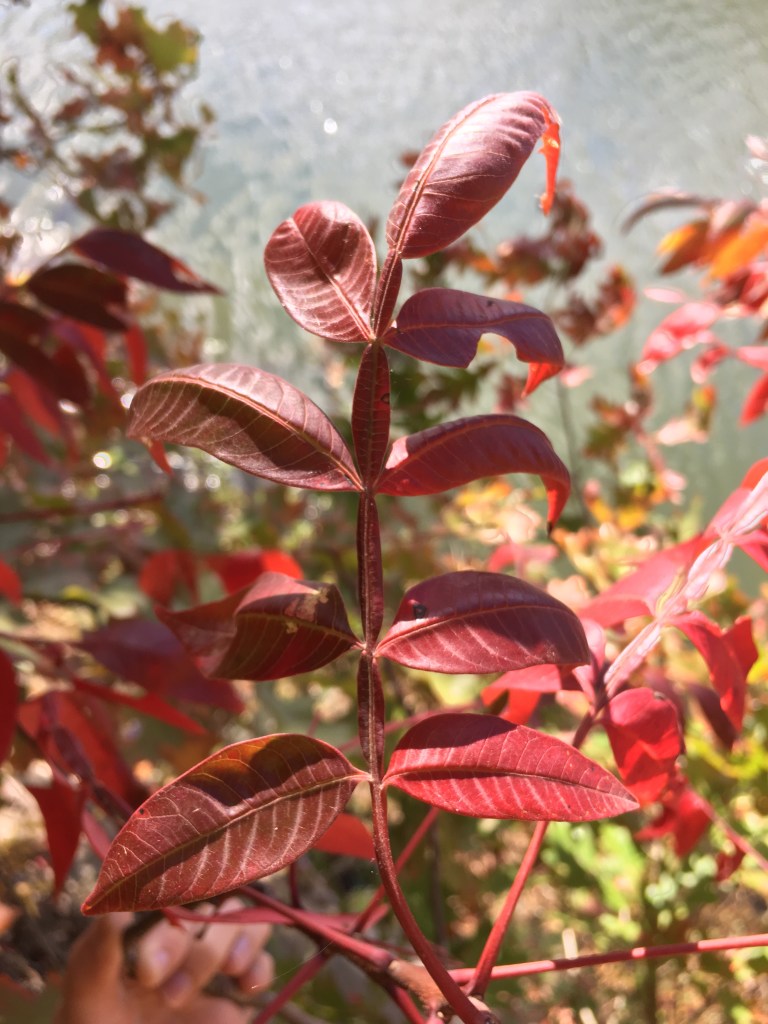
Hoosier-spirited Shining Sumac
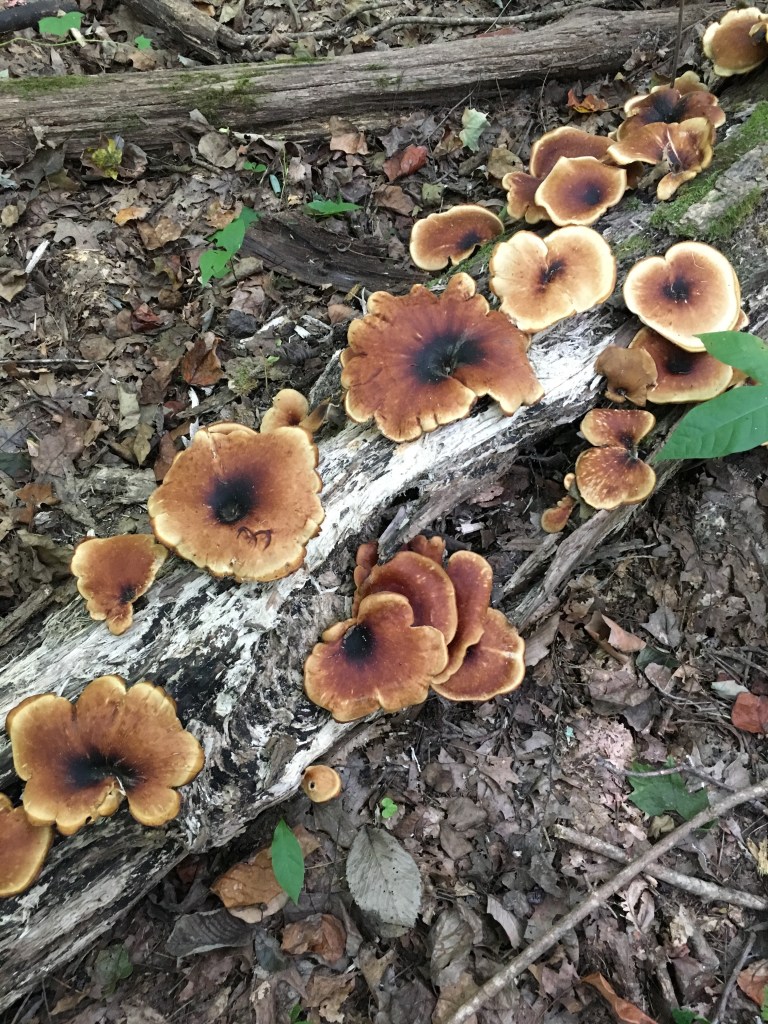
Bay Polypore, like giant burnt pancakes
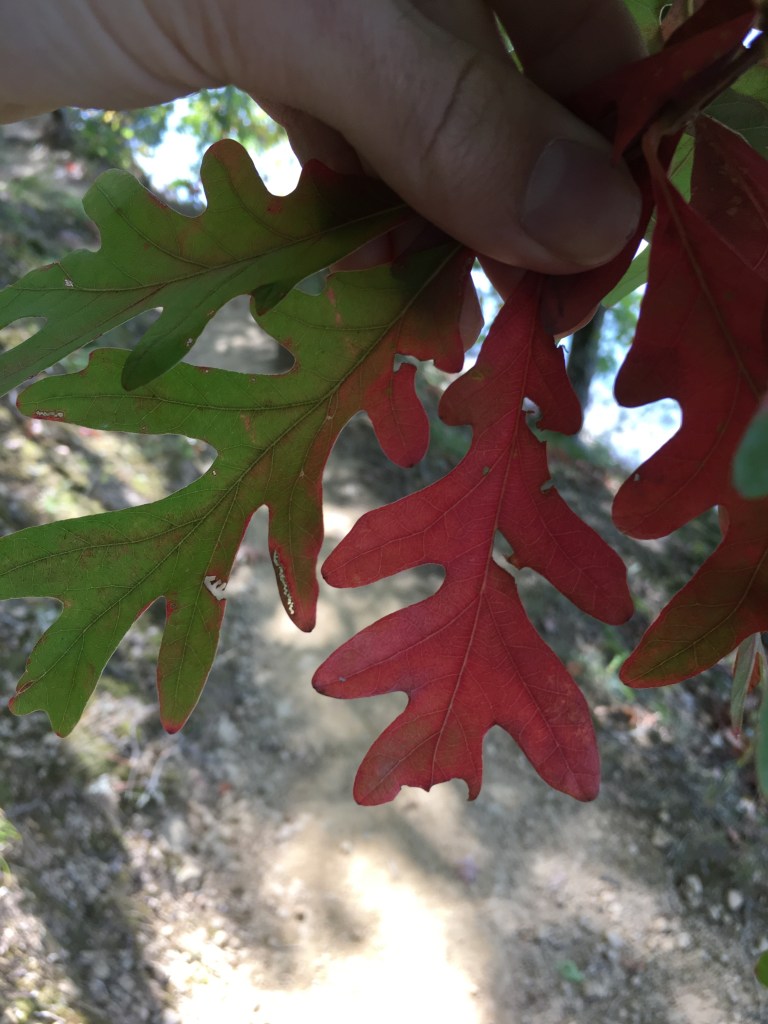
White Oak
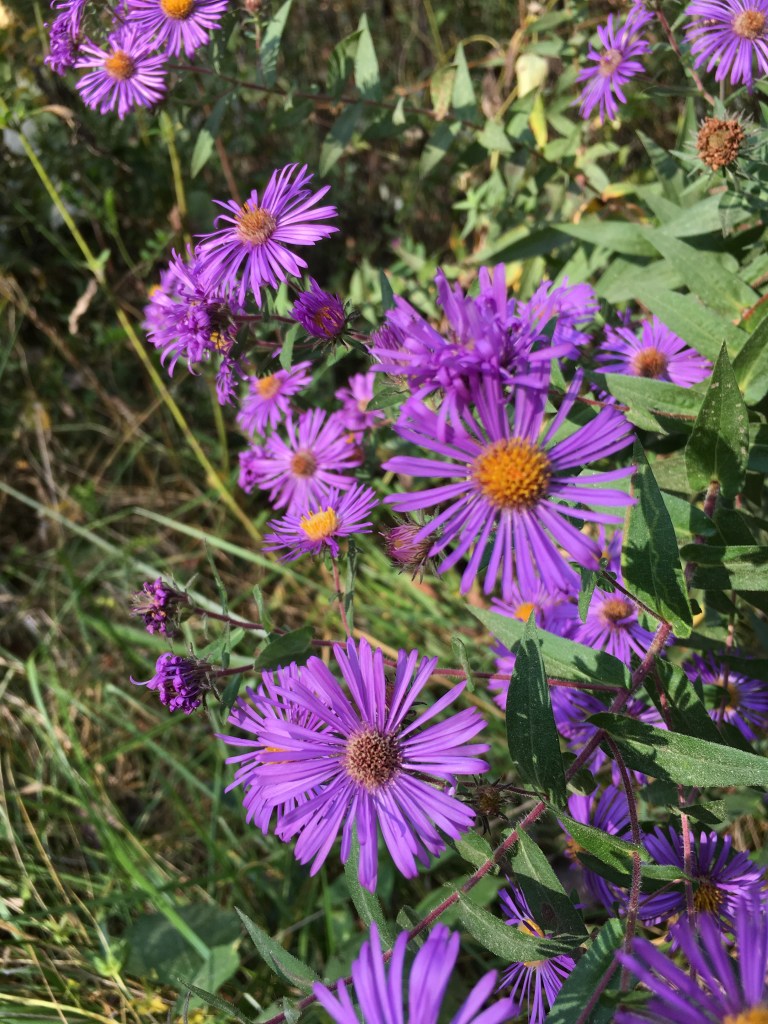
New England Aster – along with Goldenrod a fall flowerer. Also know as “Michaelmas-Daisy” because it flowers around September 29, the feast of St. Michael.
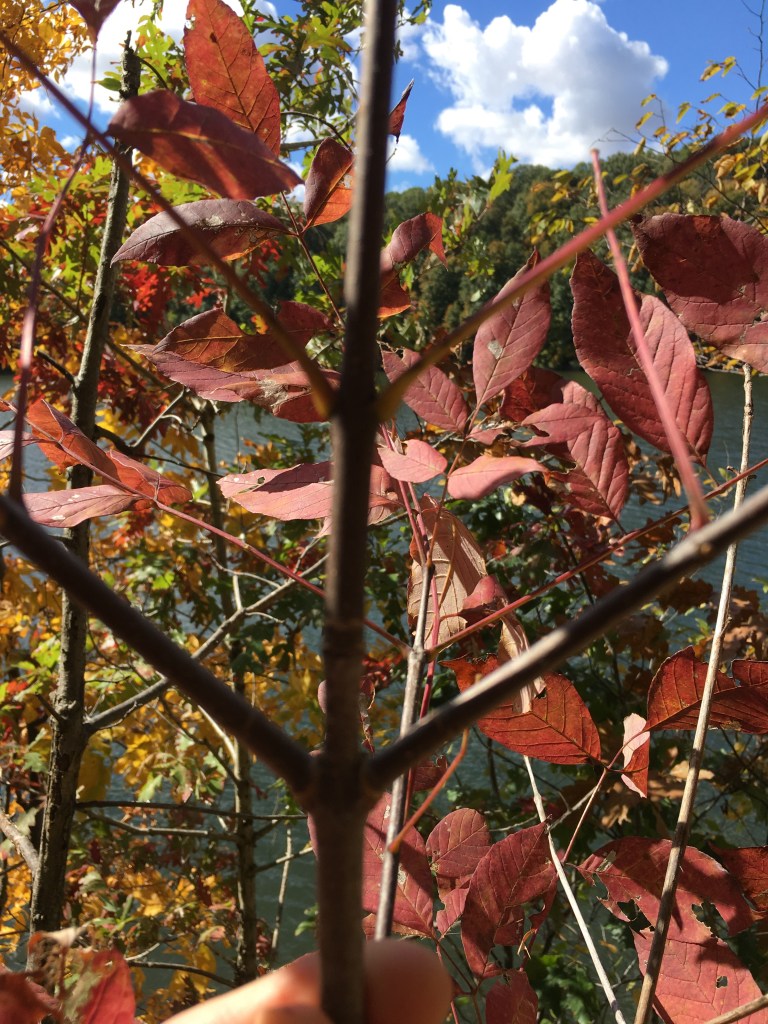
Ash trees are notoriously difficult to pin down to the species level. One thing that makes them easily recognizable as a group though, is the opposite branching shown here.
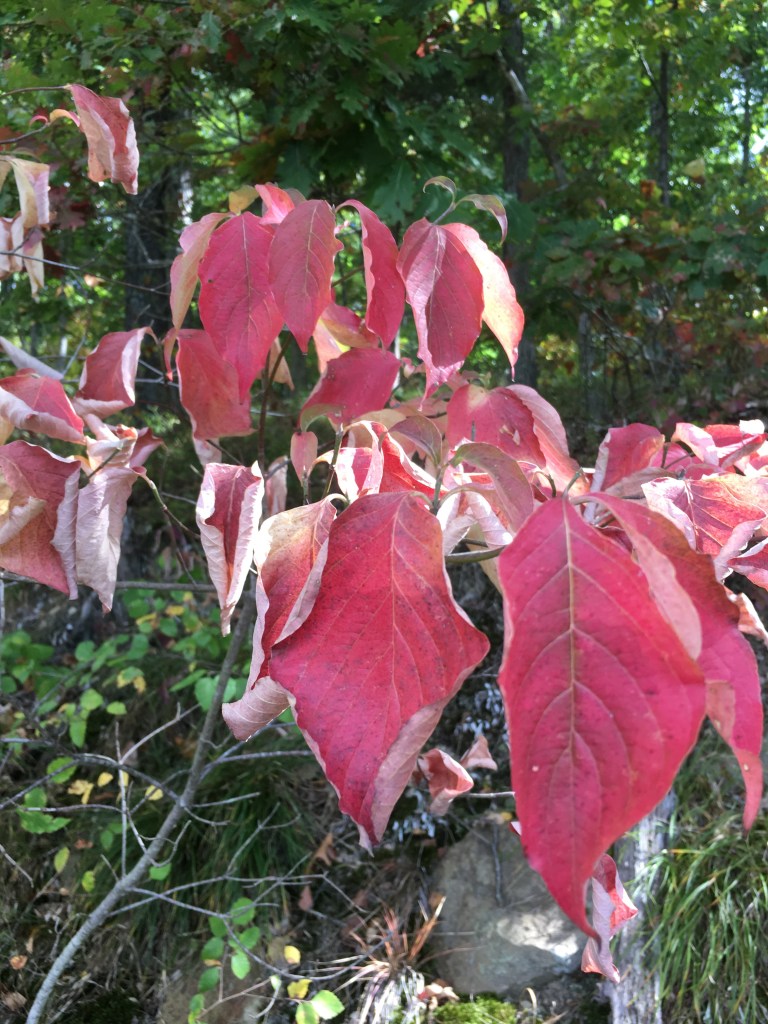
Dogwood has a beautifully pale pink which contrasts nicely with the scarlet of Red Maple and the burgundy of Ash.
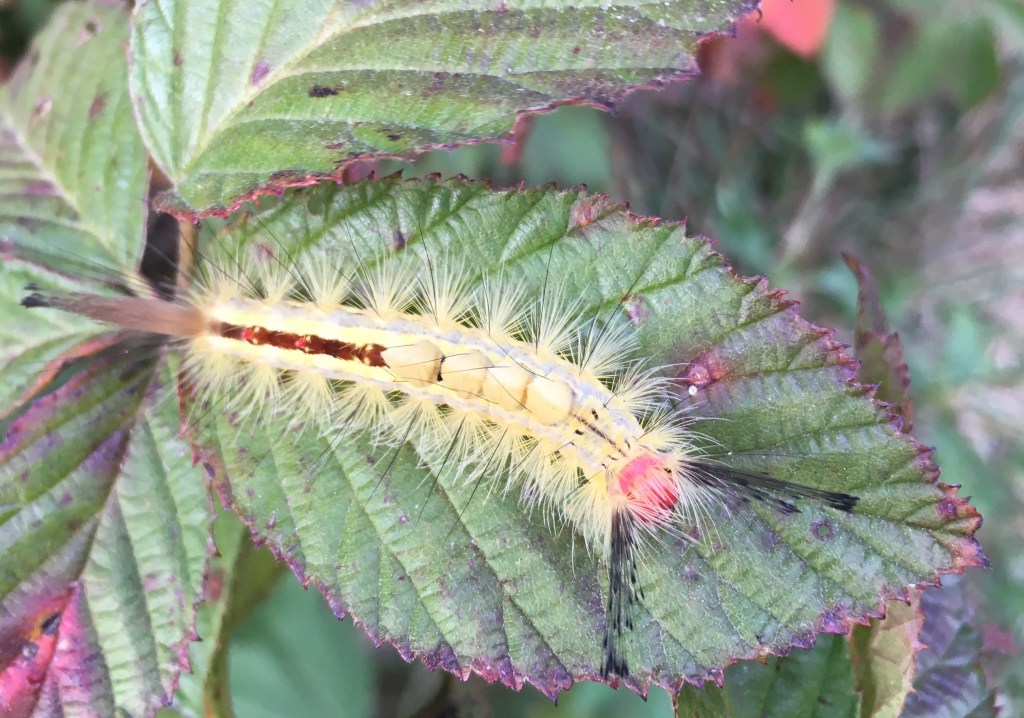
I’m no lepidopterist, but I believe this is a “Tussock Moth” of some sort.

Indiana Orchids: Fall is the new Spring

This week I’m taking a break from the Mushroom Lingo series to talk about mushrooms’ floral cousins: orchids. I say that orchids are cousins to mushrooms because orchids depend on fungi for energy during crucial phases of their growth. This is why they are so hard to transplant.

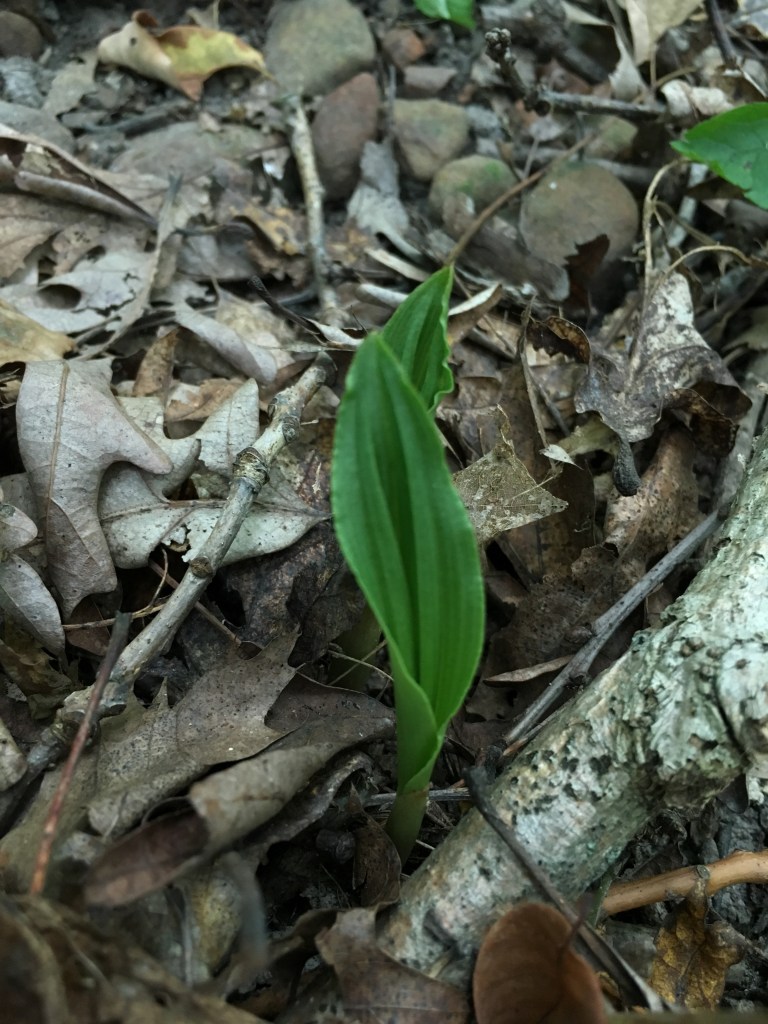
First of all, let’s take a look at Putty Root (named for it’s mucilaginous tubers). At a time of year when everything else is losing leaves, this orchid is growing them. (Hence fall is orchid-spring).

This leaf will persist throughout the winter, able to perform photosynthesis in temperatures only slightly above freezing, and looks something like this in early Spring:

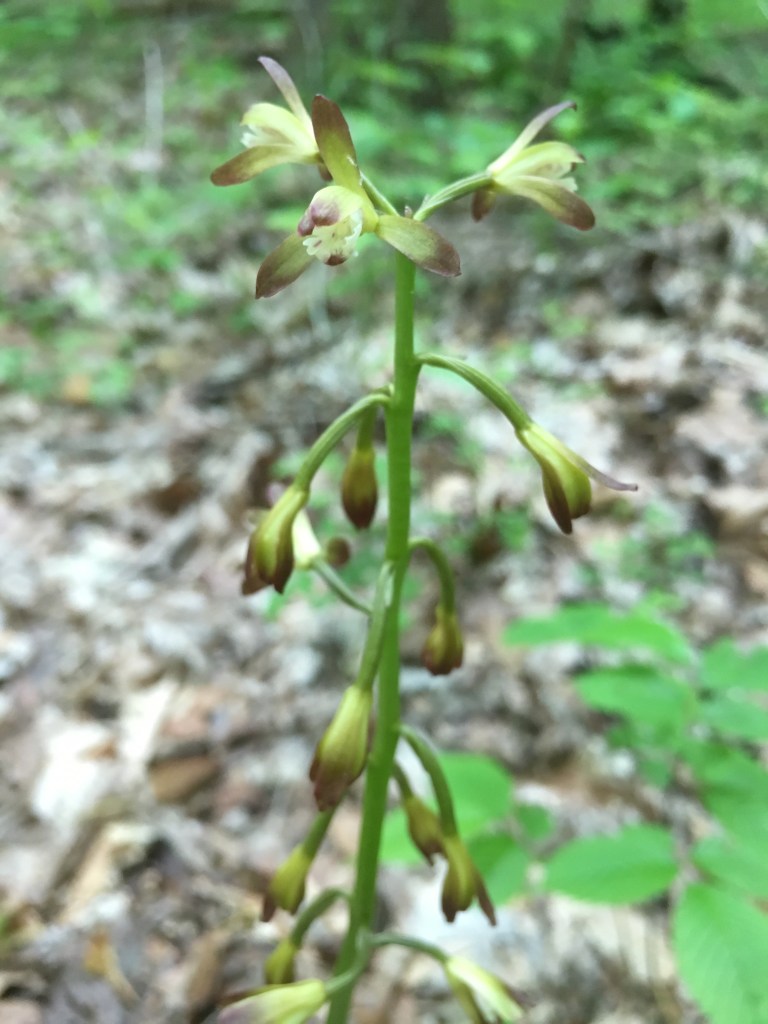
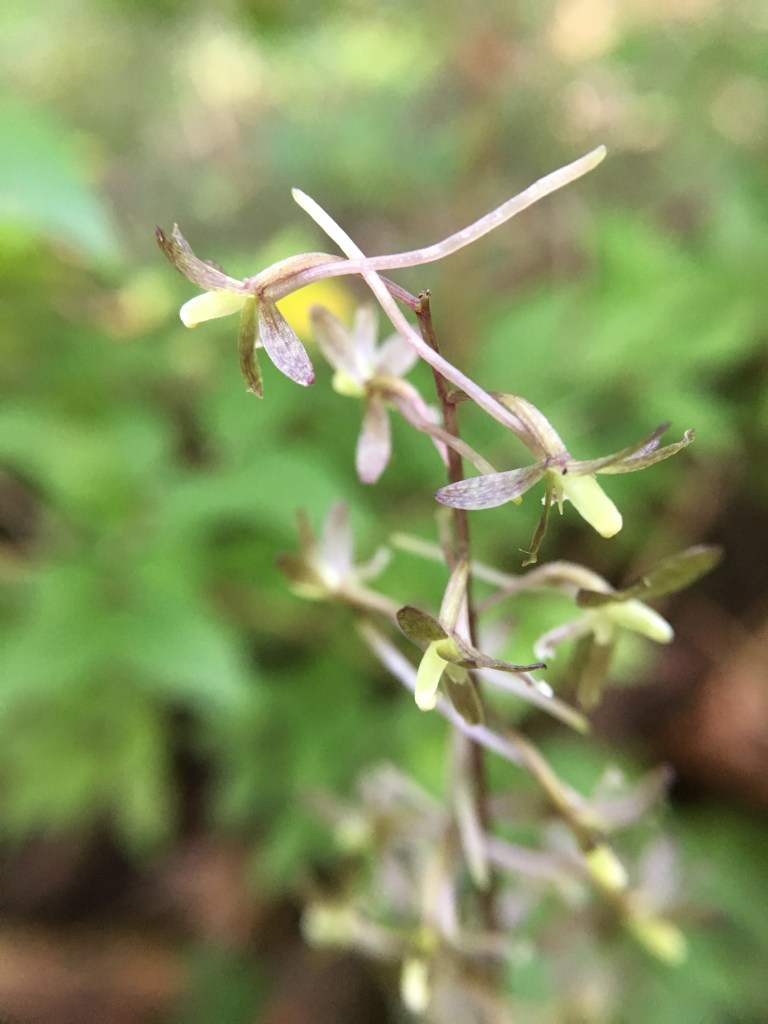
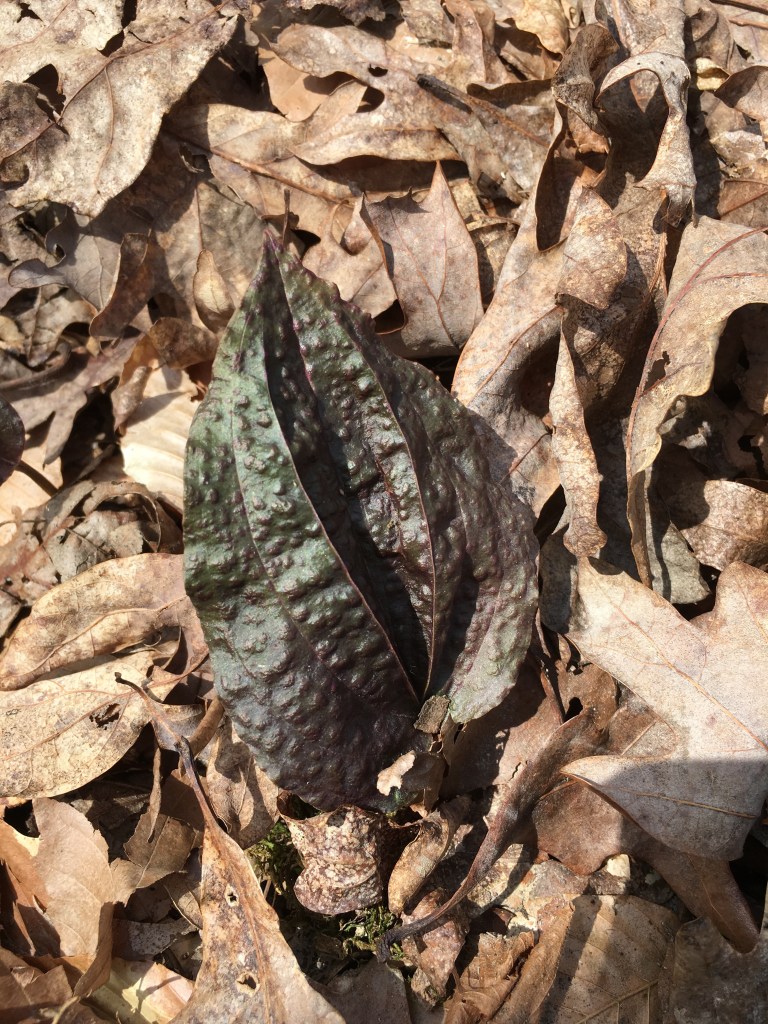
The flowering part of Putty Root can easily be confused with another orchid: The Crane Fly orchid, which also grows a leaf in the fall, but in its case, the leaf has a warty purple underside.

Putty Root
Crane-fly Orchid
Crane-fly Orchid Leaf

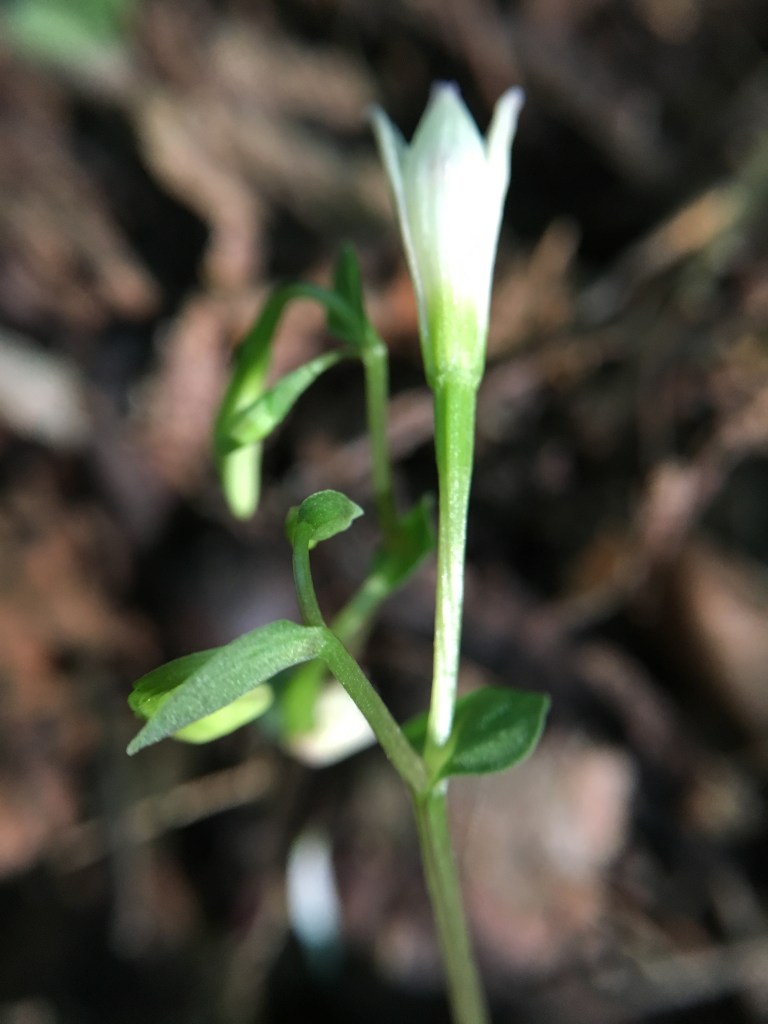
The rarest orchid I’ve found is the Three Birds Orchid, which is considered “G3” or “Vulnerable.” What makes this orchid difficult to spot is that it blooms for only a couple hours on a couple days a year, and populations tend to synchronize their blooming across a region—so it won’t bloom in one place on one day, and then bloom somewhere else on another day. I missed optimal blooming by a couple hours (apparently between 11am and 1pm is the best time) but it was still a neat find.

One last thing about the Three Birds Orchid: it is “semi-saprophytic,” meaning, like saprobic fungi, it gets some of its energy from breaking down organic matter.

Book Review: “The Secret Life of Stories: How Understanding Intellectual Disability Transforms the way we Read

This book’s greatest strengths and greatest drawbacks are intertwined. For example, rather than focusing on a detailed look at the function of disability in a few texts, Bérubé moves quickly between a huge range books, leaving me with the impression that I don’t fully understand his arguments, but also giving me effectively a reading list for further study.

  • The Woman Warrior — Maxine Kingston
  • Martian Time-Slip — Philip K Dick
  • The Life and Times of Michael K. — Coetzee
  • Foe — Coetzee
  • The Curious Incident of the Dog in the Night-time – Mark Haddon
  • The Secret Agent — Conrad
  • The Speed of Dark — Elizabeth Moon

Even with texts Bérubé mentions that I have read, such as Pale Fire, the Harry Potter series, A Wrinkle in Time, and Don Quixote, I feel like Bérubé’s analyses amount more to abstracts for somebody else’s more detailed reading, than illuminating readings themselves. For one thing, he doesn’t discuss the impact of a disability studies reading on other elements of the text, or on the text overall.

There is also a lot of theory: again both a strength and a drawback. A strength if you have read Mitchell and Snyder, Quayson, Boyd, Zunshine, Kermode, Sedgwick, Shklovsky, Vermeule etc, etc, and want to know how exactly Bérubé’s theory differs from theirs. I, personally, had not previously heard of Evocriticism, so the significant chunks of this book Bérubé devotes to somewhat smugly demonstrating their misguidedness were wasted on me.

Bérubé has something of a know-it-all tone and sense of humor about him. Here is clearly a guy very much at home in academia, who enjoys playing the professorial show-off a bit. This can be slightly condescending/annoying but not egregiously so. Overall, I’m glad I read the book because now I know where to start.

Mushroom Lingo #10: Agaric

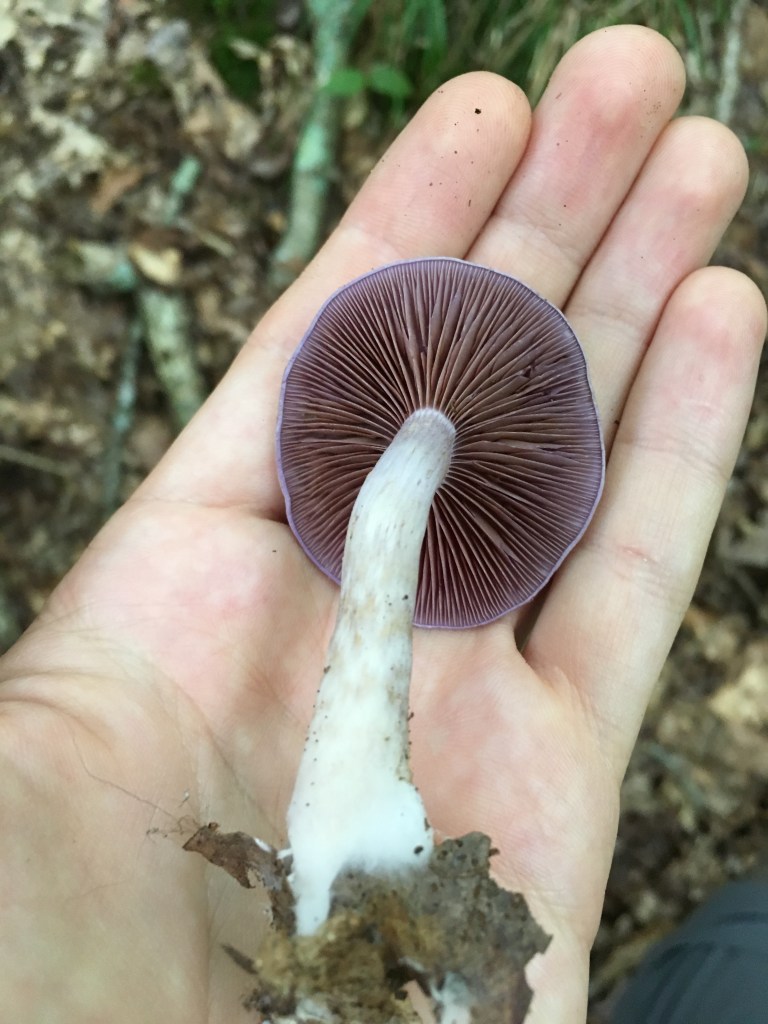
Like “polypore,” “agaric” can be interpreted in two ways. Firstly, morphologically, to refer to any mushroom with the typical mushroom shape—a stem, cap, and gills.

Beautifully purple-gilled Cortinarius sp.

It can also be interpreted phylogenetically, to refer to the Order Agaricales. Way back in the days of Linnaeus, when mushrooms were classified macroscopically, these two meanings were equivalent. But as scientists have reclassified mushrooms based on DNA evidence, the two meanings have grown apart. Nowadays, “agaric” is used mostly as a common name for mushrooms with a stem and gills, and the term “euagaric” is used to refer members of a specific order.

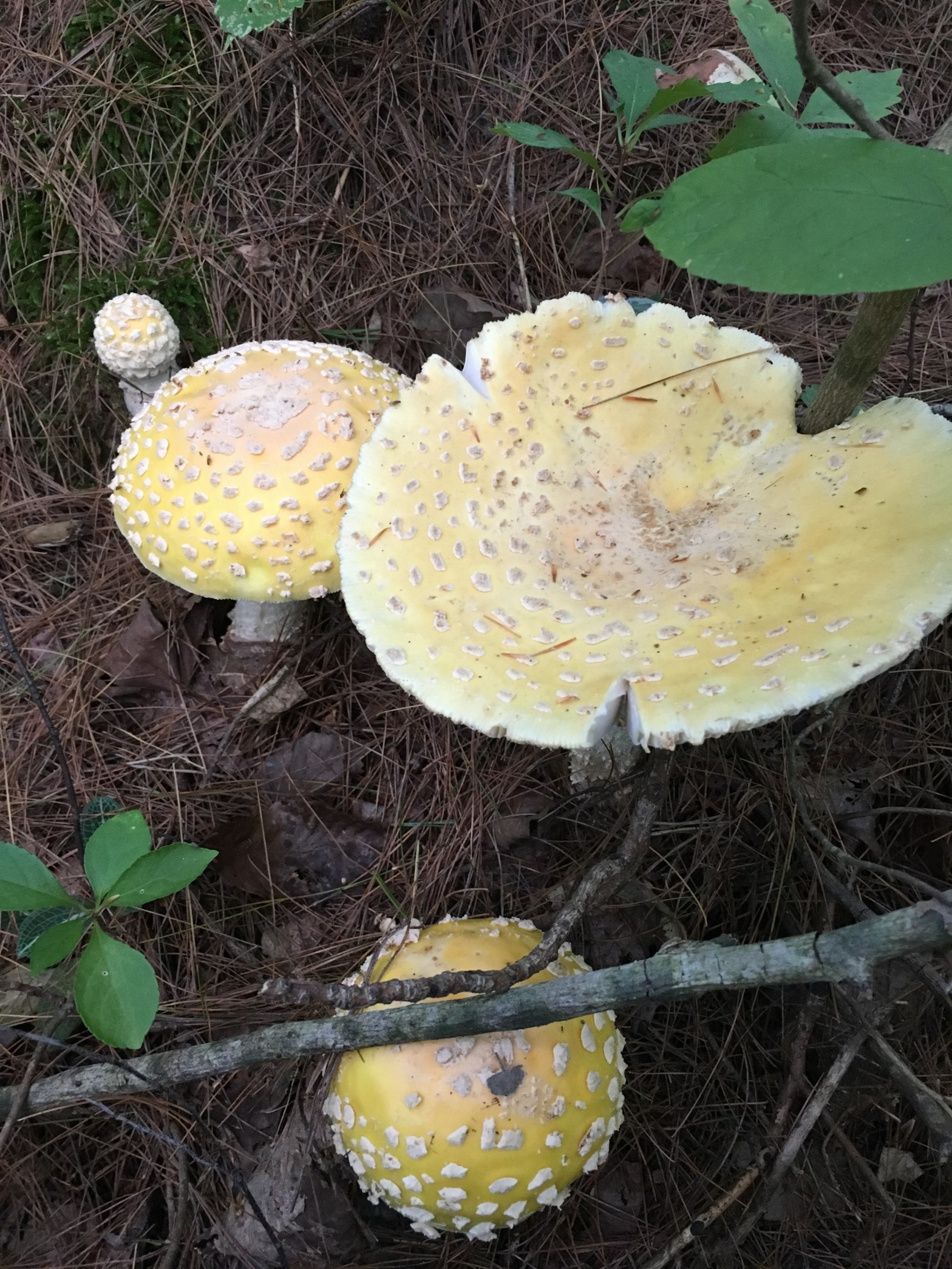
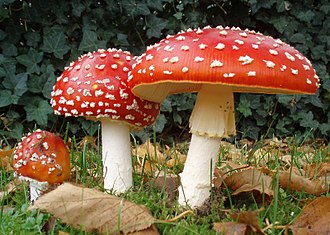
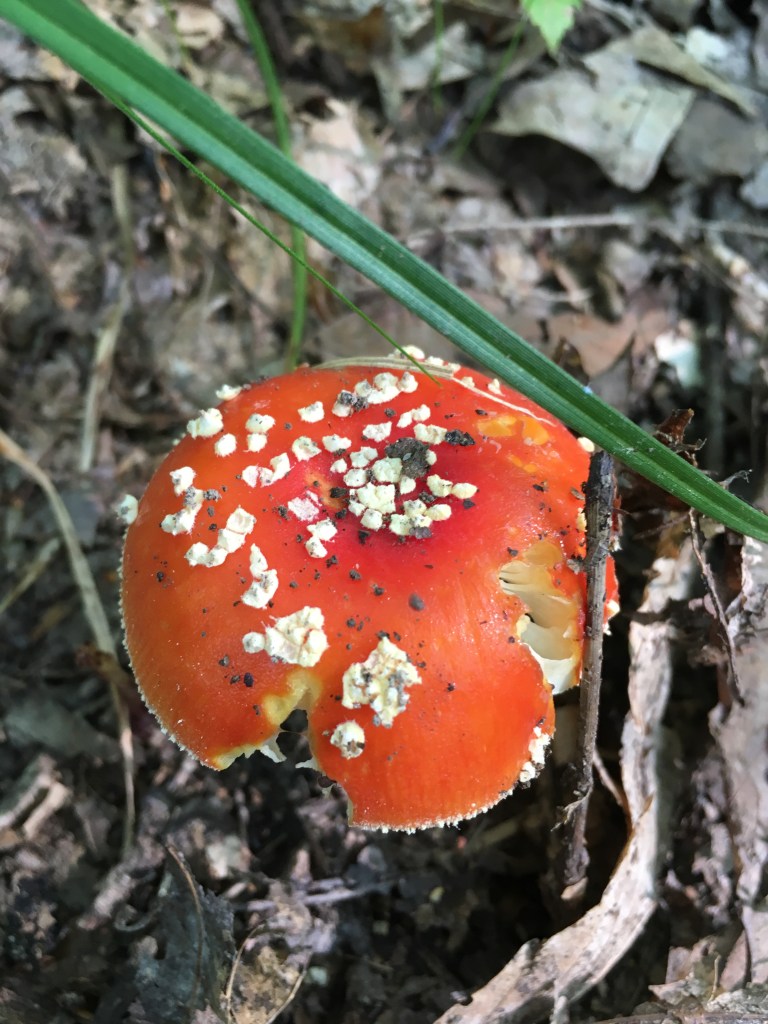
The most famous agaric, which is also the most famous mushroom period, is of course the fly agaric, Amanita muscaria. The iconic European version of this mushroom is a bright red, but there are several variations, including Amanita muscaria var. guessowii (first recognized by the Czech mycologist Rudolf Veselý and named after Hans Güssow, the Canadian who first described it), which is the main variation found in North America, typically in association with conifers.

The fly agaric is called that, by the way, because in some countries it is used as a fly trap. Small pieces of the poisonous/hallucinogenic mushroom are placed in milk. The flies are attracted to the milk, become inebriated/poisoned and die—or so I hear.

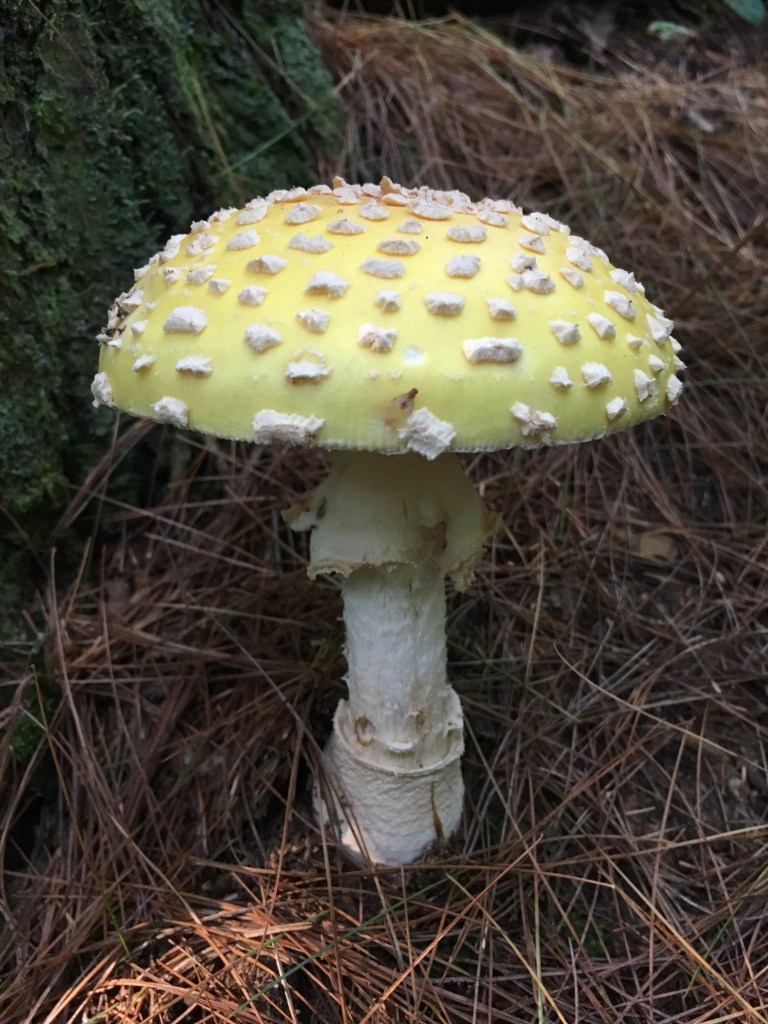
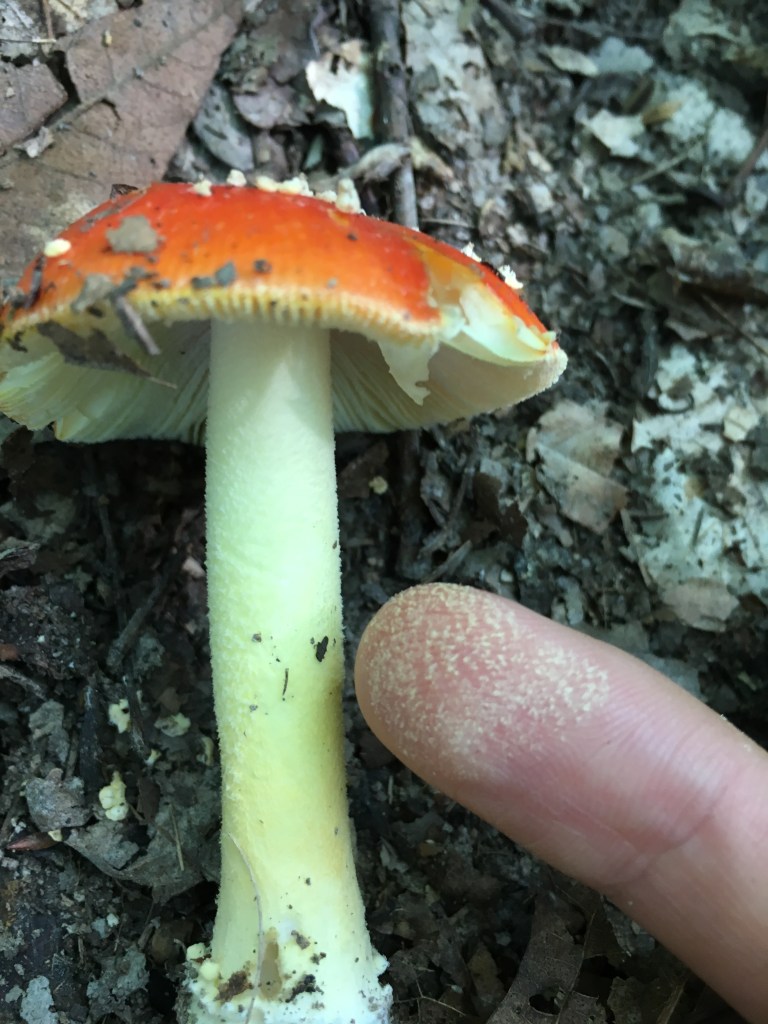
There are a couple mushrooms which look like the iconic red fly agaric, but are not—though they are “agarics.” Most notably, there is Amanita parcivolvata, the False Caesar’s Mushroom, which, despite looking virtually identical seen from above, can be easy distinguished by the absence of a ring on the stem and it’s yellow powdery volval remnants. Besides being the closest thing we have here in North America to the bright red toadstool of European lore, the False Caesar’s Mushroom is an excellent reminder that very few mushrooms can be identified from a single angle—so take more than one picture!

Design a site like this with WordPress.com
Get started