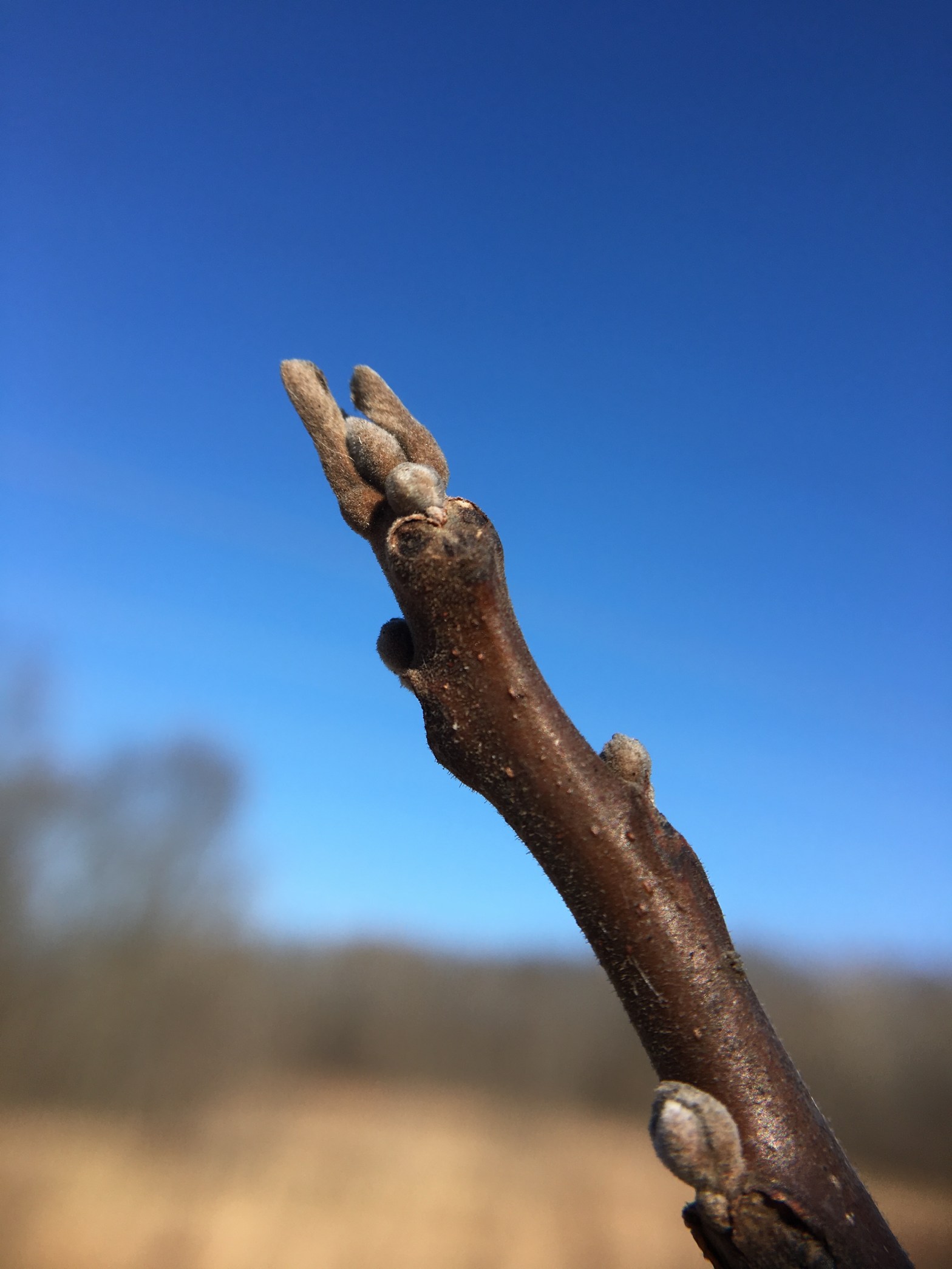
The walnut family, the Juglandaceae, have large, fuzzy buds (at least the ones in Indiana). I could be wrong, but I bet there’s a connection between the typically large, almost floral buds of walnuts and hickories and the fact that these trees have large, compound leaves—Black Walnut leaves can be up to 2 feet long, for instance.
You may be wondering where the name Juglandaceae comes from. I believe it comes from, or is at least related to the compound juglone, which is an allelopathic compound occurring naturally in walnuts. (Allelopathy, in case you missed my post on Garlic Mustard, is when plants produce biochemicals which influence the growth of other plants. In the case of juglone, it stunts the growth of other plants thus giving the walnut a competitive edge. In fact, it is sometimes used as a herbicide.)
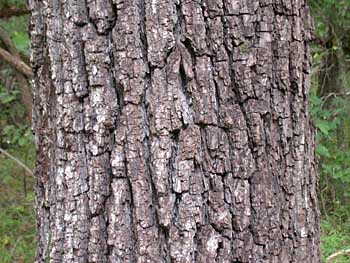
The picture at the top shows the bud of a Black Walnut. It’s extremely stout and blunt, which is befitting the character of this tree. Walnuts are great trees for many reasons. One is their dark, rough, chocolaty bark.
If you scrape the outer bark with a knife, you can reveal a beautiful chocolate brown inner bark.
Another thing I like about walnuts is the almost citric fragrance of their leaves. Based on appearance, black walnut leaves could almost be confused with Tree of Heaven. Both have large compound leaves. But in terms of scent, they are on opposite poles. (For more about Tree of Heaven and its scent see here.)
Lastly, walnuts are almost the last tree to leaf in Spring. Last year, they did not leaf around here until mid to late May. So there’s a little extra suspense, and then when they do leaf out there is a great contrast between the bright green of the new leaves, and the dark brown of the bark (which I tried to capture in the picture below).
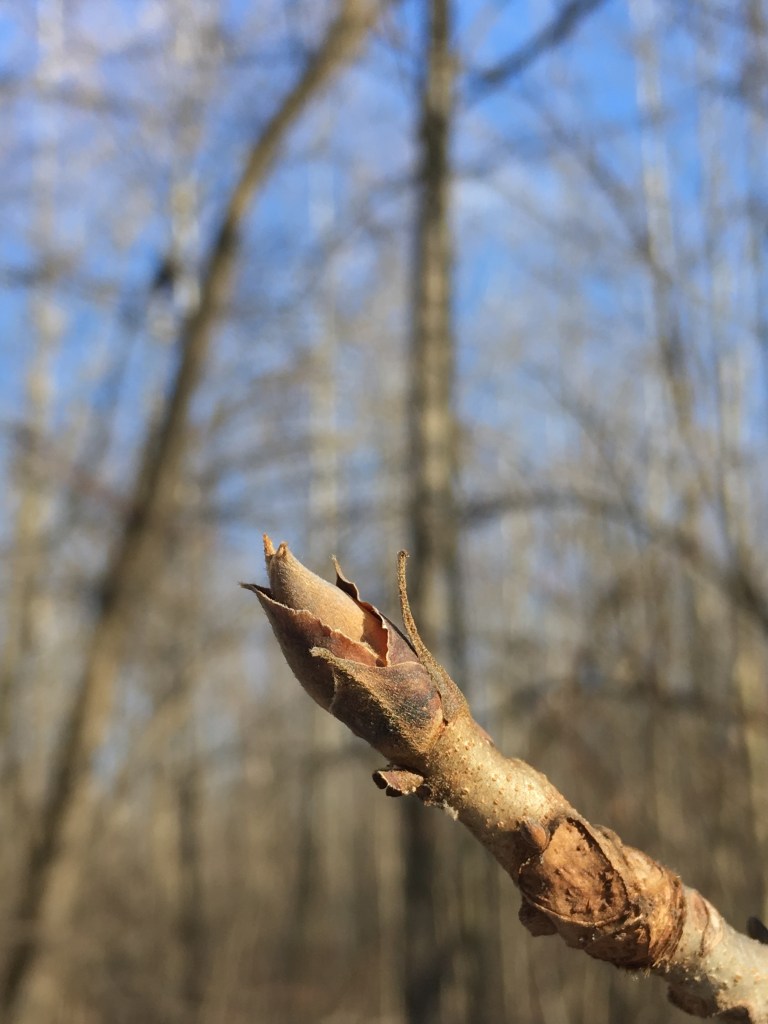
Moving on to some other trees in the Walnut family. There is the Shagbark Hickory, which you probably don’t need the buds to identify, but which has interesting buds nonetheless. To me, they have petals like a flower
Notice also the large, triangular leaf scars.
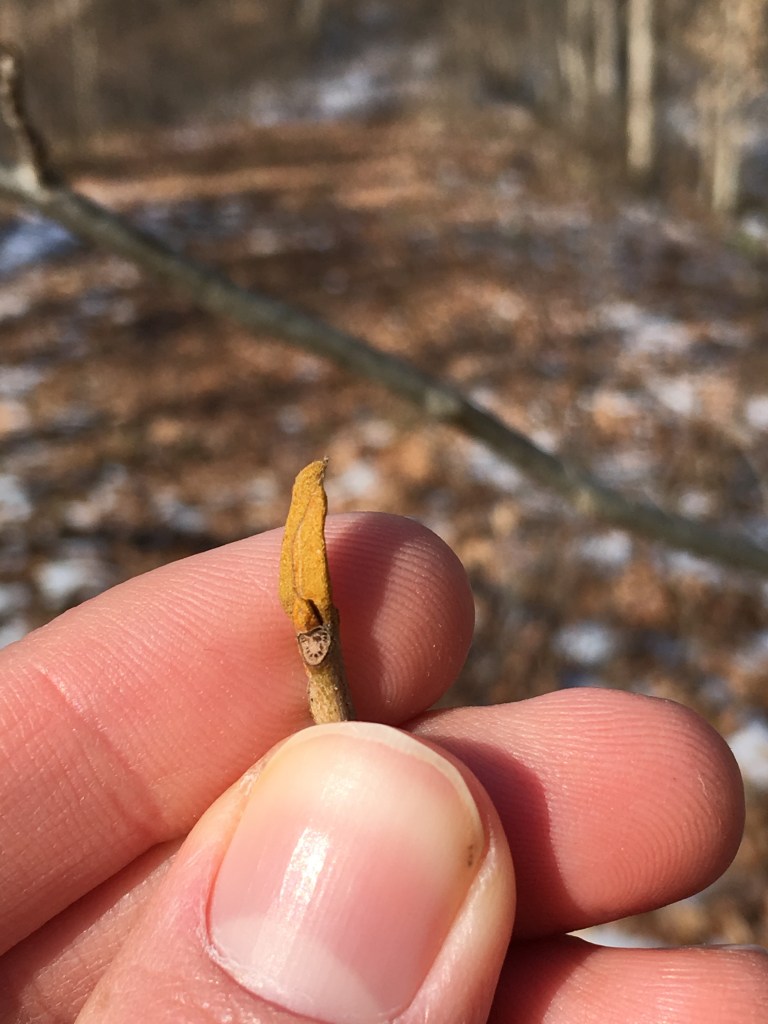
And I’ll end with the Bitternut hickory, which I have talked about before, but also belongs here, alongside its cousins. I think the name “Sulfur Flame hickory” would be apt.
The current moment is highly charged with political potential energy. It’s a new year, there’s a new president, and, on a more local level, we in Indiana are working on a new state budget. So I felt like this might be a good time to discuss a political issue not often brought up, particularly as it ties into some of my moral/pedagogical beliefs. That issue is direct support professional wages.
DSPs are “front-line” supports for people with disabilities. They provide personal care and transportation, they help prepare meals, do laundry, help people with disabilities take showers, put on cloths, clean their homes. They administer medication, track bowel movements, implement behavior plans, provide access to the community … and, they make less than an entry level employee at Walmart.
The statewide average wage for a DSP is $11.36 an hour. At Walmart the average wage for full time employees was $13.38 (according to the Indiana Association of Rehabilitation Facilities, INARF).
It should come as no surprise then that in 2020 the turnover rate for DSPs was 51%. And the problem is snowballing because the higher the turnover rate the more understaffed facilities are, and the more understaffed facilities are, the more stressful the job is, hence the higher the turnover rate. There is currently an average vacancy rate of 23% for DSP positions in Indiana 1.
Providers cannot simply increase DSP wages. DSP wages are determined by Medicaid reimbursement rates, Medicaid being the sole source of funding for DSP services. Service providers can only offer employees higher wages if the rate at which Medicaid reimburses them also goes up.
But there is also what I see as a larger issue. The problem is not just total funding for Medicaid, but the way Medicaid funding is distributed. What I mean is that whereas Behavior Management (BMAN) is reimbursed at $18.20 per .25 hours, or $72.80 an hour, DSP services are reimbursed at something closer to $8.90 an hour — depending on the exact service and situation.
What it seems to me this does is invert Maslow’s hierarchy of needs. It doesn’t matter how good of a behavior plan you come up with, if someone’s basic needs are not met, there are going to be behavior problems. I admit that the situation is complicated and I am far from understanding all the ins and outs of it. But to me the situation smacks of the neoliberal mentality: to speak of freedom and self-actualization while basic physiological and psychological needs are unmet.
In my opinion there is a classist and counterproductive devision of labor and reimbursement. The gap in salary between typically high-school educated DSPs and college educated therapists is ultimately damaging to the people they are supposed to serve. It is not that the college educated therapists don’t deserve the money they make, it is that they can’t actually do their jobs if clients’ more basic needs are not met. I fear that the “higher order” services are merely being provided as a smokescreen to mask the poor daily living standards of most people with disabilities.
I am still new to this field, however, and willing to admit my conclusions might be hasty. For more info/sources see:
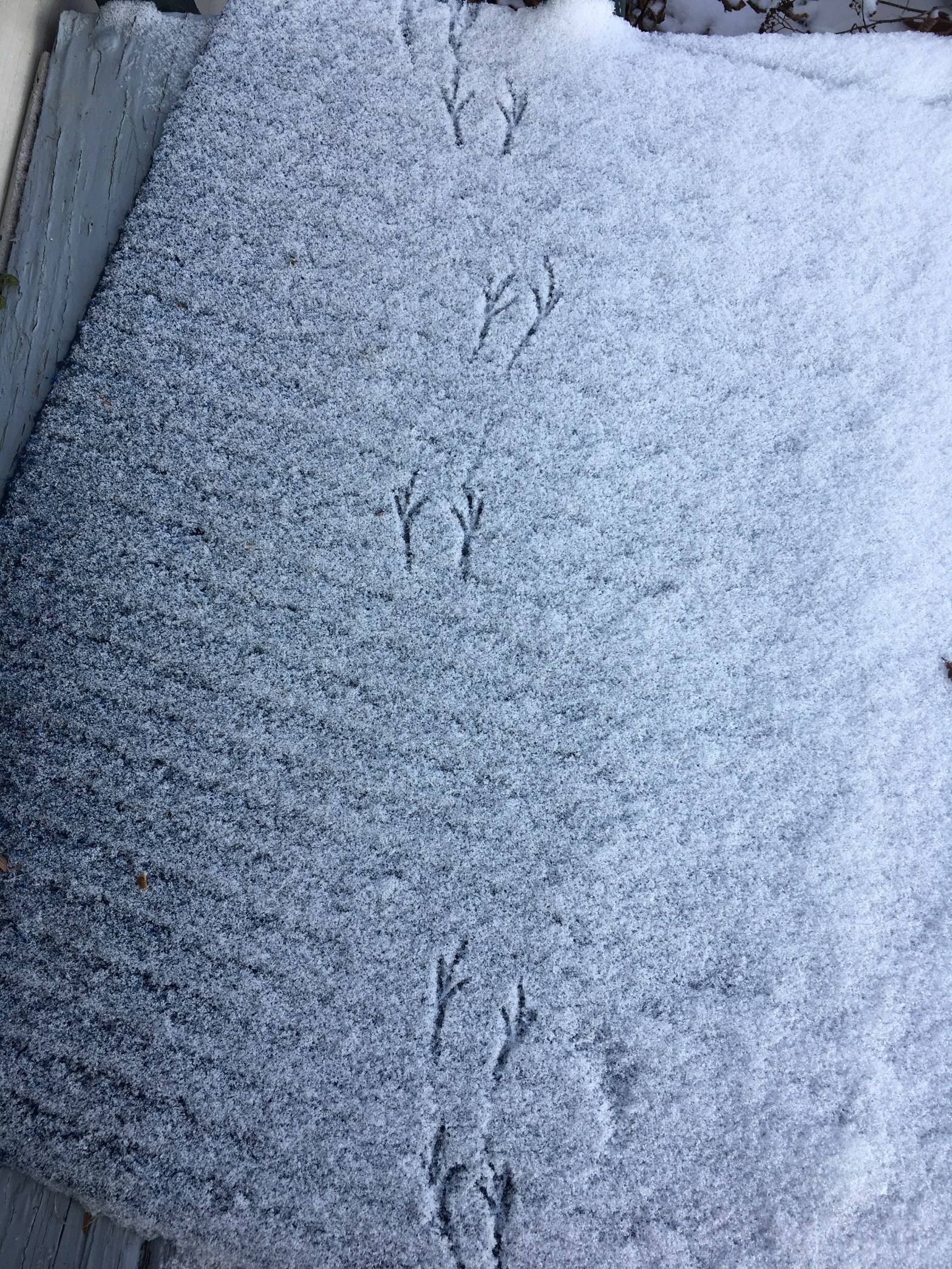
Beautiful snow this morning in Bloomington. Signatures of the neighborhood animal life.
A cat
In the cat tracks above, notice how the back feet land almost directly on top of the front. In animal tracking this is called “direct register,” and is typical of cats and foxes. For more tracking terms check out this link.
Cottontail rabbits leave interesting tracks. They appear to be three legged. In fact their two back feet converge into one mark.
Rabbit tracks
The photo below shows both cat and rabbit tracks. Notice the huge leap between the rabbit’s tracks!
Lastly, it has nothing to do with tracking, but I’d like to point out the Eastern White Pine. What I like about it is the shape of its crown. Tree guides politely call it “irregular.” It might be scraggly, but it sure is recognizable.
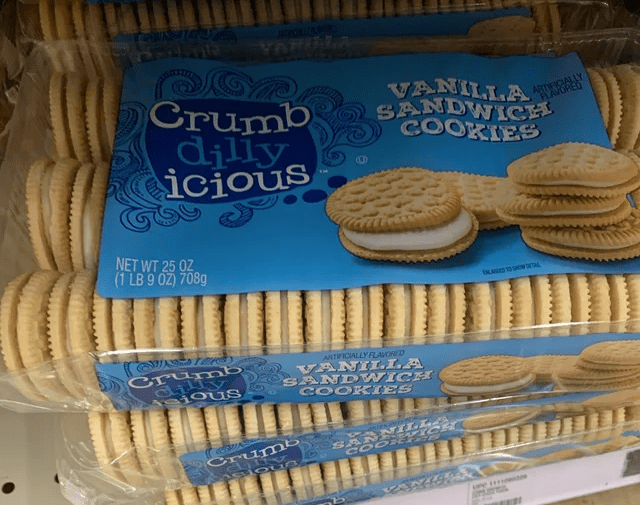
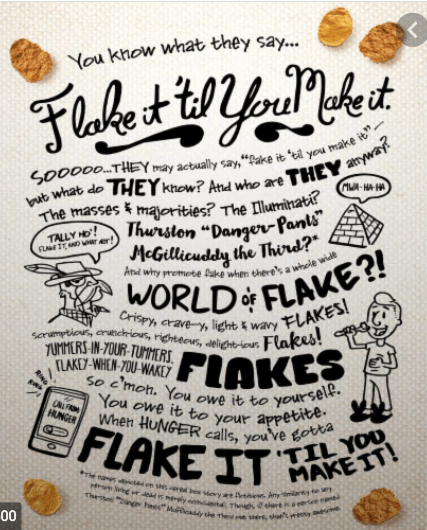
We’ve all got to start somewhere, and I started with Kroger brand “Crumb dilly icious” sandwich cookies. No particular reason except for their ridiculous name, and the fact that I ate A LOT of them. Kroger, by the way, has an impressively (what I assume to be) tongue-in-cheek marketing strategy. Either that or they’ve really taken Brené Brown up on the power of vulnerability. Witness, for example, the back of a box of corn flakes:
Which reminds me that I actually started with cereal (back in 2020). Cereal inevitability comes in a plastic bag (at least that I know of) and oatmeal is so much better. It’s hot! You can put raisins, bananas, honey, walnuts, and chocolate in it. Cereal is just a habit.
So I stopped buying sandwich cookies, and I can’t say I’ve missed them. Instead, I’ve been making my own cookies, which so far hasn’t been particularly onerous (it’s interesting how far we have been conditioned into thinking that we are so busy, productive, important, that we couldn’t possibly find the time to make something as banal as cookies). One big batch a week seems to do the trick.
I also “returned” a bunch of Christmas packing materials to a local shipping store. That was pretty easy. Slightly more complicated was removing myself from mailing lists, which you can do at http://www.dmachoice.org (for $2) and at http://www.optoutprescreen.com. Now I just get mail from the city government and my various elected officials…which is acceptable.
The last thing I’ve done is buying a couple things in bulk. Namely, raisins (for the oatmeal), peanut butter, and various beans. All told, I’m probably saving myself five or six pieces of plastic a week. So there!
(a useful website I’ve found recently is: https://www.ecocycle.org/ You can even play a fun new recycling sorting game—at the end of each level you unlock items you can use to build up your park!).
Tomorrow, SB 389 will be heard by the Indiana Senate Environmental Affairs Committee. The bill would categorically eliminate protection for state wetlands by repealing the 2003 state wetlands law. For the past 17 years, whenever a project is planned that will impact a state wetland (otherwise known as an “isolated” wetland, as opposed to a federal wetland) the project must get a permit certifying that it will not violate water quality or aquatic resource protection requirements. Most wetlands in Indiana are state wetlands, not federal, which means that SB 389 would leave the majority of Indiana wetlands unprotected.
What has changed in 17 years that suddenly Indiana wetlands are not worth protecting?
Hopefully, SB 389 will go nowhere. Although it is not apparent today, Indiana was once much more marshy than it is now. A perfect example of this was the draining of the Kankakee wetland in Northeastern Indiana to produce the arable farmland you see today. The Kankakee river was once 240 miles long (today it is 133) and drained one of the largest wetlands in Northern America, known as the Kankakee Marsh1.
What remains of this marsh are a few nature preserves, including the Chamberlain Lake Nature Preserve, the Dunes Nature Preserve, and the Springfield Fen Nature Preserve.
In it’s typically understated fashion, the Indiana DNR states, “Thanks to glacial activity, we were endowed with thousands of lakes, ponds, marshes, swamps and peat bogs” (https://www.in.gov/dnr/naturepreserve/7384.htm, emphasis mine). Those had to go to make room for corn. That story is already history, which hopefully SB 389 will never become.
Not a clear theme for today, just thought I’d share some of the things I’ve found.
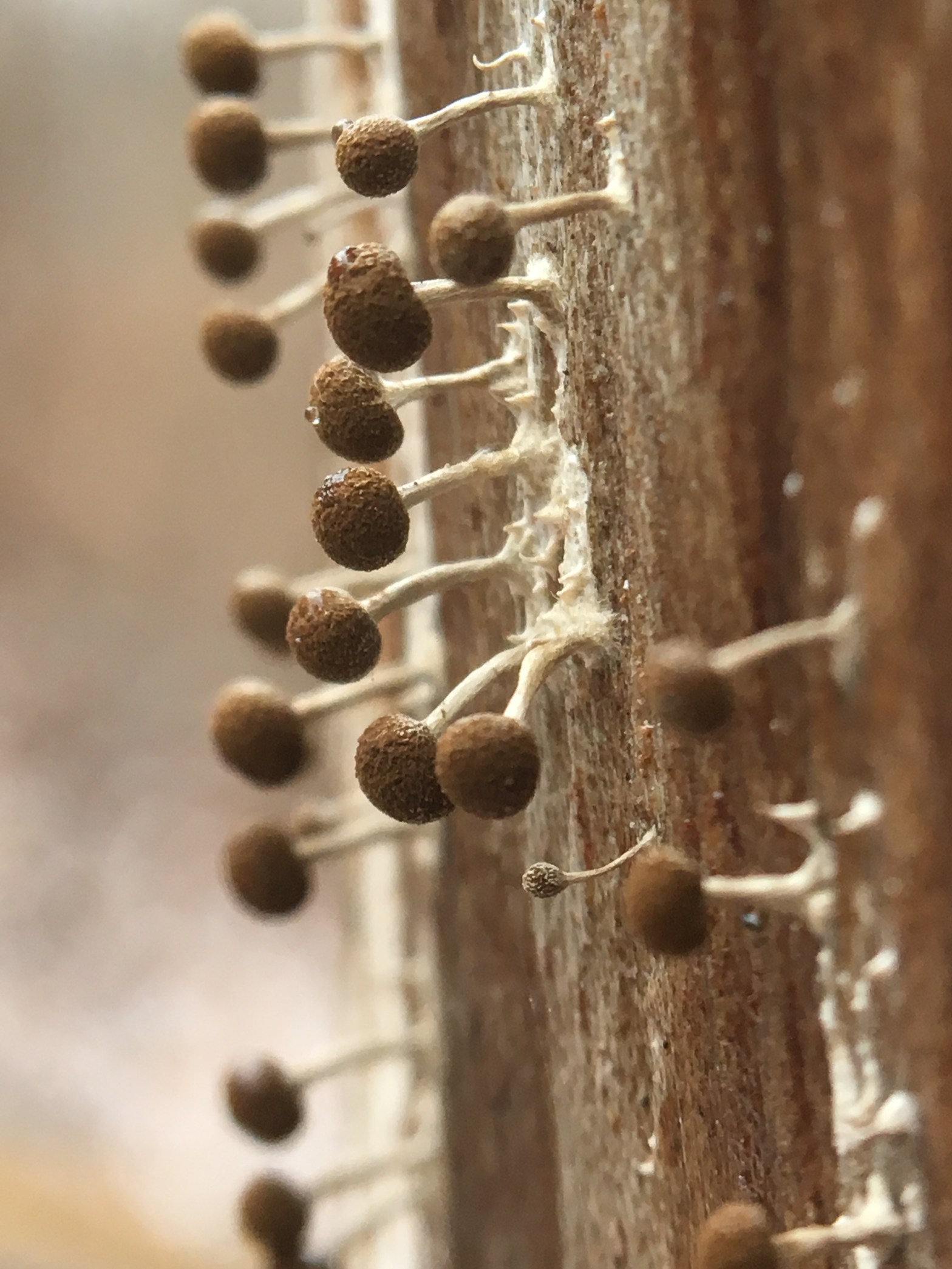
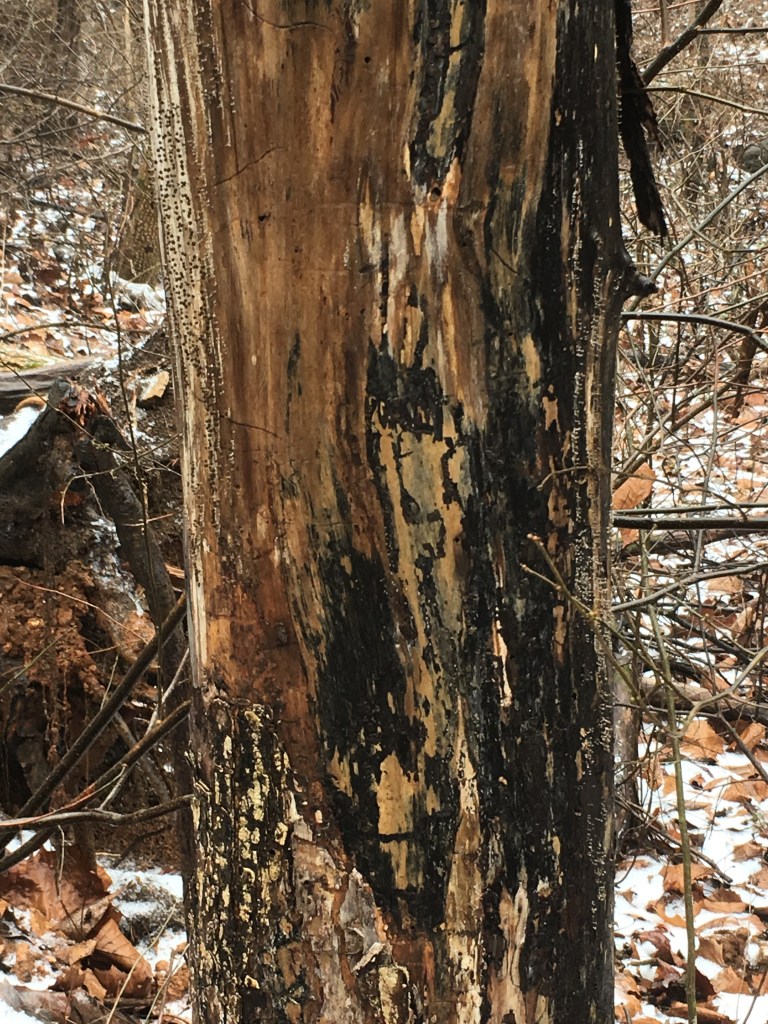
The featured picture above is some kind of slime mold, probably unidentifiable. It was growing from a dead elm tree, with the bark peeling off. I’ve actually seen these structures on a couple different dead elm trees so I wonder if it goes hand in hand with one of the typical elm diseases.
On the same hike I found these:
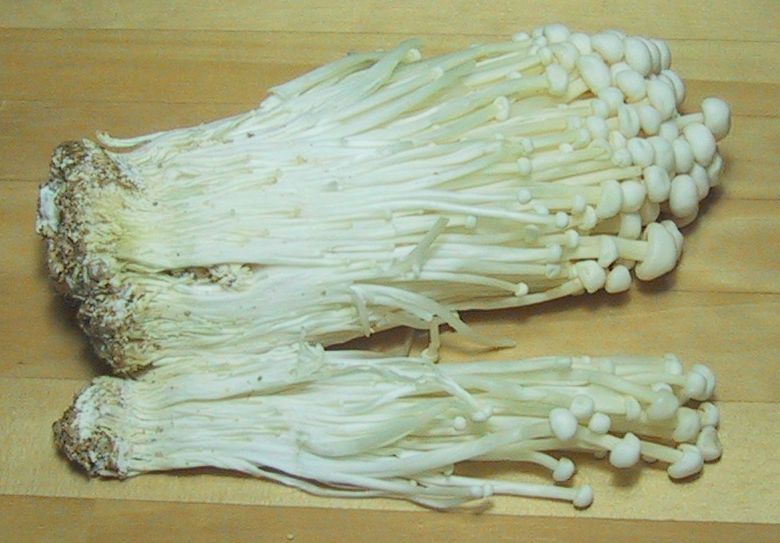
This is “Velvet Foot” or Flammulina velutipes. A cultivated form of this mushroom which has not been exposed to light is known as enoki, which you might know from its role in Japanese cuisine, and its reported anti-cancer properties.
Just like with wild chicory vs. cultivated endives, it’s amazing the different forms species can be tricked into taking. Flammulina velutipes can be distinguished from numerous other small brown mushrooms (some of which are deadly poisonous) by its stem which turns dark and velvety with age,by its white spore print, and by the absence of any sort of ring on the stem.
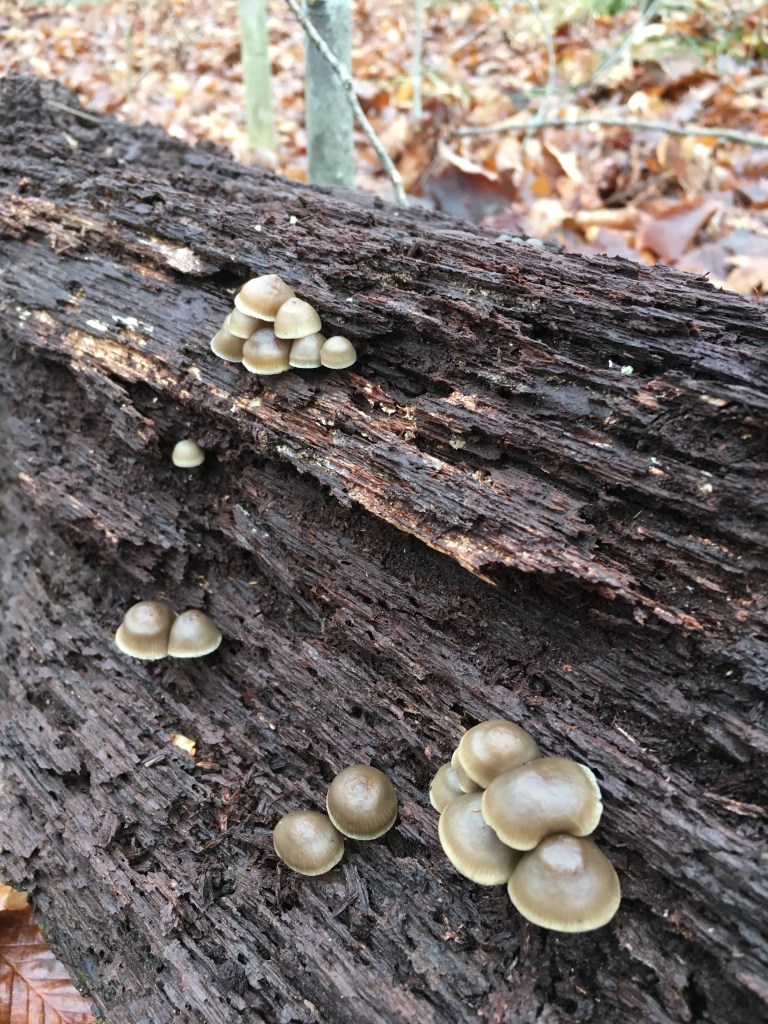
The mushrooms below are “bonnets” or members of the genus Mycena.
With the exception of the Orange mycena (Mycena leaiana) below I find this group of mushrooms difficult to distinguish.
Orange Mycena, this photo is from August.
It doesn’t help that, in the words of mushroom expert Michael Kuo:
“Truth be told, both Mycena inclinata and its close look-alike Mycena galericulata [two candidates for the grey bonnets above] are European species whose presence in North America is debatable, and North American mycologists have tried over the years to fit their collections into European descriptions, often having to adopt a “best-fit” sort of attitude.”
So I am just going to call them “grey bonnets” and leave it at that.
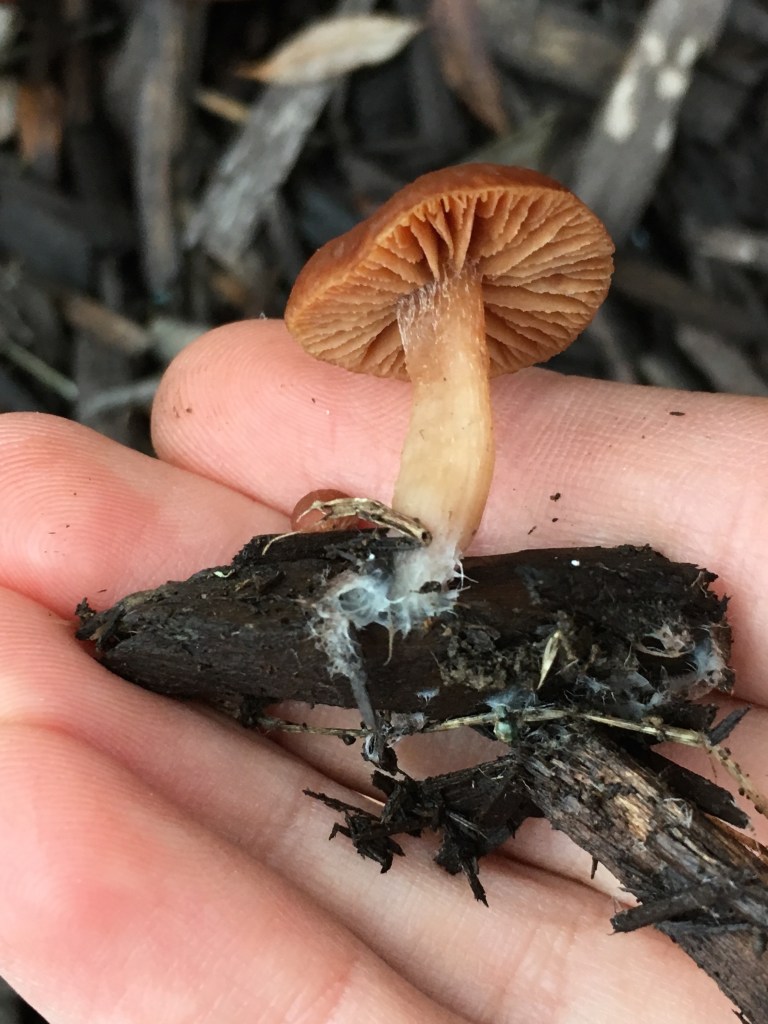
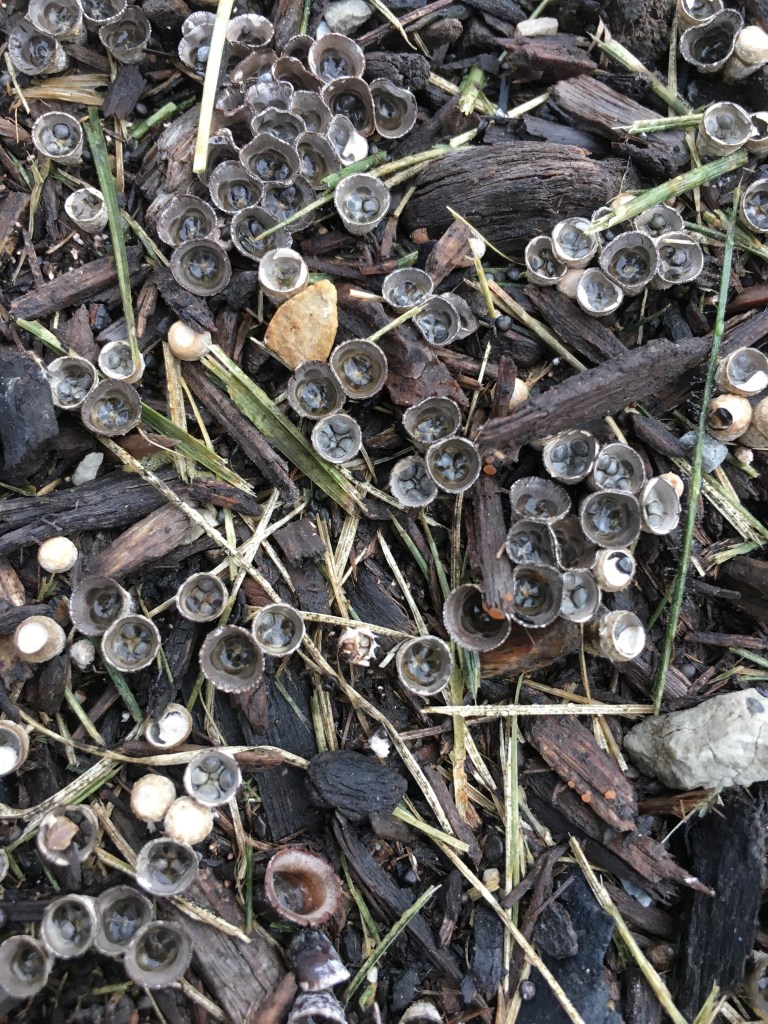
And lastly, for today, yet another species of mushrooms has sprung up in my flowerbed wood chips (this brings the yearly total to four, I believe). This time it looks like Tubaria furfuracea or “Scurfy twiglet” (no, that is not a typo). “Scurfy” from “scurf” meaning:
1: thin dry scales detached from the epidermis especially in an abnormal skin conditionspecifically: DANDRUFF
2a: something like flakes or scales adhering to a surface
So Tubaria furfuracea is a mushroom characterized by white flakes or scales on the cap, its preference for wood chips (as opposed to logs), its ochre (as opposed to dark brown) spore print, and the fact that its cap is hygrophanous, meaning it changes color as it absorbs or loses water. (Scurfy twiglet is on the left below, the other two pictures are from last year in the same place).
Probably Tubaria furfuracea, or “scurfy twiglet.” Notice white mycelium at the base of stem, and slight scurfiness towards the top of the stem. Also, as this mushroom dried it became lighter, in other words its “hygrophanous” (like the mower’s mushroom)
Given that the unemployment rate for people with disabilities is more than twice that of people without disabilities (7.3% vs 3.5% in 2019) there are two major explanations. One, people with disabilities lack the essential skills to gain employment, and two, workplaces are not accessible to people with disabilities (remember that unemployment rates only consider people who are actively looking for jobs, so the explanation that fewer people with disabilities are looking for jobs is not relevant). For the most part, our public policy assumes the first explanation. It sees the problem as lying in something disabled people lack, and therefore sees rehabilitation as the main solution.
At first glance, this is pretty reasonable. But it places the responsibility for their own underemployment on people with disabilities. There is a long-standing assumption manifest in the image above (taken from a website for a physical therapy provider: https://integratedmedical.care/bucks-county-physical-therapy/) that disability is backward, a problem to be overcome, an obstacle to progress. The implication is that people with disabilities have a civic duty to undergo rehabilitation and become as able-bodied as they possibly can. Similarly, the assumption that people with disabilities are underemployed because they lack skills (perhaps social, cognitive or emotional) puts the onus on them to undergo various correctional therapies.
Teaching someone a skill is not necessarily forcing them to reject their disability. For example, teaching someone with autism social skills is not necessarily teaching them to become “less autistic,” it is just teaching them to live better with their autism. Of course the problem arises when it is the provider who decides what a “better” life looks like. Hard as it may be to imagine, some people with ADHD, for example, may not want to improve their executive function, as providers tend to assume they do. Rehabilitation assumes disabled people have an obligation to overcome their disabilities, but this creates a double standard (people without disabilities are not required to “overcome” themselves).
What if the problem is not with people with disabilities, but with workplaces? In some cases it is not so hard to see ways workplaces could be made more accessible (using task separation, time management apps that provide prompts, wall calendars, etc… for the ADHD example above). But do “reasonable” accommodations exist for every possible disability, and even when they do exist are they fully effective? Is it realistic to expect businesses to drastically adapt their way of doing business in the interests of diversity? And can neurodiverse businesses survive in a free market economy? For the economy to become truly accessible would require a huge change in our country’s priorities, what we value as “work,” and in the narratives we tell ourselves about disability (and narratives are no easy thing to change).
So we have an eternal balancing act to perform. On the one hand, people with disabilities shouldn’t be placed in a double standard, where they are responsible for compensating for their perceived deficits. On the other hand, society is not going to change overnight, and so in the meantime people with disabilities will have to learn to adapt if they want to participate in the workforce, unfair as that is. Just like people of color, who have to work twice as hard to obtain the same ends, people with disabilities are expected to undergo lengthy “interventions,” therapies, and “rehabilitation,” in order to have the same chances as their non-disabled peers. Funding programs to provide these interventions (assuming they are voluntary—which is a tricky question) is thus unideal, but perhaps, necessary.
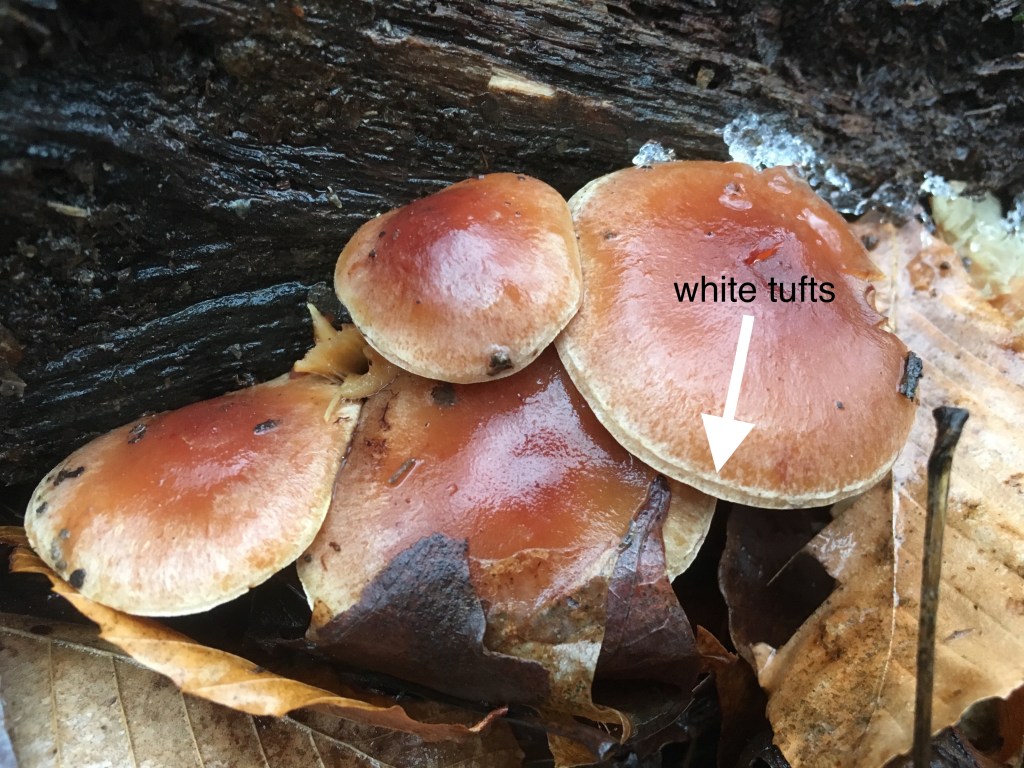
Let’s take a close look at these guys! They are called Brick caps because of the color. The margins tend to be lighter, and sometimes have white tufts of fiber remaining from the partial veil.
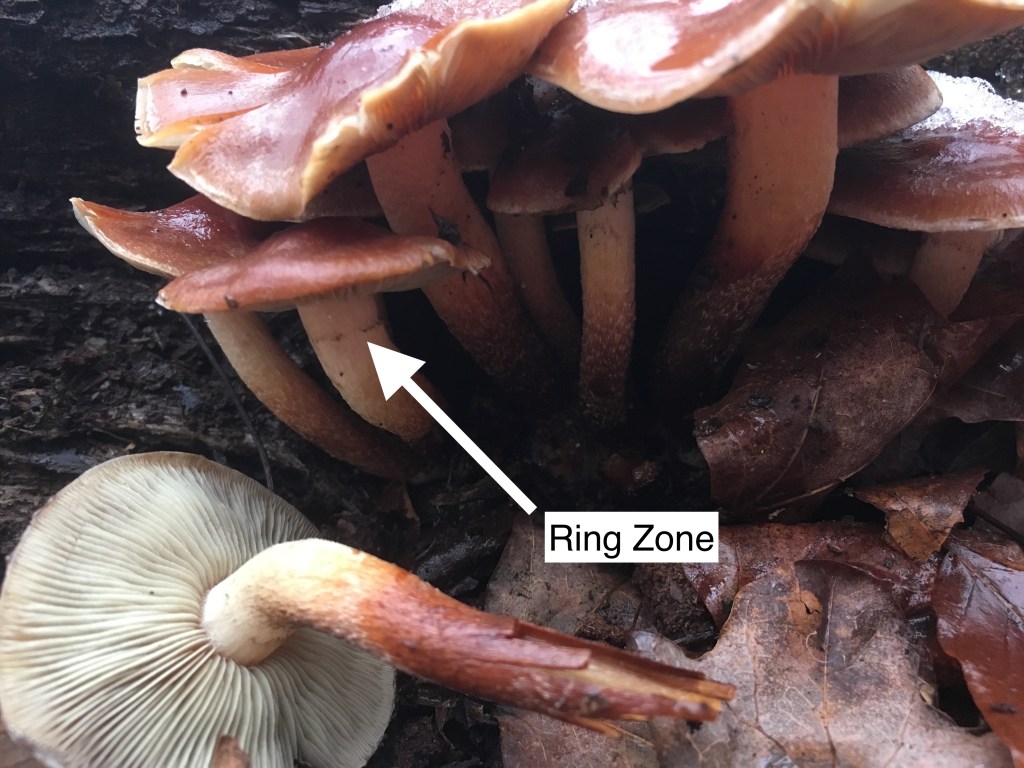
They grow in clusters from decaying hardwoods. The stipe is lighter above and more reddish below, and often twisted because of its clustered growth. Sometimes you can find a ring zone, and I often find them with a little bit of white shagginess on the lower stem, although I don’t know if that is something consistent. The gills are initially white, but turn a nice purple greyish color.
The jury is out on whether or not Brick caps are edible. Tempting as they are, since it’s usually pretty slim pickings in the fall/winter when these guys are around, I’d say they’re probably not worth it—they’re reputed to be quite bitter. (Another reason not to eat them is they’re pretty similar to the poisonous Sulphur Tuft mushroom, which is closely related and only differs in being a shade more yellow/green as opposed to brickish red).
Jonathan Haidt’s The Righteous Mind: why Good People are Divided by Politics and Religion is roughly divided into two parts. In the first, Haidt makes the case for social intuitionism, the theory that moral judgements are primarily the product of automatic intuitions rather than conscious reasoning. The main form of evidence for this is so-called “moral dumbfounding”: when people are shown to instantly reach moral conclusions they cannot then explain using reasoning. Example, “A man goes to the supermarket once a week and buys a dead chicken. But before cooking the chicken, he has sexual intercourse with it. Then he thoroughly cooks it and eats it.” We immediately react that it is wrong to have sex with a dead chicken before we are able to explain why. When experimenters ask test subjects to explain why it is wrong to have sex with a dead chicken, they are often “morally dumbfounded,” ie unable to come up with a good rational explanation. Moral reasoning, Haidt concludes, is therefore always post hoc.
Hard to argue with that…although Haidt doesn’t necessarily show that all moral judgements operate according to his theory. Nonetheless, it is the second part of the book, in which Haidt puts forth the argument for Moral Foundations theory, that is more problematic. According to this theory, there are six main moral intuitions, or “modular foundations,” that we are innately predisposed to develop. The above example with the chicken, for example, would violate the Sanctity/degradation moral foundation. The central metaphor of this theory is that the moral mind is like a tongue with six taste receptors, those being “Care/Harm, Fairness/Cheating, Loyalty/Betrayal, Authority/Subversion, Sanctity/Degradation, and Liberty/Oppression.”
I feel uneasy reducing ethics to a set of “tastes,” implying that because some moral judgements seem to be a matter of instant and irrational intuitions, all moral judgements are so. Furthermore, Moral Foundations theory essentially tells us that morality is a set of evolutionarily beneficial prejudices. According to Haidt, we have evolved these six moral foundations as a species because they are the moral intuitions which guarantee us the greatest chance of survival. Therefore, they are all equally important and valid, and a morality which includes all of them will be more “fit” than one with only some. No moral foundation has the right to consider itself more important on the basis of reasoning, argument or conscious thought, because in fact all conscious thought about morality is post hoc self-justification (according to Haidt).
One of the biggest problems with this is that it implies that all prejudices are evolutionarily functional (or else why would we have them?), and hence useful, even moral. White supremacy, for example, can been seen as have the useful function of holding a group of people together, uniting them to work towards a common good. Under Haidt’s theory there is no way to argue that an ethics of fairness, equality and diversity is inherently better than an ethics of white supremacy. Morality is nothing more than a set of evolutionarily programed moral intuitions (or at least that seems to me to be the logical conclusion of Haidt’s argument).
Haidt, however, puts a more positive spin on his findings by arguing that if we can just learn to recognize everyone’s moral intuitions as equally valid, then we will live in a better, more cooperative world. According to Haidt, progressives tend to focus on just two of the six moral foundations, whereas conservatives take into consideration all six. Therefore, conservatives are numerically better than progressives, see figure below:
One problem with this is that his choice of six moral foundations is fairly arbitrary. Other studies have found that two moral foundations (an individualizing foundation and a binding foundation) would be enough to explain the data (see this study). Furthermore, why should a greater number of moral intuitions be inherently better? How have we gone from the descriptive to the prescriptive?
To suggest that because respect for authority has been considered a virtue means that it always should be considered one, for example, seems to me a stretch. Or another example, homosexuality has long been considered a violation of Sanctity. According to Haidt, the predisposition to view homosexuality as immoral is innate and carries just as much moral weight as a person’s right to sexual autonomy. Even if he is right that we have innate moral predispositions, is there any reason we can’t decide on the basis of experience and reasoning that some of them are more valuable than others? Or that just because we have a certain predisposition (for example to violence and exploitation) we have to make use of it?
Aside from this, there is the problem that much of Moral Foundations theory is unfalsifiable. As with so many evolutionary explanations (see Steven Pinker), there is a danger of creating “Just-so stories,” ie an “untestable narrative explanation for a cultural practice, a biological trait, or behavior of humans or other animals1.” How is one to determine experimentally why a certain adaption evolved. Is something true just because it is plausible?
So while Haidt’s work presents an important reminder to remember that our moral judgements are culturally influenced, and that therefore we risk misunderstanding other people when we apply our own moral standards to them, I reject his conclusions, especially as they are prescriptive, as opposed to descriptive.
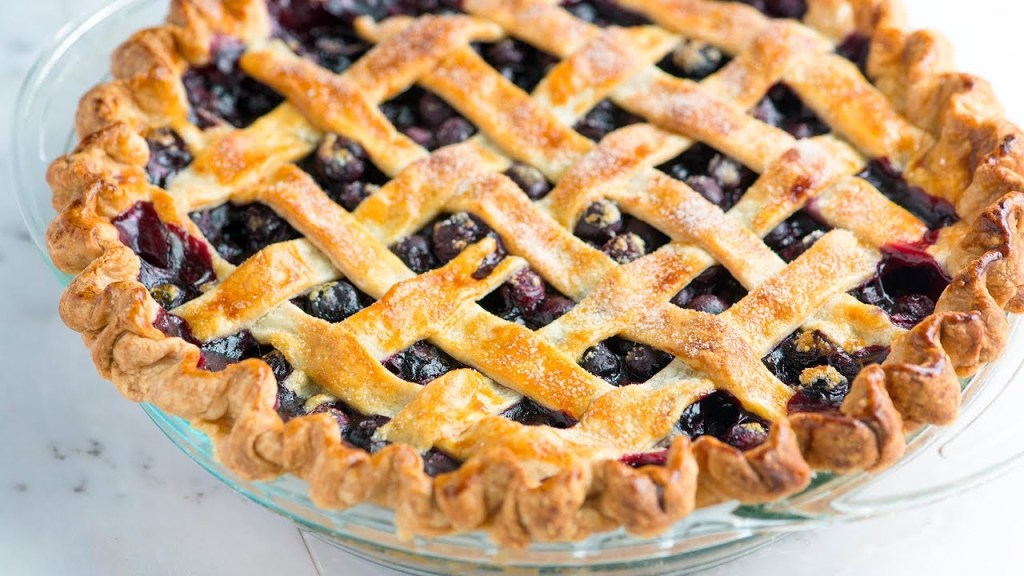
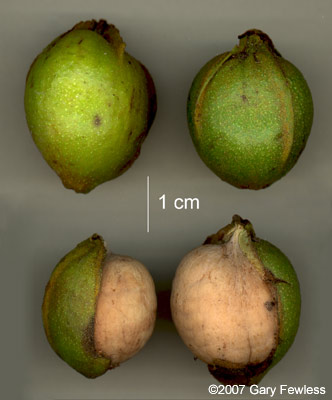
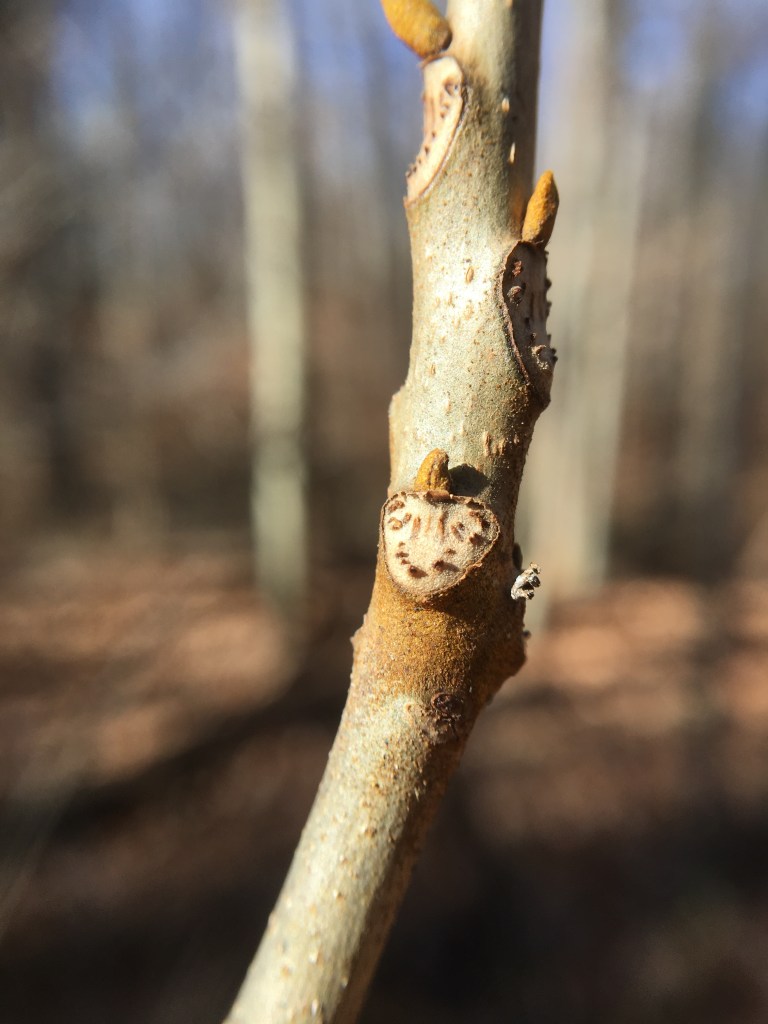
Redbuds are not the only tree named in reference to their buds. Bitternut hickory is also called yellowbud hickory, which to me is a more useful name, since I rarely pick up, pry open, and taste the squirrel-neglected nuts I find on the ground. On the other hand, it’s only during this half of the year that the name yellowbud hickory is really helpful. At other times of year you might use the bark (which has shallow interlacing fissures like a lattice pie crust) or the nuts which are small and have a thin husk, unlike shagbark hickory, for example.

















 recycled paper clips

