Confusion with “Sycamores”

If you look for “how to identify a sycamore tree” on wikiHow you’ll come across one of those innumerable American English / British English differences constantly under our noses and yet so rarely noticed. To identify a sycamore we are told, we should first check for “small woody balls,” like so

and then, as if that vague, oversimplified drawing weren’t confusing enough, we are also told to look for “helicopter seeds,” like so

A sycamore tree, it seems, has both “small, woody balls” and “helicopter seeds.” Why a tree would need two entirely different ways of dispersing its seeds is inscrutable, but there it is: according to wikiHow, both are ways of identifying a sycamore.

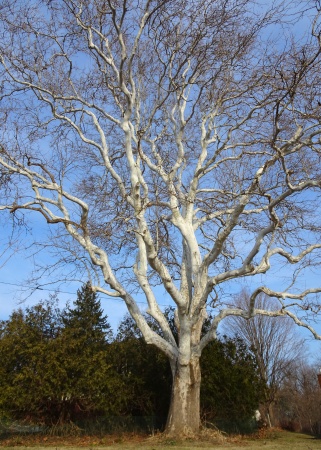
The problem is that wikiHow is talking about two entirely different trees both called “sycamores,” just in different parts of the world. What is called a sycamore in the US, Plantanus Occidentalis, would be called a “plane tree” in the UK. (now that I know what a plane tree is, a good chunk of European literature becomes easier to imagine. Personally, I thought of a plane tree as something flat and short like the trees that are used for road dividers) And what is called a sycamore in the UK, is actually a kind of maple: Acer pseudoplantaus (ie.” Maple pseudo plane tree”) hence the helicopter seed pods.

So there you go, identifying a sycamore isn’t that hard, as long as you know which sycamore you’re talking about.

What’s up with this beech tree?

This time of year beech trees really stick out because for whatever reason, though their leaves die and turn a beautiful translucent brown, many of them remain on the tree, creating a sort of ghostly afterimage of the full grown summer plant. Like this:

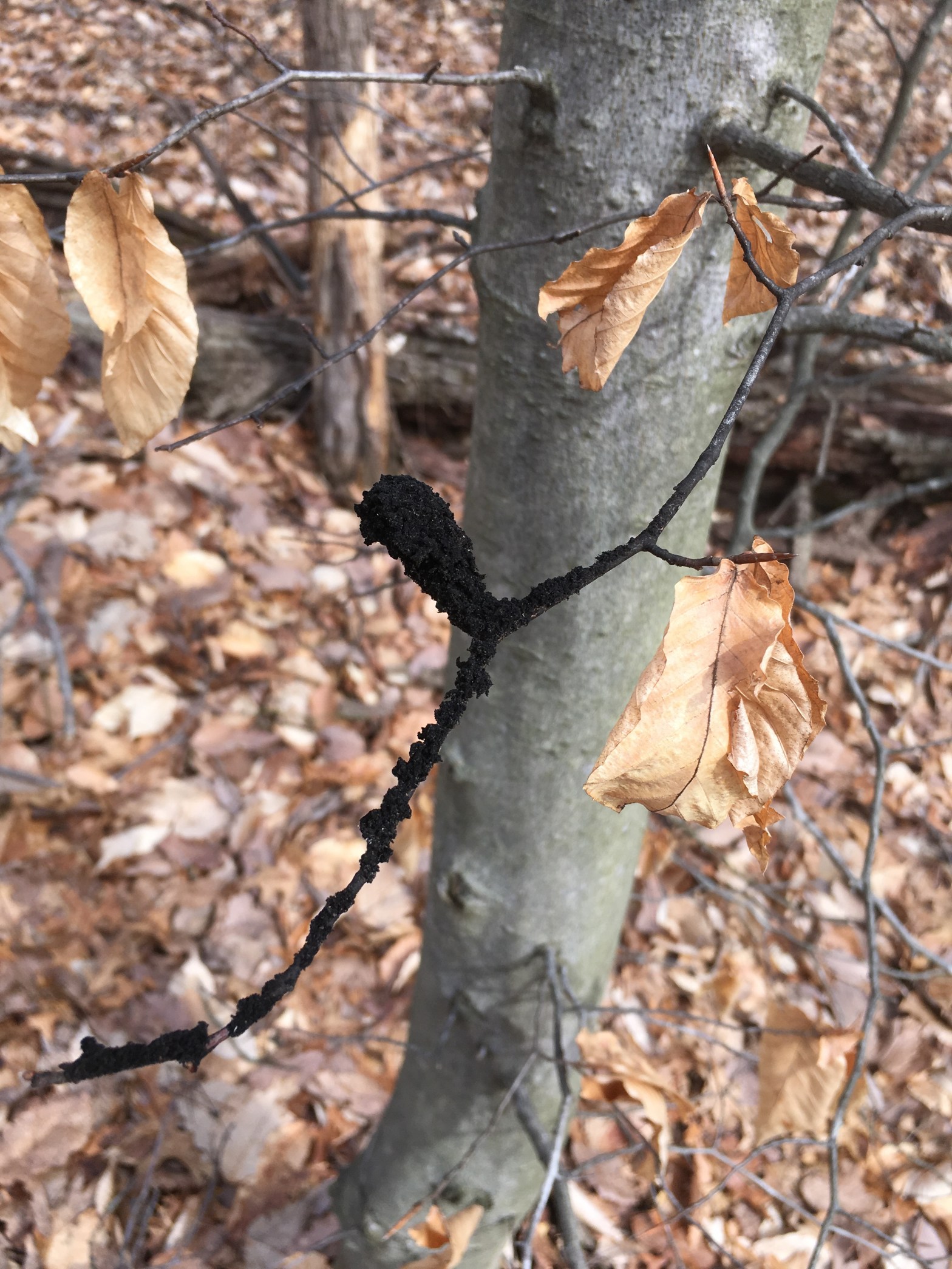
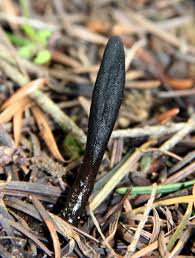
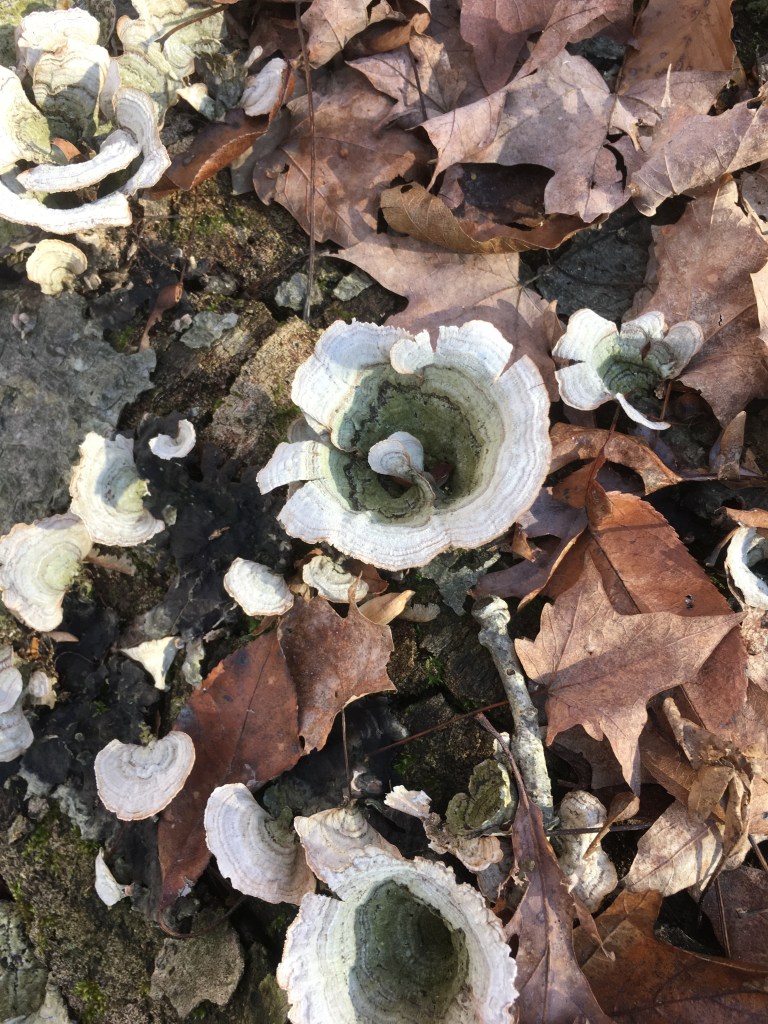
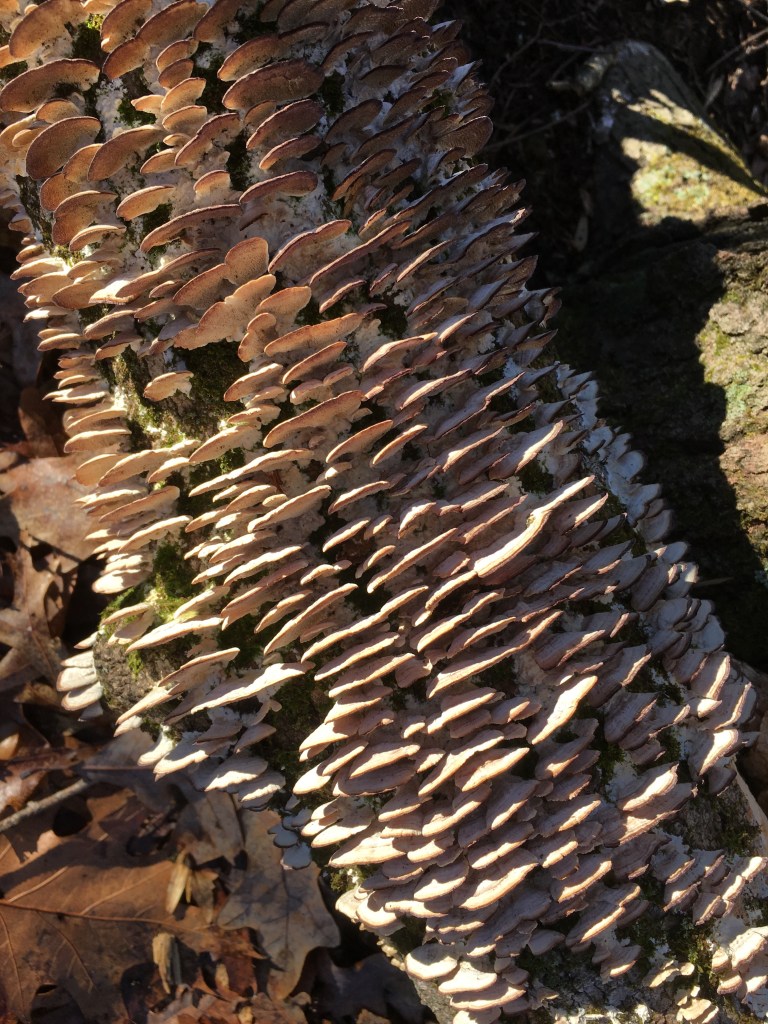
When I took a closer look at some beech trees on a hike yesterday I noticed the above charred-marshmallow-like formation and it reminded my of some “earth tongue” mushrooms, like the one below:

Curious if there was any relationship, I decided to do some research. It turns out that the above beech mould is “scorias spongiosa,” which grows on aphid honeydew. To quote wikipedia, “Scorias spongiosa is a specialist and grows exclusively on the honeydew formed by colonies of the beech blight aphid, Grylloprociphilus imbricator. This aphid is found only on one host plant, the American beech tree, Fagus grandifolia, where it congregates on branches and twigs, creating copious amounts of honeydew that drip onto vegetation below.[1] The large quantity of honeydew enables this fungus to grow to a large size, much bigger than other sooty mould fungi, which produce only a thin black layer on the surface of leaves. On tree trunks this fungus has been known to grow into a mass of hyphae as big as a football, but it is more usual for the agglomeration on branches or twigs to reach a diameter of about fifteen centimetres.”

Scorias spongiosa and black earth tongues are in the same phylum, but are not particularly closely related. So there you have it, and by the way, scorias spongiosa (or should we just call it the sooty beech tree mold?) is not itself harmful to the tree, but does betray the presence of the beech blight aphid.

Beanpole: 8/10

Beanpole is a strong film. The most obvious thing that makes it stick out is the choice to focus on the moment after the war. Like The Odyssey which portrays a survivor’s attempt to return to normalcy after the disruption of the Trojan War, so Kantemir Balagov chooses to set his story after the “end.” In this way, the film has the effect of an epilogue, an addendum which disrupts the “main” text.

This leads to the question of why Balagov chose this theme in the present moment. Is it that Balagov saw parallels between the trauma of the collapse of USSR, which was in progress as he was being born, and the trauma of rebuilding Russia after WWII? This doesn’t seem overwhelmingly convincing. What other explanations are possible?

Beanpole plays with the war movie genre in other ways than by taking place after the “conclusion” of the war. For one thing, the main characters are female. For another, there is no patriotic optimism, no national myth-making.

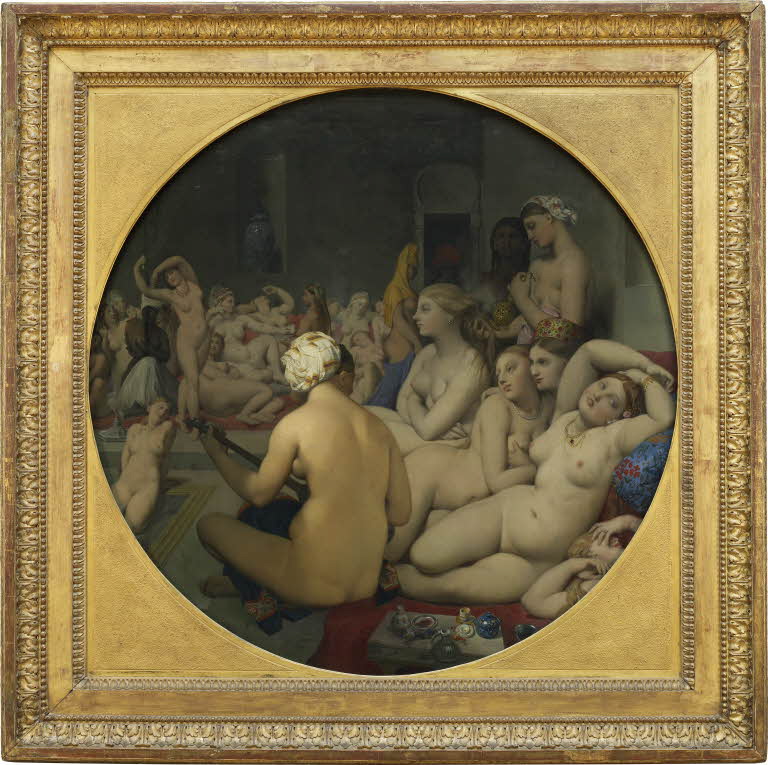
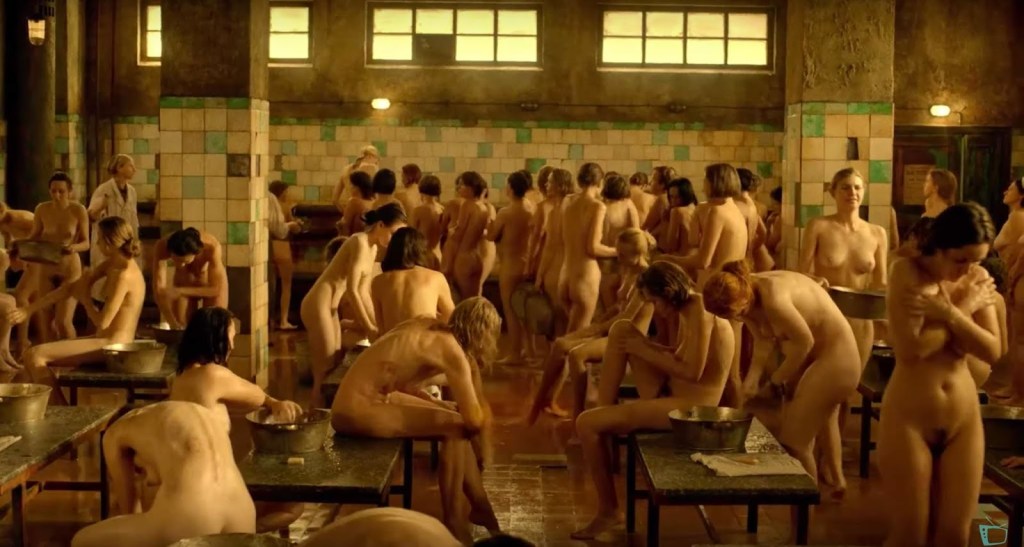
The only thing that feels somewhat gratuitous about the film are the several voyeuristic bathing scenes. The crowd bathing scene in particular has a Turkish Bath à la Ingres feel.

One wonders why the director went to the trouble of arranging this scene (casting 30-40 mildly-emaciated but still full-chested women to play nude parts with well-shaven legs and armpits, orchestrating a complicated crowd scene with perfect art-house soft-lighting and so on) if not for either his own, or the viewer’s voyeuristic pleasure, for the bathhouse setting is not that important to the plot.

There are other, one-woman bathing scenes which don’t play an erotic role within the film (ie the characters don’t experience them as erotic moments) but are clearly erotic for us the viewers.

Very probably these scenes are just a rule of art-house, especially lesbian art-house, film making that must be obeyed and checked off if you wish to have a chance at Cannes or achieve some level of financial success. Somewhere there exists a textbook of indie-filmmaking containing the magic formula of total movie time to total “artful” female nudity time necessary to ensure indie movie acclaim. Balagov has not neglected to conform to this convention.

Besides this, though, and a few other slight clichés, there is very little to complain about. Beanpole is a rare accomplishment. A sustained attempt to portray trauma, simply, steadily, and honestly in film.

A First Glance at: “First Person” Putin’s Self-Portrait

So far (I’m about half-way in) “Volodya” as he is mostly called, seems to be a fairly typical product of his environment. As he himself says, “I was a pure and utterly successful product of Soviet patriotic education,” an interesting remark because it implies that he at least partially sees through that patriotic brainwashing, and yet is not particularly shocked or fundamentally shaken by it. I get the impression of someone who now realizes his boyhood fantasies (of playing the romantic role of super-spy) were illusions, yet still feels almost sentimental or at least somewhat attached to those illusions. (In many ways Putin reminds me of the little I know of Frank Sinatra. Somewhat rough origins, bellicose, interest in martial arts, but with a “soft” side: romantic dream of playing the provider-hero. Compare Sinatra in Tony Rome?)

In general, Putin seems to have more of less gone along with the flow. Perhaps more intensely competitive than most, (he was the 1976 Leningrad Judo Champion), but then he had to be because of the competition-based nature of Soviet education. A certain number of spots were available (to go to university, to get a car, to travel abroad, to have a nice apartment etc…). Getting anything meant that someone else didn’t, so it’s no surprise that competitiveness was encouraged.

It’s interesting that education in the US, which is supposedly a meritocracy where anyone can work their way up through stellar performance, is actually much less grades/competition based than most European countries (France, for example, with its all-important “bac” or the Czech Republic where university admission is based almost entirely on test scores). This is not to say that the Soviet educational system was a meritocracy. Far from it. “Winning” more often involved knowing the right people, or being able to pull various strings, than pure merit. But “winning” was all important.

Putin’s relationship to his wife Lyudmila is not particularly surprising or revealing. She is described as “a real woman, who could stay up all night having a good time, and still clean up the apartment and cook the next morning.” Before marrying Putin she was an airline stewardess. He was a KGB trainee who’s primary appeal at first seems to have been “that Volodya was the kind of person who could get tickets to any theater.”

Where I am at now in the book, Putin and his wife are living in Dresden. Putin performing what he calls “routine” intelligence work. He portrays it as a largely mundane job consisting of gathering information, analyzing it and sending back reports. Not very different from a market analyst, or some such similar job. We’ll see what the second half of the book brings!

Reading Ta-Nehisi Coates: An update on “The Black Family in the Age of Mass Incarceration”

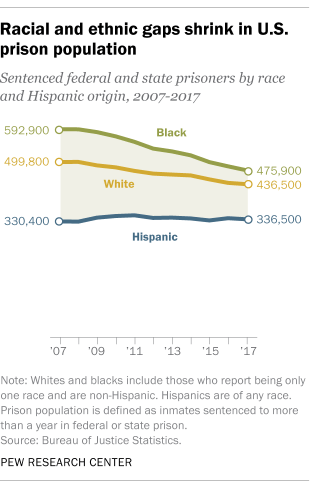
Ta-Nehisi Coates first published “The Black Family in the Age of Mass Incarceration” in October of 2015. Four and a half years and an important prison reform law (the First Step Act) have passed, how much has changed?

There seems to have been some improvement. Not only has the total incarceration rate dropped, but the gap between the total number of black and white prisoners has shrunk.

This progress would have to be maintained for decades, however, before anything like an equitable state of affairs could be reached. That it was president Trump, of all people, who passed the First Step Act, goes to show just how strong the momentum in favor of prison reform is, and how much our so-called leaders are really those being led. (Compare Tolstoy on Napoleon). What’s worrying though, is that this tide of support for prison reform could just as easily and mysteriously withdraw and we would be left with a system which has not been fundamentally changed, only “tuned up.”

It is therefore imperative that whoever our next president is, follows up. As is, the First Step Act, does nothing to explicitly address racial inequality. The assumption seems to be that racism will gradually and painlessly work itself out of the system, like a baby tooth.

For an in-depth account of what the First Step Act does do see https://www.urban.org/sites/default/files/publication/100230/next_steps_in_federal_corrections_reform_1.pdf

Speak, Memory: Worth Reading, but not a Must Read

Nabokov’s “Speak, Memory” has been called “The finest autobiography written in our time.” This is certainly an exaggeration. As with Pale Fire, Nabokov is pleasant reading (given a free afternoon in the middle of winter, plenty of strong black tea, nothing else to do, and ideally a warm, crackling fire). He is a writer of rare descriptive talents whose rich and complex language, like a fine wine, is best savored slowly. But he is not in my opinion a “great” writer, that is a writer of lasting cultural importance.

Just as the history of our world is not told in fine, rare wines but in coffee, tea, coke, and boxed rosé, so an understanding of Nabokov is not essential to the history of our culture as it has led to the present day. Nabokov does not grapple with anything beyond himself and his own small fate. I was excited to read Speak, Memory because I’d heard it offered a detailed and rich picture of St. Petersburg at the turn of the century. It doesn’t. It offers a detailed and rich portrayal of the author’s own family, but they are by no means representative of the society in which they lived. In fact, even when speaking about his own family Nabokov dwells more on the setting of the scene, on the fixed routines and rituals, than on what we might call the “life” (the feelings, beliefs, goals, setbacks etc…) of his characters. We get the impression of a very self-contained collection of precious objects, rather than living subjects.

To be fair, very few ten year olds are much aware of the world outside their family (Nabokov was around the age of 10 for most of the book). Nabokov’s ego-centricism is not particularly aggravating because it frankly admits itself as such. Nabokov’s aspirations as a writer are very deliberately modest: to remember what he remembers best. To grapple with nothing beyond his own “fate.” It is this modesty, this awareness of the limitations of his own egotism that makes Nabokov pleasant to read. But is Speak, Memory a “great” autobiography, a cultural touchstone? No, it is not.

Art According to Ta-Nehisi Coates

Reading through Ta-Nehisi Coates’ “We Were Eight Years in Power,” I came across an incredible paragraph in which he describes the aesthetic he absorbed from Nas’s “One Love.” “Art was not an after-school special. Art was not motivational speaking. Art was not sentimental. It had no responsibility to be hopeful or optimistic or make anyone feel better about the world. It must reflect the world in all its brutality and beauty, not in hopes of changing it but in the mean and selfish desire to not be enrolled in its lie, to not be coopted by the television dreams, to not ignore the great crimes all around us.”

The first thing to unpack here is that Coates sees art as something “mean” and “selfish,” that is, something fundamentally personal and private. Art as a tool of the individual to save himself from the insanity of those around him.

And secondly, he sees good art as being itself a subversion of other art, namely the bad art of television, marketing, and the “epic” myth of innocence America tells itself. This strikes me as being a very distinctively contemporary view of art. More often in the past, it seems to me, the “enemy” of art, so to speak, was the banality of non-art, the meaninglessness of the day-to-day, boredom, confusion, forgetfulness. For example, think of a writer like Joyce for whom myths, marketing, all culture in general was material not to be subverted, but to be reimagined and thus reborn.

What other artists have seen art as Coates does? Have there been thinkers in all ages who thought of art, as Coates does, as something inherently subversive, or is this something truly new?

Tolstoy’s Absolutism: Strength or Weakness?

Part I.

One of the most distinctive characteristics of Tolstoy, both in his actual life and in his literary fictions, was his absolutism. As we know from his wife’s diaries, whenever Tolstoy embraced a passion, whether it was beekeeping, war, agriculture, philosophy, politics, or writing, he embraced it totally; and when he grew disinterested in something, when he no longer believed it was the absolute solution, he equally totally rejected it. His autobiographical characters perform the same radical reversal of values. At one point, Levin is all into reforming his estate, haggling with stewards and attending village councils. At another, he decides all that is vanity, and all that really matters is family life. Prince Andrei does the same with his interest in war. Likewise Pierre and Freemasonry.

The origin of this absolutism can be found in the politics of the world in which Tolstoy lived. Firstly, he lived in a country ruled by a total autocrat. Russia has a long, complicated history of absolute power and of huge differences in wealth, and Tolstoy’s family was the product of this unequal history. Second, he himself, within the microcosm of his own estate, was an absolute ruler. Though after 1861, Tolstoy no longer actually owed other people, he continued to be the pinnacle of a hierarchy that included his wife, thirteen children, and 350 peasants. Given this position of power and control over his own life, it is easy to see why compromise and relativism are not features of his character. Why would he need to compromise, when would he be forced to accept half-measures?

But to return to my original question, as a write and a philosopher, was this absolutism a strength or a weakness? In many ways it was obviously a strength. Had he not thrown himself headlong into so many harebrained schemes his work would not have the breadth that it does. Had he not been a gambler and a patriotic hawk we would not have The Siege of Sevastopol, we would also not have his more mature insight into the character of Vronský. Had he not been at one time a fanatical hunter and an aficionado of hunting dogs, we wouldn’t have the beautiful scenes in Anna Karenina where Levin goes grouse hunting at dawn as the landscape is described through the eyes and brain of his dog, Laska. And so on.

More fundamentally, perhaps, without his need to see the whole truth in plain, bright, absolute light, and to live according to what he saw, Tolstoy might not have seen through the lies, injustices and senselessness of the world into which he was born as well as he did. He could have easily become comfortable in a moral grey zone, as we are when know that a certain product is produced under horrible conditions and continue to buy it anyway. His bitter denunciations of the vanity of the various intrigues before the Battle of Austerlitz or the confusion reigning in the Russian army due to the presence of the Sovereign at the beginning of Napoleon’s invasion, would lose their piercing exactitude if Tolstoy had been willing to give himself and others the benefit of the doubt.

to be continued.
Dead Man

Dead Man

A Review: 5/10

Dead Man, the 1995 film directed by Jim Jarmusch, is essentially a classic Western made more palatable to the 90s by a trendy admixture of decadence. The underlying myth, the fundamental ideology has not changed. It in no way challenges the traditional narrative, or acknowledges that narrative as problematic.

Our white male center of the universe (Johnny Depp) travels West towards his manifest destiny of badassitude, helped along the way by a harmless Native American born specifically to nurse a white individual back to health all the while professing a comic hatred of white men in general. The mental dissonance of heroizing an individual white man while disparaging white men in general is not acknowledge in the film because in Jarmusch’s world white history is something which can be transcended, sloughed off by a sufficiently charismatic individual, such as Johnny Depp.

This is a common aspect of white American mythologies. Sure, white people as a collective have done such and such terrible things, but the individual white man is different, is not implicated, is not bound or constrained by race because he is the artist of himself, the product of a mythological journey whereby he transcends his own origins.

Dead Man is the story of a man shedding his own history, moving from the particular and the culpable (a cityfied accountant from Cleveland) to the universal, which transcends questions of guilt and origin.

It is not a poorly made film. It’s a well-made, well-acted and well-shot film. It is really just the narrative, the fundamental assumptions of the film that bother me.

The director Jim Jarmusch was present at the screening, which took place on the campus of a wealth public university. At the Q&A afterwards educated people gushed. The moderator called it his favorite film of all time. Jarmusch, a competent anecdote teller, told stories about the eccentricity of various geniuses he had the honor of working with. The overall fawning was just slightly sickening.

Design a site like this with WordPress.com
Get started