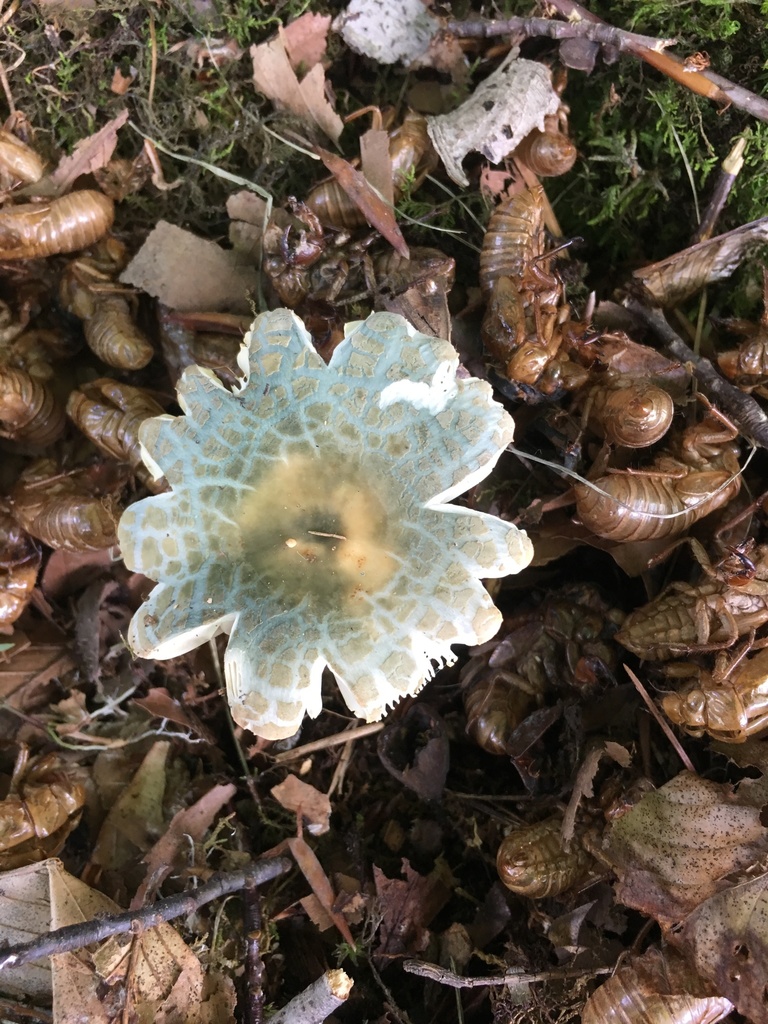
Russulas are notoriously hard to identify, so much so that most of the time I don’t even try. However, this year I feel like I’ve made some progress due to some colorful finds.
Russula is a large genus of mushrooms, characterized by brittle gills and stems. If you bend the stipe of most mushrooms, you’ll find that it is fibrous and doesn’t break cleanly. Russulas, in contrast, tend to snap, almost like very weak chalk. Their gills, also, cannot be bent without breaking.
Other identifying characteristics include the absence of a veil, paler spore prints, and a certain outline you will quickly come to recognize. They are one of the first mushrooms you will notice when you start mushroom hunting because they tend to have brightly colored caps, are very common, and can be found throughout the mushroom season.
Getting from the genus level identification (Russula) to the species level is a real challenge, though. So far, I have only found a handful of russulas distinctive enough to make this leap. Here they are:
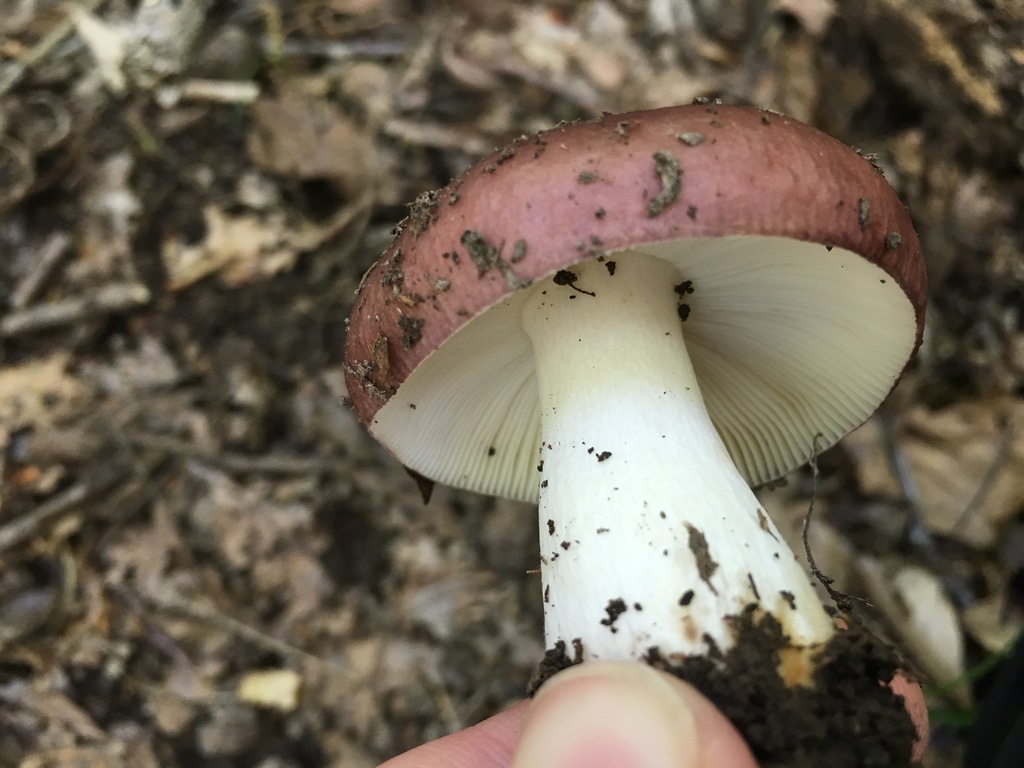
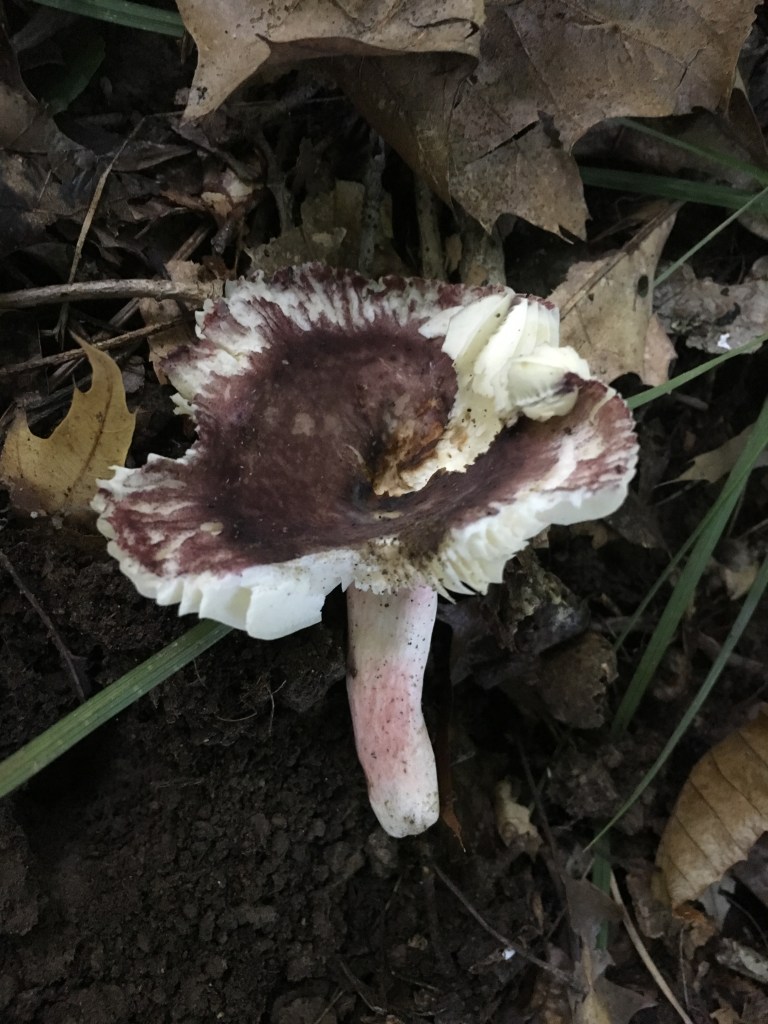
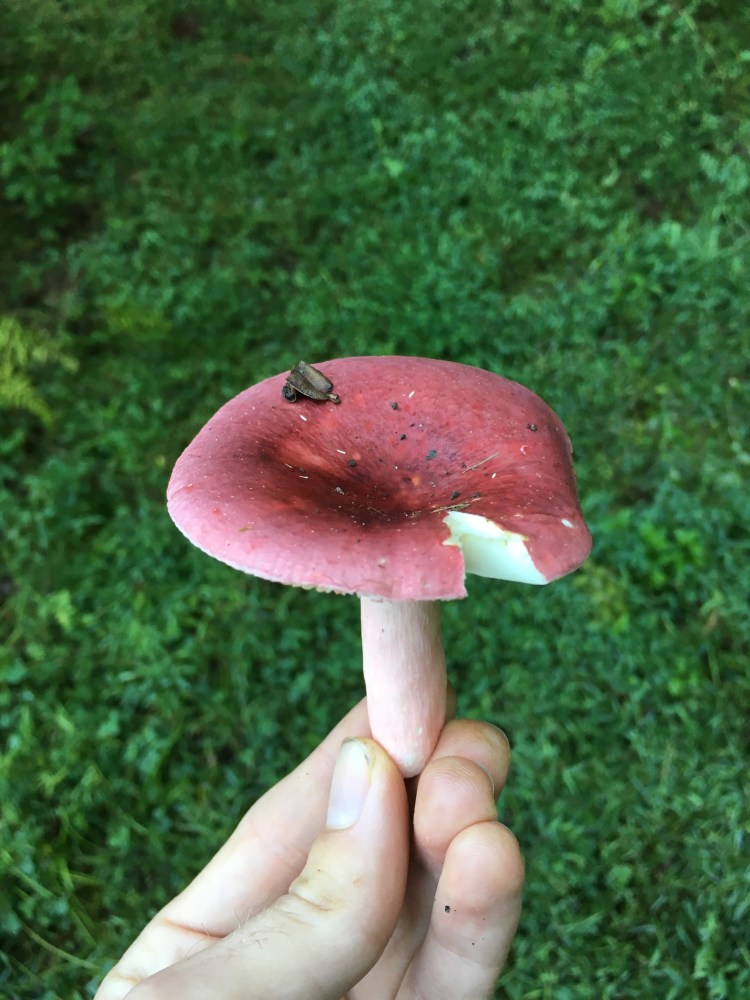
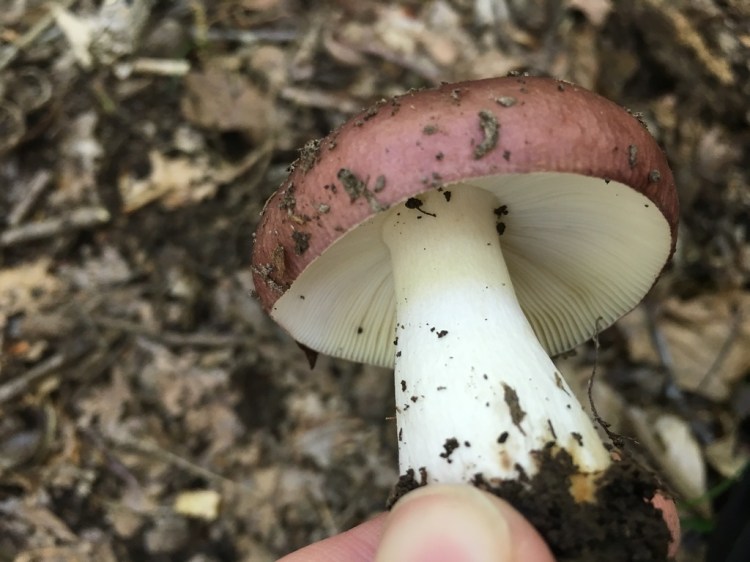
This was actually the first russula I learned to identify. You can see a step by step identification here. The key detail is less anything physical about the mushroom and more the time of year it appears: early to mid spring. It also has a somewhat distinctive wine-red color.
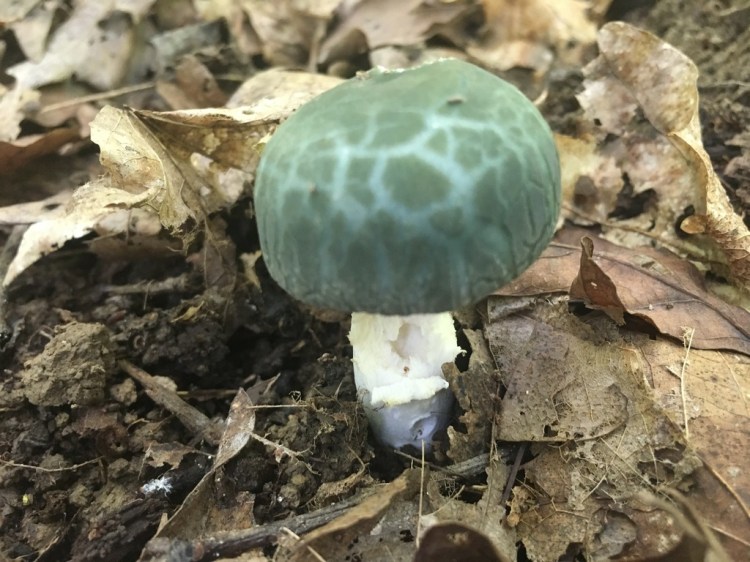
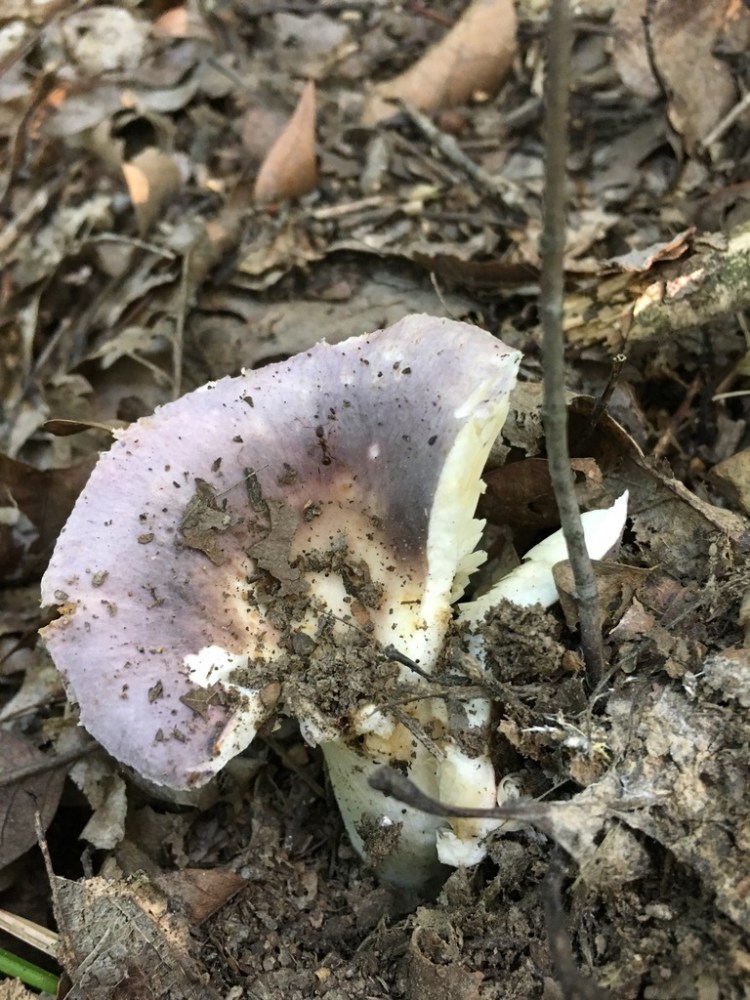
This is one of the more beautiful (and easy to identify) russulas. The key feature is the large patches of color that break up, almost like cooling magma (if magma were blue). Russula parvovirescens is actually a fairly new species, formed on the basis of DNA analysis. Traditionally, there was R. virescens and R. crustosa but these have turned out to be European species. Analysis of North American samples has turned up a slew of new species (many of which are yet to be published)more info here. The only one of these that is identifiable in the field is R. parvovirensens, the “Blue-green Cracking Russula.”
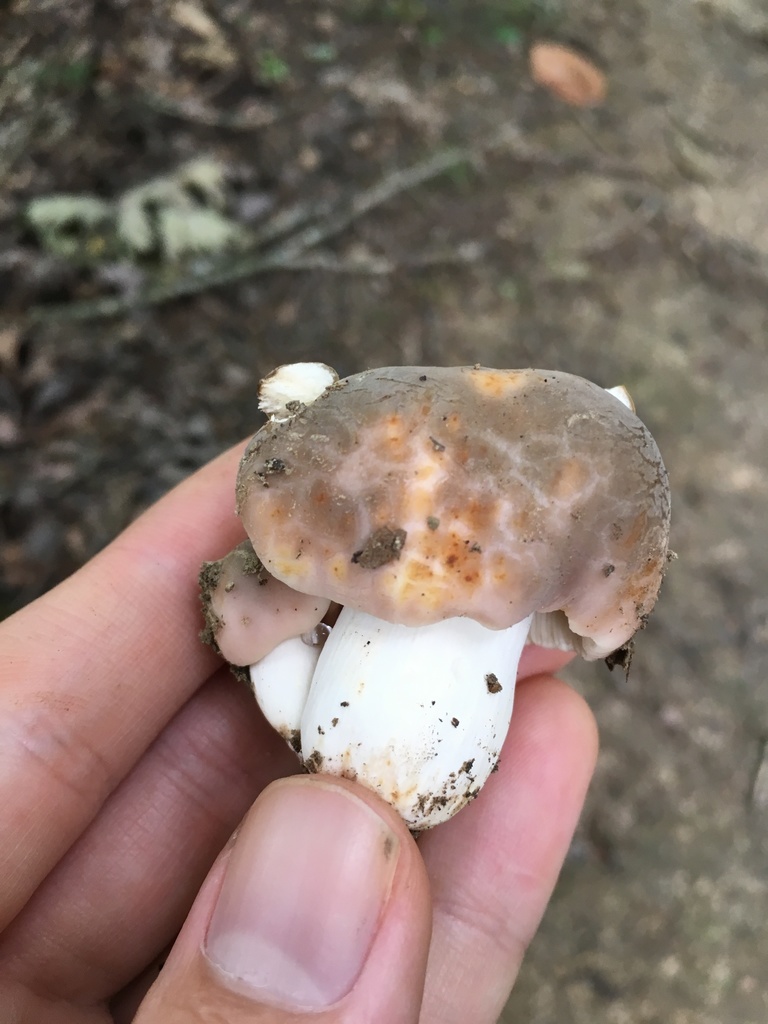
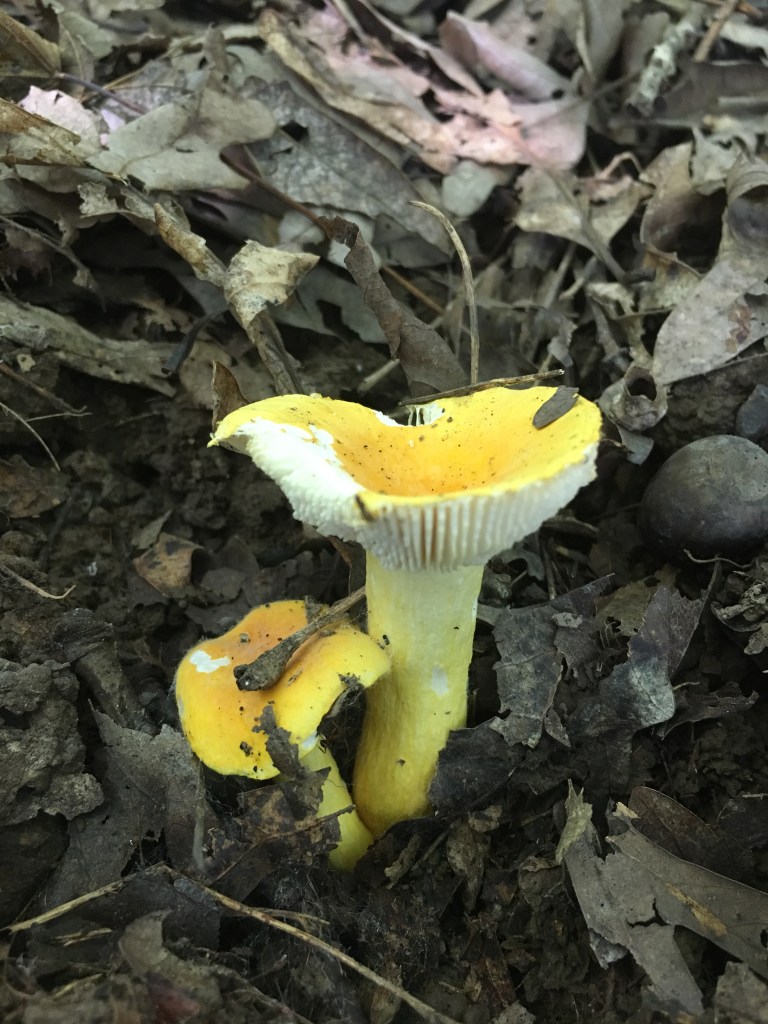
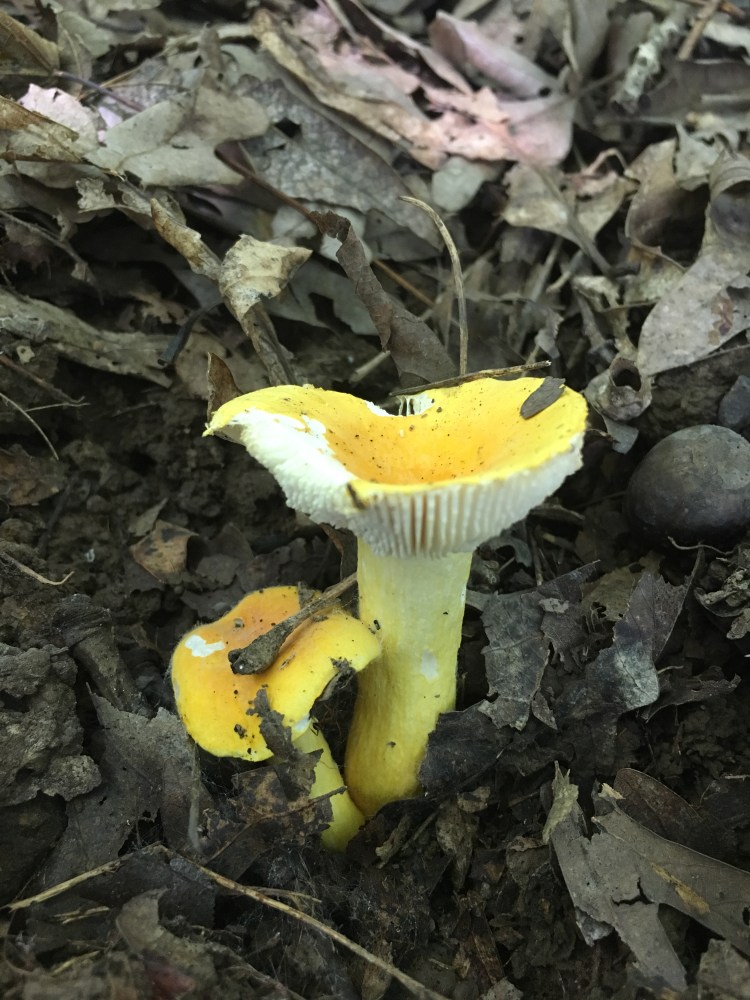
This one I’m still not 100% about—I only included it because of it’s bright lemon yellow colors, unusual for a russula.
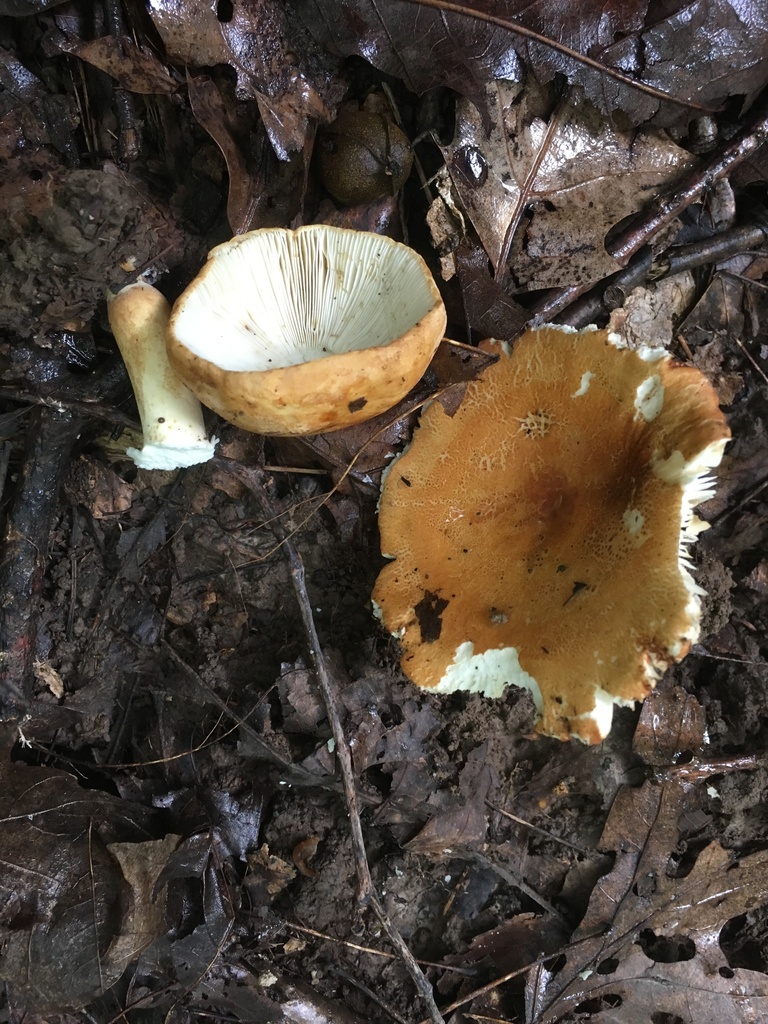
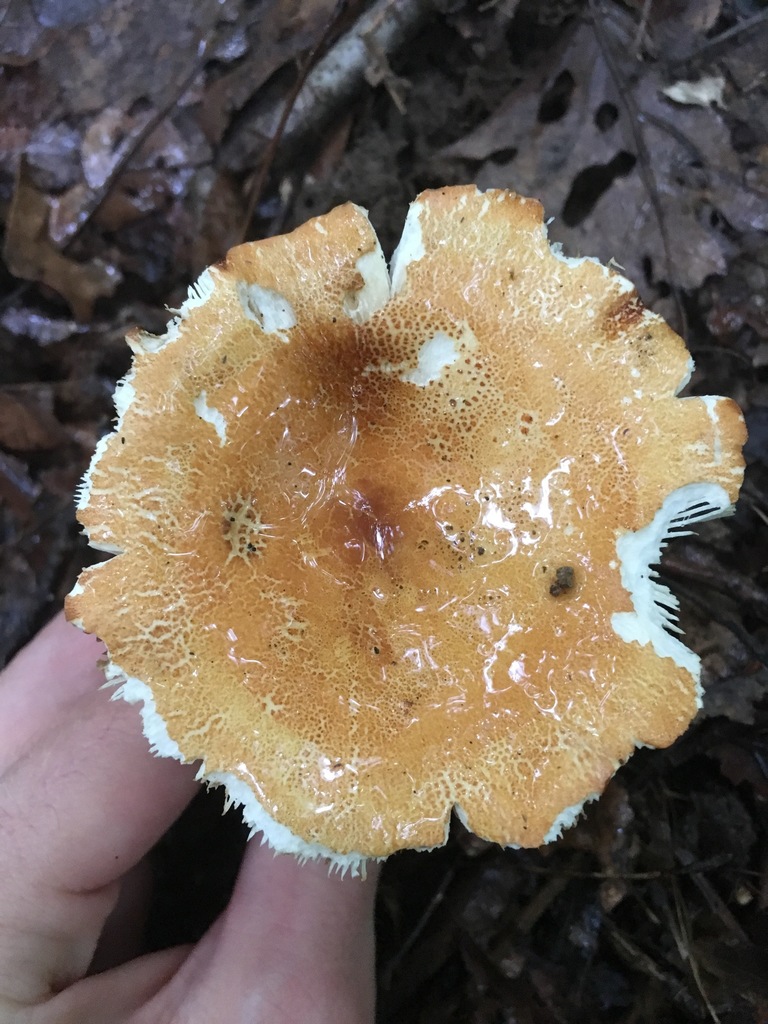
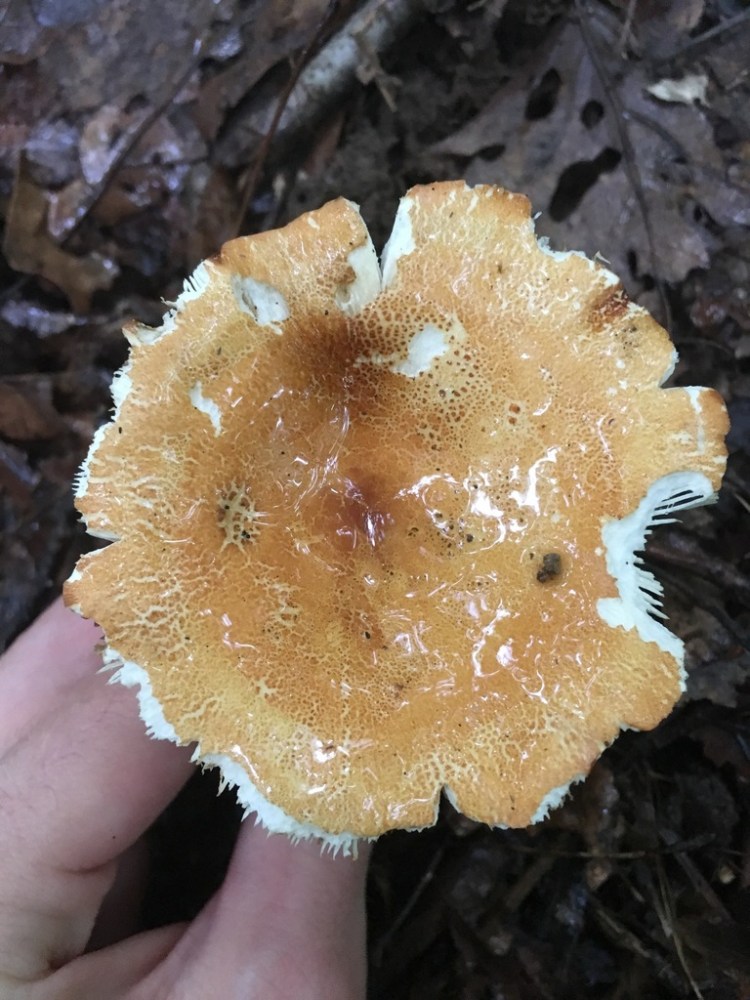
Russula balloui is one of my discoveries this year. It has a beautiful orange cap that breaks up into patches of color (but much smaller patches than R. parvovirescens).

 recycled paper clips