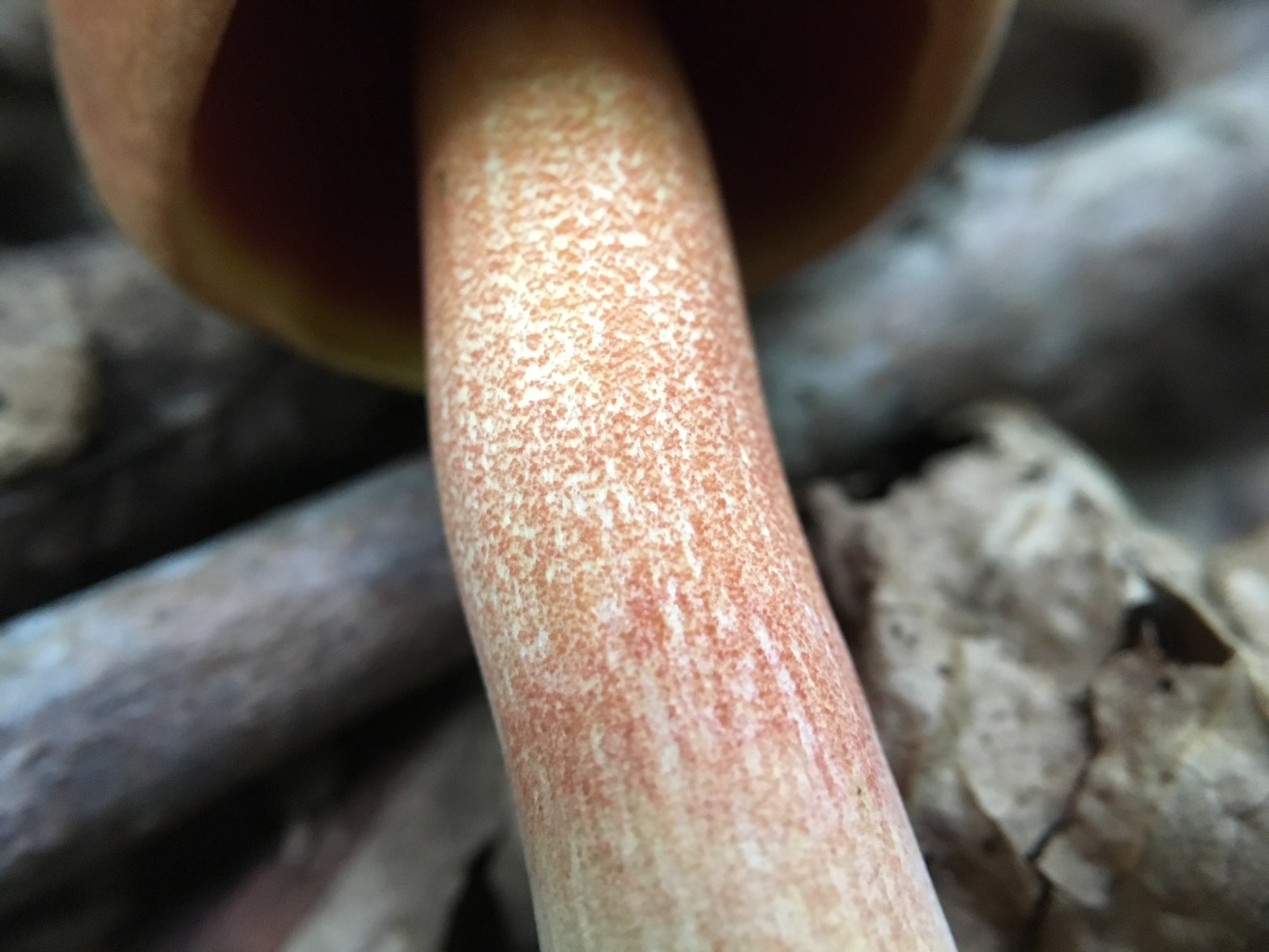
I recently bought Boletes of Eastern North America, which has been a game-changer for identifying all those incredibly similar cushiony pored mushrooms we call boletes. One thing about it that has changed my mindset is that it starts off by closely examining the stalk. Boletes are divided into five groups, based on the qualities of their stalk: Ring Stalks, Net Stalks (see Mushroom Lingo #1: Reticulate), Resin Stalks, Rough Stalks, and Smooth and Miscellaneous Stalks.
To put it briefly, “punctae” are dots (punctuation, you could say) on the stalk. They differ importantly, however, from “resin dots” in that they are dry and do not smear when touched. As you can see below, visually they are fairly similar, but to the touch they are easily distinct.

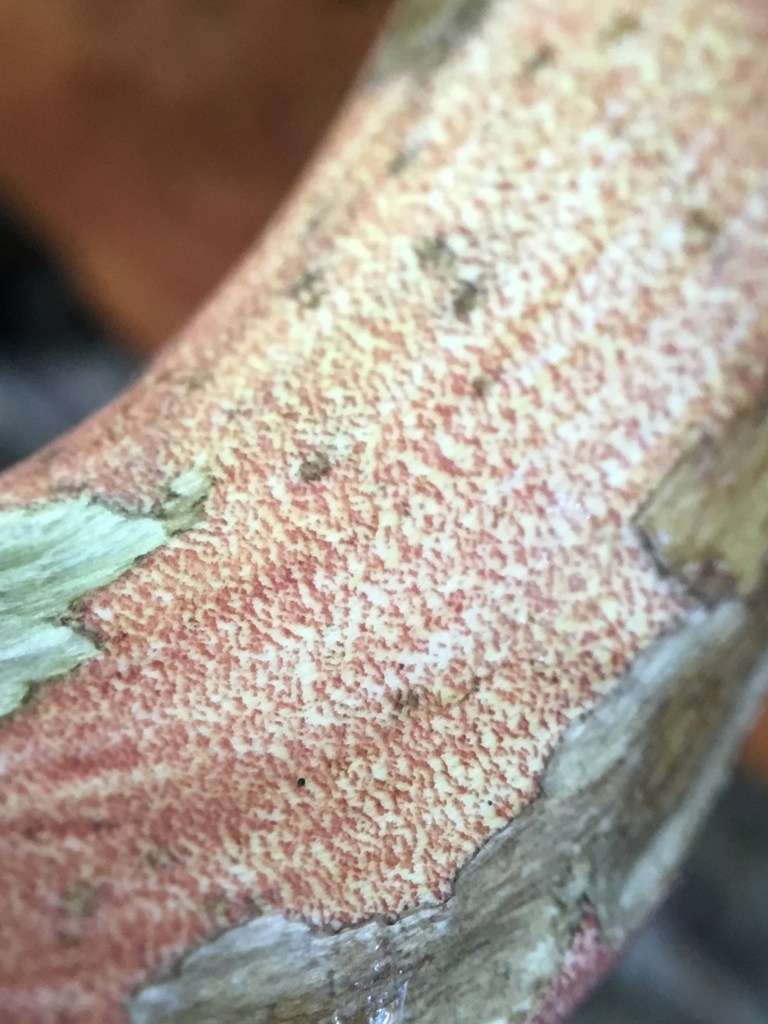
These dots are a key identifying feature of at least one beautiful mushroom: the Scarletina Bolete. In Europe, the Scarletina Bolete is a well established and sought-after if somewhat risky edible mushroom. (There are lots of youtube videos in Czech, Polish, Ukrainian, etc about correctly identifying it, if you are curious about European mushroom culture). In North America, however, it is less well established (meaning it will probably go through additional name changes and taxonomic swaps). Very probably, what we have over here is not the same mushroom they have in Europe (even though for now they are flying under the scientific name) so it should not be considered edible.
Anyways, whatever it may eventually be called, Neoboletus luridiformis is an exceptionally pretty mushroom characterized by “carmine” punctae, a dark brown cap that gets paler with age, a lack of red hairs on the base of the stalk, blue staining, red to orange pores, often yellowing at the margin and depressed around the stalk.
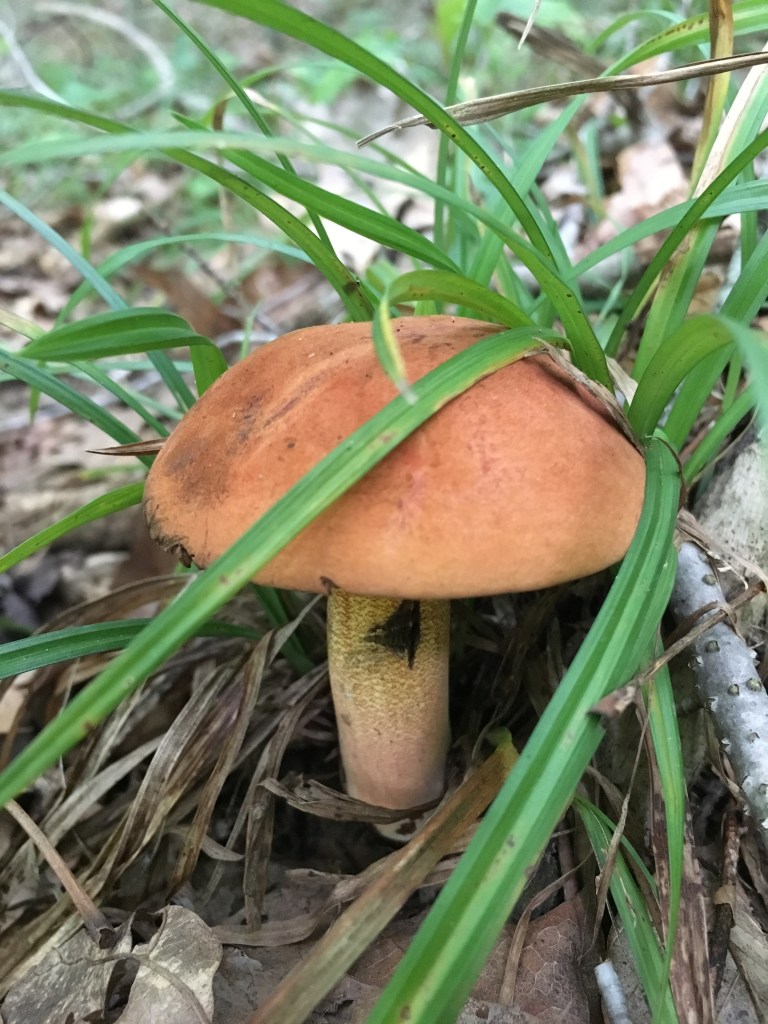
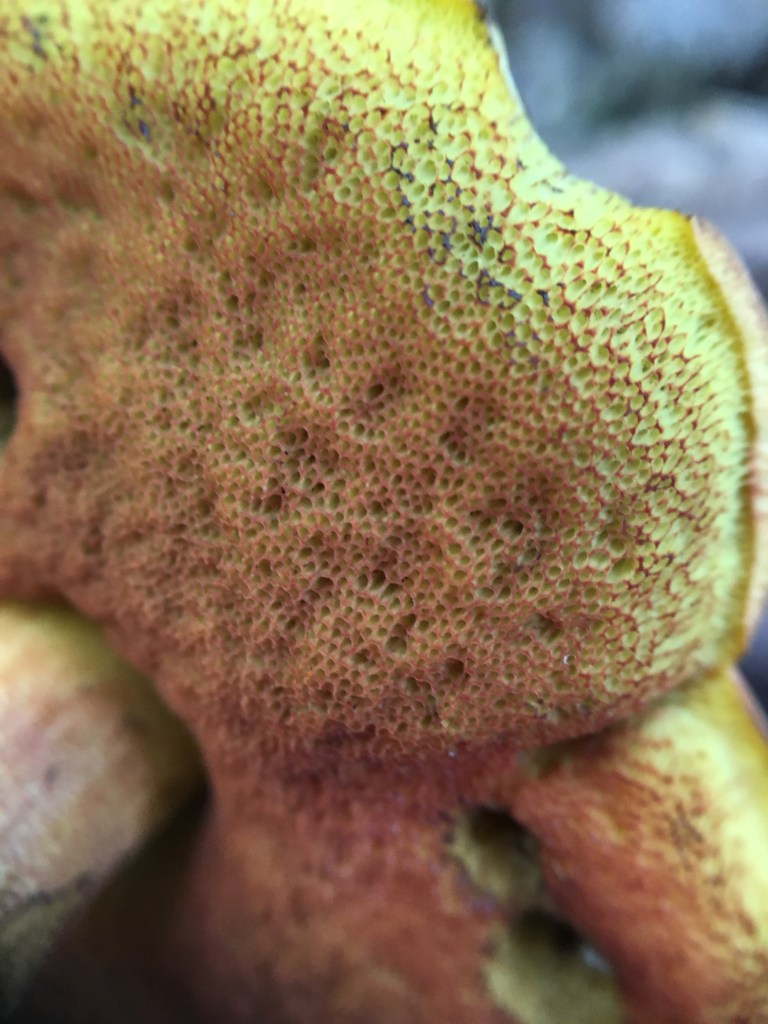
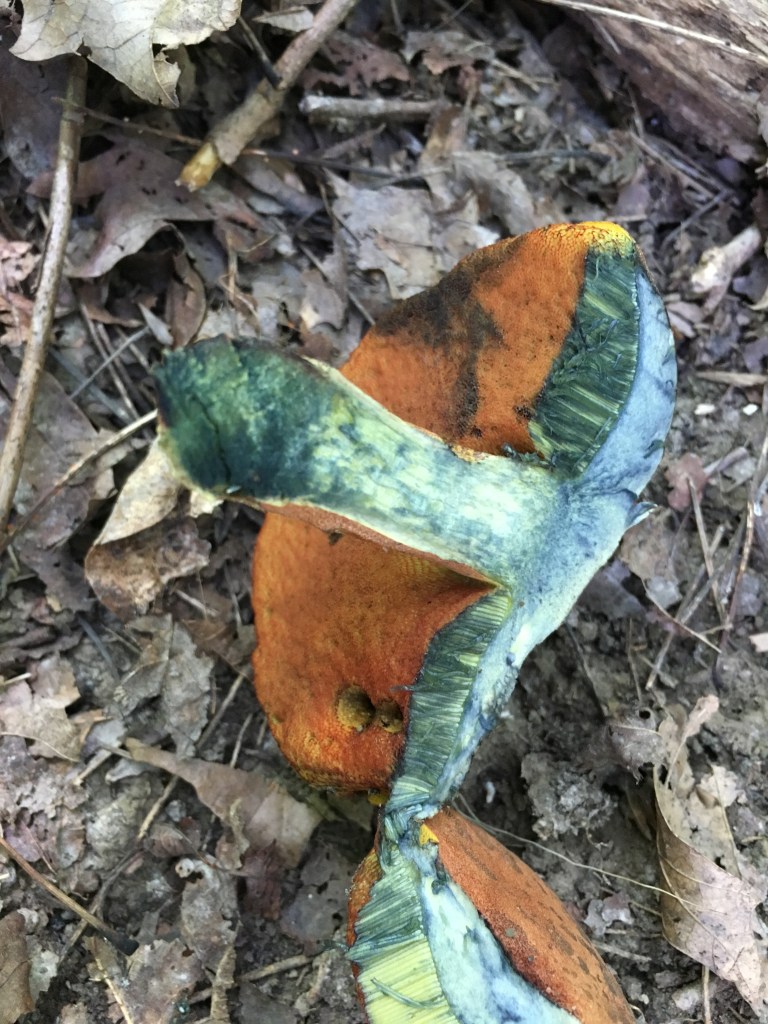
Even with all this though, identifying Neoboletus luridiformis is more a matter of probability than on certainty. As the authors of Boletes of North America say, “the art of field identification is recognizing the point at which flexibility exceeds credibility.” But what is more important than positively identifying a mushroom, is learning to see them in a more detailed way.
 recycled paper clips