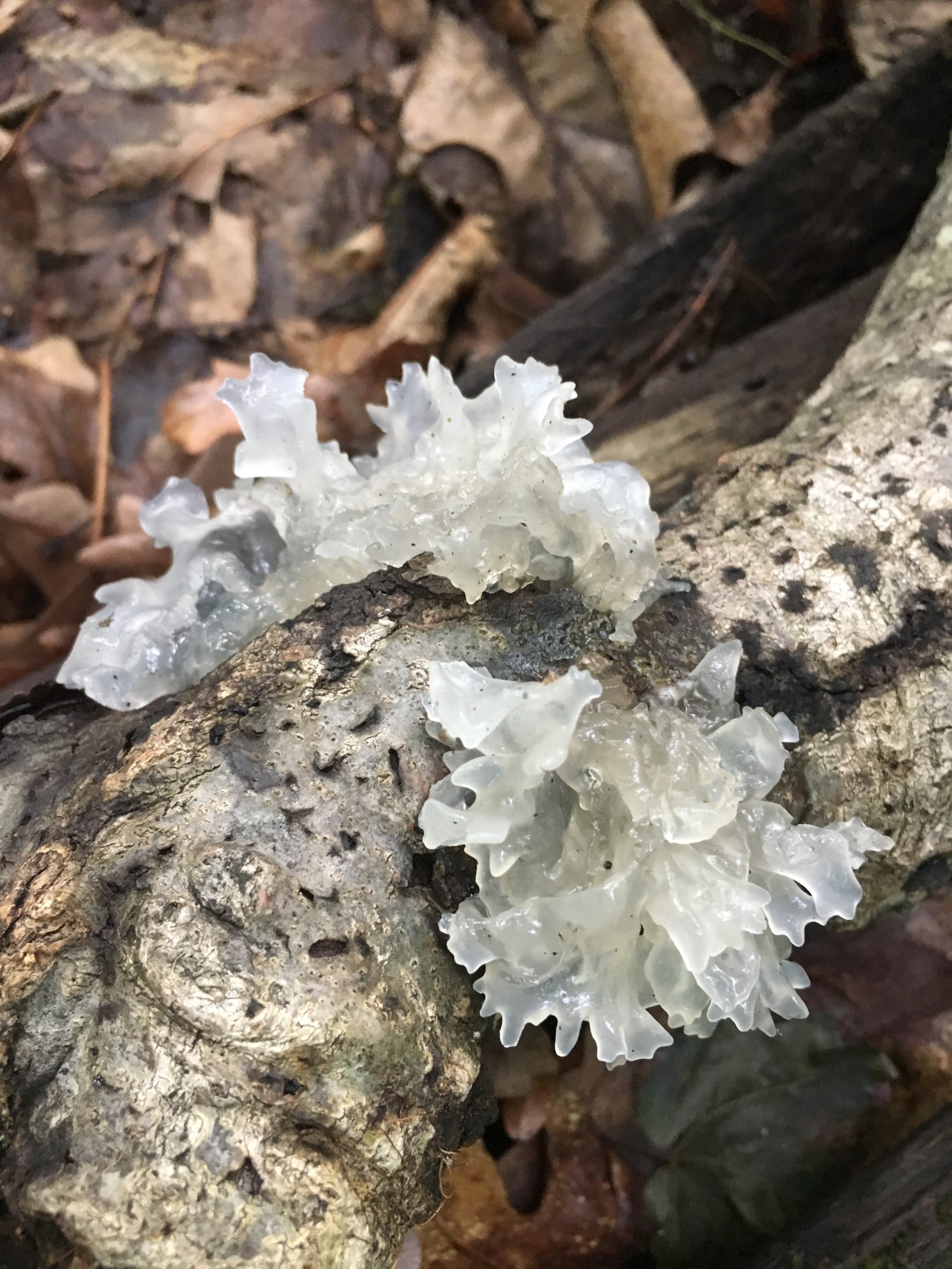
I mentioned in a previous post that Snow Fungus, Tremella fuciformis, deserved its own post. Firstly because, although you wouldn’t know it from the looks of it, it is considered a choice edible, and is actually cultivated to the tune of over 100,000 metric tones a year1. Despite having little appreciable flavor, you can find it dried at most Asian food stores, because it is highly valued for its gelatinous texture and various health benefits (some of which have been experimentally demonstrated).
Beyond this though, it is an interesting mushroom because of its lifecycle. Tremella fuciformis is a yeast, which only produces the edible fruiting body after invading a host fungus. Fungi have two main forms. They can swim around as single-celled yeasts, or they can form long chains of cells called hyphae2. Bundles of these hyphae are called mycelium, which under the right conditions produce mushrooms.
These two fungal modalities are not clearly separated taxonomically. It’s not that yeasts are one branch of the fungal kingdom, and mycelium-forming fungi are another. Rather, the two modalities are kind of scrambled in across the fungal kingdom, or in the case of snow fungus, across the lifespan of a single fungus.
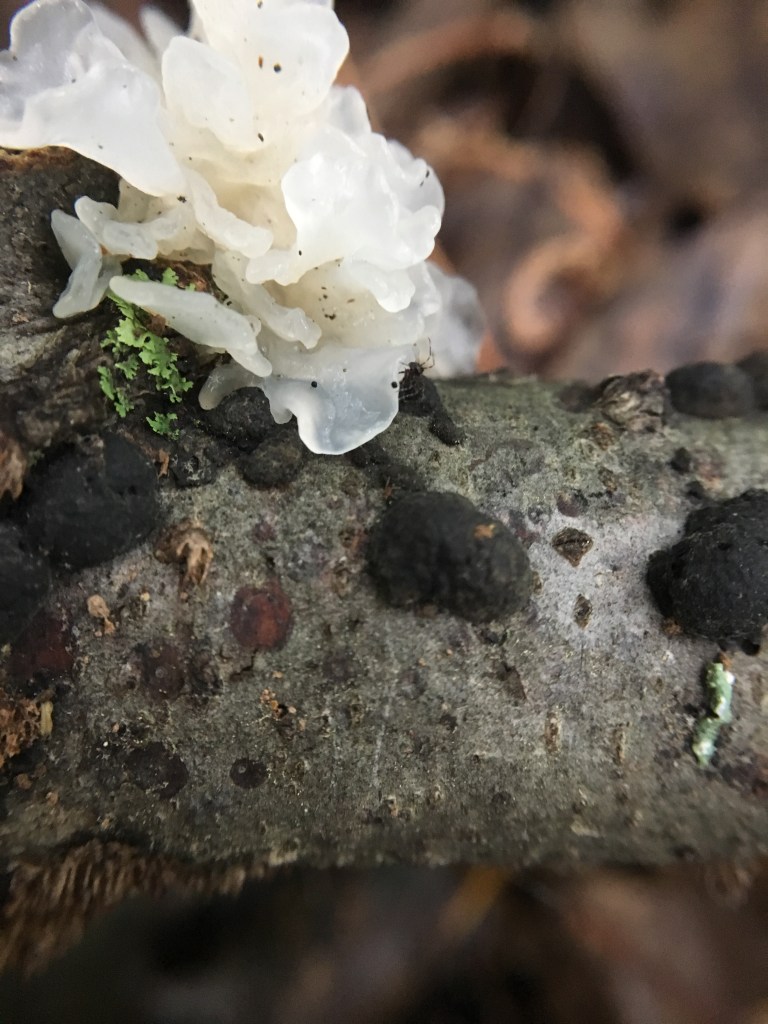
When T. fuciformis finds a suitable host, such as Annulohypoxylon archeri (the small, carbon-y balls in the picture below) it switches from yeast to hyphae, rapidly generating the mycelial web necessary to fuel the growth of the fruiting body. The exact relationship between snow fungus and its host is not yet known. It could be parasitic, or it could be there is a subtle symbiosis going on.
Snow fungus, like many other fungi, challenges our traditional notion of species as separate, independent life forms. But in fact these sort of multispecies “super-organisms” are by far and away the norm. Consider our own complex relationship to the bacteria, protists, and fungi that make up our “gut flora.” Or the anaerobic fungi that live in herbivorous animals’ rumens and allow them to digest plant matter.
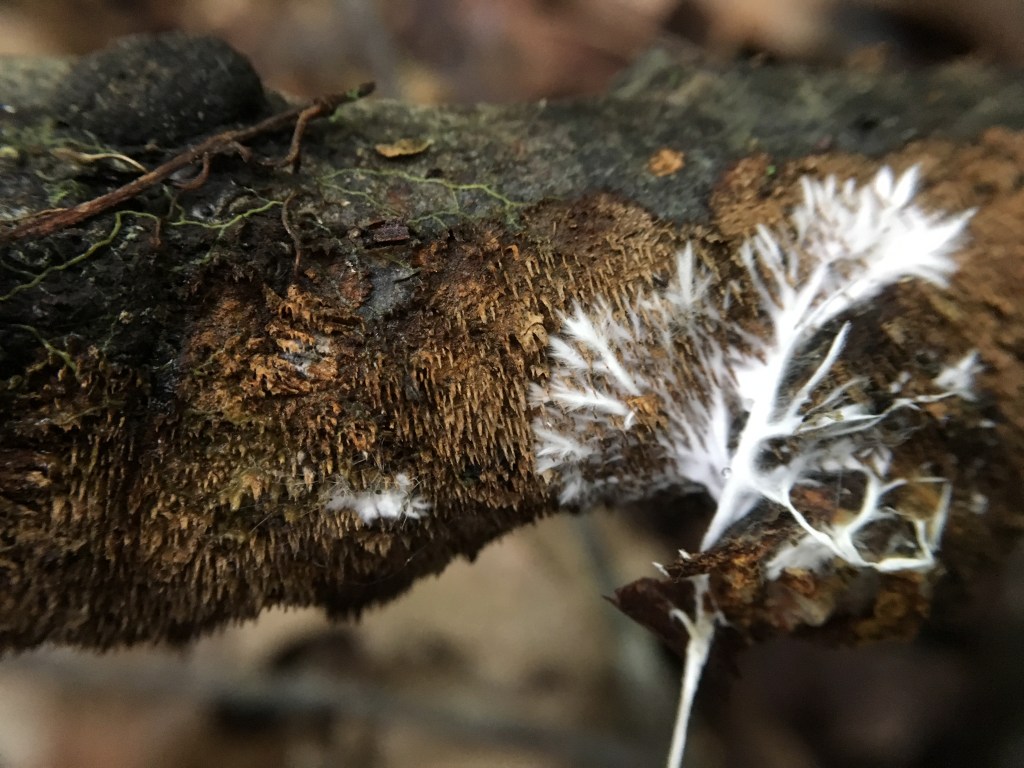
Viewed in this light, snow fungus’s relationship to its host is far from unique. But it is especially interesting because you can see it with your own eyes. If you ever see snow fungus (which won’t be that difficult if you live in Indiana or further south) examine the rest of the log its growing on and you’ll find a complex microecosystem.
Snow fungus grows all over the world, mostly in tropical areas, but extending north into temperate zones as well. It can be identified by its transparence and the fairly well defined lobes it forms3.
Sources
- Tremella fuciformis – Wikipedia
- #003: Yeast vs. Hyphae – Fungus Fact Friday
- Tremella fuciformis (MushroomExpert.Com)
 recycled paper clips