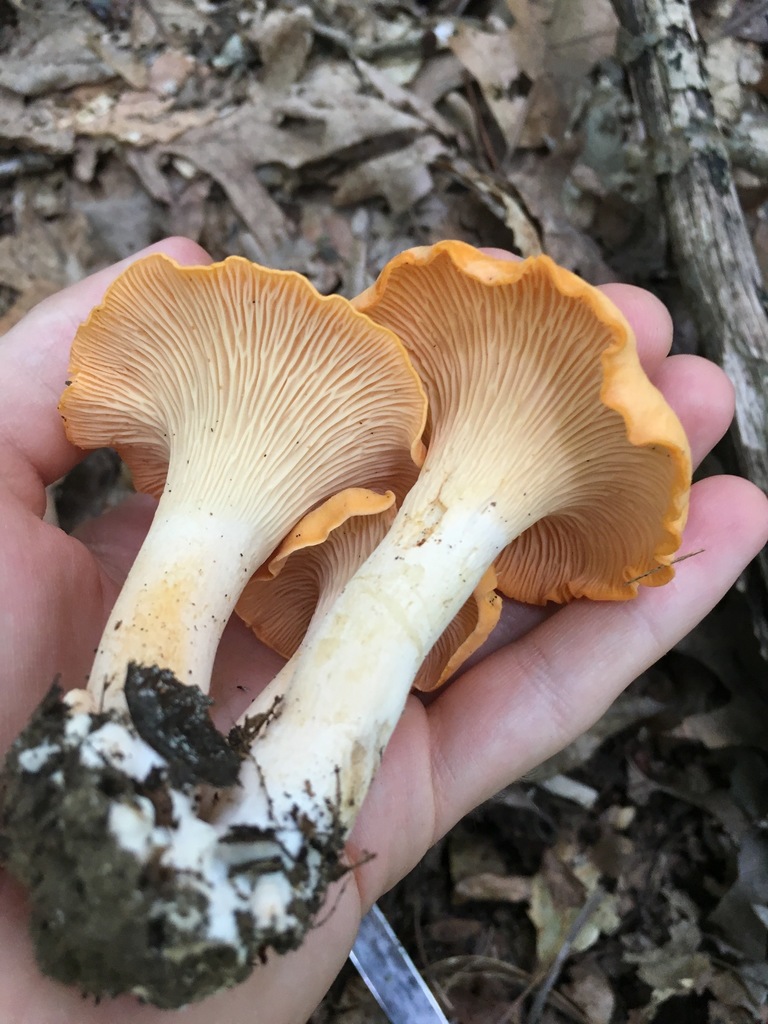
Chanterelles are out! The upcoming two months are the best time of year, in my opinion, if you are looking to harvest edible mushrooms for the table. I won’t go over how to identify chanterelles, as there are already plenty of resources on that. Instead, I’m just going to share some pictures of the different types of chanterelles that grow in my region.
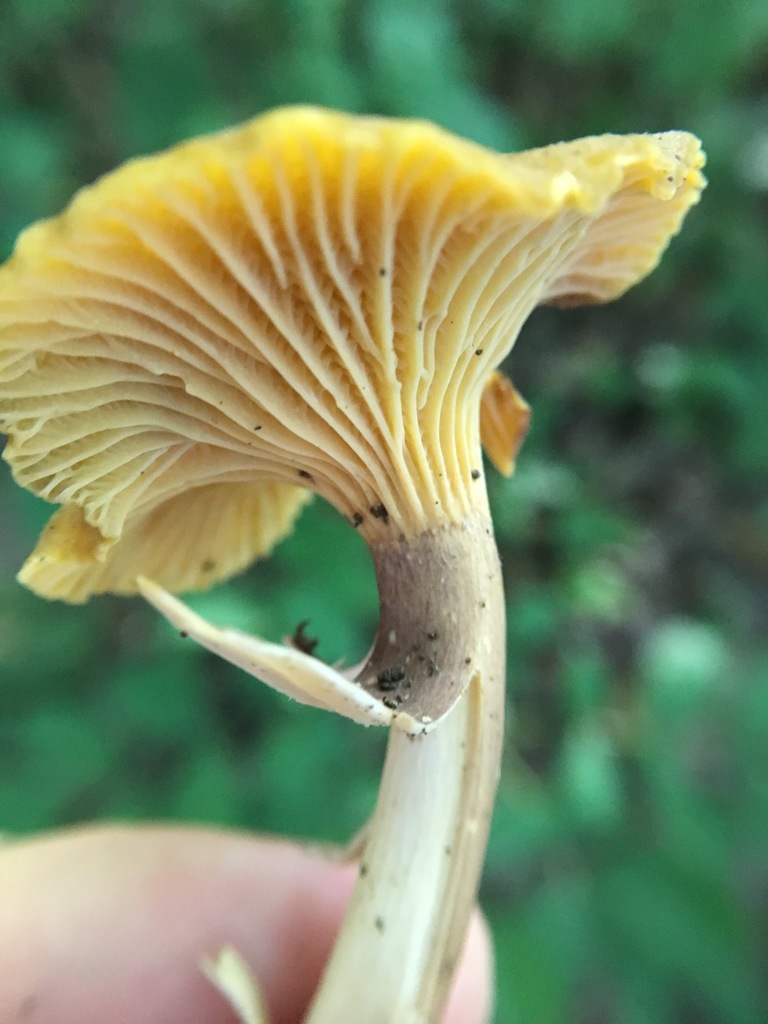
Probably the most highly sought after chanterelle is the “golden chanterelle,” Cantharellus cibarius, the “original” chanterelle of French cuisine. However, DNA analysis has shown that this mushroom does not grow in the United States. Instead we have a cluster of similar species we may casually call “golden chanterelles,” but actually comprise a group of genetically distinct North American species including the “Chicago Chanterelle,” the “Appalachian Chanterelle,” and the “Peach Chanterelle.”
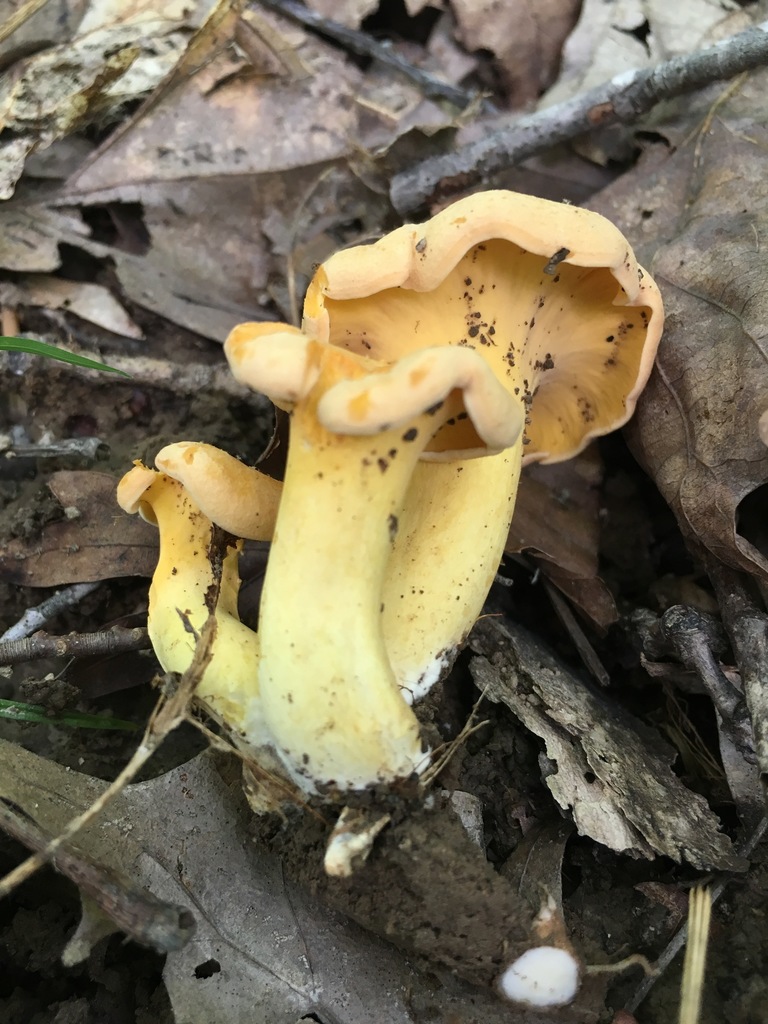
Smooth Chanterelles (Cantharellus lateritius) tend to be a little bulkier than “golden chanterelles,” and supposedly have a weaker flavor. What generally sets “golden” and “smooth” chanterelles apart is that golden chanterelles have more pronounced folds under the cap. Smooth chanterelles develop folds as well, but typically only gradually as they mature (for instance the chanterelles up top, are most likely smooth chanterelles, even though they are not entirely smooth). As with “golden chanterelles” the story is not quite as simple as most “field to kitchen” guides would have it. There is also a nearly indistinguishable species called C. flavolateritus, which likely evolved just to make things more complicated.
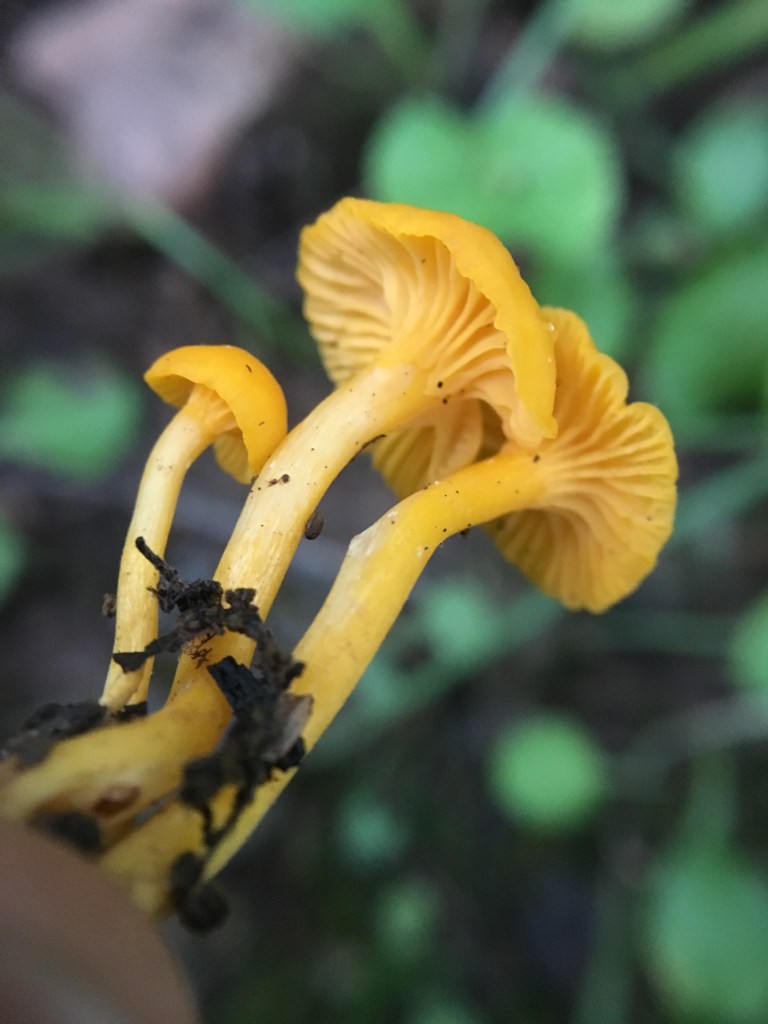
Not all chanterelles are quite this complicated, however. At least not yet. The above is C. minor, which as it’s name suggests, can mostly be identified on the basis of its smallness.
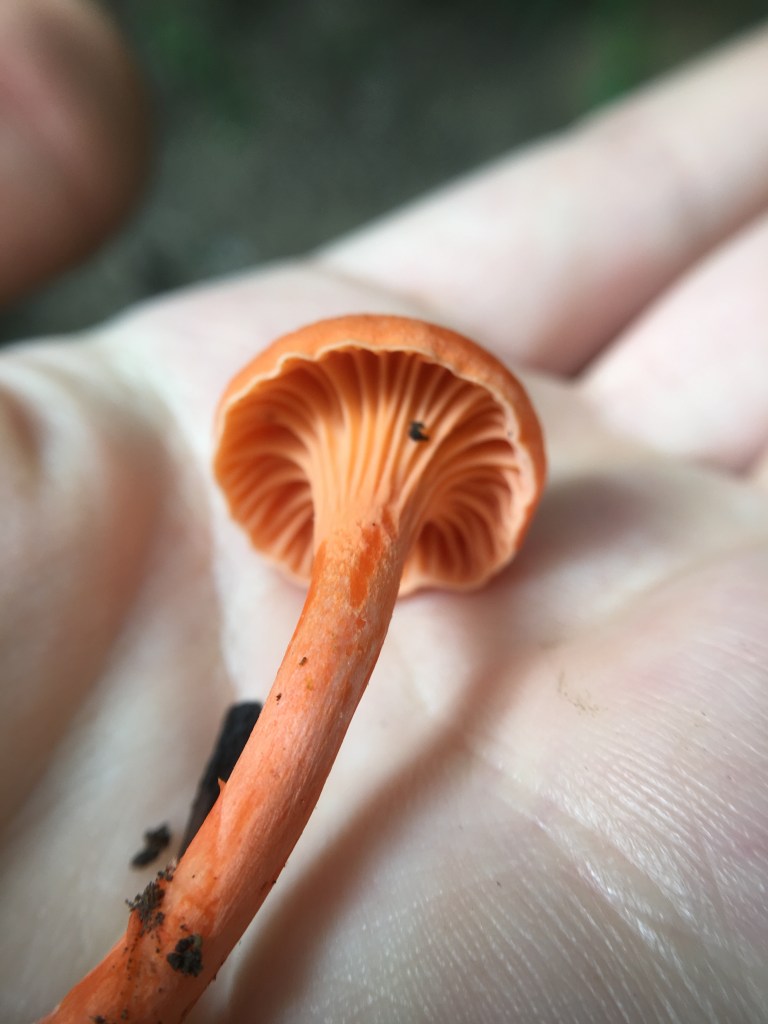
The red chanterelle, is also quite small, and has a distinctive color to make things even easier.
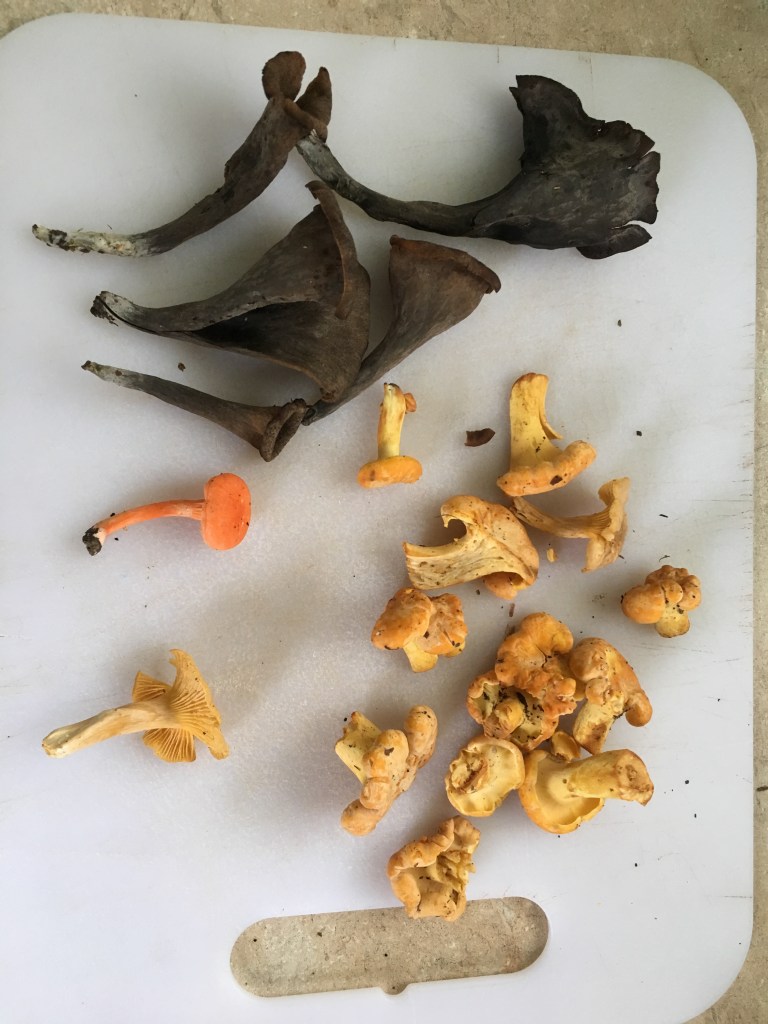
Lastly, there are Black Trumpets, which belong to a slightly difference genus, Craterellus. The European equivalent is called trompette de la mort, “trumpet of death,” in French. They are highly prized, especially for their flavor dried. Fresh, they tend to be rather insubstantial.
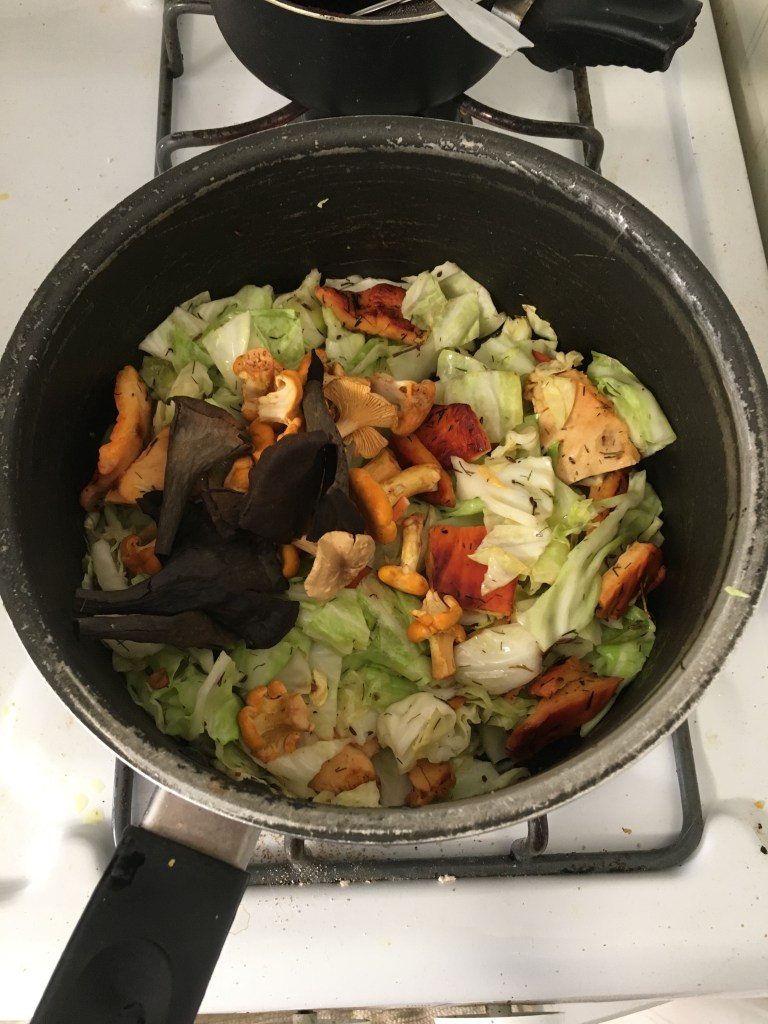
Regardless of the exact species you find, what makes chanterelles great edibles, is that they are easy to find (they’re bright yellow and grow in large clusters) and are usually not overly bug-ridden. I find smooth chanterelles have a nice firm texture and slightly fruity flavor, which without sounding too much like the fox and the grapes, I would take as gladly as morels any day.
 recycled paper clips