
Today looking at a part of the natural world I often overlook: the invertebrates. In particular, I’ve recently learned about two fairly different sets of invertebrates: mimic flies and burrowing crayfish.
Mimic flies, also known as hoverflies or flower flies, are an incredible family. They are typically black and yellow, fly from flower to flower feeding on pollen and nectar, and buzz very much like bees—but they aren’t. Their strong resemblance, however, buys them protection from predators who mistakenly believe they sting.
The resemblance is remarkable. Consider this Bare-eyed Bee-mimic fly from a couple weeks ago.
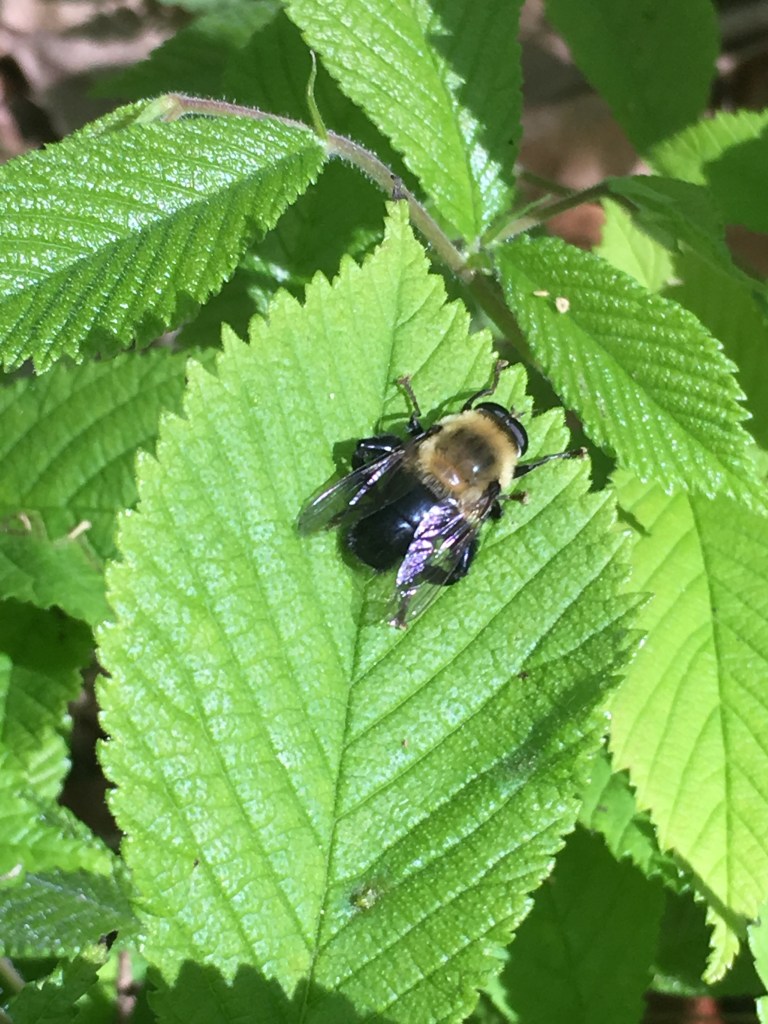
Without knowing there were such a thing as mimic flies, I assumed this to be a bumblebee, but a side by side comparison reveals a number of fairly clear differences.
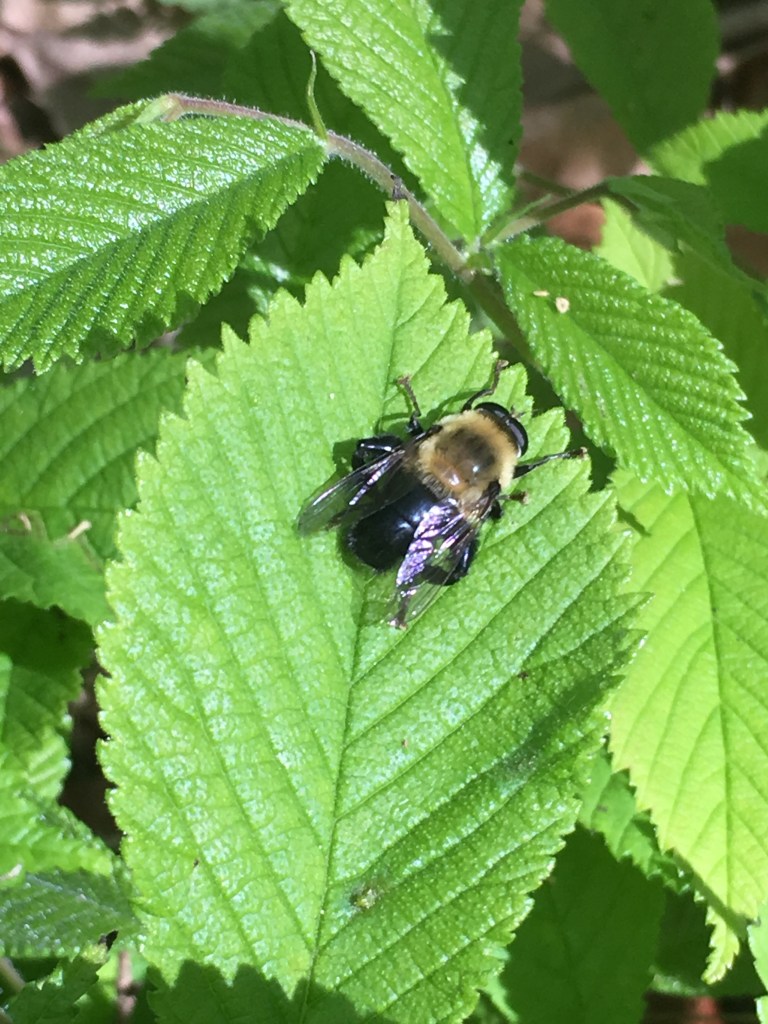
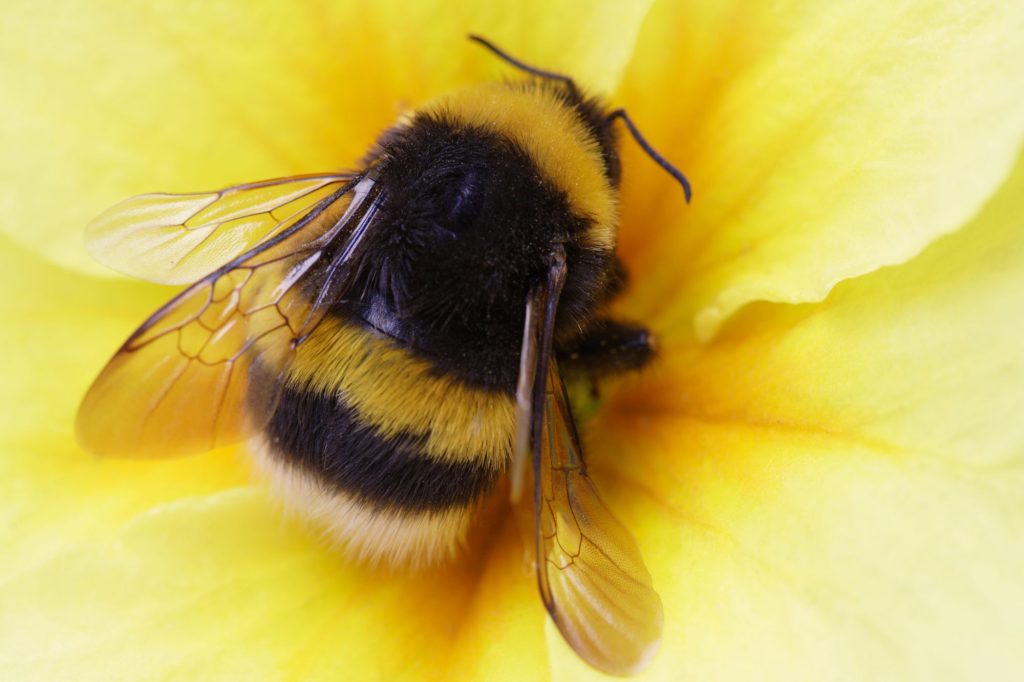
One, the fly on the left has large, compound eyes, while bumblebees have much smaller eyes (not particularly visible in the picture). Two, the mimic fly has very short antennae, while the bumblebee has longer ones. Three, and not all that easy to see, the fly has one set of wings, while the bee has two. And lastly, the abdomen of the mimic fly is smooth black rather than the fuzzy black and yellow of the bee.
Just goes to show you can’t see what you don’t know to look for.
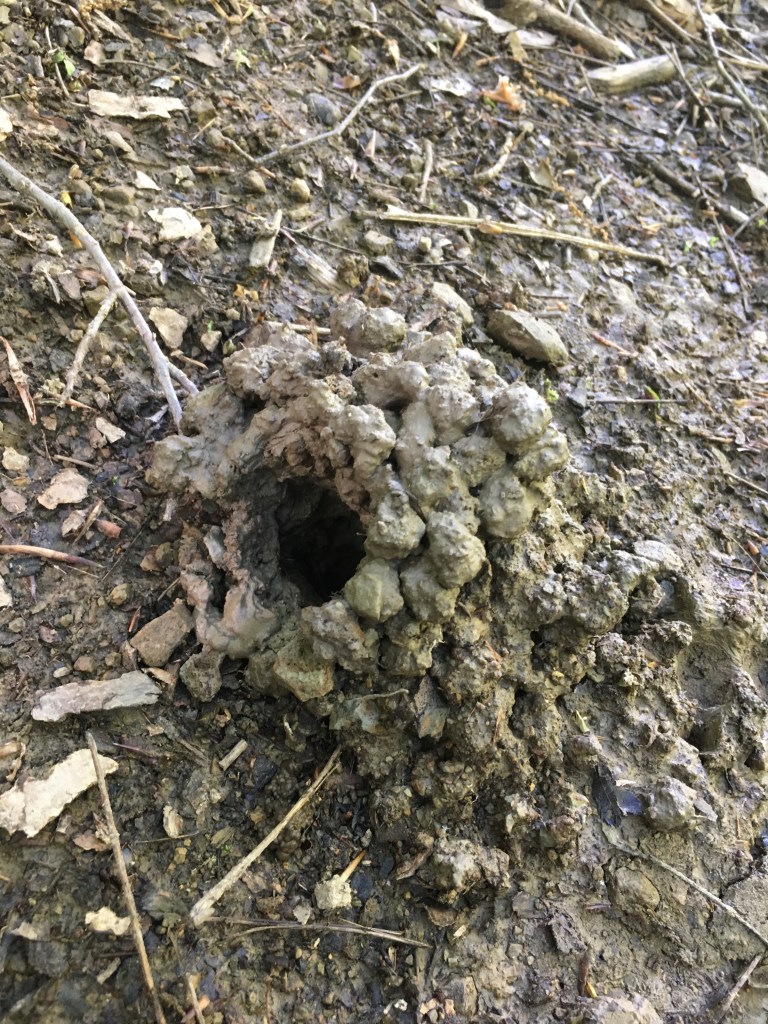
Burrowing crayfish are another fact I’d overlooked until recently. I’d noticed the “chimneys” before, but it never occurred to me that they could be crayfish. Crayfish I’d always associated with the bottom of lakes. What would a crayfish be doing on land?
It turns out, however, that some species of crayfish do live on land and create burrows as a way of finding water and hiding from predators. Crayfish breathe through gills. Under humid conditions, there is enough water in the air that they can breathe on land just as they would underwater. However, in dry conditions they will be unable to breathe. To solve this problem, and guarantee themselves a source of humidity, crayfish dig burrows down to the water table. Typically, burrowing crayfish live in the vicinity of surface water, so they only have to dig a couple feet to reach ground water.

What is interesting about crayfish burrows is that it is hard to imagine how they make them. Pincers seem like they would be good for a lot of things, but not making little pellets of mud.
Crayfish can find just as much food in your lawn as they can on the bottom of a lake. Despite their aggressive-looking claws, are actually detritivores, meaning they eat detritus, primarily decaying leaves. In this respect, they are not so different from the fungi I usually write about.
Some people are willing to stick their hands down into the burrows to catch crayfish—crayfish noodling, Check it out. I will not be doing this anytime soon, but at least now I know what is down there.
More info and sources:
- https://www.fs.fed.us/wildflowers/pollinators/pollinator-of-the-month/flower_flies.shtml
- http://www.americaswetlandresources.com/wildlife_ecology/plants_animals_ecology/animals/invertebrates/crawfish.html#:~:text=The%20crawfish%20has%20to%20dig,will%20be%20vulnerable%20to%20predators.
- https://askinglot.com/how-do-crayfish-breathe-on-land#:~:text=Crayfish%20breathe%20by%20internal%20gills,each%20side%20of%20the%20body.&text=Crayfish%20have%20gills%20for%20breathing%20underwater%2C%20but%20can%20also%20breathe%20air.
 recycled paper clips