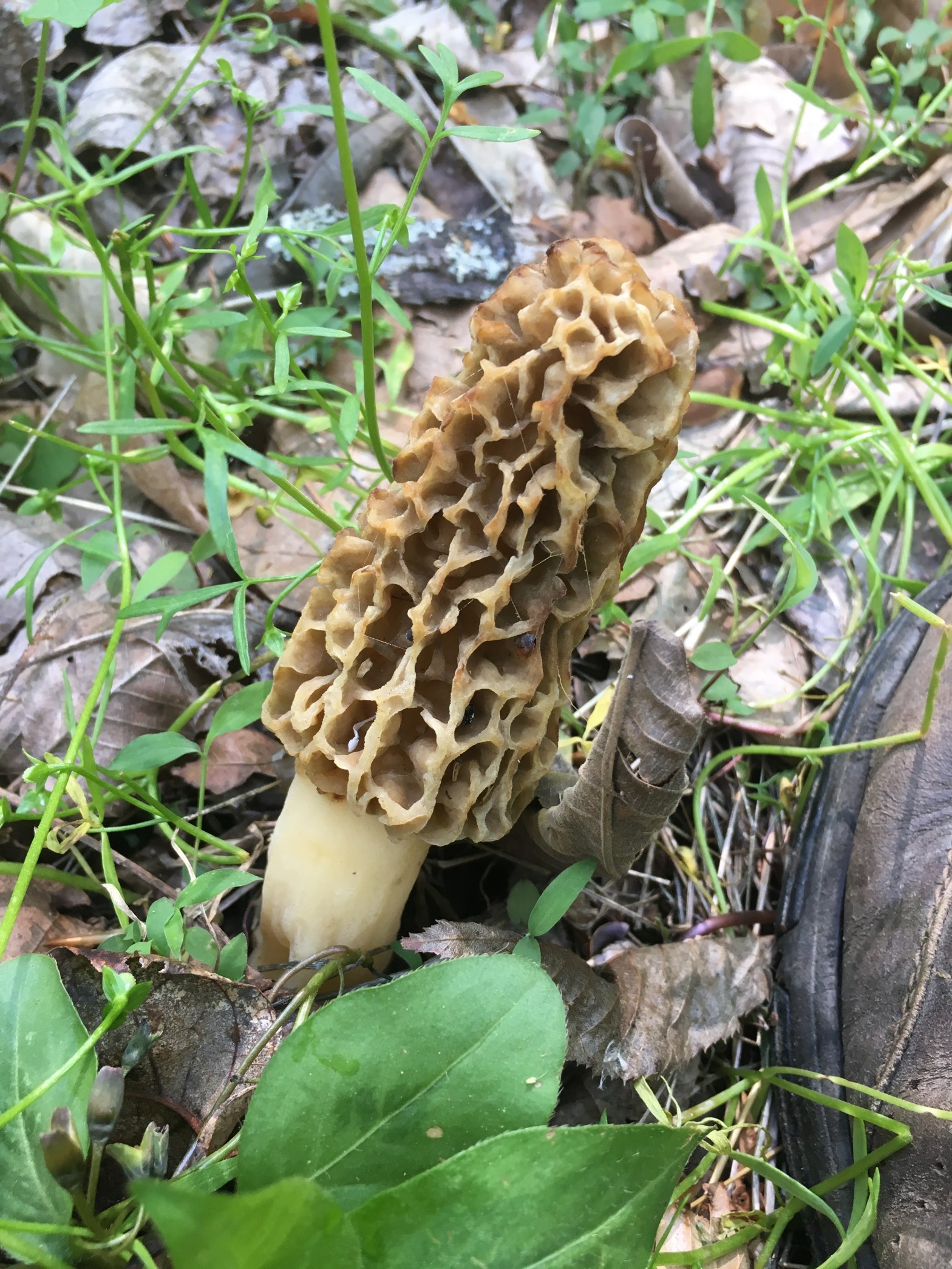
Morel hunting can be tough going. It’s the perfect place at the perfect time…and there’s nothing doing. Luckily, there’s a lot more going on in morel season than just morels. Adding a couple other things to your repertoire can salvage an otherwise disappointing hunt.
To start with, a mushroom you will almost certainly find if you are looking in the right place for morels (around dead elm trees): Dryad’s Saddle aka Pheasant Back. When fresh, this is a great find. It smells like watermelon rind, which is pretty cool for a mushroom. I peel off the porous undersurface and just cook the flesh cut into thin strips, which is honestly above average, I would say. Pretty much equal to your supermarket mushrooms for flavor and texture.
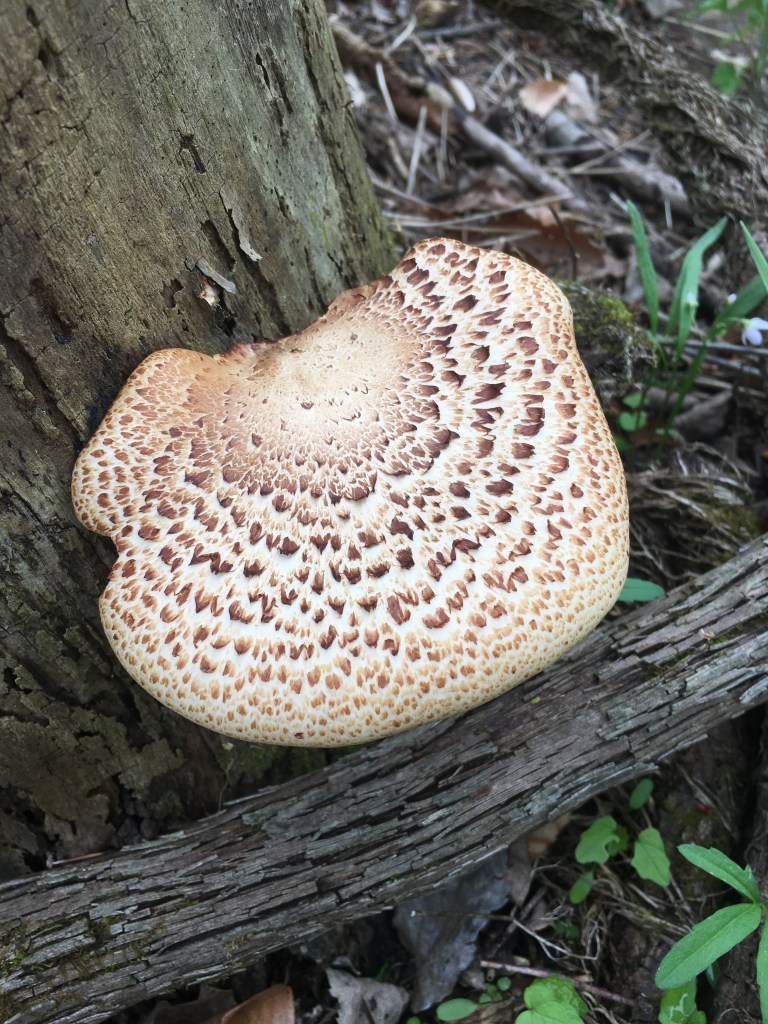
What gives Dryad’s Saddle a less than glamorous reputation is the fact that it sticks around well past its prime. You’ll find bug-ridden and inedible Dryad’s Saddle year round—but don’t judge the mushroom based on those specimens.
To identify Dryad’s Saddle you want to look for a pored mushroom growing from dead wood, tan with darker brown scales (somewhat resembling a pheasant…if you’ve ever managed to see one). What’s interesting is that it seems to have a preference for decomposing elm trees, which is convenient for morel hunters to say the least.
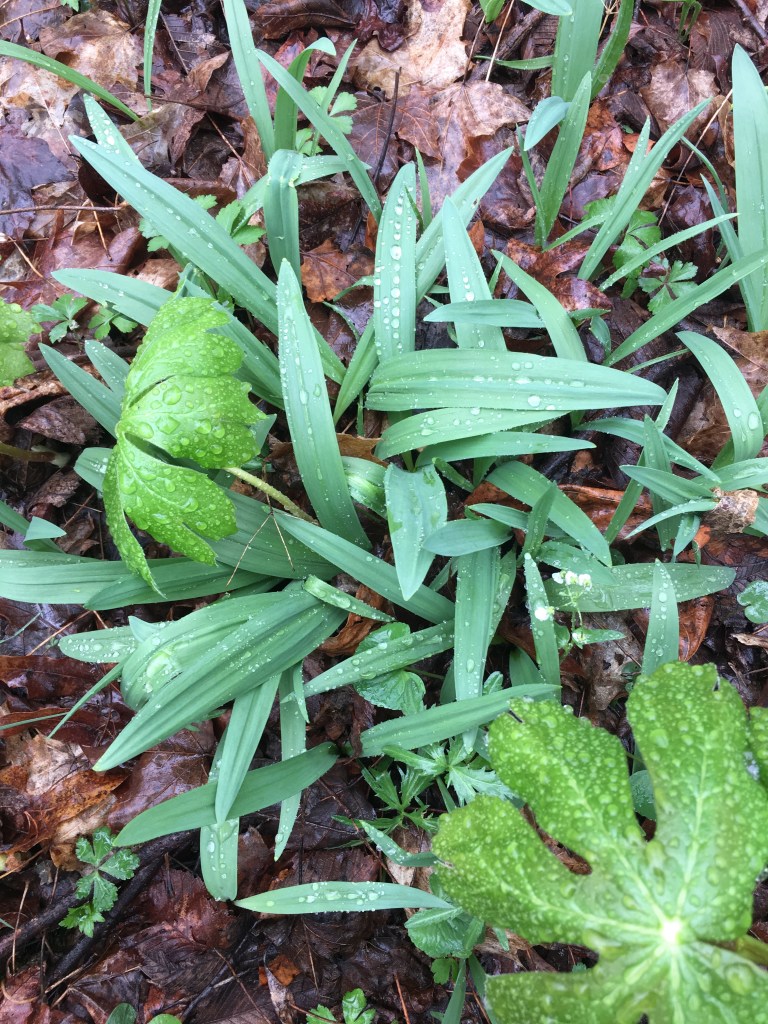
Second, and not a mushroom, are ramps. Ramps, or Allium tricoccum,(or “wild leek”) are fairly trendy at the moment—and for good reason. They taste great with all kinds of things lightly sautéed in butter. Ramps have a big cultural following in Appalachia, especially it seems in West Virginia, where you can find ramp-eating contests, cook offs, and a spring ramp festival sponsored by the NRA (National Ramp Association)—I kid you not.1
A closely related species, Allium ursinum, or “Bear Garlic” has a similar following in Central Europe.
Ramps grow in colonies, but are somewhat vulnerable to over-harvesting because they take 7-10 years to grow to maturity. I typically harvest only one leaf from a given plant and leave the bulbs.
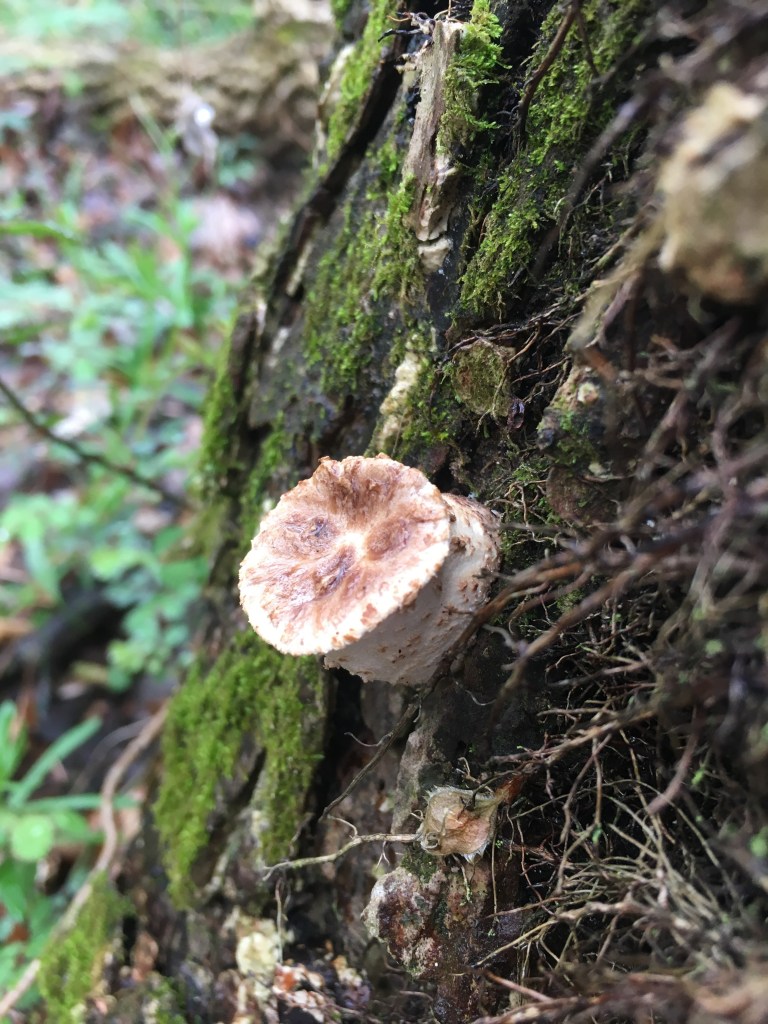
Lastly, a mushroom I wouldn’t necessarily recommend for the table, though it is eaten, and even widely cultivated. The Wine Cap mushroom, or King Stropharia, is typically found growing from woodchips, or decaying wood in the forest. It can apparently be easily cultivated in gardens and at home, although I have not yet tried this2. Identification is a little tricky, but overall you want to look for gills starting out white, becoming lilac to purple/black, a purple-grey to blackish spore sprint, a thick, split ring, a bulbous base and white rhizomorphs. The color of the cap is burgundy when young, although it fades to reddish brown, and then to tan, and finally becomes whitish.
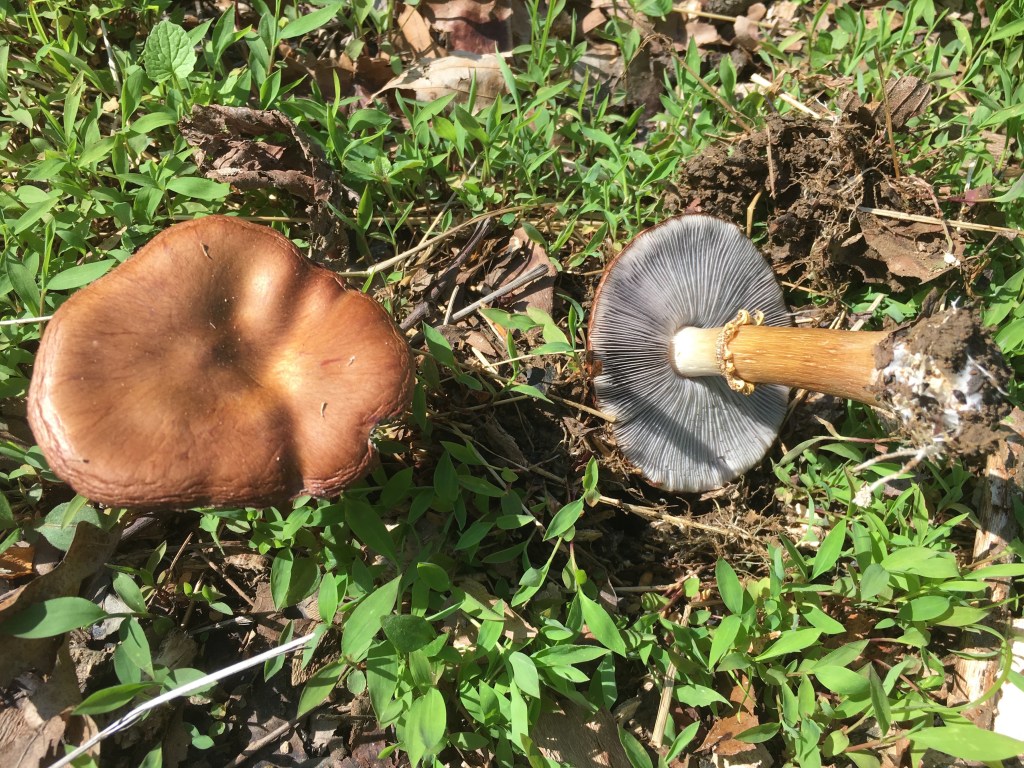
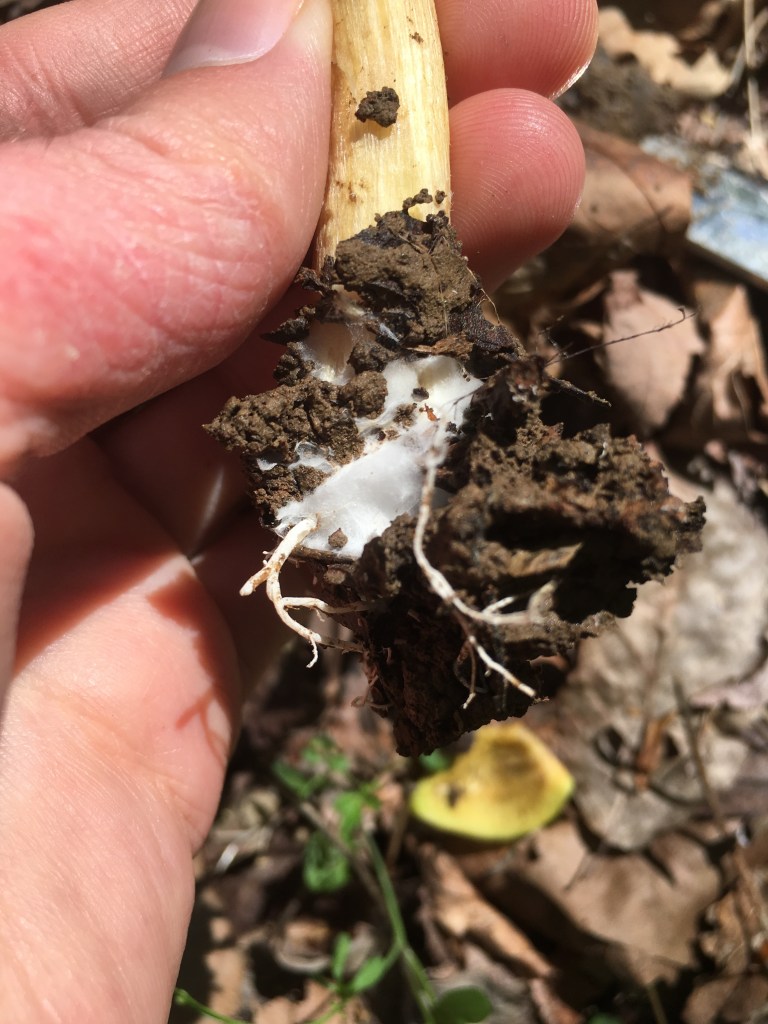
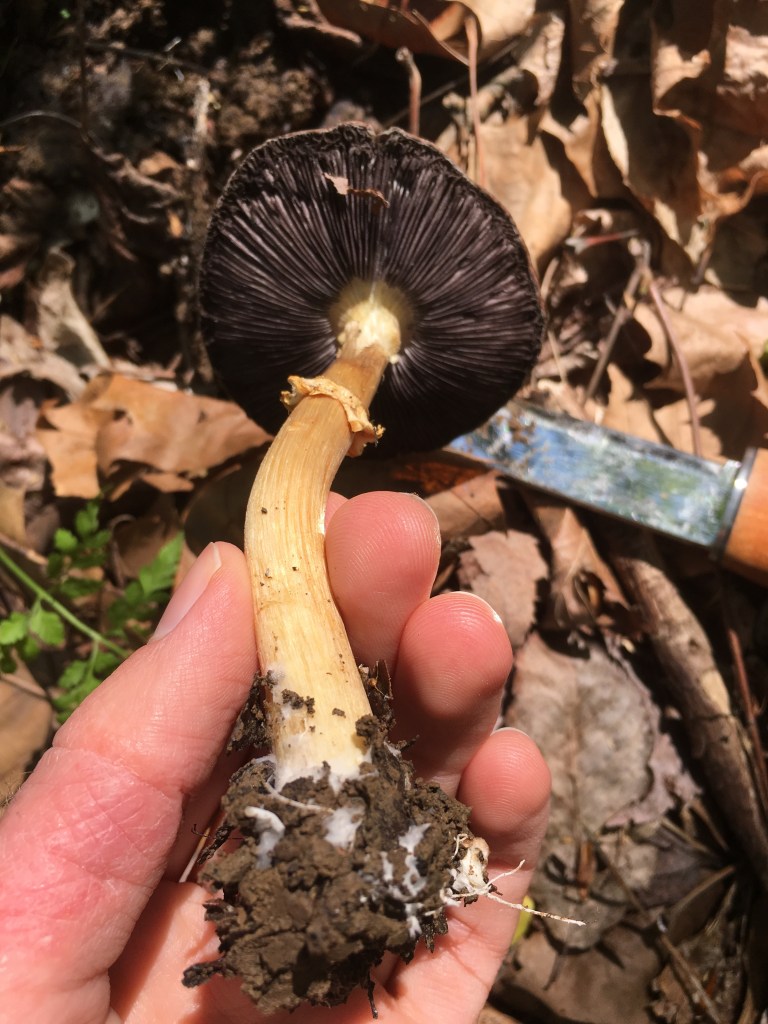
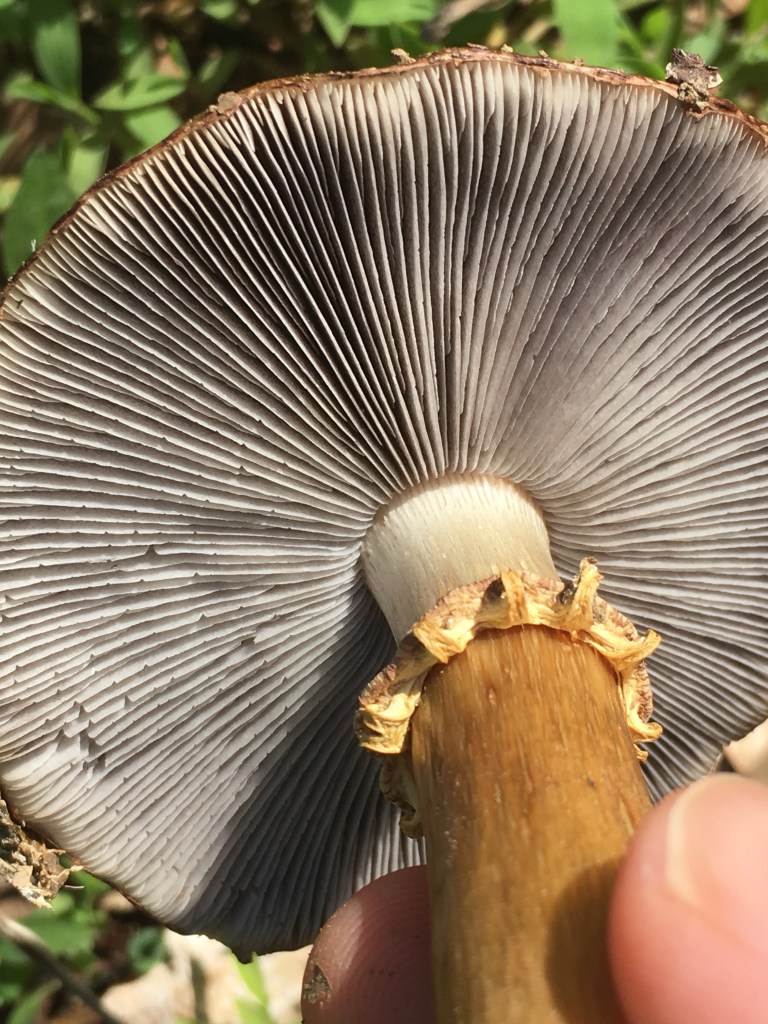
I wouldn’t necessarily recommend eating this mushroom because there are a number of poisonous look-alikes, although positive identification is possible. Nonetheless, it’s a satisfying find with it’s beautiful purple/burgundy colors. It can be found along creek beds (where dead wood tends to pile up) during late morel season. Plus, it’s been found that special cells at the base of the mushroom are able to immobilize and digest nematodes (microscopic worms)3. Not a bad consolation prize for when morels are hiding.
 recycled paper clips