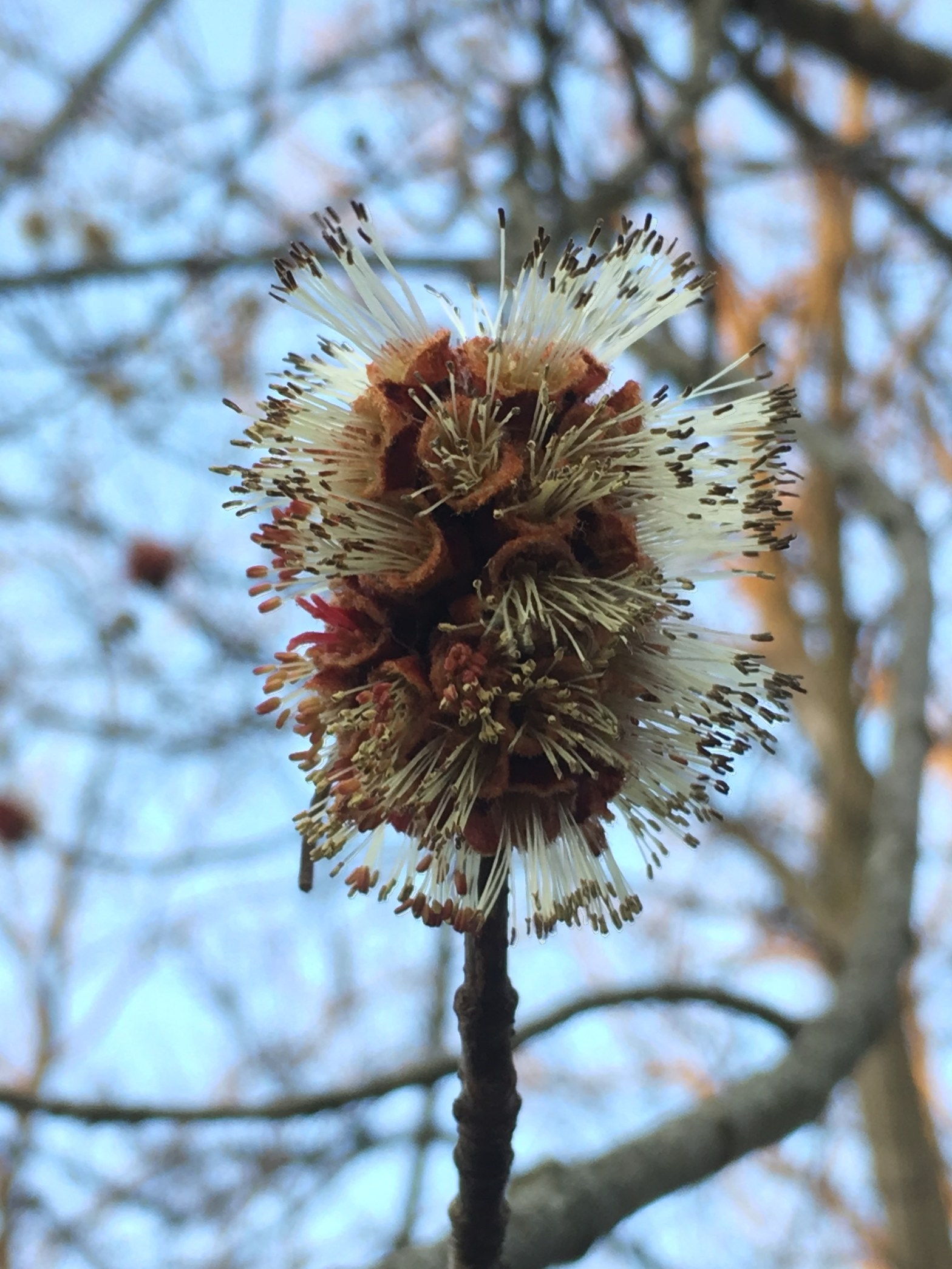
First, a quick explanation of the words in the title above: monoecious vs dioecious. Both of these differ from a third type of flower, the “perfect” flower, or bisexual flower which has both pistils and stamens (an example of this are elms, about which, more in another post). So in both monoecious and dioecious flowers there is some separation between pistil and stamen, between male and female parts. The difference is that if a species is monoecious both types of flowers, pistillate and staminate (female and male), occur on the same individual. Dioecious plants, on the other hand, have separate male and female individuals.
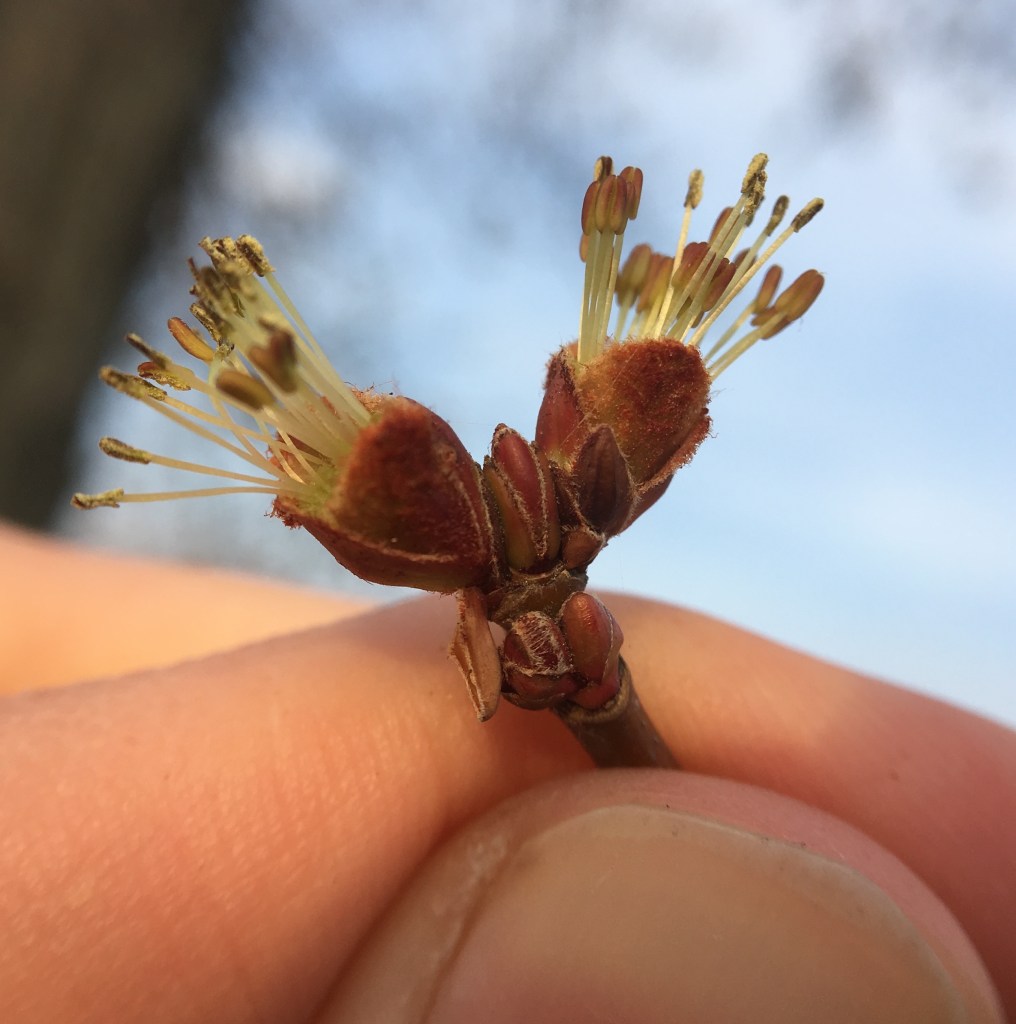
What’s interesting about maples is that they can be both. Most maples have a predominate sex, but you will often find on mostly staminate trees pistillate flowers, as below.
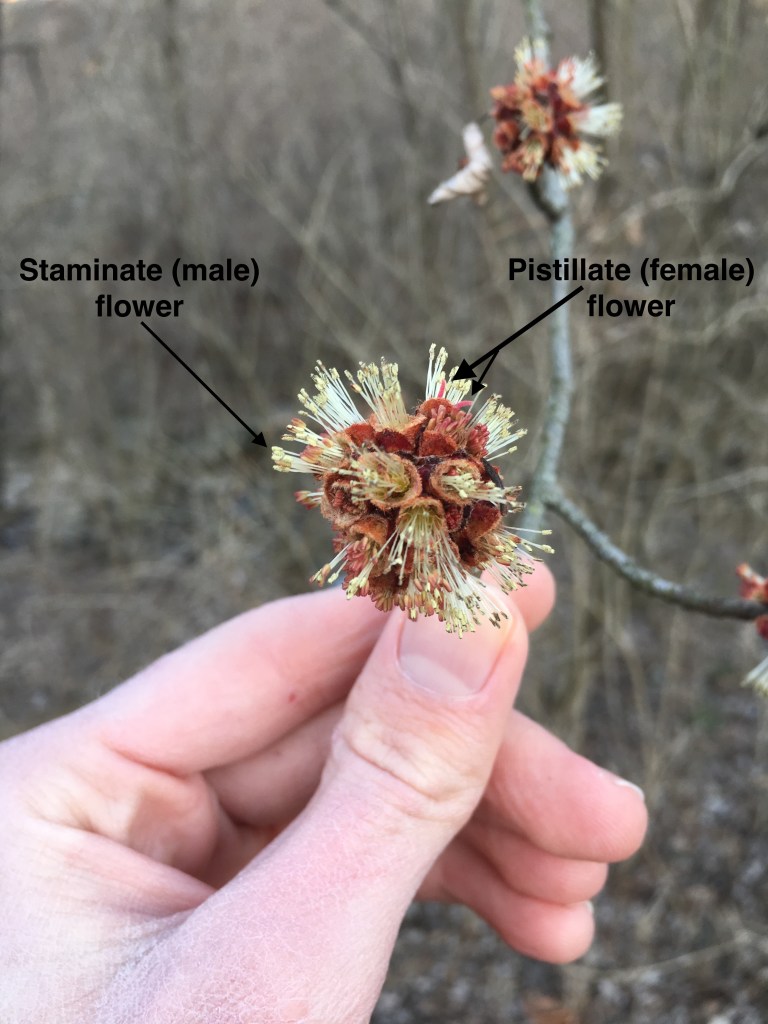
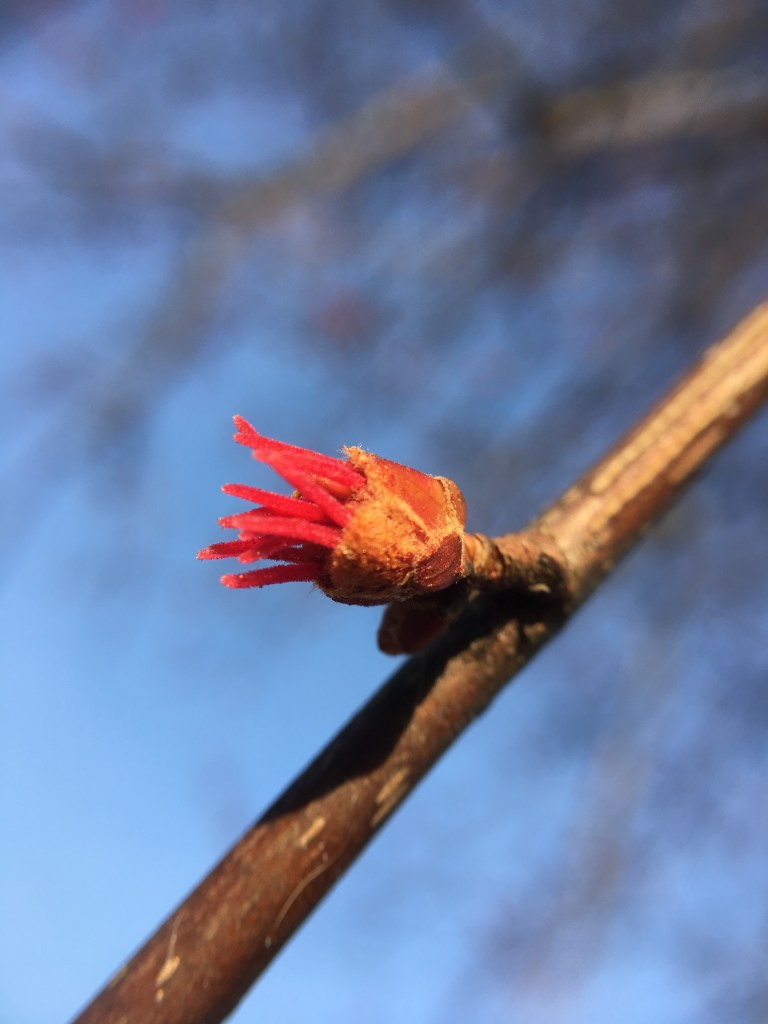
Dioecious individuals also exist, as for instance the pistillate flowers below.
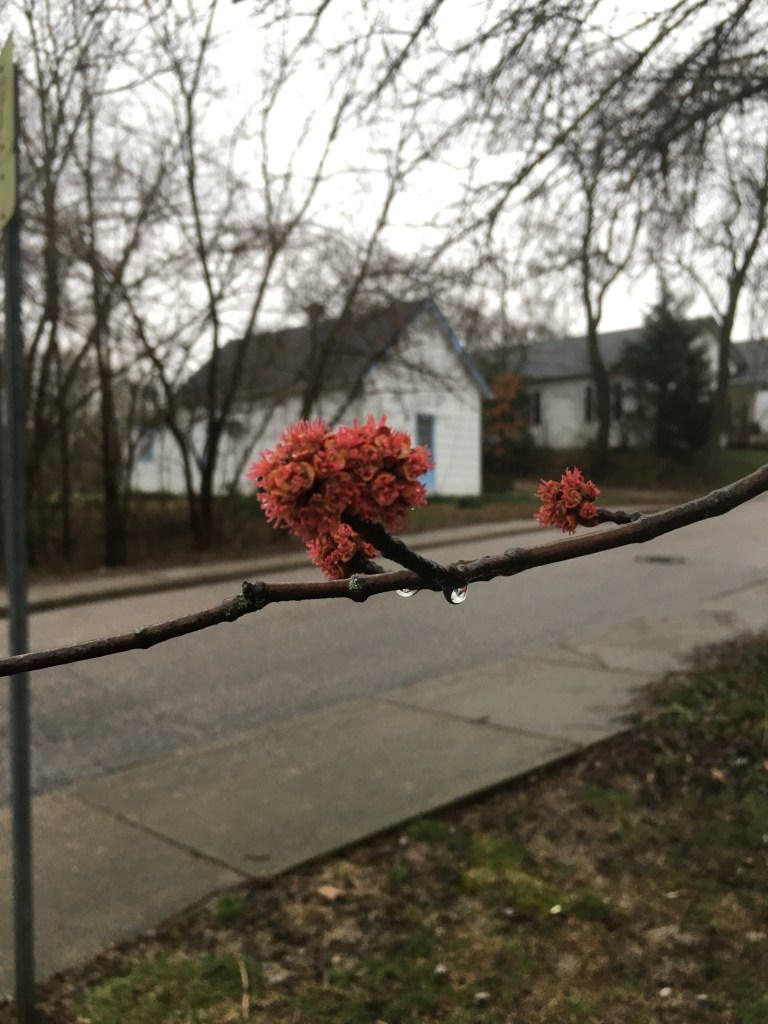
Maples pollinate via the wind so they have no need to attract insects, and hence no need for petals. Maple flowers are thus considered “incomplete” flowers. Here are a couple more pictures:
 recycled paper clips