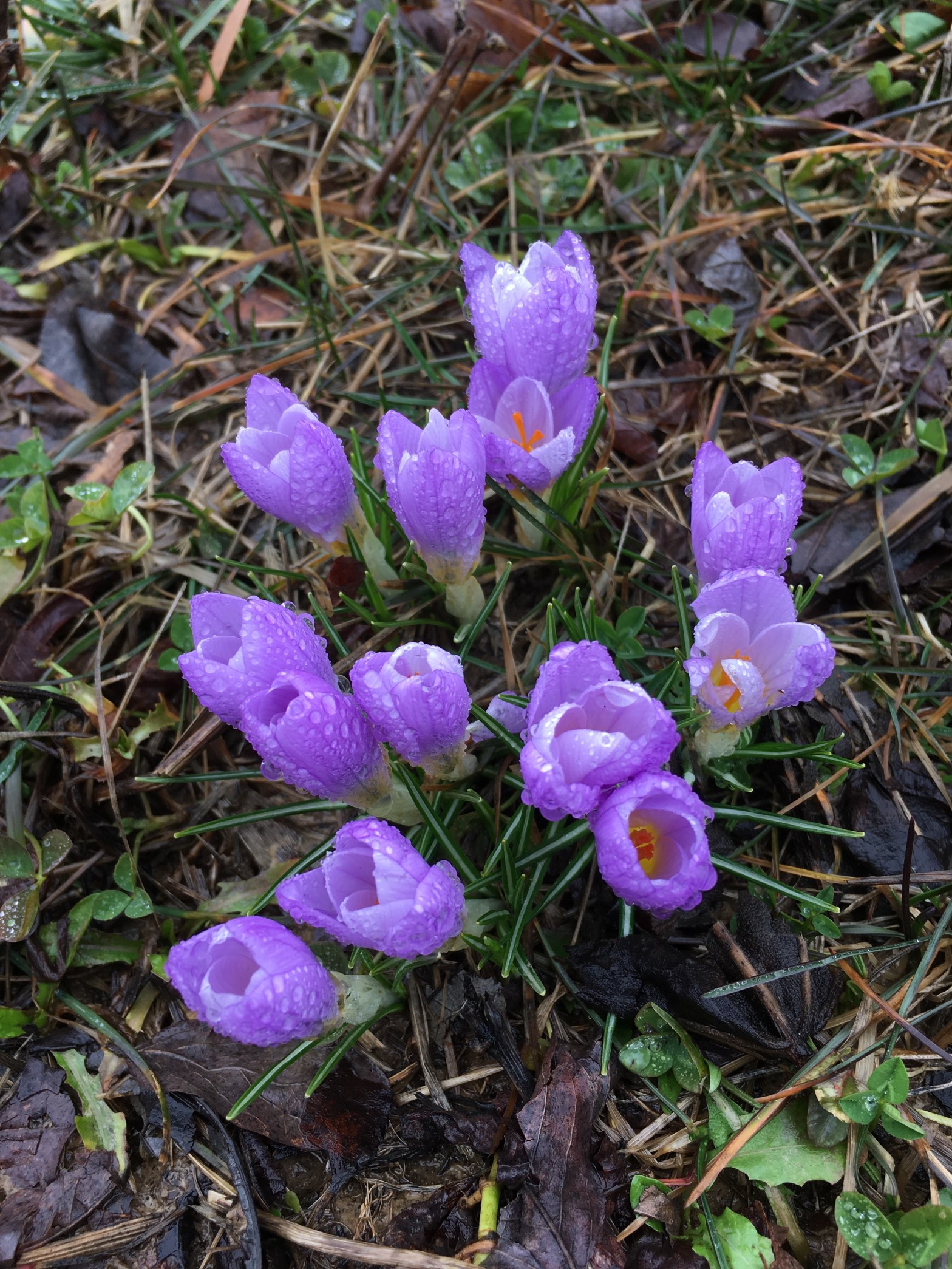
A week ago we had ten inches of snow. There’s still some snow left, piled up along the edges of parking lots, but that hasn’t stopped winter blooming species from taking advantage of the suddenly temperate temperatures.
Firstly, above, there are the Crocuses. Something I didn’t know about this genus is that the spice saffron is made from a type of Crocus, and that the name Crocus ultimately links back through Greek and Hebrew to the Sanskrit word for saffron1. I am guessing that the crocus above is Crocus vernus, which is native to the Alps, Pyrenees and Balkans, and which cannot be made into saffron 😦
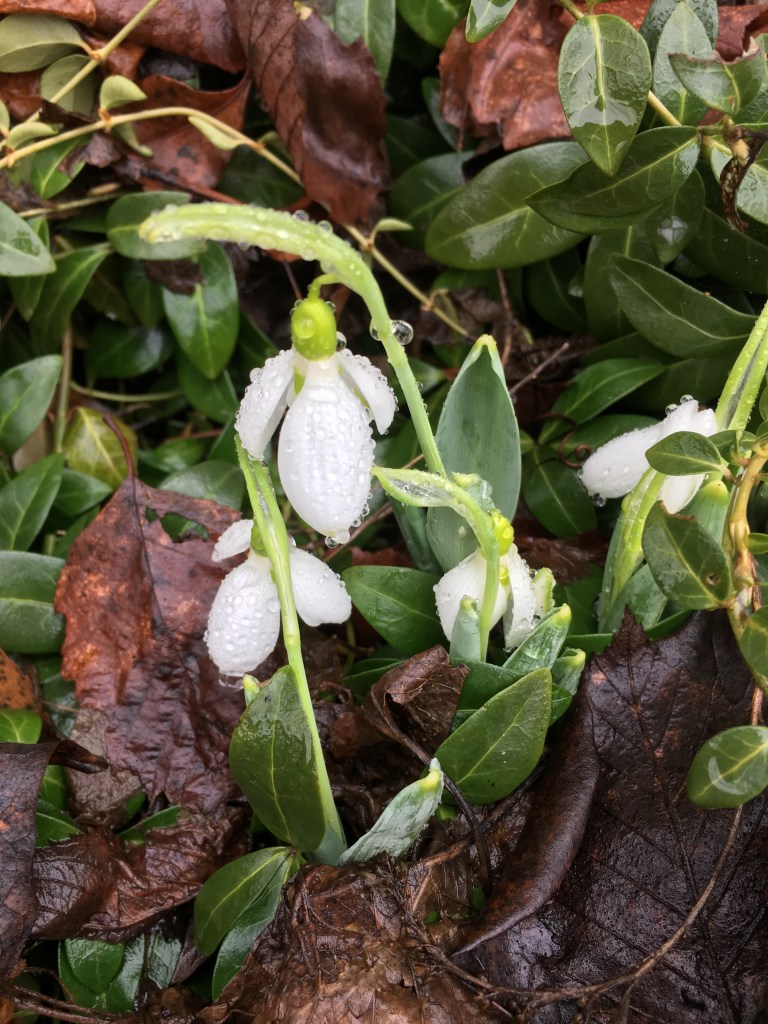
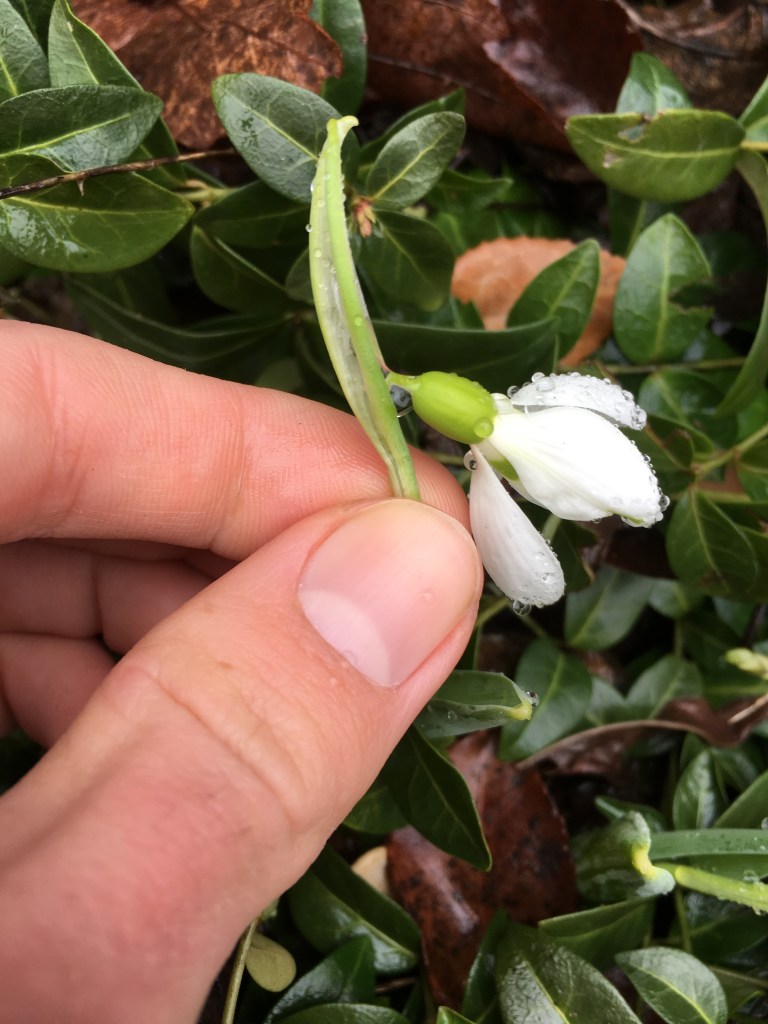
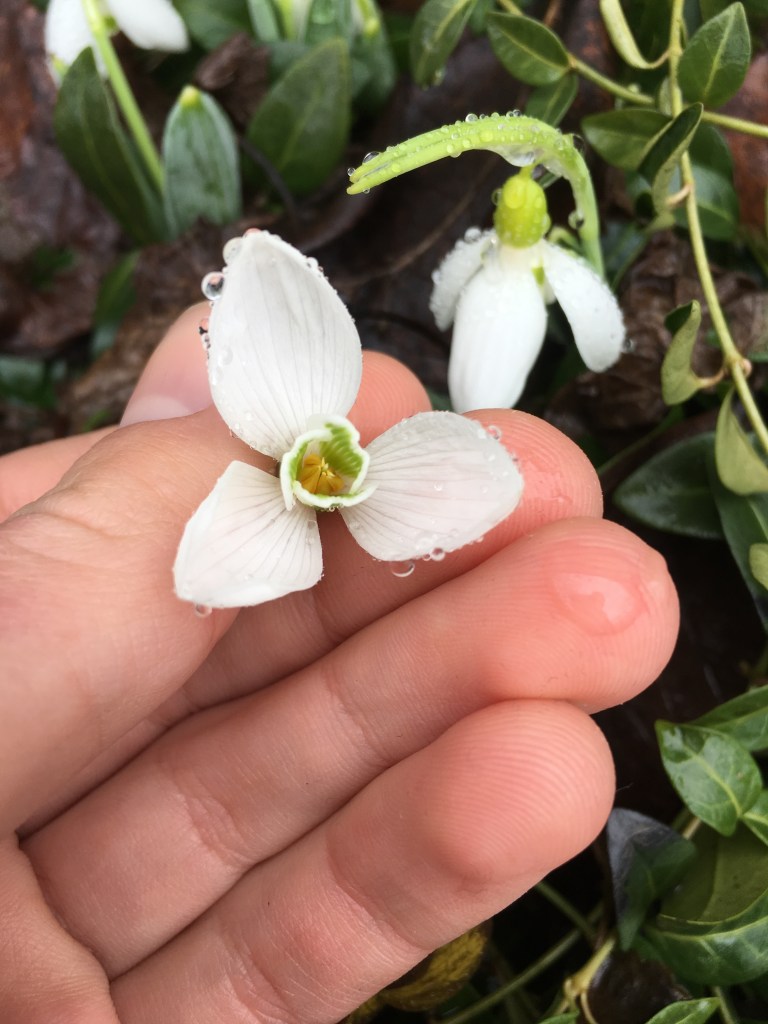
I believe this (below) is the greater snowdrop, Galanthus elwesii, which is a native of the Caucasus, although I’m not 100%. The main other candidate would be the Common Snowdrop, which is interesting in that it contains the chemical Galantamine which is used for “treatment of cognitive decline in mild to moderate Alzheimer’s disease and various other memory impairments.”2 Basically, galantamine increases the availability of acetylcholine, which, as I’ve been learning in my Speech Anatomy class, is a neurotransmitter associated with muscle firing. It must also be involved in memory though, I’m not quite sure how. Anyways, it’s an aptly named flower.
Lastly, what I initially thought were buttercups have sprung up.
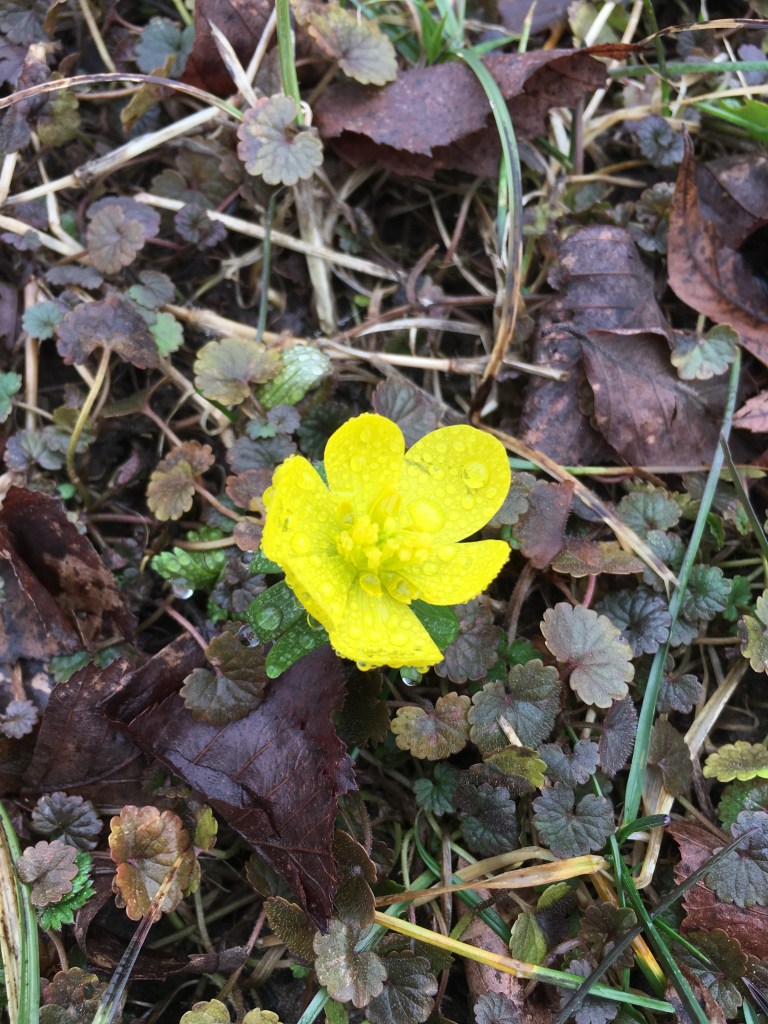
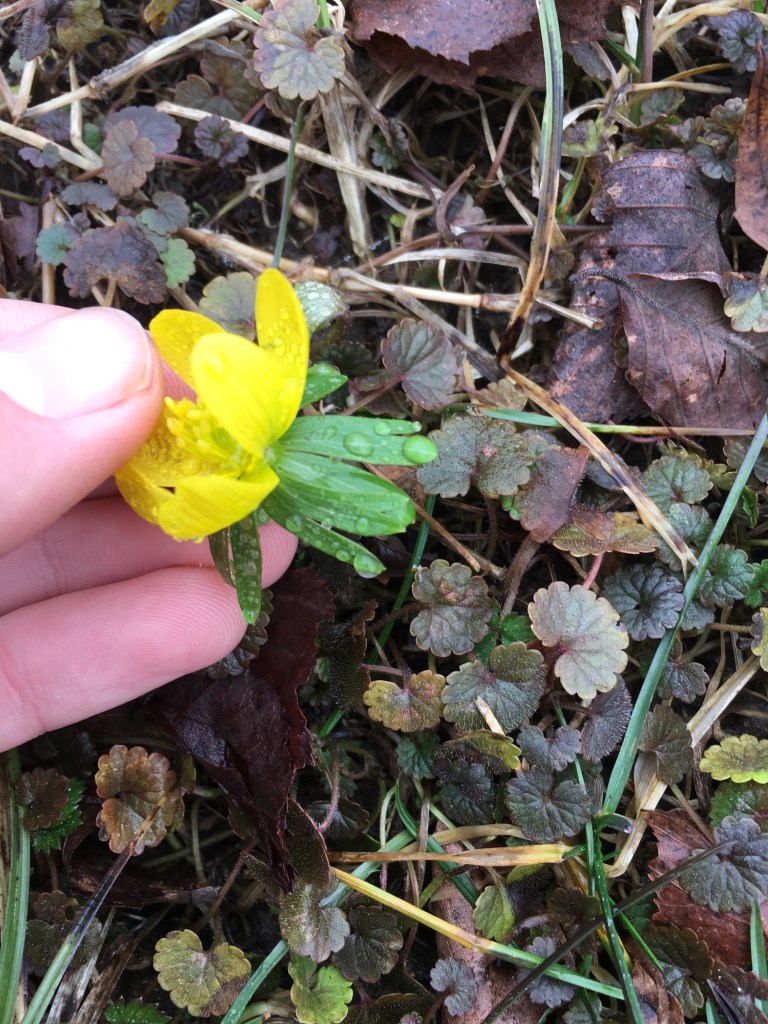
It turns out after closer inspection however, that the leaves do not match those of buttercups. Rather, this is a closely related species called Winter Aconite. It is in the same subfamily as buttercups, but a different genus. Like buttercups though, all parts of the plant are poisonous.
 recycled paper clips