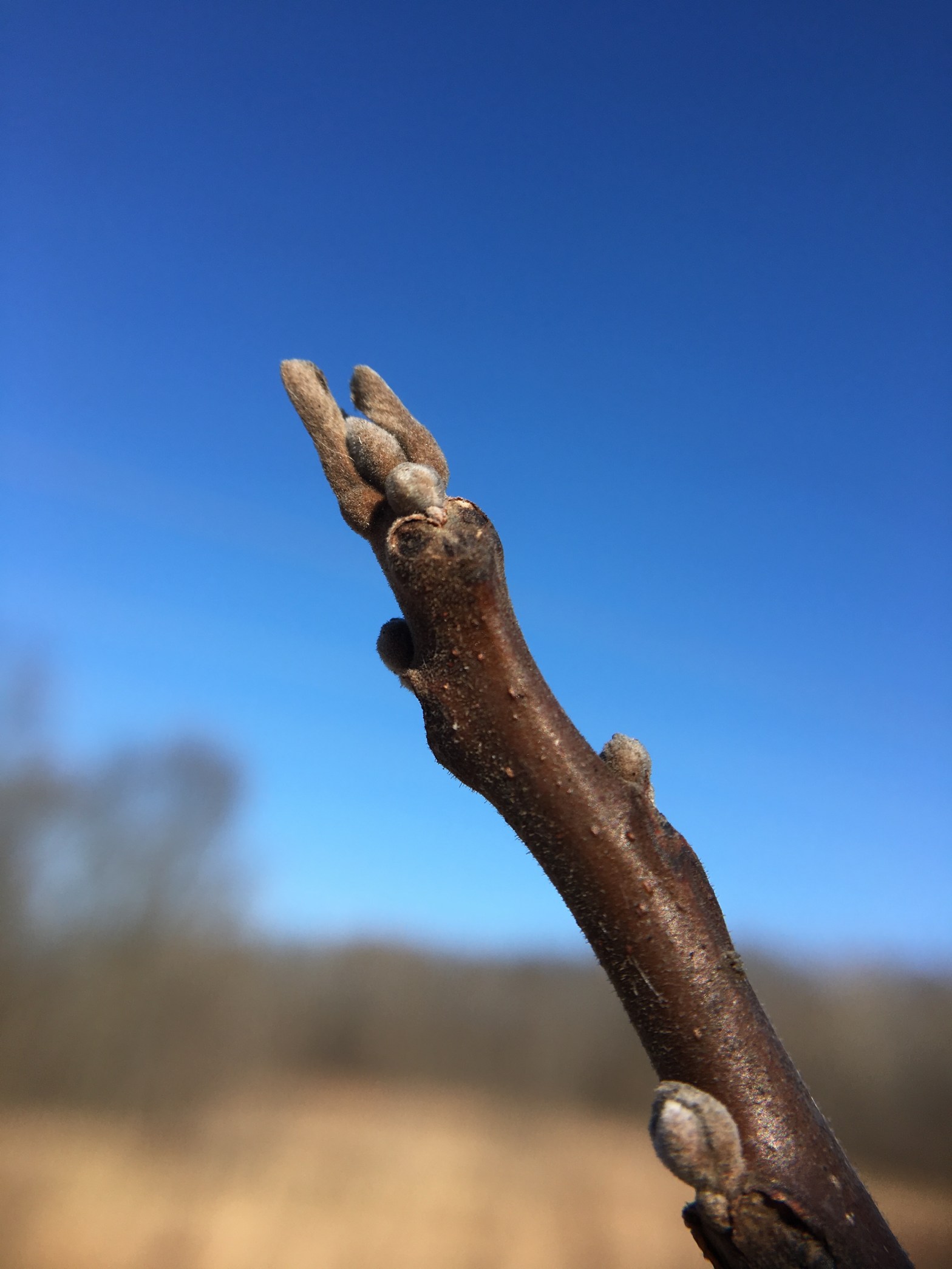
The walnut family, the Juglandaceae, have large, fuzzy buds (at least the ones in Indiana). I could be wrong, but I bet there’s a connection between the typically large, almost floral buds of walnuts and hickories and the fact that these trees have large, compound leaves—Black Walnut leaves can be up to 2 feet long, for instance.
You may be wondering where the name Juglandaceae comes from. I believe it comes from, or is at least related to the compound juglone, which is an allelopathic compound occurring naturally in walnuts. (Allelopathy, in case you missed my post on Garlic Mustard, is when plants produce biochemicals which influence the growth of other plants. In the case of juglone, it stunts the growth of other plants thus giving the walnut a competitive edge. In fact, it is sometimes used as a herbicide.)
The picture at the top shows the bud of a Black Walnut. It’s extremely stout and blunt, which is befitting the character of this tree. Walnuts are great trees for many reasons. One is their dark, rough, chocolaty bark.
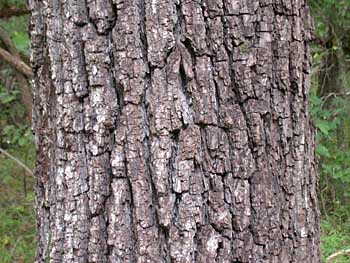
If you scrape the outer bark with a knife, you can reveal a beautiful chocolate brown inner bark.

Another thing I like about walnuts is the almost citric fragrance of their leaves. Based on appearance, black walnut leaves could almost be confused with Tree of Heaven. Both have large compound leaves. But in terms of scent, they are on opposite poles. (For more about Tree of Heaven and its scent see here.)
Lastly, walnuts are almost the last tree to leaf in Spring. Last year, they did not leaf around here until mid to late May. So there’s a little extra suspense, and then when they do leaf out there is a great contrast between the bright green of the new leaves, and the dark brown of the bark (which I tried to capture in the picture below).

Moving on to some other trees in the Walnut family. There is the Shagbark Hickory, which you probably don’t need the buds to identify, but which has interesting buds nonetheless. To me, they have petals like a flower
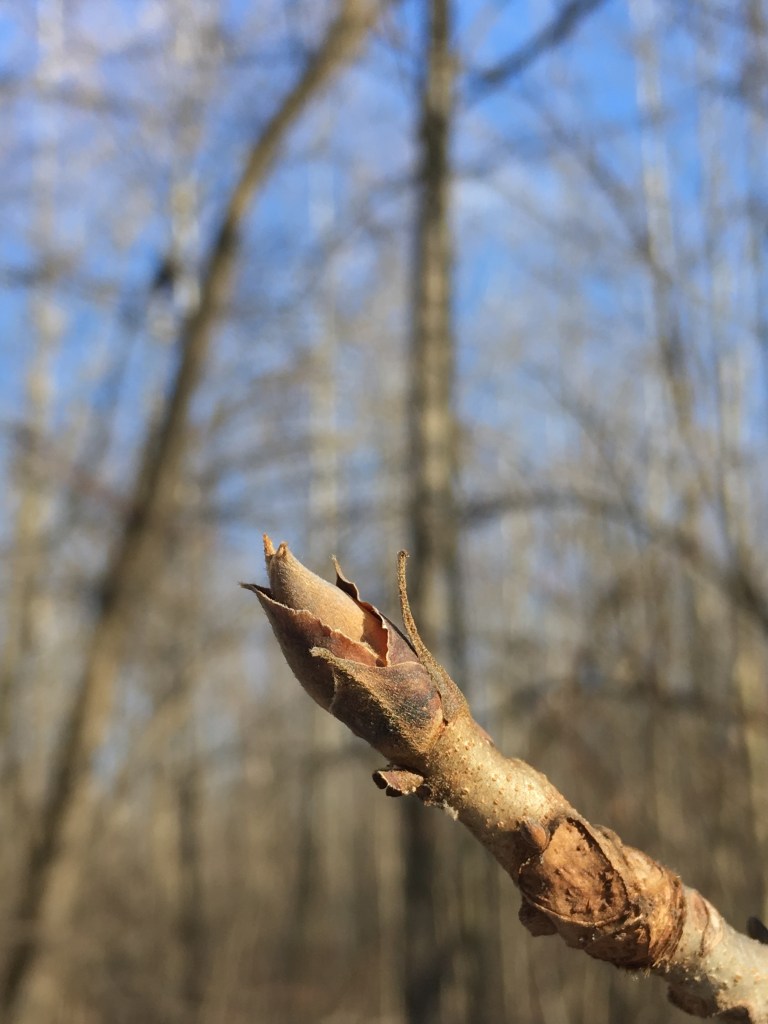
Notice also the large, triangular leaf scars.
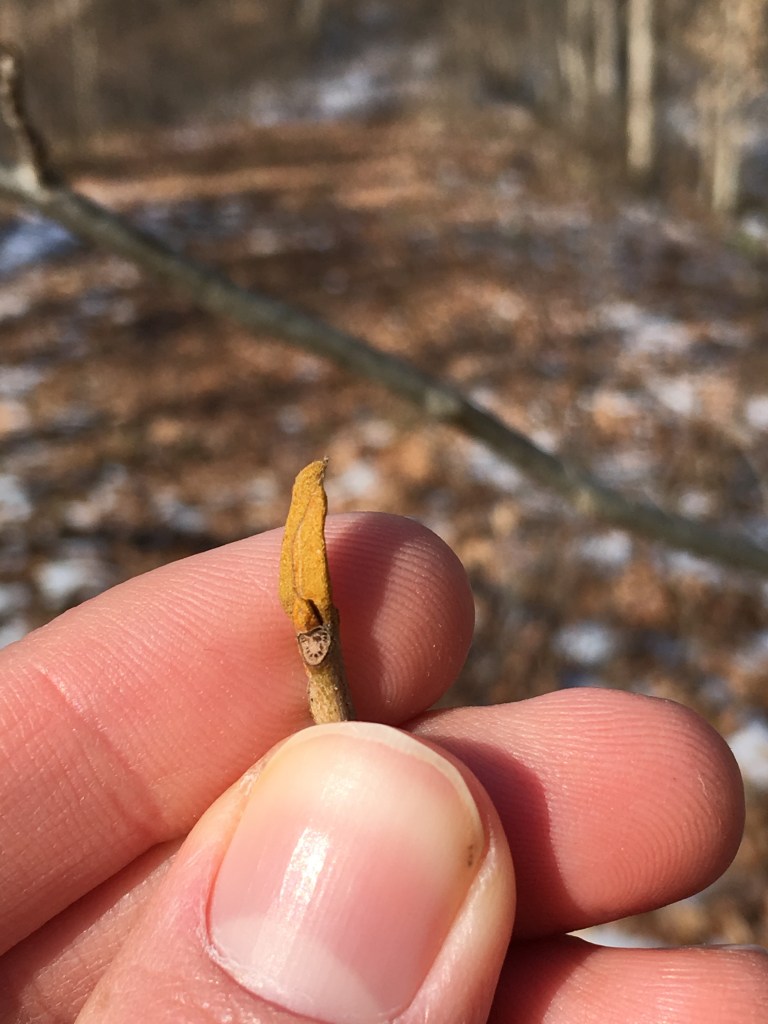
And I’ll end with the Bitternut hickory, which I have talked about before, but also belongs here, alongside its cousins. I think the name “Sulfur Flame hickory” would be apt.
 recycled paper clips