Tomorrow, SB 389 will be heard by the Indiana Senate Environmental Affairs Committee. The bill would categorically eliminate protection for state wetlands by repealing the 2003 state wetlands law. For the past 17 years, whenever a project is planned that will impact a state wetland (otherwise known as an “isolated” wetland, as opposed to a federal wetland) the project must get a permit certifying that it will not violate water quality or aquatic resource protection requirements. Most wetlands in Indiana are state wetlands, not federal, which means that SB 389 would leave the majority of Indiana wetlands unprotected.
What has changed in 17 years that suddenly Indiana wetlands are not worth protecting?
Hopefully, SB 389 will go nowhere. Although it is not apparent today, Indiana was once much more marshy than it is now. A perfect example of this was the draining of the Kankakee wetland in Northeastern Indiana to produce the arable farmland you see today. The Kankakee river was once 240 miles long (today it is 133) and drained one of the largest wetlands in Northern America, known as the Kankakee Marsh1.
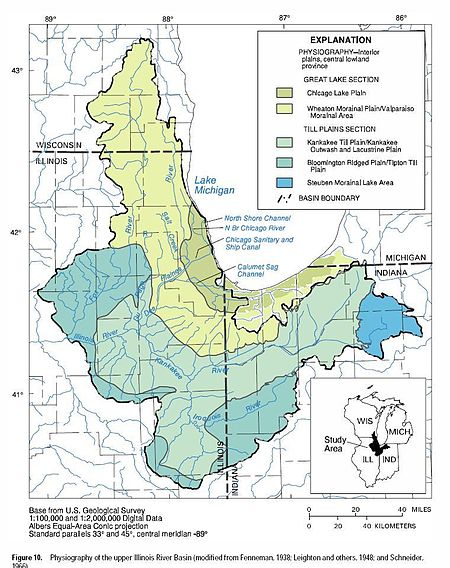
What remains of this marsh are a few nature preserves, including the Chamberlain Lake Nature Preserve, the Dunes Nature Preserve, and the Springfield Fen Nature Preserve.
In it’s typically understated fashion, the Indiana DNR states, “Thanks to glacial activity, we were endowed with thousands of lakes, ponds, marshes, swamps and peat bogs” (https://www.in.gov/dnr/naturepreserve/7384.htm, emphasis mine). Those had to go to make room for corn. That story is already history, which hopefully SB 389 will never become.
For more info see:
- https://www.hecweb.org/bill-watch-2021/
- http://iga.in.gov/legislative/2021/bills/senate/389#document-30553ae8
- https://www.in.gov/idem/wetlands/2343.htm
 recycled paper clips