Not a clear theme for today, just thought I’d share some of the things I’ve found.
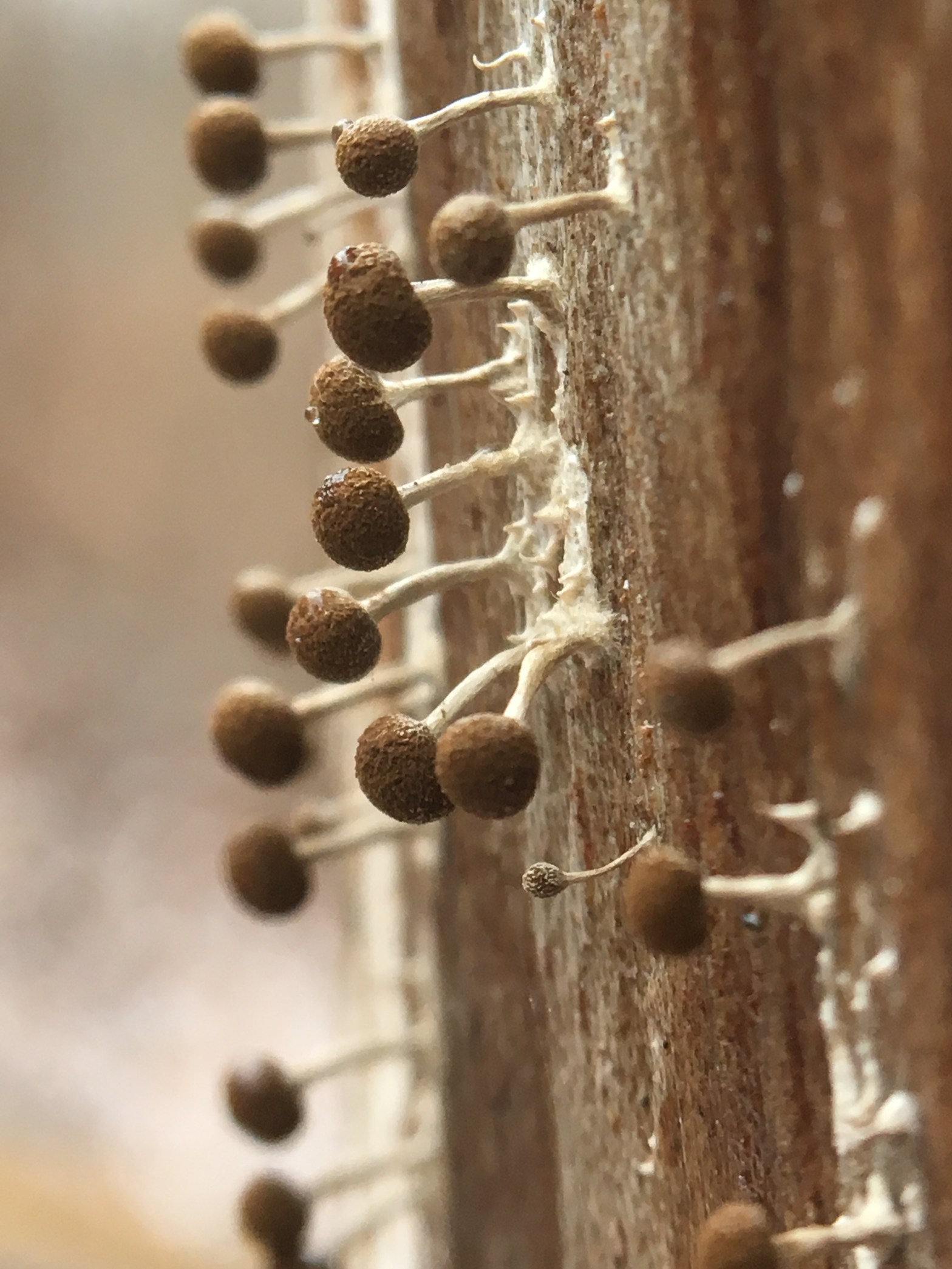
The featured picture above is some kind of slime mold, probably unidentifiable. It was growing from a dead elm tree, with the bark peeling off. I’ve actually seen these structures on a couple different dead elm trees so I wonder if it goes hand in hand with one of the typical elm diseases.
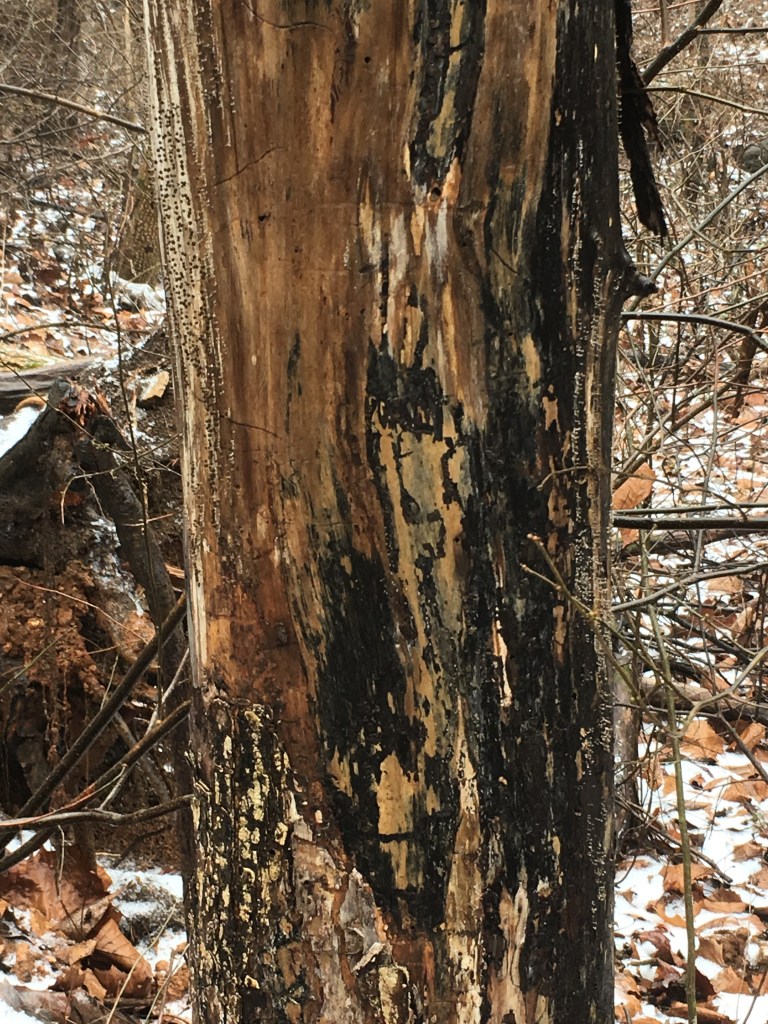
On the same hike I found these:

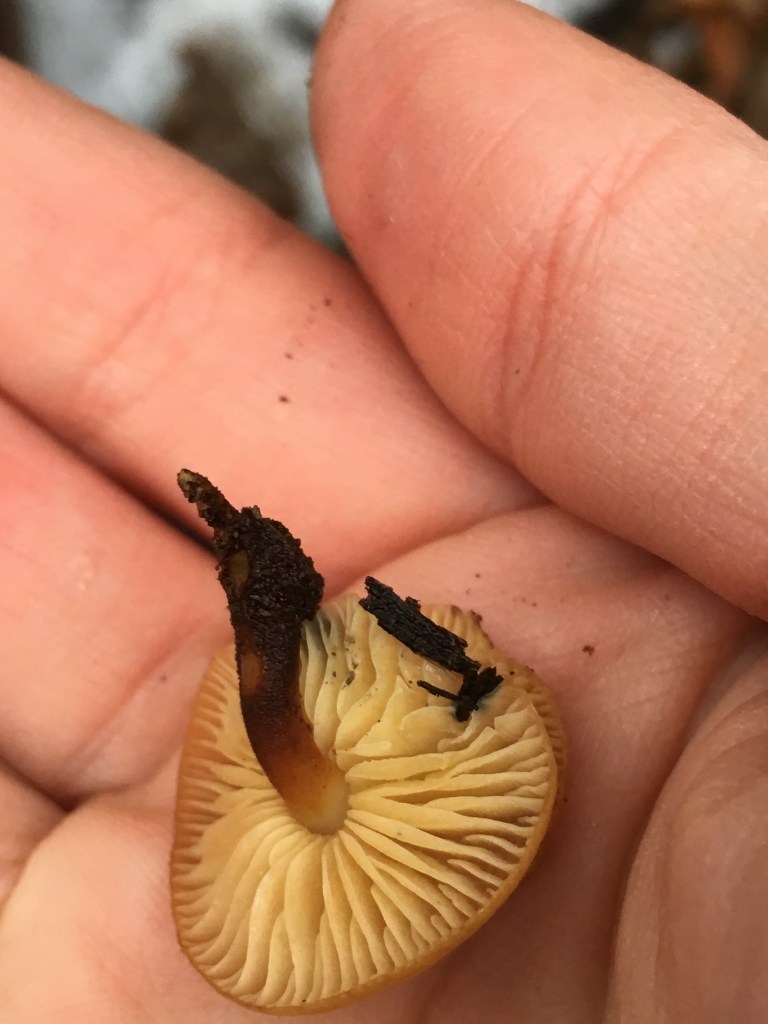
This is “Velvet Foot” or Flammulina velutipes. A cultivated form of this mushroom which has not been exposed to light is known as enoki, which you might know from its role in Japanese cuisine, and its reported anti-cancer properties.
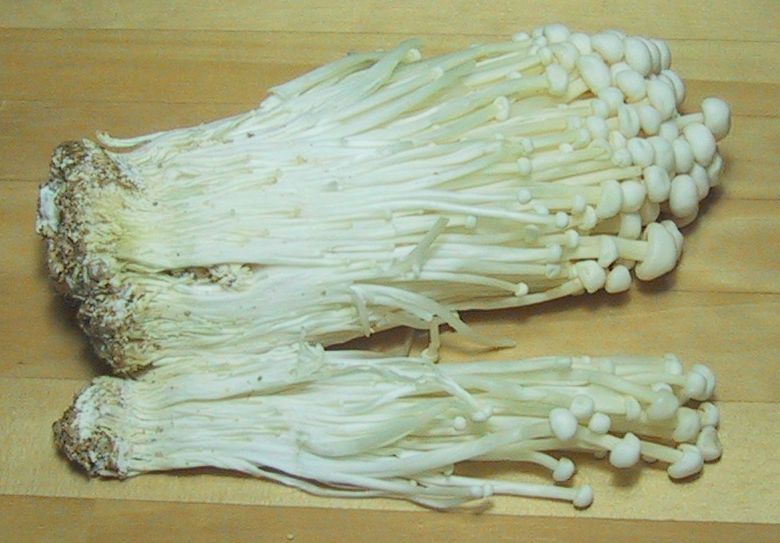
Just like with wild chicory vs. cultivated endives, it’s amazing the different forms species can be tricked into taking. Flammulina velutipes can be distinguished from numerous other small brown mushrooms (some of which are deadly poisonous) by its stem which turns dark and velvety with age, by its white spore print, and by the absence of any sort of ring on the stem.
The mushrooms below are “bonnets” or members of the genus Mycena.
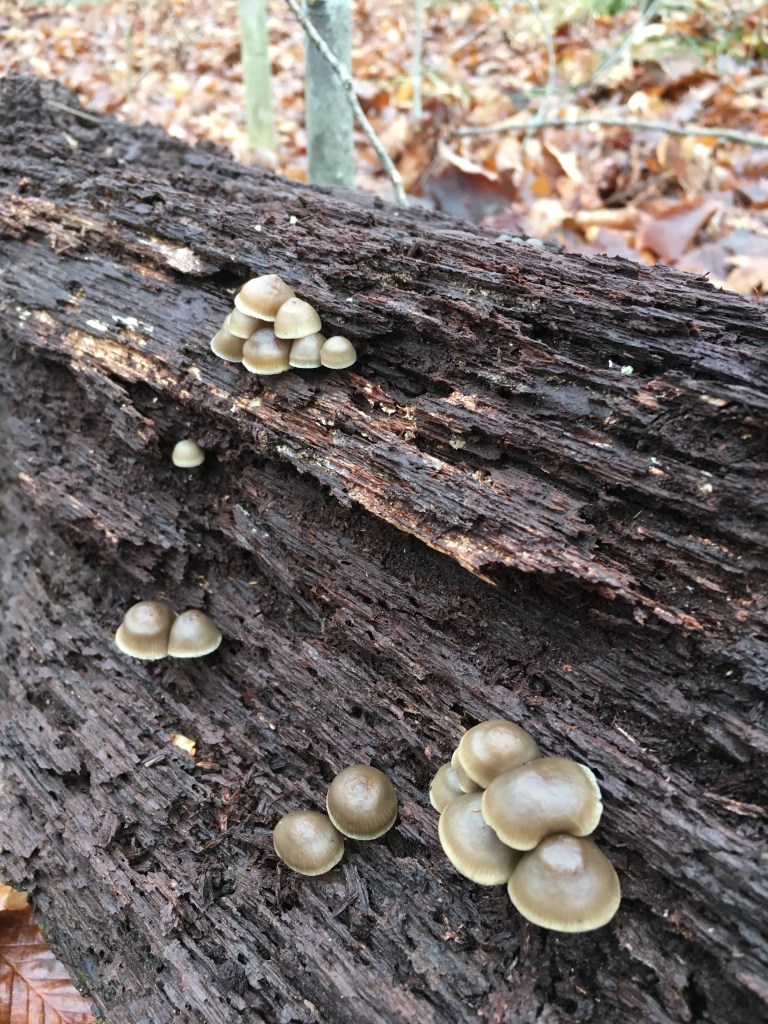
With the exception of the Orange mycena (Mycena leaiana) below I find this group of mushrooms difficult to distinguish.

It doesn’t help that, in the words of mushroom expert Michael Kuo:
“Truth be told, both Mycena inclinata and its close look-alike Mycena galericulata [two candidates for the grey bonnets above] are European species whose presence in North America is debatable, and North American mycologists have tried over the years to fit their collections into European descriptions, often having to adopt a “best-fit” sort of attitude.”
Michael Kuo, https://www.mushroomexpert.com/mycena_inclinata.html
So I am just going to call them “grey bonnets” and leave it at that.
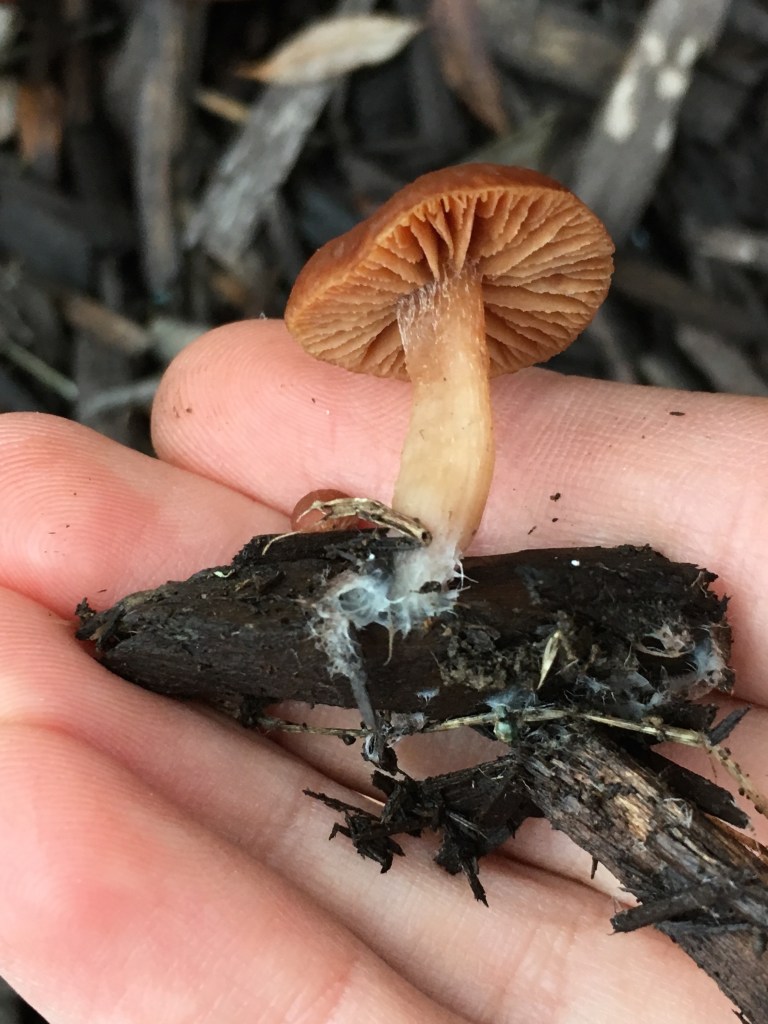
And lastly, for today, yet another species of mushrooms has sprung up in my flowerbed wood chips (this brings the yearly total to four, I believe). This time it looks like Tubaria furfuracea or “Scurfy twiglet” (no, that is not a typo). “Scurfy” from “scurf” meaning:
1: thin dry scales detached from the epidermis especially in an abnormal skin conditionspecifically: DANDRUFF
2a: something like flakes or scales adhering to a surface
https://www.merriam-webster.com/dictionary/scurf?src=search-dict-hed
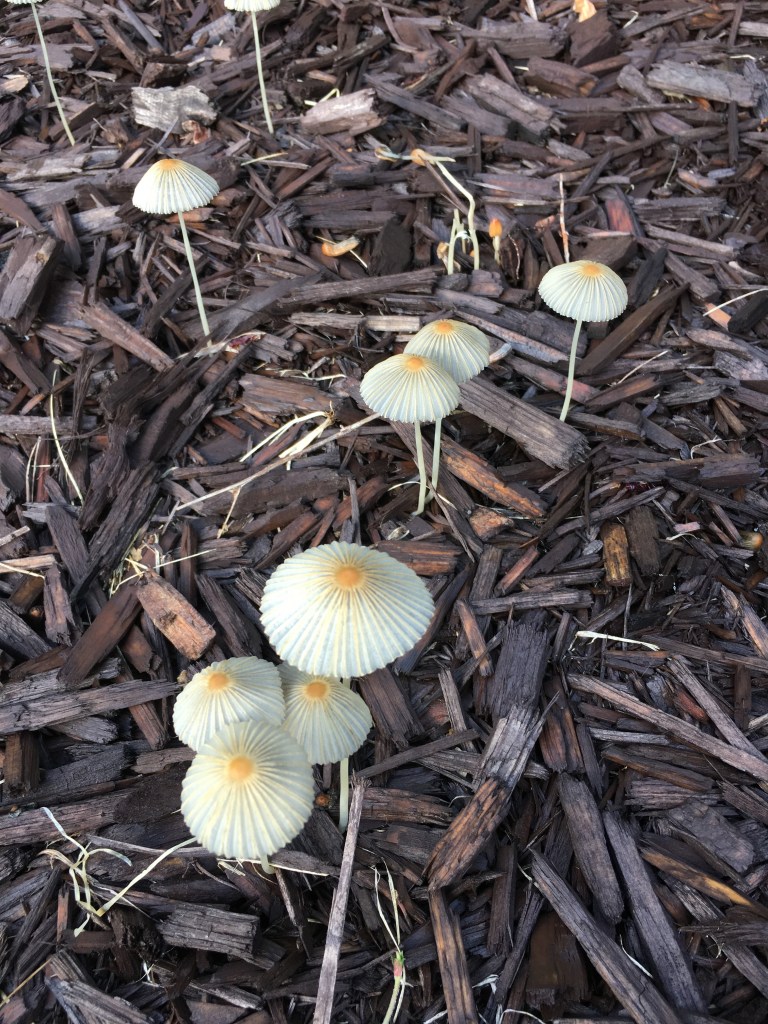
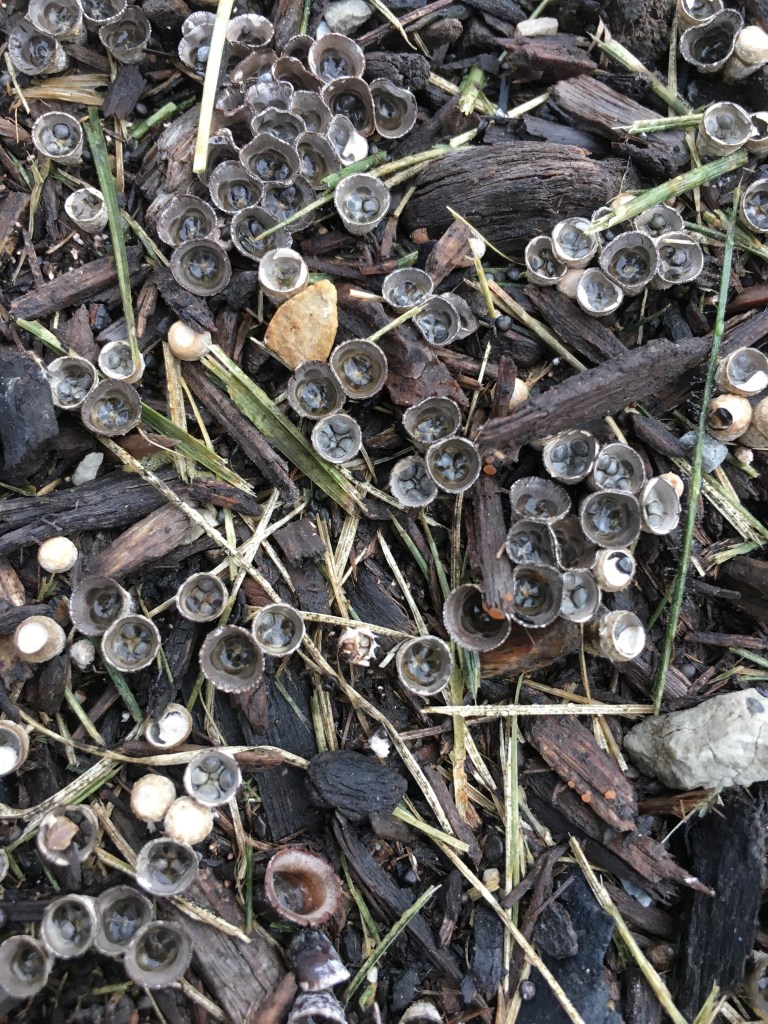
So Tubaria furfuracea is a mushroom characterized by white flakes or scales on the cap, its preference for wood chips (as opposed to logs), its ochre (as opposed to dark brown) spore print, and the fact that its cap is hygrophanous, meaning it changes color as it absorbs or loses water. (Scurfy twiglet is on the left below, the other two pictures are from last year in the same place).
 recycled paper clips

Gorgeous fungi pictures!
LikeLike