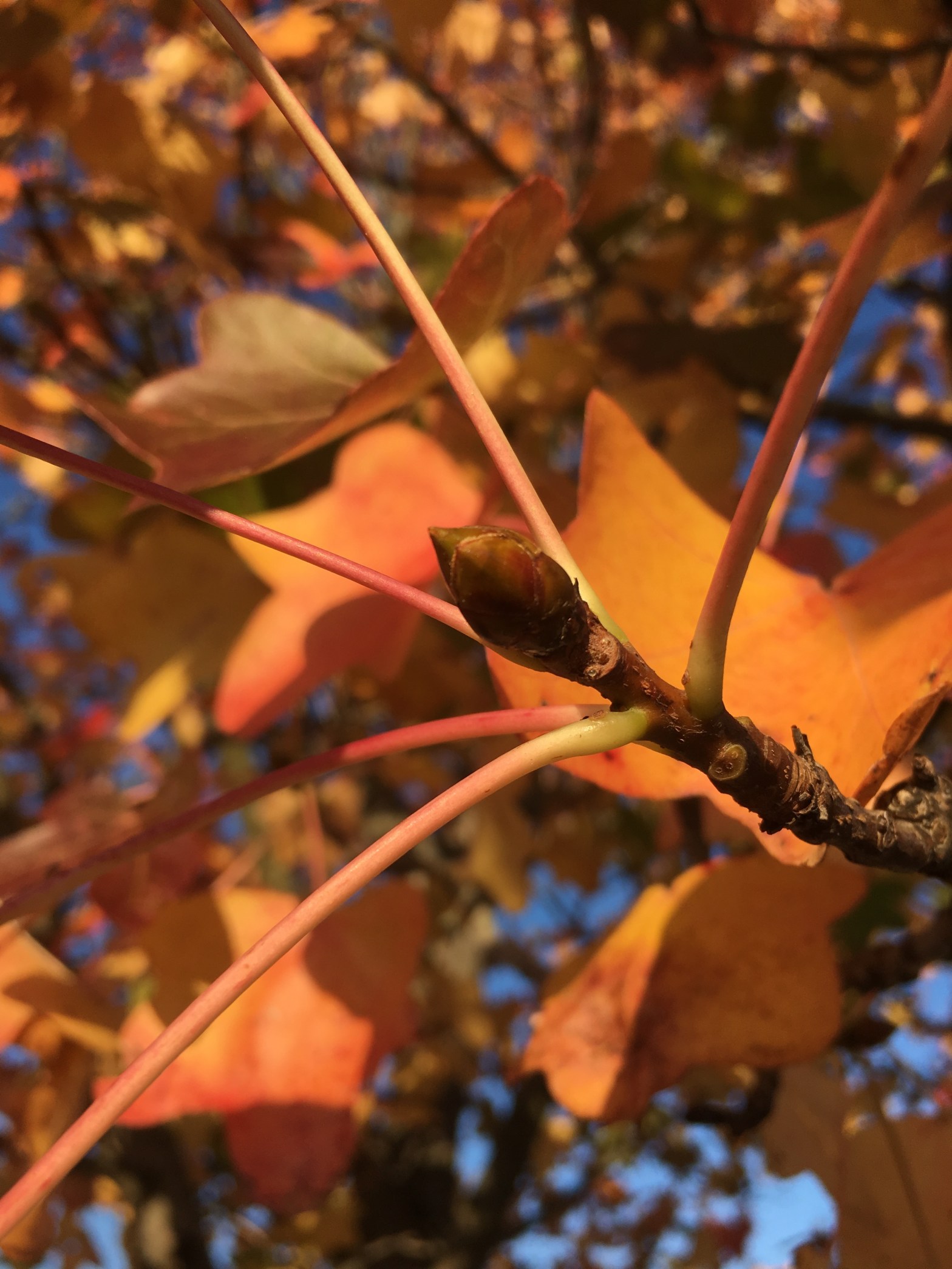
I’ve written before about using bark to identify trees in the winter, but sometimes bark can be ambiguous and it helps to have another tool up your sleeve. Knowing a bit about buds just gives you that much more evidence to go on.
One of the first things looking at buds will tell you is whether a tree has alternate or opposite leaves. Knowing just this one fact can help you rule out a lot of options. In the Midwest, a common mnemonic for remembering the trees with opposite branching is “M.A.D. Buck” which stands for Maple, Ash, Dogwood, Buckeye. Let’s check out a couple of these:
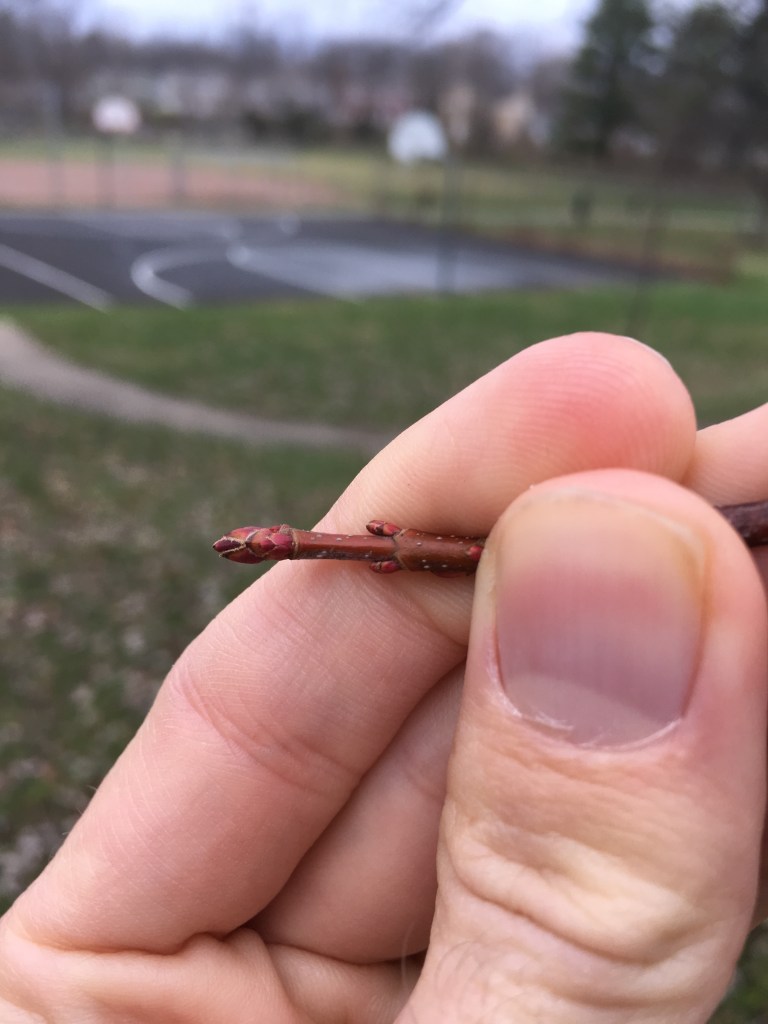
Notice that buds are oppositely arranged, they are also somewhat rounded, small and slightly hairy. All this adds up to…Red Maple.
The tree below could easily be confused with a sugar maple, judging by the leaves still left on the tree.

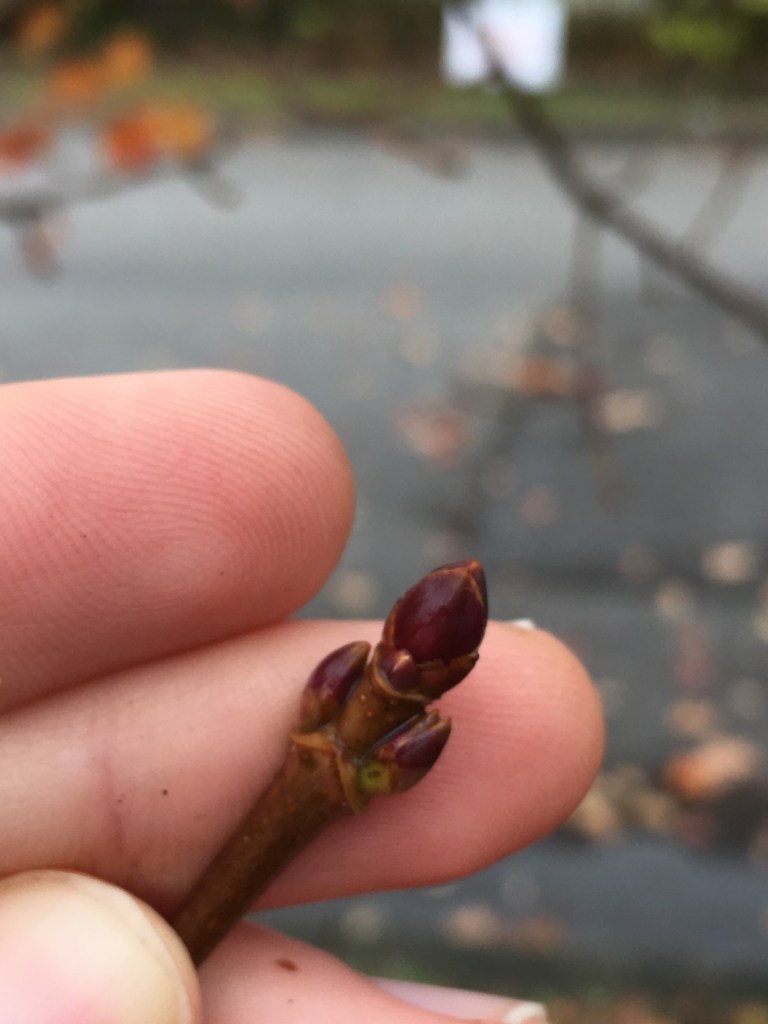
But the buds tell a different story. Whereas sugar maple buds are brown and sharply pointed, these are fatter, redder and shinier. There’s no mistaking the Norway Maple.
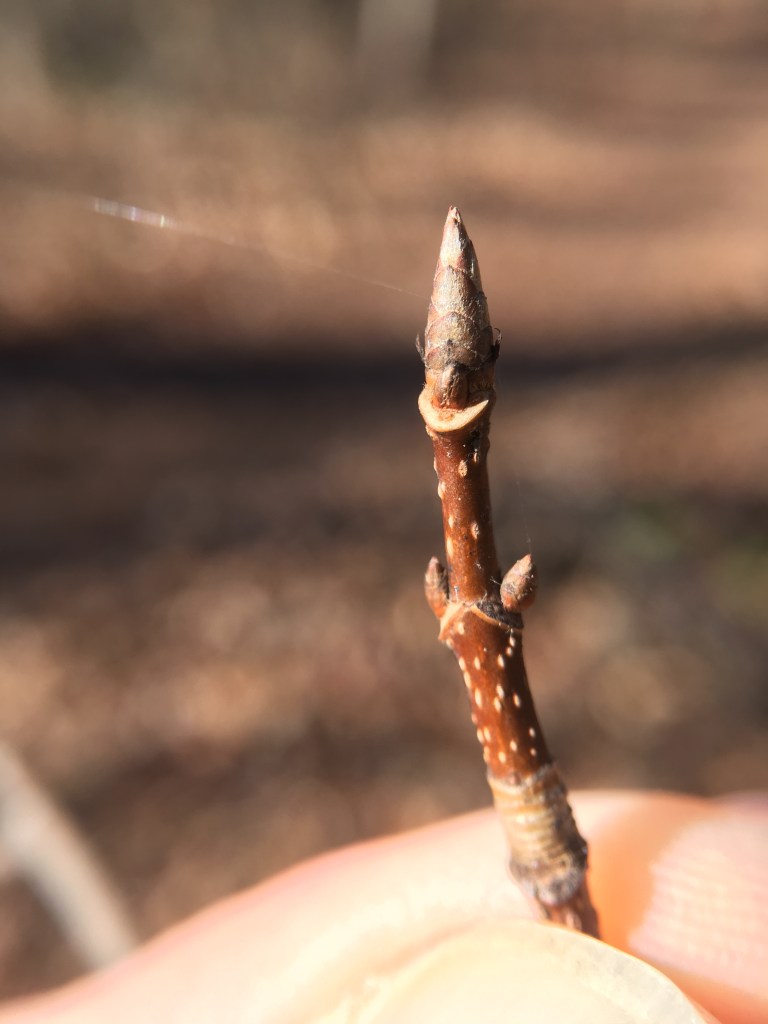
This, in contrast, is sugar maple:
Another opposite brancher is Flowering Dogwood, which has very cool looking twigs. There are two types. The buds that will become the flowers, which look like little purple-green mushroom-domes, and the buds that will become leaves, which are small pointy and lilac.
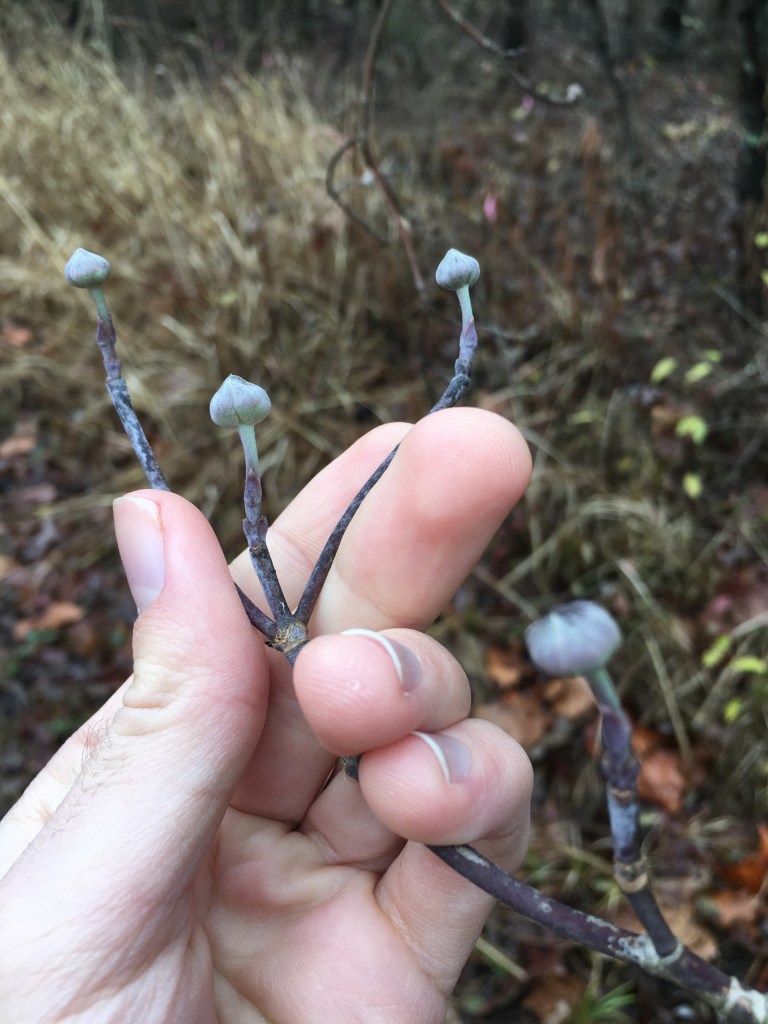

While not every tree has as clear a distinction between its flowering buds and its leaf buds as Flowering Dogwood has, it’s important to keep in mind that one tree has multiple kinds of buds, depending on their eventual function. Consider this American Elm branch for example:
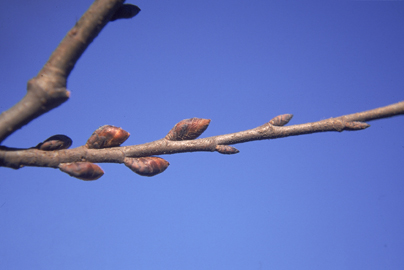
The buds closer to the tip are smaller and pointer—they will become leaves. Further from the tip they are bigger and rounder, they will become flowers. So before identifying a tree based on its buds, know what kind of bud you are looking at. Most commonly guide books will use the terminal bud (the bud at the very end) as a standard point of reference.
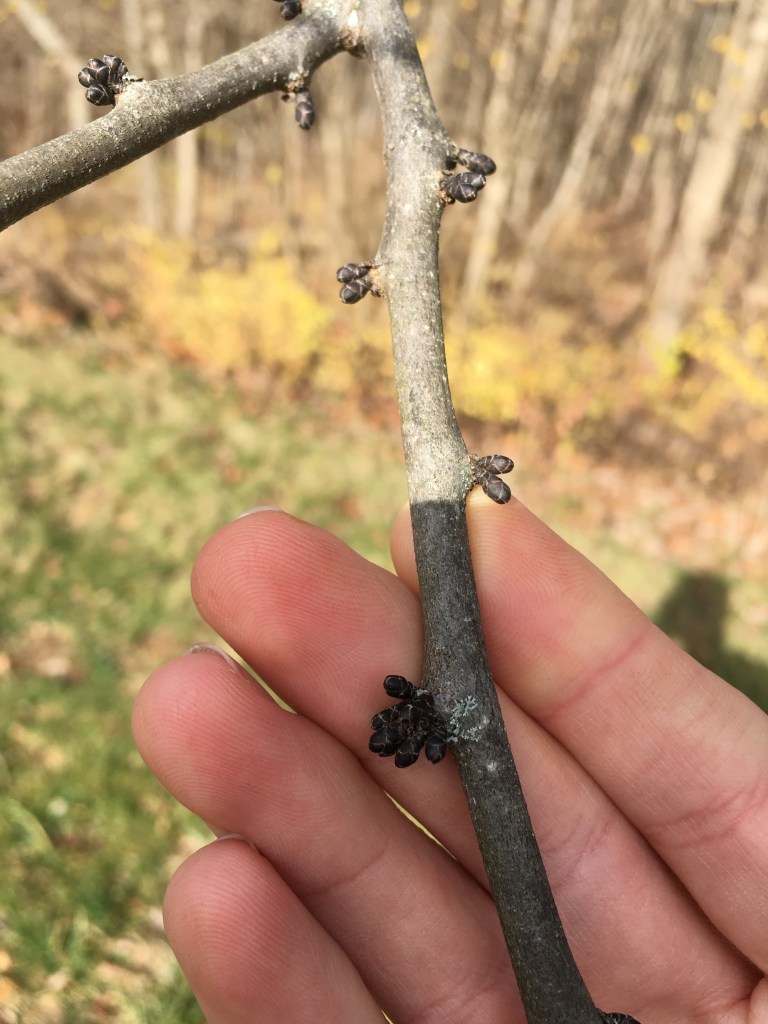
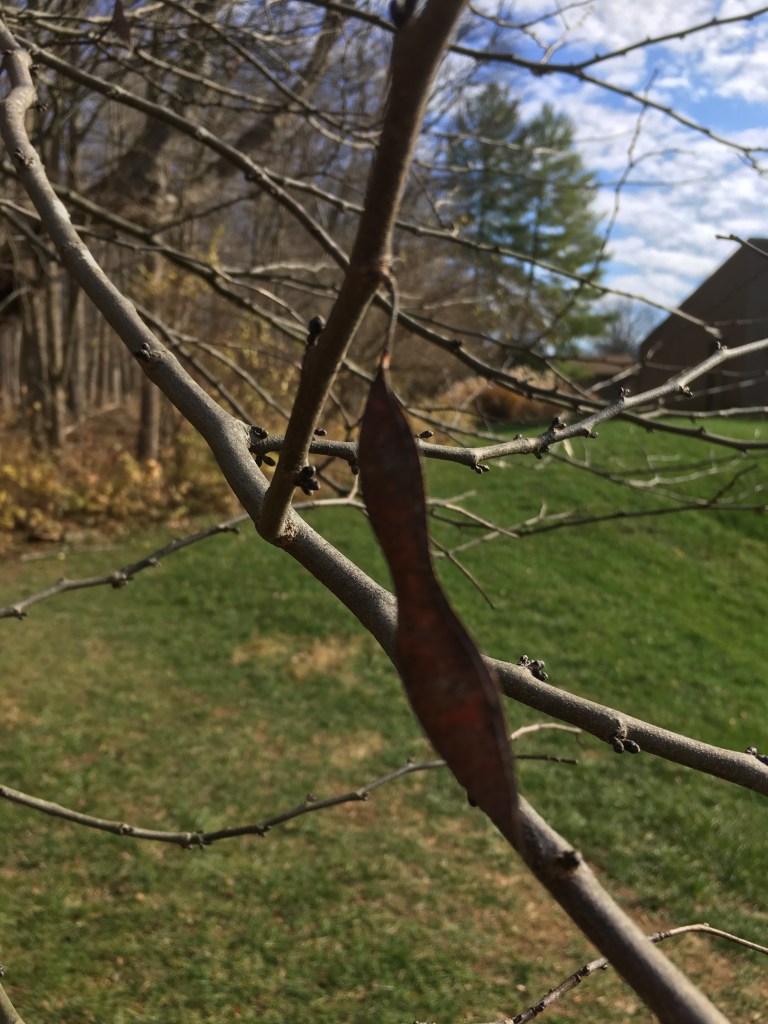
When it comes to alternate branching trees, there’s a lot more to choose from. For now, let’s just take a look at the tree with “bud” in its name: The Eastern Redbud. This time of year the buds are not particularly red, but they will become more so when we are on the other side of winter, heading in to Spring. For now, the presence of the seedpods makes identification a little easier.
 recycled paper clips