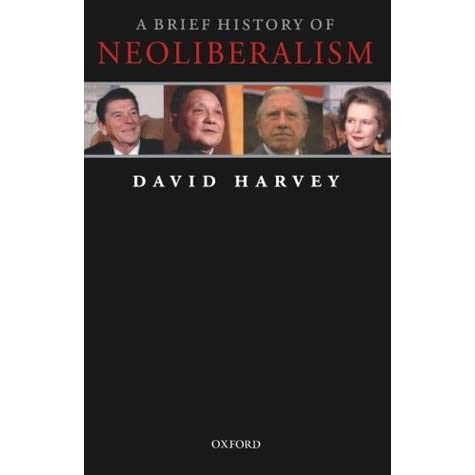
David Harvey sheds light on a question I have asked before on this blog in connection with Peter the Great: Why do we obey? Or rather, why do people sometimes act against their own best interests? Why do the many “let” the few take advantage of them?
This question is perhaps not as mysterious as my own cognitive biases make it seem. As a product of Protestant America, perhaps I see the individual as more individual than he/she really is. Furthermore, I tend to favor explanations resting on raw, concrete facts or the brute power of tangible resources. I tend to see ideology as following and justifying, rather than as leading material interest.
And yet, as both the reign of Peter the Great and US history since Reagan show, people act against their own interests. The Rust Belt, for example, votes overwhelmingly for the very people who destroyed their unions and outsourced their jobs. Why? Harvey’s answer is that ideology is a lot more powerful than I would like to admit.
To say that people act against their own true interests is in a sense merely to say that they don’t act rationally—and yet I find myself very reluctant to admit this! For one thing, it makes so much of human suffering seem needless, lacking the dignity and inevitability of tragedy. Furthermore, to admit that other people can be duped into walking themselves into their own prisons, is to admit the same of myself.
On the other hand, to acknowledge the power of ideology is also to acknowledge the power of art and thought. It teaches me to have more patience for ideas than I might otherwise have. And while it strips away the fatalistic dignity of tragedy, it opens up avenues of change that would be closed in a fully pragmatic universe.
 recycled paper clips