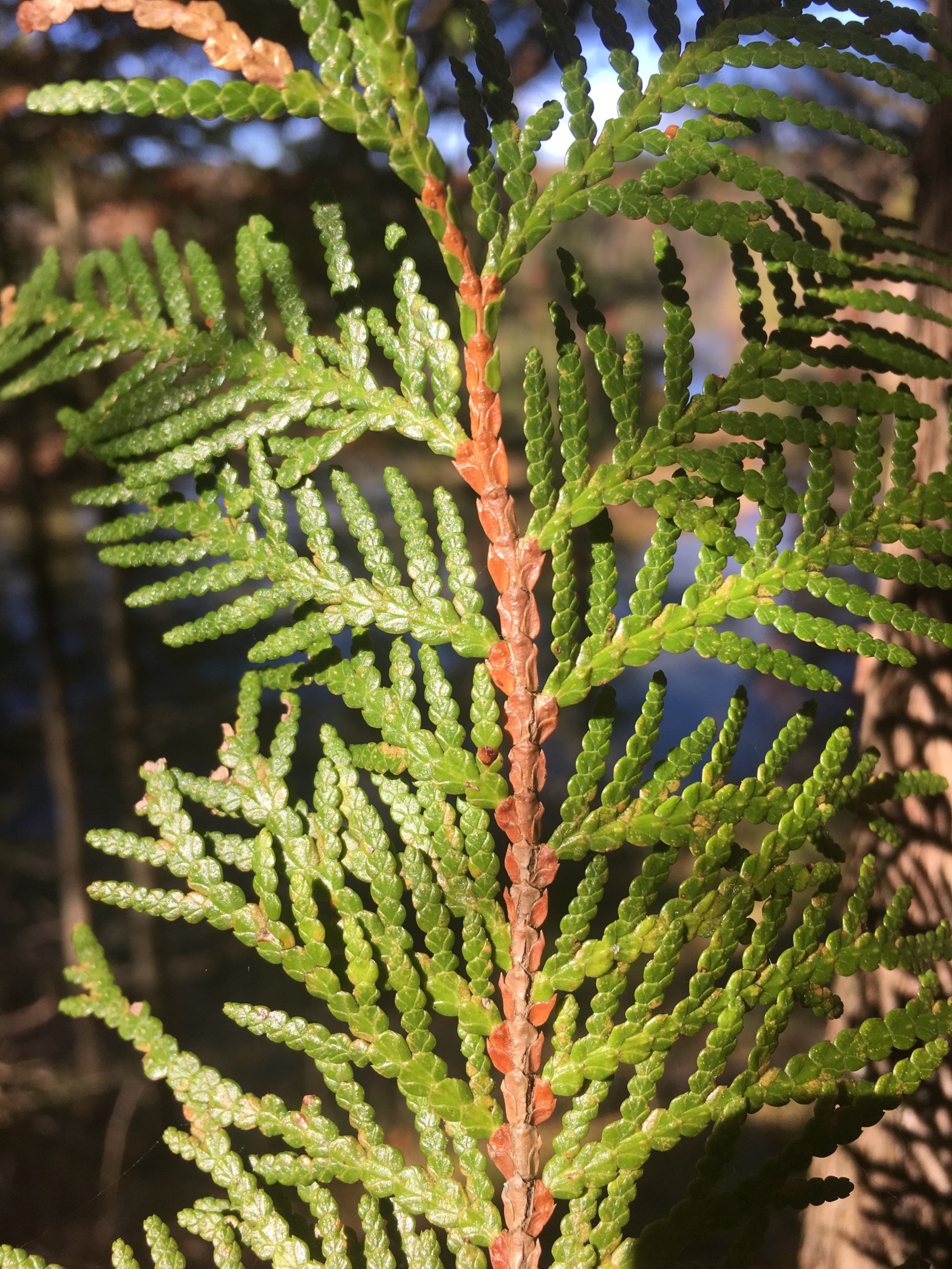
I just got back from a trip up north, which took me into the native range of Thuja occidentalis, also know as Swamp-cedar or Arborvitae. I chose to write about it for two additional reasons: one, because I’ve been reading William Cronon’s classic Changes in the Land, which mentions it as one of the trees more common before the impact of the early colonists was felt, and two, because it is rare to non-existent in the wild in Indiana, thus making it something of a special sighting for me.
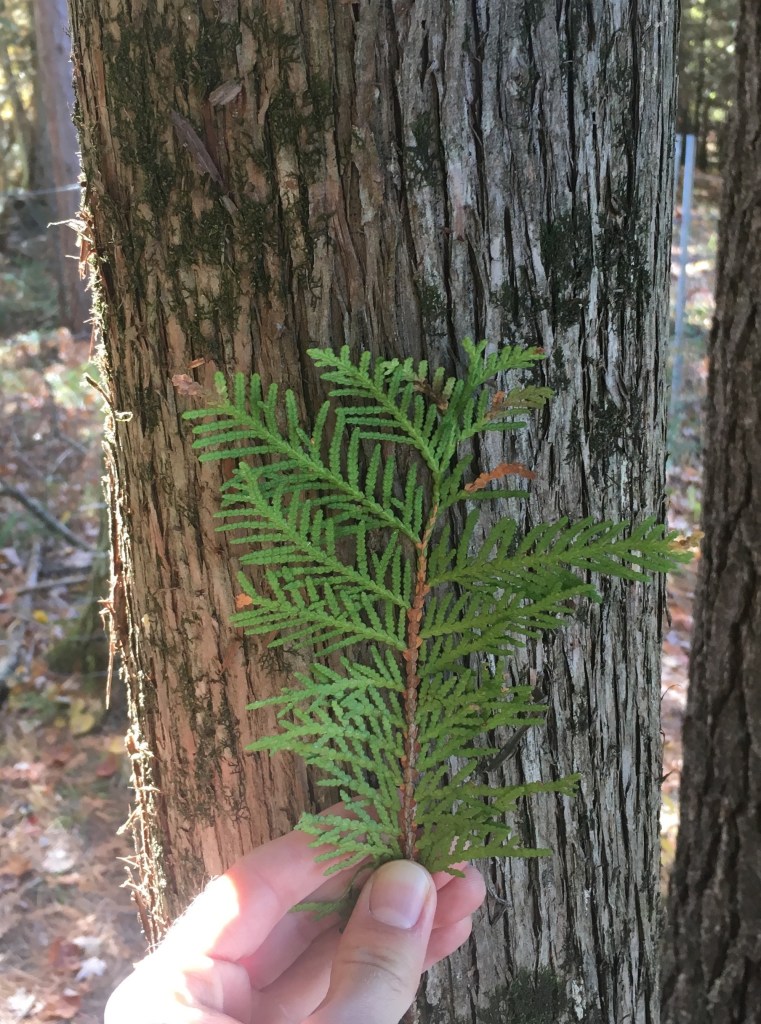
Northern White-cedar is a pretty tough tree. They love to grow in swamps, and on the edges of cliffs, growing very slowly and usually only to about 50 feet. The cliff specimens, which are inaccessible to deer and wildfires, can be quite long-lived—the oldest currently living specimen being 1,100 years old.
A distinctive feature of the Northern White-cedar is its fan-shaped branches, forming flat sprays of scaly leaves. In contract, Juniper (or Red Cedar, which is not a cedar at all) is more needle-y and less flat and fan-like. Northern White-cedar has many uses–which is why the early colonists almost harvested it to elimination. Colonists were most interested White-cedar because it makes good shingles and fencing. Cedar wood is incredibly light, durable, and fragrant (due to its essential oils).
It gets the name Arborvitae (Tree of Life) from the story of an early French explorer, whose crew fell ill of scurvy. According to the story, they were saved when the local Native American people (either Iroquois or Heron) prepared a tea they called “annedda.” It is believed that this tea was made from White-cedar foliage, which is extremely rich in Vitamin C.
Though fairly uncommon in the wild, Northern White-cedar is an often used ornamental, frequently as a screen or hedge. In whatever form you find it, take a look! There is something spare and yet flourishing about the contrast between its rough shaggy bark and inhospitable habitat, and its fragrant, evergreen leaves.
 recycled paper clips