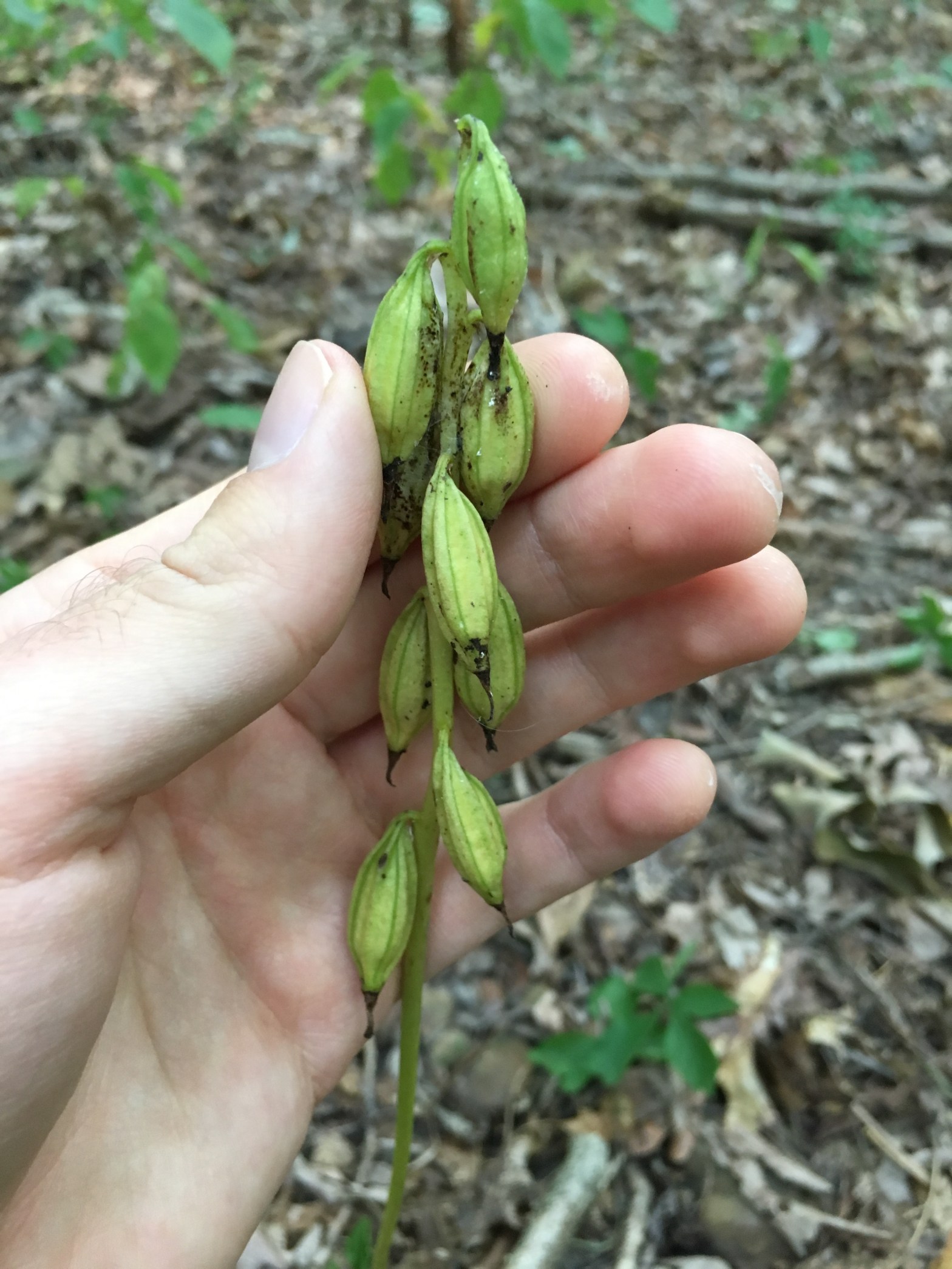
This week I’m taking a break from the Mushroom Lingo series to talk about mushrooms’ floral cousins: orchids. I say that orchids are cousins to mushrooms because orchids depend on fungi for energy during crucial phases of their growth. This is why they are so hard to transplant.
First of all, let’s take a look at Putty Root (named for it’s mucilaginous tubers). At a time of year when everything else is losing leaves, this orchid is growing them. (Hence fall is orchid-spring).
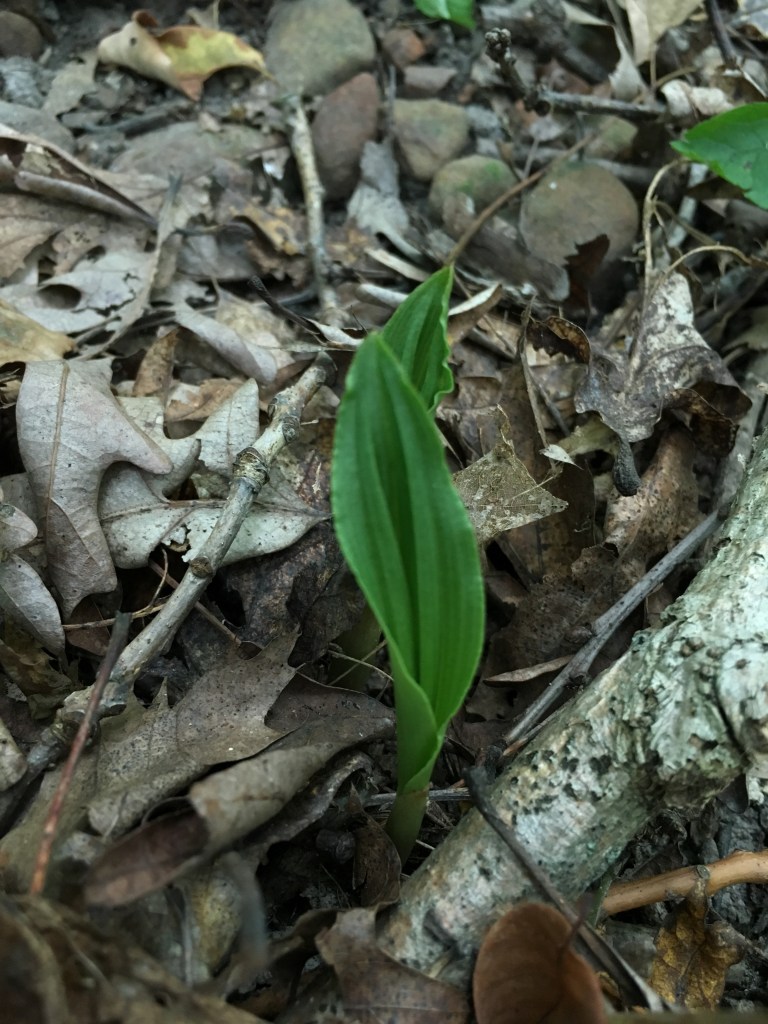
This leaf will persist throughout the winter, able to perform photosynthesis in temperatures only slightly above freezing, and looks something like this in early Spring:

The flowering part of Putty Root can easily be confused with another orchid: The Crane Fly orchid, which also grows a leaf in the fall, but in its case, the leaf has a warty purple underside.
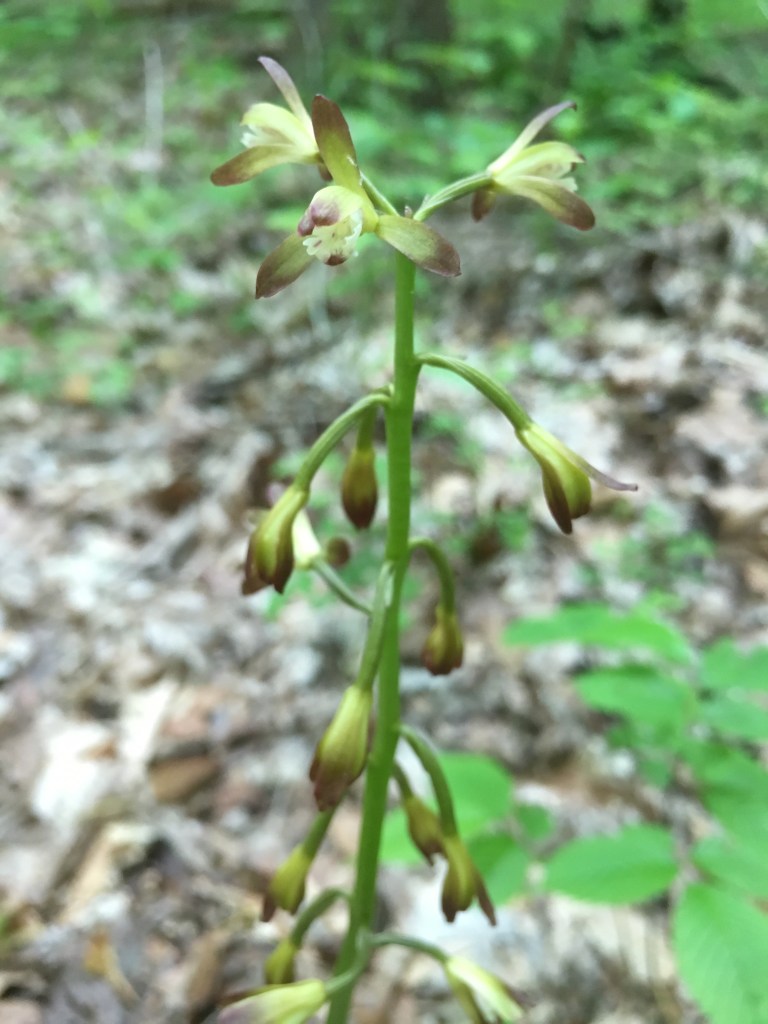
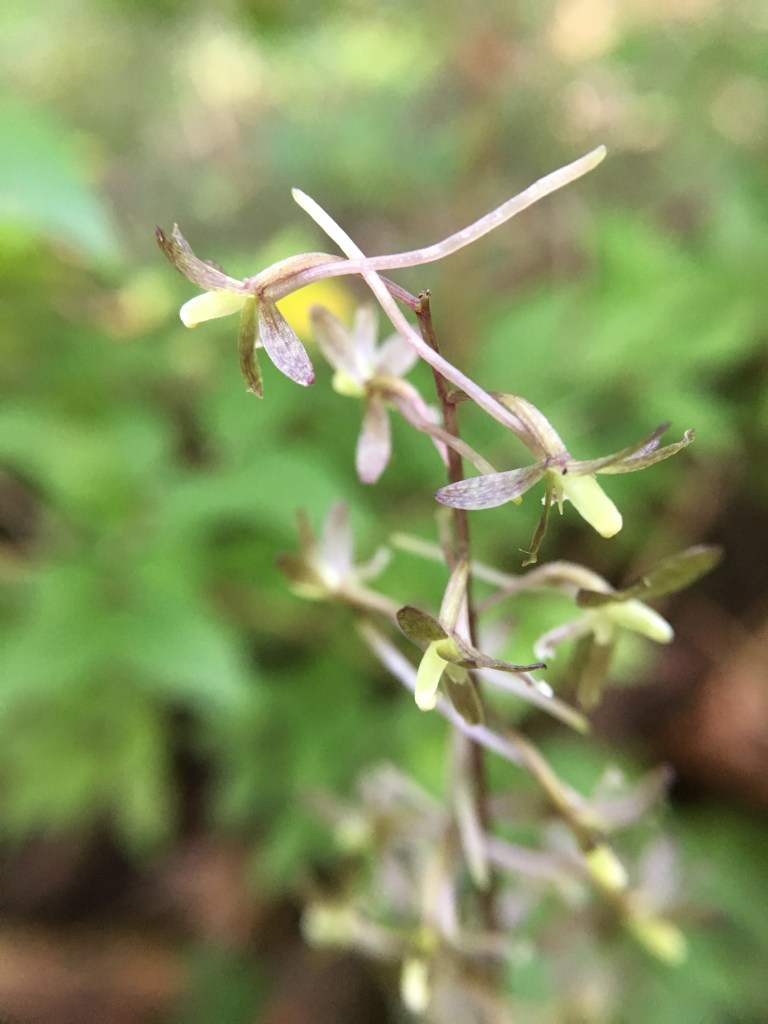
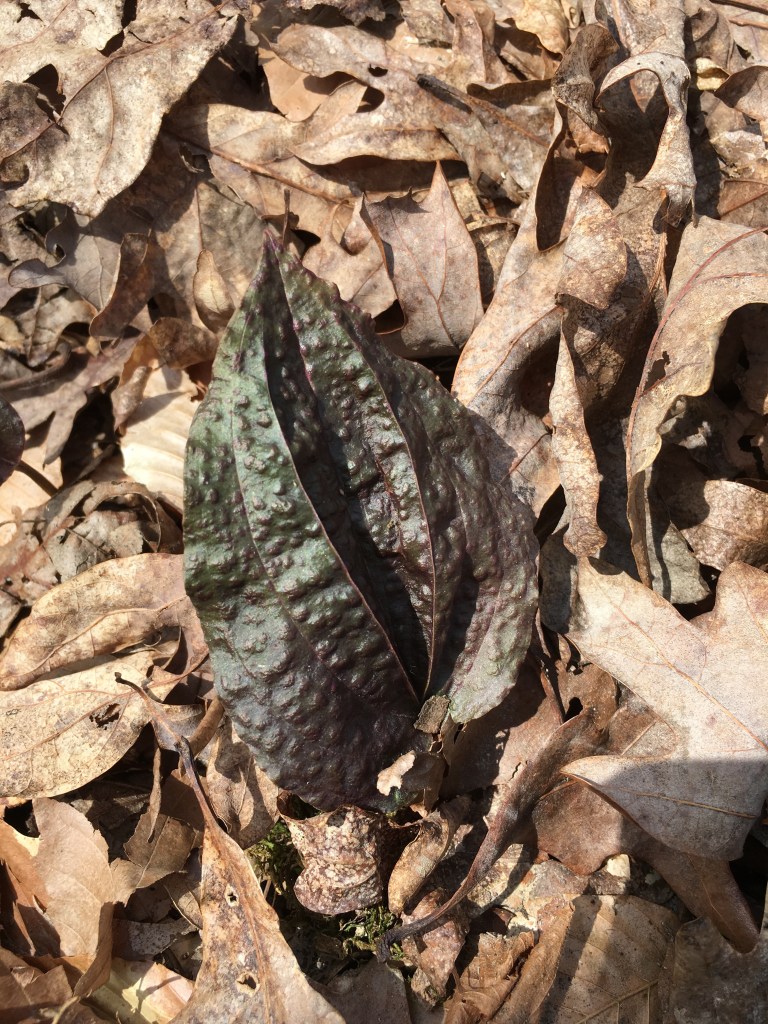
The rarest orchid I’ve found is the Three Birds Orchid, which is considered “G3” or “Vulnerable.” What makes this orchid difficult to spot is that it blooms for only a couple hours on a couple days a year, and populations tend to synchronize their blooming across a region—so it won’t bloom in one place on one day, and then bloom somewhere else on another day. I missed optimal blooming by a couple hours (apparently between 11am and 1pm is the best time) but it was still a neat find.
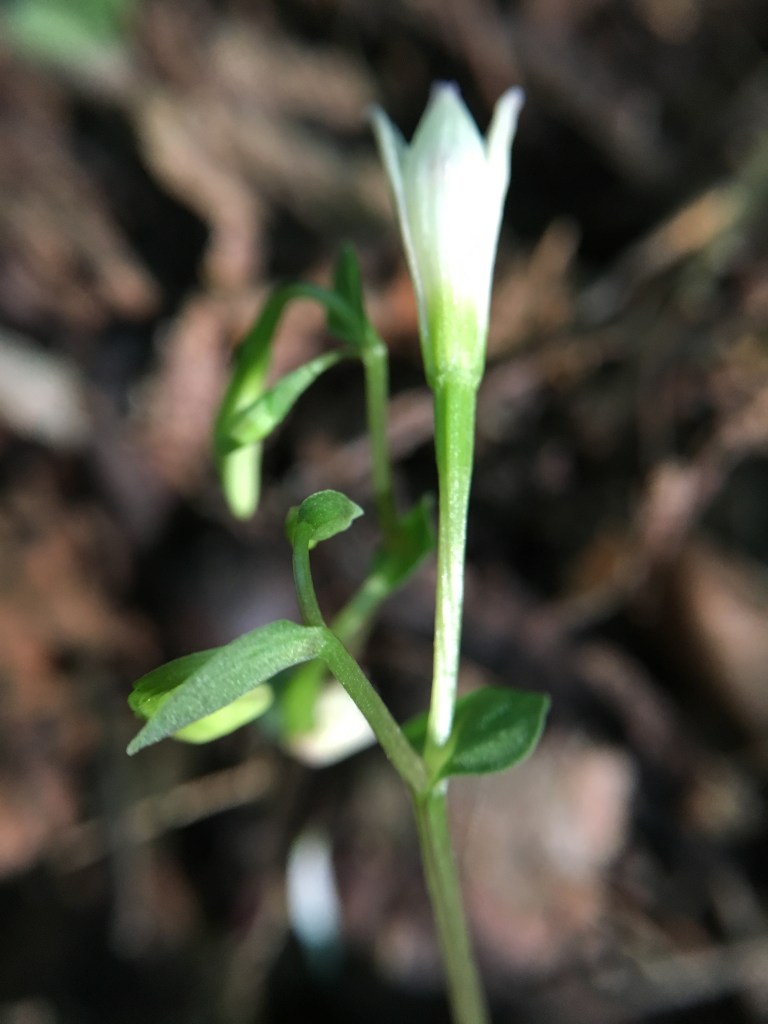
One last thing about the Three Birds Orchid: it is “semi-saprophytic,” meaning, like saprobic fungi, it gets some of its energy from breaking down organic matter.
 recycled paper clips
Beautiful
LikeLike