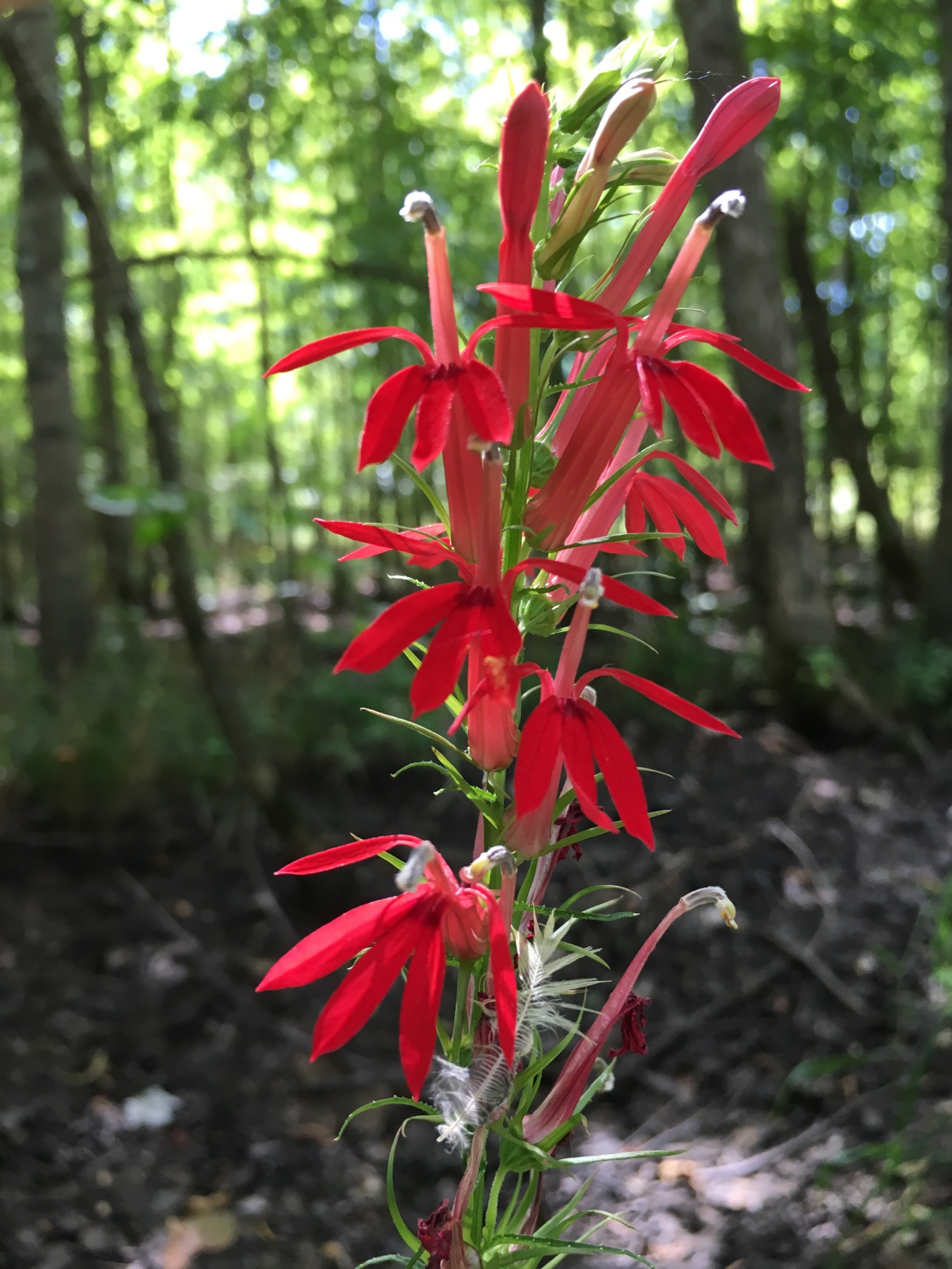
In Indiana at least, forests are actually one of the best preserved habitats. Forests are “multiple-use” spaces — they can be used for hunting, logging, and hiking — and so there is an economic incentive to preserve them. In contrast, wetlands tend to be less well preserved because they don’t produce a salable product like timber. Pre-European settlement, an estimated %25 of Indiana was wetlands, whereas today wetlands represent approximately %4 1 .
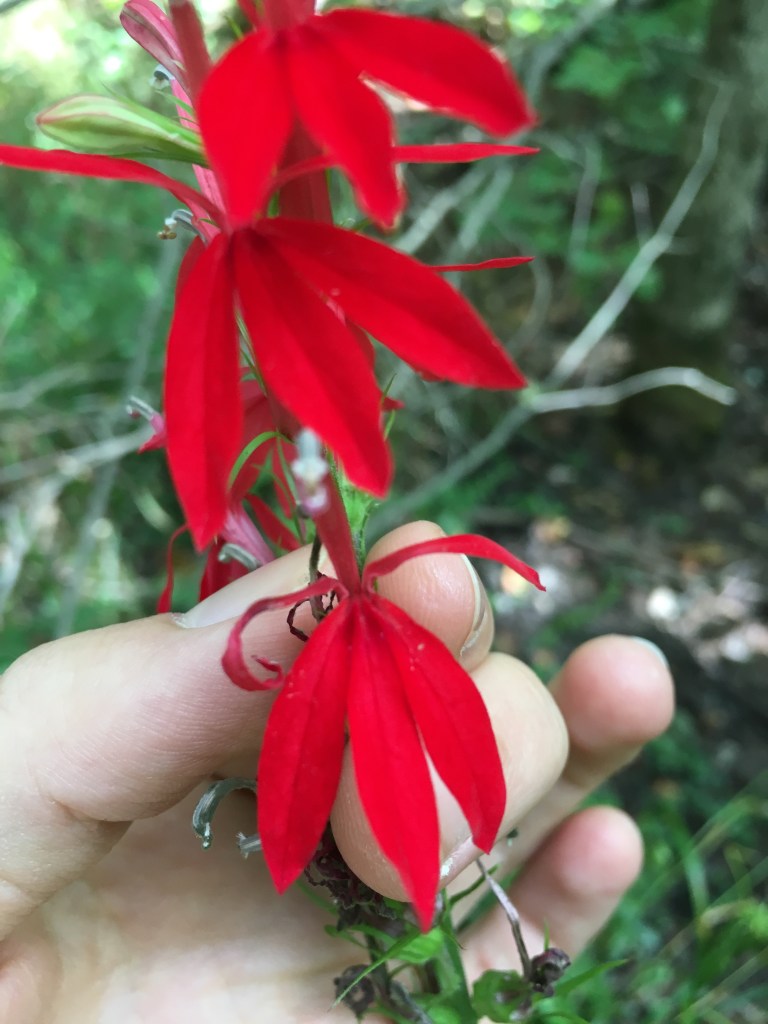
This is what makes the Cardinal Flower a rarer species. Not that it is rare within its habitat, but that its habitat is rare. Luckily, a couple weeks ago I had the opportunity of visiting one of these habitats and found the Cardinal Flower, “America’s Favorite,” everywhere.
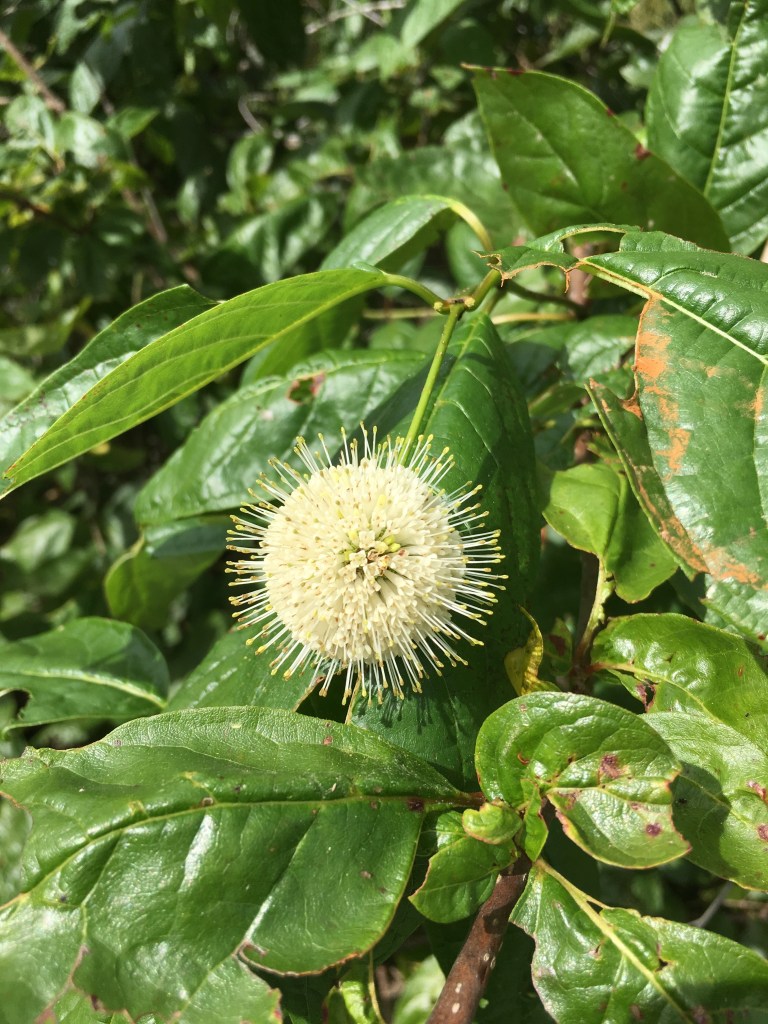
Another species I found everywhere, was Buttonbush. Like the Cardinal Flower, Buttonbush has a number of medicinal uses historically, but is now considered poisonous.
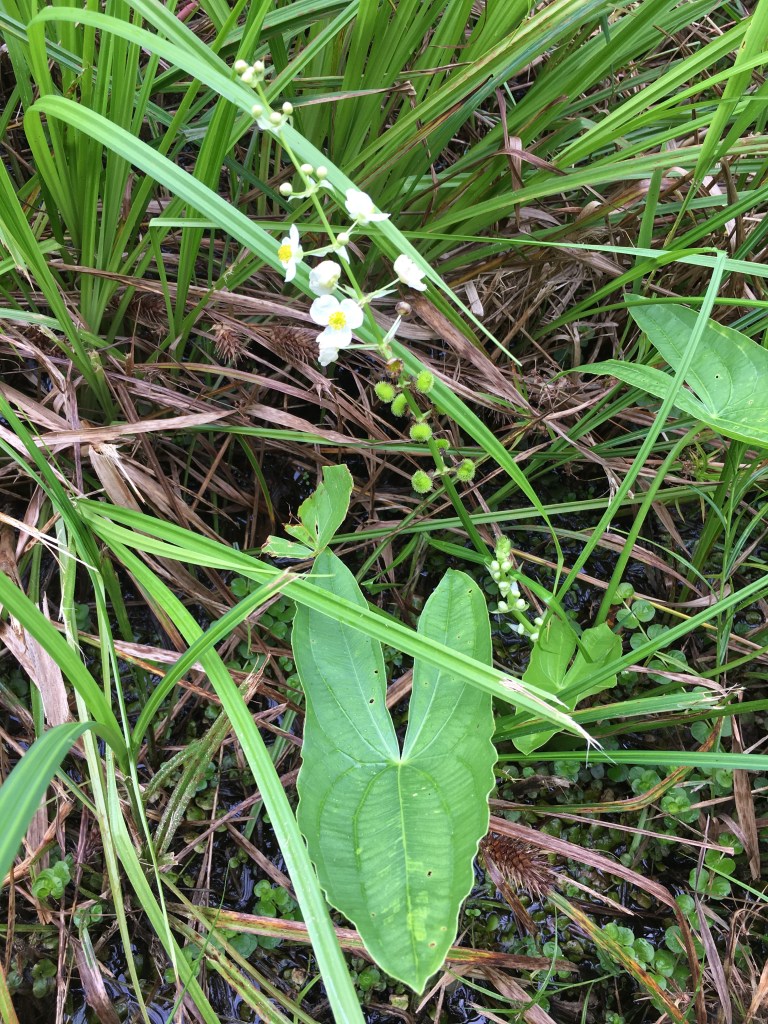
Another swampy stable, Broadleaf Arrowhead, Sagittaria latifolia, or “duck-potato,” is so called because it produces edible tubers, which were cultivated by indigenous peoples. In fact, according to the wikipedia page, raw arrowhead has 5.33g of protein per 100g—which is way more than potatoes have, and a little less than peanuts.

Anyways, all this to say: brave those mosquitoes and go check out a swamp!
 recycled paper clips