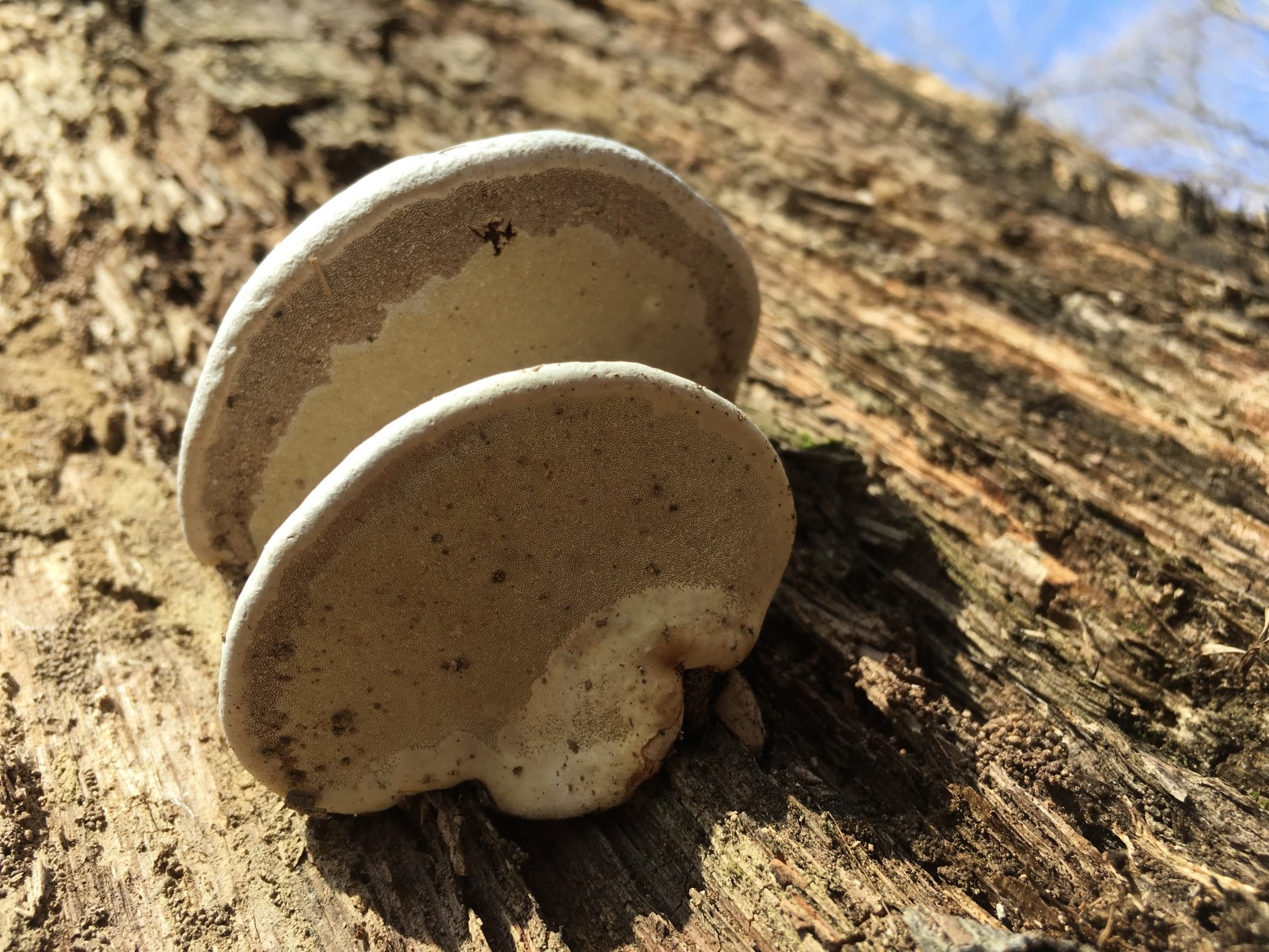
A polypore is just a mushroom with a lot of pores, right? Not quite. Boletes are pored mushrooms, for example, and yet are not polypores. Lenzites betulina doesn’t have pores — it has gills! — and yet it is considered a polypore. What’s going on?
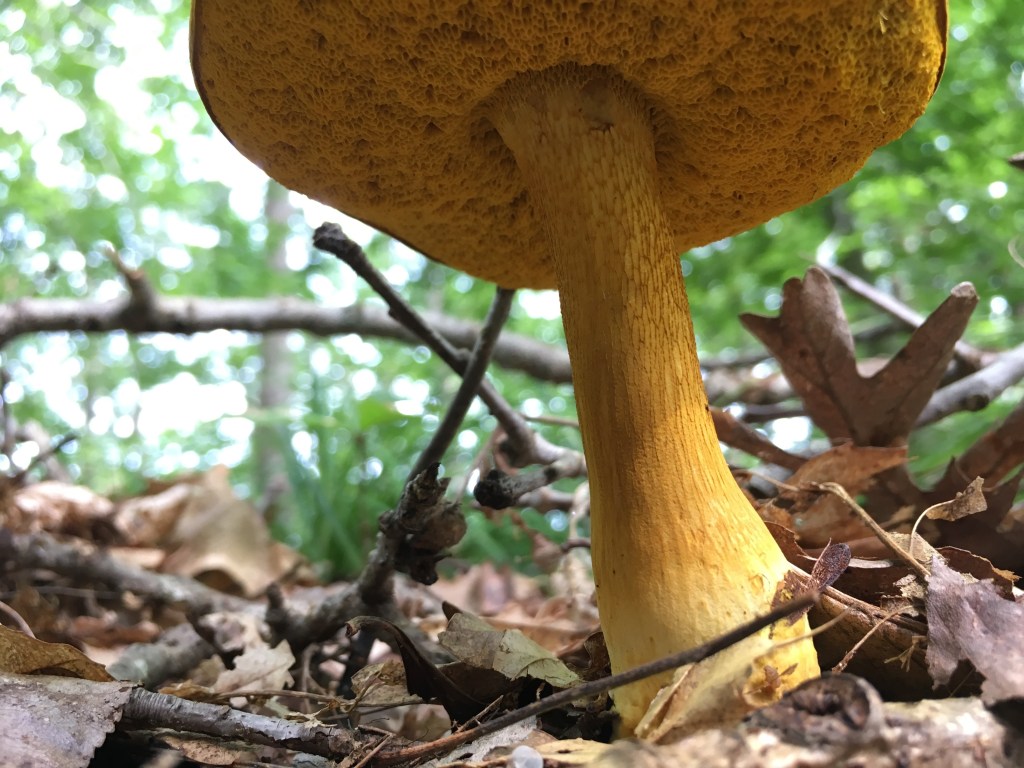
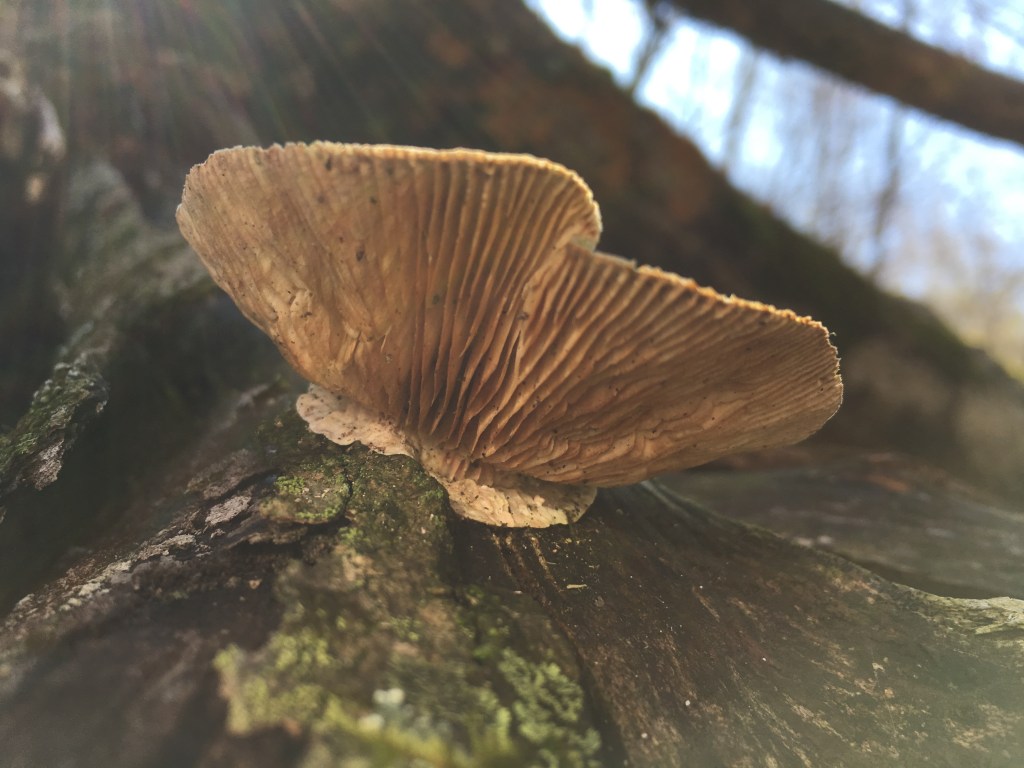
As so often with things mushroomy, there isn’t a clear cut definition. Typically, polypores produce fruiting bodies which are tough and shelf-shaped, don’t have a well developed stem, and grow from wood. Individual polypores may violate one of those conditions, but conform to the majority. Additionally, I should specify there are two ways of using “polypore”: morphologically (to describe a certain form of mushroom) or phylogenetically (to refer to a group of related fungi in the Order Polyporales). I have more the first sense in mind, since I’m not overly obsessed with mushroom taxonomy, and some of the “polypores” I will talk about are not actually in the Order Polyporales.
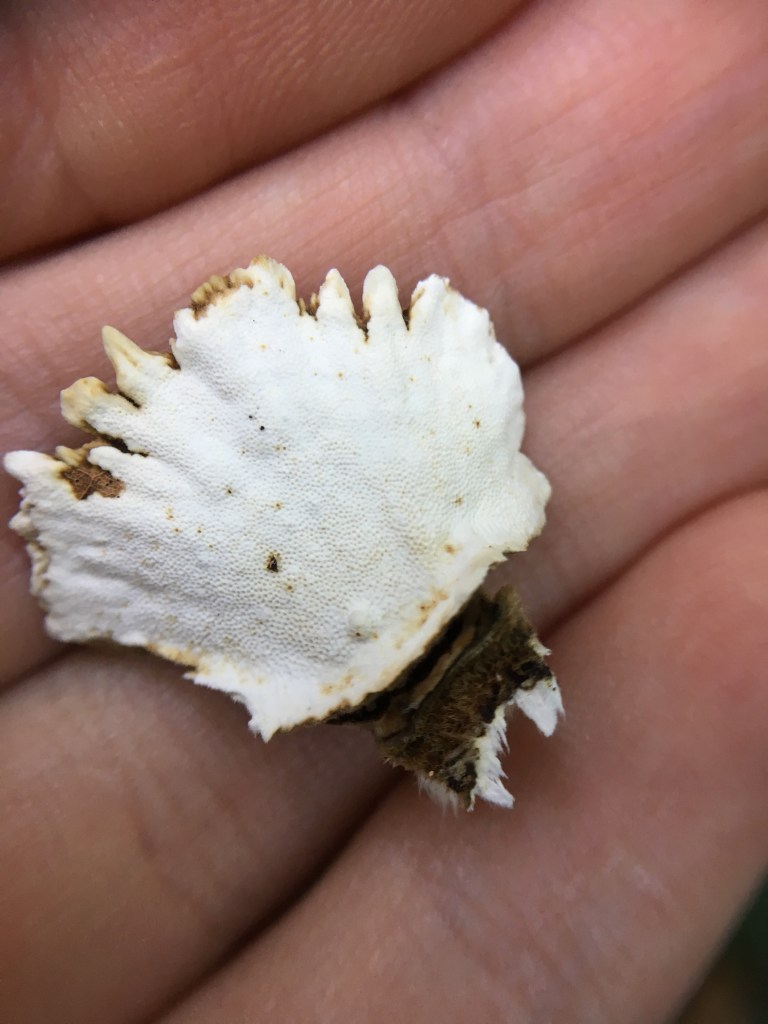
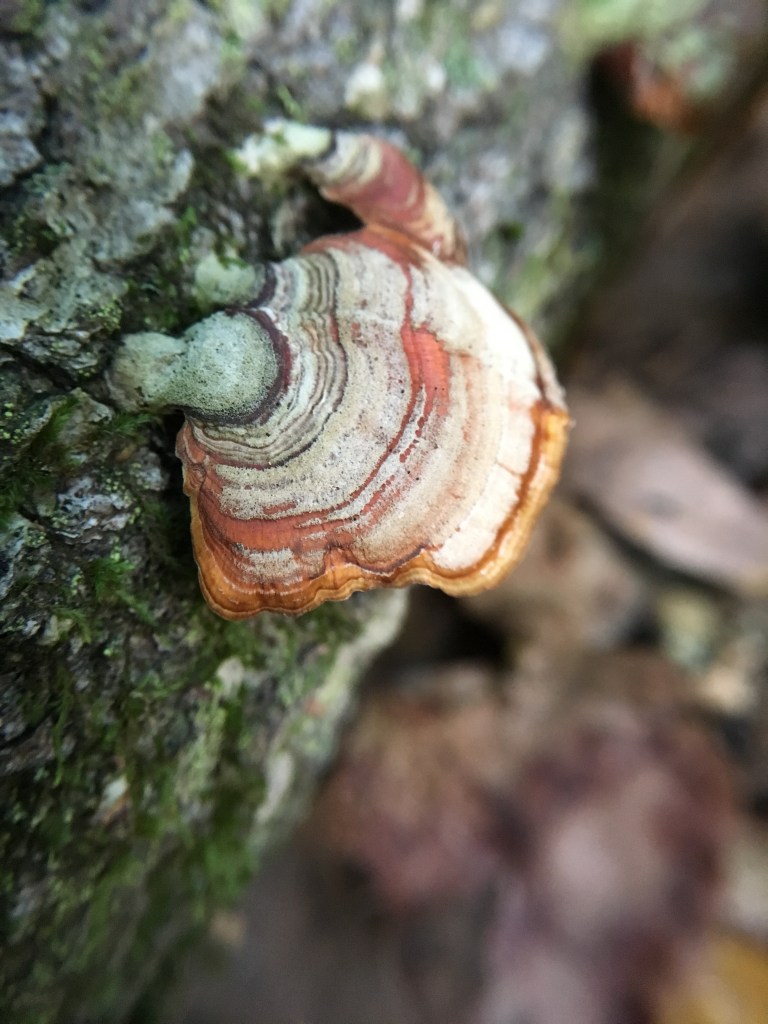
Probably the most famous polypore is Turkey Tail. It’s a beautiful mushroom characterized by rings of color, a fuzzy cap, and visible pores.
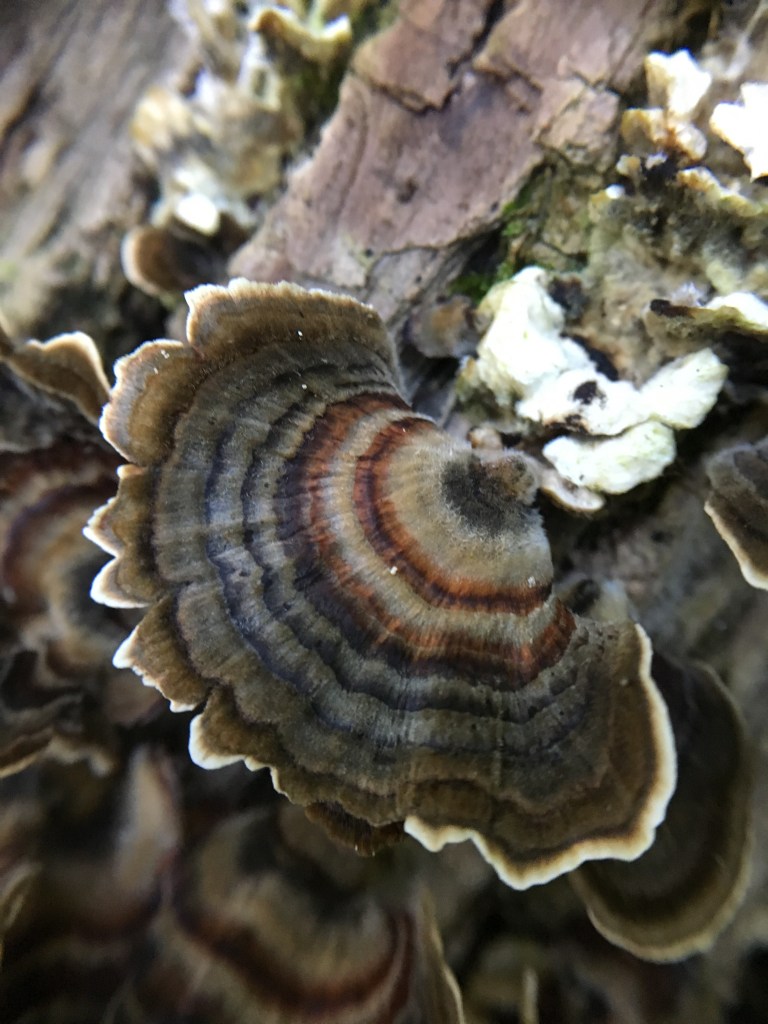
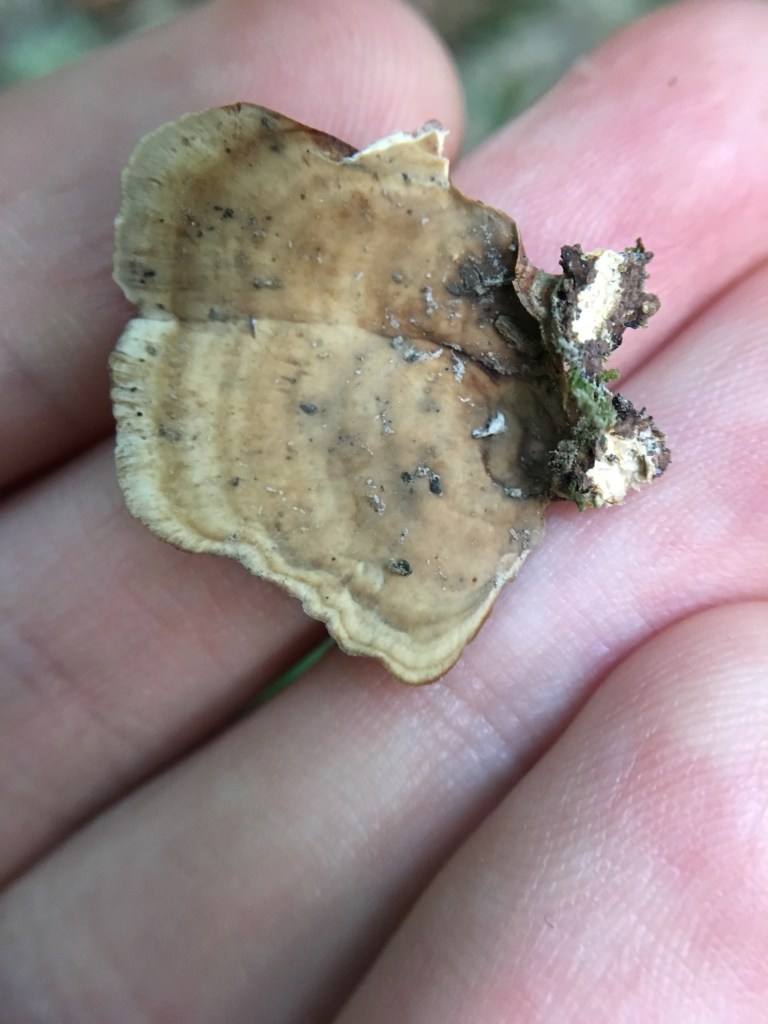
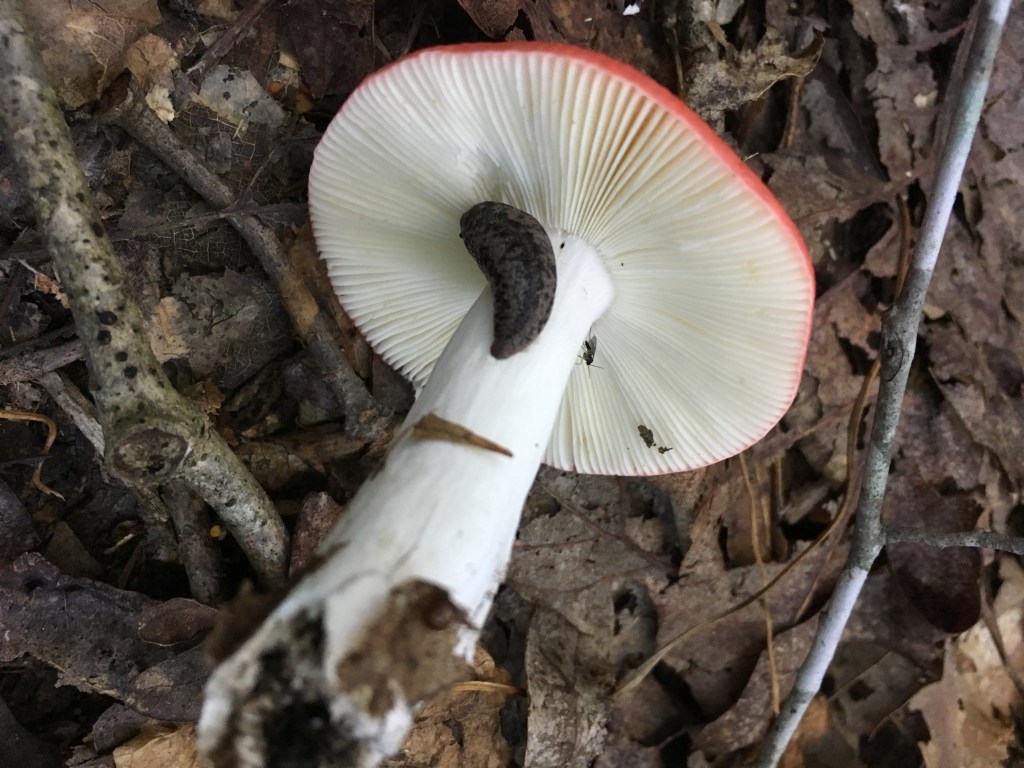
In contrast, False Turkey Tail, Stereum ostrea, lacks visible pores (its pore surface is “bald”), and tends to have buffer/tanner colors. Fantastically, Stereum ostrea is a member of the order Russulales, a group of typical-mushroom-looking-mushrooms with gills. Which just goes to show the incredible disconnect between the form of a mushroom and its evolutionary past.
 recycled paper clips