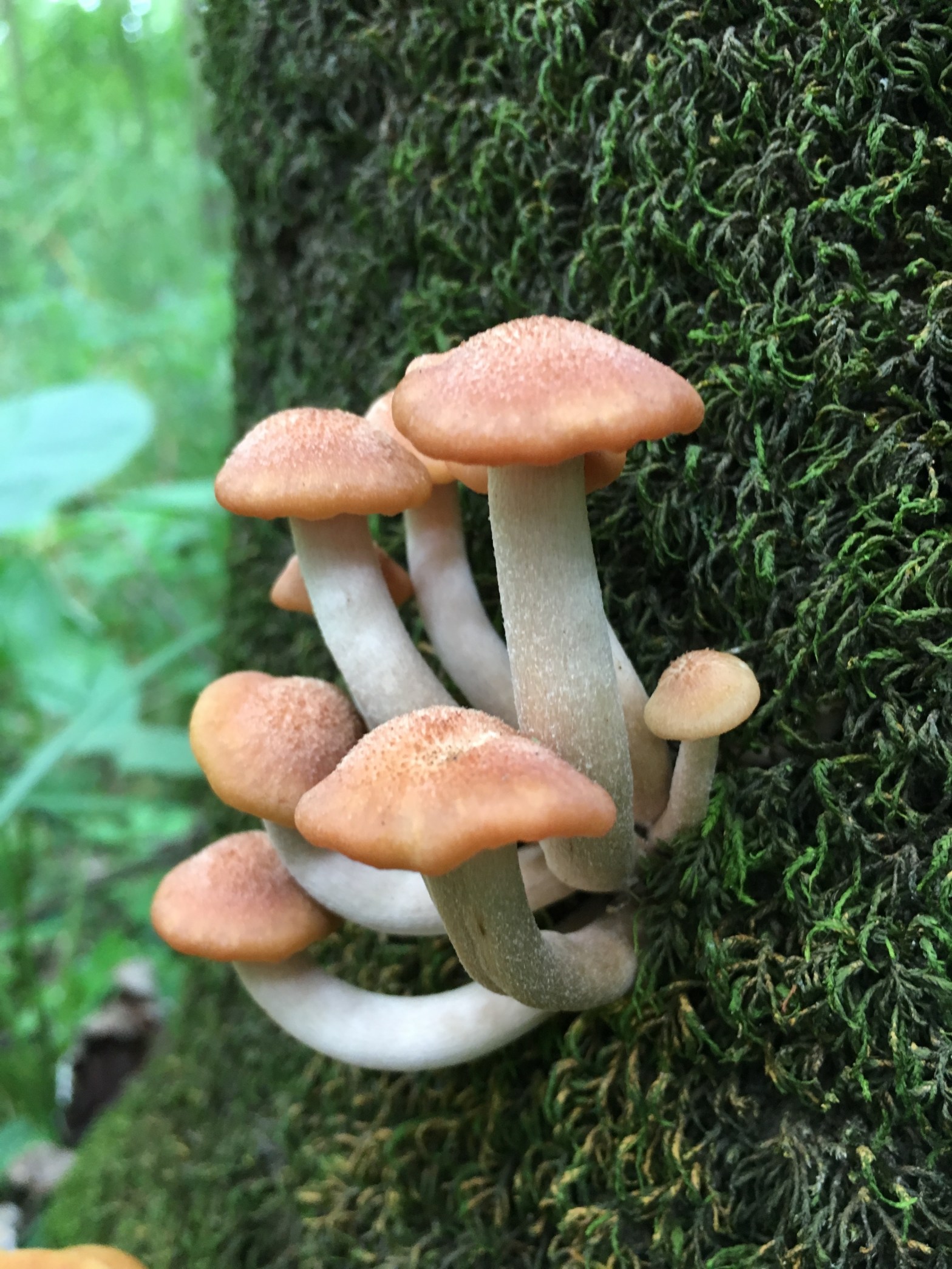
This one’s not too hard to figure out. In contrast to saprobic fungi, parasitic fungi feed on living organisms, whether those are trees, other fungi, or even insects—as is the case with the famous Cordyceps militaris (see Planet Earth: https://www.youtube.com/watch?v=XuKjBIBBAL8)
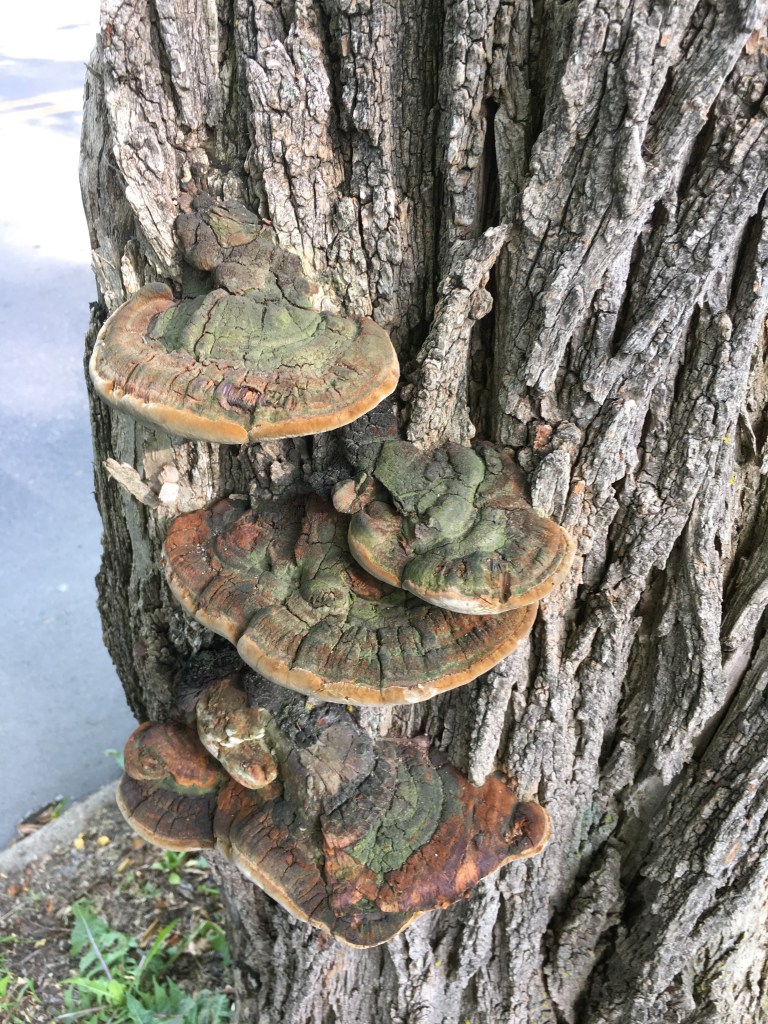
Trees undoubtedly bear the brunt of fungal parasitism, however. These parasites are often specific to certain species of trees. There’s the Birch Polypore (found on “Ötzi the Iceman” and known for its medicinal properties) which only attacks birch, for example. Or Phellinus robiniae, which is primarily found on Black Locusts (so commonly that it can almost be used to identify that tree.
Then there are species like Armillaria solidipes, the world’s largest living organism—in terms of area, not mass— which parasitize trees but don’t necessary grow directly from them. Rather, they spring up terrestrially, like mycorrhizal mushrooms, which can be confusing. Species of this genus (broadly known as “honey mushrooms”) use rhizomorphs (black “shoestring” like structures)
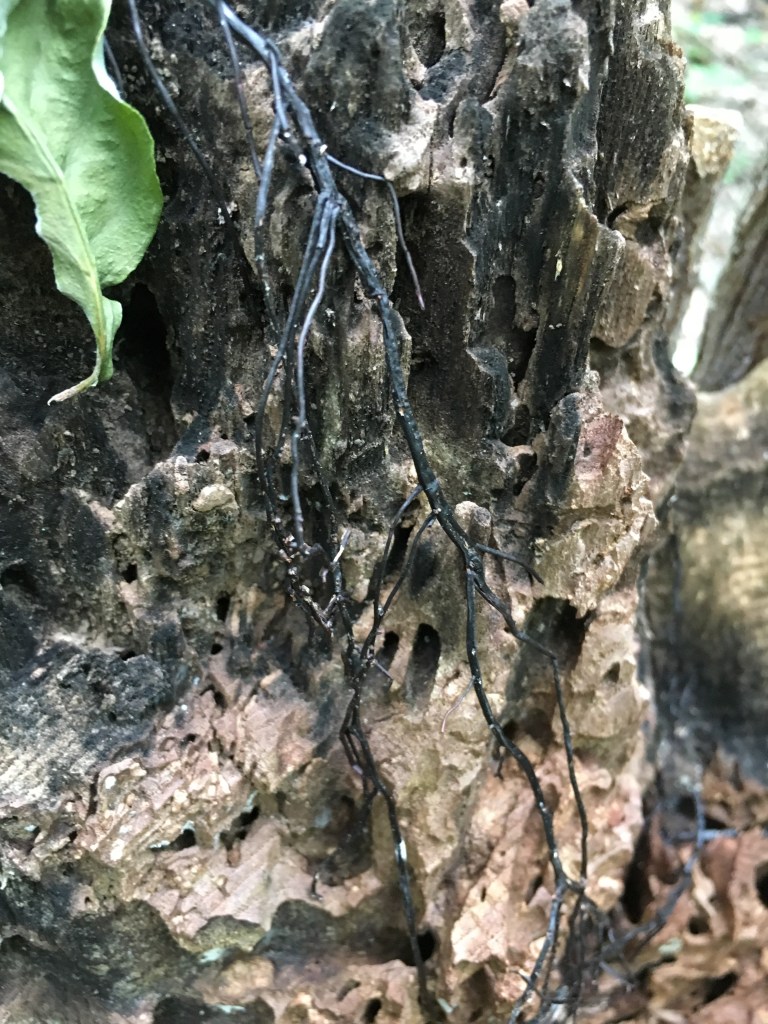
to infiltrate under the bark of trees and spread through the ground from tree to tree. They are one of the most prolific fall fungi: you’ve probably seen something like this before:

Fungi don’t just parasitize insects and trees though, they also parasitize each other. One of the most common instances of this is “Bolete mold,” Hypomyces chrysospermus.
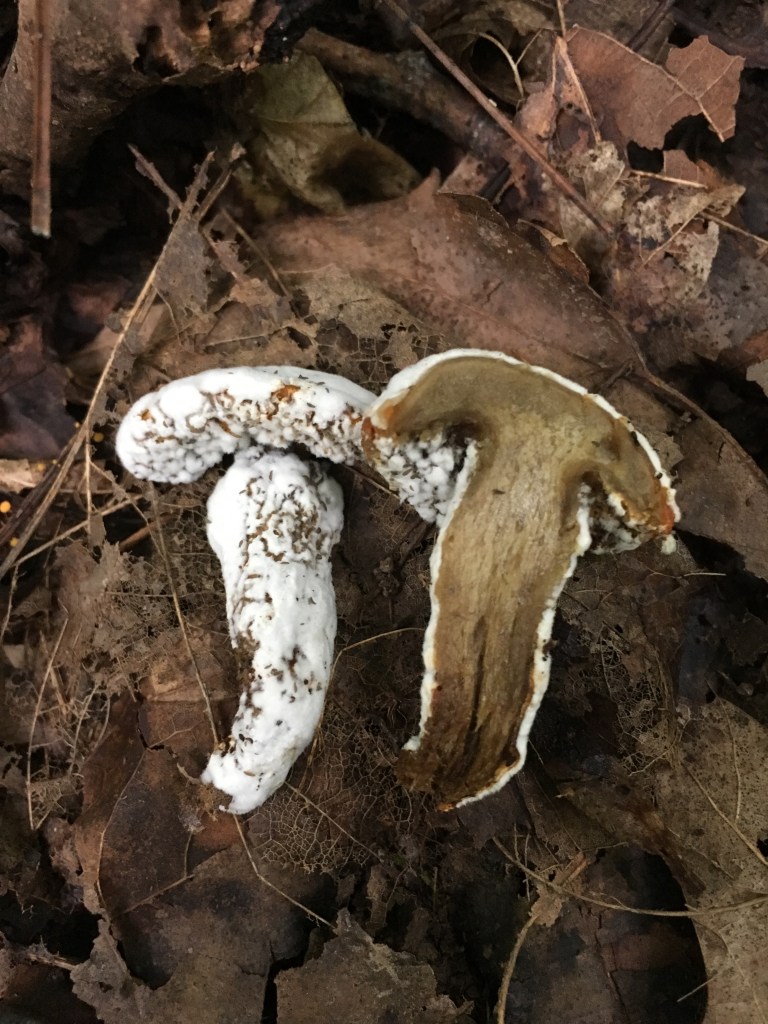
Or if you are luckier, you might find Hypomyces lactifluorum, the “Lobster Mushroom,” which attacks Milkcaps and Russulas and is considered a prime edible. Molds are fungi, but that’s not quite the same thing as a mushroom parasitizing another mushroom. For that you’d have to look to species like Asterophora parasitica:
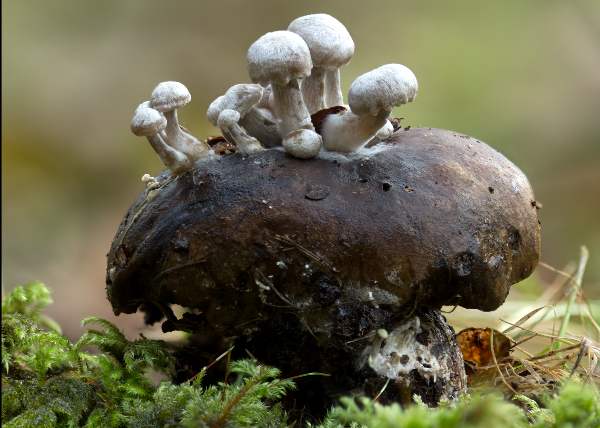
As I’ve mentioned before, the exact ecological role of a mushroom is sometimes variable. A fungus might start out as a parasite on a living tree, but then become a saprobe once that tree is dead, for example. Some mycorrhizal mushrooms are in some part saprobic-like, in that they can also break down organic matter (it’s just that that is not their primary source of energy). And other mycorrhizal mushroom paralyze springtails and use them for nitrogen, does this make them partial parasites? Should we think of saprobic-mycorrhizal-parasitic as a continuum, rather than three discreet identities? At any rate, the ecological versatility of fungi, their incredible niche-finding ability, is part of what makes their unseen, unstoppable presence, awesome.
 recycled paper clips