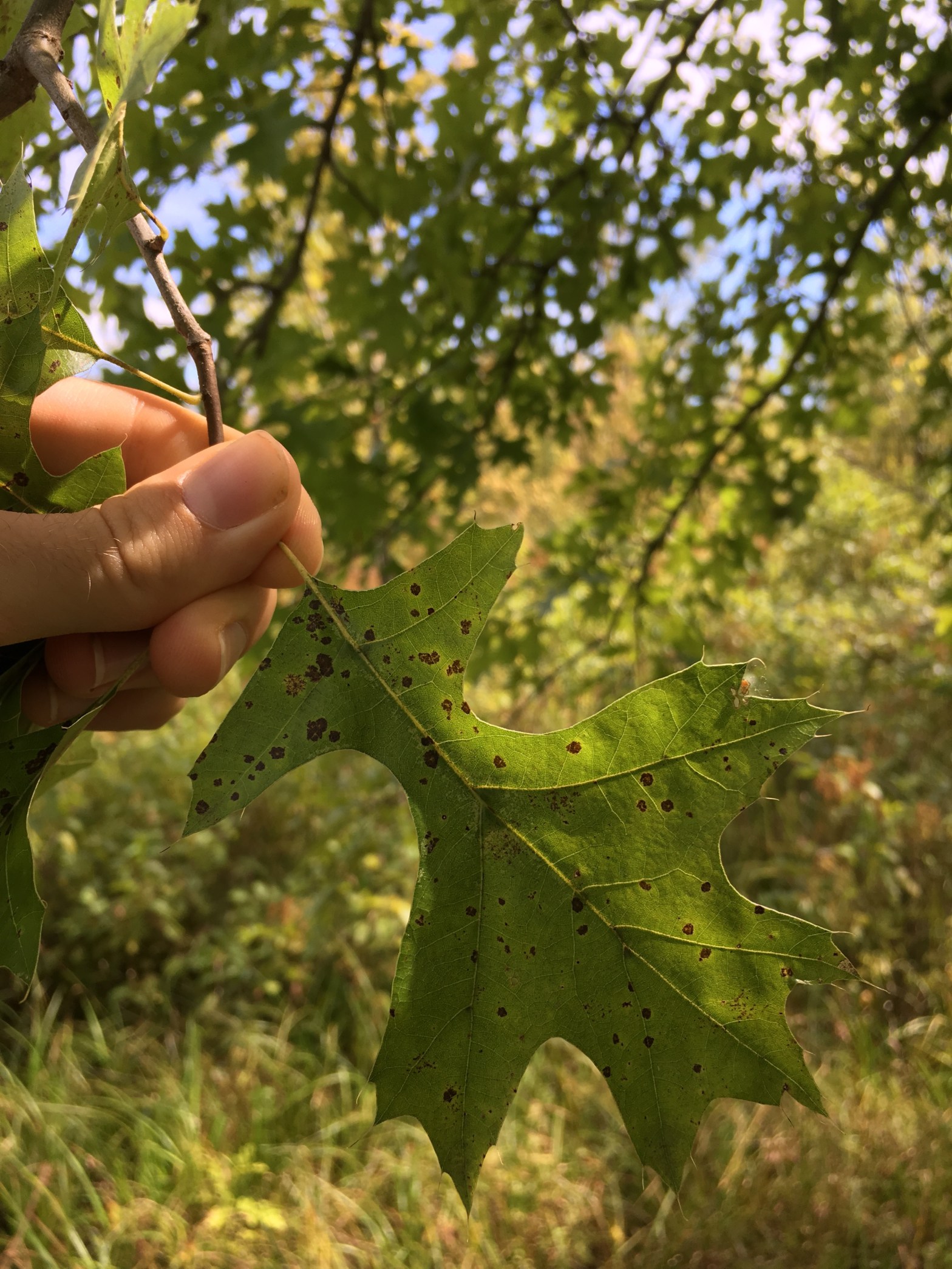
As it naturally occurs, the Pin Oak is a bottomlands tree. It grows on poorly drained, high-clay content soils, with dormant season flooding. The latin epithet palustris in Quercus palustris means something like “of swampy areas,” and it can be readily identified in the wild on the basis of its habitat. Other red oaks, like the Scarlet Oak or Black Oak, with which it could be confused, are upland species which would not tolerate the seasonal flooding Pin Oak does.
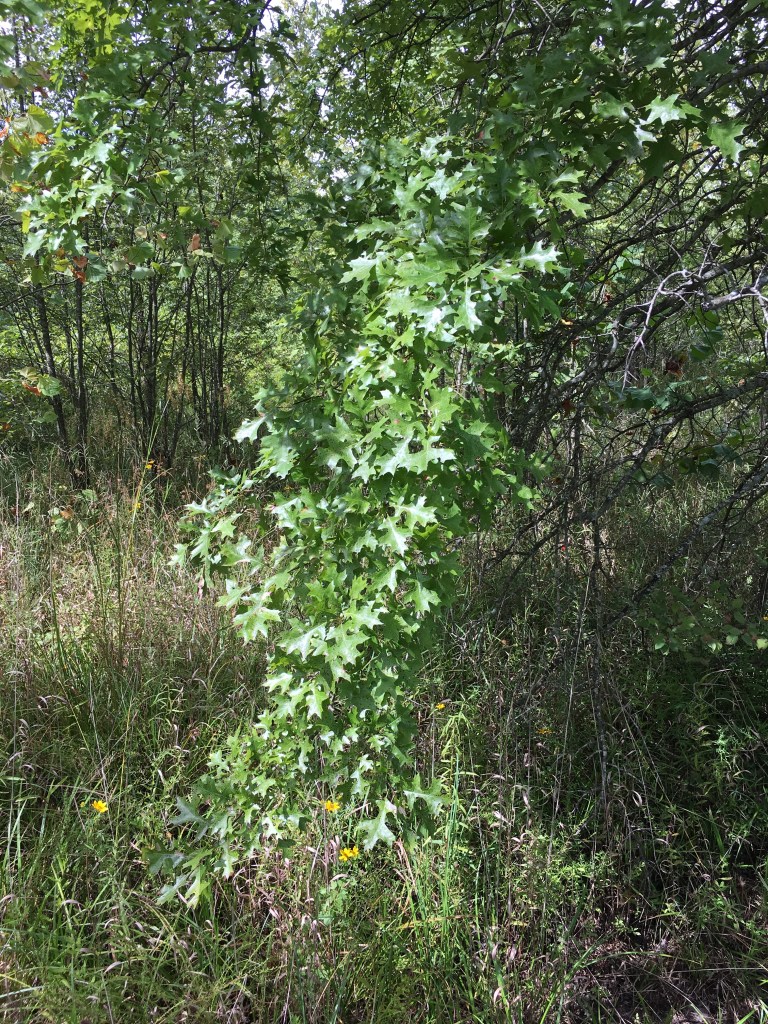
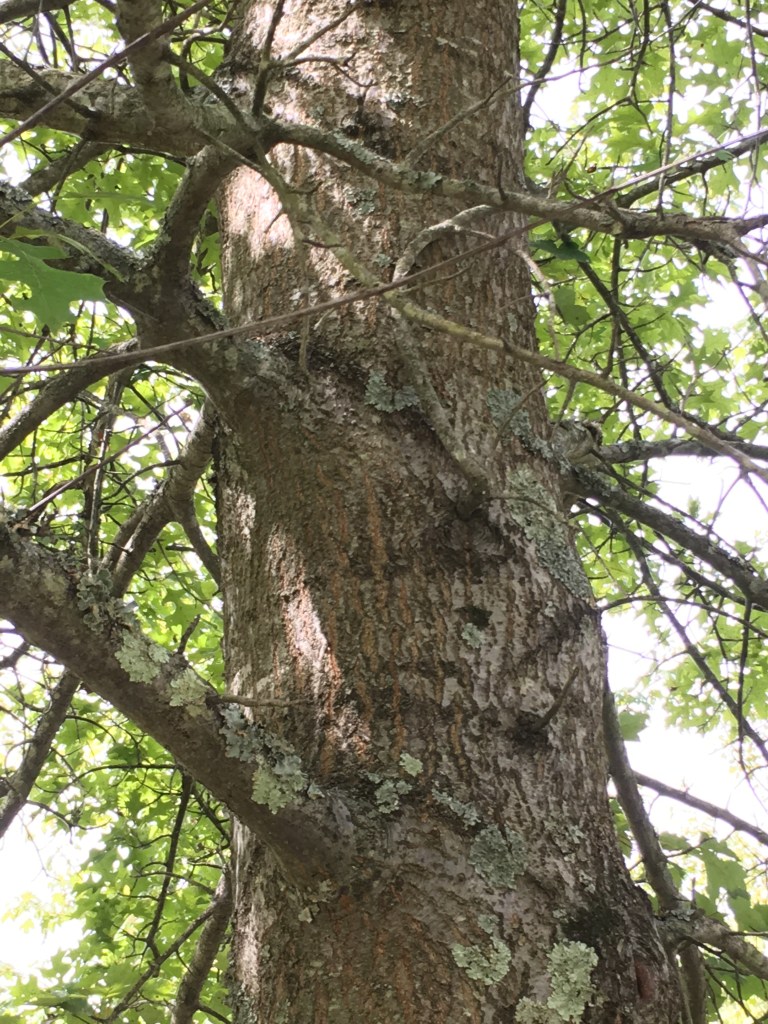
Pin Oak, however, is also a popular landscaping tree, and in this context it could be confused with other trees if identified on the basis of leaves. The key feature here, and probably the origin of its name, is the structure of its canopy. Unlike other oaks, Pin Oaks do a poor job of self-pruning, which means that mature trees have many dead, downward pointing branches, while the middle of the canopy juts straight out, and the top actually points upward.
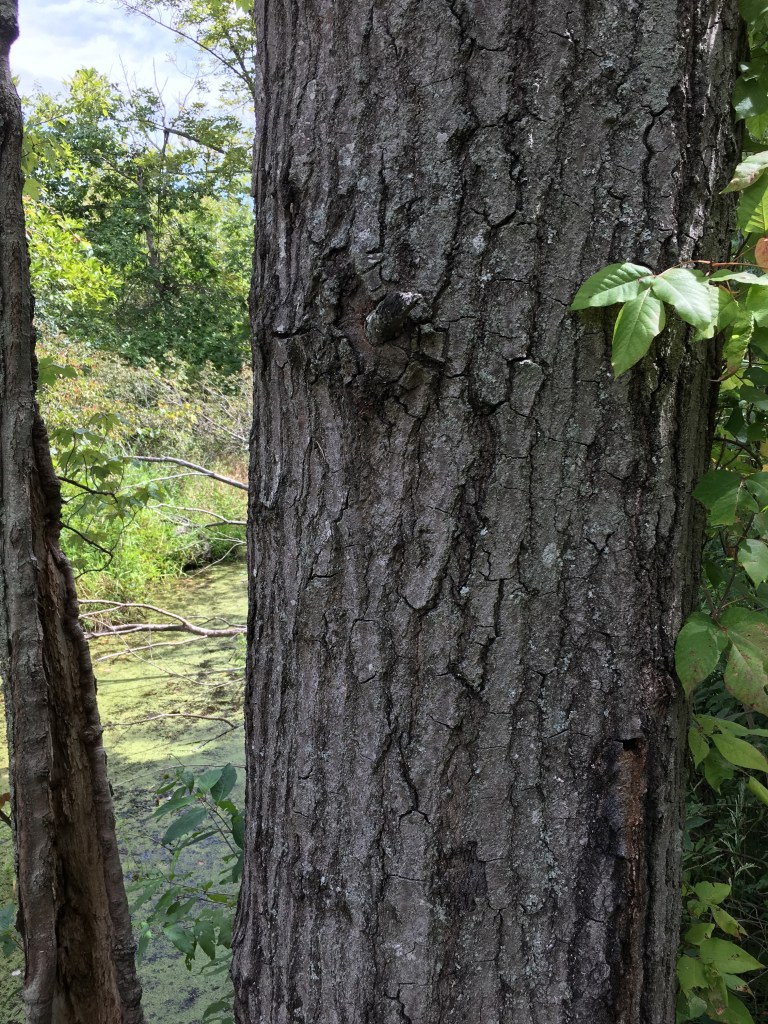
Pin Oak also has somewhat distinctive bark for an oak. It doesn’t have the deep furrows, or scaly appearance of other oaks. The grey-red coloration reminds me somewhat of pines.
 recycled paper clips
Wonderful post! Pin Oak is a wonderful tree.
LikeLike