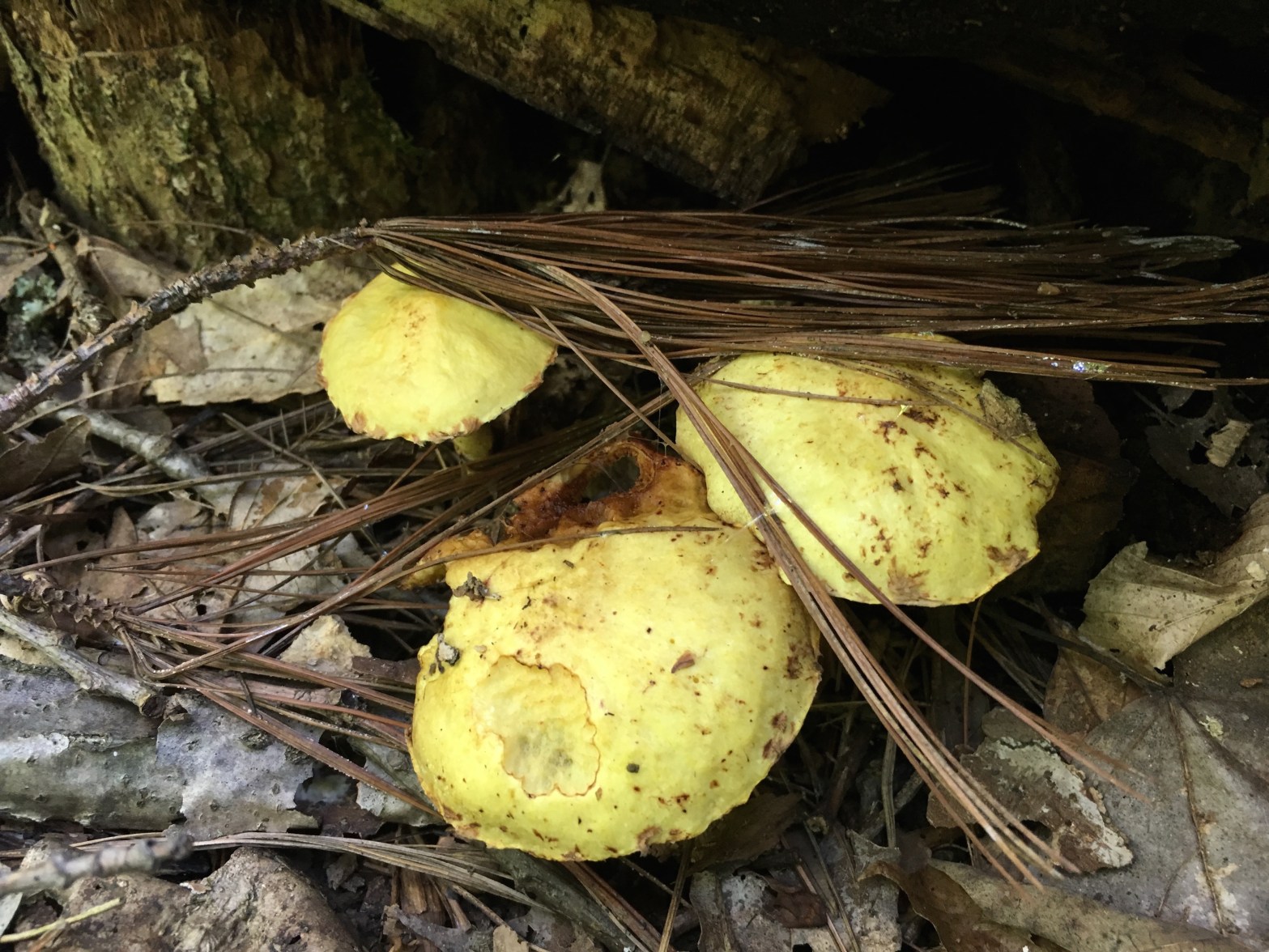
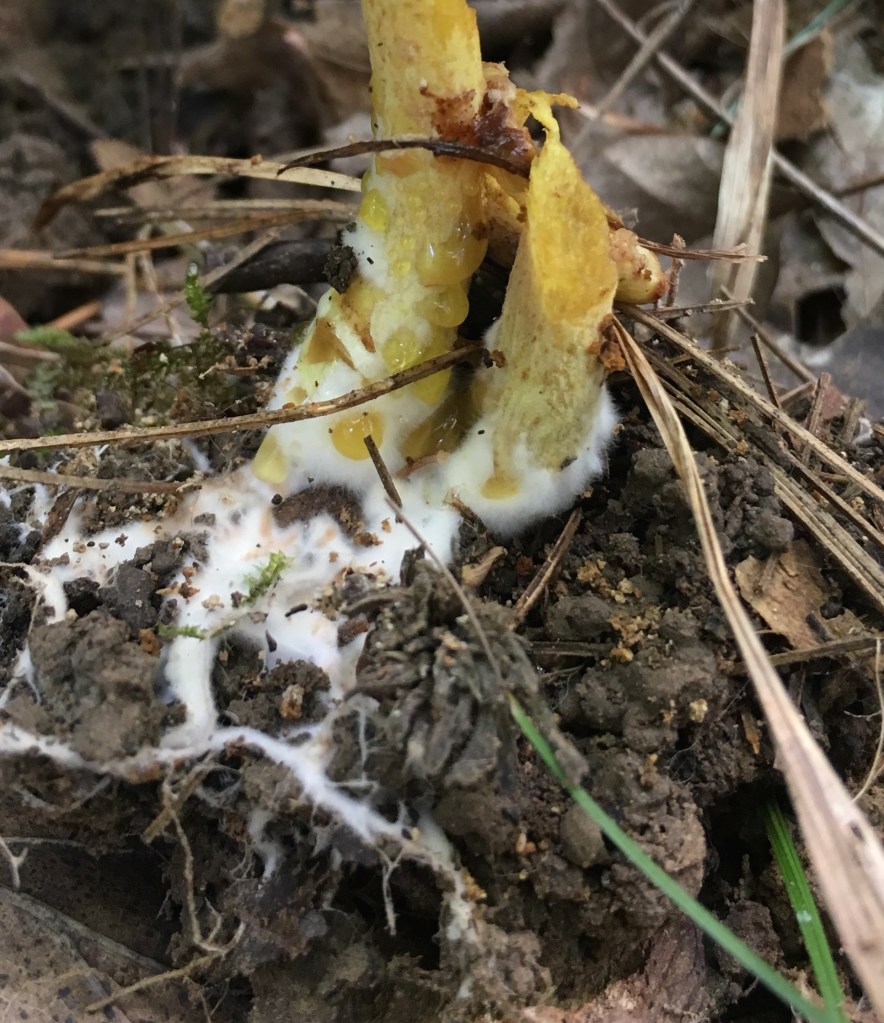
The Chicken Fat Mushroom, or Suillus americanus, has a doubly interesting name. Firstly, why “Chicken Fat”? I think it’s an incredibly apt name, given the overall slimy/tackiness of the mushroom and these fat-like globules that seem to coagulate around the base:
And secondly, there is the specific name “americanus.” What makes this mushroom American? Most obviously, there’s its geographical distribution. Suillus americanus is not found in Europe, which in some ways makes it easier to describe and define. Many North American species are based off of European taxa, which can be confusing because sometimes the North American reality doesn’t line up with what European sources say are the distinctive features. In the case of the Chicken Fat mushroom, however, the species was defined based on North American specimens and so the book description and the field reality line up quite well.
Suillus americanus is part of the genus Suillus (pronounced Sue-il-us), which is a fairly distinct subsection of the Boletes, characterized by their habitat (growing under conifers), their sliminess, their “glandular dots” on the stem, and remnants of a partial veil hanging from the cap margin.
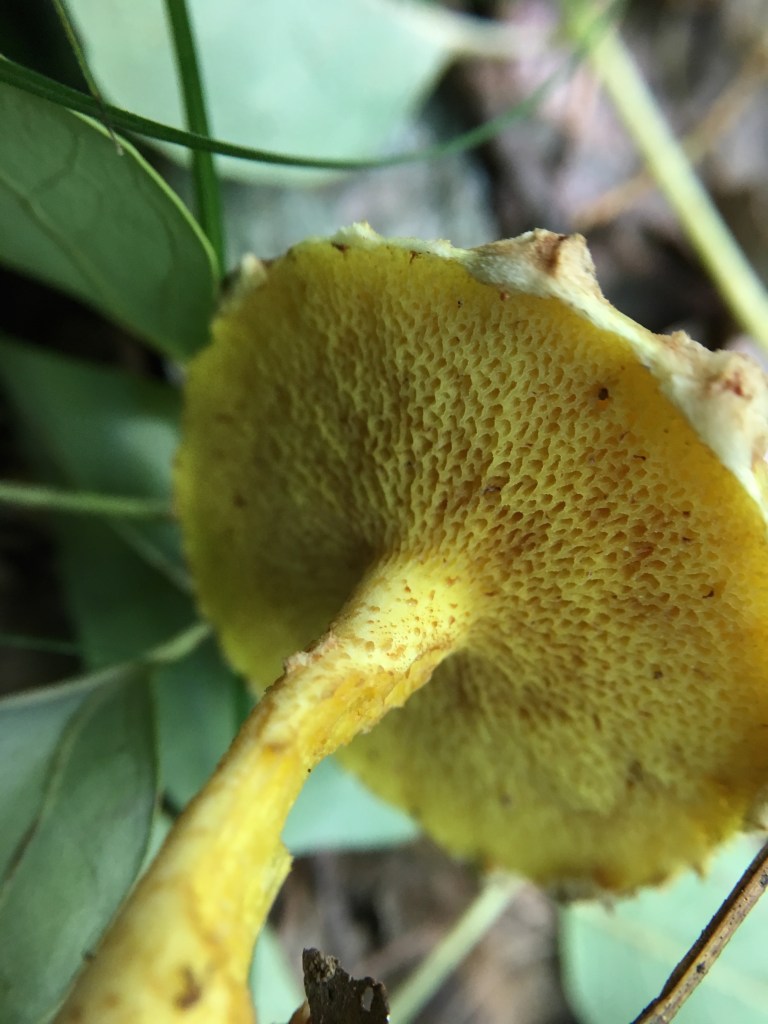
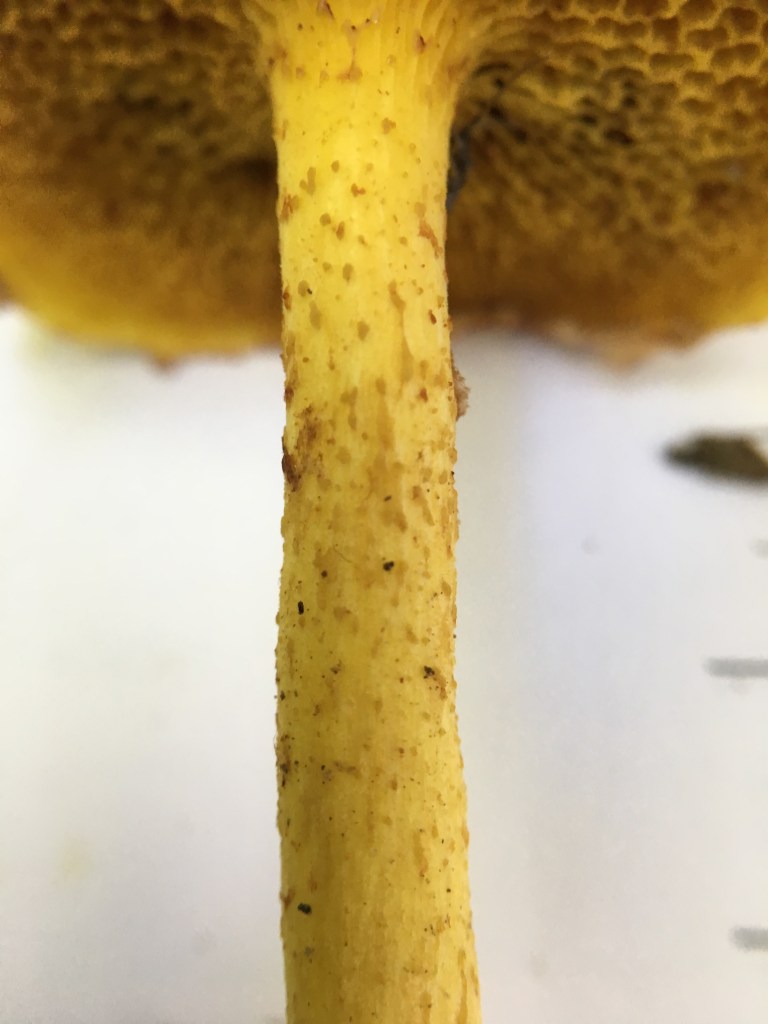
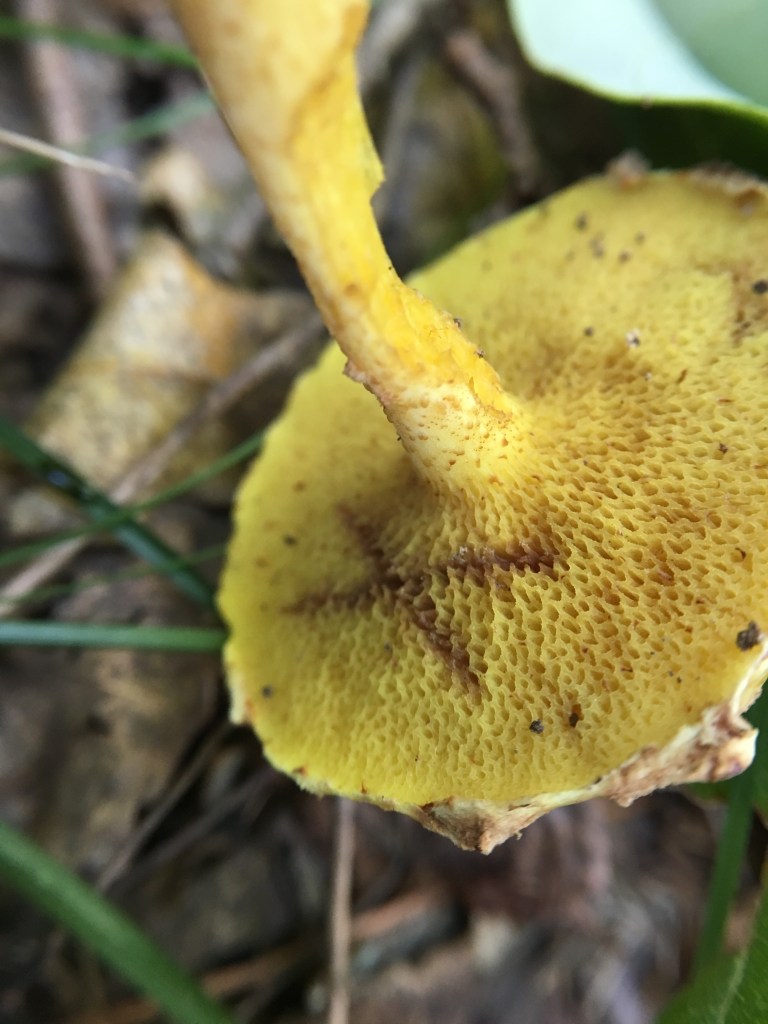
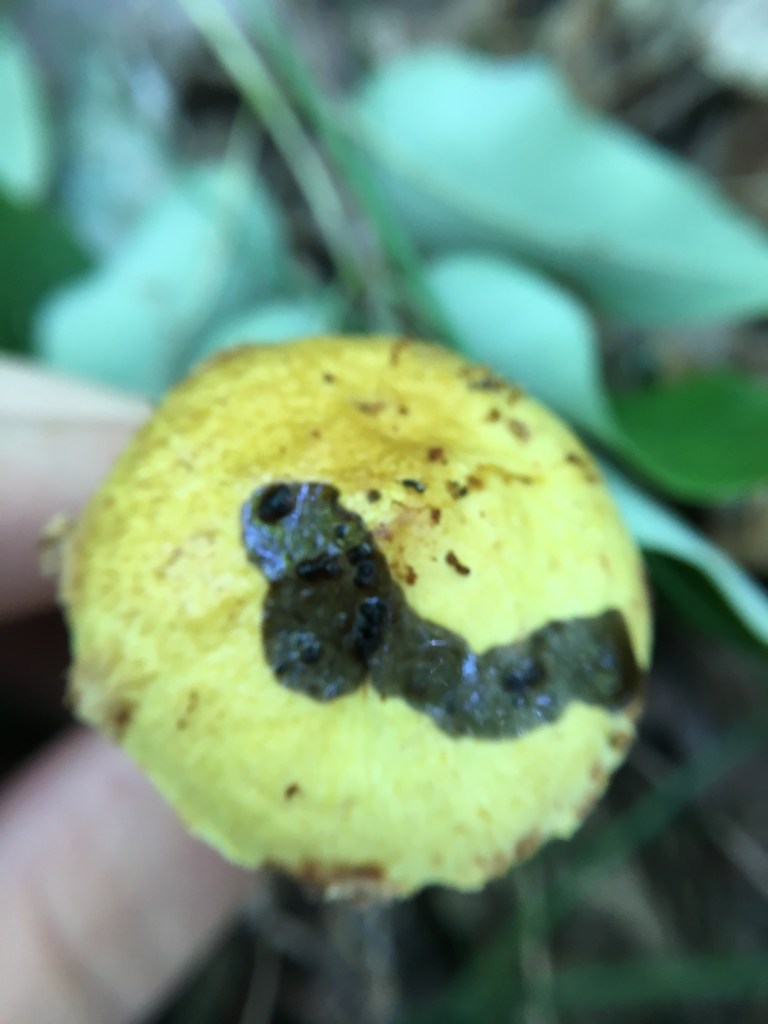
Other distinctive features of the Chicken Fat mushroom include the white basal mycelium, the reddish bruising pore surface, and an interesting chemical reaction. KOH, or potassium hydroxide, is a strong base used to identify some mushrooms. When applied to the cap of Suillus americanus it turns an inky black:
And that’s about all there is to the Chicken Fat Mushroom. It is considered edible, but it’s rather insubstantial and slimy, so I personally have no desire to give it a try, appetizing as its name may—or may not—be.
 recycled paper clips