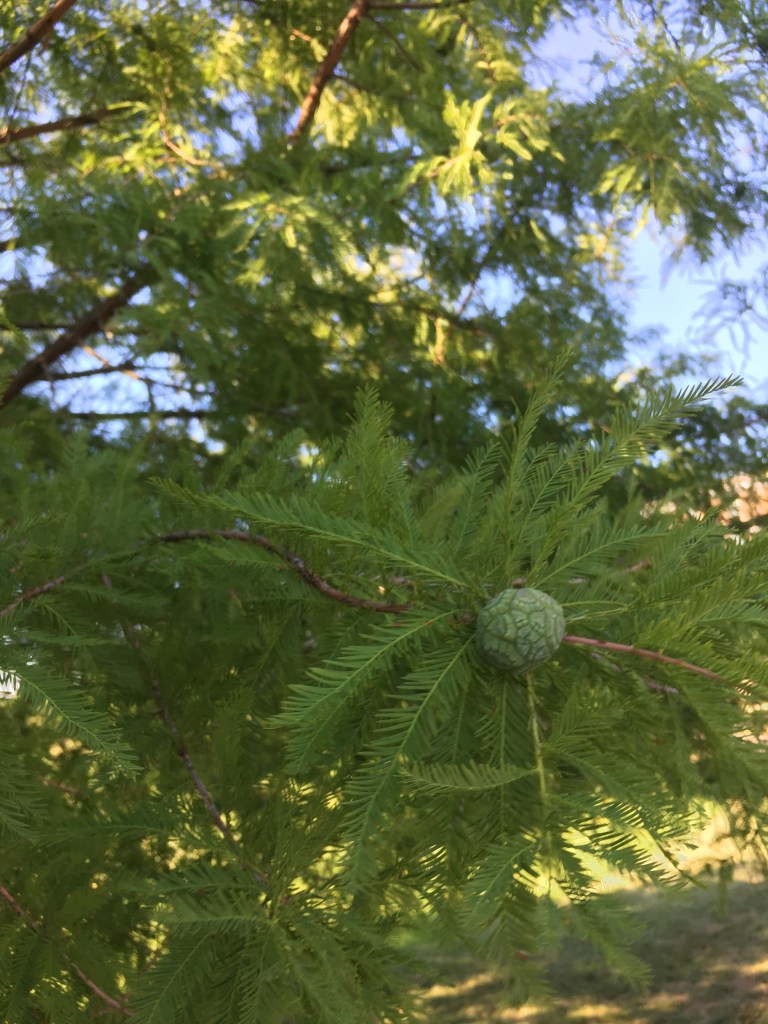
First of all, there is a difference between a “conifer” and an “evergreen,” as the Bald-cypress shows. A conifer is a tree that produces a cone rather than a flower to spread its seeds. An evergreen is simply a tree that doesn’t lose its leaves. The Bald-Cypress produces a rather quirky spherical cone, making it a conifer, but its leaves also turn red and fall off in the fall, making it not an evergreen, but a deciduous tree.
Another example of a conifer that is not an evergreen is the tamarack, or larch, which is more of a northern species not found all that often here in Southern Indiana.
The second oddball conifer we’ll talk about would be the Virginia Pine, which I consider an oddball because of its twisted needles, which almost seem to be trying to writhe or curlycue their way out of their sockets.
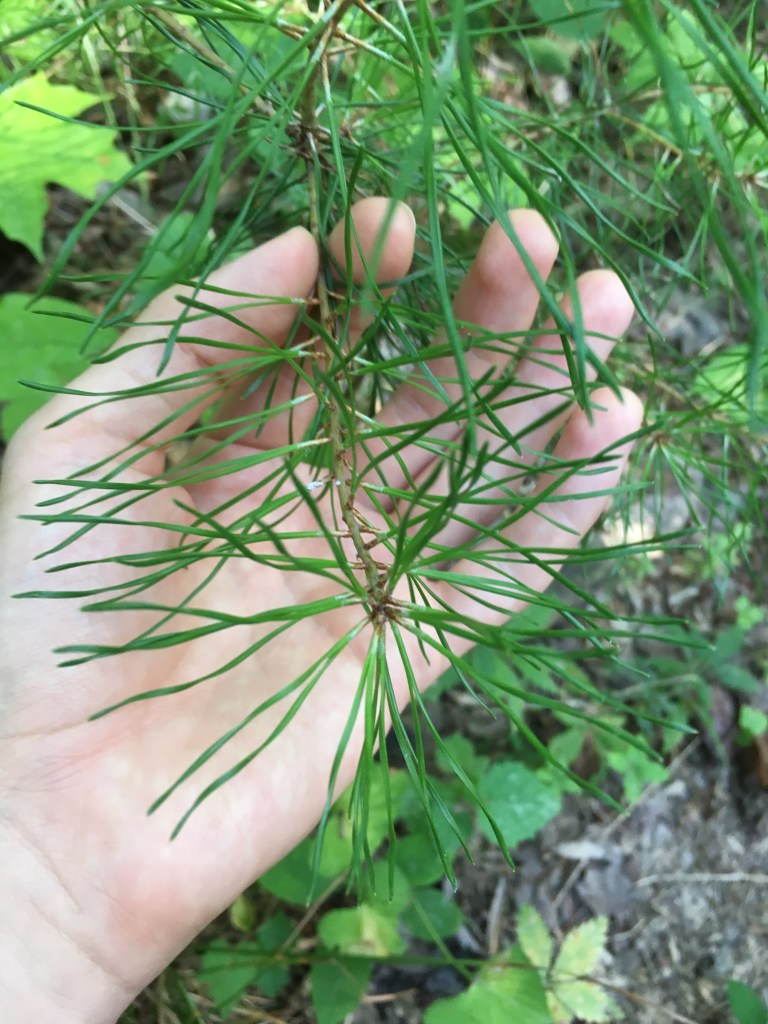
The Virginia Pine is also interesting for historical reasons. It was often planted on old strip-mine sites, so it can provide a clue to the history of the land you are standing on.
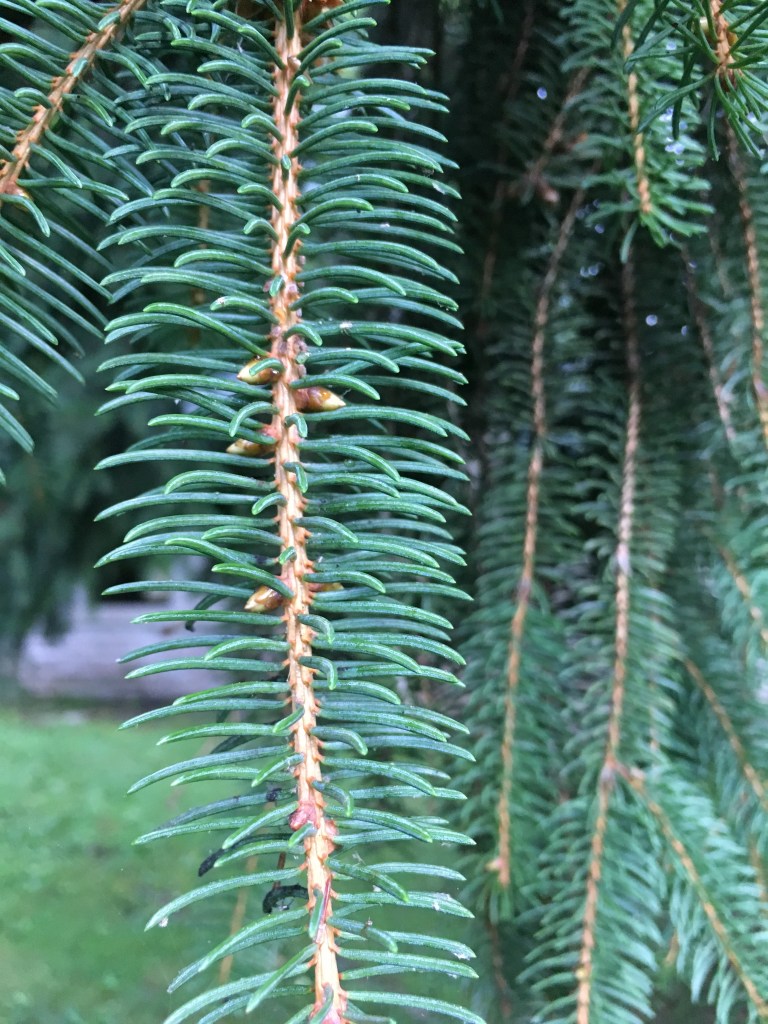
Lastly, the Norway Spruce is not native to the US, but it is a widely planted tree and a bit of an oddball, for two reasons. One, it’s the only spruce with branchlets that hang downward from the branches, giving it a shaggy, drooping look.
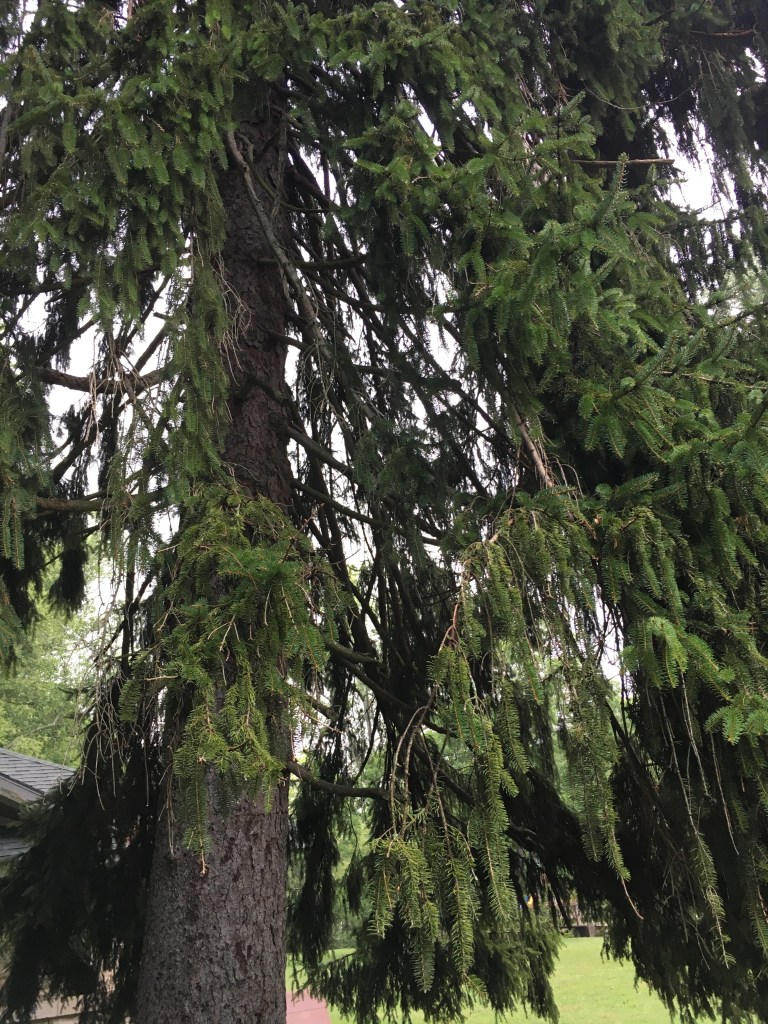
And two, its scientific name, Picea abies, reveals a historical confusion about its true nature. Picea is the genus of spruce trees, Abies is the genus of Fir trees, so Picea abies means something like “Fir-Spruce.” Scientists initially classified it as a Fir, before realizing it fit better in Picea. So what is the difference between a spruce and fir anyways, and why did they change their mind?
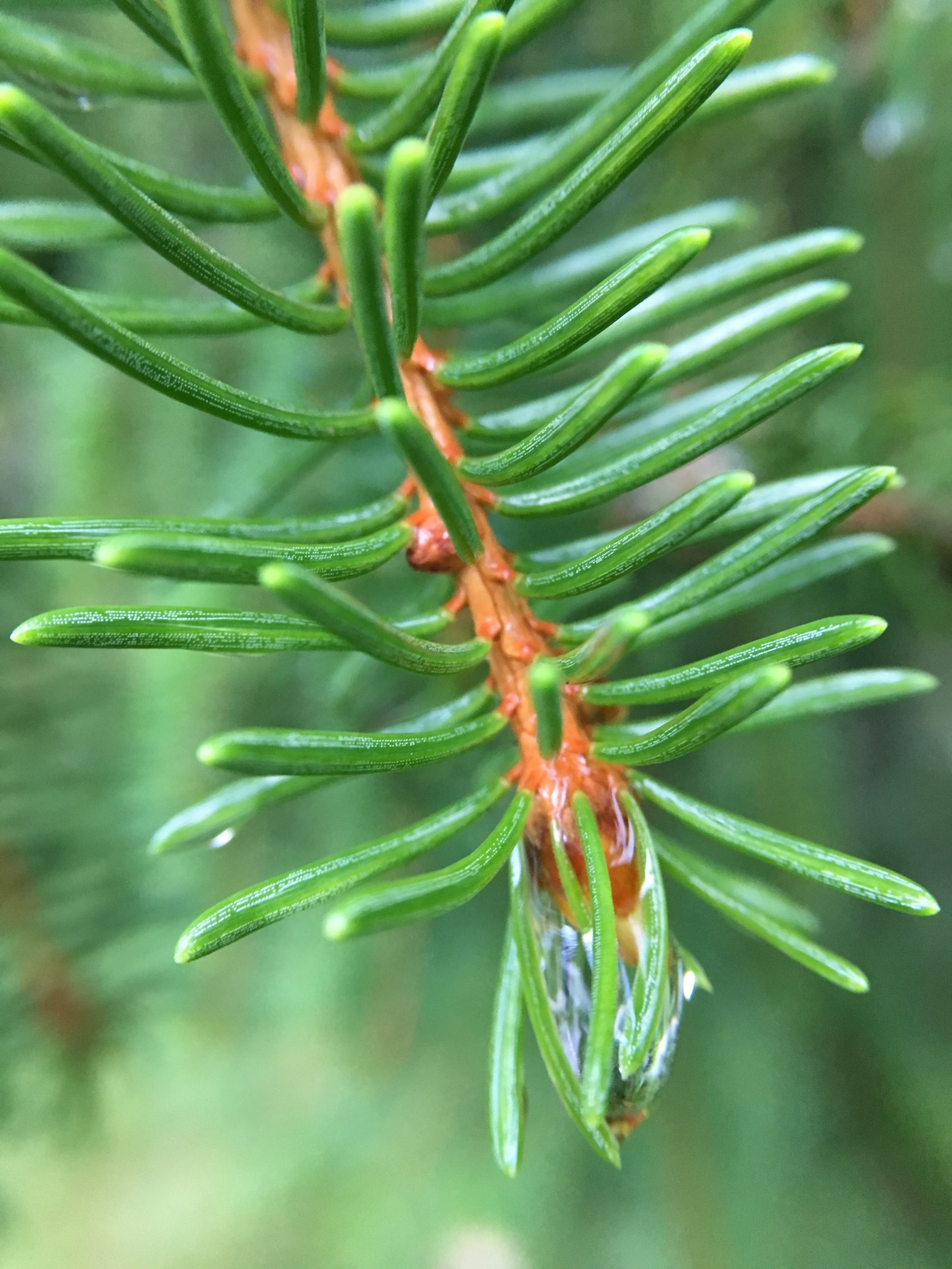
Both spruce and fir trees differ from pine trees, like the Virginia Pine, in that their needles are not attached to the branch in clusters. Spruce needles, however, tend to be four-sided, or square, as opposed to flat, so that you can easily roll them between your fingers. They are also attached to the branch by a kind of woody peg-like structure, which stays behind even when needles fall off:
Fir trees on the other hand, have flat needles, and no woody projections, making the branches feel more smooth. Another difference is that spruces typically have cones growing downwards, whereas fir cones grow upwards.
(Final note: Norway Spruce is often used for large Christmas trees, as below, in Prague)

 recycled paper clips