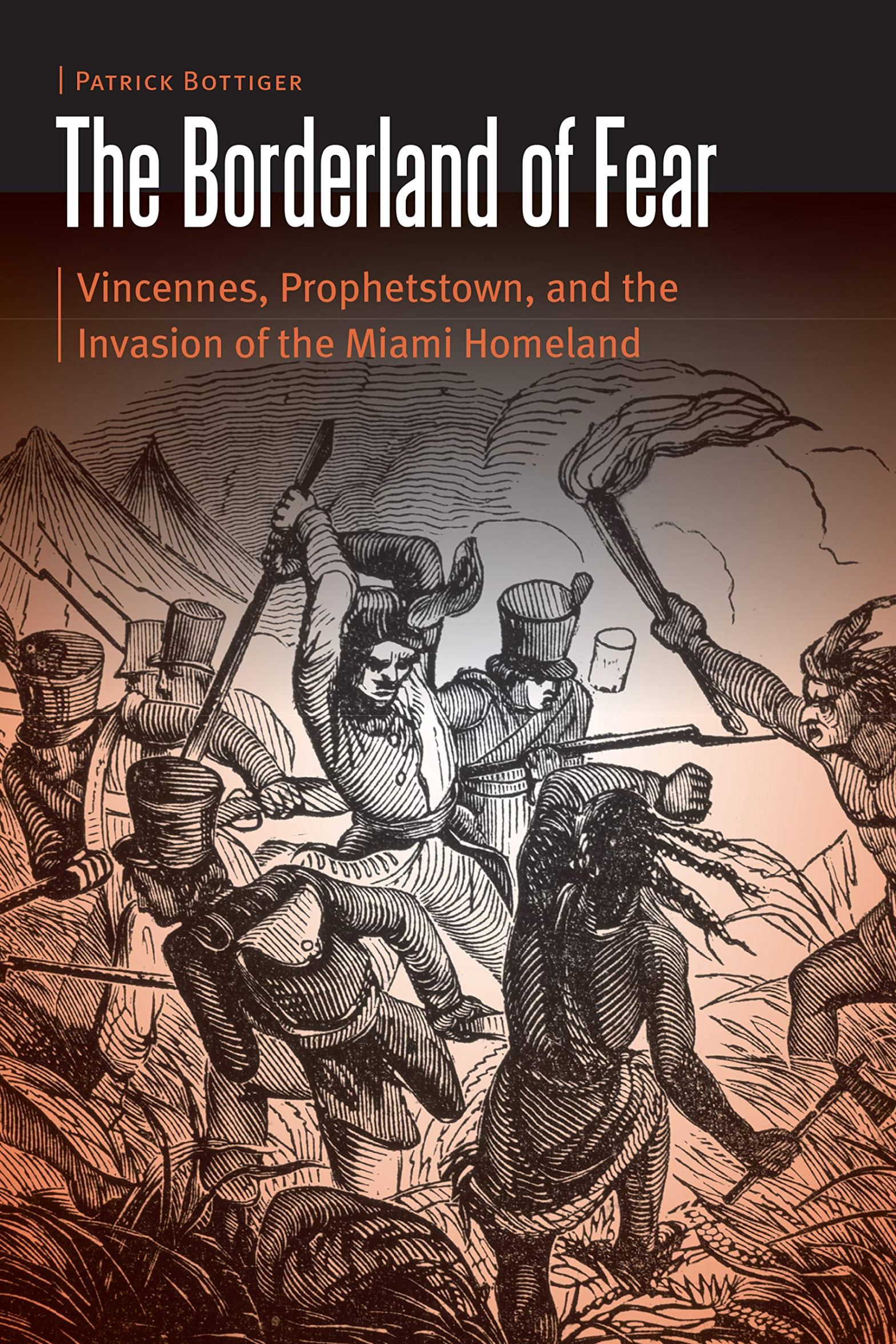
First of all let me say I give this book five stars. It’s not easy to find books about Native American history that don’t either treat Native Americans as uncivilized savages or as romanticized heroes. I started, but had to put down, A Sorrow in our Heart, Allan W. Eckert’s Hollywood version of the life of Tecumseh, for example.
Bottiger breaks down an assumption I had: that early frontier history was Natives vs. Whites, that Native American and white were two cohesive, monolithic identities with fundamentally opposed interests. The common view sees frontier conflict as being essentially racial. There are the Euroamericans on one side, and the Native peoples on the other. In fact, though, this dichotomy is itself a very Euroamerican point of view, originating in the early American inability to understand the complicated web of tribal and ethnic forces at play, and subsequent fear, and “otherization” of what they couldn’t understand.
For one thing, there is very little evidence that Native peoples saw themselves as a cohesive group. The Miami, for example, saw the Shawnee as just as much a threat to their way of life as the Euroamericans. The vast majority of the time, local community interests trumped racial interests in the eyes of Native American leaders.
Bottiger explores the ways in which forces we usually ignore, such as the Miami and the French, shaped the ways Americans viewed Prophetstown to their own advantage. They greatly exaggerated the threat Tecumseh and his brother presented because Tecumseh and his brother were themselves a threat to their way of life, in the case of the Miami because his racialized sense of pan-Indian identity threatened their local, ethnic sense of identity, and in the case of the French, because the Prophet’s rejection of trading with whites threatened their economic prosperity in the region.
William Henry Harrison, the governor of Indiana Territory at the time, had to rely on French and Miami sources of information. These sources of information in turn, were more than happy to play on Harrison’s fear and paranoia in order to secure their own interests. In Harrison’s mind, there was a vast pan-Indian confederacy threatening to wipe white people off the map, when in reality there was a complicated web of factional interests and diverse identities at play. The American view tends to assume that the Shawnee and Miami had the same interests, that they recognized each other as belonging to the same racial group, because from the American point of view they were not two different ethnic identities, but one Other.
I could say a lot more on the subject, but I’ll let you read the book for yourself, it’s a book you really should read!
 recycled paper clips