Plants are multicellular organisms that use chlorophyll to make their own food…right? Well, not always, as it turns out.
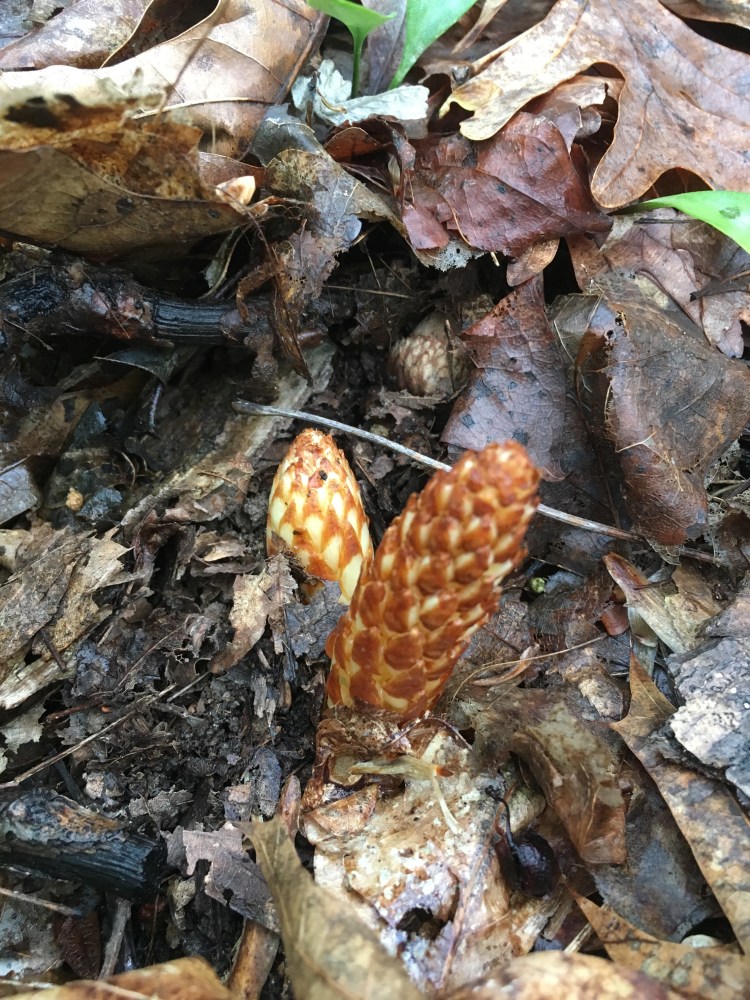
There are actually a number of plants that parasitize other organisms, mistletoe, for example. Or American Cancer Root, which has featured before on this blog and parasitizes oaks.
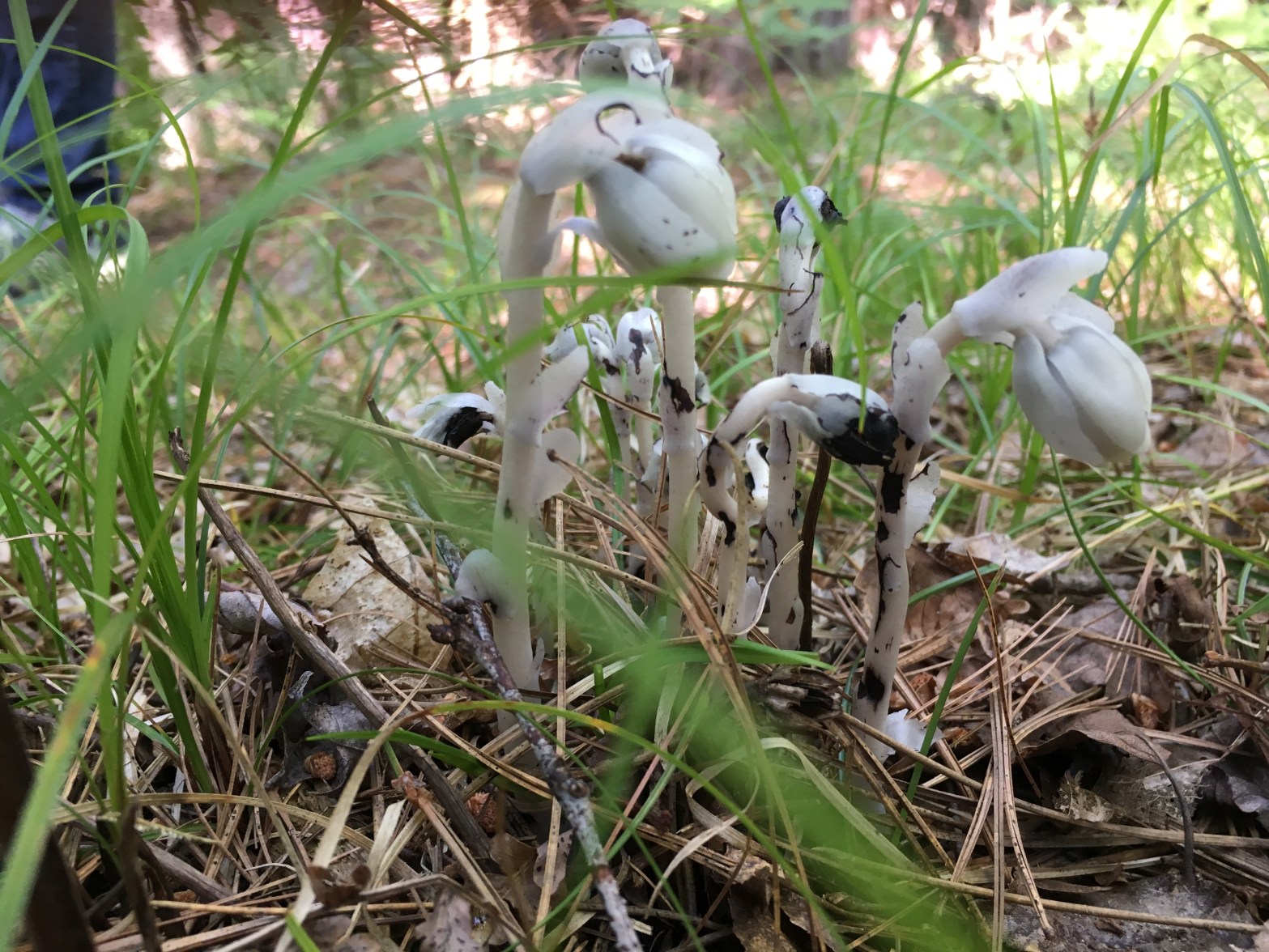
But have you ever heard of a plant feeding off a mushroom?? It’s usually the other way around, but Monotropa uniflora, or “ghost pipes,” formerly “Indian Pipes,” does just that. It feeds itself by taping into the mycelium of a specific group of mushrooms, the Russulas, which in turn get their energy from a symbiotic relationship with the root systems of trees.
So if ghost pipes don’t have chlorophyll or photosynthesize, what makes them plants? Well, their evolutionary history mostly. Ghost pipes are actually somewhat closely related to blueberries, if you can believe it. There seems to be some taxonomic back and forth, with some biologists (and wikipedia) considering them part of Ericaceae (the family of which blueberries are a member), and others claiming they should be part of a seperate Monotropaceae family. Regardless, based on DNA they are much more closely related to other plants than to the fungi they parasitize. Besides DNA evidence, there are structural features which group them with plants. Having a flower and seeds for example. But it just goes to show how hard it is to define something as simple as a “plant,” and how many exceptions you can find if you look hard enough.
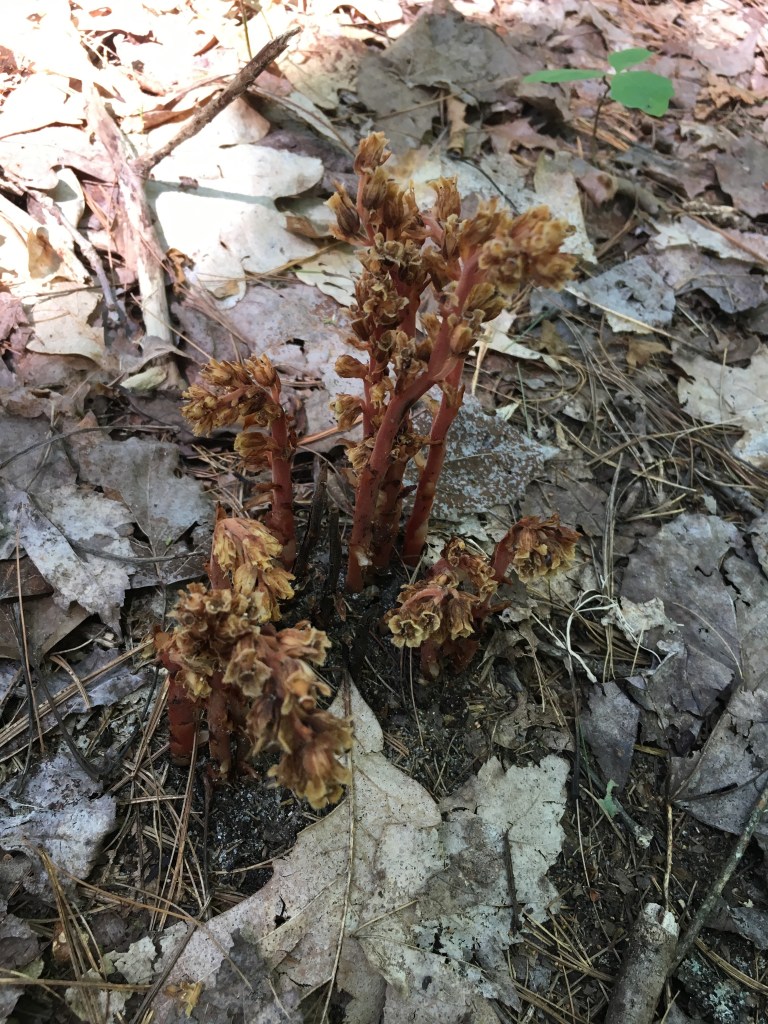
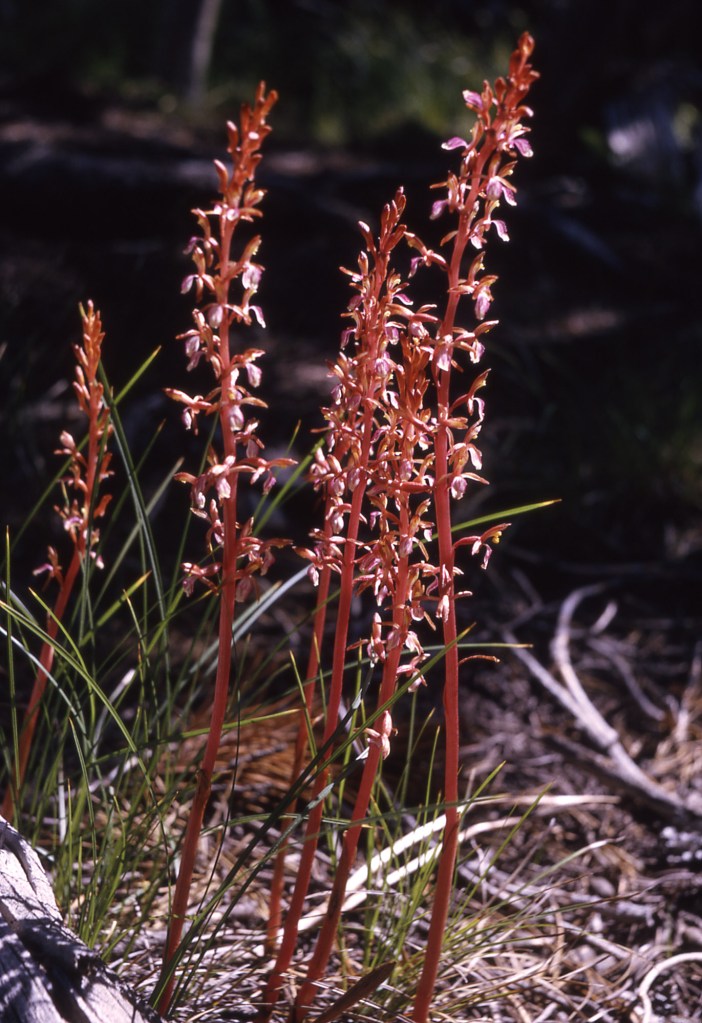
While we are on the subject of non-photosynthesizing plants, I’ll briefly mention a third I’ve seen recently, called Pinesap, or Monotropa hypopitys. It’s fairly similar to ghost pipes, except that it has several flowers instead of just one, and tends to be reddish tinted. And lastly, many Orchids are also myco-heterotrophs (meaning they feed on mushrooms) which is part of the reason they are so hard to cultivate!
 recycled paper clips
One thought on “It’s not a fungus, but what is it? Part 2”