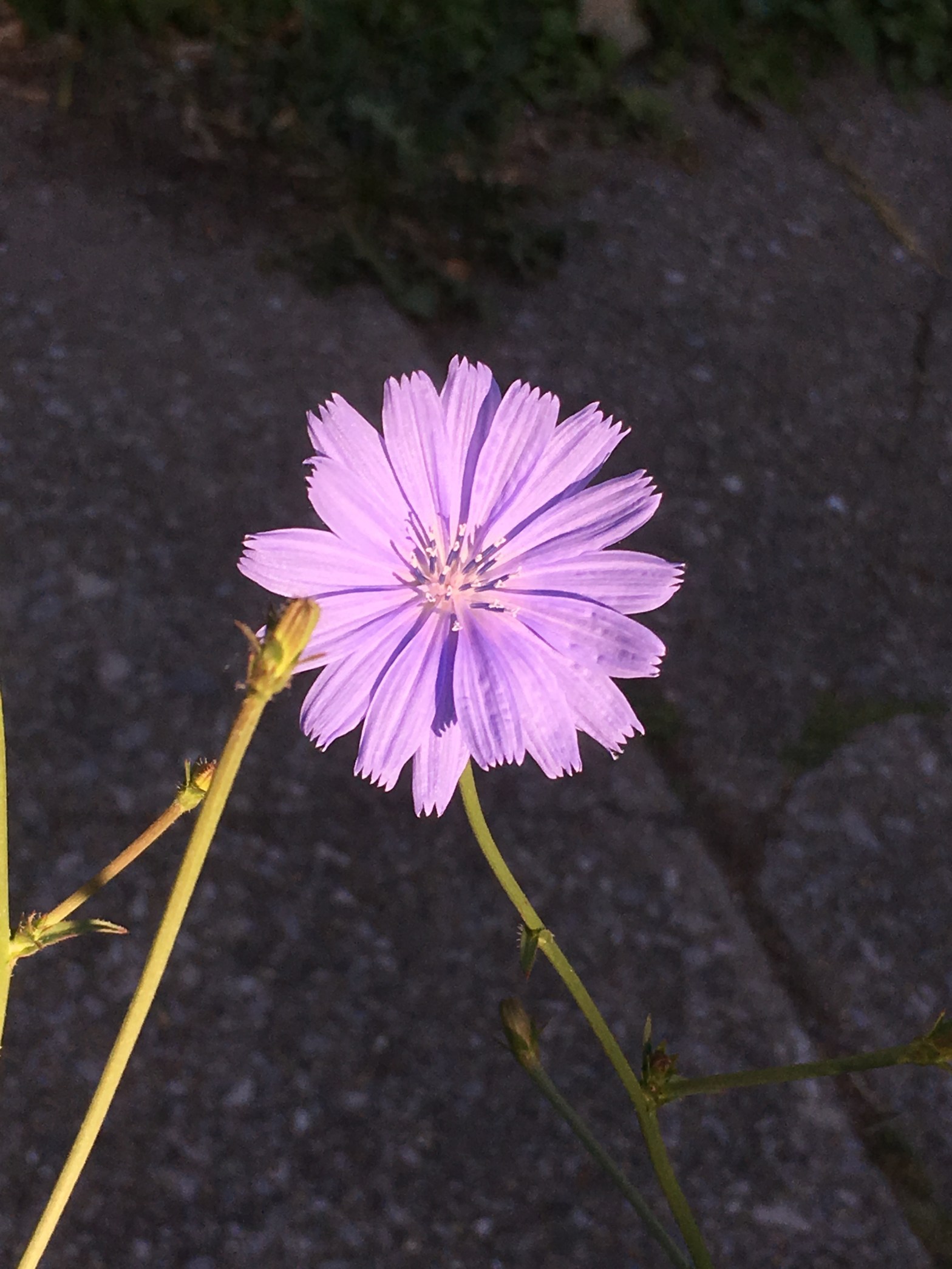
On my morning bike ride to work one day I spotted some electric blue flowers in my neighbor’s yard—which he has yet to mow this year. Then I saw them a couple other places on my morning route. I took a mental note and resolved to come back during my lunch break and photograph them and figure out what they were. They were a very pretty shade of blue, “electric” in the morning sunlight in contrast to the still-in-shadow ground. But when I went back around 12:30 to look for them they were nowhere to be found.
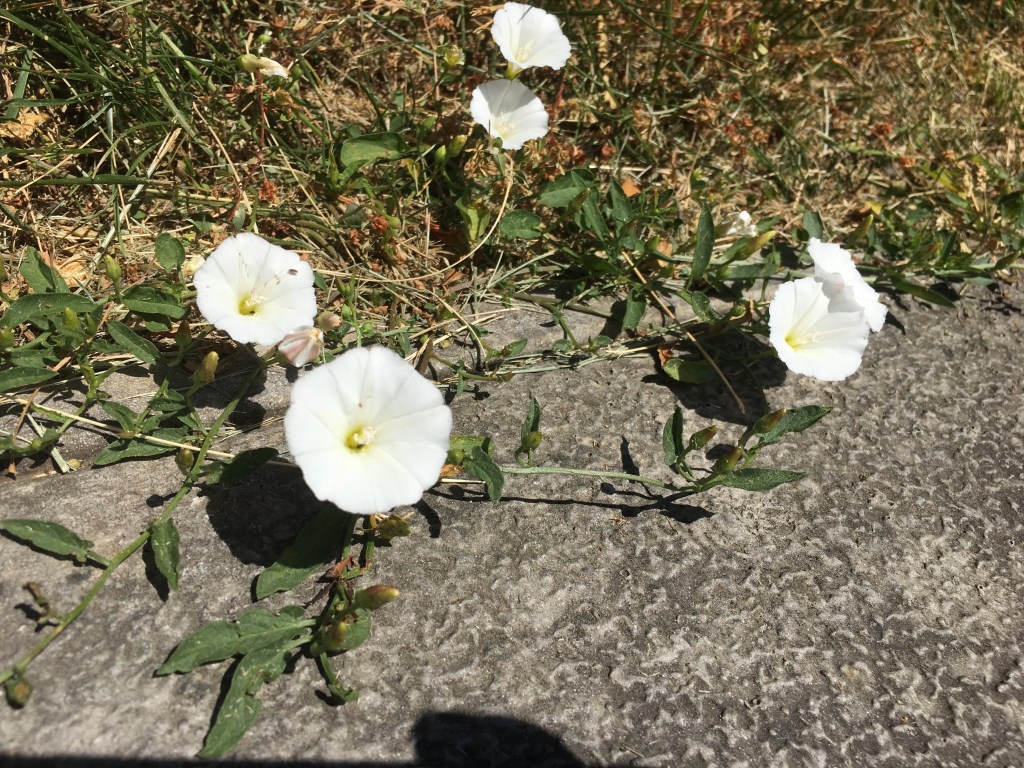
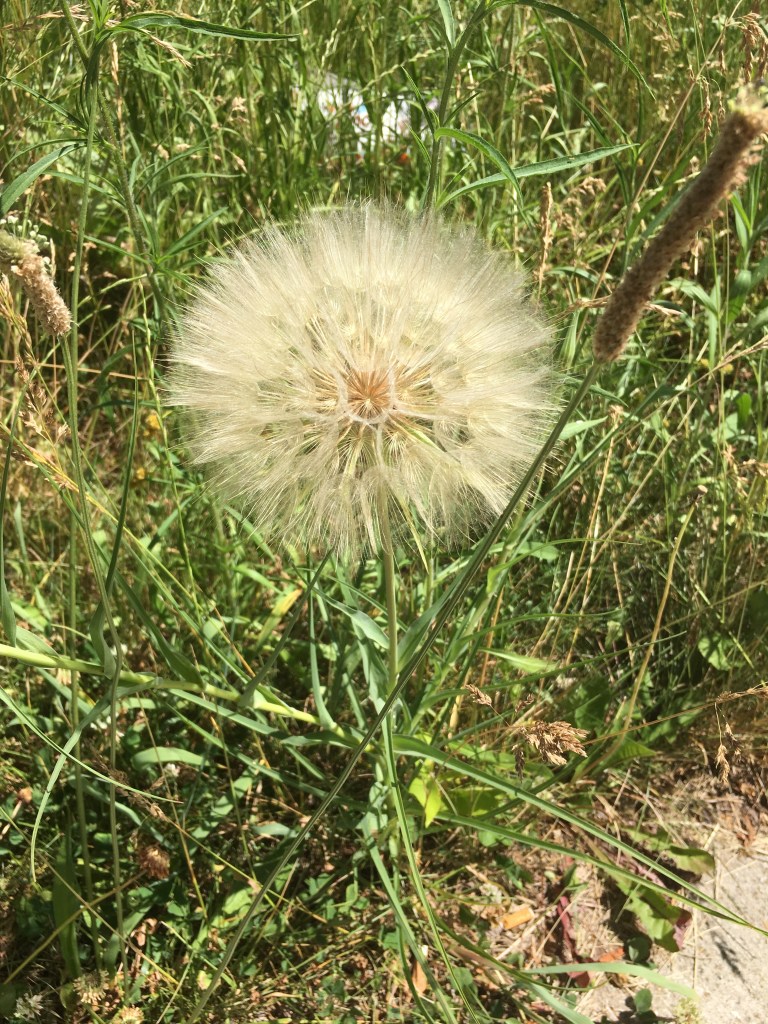
I found plenty of bindweed, the no. 1 enemy of my garden, in bloom. I found what I believe is a kind of Salsify, which looks like the seed-head of a dandelion, but much larger. I found what looked like the stem and leaves of the blue-flower but it was bare, weedy, and somewhat ugly.
There was nothing for it but to wait for the next morning. And sure enough they were back.
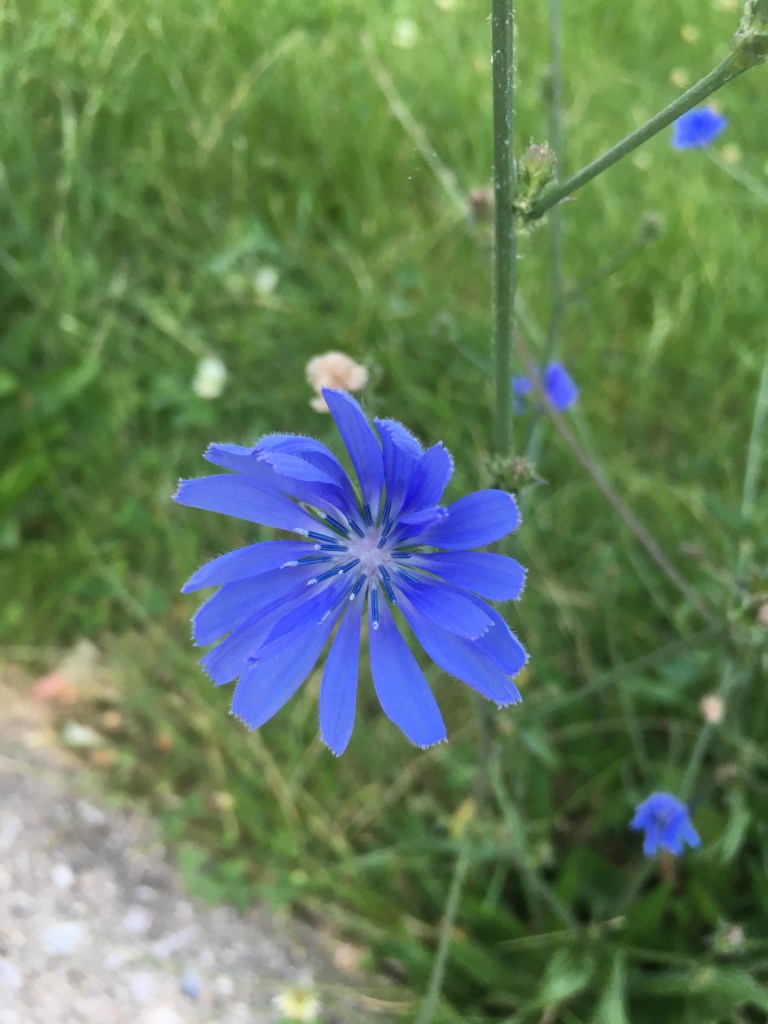
Chicory is also known as Blue Dandelion because the basal leaves are similar — although so are those of many other plants, including a potential lookalike, Wild Blue Lettuce. Also like many other plants, Chicory has two distinct leaf forms, a basal rosette form, and a stem leaf form. The basal form is dandelionish, but the stem leaves are lance shaped, clasping, and few and far between.
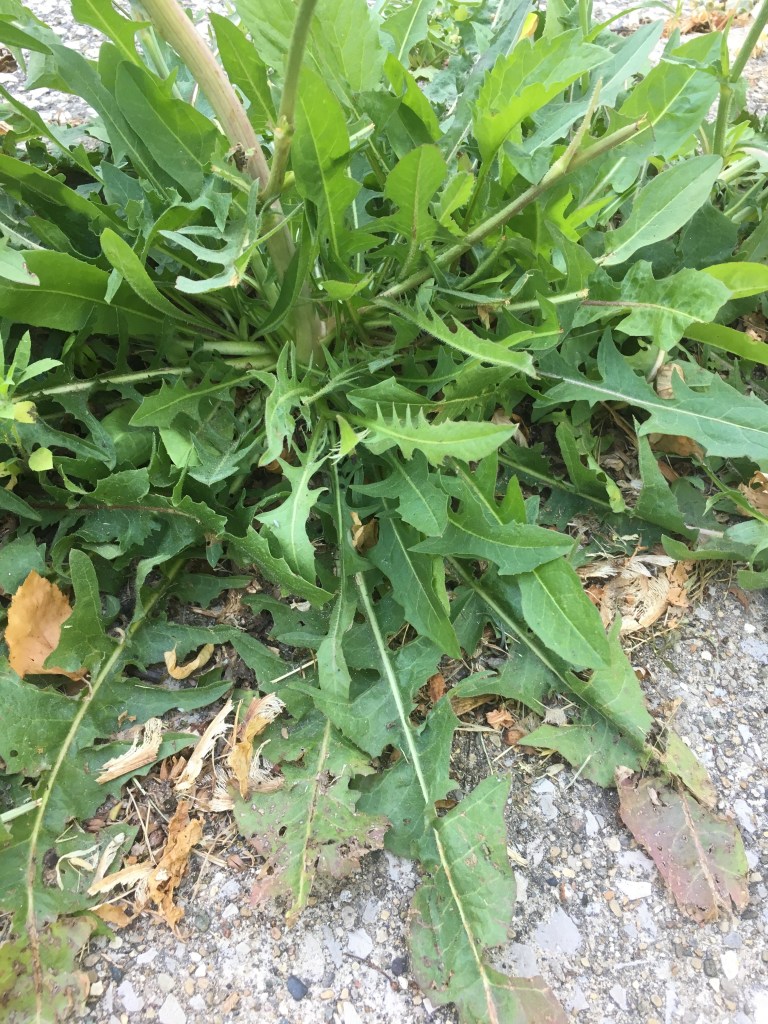
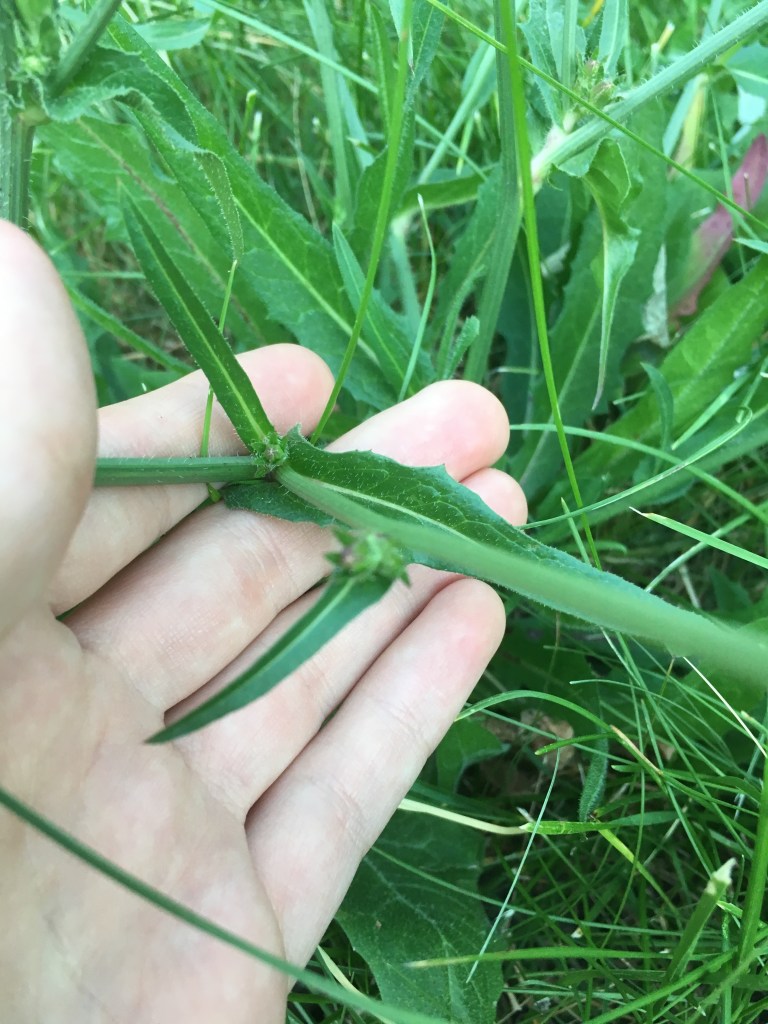
The flowers are nearly stemless, open in the morning, track the sun, and close by noon. These characteristics, taken together, make it fairly easy to identify Chicory, at least during the summer. Chicory, of course, is also known for having a very sturdy taproot—which I have yet to dig up—which can be made into Chicory coffee; but what I didn’t know was that the leaves are a common salad green in Europe. In fact, Belgian Endives are a cultivated form of Chicory, as is the Italian Radicchio. The reason Belgian Endives look so different from the weedy Chicory I found is that they grow it indoors, or without light, which prevents the leaves from greening up and becoming bitter.
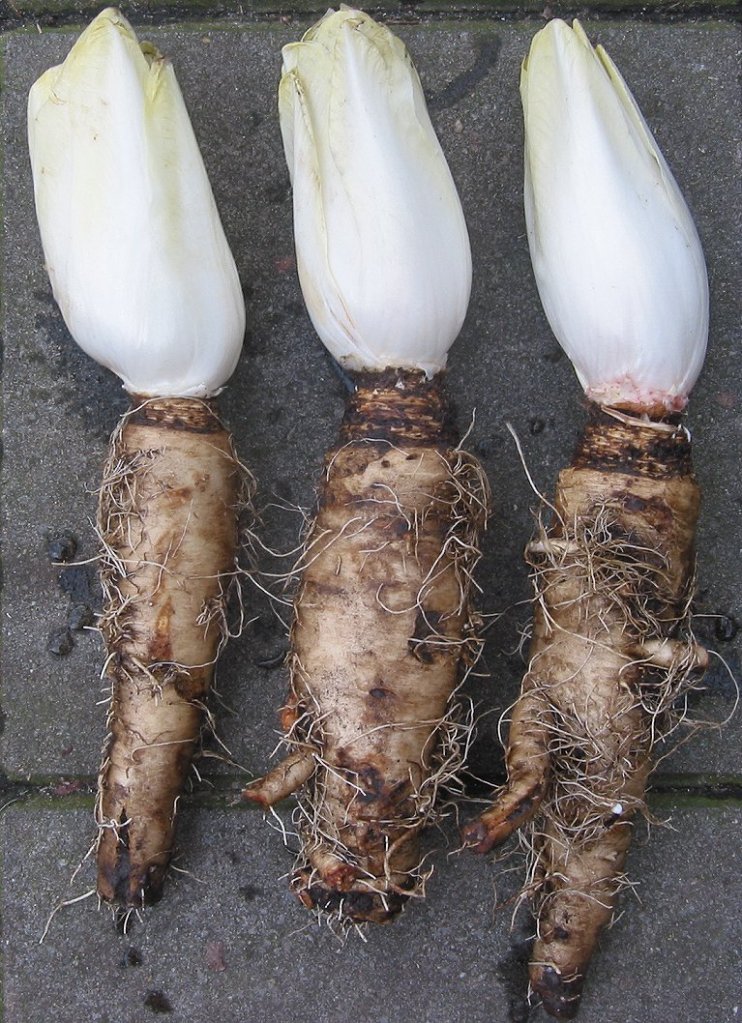
The plant is native to the Mediterranean. Its latin name, Cichorium intybus, refers to the Egyptian word for January, which is when Egyptians harvested Chicory thousands of years ago. It was later brought to North America as a fodder crop, salad green, and coffee substitute. And although it is an invasive species, I find it hard to wish for its eradication.
(If you are curious about growing Chicory for endives, or just want some language practice, there are lots of Dutch, French and German youtube videos out there that will tell how to do it–and give you some language practice too).
- https://www.youtube.com/watch?v=rJyby1JRffc (Dutch)
- https://www.youtube.com/watch?v=ySdO26IRGe0 (German)
- https://www.youtube.com/watch?v=VpHnbWFmvQo (English)
- See also the Ohio Weedguide: https://www.oardc.ohio-state.edu/weedguide/single_weed.php?id=25 an extremely useful resource for identifying common weeds.
 recycled paper clips

Great post! I always love Chicory’s flowers.
LikeLike