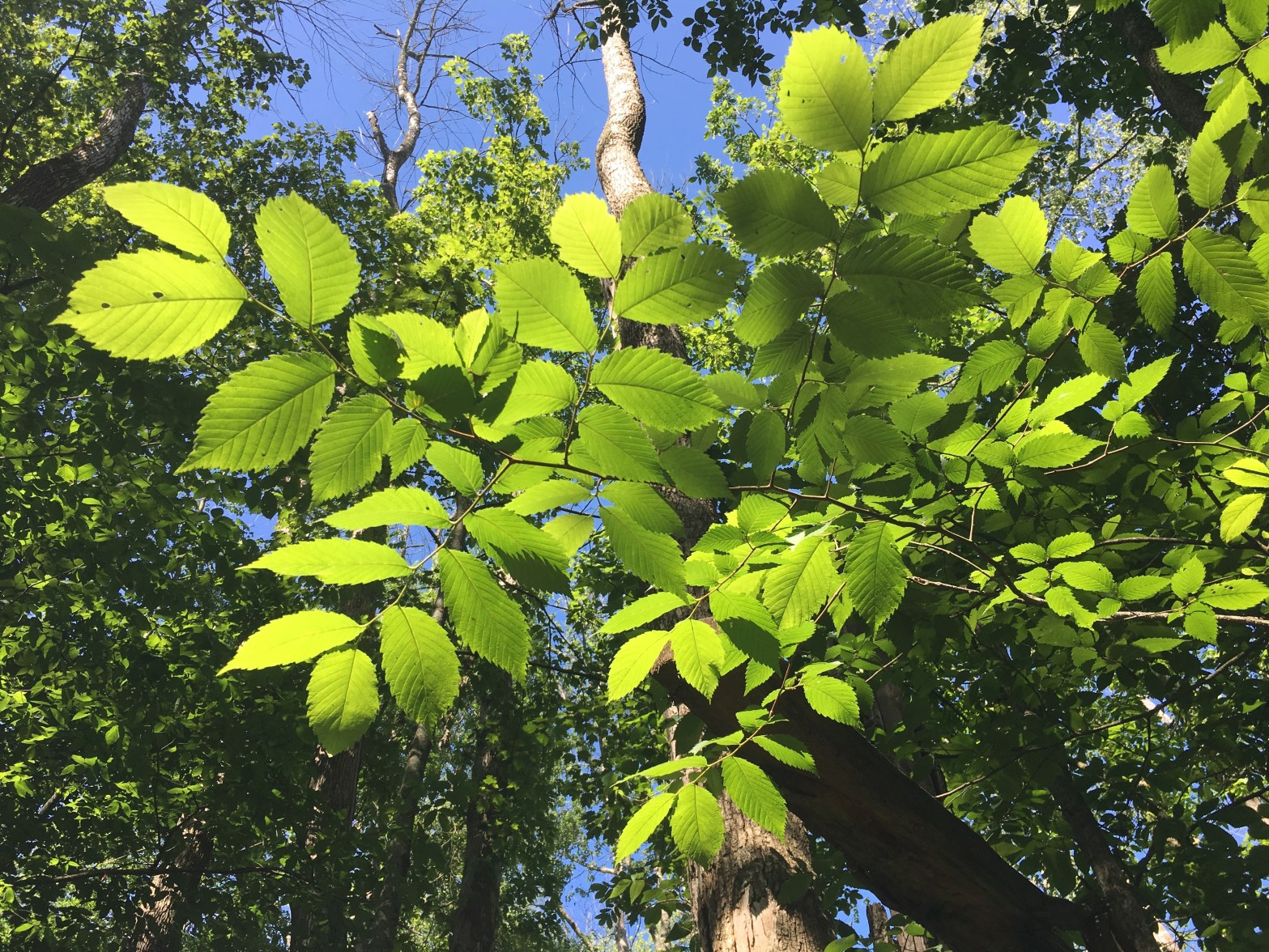
The conventional wisdom on Elms (American and Slippery) is that they can be recognized by their asymmetrical leaf bases. However, in my experience there is considerable variation from plant to plant and also even from leaf to leaf on single tree. Many of the elms I find have nearly symmetrical leaf bases—possibly because they have hybridized with the invasive Siberian Elm which is more resistant to DED (Dutch Elm Disease)!? It’s also possible that asymmetry varies with the age and size of the tree, the point during the growing season, or what kind of stress the tree is under. In the drawing of a Slippery Elm below (from the Pennsylvania Department of Forestry) for example, the asymmetry is hardly noticeable. So here are a few other ways of identifying Elms, separating them from each other, and from their look-alikes: The American Hop Hornbeam and the American Hornbeam.

Slippery Elm, American Elm, American Hop Hornbeam and American Hornbeam all have doubly serrate leaf margins. This separates them from the Siberian Elm, although as with the leaf bases the distinction is not always clear cut. Another clue you have a Siberian Elm, also known as a “Piss Elm” because they are considered unattractive, is the small size of the leaves (up to 2.5 inches.)

After checking to make sure the margins are doubly serrate, the best test, in my experience, is texture. Slippery Elm leaves feel like sandpaper, or like a “cat’s tongue,” as I’ve heard some people say. Unlike what their name might lead you to imagine, the leaves are quite rough, as the picture below shows.
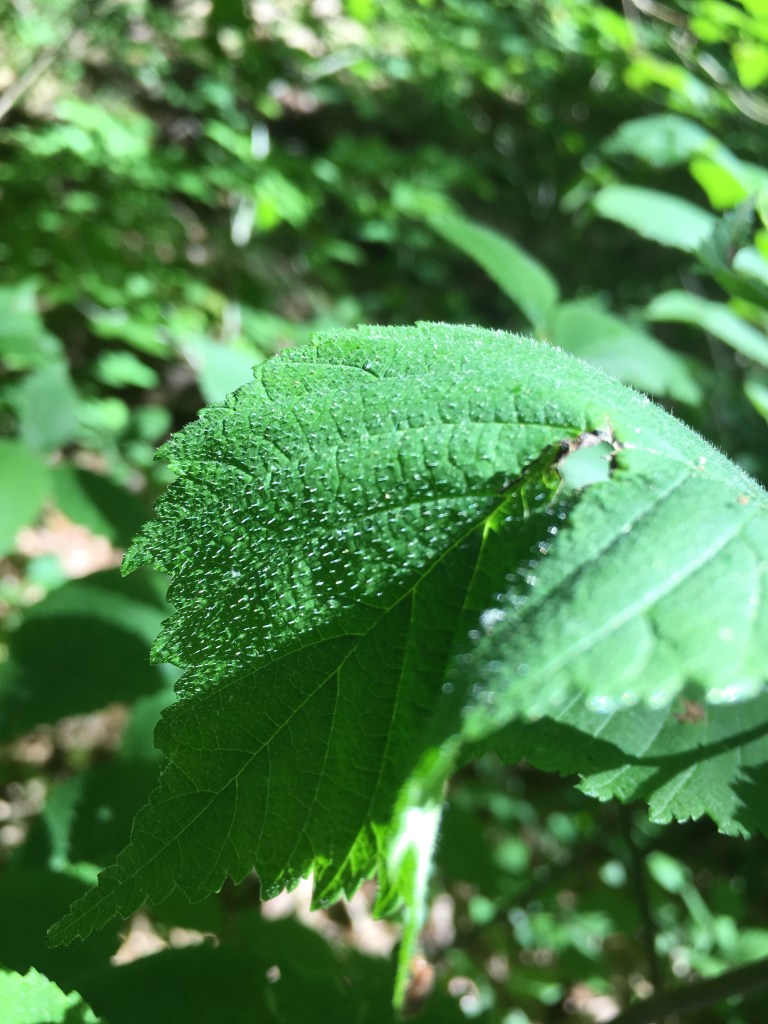
American Elms, by contrast, are smooth, and have slightly smaller leaves.
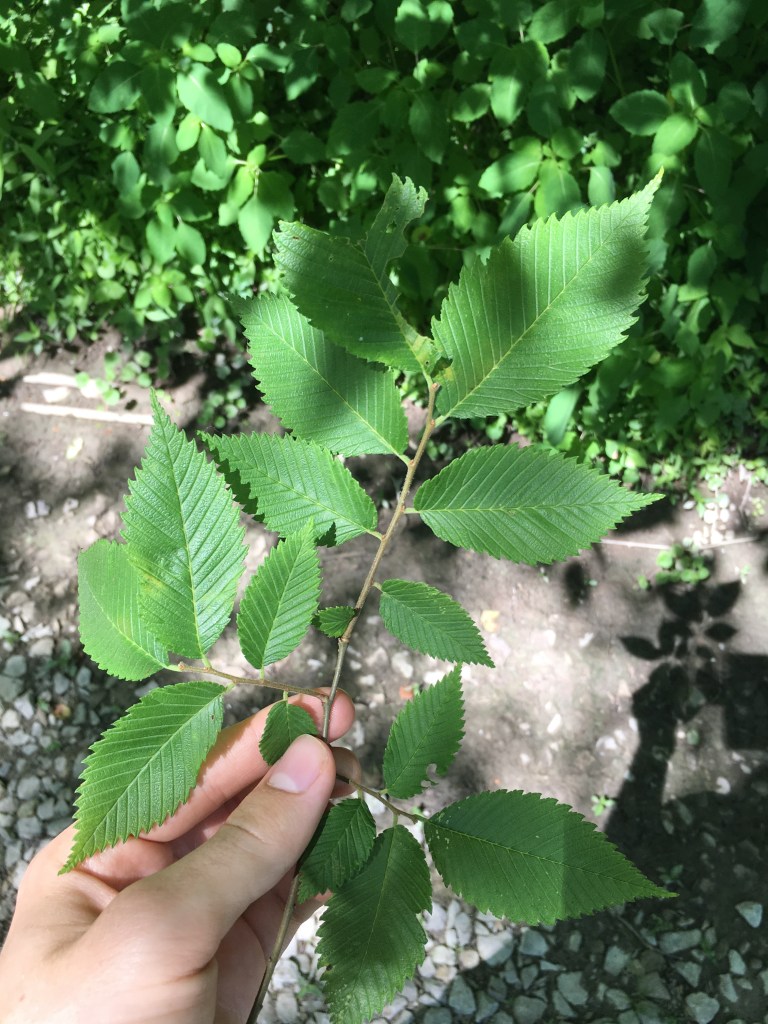
The next species to consider is the American Hop-Hornbeam. The Hop-Hornbeam is a common understory tree, almost never getting more than a foot in diameter—but then neither do Elms these days. It has incredibly tough wood, also giving it the name “Ironwood.” The best way in my opinion to tell this one apart from Elms is again the texture of the leaves. They are soft and thin, neither totally hairless like American Elms, nor rough like Slippery Elms. Their leaves look very very similar to Elms, except that they are a lighter, more yellowish shade of green. Another hint, if it’s larger than a sapling, is the bark, which is “shreddy,” coming off in thin vertical strips.
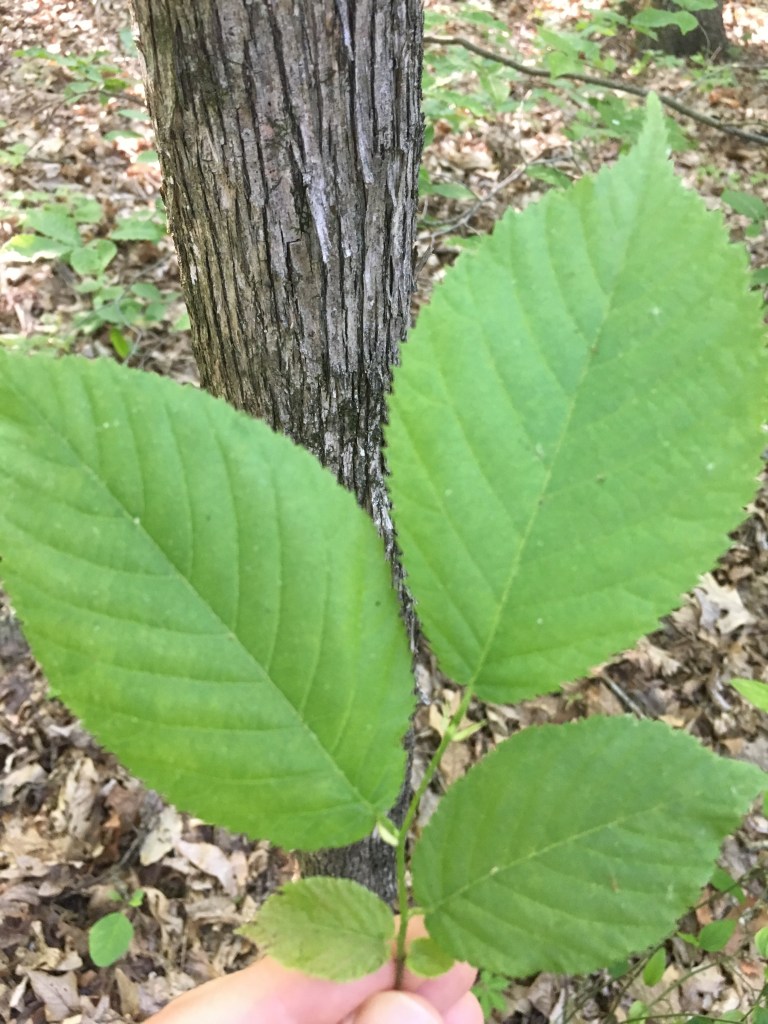
The habitat tends to be more upland than Elms, but I have also found them growing along creek beds interspersed with Elms and our next tree, the American Hornbeam, also known as “Musclewood” because its most distinctive feature: the sinewy, muscly shape of its trunk
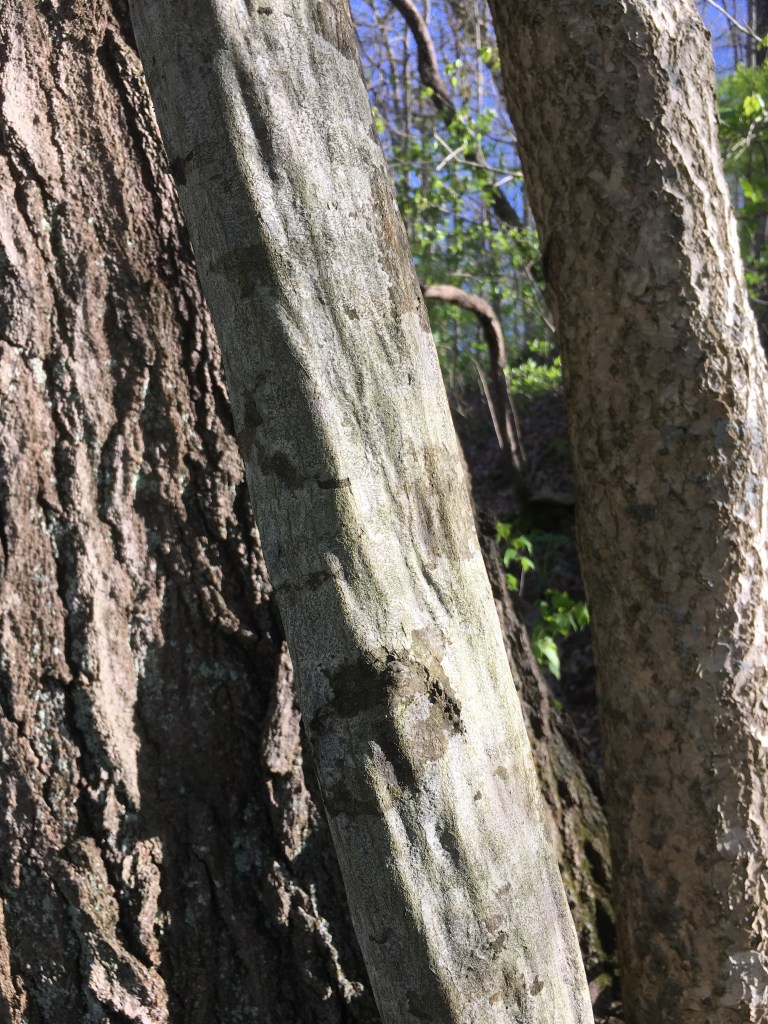
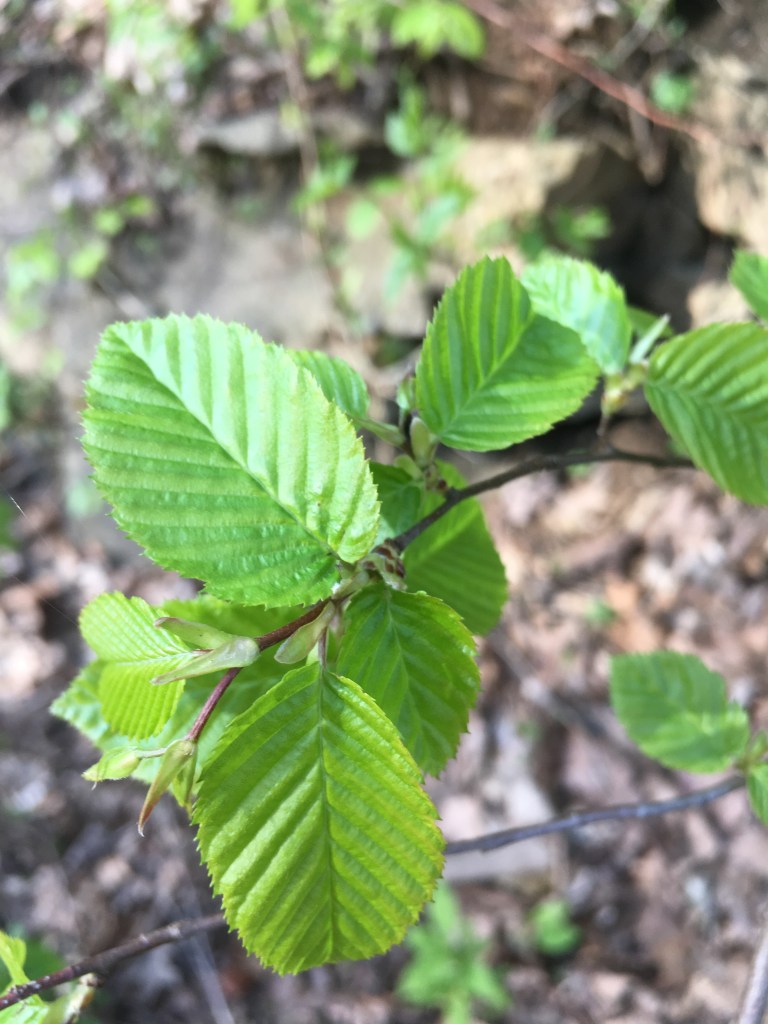
Aside from the trunk, which is distinctive even with saplings, Musclewood can be differentiated (from Hop-Hornbeam and Slippery Elm) by the smoothness of its leaves and its prominent veins, almost giving the leaves a corrugated look at least when young.
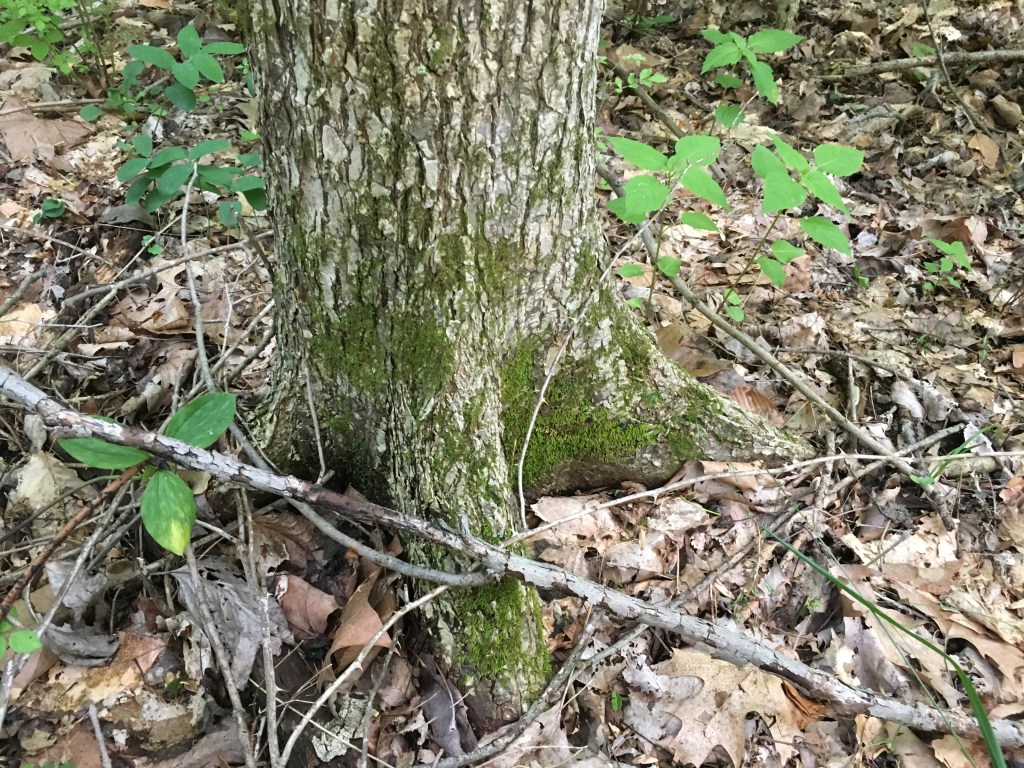
We’ve discussed the bark of Hop Hornbeams and American Hornbeams, what about the bark of Elms? Again, visual details aren’t always the most helpful when identifying Elms. Rather, it’s the feel of the bark—soft, almost like styrofoam, so that when you press into it with a fingernail it gives— that is helpful, at least for American Elms. Also, it tends to have a sort of “terraced” look, like multiple layers built on top of each other.
All this is not to say that leaf asymmetry isn’t a useful feature for identifying Elms, but I do think that it can be quite minute, and there are other, perhaps easier, features to check for when the leaf bases are ambiguous.
 recycled paper clips