Everyone knows that Peter the Great “westernized” Russia. But what does that mean? And how true is it?
In a very literal sense Peter the Great did westernize Russia, that is by persuading a large number of Western experts to immigrate and take up prominent posts in the Russian government. Peter “imported” shipwrights, mathematicians, generals, architects, translators and more by the hundreds and the thousands. He also forcibly sent thousands of Russians abroad to study these subjects, something that wasn’t at all popular with the Russian nobility.
On a deeper level though, the question is more ambiguous. I think when people speak of “westernization” they have two key ideas in mind. The first is that “Western” is associated with the scientific, the empirical, the rational, as opposed to the supposedly faith-based, irrational non-West. And the second, is that it has something to do with democracy and an increase in individual freedoms.
Peter certainly greatly advanced the scientific standing of his nation. He founded schools, brought inventions and scientific marvels back from his travels in Western Europe, and made it a point to make direct personal contact with Western chemists, mathematicians, and physicists.
But his interest was not in science for its own sake, but in science for the sake of war. Like most “great” leaders, his fundamental goals were military strength and geopolitical power. Science, and rationalism in general, was a means of more efficient exercise of power.
Although this is probably not what most people have in mind when they say that Peter westernized Russia, his focus on territorial expansion was indeed very Western/proto- Colonial. Peter was the first Tsar to give himself the title “Emperor,” a title for him having connotations going back to Alexander the Great, his role model.
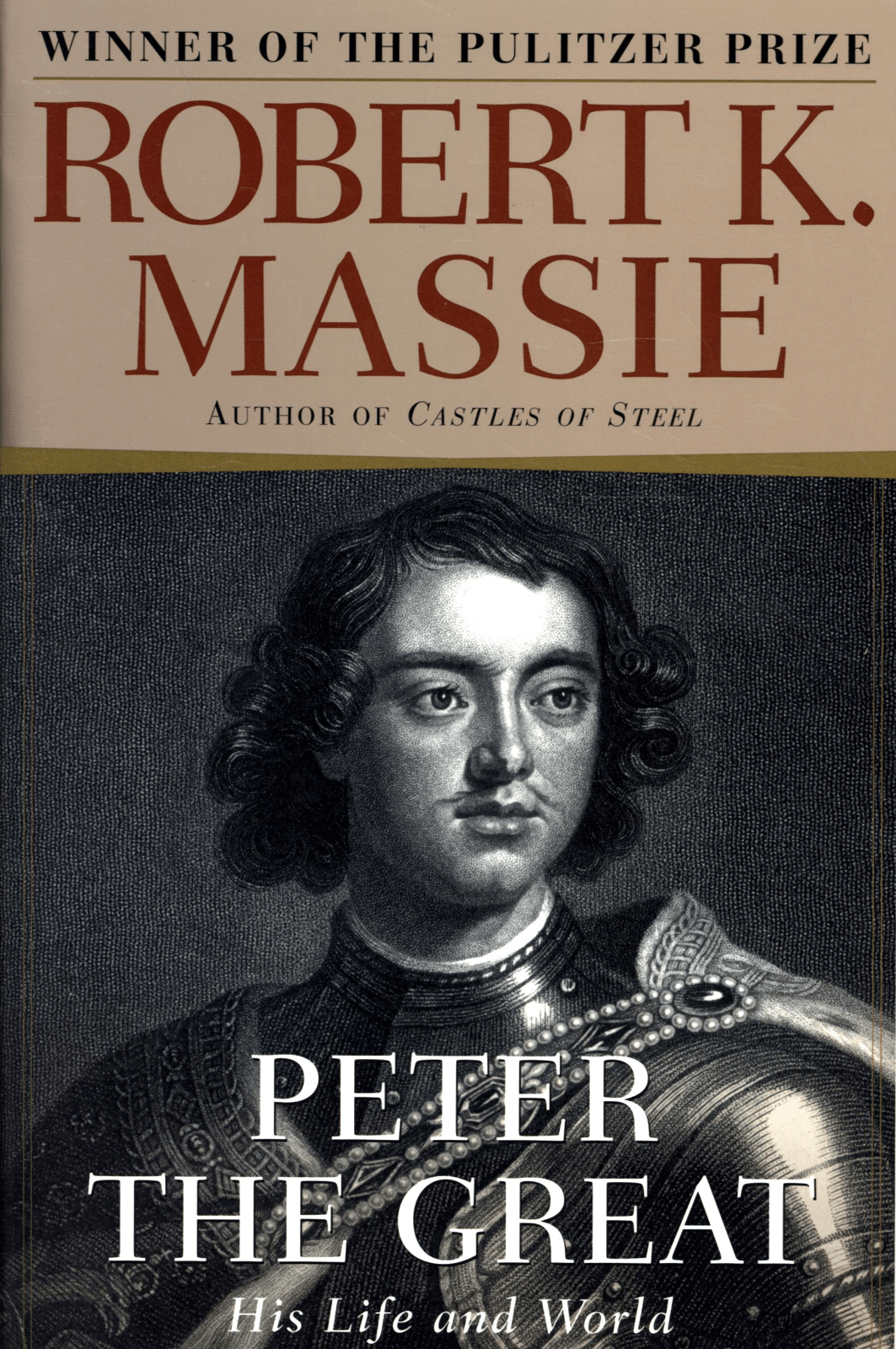
In the second sense in which we mean “Western,” that is, having to do with greater individual freedoms and political institutions such as democracy, however, Peter cannot really be said to have westernized Russia. As Robert K. Massie puts it in his biography Peter the Great, his Life and World
Russian society, like that of medieval Europe, was based on obligations of service. The serf owed service to the landowner, the landowner owed service to the Tsar. Far from breaking or even loosening these bonds of service, Peter twisted them tight to extract every last degree of service from every level of society.
pg. 775
One thing you might not know about Peter the Great is that he tortured his own son to the point of death, because he believed (without much foundation) that there was a conspiracy afoot to overthrow him. Peter wracked his country with such absurd taxes and duties that the wonder of it is that they didn’t rebel.
There was a tax on births, on marriages, on funerals and on the registration of wills. There was a tax on wheat and tallow. Horses were taxed, and horse hides and horse collars. There was a hat tax and a tax on the wearing of leather boots. The beard tax was systematized and enforced, and a tax on mustaches was added. Ten percent was collected from all cab fares…etc
Robert Massie, Peter the Great pg. 401
The building of St. Petersburg, which cost the lives of tens of thousands of conscripts, is another example of the human cost of Peter’s greatness. Another particularly mean piece of despotism was the government monopoly on salt. Peter fixed the price of salt at twice what it cost the government to produce, so that, “Peasants who could not afford the higher price often sickened and died.”
So if we take “westernization” to mean a lightening of the feudal yoke, then Peter’s reign was the opposite. “Individual freedoms” were not in his vocabulary, they had no place in his idea of how a State should be organized. But were individual freedoms and more respected by the leaders of the West? Not really.
We can say that Peter “westernized” Russia as long as we are clear that we mean the exploitative, territorial, and repressive aspects of Western civilization rather than its often invoked lofty ideals. For many people though, those negative aspects of Western civilization are by far the greater portion, so perhaps the claim that Peter “westernized” Russia is more accurate than we have realized.
 recycled paper clips