
If there is a single fungus which exemplifies the morbid connotations of that word, it is “Dead Man’s Fingers,” Xylaria polymorpha. The wikipedia article, probably written by someone more familiar with mycology than literature, falsely claims that the fungus is mentioned in Hamlet Act IV Scene 7, when Gertrude describes Ophelia’s suicide.
“There with fantastic garlands did she come
Of crow-flowers, nettles, daisies and long purples
That liberal shepherds give a grosser name,
But our cold maids do dead men’s fingers call them”
Hamlet Act IV Scene 7
Unfortunately for mycophiles, the “dead men’s fingers” or “long purples” Ophelia wove into funereal garlands, are clearly not fungi, but a kind of flower, Orchis mascula, as you can read about more here: https://bardgarden.blogspot.com/2015/01/ophelias-flowers.html#:~:text=It%20is%20generally%20accepted%20that,macabre%20imagery%20of%20Ophelia’s%20death.
Despite not making an appearance in Hamlet, Xylaria polymorpha is a fairly uncanny mushroom. In Spring the “fingers” are blueish with white tips, but by the fall they are more bloated and black. The insides are white. They reach up out of the earth as if the underworld were grasping at our feet.
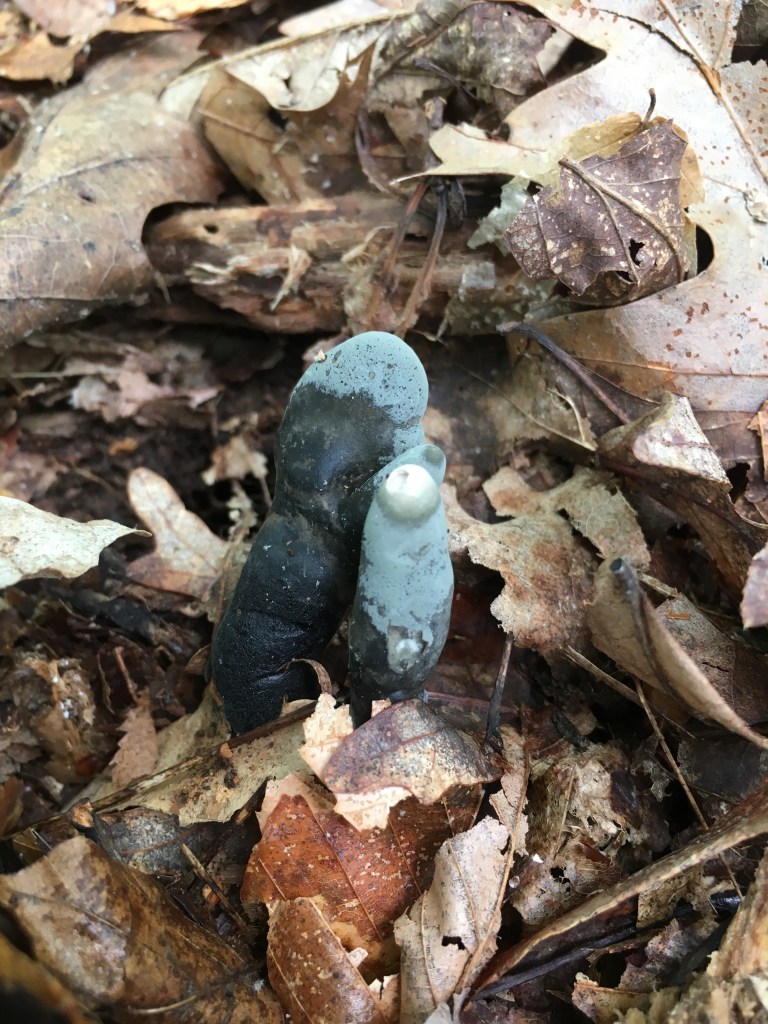
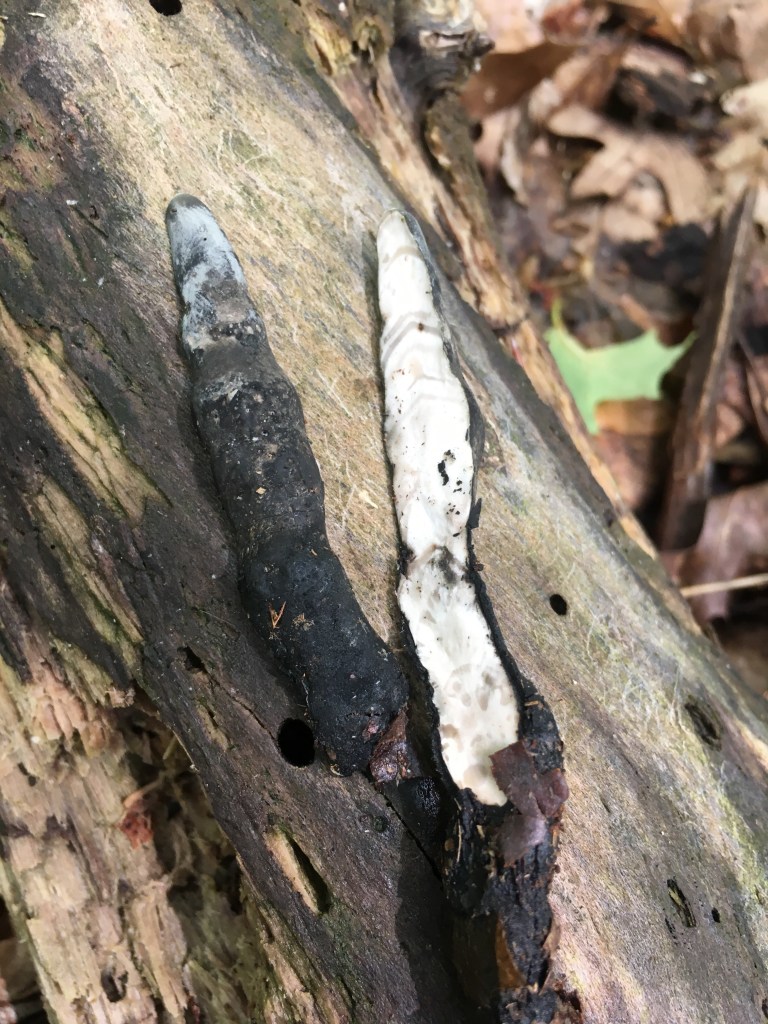
Strange as it may seem, personally I am a little bit pleased whenever I find Dead Man’s Fingers. Firstly, because it was one of the first mushrooms I remember identifying after I moved to Indiana. Secondly, I find their gradual metamorphosis interesting, not many other mushrooms (that I know of) slowly change over the course of seasons. Thirdly, and perhaps this is stretching it, but they seem like a kind of “crux mushroom” for understanding our relationship to mushrooms, and maybe to the “abject” or the uncanny in general.
Mushrooms occupy a sort of liminal space between Life and Death. Good as they do taste, a large part of the thrill of hunting for morels, for example, must be the strangeness of the things. Is this life? Is this death? You almost ask yourself when you find one and hold it in your hand. It occurs to me that there is a parallel between different societies’ attitudes towards mushrooms, and their attitudes towards death. In Kiev, I visited the Pechersk Larva, a cave monastery consisting of a series of narrow candle-lit underground corridors and chambers filled with the preserved bodies of various important religious figures going back to the 11th century. What struck me most was what seemed to me the veneration of the dead bodies themselves, rather than of an ideal spirit in heaven. I felt almost a sense of panic, which was heightened by the sense that for everyone else around me, the physical presence of death was a thing sought after. For me, it was not a spiritual experience, but what Post-structuralist theorist Julia Kristeva might call an “abject” experience.

My point being, that perhaps there is a parallel between the Russian love of mushroom hunting, and the Orthodox fascination with the corruptions of the flesh on the one hand, and our American fear/distain for all things fungal and our Protestantism, which pictures virtue and vice as primarily mental, on the other.
Anyways, before I go too far out on a limb, it’s something you’re likely to see, and you might as well know what it is.
 recycled paper clips
