Slowly but surely I am learning my trees. A couple weeks ago, in my post, “On Bark,” I wrote about ash, tulip, northern red oak, black locust and honey locust. Today I would like to add a couple oaks and maples to the list: Chestnut Oak, Black Oak and Sugar Maple.
Quercus montana, or the Rock Chestnut oak, tends to grow, as its latin name implies, in hilly or mountainous environments. Its range more or less runs down the Appalachian mountains. Here in the South-central Indiana hill country, we are on the utmost edge of its habitat. And yet it is fairly common, especially up along ridges.
Its most recognizable feature, to me, is its bark. Wikipedia describes it as “massively ridged, the thickest of any Eastern North American Oak.”
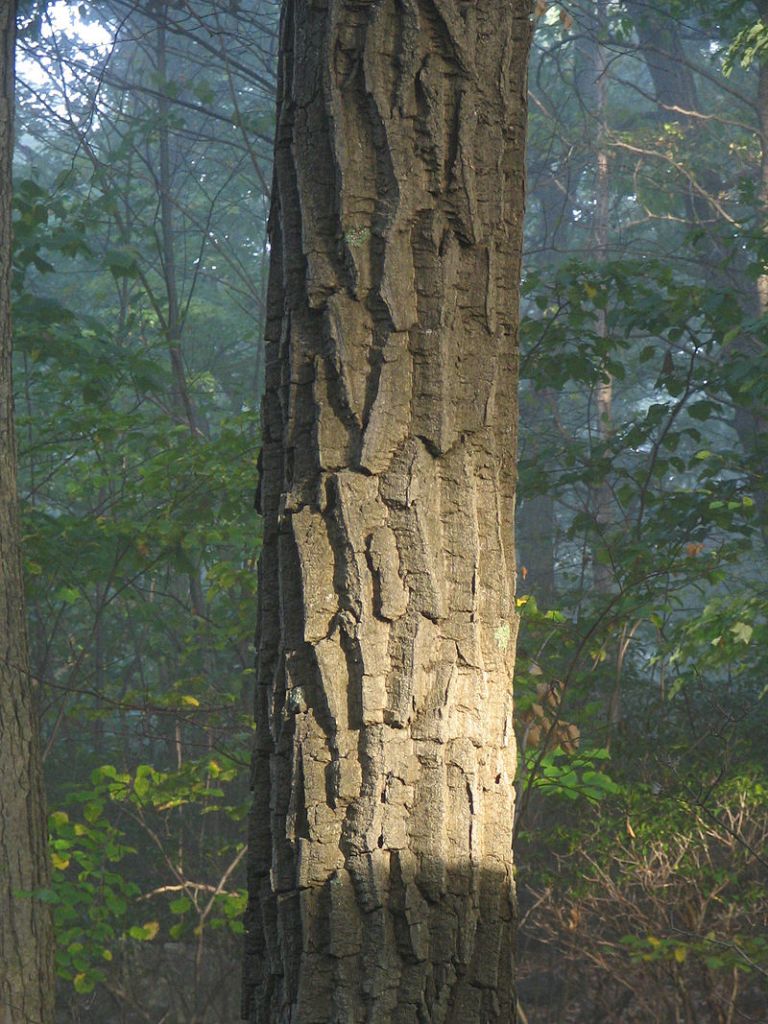
Notice that the ridges are broken, ie they don’t run down in long continuous vertical lines. Also, if you run your hand over them, the are slightly rounded. There is something “stone-like” about the bark (or maybe I just think that because it’s called a Rock Chestnut Oak). To me, they would make good candidates for Tolkien’s Ents, although they usually don’t get to be that big.
The leaves, and this is where I assume they get the name Chestnut Oak from, are less deeply lobed that other oaks.
I would also like to present the Black Oak. Like the Rock Chestnut Oak, the Black Oak, at least in Indiana, likes well-drained upland forests. I often see them along the same ridges where I find Chestnut Oaks.
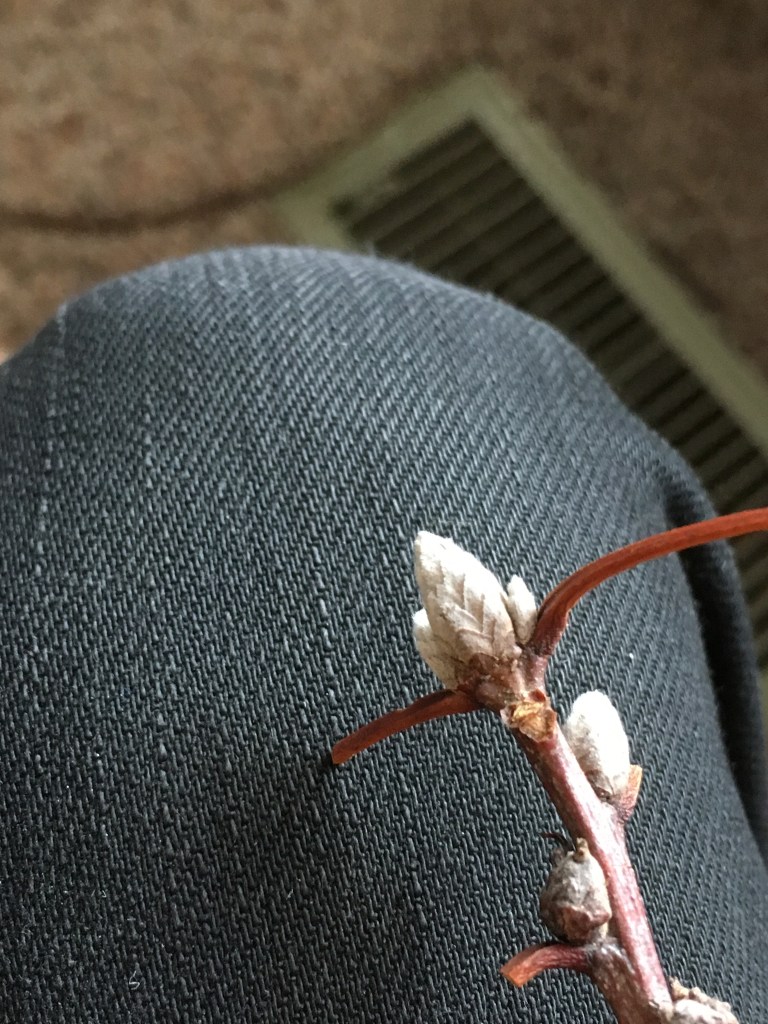
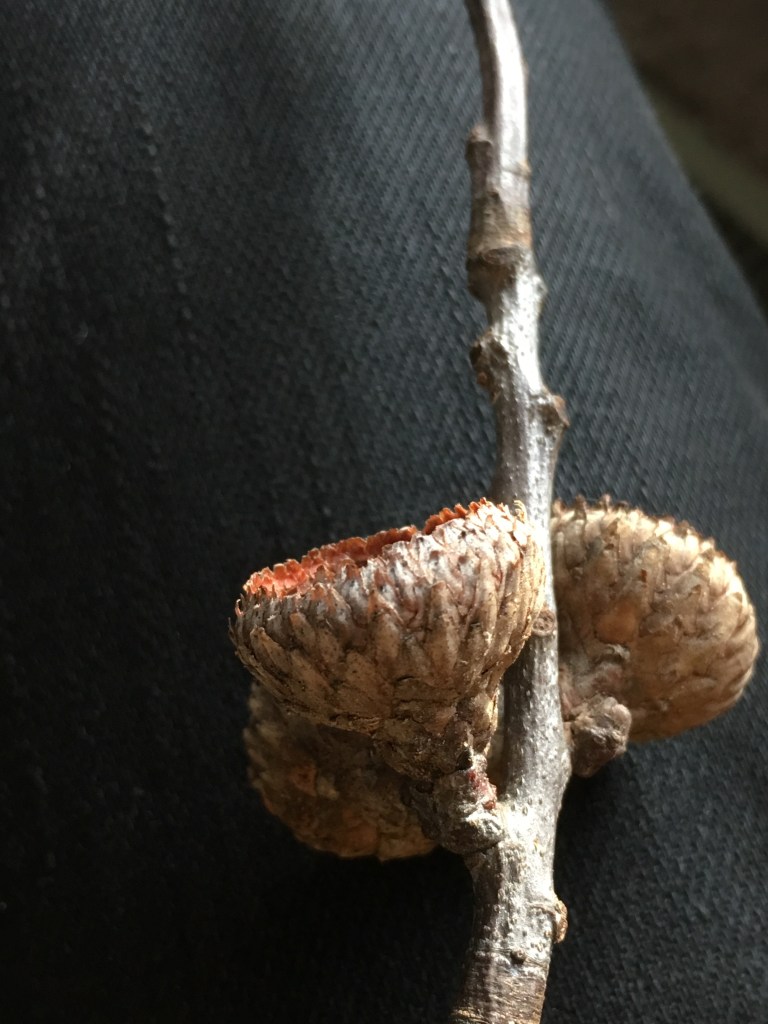
The leaves of Black Oak are similar to Northern Red Oak, but the bark doesn’t have those “ski trails” I mentioned a couple weeks ago. Rather, the bark is dark, as the name suggests, and “blocky.” The other thing that can help tell these two apart are the twigs and acorns. Black Oak has large buds covered with grey wool. You’ll also notice the young leaves are reddish, and very hairy. This probably explains the latin name “velutina.” Also, the acorns cover half the nut and are scaly, as opposed to the flat, saucer-shaped acorns of Red Oak.
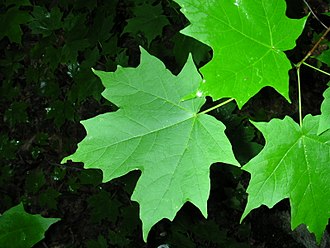
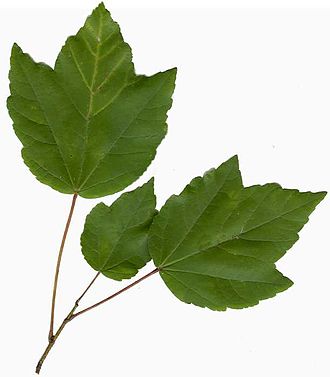
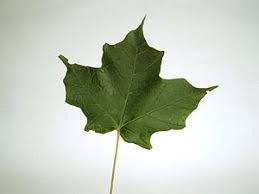
Lastly, maples. Personally, and I don’t know how much scientific backing there is for this, I divide them into two groups “Sugar/Black” and “Red/Silver.” The Red/Silver group have fruit which matures in spring (all those little helicopter wings spiraling into your backyard right now), and the Sugar/Black group have fruit which matures in autumn. Also, Red/Sugar maples have more jagged leaves, while Sugar/Black maple leaves have rounded edges.
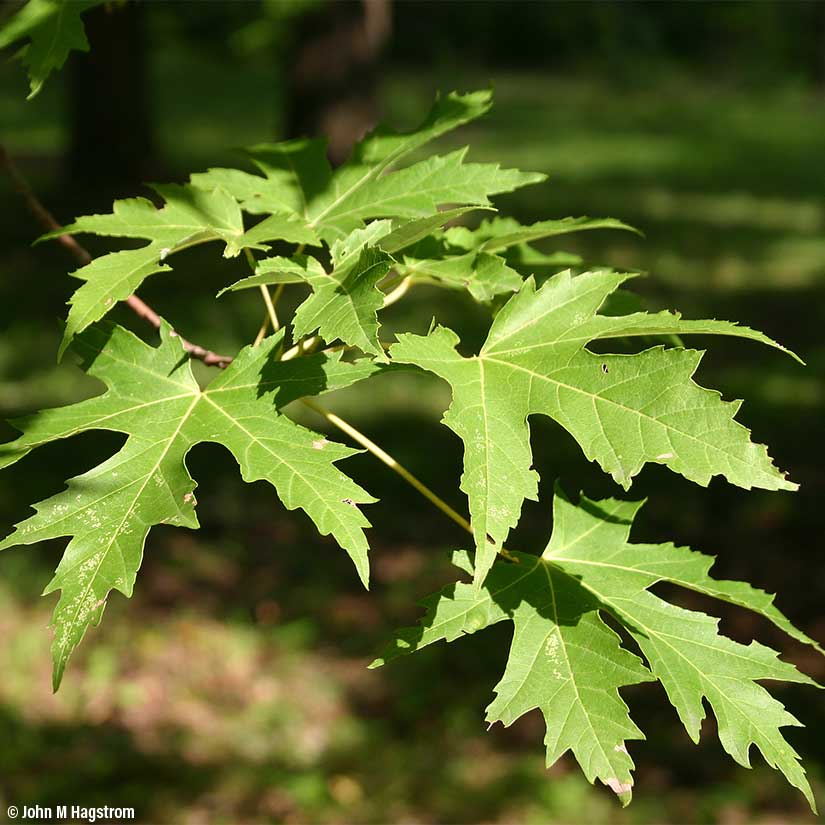
Sugar maple is the leaf on the Canadian flag, with five lobes like a hand. Black maple is similar, except the thumb and pinky, so to speak, are a little bit less pronounced. It’s sometimes described as like a “goose-foot.” Red maples, look more three-pronged, and have V-shaped notches between the main lobes. And silver maples are unmistakable with their sharp-angles and deep incisions, the most spiky looking of the four.
And now for a quiz, can you tell which is which?
 recycled paper clips
