
Rain Man opens with a scene which could be the picture definition of “toxic.” Toxic workplace, toxic masculinity. Tom Cruise, the wheeler-dealer son a multimillionaire is yelling at people in order to make a profit on some lamborghinis. The EPA (which stars more prominently as arch-villain in another Reagan-era hit: Ghostbusters) is holding things up.
Though it was Dustin Hoffman who won Best Actor in a Leading Role, Tom Cruise’s character, Charlie, is the real focus of the film. He is not portrayed flatteringly (most American heroes aren’t: think Captain Ahab, Norman Mailer, There Will be Blood, Mad Men, etc…). We have penchant for glorifying the ugly, at least when it’s male and violent. The movie does a great job of showing the childish self-pity and destructive solipsism of Charlie Babbitt. It is fully aware of the problems of his character. “You’re using me, you’re using Raymond, you’re using everybody” his Italian-immigrant girlfriend points out before leaving him.
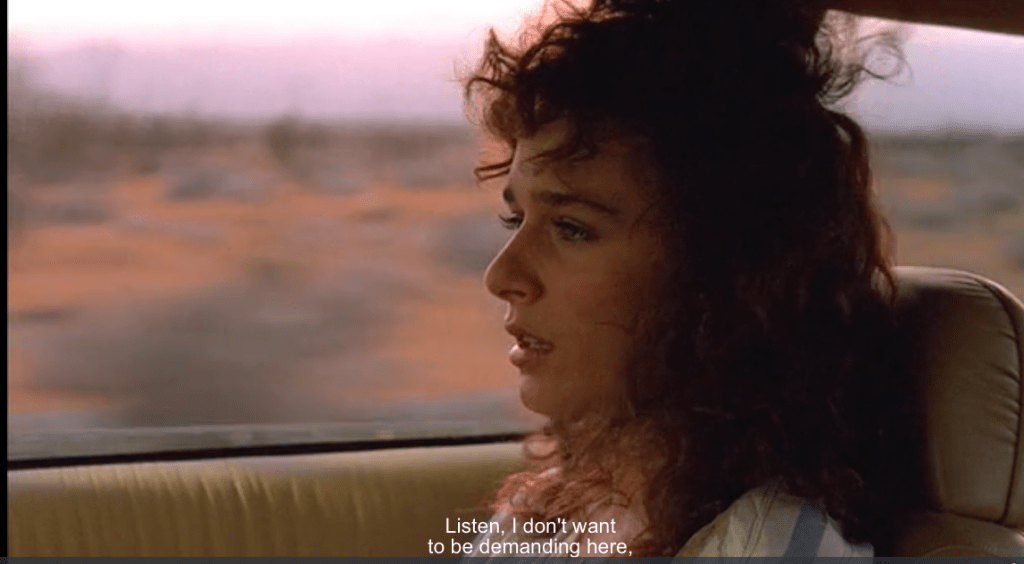
And yet, she comes back in the end. As so often in Hollywood movies, there comes a point where the critique stops, or rather fades out into sentimentality. There is no longer a need for critique or subversion, the movie implies, because the bad guy has gone through a change of heart. He has learned to feel for another human being, his autistic brother Raymond.
While this is not an exclusively American maneuver, it is our national “method of dealing with guilt” of preference. Racism was horrible, but we don’t have to worry about that anymore because we’ve had a black president. Protest, subversion and individuality are all virtues sacred to us, as long as they belong to a hallowed past. We live in a present which has been cleansed of ties to the past by our great forefathers. Abraham Lincoln, who Christ-like, took on himself the burden of slavery, and cast the demon out at the cost of his life, is perhaps the greatest example.

And how much of a connection does Charlie really make? The focus on emotional, familial ties and physical contact in the final scenes are ironic in a movie about a person with autism. The solution to toxic capitalism/masculinity is not that Charlie has to submit to some form of reparation to Susanne, his immigrant girlfriend who he has been exploiting and abusing both as a lover and as an employer this whole film, but that, through the miracle-working powers of family (one of Reagan’s key ideals), the slate will be wiped clean and our hero will be allowed to start afresh—without anything forcibly changing his behavior except his own change of heart.
Everything is so well done: the acting phenomenal, the directing and filmography subtle and intelligent, the depiction of a person with autism reasonably humane—if only there were some way we could avoid, or put to the side, the film’s political message.
 recycled paper clips