Tree bark is one of those things difficult to describe without metaphor. It’s also one of those things people can recognize without being able to describe (giving rise to numerous not particularly helpful youtube videos, and demonstrating, by the way, that we can think, or at least categorize, outside of language). Whereas leaves can be described relatively precisely using a technical nomenclature (parallel vs. palmate vs pinnate venation for example), even scientific studies are forced to use terms like “platy” and “ropy” when describing bark, just as wine connoisseurs use words like “funky,” or “chewy.”
This lack of clear vocabulary, while frustrating, has the advantage of encouraging us to be poets or at least readers of poetry. We learn that northern red oaks have “ski trails,”
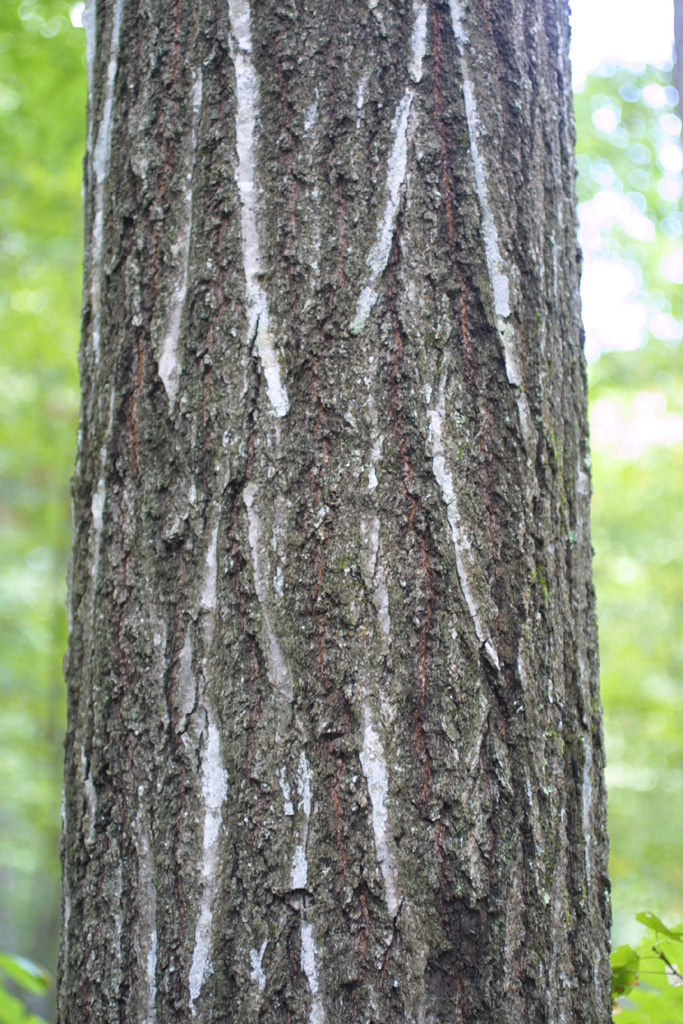
and indeed they do. Shagbark hickory is like “beef jerky,” flowering dogwoods are like “alligator skin.” And there is something “ropy” about black locust bark, isn’t there?
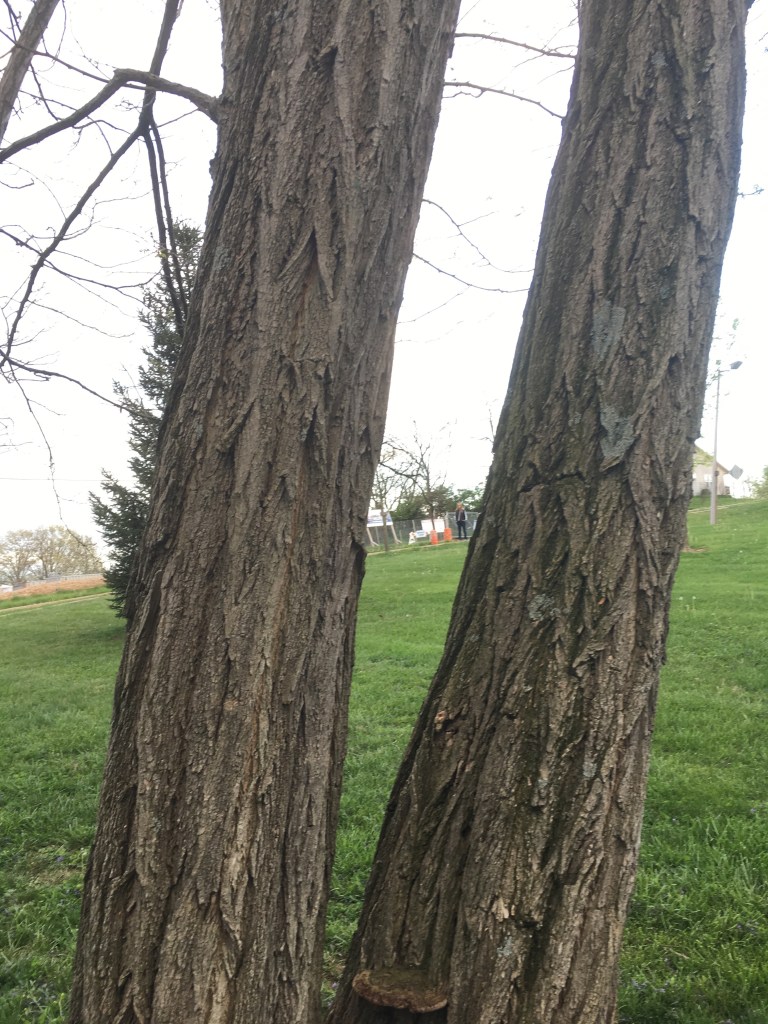
On the other hand, for the purposes of identification, it does help to break bark down into a series of contrast and categories, as we do with leaves. In lieu of a more precise terminology, the following are the descriptive contrasts I’ve found to be helpful identifying trees by bark.
Obviously, to start with, there is smooth vs. rough. I’m just going to focus on what could be called the more “barky bark”: rough bark. The next question is, are there strong vertical lines or is the bark scaly (like a black cherry or flowering dogwood)?
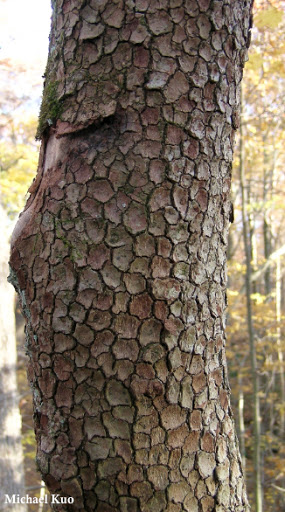
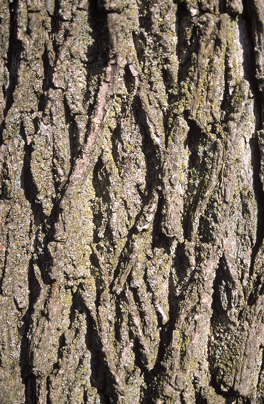
Assuming it has strong vertical lines, are they more like cracks (shallow fissures, flat ridges), strips (you could dig your finger under them and peel them off), or ridges?
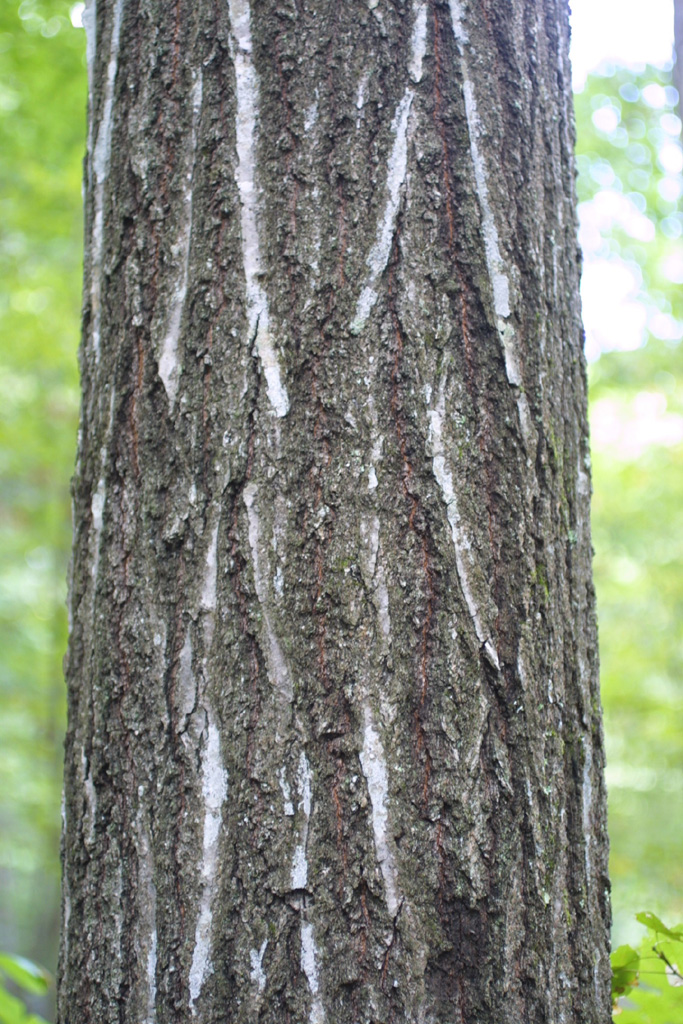
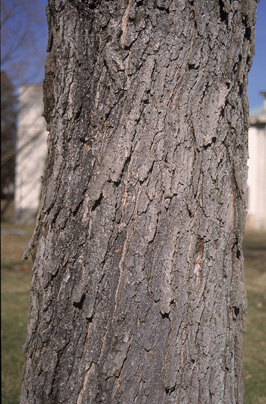
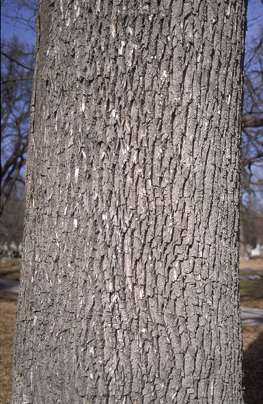
At this point, we usually need to bring in a few hints from the overall structure of the tree. Ash trees can be identified fairly easily because of their opposite branching. An extremely straight, regular trunk, with no low branches and bark that is “corrugated” (the tips of the ridges are flat, and the fissures are a uniform depth) separates out the tulip tree. White oaks tend to have paler bark, bark broken horizontally, or when younger, flaky bark.
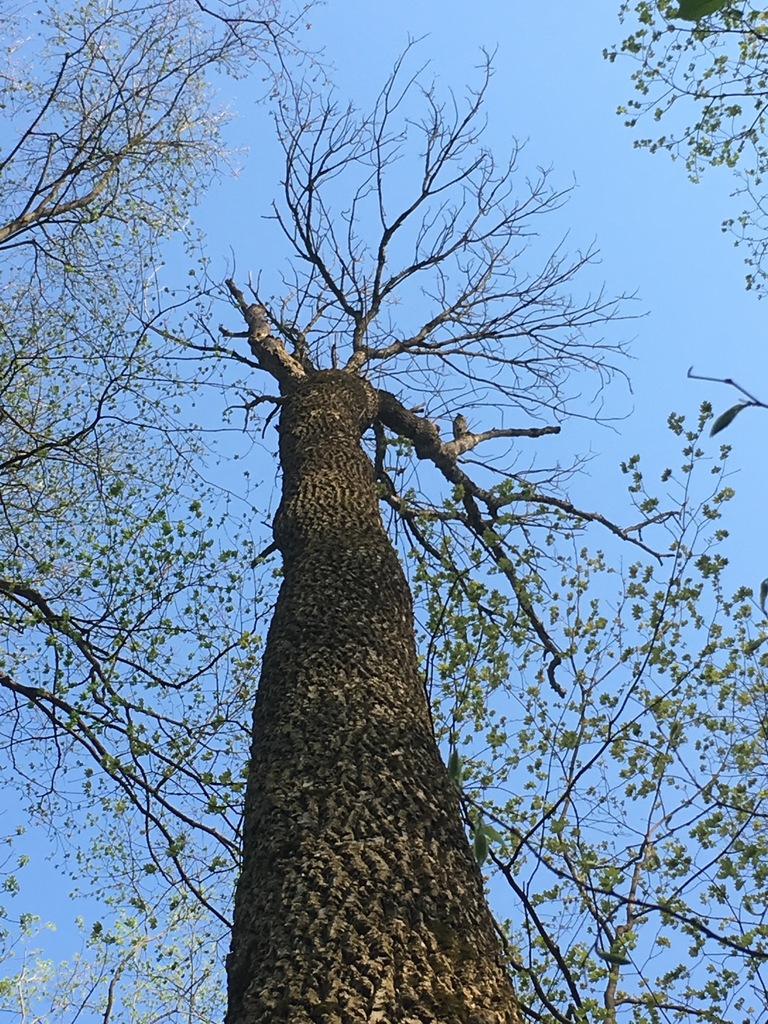

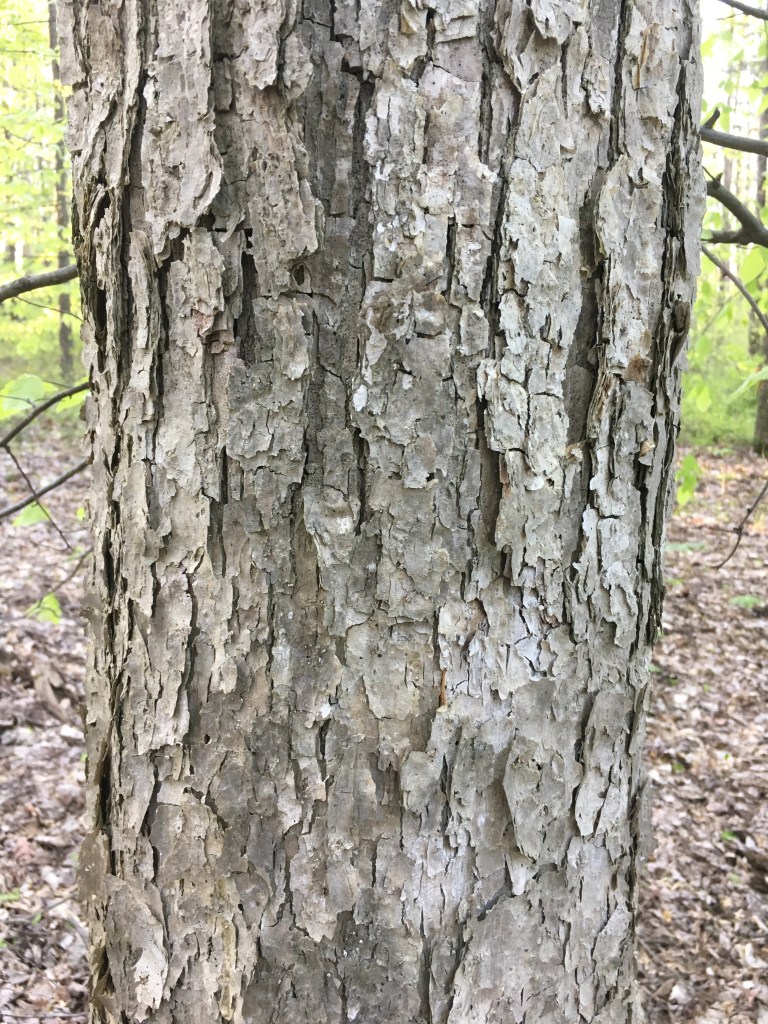
While I know this leaves many trees unidentified, I hope it is at least moderately helpful. There’s a lot more to it, but for now I’ll just mention a few of the remaining more distinctive barks. Above I mentioned the “ropy” texture of black locust, but even easier to spot is honey locust, because of its sharp spikes. And ironwood, or the American Hornbeam, is another smaller tree which is easy to identify because of its cordlike, almost muscular (here we go again with the metaphors) feel.
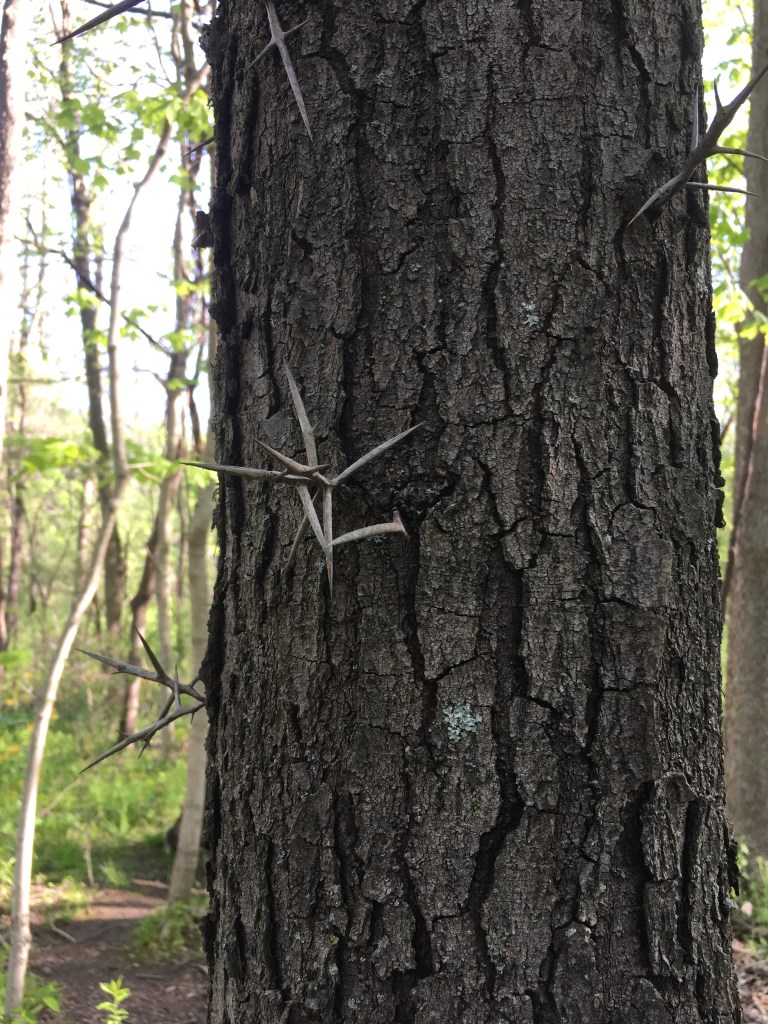
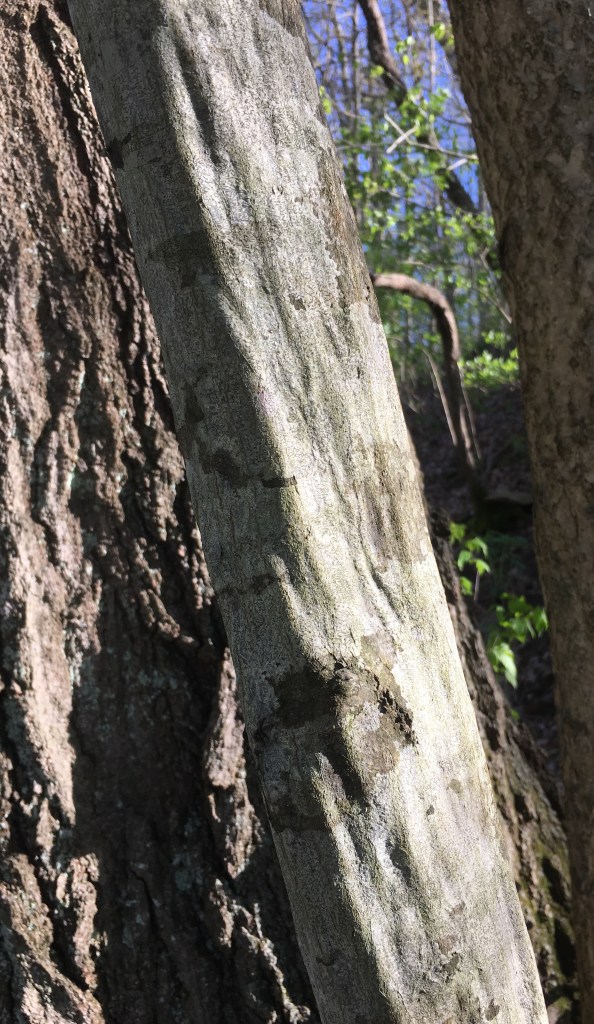
Lastly, I’m far from an expert in tree identification, which is part of the reason I set myself this project. The variation a single species can show over the course of its lifetime is fairly bewildering. Just when you think something is “distinctive,” you find out that another species does that too, or that not all trees of that species display that specific feature. Bark is highly variable based on things like rate of growth, disease, and soil conditions. This is why some people recommend learning twig structure, which does have a fairly precise technical vocabulary. I haven’t jumped into that just yet, but in any case, there’s something satisfying about being able to spot a stand of tulips forty yards away, up on the next ridge.
 recycled paper clips