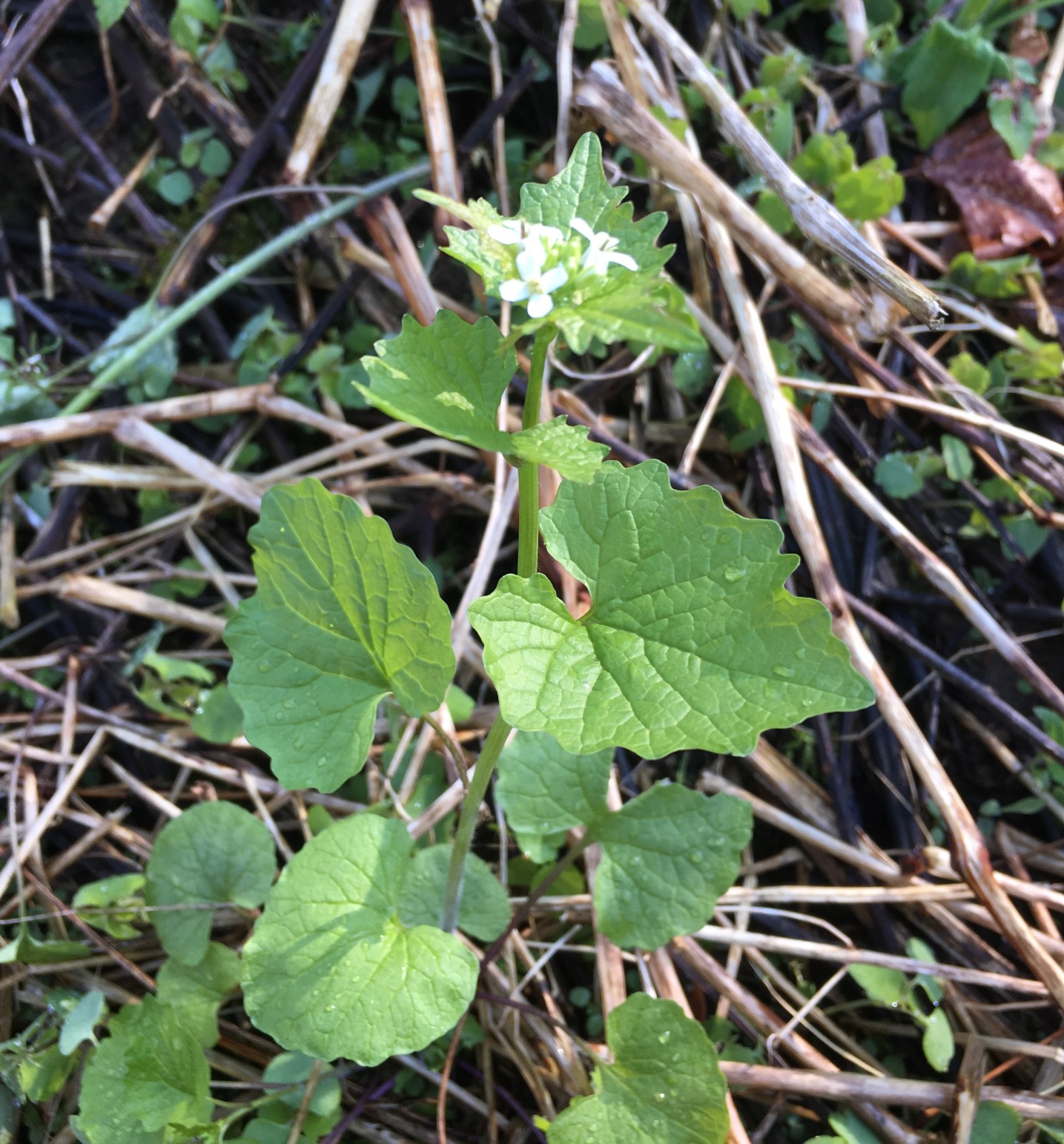
Eating Garlic Mustard is often urged as a way of fighting an invasive plant, but there’s another reason it’s worth a try: history. Ever come across those startling, seemingly inexplicable details when reading something older than the 20th century, such as that people used to sleep in two four hour shifts, or put eggs in their beer (I guess people still do this), or never bathe? For a minute we’re puzzled, then maybe we look it up, then we forget all about it and go on imagining the day-to-day life of times past essentially in the terms of our own day.
Recently, for example, I’ve been reading a biography of Peter the Great, full of such quizzical facts, startling when first come across but then quickly forgotten because they don’t fit in with my lived experience.
Well, think of Garlic Mustard as a little bit of a space-time traveling machine with a specific destination. Actually, people have been eating Garlic Mustard for over 6,000 years, but the invasive Garlic Mustard we have over here in the States is most closely related to the Garlic Mustard that grew in the British Isles before the 1800s. Garlic Mustard, also known as “Sauce-alone” or “Jack-by-the-hedge,” was a staple of English and Irish diets presumably from time immemorial until sometime in the 20th century. It was used in stews or made into a sauce for meat or eaten as “sallad.” So next time you need to channel Shakespeare or Samuel Johnson, or whoever you happen to be reading in your survey of British Literature class, try Garlic Mustard.
I chose to give the most common internet Garlic Mustard recipe a try: Garlic Mustard pesto. I didn’t have pine nuts, so I used some roasted pumpkin seeds from last fall, and I didn’t have parmesan so I used mozzarella. But all you really need is Garlic Mustard, olive oil, salt (and maybe some basil and oregano).
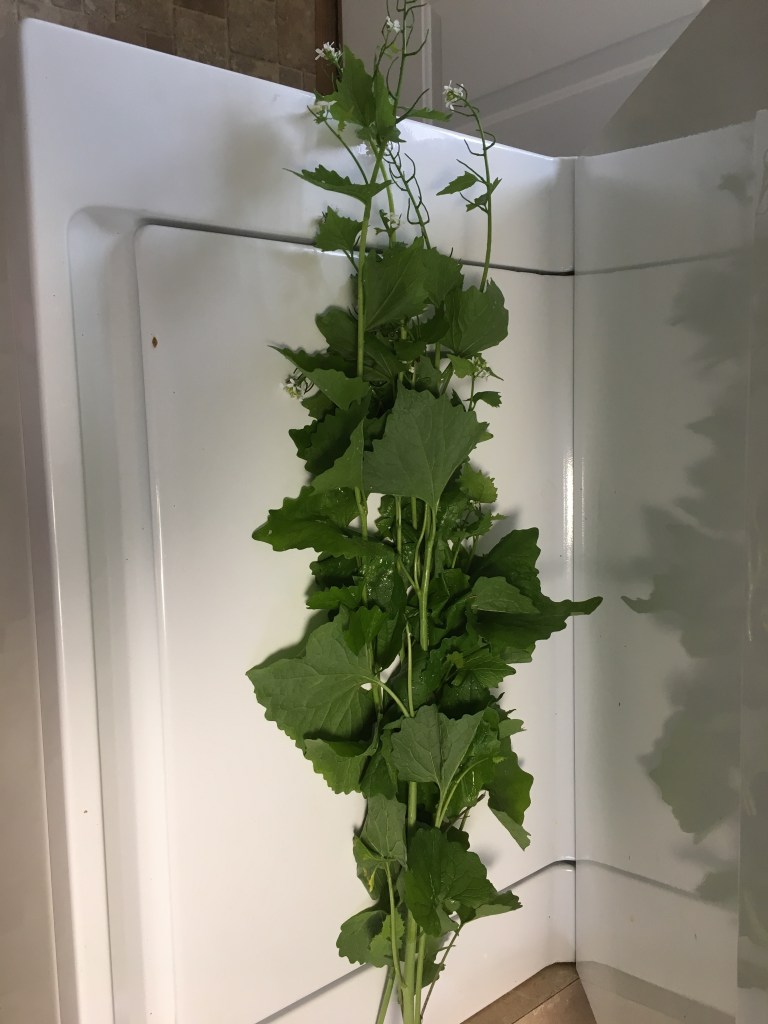

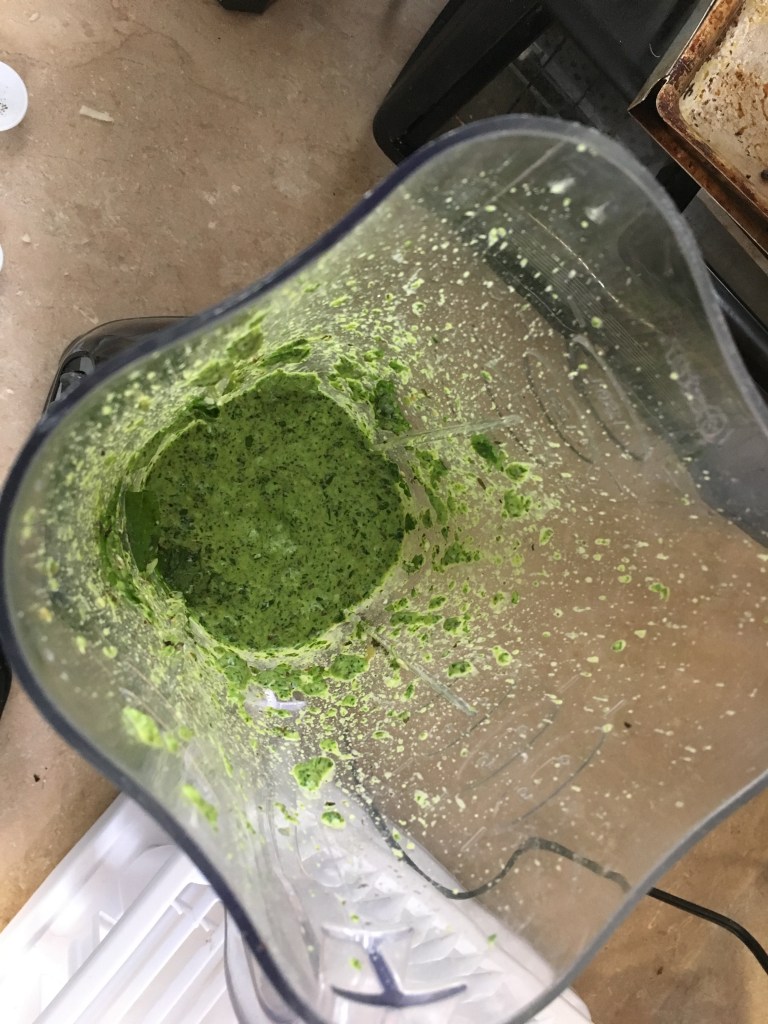
Now, I doubt that this is exactly how Shakespeare had his sauce-alone (not having a blender) but I would say that a few leaves ground up in a pestle with oil and salt would make a pretty good sauce for some lamb. I did try a few of the leaves plain and I’d say they’d make a pretty decent salad, a little bit on the spicy and bitter side, but I like that anyways.
For more on the subject see: https://www.history.com/news/shakespeares-suppers , https://en.wikisource.org/wiki/Domestic_Encyclopædia_(1802)/Mustard,_the_Hedge , https://en.wikipedia.org/wiki/Alliaria_petiolata
 recycled paper clips
One thought on “Garlic Mustard: it’s everywhere, why not eat it?”