Today I’m going to show you some of the stranger things I’ve found hiking. Starting below, with some kind of coral fungus I haven’t managed to quite identify.
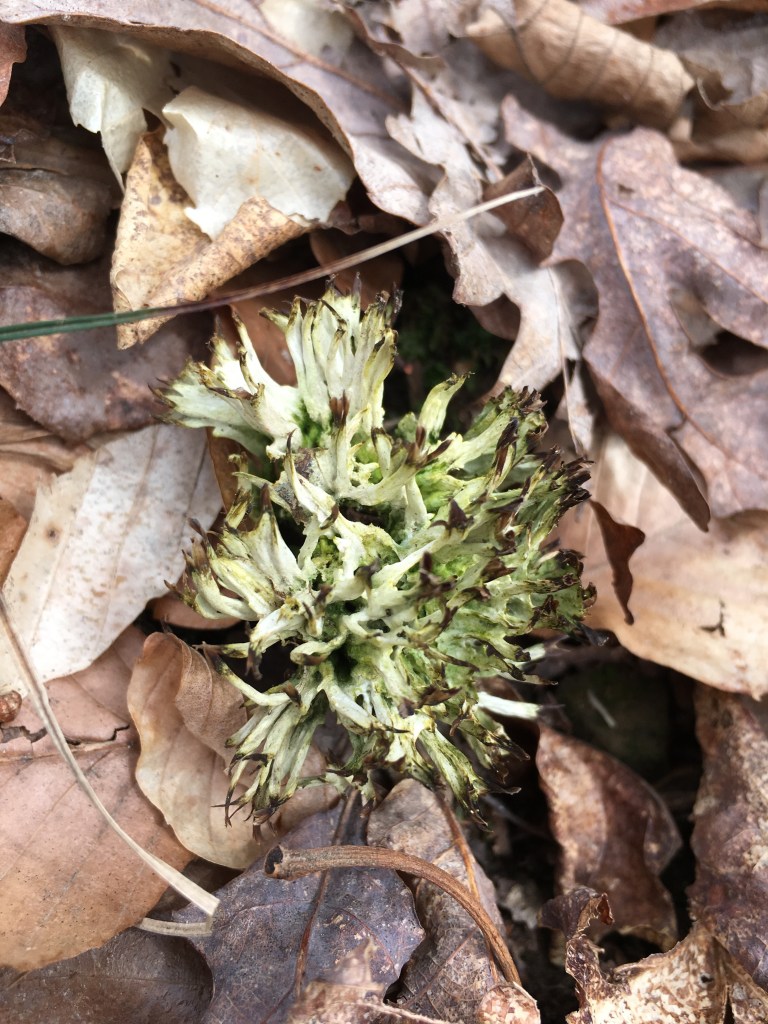
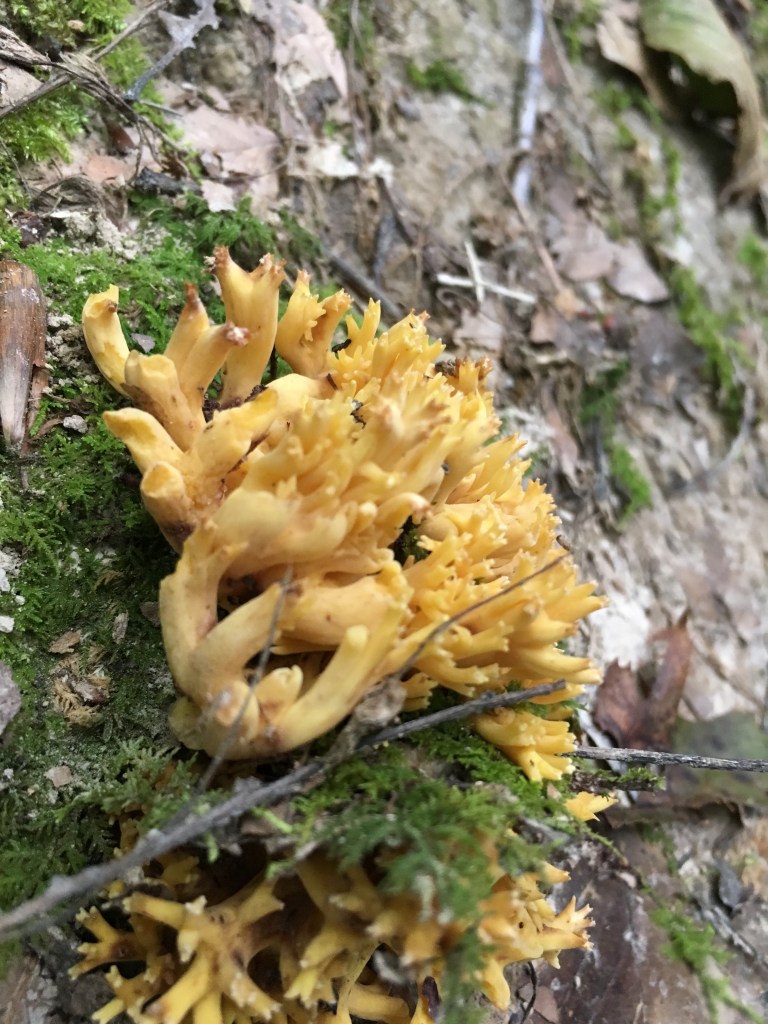
I’ve seen this several times now, usually while poking around for signs of morels. The fungus above has become lichenized, which results in the green tint. All lichen, by the way, are part-fungi, consisting of a symbiotic relationship between a fungus and algae/cyanobacteria. See: https://www.britishlichensociety.org.uk/about-lichens/what-is-a-lichen . The above lichen/fungus is not fresh, witness the dried and blacken tips which means it’ll probably be impossible to identify. Most likely bet is something in the genus Ramaria, but that’s just a shot in the dark. Way back in the fall I took a picture of this guy, which is possibly the “fresh” form of the same thing:
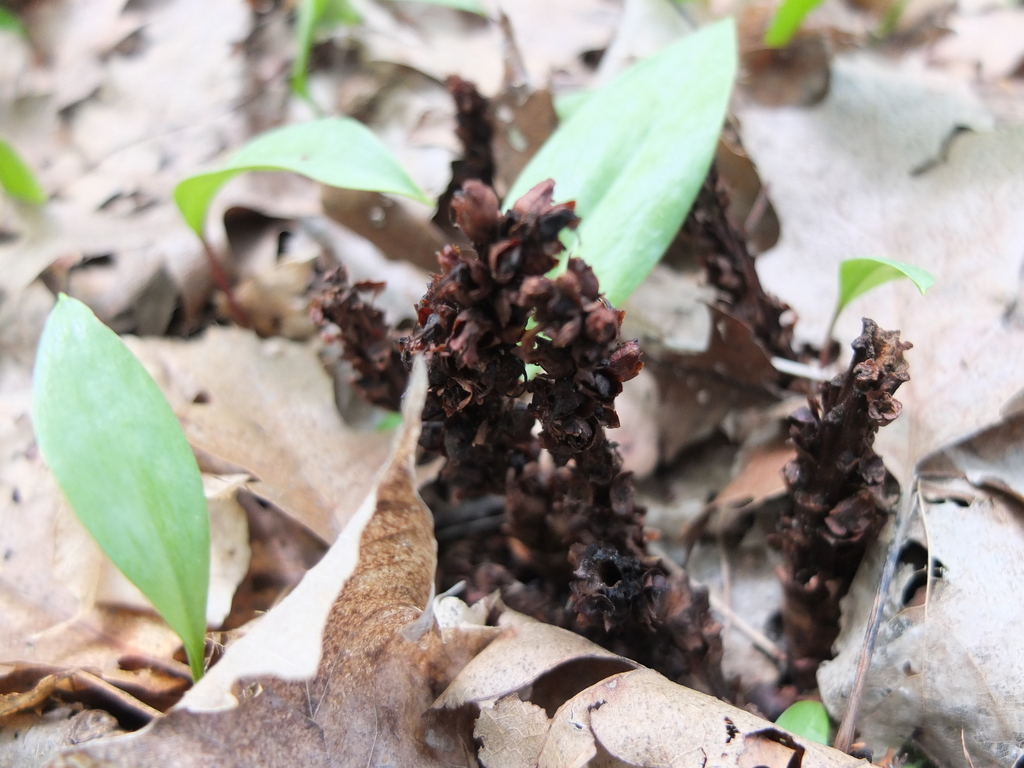
The next natural bizarrity we’ll look at is American Cancer root. Unfortunately, I had to delete my photos of this to make room on my phone, so I’ll have to rely on Wikipedia and iNaturalist. So far I’ve only seen it in the desiccated form below:
But in full “bloom” it looks more like this, justifying it’s other name “Bear Corn”
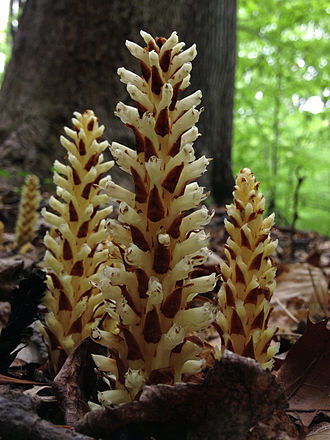
It is technically a plant, although it does not photosynthesize (!?), being fully parasitic on the roots of Oak and Beech trees. The name is hard to explain, other than that it’s strange and parasitic, and so is cancer.
Last but not least, one of the most recognizable Indiana trees: the Shagbark Hickory.
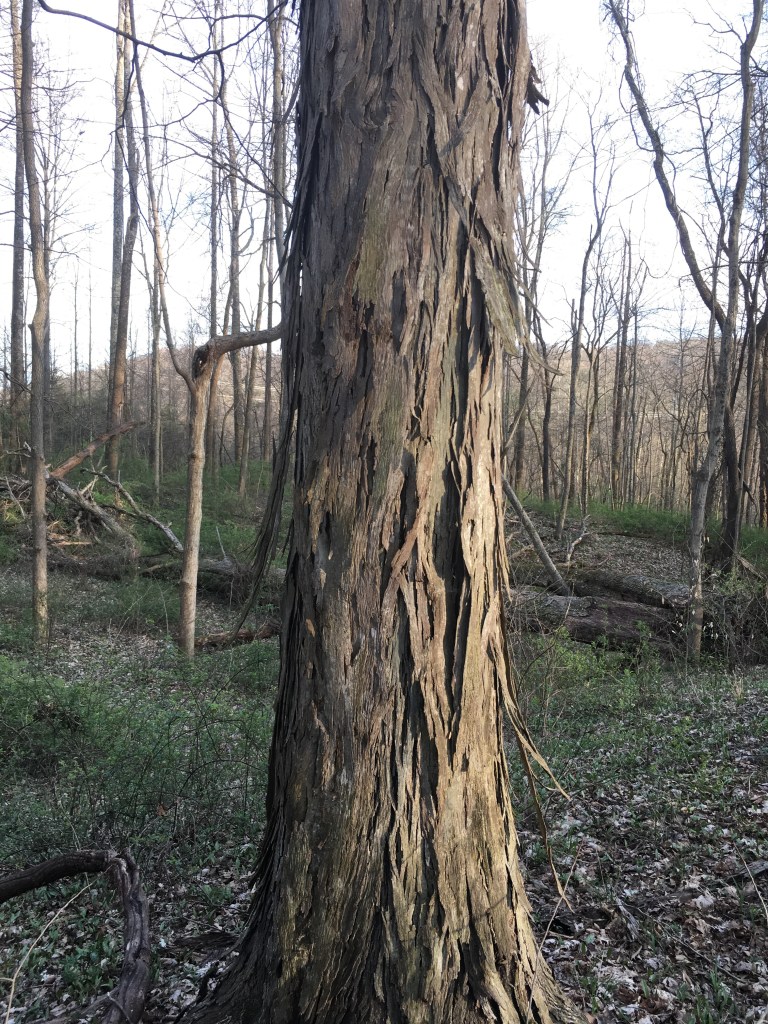
What is the evolutionary advantage of this crazy bark? I don’t know. What I do know is that it’s pretty unique, perhaps even bizarre.
 recycled paper clips