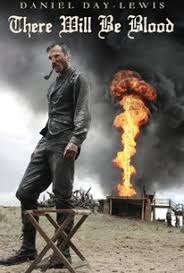
There Will be Blood is a piece of myth-making about America and about masculinity. The myth it tells about America is that it is the product of fanatical individuality, the fierce will of the strongest, that the problems with our society stem not from something systemic or collective, but from the tragic flaws of great men. The myth it tells about masculinity is that it must, and can, be bought at the price of blood.
On the one hand you may say that the movie clearly does not approve of Daniel’s behavior. And on the surface that is true. But that Daniel Plainview is obviously destructive and miserable does not make him less idealized. All “great” heroes and geniuses are “flawed,” but those “flaws,” far from weakening the admiration due to them, increase it. In other words, Daniel is not the hero of the story despite being violent and destructive, but because he is so.
There Will be Blood sends two messages, one avowed and the other implicit. The overt message is that boundless competitiveness is ultimately destructive. The implicit message is that that destructiveness is a confirmation of manhood, which is nearly synonymous with greatness/Americanness. The epic form of the 2 and half hour long Western, overpowers and uses for it’s own ends the original satiric kernel of content. Of all genres, the epic and the satire are perhaps least capable of symbiosis.
This reading of There Will be Blood ties into something else I am reading, Civil War Monuments and the Militarization of America, by Thomas Brown, which is about the emergence of the American martial ideal. There Will be Blood begins in 1898, the year of the Spanish-American War and close to the epicenter of the emergence of the soldier as paradigmatic American citizen.
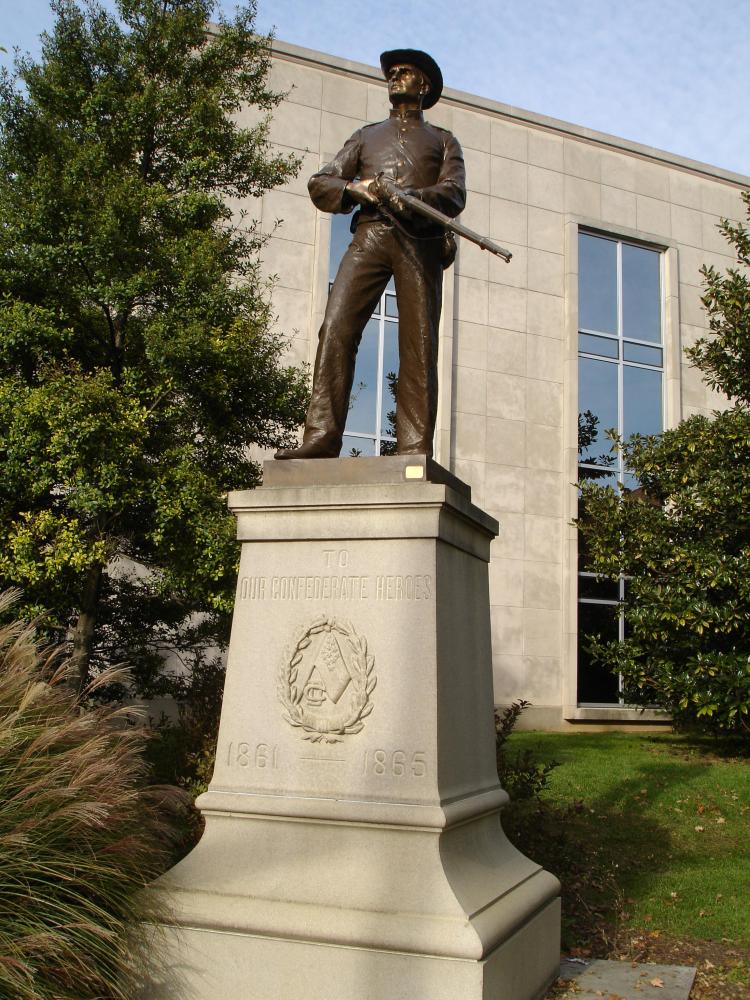
As Thomas Brown explains, the emergence of this ideal was tied to two powerful forces of the day. One was the Grand Army of the Republic, G.A.R., a fraternal organization of Union veterans with considerable political clout (consider what enormous percentage of the all-male electorate would have been veterans in the decades after the Civil War). And the other was industrialization. Gilded Age magnates such as Andrew Carnegie (who paid someone to serve in his stead during the Civil War) propagated the citizen-soldier as model of the paradigmatic American because it reinforced the workplace mentality/hierarchy profitable to their business, and because it was the National Guard which had to be called in to enforce their working conditions by putting down strikes.
All this to say, that while There Will be Blood is a well-made and powerful piece of epic mythification, it brings nothing new to our picture of America or of manhood.

 recycled paper clips
I like your focus on the mythification of American manhood in this movie! The movie’s timestamps that flicker in to show the time-jump (i.e. “1899” to “1905” to “1927”) in certain scenes also made me reflect on how white the story is, and how white this genre is (individualistic manly-man entrepreuner exploiting the Southwestern Industrial-era frontier for oil or gold). As I saw the years, in other words, I thought of how very different theSouthwestern frontier was for the Indigenous groups at this time who came in touch with white settlers and prospectors (and here I think of the Dakota oil pipeline ripping through the Standing Rock Indian Reservation). How different, too, for African Americans in this post-Reconstruction era was the task of merely staying alive and free. The myth of the one-man empire which validates Daniel’s violent individualism is not unlike the validation of a suave-but-cruel slavemaster, whose handsomeness and clever quips are a key part of protecting the myth of his individual economic and moral genius, which he in turn boasts about and safeguards via acts of violence toward enslaved persons.
It is not a crime, of course, for a movie to tell about the experience of just one race/sex. I am not asking “There Will Be Blood” to put in a few people of color as a “consolation prize”. But the genre in general is guilty of silence at best, and gratuitous violence at worst, toward any non-white experience of the Southwestern frontier.
LikeLike