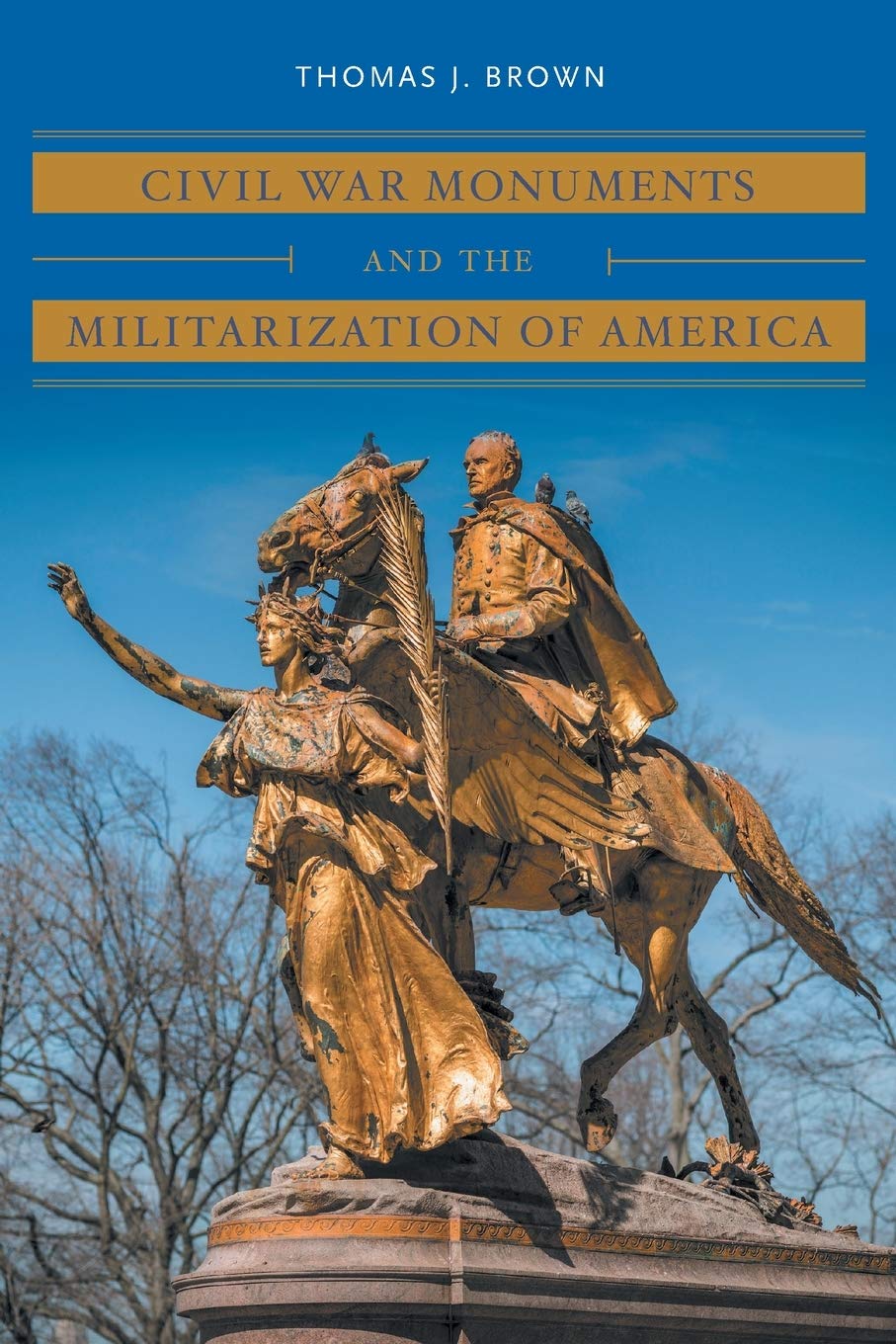
Since the beauty of this book lies in the specifics, rather than try to somehow present a coherent summary in the form of an essay, I am simply giving as bullet points facts that struck me so far.
Americans initially thought of themselves as peaceable in contrast to Imperial Britain with it’s global empire and professional army. The paradigm of the American was the farmer or the craftsman, who was seen as representing industrious virtue, whereas the professional solider was emblematic of illegitimate authority and idleness/loose virtue (cards, drinking, women—like soldiers in 18th and 19th century novels). The situation now is the extreme opposite. Soldiers today represent the pinnacle of discipline and citizenship, Abu Ghraib notwithstanding.
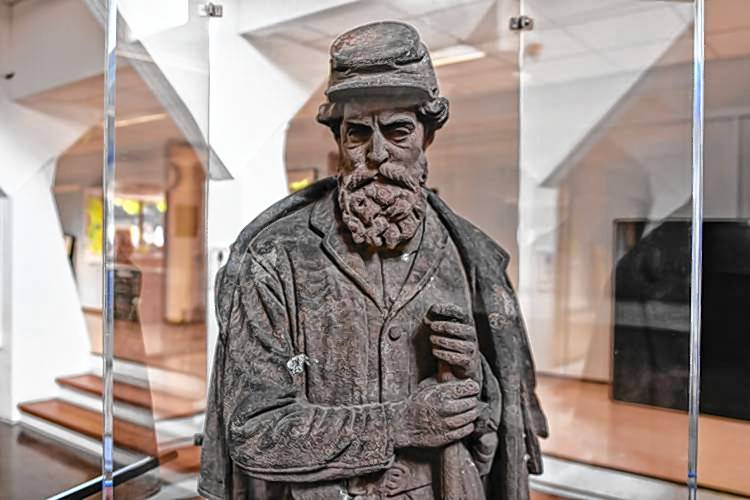
As an example of changing attitudes towards military service, we can compare two types of Civil War monuments. One, erected mostly in the more immediate aftermath of the war, shows the solider mourning or at rest. The emphasis is on sentiment, war as tragedy, aberration. For example, this one from 1867
The second, later, type focuses on the soldier as soldier; alert and active, not as someone who is experiencing war but as someone who is participating in it. This is true both of confederate and Union statues.
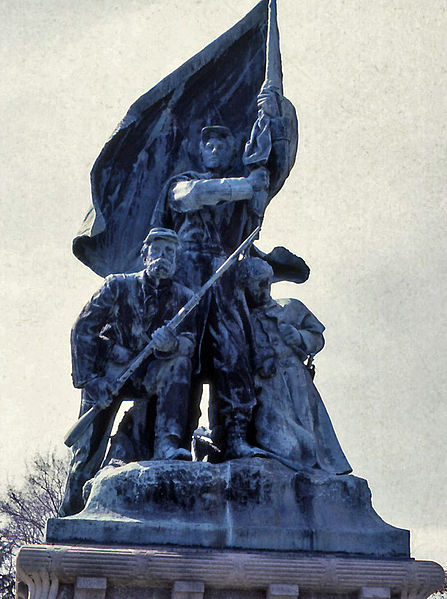
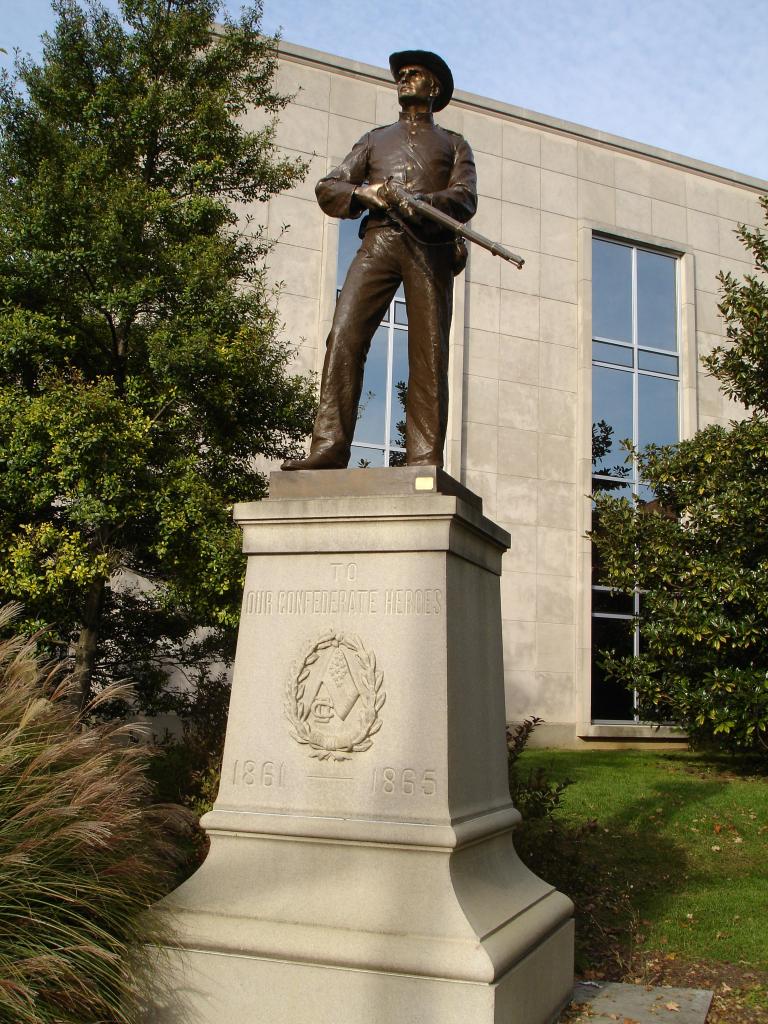
What happened in between? … I’ve still got some reading to do.
 recycled paper clips