
Beanpole is a strong film. The most obvious thing that makes it stick out is the choice to focus on the moment after the war. Like The Odyssey which portrays a survivor’s attempt to return to normalcy after the disruption of the Trojan War, so Kantemir Balagov chooses to set his story after the “end.” In this way, the film has the effect of an epilogue, an addendum which disrupts the “main” text.
This leads to the question of why Balagov chose this theme in the present moment. Is it that Balagov saw parallels between the trauma of the collapse of USSR, which was in progress as he was being born, and the trauma of rebuilding Russia after WWII? This doesn’t seem overwhelmingly convincing. What other explanations are possible?
Beanpole plays with the war movie genre in other ways than by taking place after the “conclusion” of the war. For one thing, the main characters are female. For another, there is no patriotic optimism, no national myth-making.
The only thing that feels somewhat gratuitous about the film are the several voyeuristic bathing scenes. The crowd bathing scene in particular has a Turkish Bath à la Ingres feel.
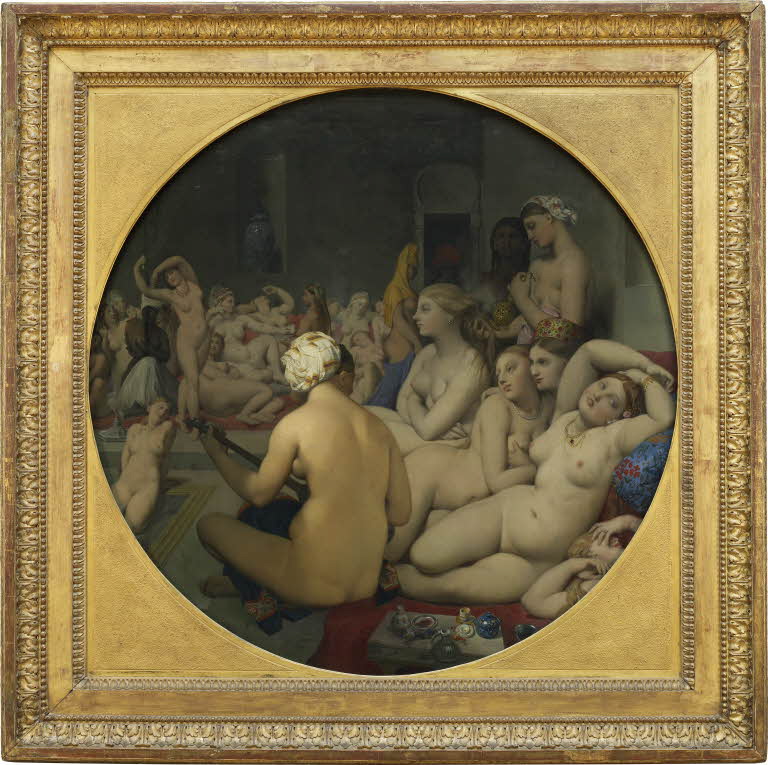
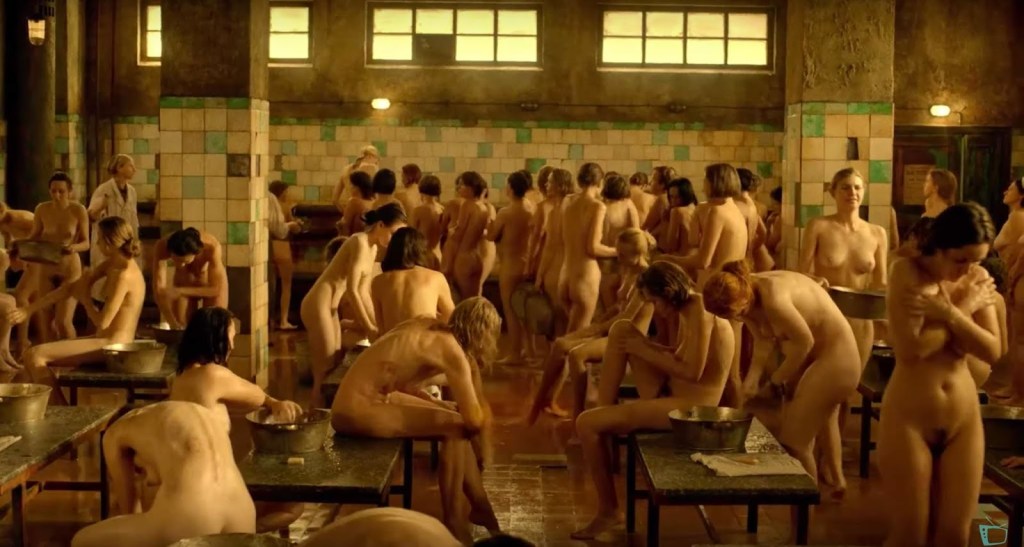
One wonders why the director went to the trouble of arranging this scene (casting 30-40 mildly-emaciated but still full-chested women to play nude parts with well-shaven legs and armpits, orchestrating a complicated crowd scene with perfect art-house soft-lighting and so on) if not for either his own, or the viewer’s voyeuristic pleasure, for the bathhouse setting is not that important to the plot.
There are other, one-woman bathing scenes which don’t play an erotic role within the film (ie the characters don’t experience them as erotic moments) but are clearly erotic for us the viewers.
Very probably these scenes are just a rule of art-house, especially lesbian art-house, film making that must be obeyed and checked off if you wish to have a chance at Cannes or achieve some level of financial success. Somewhere there exists a textbook of indie-filmmaking containing the magic formula of total movie time to total “artful” female nudity time necessary to ensure indie movie acclaim. Balagov has not neglected to conform to this convention.
Besides this, though, and a few other slight clichés, there is very little to complain about. Beanpole is a rare accomplishment. A sustained attempt to portray trauma, simply, steadily, and honestly in film.
 recycled paper clips